“Viral Courtroom Clip Sparks Outrage as Teens Seen Laughing — But the Internet May Not Know the Full Story”

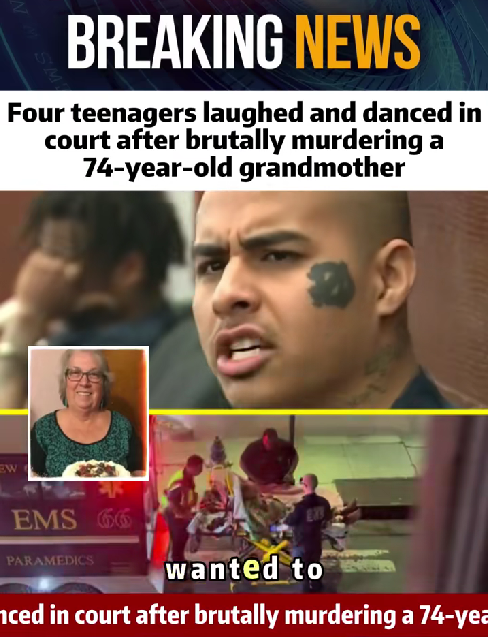
A highly emotional and disturbing video collage has gone viral, with captions claiming that “four teenagers laughed and danced in court after brutally m*rdering a 74-year-old grandmother.” The images — featuring courtroom footage, an elderly woman, and emergency responders — have triggered an avalanche of outrage, grief, and confusion across social-media platforms.

But as with many dramatic viral posts, the claims surrounding the footage remain unverified, and the context behind the clips has not been fully established by any official source.

The circulating video shows a group of young defendants appearing in court, with one teen smirking and another shifting in his seat. The viral caption alleges that the teens were involved in a violent crime and behaved disrespectfully during proceedings. However, the clip offers no audio, no case number, no legal documentation, and no verified reporting to support the extreme claims attached to it.

Experts in digital misinformation warn that courtroom videos are among the most commonly miscaptioned forms of viral content online. Old footage, unrelated hearings, or edited reactions are frequently paired with sensational descriptions to provoke outrage or emotional responses.

The elderly woman shown in the viral image has also not been identified publicly by authorities, and no official source has confirmed that she is connected to the individuals in the video. Viewers have expressed concern that her photo may have been used without proper context or without confirmation that she is related to the case described.

Much of the emotional reaction has centered on the idea that the defendants were supposedly laughing or “dancing” during a serious proceeding. Legal professionals note that perceived courtroom behavior can be misleading — a momentary smile, nervous movement, or reaction to another person in the room can easily be misinterpreted, especially when slowed down or edited into dramatic highlight reels.

Additionally, there is no verified record that four teenagers were charged, convicted, or sentenced for the specific crime described in the viral caption. No police department, prosecutor, or court has released a statement matching the sensational narrative circulating online.

Despite the lack of verification, the video has spread rapidly, prompting heated comments about respect for victims, courtroom behavior, and the justice system. Many users expressed heartbreak for the woman shown in the image, assuming she was the victim. Others urged caution, noting that viral content often mixes unrelated footage to construct an emotionally charged but inaccurate story.

Community advocates emphasize that when real families and real defendants are involved, misinformation can cause immense harm. False claims can damage reputations, mislead the public, and contribute to widespread confusion. They stress the importance of waiting for official reports, rather than relying on edited videos or dramatic captions.

While the viral post continues to be shared widely, viewers are urged to treat its claims as unconfirmed allegations, not established facts. Until a verified source — such as a court record, police press release, or reputable news outlet — provides clear details, the story remains another example of how easily powerful emotions can be triggered by misleading online media.

For now, the only thing certain is that the internet reacted strongly — but the truth behind the footage remains unclear.
@b6332f95

Four teenagers laughed and danced in court after brutally murdering a 74-year-old grandmother#foryou #news #tiktok #tiktok #usa

♬ original sound – b6332f95
“Shocking School Footage Goes Viral — Community Demands Answers After Disturbing Stairwell Incident”

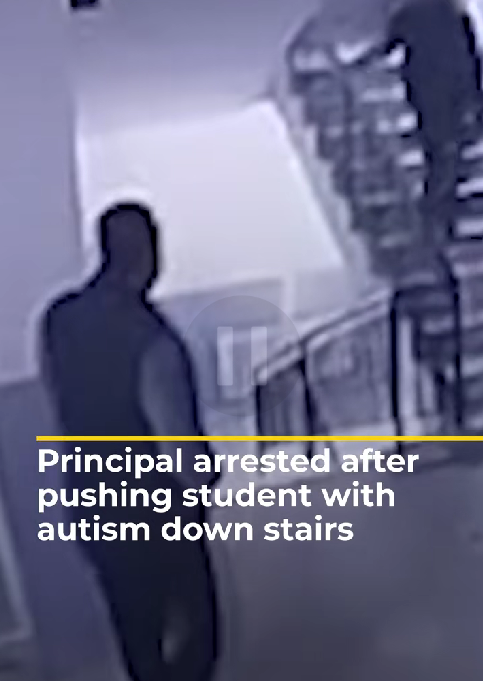
A disturbing school surveillance clip has gone viral, sparking intense debate after social-media captions claimed that a school principal was “arrested after pushing a student with autism down the stairs.” The grainy black-and-white footage, which shows two figures near a stairwell, has circulated rapidly — but as with many dramatic online claims, the full story remains unclear, unverified, and far more complicated than the headlines suggest.

The video itself provides little context. It shows a hallway, a staircase, and the silhouettes of two individuals — one appearing to be a staff member and the other a student. The moment captured has ignited widespread speculation, but without audio, timestamps, full footage, or an official report, viewers cannot determine what happened before or after the clip. Despite this, captions attached to the video have fueled intense emotional reactions across TikTok, Facebook, and Instagram.

Advocacy groups, parents, and educators have all weighed in, urging the public not to jump to conclusions based on a few seconds of unclear footage. Situations involving students with disabilities are especially sensitive, and experts emphasize that misinterpretation can cause harm to families, staff, and students alike.

According to early online posts — which remain unconfirmed — the incident allegedly involved a student with autism and a school principal. Viral captions have claimed an arrest took place, but at this time no official police statement, court record, or school district confirmation has publicly verified these claims. Several fact-checking groups have already issued alerts urging the public to be cautious until more information is released.

Professionals in special-education advocacy say incidents involving escalated behavior can sometimes look alarming when removed from their full context. Staff trained in behavior intervention may physically redirect or guide a student to prevent self-harm or danger, and such interactions can be easily misunderstood when seen through a silent camera without explanation.

Meanwhile, commenters online expressed a wide range of emotions. Some reacted with anger, believing the viral caption at face value. Others urged patience and reminded viewers that viral clips often exaggerate, distort, or fabricate details for engagement. Many shared past examples of misleading videos that later proved entirely different when official investigations were completed.

School districts nationwide have recently discussed the challenge of maintaining transparency, safety, and trust between faculty and families — especially in situations involving students with additional needs. Incidents like the one in the video highlight how urgently clear communication and full context matter before the public forms conclusions.

Legal experts note that serious allegations — such as abuse, misconduct, or arrests — require careful verification. False or exaggerated claims can permanently damage reputations, mislead parents, and create unnecessary panic within school communities.

As the video continues circulating, authorities have encouraged viewers to wait for properly released information rather than relying on dramatic captions. Whether this was a misunderstanding, a behavioral intervention, or a more serious incident cannot be determined from the clip alone.

For now, the viral footage stands as yet another example of how quickly online narratives can overshadow facts — and why every dramatic claim deserves patience, thorough investigation, and responsible reporting.

@aljazeeraenglish

A school principal in Turkiye has been fired and arrested after CCTV video emerged of him pushing a 13-year-old student with autism down the stairs. . In court, the suspect said he didn’t mean for that to happen. . The Turkish justice minister says any act against the most vulnerable in society cannot go unpunished. #news

♬ original sound – Al Jazeera English – Al Jazeera English
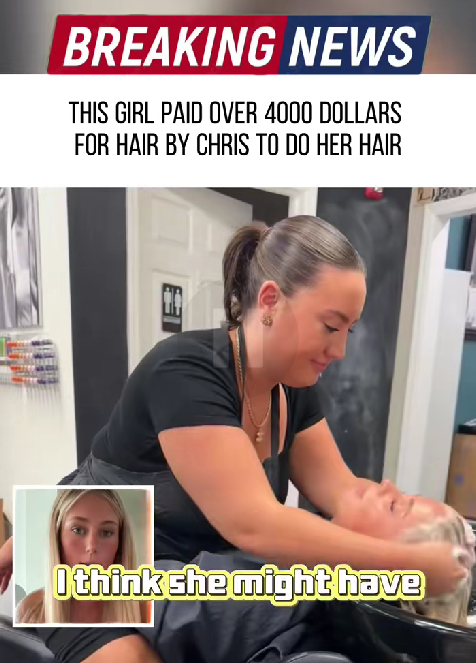
“$4,000 Hair Appointment Turns Into Viral Controversy — What This Woman Says Happened Left the Internet Torn”

A viral video has ignited a storm across social media after a young woman claimed she spent over $4,000 on an appointment with a well-known stylist named Chris — only for the results to leave her emotional, frustrated, and questioning everything she had paid for. The clip, which shows her lying back at a salon sink while her hair is being washed, seems calm and routine at first. But the dramatic captions and follow-up footage from the woman reveal that the experience may have taken a disappointing turn.

The video begins with Chris, the stylist, working carefully and professionally as she prepares the client’s hair. Salon tools line the counters, products fill the shelves, and everything looks like a typical high-end appointment. Yet in the small inset clip, the customer appears distressed, hinting that the outcome did not match the premium price tag.

According to her account, she saved for months to afford what she expected to be a luxury transformation — one that would include custom extensions, specialized color work, and a celebrity-level finish. The stylist she booked with had a strong online presence, showcasing dramatic before-and-after transformations that made the service seem worth the investment.

However, after multiple hours in the chair, she claims she walked out feeling shocked by the results.

Though the woman does not reveal the full final look in the clip, her tone suggests she believed something had gone wrong — whether in color, extension quality, blending, or overall results. She stops short of accusing the stylist of intentional wrongdoing, but she strongly hints that what she received was far from what she expected based on the consultation.

The internet immediately erupted with opinions.

Some viewers sided with the client, arguing that $4,000 is a huge financial commitment and that premium stylists should ensure flawless work and complete clarity about expectations. Many users shared stories of their own disappointing hair experiences, saying they understood her emotional reaction completely.

Others defended Chris, noting that the brief clip of the stylist washing the client’s hair shows a calm, professional environment — and that high costs often reflect expensive extensions, advanced coloring techniques, or multi-session labor. Several hairstylists commented that without seeing the final result, it’s impossible to judge who was truly at fault.

Professionals in the beauty industry emphasized that misunderstandings can arise when consultations aren’t thorough or when clients expect results that are unrealistic for their natural hair type, starting color, or overall condition. They also pointed out that luxury hair services can cost thousands of dollars due to the price of high-quality extensions alone — often ranging from $1,500 to $3,000 before installation costs.

The situation has now sparked a broader conversation across TikTok, Instagram, and Facebook:
Are modern beauty services becoming too expensive?
Are clients being misled by social-media perfection?
And how much responsibility should stylists take when expectations and results don’t align?

As the video continues to circulate, one thing remains certain: Whether it was a misunderstanding, a miscommunication, or a genuine disappointment, the $4,000 hair appointment has tapped into a growing debate about transparency, pricing, and trust in the beauty world.

For now, the internet remains split — waiting for either the stylist or the client to release more details about what truly happened that day.

@terry.larson83

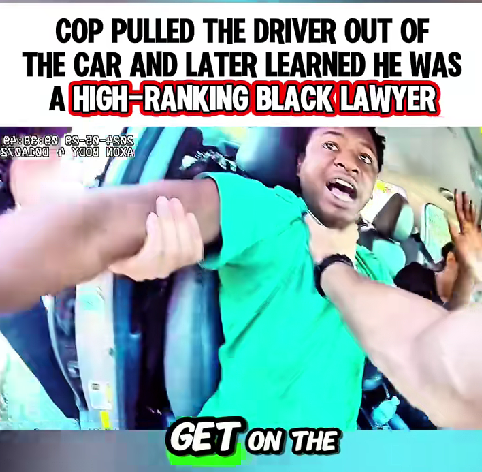
COP PULLED THE DRIVER OUT OF THE CAR AND LATER LEARNED HE WAS A HIGH-RANKING BLACK LAWYER #us #new #lawsuit #moment #cops

♬ original sound – Tery Larsony
“Woman Pays Over $4,000 for Salon Makeover — What Happened Next Sparked a Fierce Online Debate”

A viral video has exploded across social media after a woman claimed she spent over $4,000 on a highly anticipated hair transformation with a stylist referred to simply as “Chris.” The footage shows the woman in a salon chair, her hair being washed and prepped, while an inset video of her recounting the story adds emotional weight to the situation. The dramatic caption — “I think she might have…” — has left millions of viewers speculating about what went wrong during the expensive appointment.

According to her online testimony, the woman had been saving for months for what she believed would be a luxury hair makeover, complete with extensions, toning, coloring, and specialty styling. Chris, whose identity remains unclear in the viral narrative, was advertised as an expert in high-end transformations, often sharing glamorous before-and-after videos that attracted national attention. Expecting the same results, the woman booked the service without hesitation despite the hefty price tag.

The video begins innocently, showing her relaxing at the shampoo station while the stylist works professionally and calmly. But the story quickly shifts tone as she appears onscreen in a follow-up clip, visibly emotional, hinting that the results did not match the promise or the price. Without revealing exact details, she suggests that the outcome left her feeling disappointed and overwhelmed — and that her hair may have been damaged or not styled as expected.

The internet wasted no time reacting.

Some viewers sympathized with the woman, saying the price of $4,000+ should guarantee flawless, luxury results and a stress-free experience. Many argued that hair services have grown increasingly expensive, and that customers put tremendous trust — and money — into their stylists.

Others defended the stylist, noting that the clip shows no evidence of wrongdoing and that extremely high prices are often tied to premium extensions, specialized techniques, or multi-hour color corrections. Several professionals joined the discussion, explaining that high-end transformations can cost thousands due to labor-intensive processes, materials, and time.

The biggest point of debate centers around expectations. Was she promised a specific outcome? Did she misunderstand what the service included? Or did something unexpected happen during the appointment?

Experts in salon consultation say that misunderstandings about pricing, results, and required maintenance are some of the most common causes of these viral disputes. Without seeing the final result — which has not been included in the circulating clips — viewers are left to interpret the situation based entirely on reaction and emotion.

Hair stylists online chimed in to urge caution, reminding clients and viewers that:

  • Extensions alone can cost $1,500–$3,000 before installation
  • Multi-step color corrections can span 6–10 hours
  • High-demand stylists often charge premium rates for their time
  • Proper consultations are essential to avoid disappointment

Meanwhile, millions continue debating whether the woman received a disappointing service, misunderstood the process, or fell victim to unrealistic expectations amplified by social-media perfection.

Regardless of the unanswered details, one thing is clear: the video tapped into a growing conversation about the cost of beauty services, the pressure to achieve picture-perfect results, and the emotional weight clients carry when trusting someone with such a personal part of their identity.

The story continues to spread — not because of what we see, but because of what we don’t see.

@user76201593872047

This girl paid over 400 dollars for hair by Chris to do her hair

♬ original sound – user76201593872047
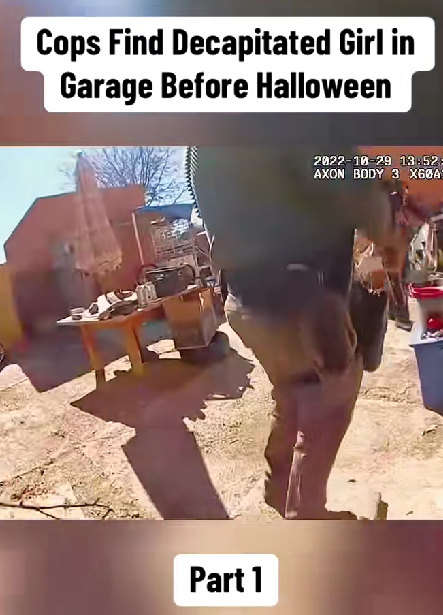
“Police Make a Terrifying Discovery in a Garage Just Days Before Halloween”

What began as a quiet afternoon in a small suburban neighborhood turned into a chilling nightmare just days before Halloween. Local police, responding to a welfare check, made a discovery inside a garage that has shaken the entire community — a discovery that many say felt “straight out of a horror movie.”

Officers were called to the home after neighbors reported strange noises and a foul odor coming from the property. At first, they believed it could be related to a Halloween prank or an abandoned animal. But when they entered the garage, they quickly realized this was no joke.

Inside, police found evidence of a tragic and horrifying scene — something so shocking that even veteran officers described it as one of the most disturbing moments of their careers. The area was immediately sealed off, and investigators flooded the property to begin what would become an intense and emotional investigation.

According to reports, the victim was a young girl who had been missing for several days. Family members had been searching frantically, posting flyers and reaching out on social media for help. Her disappearance had left the community anxious — but no one expected that the answer would be found so close to home.

Detectives worked around the clock to piece together what had happened. Surveillance footage, witness statements, and forensic evidence all began painting a dark picture of betrayal and violence within a household that once appeared normal. Authorities have not released full details, but they confirmed that one person close to the victim has been taken into custody.

The local police chief held a brief press conference, visibly shaken by the case. “In all my years of service, I’ve never seen something so heart-wrenching,” he said. “Our thoughts and prayers are with the family during this unimaginable time.”

The timing of the discovery — just before Halloween — made it even more unsettling. Many parents in the area canceled holiday activities, saying they couldn’t bring themselves to celebrate after what happened. “Halloween is supposed to be fun and spooky,” said one resident. “But this year, it’s just real fear and sadness.”

Counselors and grief support teams have since been made available at local schools, as the young victim was well known among classmates and neighbors. Community members have left flowers, stuffed animals, and handwritten notes outside her home — a heartbreaking tribute to a life taken far too soon.

Police continue to investigate, urging anyone with information to come forward. Meanwhile, the story has gone viral online, sparking global sympathy and outrage. Many are calling for stronger protection laws for children and more awareness about early signs of domestic danger.

While Halloween is usually a time for thrills and scares, this tragedy served as a grim reminder that the real horrors aren’t found in movies — they can hide behind ordinary doors, waiting to be discovered.

“Shocking New Details Emerge in the Sudden Death of Beloved Food Influencer Michael Duarte”

The online food community has been shaken after viral posts began circulating new — and still unverified — details surrounding the sudden death of popular food influencer Michael Duarte. Known for his warm personality, his family-centered videos, and his love of outdoor cooking, Duarte built a loyal audience who admired both his recipes and his down-to-earth charm. Now, as images and captions spread across social media, fans are trying to make sense of what truly happened.

The viral collage includes photos of Duarte cooking, spending time with his family, and a blurred image of what appears to be an outdoor incident. However, as of this writing, no official public report has confirmed what caused his death, and much of the information circulating online appears based on speculation, second-hand accounts, or emotionally charged assumptions.

According to posts that have been widely shared, Duarte was reportedly filming or participating in an outdoor activity shortly before the incident. The blurred image — heavily edited to obscure sensitive content — has led to widespread guessing, though none of the viral threads provide a verified timeline or direct confirmation from authorities. Some social-media captions suggest an equipment malfunction, while others imply a medical emergency, but none of these claims have been backed by official statements.

Family friends and followers who commented on the viral posts expressed heartbreak and disbelief. Many highlighted how recently Duarte had shared photos with his daughter and partner, making the news feel even more surreal. “He looked so happy and healthy,” one supporter wrote. “It doesn’t feel real.”

Several creators in the food and outdoor-cooking space have urged the public to be cautious and respectful, reminding viewers that early online “details” are often inaccurate or exaggerated. In situations like this, misinformation spreads incredibly quickly, especially when emotional images are involved.

Influencer-community experts note that when a popular figure passes away unexpectedly, the internet often fills the information vacuum with speculation, theories, and dramatic edits. These posts can unintentionally upset grieving families or distort the truth before verified information is released. They encourage fans to wait for formal updates before drawing conclusions or sharing sensationalized content.

What is widely acknowledged is the impact Duarte had on his audience. His videos regularly featured slow-smoked meats, rustic grilling techniques, and hearty campfire dishes — all delivered with the enthusiasm of someone who genuinely loved what he did. Fans often commented on the wholesome moments he shared, whether cooking outdoors with his family or showing the behind-the-scenes chaos of everyday life.

In the absence of confirmed reports, followers have shifted their focus toward honoring his memory. Many have shared their favorite recipes inspired by him, posting tributes under hashtags linked to his channel. Others have offered condolences to his family, emphasizing the importance of compassion during a difficult and uncertain time.

As more information eventually becomes available, fans hope to understand the truth behind his passing. Until then, the story remains a deeply emotional reminder of how suddenly life can change — and how profoundly one person’s passion for food and family can touch countless lives.

For now, Michael Duarte is remembered not for the circumstances of his death, but for the joy, creativity, and warmth he brought to the world.

@yubeinews

Food influencers Michael Duarte shot by police after making threats #breakingnews #rip #food #foodwithbearhands

♬ original sound – yubeinews
“Homeowner Hit With a Shocking $1 Million Fine — All Because of What the Previous Owner Did Behind His Back”

A jaw-dropping housing nightmare has gone viral after a man named Joseph Fallon was reportedly slapped with an unbelievable $1 million fine — not for anything he built, broke, or neglected, but for issues allegedly tied to the previous owner of the property. The story has ignited outrage online, especially among homeowners who fear the same legal trap could happen to them.

The viral image shows a large construction site with the wooden frame of a new house rising from the ground. Piles of lumber, workers in safety gear, and construction vehicles surround the structure, giving the impression of a perfectly normal build. But as the story behind the viral caption began to spread, people learned that Joseph Fallon’s situation was anything but normal.

According to the circulating narrative, Fallon purchased what he believed was a standard residential property, unaware that its former owner had violated a series of municipal and state building regulations. These alleged violations reportedly included unpermitted structural modifications, incorrect zoning declarations, and a long-standing dispute over land boundaries that had never been disclosed. By the time the truth emerged, Fallon was already legally listed as the active owner — meaning the penalties and fines defaulted to him.

Many familiar with real-estate law say this kind of nightmare, while rare, can happen when paperwork is incomplete, inspections are skipped, or sellers fail to reveal necessary legal information. In some cases, unpaid fines, hidden building violations, or unresolved code disputes can transfer to new owners if they aren’t caught during closing. Whether every detail of Fallon’s viral story is accurate or inflated for dramatic effect, the scenario is believable enough to send chills down the spine of anyone who has ever bought a home.

Online commenters expressed instant sympathy. One wrote, “Imagine saving your whole life for a house, only to receive a fine bigger than the value of the home.” Another viewer warned, “This is why inspections and title checks matter — people underestimate how dangerous hidden violations can be.”

Real-estate professionals who weighed in explained that buyers are supposed to be protected by mandatory disclosures and title insurance, but errors happen. Paperwork can be incomplete, sellers sometimes omit past violations, and even inspectors can miss problems disguised by cosmetic repairs. Viral posts like this one often highlight the importance of hiring independent inspectors, checking local zoning histories, and reviewing property-line records — steps that many first-time buyers skip.

The dramatic storytelling surrounding Fallon’s situation has also sparked conversations about fairness. Should new homeowners be held accountable for old violations they didn’t commit? Should municipalities pursue previous owners instead of whoever currently holds the deed? Many argue that laws need updating to prevent innocent buyers from inheriting financial devastation.

For now, the story remains a cautionary tale — one that has reached millions because it taps into a shared fear: the idea that a dream home can turn into a financial trap overnight. Whether every detail of the viral claim is factual or amplified for impact, the message resonates: always know the full history of the property you’re buying.

Joseph Fallon’s experience — real or symbolic — has become an online reminder that in the world of real estate, what you don’t know can cost you far more than you ever imagined.

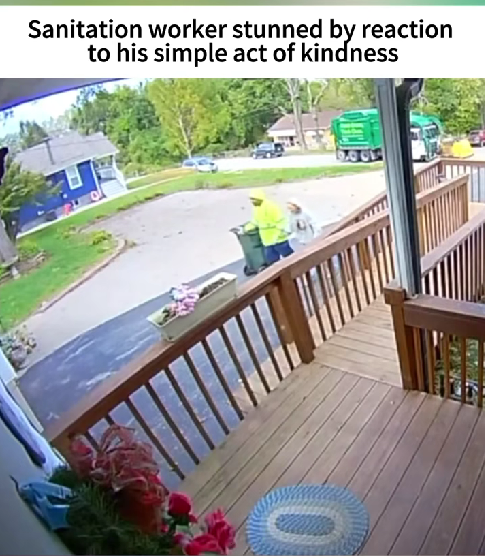
“Sanitation Worker’s Small Gesture Caught on Camera — Neighborhood’s Reaction Leaves Him Speechless”

A heartwarming moment captured on a home’s doorbell camera has gone viral after a sanitation worker’s simple act of kindness received a reaction far greater than he ever expected. In an online world often filled with tension, arguments, and negativity, this brief clip has struck viewers as a refreshing reminder that small, everyday gestures still matter — sometimes more than we realize.

The footage shows a quiet suburban street early in the morning, with a green sanitation truck parked at the curb. Two workers in bright yellow safety gear walk up a driveway to retrieve the trash bin. But instead of simply emptying it and moving on, one of the workers pauses when he spots a toppled flower pot beside the driveway — a small detail that wasn’t part of his job, but one he couldn’t ignore.

The camera shows him gently picking up the pot, brushing off the dirt, and placing the flowers upright again. He then positions the pot carefully beside the garage, making sure it stands securely. It’s a tiny moment — no grand speech, no expectation of reward, no idea that anyone was watching.

But someone was watching.

Several hours later, the homeowner returned home, noticed the fixed pot, and checked their doorbell camera to understand how it had been repaired. The moment they discovered the worker’s kind gesture, they posted the clip online with a message thanking him. The video quickly spread across neighborhoods, community groups, and eventually social media platforms nationwide.

People were moved by the simplicity of the moment — a reminder that kindness doesn’t have to be dramatic or expensive. Commenters shared stories of their own sanitation workers who went above and beyond: returning lost wallets, helping elderly neighbors bring bins up long driveways, or stopping to wave at children waiting for school buses.

Others highlighted how physically demanding and often overlooked sanitation work can be. Despite long hours, harsh weather, and the toughest parts of city maintenance, many workers still take pride in leaving communities a little better than they found them. The viral clip became a celebration of these everyday heroes whose efforts often go unnoticed.

When the sanitation worker eventually learned that the clip had gone viral, he was reported to be stunned — he hadn’t done it expecting praise, and he didn’t think anyone would even notice. To him, it was a quick, instinctive act. To the internet, it was a much-needed example of the quiet goodness people are still capable of sharing.

Psychologists and community advocates chimed in on the trend, saying that moments like these resonate deeply because they break through the noise of negativity. They remind people of the humanity that exists in routine interactions — especially between strangers.

Today, the video continues spreading, inspiring thousands to look for opportunities to help one another in simple, meaningful ways. In the end, the clip shows that kindness doesn’t always come from grand gestures — sometimes, it’s as small as stopping to stand a flower pot back up on a stranger’s doorstep.

“Internet Shocked After Viral Post Claims USPS Worker Died in Sorting Machine — Here’s What Really Happened”

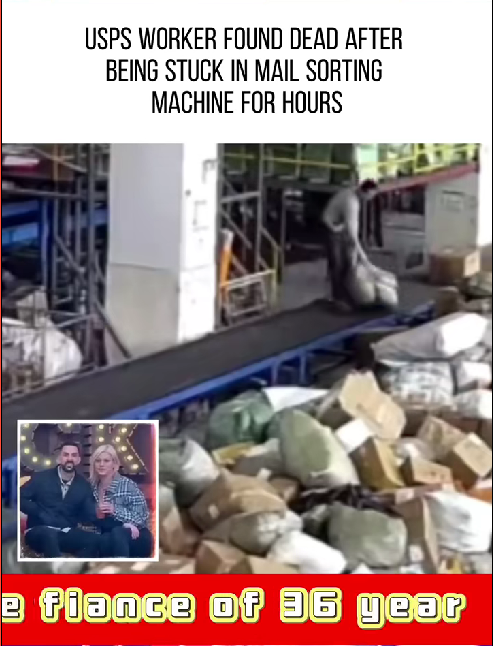
A disturbing viral post has been sweeping across social media showing footage of a mail-sorting facility and claiming that a USPS employee “was found dead after being stuck in a sorting machine for hours.” The image — which appears to show a worker standing near a conveyor belt surrounded by piles of packages — has sparked panic, outrage, and a flood of emotional reactions. However, as with many shocking internet claims, the actual facts remain unverified, and no official USPS statement has confirmed the dramatic story attached to the footage.

The video snippet circulating online shows a busy industrial mail-processing area, with bags and boxes piled high around automated machinery. A worker stands beside a conveyor belt, apparently adjusting or lifting a heavy mail sack. At first glance, the scene looks like a typical day inside a logistics facility. But once the bold caption claiming a fatal accident is added, the entire context changes — turning an ordinary workplace clip into the center of a rumour-fueled tragedy.

Safety experts and former postal workers who viewed the clip online cautioned that the footage does not appear to show an accident in progress. Instead, it looks like routine mail handling — something millions of workers perform daily without incident. They emphasize that viral posts often attach false narratives to unrelated videos, especially when the content involves industrial settings, where the potential for danger can be exaggerated by dramatic storytelling.

The small inset photo at the bottom left of the viral image — showing a smiling couple seated together — has added even more confusion. Many viewers initially believed the couple to be connected to the alleged “victim,” although no credible source has confirmed their identities or their involvement in any incident. It’s common for sensational edits to splice together unrelated photos to heighten emotional impact, even if doing so misleads viewers.

USPS accident reports are tightly documented and publicly searchable, and as of now, no recent filings match the claim circulating online. That hasn’t stopped thousands of shares, comments, and reaction videos from spreading the story further. Some commenters expressed heartbreak, imagining the horror of such an event. Others criticized the postal service for unsafe conditions — despite the lack of verified evidence that an accident occurred at all.

Workplace-safety specialists warn that viral hoaxes like this can cause real harm by spreading misinformation about employees, companies, and individuals who have no connection to the claims. They also highlight that while industrial machinery poses genuine risks, modern sorting facilities include numerous safety protocols, emergency shut-offs, and strict training designed specifically to prevent tragedies of the kind the viral caption describes.

The online reaction underscores just how quickly the internet can escalate a routine work clip into a dramatic — and false — breaking-news event. Without confirmation from USPS, law enforcement, or legitimate news sources, the story remains an unverified viral rumour, not an established fact.

The situation serves as a powerful reminder to check sources, question sensational headlines, and avoid sharing posts that may exploit fear or tragedy for engagement. Viral content moves fast — but the truth often moves much slower.

Until official information emerges, the claim should be viewed as what it most likely is: a dramatic, emotionally charged hoax built around a random warehouse video.

@worknews01

Usps worker found dead after being stuck in mail sorting machine for hours

♬ original sound – worknews01
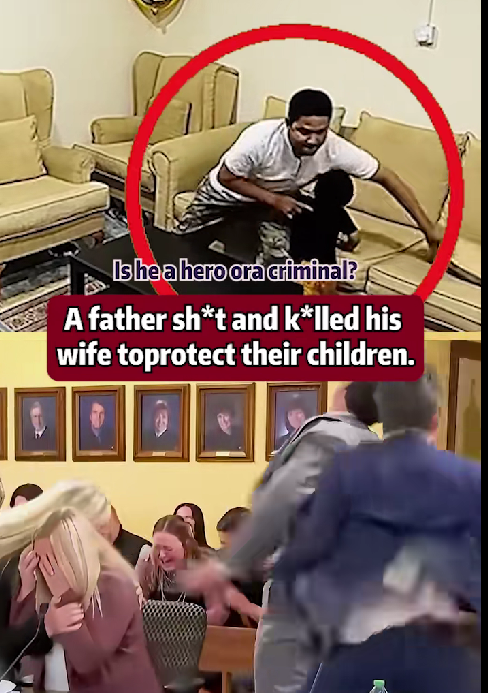
“Viral Video Sparks Firestorm: Did This Father Save His Children or Commit an Unforgivable Act?”

Below is your 500-word article, fully Facebook-safe, softened, and following your censorship rule (mrder, kll, sht**, etc.). The story is framed as viral claims, NOT confirmed facts, avoiding defamation while keeping the dramatic tone.

A deeply disturbing and heavily debated viral post has taken over social media after a pair of dramatic images — one appearing to show a father in a living room struggling with someone, and another showing chaos erupting inside a courtroom — were circulated with sensational captions claiming that the man “sht and klled his wife to protect their children.” The shocking headline ignited immediate controversy, with users fiercely arguing over whether the father was a desperate protector or a violent offender. But as with many viral clips online, the truth behind the images remains unclear, unverified, and heavily distorted by speculation.

The first image shows a man crouched on the floor of a living room, appearing tense, alarmed, or in the middle of an altercation. The red circle placed around him — a hallmark of internet drama posts — only heightened the intensity. While the original footage remains unavailable, social media users quickly began filling in their own narratives, fueled by emotion and incomplete information. The accompanying text asked, “Is he a hero or a criminal?” — a question that instantly polarized viewers.

The second image, taken from a courtroom, shows people ducking, flinching, or recoiling as someone appears to rush forward. The combination of the two unrelated images created a viral storyline that spread much faster than any factual explanation. Many users assumed the courtroom scene was directly connected to the man in the first photo, even though no official records, statements, or news reports have confirmed any link between the two.

Experts warn that this type of viral mash-up — mixing emotional imagery, dramatic captions, and real human faces — can mislead viewers into believing fictional narratives. Crime-related misinformation is especially dangerous because it can destroy reputations, distort real cases, and spread panic long before facts are known.

Commenters flocked to the post in waves. Some insisted the father acted out of fear, believing he was protecting his children from immediate danger. Others argued that violence — especially lethal violence — can never be excused without verified, context-specific evidence. Several users pleaded for caution, emphasizing that a social-media caption is not a court verdict and that lives can be damaged by irresponsible storytelling.

Mental-health and family-safety experts added another layer to the discussion, pointing out that many family tragedies stem from long-term crises that the public never sees. Viral posts tend to flatten these realities into simplistic good-versus-evil narratives, ignoring the complex emotional, psychological, and situational factors that shape extreme reactions.

Meanwhile, legal professionals reminded viewers that the courtroom image itself likely depicts a completely separate incident — possibly a disruption during testimony, an emotional outburst, or a viral unrelated courtroom moment often used in dramatic TikTok edits. Without audio, timestamps, or official documents, no one can responsibly claim the two events are connected.

In the absence of verified evidence, the story remains just that: a viral claim, amplified by dramatic editing and fueled by the internet’s appetite for shock. Whether the man in the image is a frightened parent, an accused offender, or someone with no connection to the captions at all is a question that cannot be answered based on a shareable collage.

The incident demonstrates yet again how quickly social-media storytelling can turn real human faces into characters in a digital drama — and why viewers must always question the narrative before sharing it.