“Courtroom Shock: Viral Video Shows Defendant Collapsing as Emotional Trial Footage Spreads Online”

A dramatic courtroom clip circulating on social media has gained massive attention after viewers claimed that a defendant “fainted in sorrow” during a high-profile trial. The case, which online captions describe as being connected to a violent incident on a Charlotte train, has not been officially confirmed by court records in the viral posts — but the emotional footage has nonetheless become a major talking point across multiple platforms.

The image montage shows a stern-faced judge presiding over the courtroom as the defendant appears visibly overwhelmed. In another frame, the man looks upward, eyes glistening, as captions added by content creators describe him as devastated by the unfolding proceedings. A separate inset photo shows what appears to be surveillance footage from inside a train, though the connection between the images has not been verified by authorities.

As is common with viral courtroom clips, the narrative online has taken on a life of its own. Tens of thousands of users have reshared the video, many expressing shock, sympathy, or curiosity about what caused the man’s collapse. Others questioned whether the fainting incident actually occurred inside the courtroom or whether the moment was clipped together from separate footage for dramatic effect.

Legal experts remind viewers that emotional reactions in courtrooms are not uncommon, especially for individuals facing severe consequences, regardless of guilt or innocence. Courtrooms can create intense psychological pressure: the presence of victims’ families, attorneys presenting evidence, and the weight of public scrutiny can all heighten emotional responses. People faint, break down, or freeze — and such moments are often amplified when reposted online with dramatic captions.

The viral clip appears to use strongly worded text that references an “execution” sentence, a phrase that has amplified tension and confusion. However, no official documentation or credible news sources included in the social media posts confirm that any such sentence was delivered in this specific case. Many commenters have urged caution, reminding viewers not to take sensational captions at face value without verified reporting.

The widespread reaction to the video reveals how quickly courtroom moments — real or edited — can shape public perception. Some viewers expressed sympathy for the defendant, interpreting the fainting moment as a sign of remorse or emotional collapse. Others argued that dramatic reactions from defendants can be complex, sometimes influenced by fear, stress, or even physical exhaustion rather than guilt.

Complicating public understanding further is the inclusion of surveillance footage in the viral collage, which may or may not be connected to the defendant shown in the courtroom. Without full context, internet speculation risks creating false narratives that can distort real criminal cases or unfairly portray individuals involved.

This is why legal professionals warn against forming opinions based solely on social media edits. Court cases involve extensive evidence, testimony, and legal standards that cannot be captured in a 10-second clip or a dramatic caption. Viral posts, especially those involving crime, often mix unrelated images or exaggerate details for engagement.

For now, the true context behind the man’s emotional moment remains unclear. Until official records or reputable news outlets provide verified details about the trial, the viral video should be viewed as what it is: a dramatic but incomplete fragment that has captured the internet’s attention — not a definitive representation of the full case.
“Hospital ER Flooded After Teens Drink Contaminated Apple Juice — Investigation Sparks Nationwide Concern”

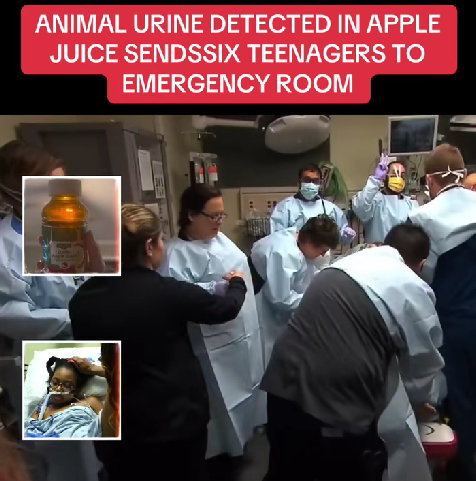
A dramatic image from an emergency room, paired with alarming captions on social media, has gone viral after claims surfaced that a group of teenagers became seriously ill from drinking apple juice allegedly contaminated with animal urine. While the online posts use shocking language, authorities have not confirmed the exact cause of the teens’ symptoms, and the circulating claims remain unverified. Still, the situation has generated intense public concern and widespread discussion.

The photo shows a crowded hospital trauma bay filled with doctors, nurses, and paramedics working rapidly around several patients. Staff members wearing masks, gowns, and protective gear move with urgency, creating a scene that looks chaotic and intense. The image, originally meant to highlight the fast-paced demand of emergency medicine, has since been repurposed by social media accounts making bold claims about a contaminated beverage.

According to viral captions, six teenagers were rushed to the hospital after consuming apple juice from a bottled brand sold locally. Some posts even claim the drink was found to contain animal urine — a statement that has not been supported by official lab reports. In fact, contamination investigations typically take days to weeks, requiring multiple tests, chain-of-custody documentation, and involvement from public-health agencies. None of that has been confirmed publicly in this case.

The scenario being discussed online, however, is not impossible. Experts say that beverage contamination — whether accidental or due to poor storage conditions — can cause symptoms ranging from nausea and vomiting to more severe complications, especially in children and adolescents. Food-safety specialists emphasize that even seemingly harmless drinks can become unsafe if handled improperly, exposed to unsanitary environments, or left unsealed. But they also stress that the most extreme explanations should be avoided until laboratory results are available.

Medical emergency rooms nationwide are trained to respond quickly to clusters of sudden illness, especially when multiple patients arrive with similar symptoms. In such cases, hospitals typically contact poison-control centers, local health officials, and sometimes federal agencies to determine whether a harmful substance is involved. While social media posts have speculated heavily about contamination, public-health authorities have not yet released findings that confirm any specific toxin or foreign substance.

What’s clear from the viral clip is the high level of concern displayed by medical professionals. Teens lying on stretchers, IV lines being prepared, and staff coordinating urgently reflect a situation taken very seriously. Viewers online expressed sympathy for the families, as well as anxiety about the safety of everyday grocery products. Many commenters admitted they had never considered the possibility of contaminants in sealed beverages before seeing the post.

As with many viral stories, the emotional impact of the imagery — combined with dramatic captions — has fueled speculation. Some users questioned the accuracy of the contamination claim, urging people not to panic without official confirmation. Others said even the possibility highlights why food inspections and proper storage protocols are critical.

Until authorities release verified information about what caused the teens’ illnesses, the story remains largely driven by social-media interpretation rather than confirmed evidence. Still, the incident underscores how quickly health scares can spread online — and how important it is to rely on official sources when assessing potential risks to public safety.

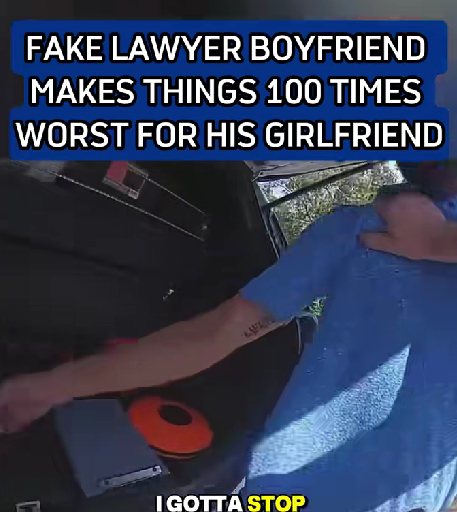
“Man Pretends to Be a Lawyer During Traffic Stop — Ends Up Making Everything Way Worse”

A viral clip has taken over social media showing a tense encounter during what appears to be a routine police stop — made far more dramatic by a boyfriend who attempts to act as his girlfriend’s “legal advisor.” The caption claims he was a “fake lawyer,” but the video itself doesn’t confirm whether he actually claimed to be one or whether he simply tried to sound authoritative. What is clear is that his involvement quickly escalated a situation that could have stayed calm.

The footage begins with body-camera video capturing a man in a blue shirt rummaging through the back of a vehicle while officers stand nearby. The trunk is open, showing scattered items — bags, tools, and everyday belongings. The man gestures animatedly as he speaks, his tone confident but flustered, leading viewers to believe he’s trying to take control of the situation. Meanwhile, officers attempt to keep the conversation structured, asking questions and trying to clarify what’s happening.

Online viewers immediately seized on the clip, fascinated by how confidently the man tries to speak over the officers. He uses phrases that sound like legal terminology, telling them what they supposedly can or cannot ask, but the officers respond calmly, gently trying to redirect him to the facts of the stop. The girlfriend, who is partially visible in other clips circulating online, appears increasingly stressed as her partner continues speaking on her behalf.

Experts on police encounters note that interruptions or attempts to “argue law” during a stop rarely go well, even when someone genuinely believes they are helping. Officers are trained to follow procedure, and attempts to derail that process often create more confusion, not clarity. The viral clip reflects this dynamic perfectly: the more the man tries to control the moment, the more complicated and tense the situation becomes.

Viewers in the comments reacted with a mix of amusement, frustration, and sympathy. Many pointed out that trying to imitate legal expertise — even informally — can overwhelm officers and put pressure on everyone involved. Some joked that the man had likely seen too many courtroom TV shows, while others expressed concern for the girlfriend, who seemed stuck between wanting support and wanting the situation to calm down.

Still, the video doesn’t reveal the full story. It doesn’t show what led to the stop, whether the girlfriend actually needed help, or whether any laws were broken. The clip is simply a snapshot of a stressful moment, and online captions labeling him as a “fake lawyer” may be exaggerated for entertainment. Without hearing the full audio or understanding the preceding events, it’s impossible to know whether the man truly misrepresented himself or was just attempting — unsuccessfully — to advocate for his partner.

This kind of viral content highlights how quickly misunderstandings can snowball. A situation that starts as routine can transform into a confusing exchange when someone feels the need to take charge. Officers, faced with overlapping voices and conflicting explanations, often must slow the moment down to regain clarity.

As of now, no official reports confirm the outcome of the stop or whether any citations were issued. What’s certain is that the video became a cautionary tale online: sometimes the best way to support someone during a stressful encounter is to stay calm, stay quiet, and let the process unfold — instead of unintentionally making things harder.

“Kitchen Chaos Caught on Camera: Mom Shares the Aftermath of a Scary Moment With Her Baby”

A viral home-video clip has sparked a flood of emotional reactions online after a mother shared a follow-up moment from what she described as a frightening day involving her infant daughter and her mother-in-law. The video, labeled as “part 2,” shows a woman moving quickly through a kitchen while holding a baby, offering a glimpse into the stress and tension that can follow an unexpected scare involving a child. While the caption claims that the baby had been accidentally dropped earlier, the footage itself does not show any fall — only the aftermath as the family tries to continue with their day.

The scene takes place in a modest kitchen where a pot simmers on the stove, utensils rest on the burners, and everyday cooking activity continues in the background. The woman in the frame, dressed in colorful floral pants and a green top, cradles the baby while moving around the small space. The urgency in her steps suggests she is still shaken, trying to manage household tasks while caring for an infant who recently experienced a stressful moment.

Online viewers reacted immediately, many expressing relief that the baby appeared to be safe in the video, while others empathized with the mother’s anxiety. Accidents involving infants, even minor ones, can leave parents shaken for days. Commenters shared their own stories of similar scares — from slipping during bath time to unexpected tumbles during diaper changes — reminding others that even loving caregivers can experience moments they deeply regret.

Parenting experts often emphasize that babies are more resilient than many people realize. However, they also acknowledge the emotional weight that caregivers carry after a scare. Feelings of guilt, fear, or stress can linger long after the child is physically unharmed. The video captures this emotional aftermath more than anything else — a family trying to continue normal life while still processing what happened.

The caption’s mention of the mother-in-law intensified discussion in the comments, with many urging compassion rather than blame. Unintentional accidents happen across households every day, and online viewers stressed that turning the moment into anger or family conflict could make the situation harder for everyone involved. Others highlighted that the most important part is ensuring the baby is checked, monitored, and comforted afterward.

What stands out most in the clip is the sense of real, everyday pressure: cooking, caregiving, managing emotions, and trying to keep things moving. Many viewers commented that the video felt painfully relatable — a reminder that parenting doesn’t pause just because something frightening occurs. The kitchen’s busy layout, the woman’s hurried steps, and the baby’s presence against her shoulder all combine to show a household quietly recovering.

Despite the dramatic framing used in social captions, the video itself portrays resilience more than disaster. The baby is being held safely, the caregiver remains attentive, and the family appears to be navigating the situation with care. As with many viral clips, the image captures only a single moment, leaving viewers without the full story — whether medical attention was sought, how the baby is doing now, or how the family resolved the emotional tension afterward.

In the end, the viral moment serves as a reminder of how quickly a normal day can turn into a stressful one — and how strong families often are when it comes to caring for the little ones they love.

@enigma.diario7

parte 2 the day my mother-in-law dropped my daughter on the floor and something horrible happened #motherinlaw #hospital

♬ som original – htts_hannax
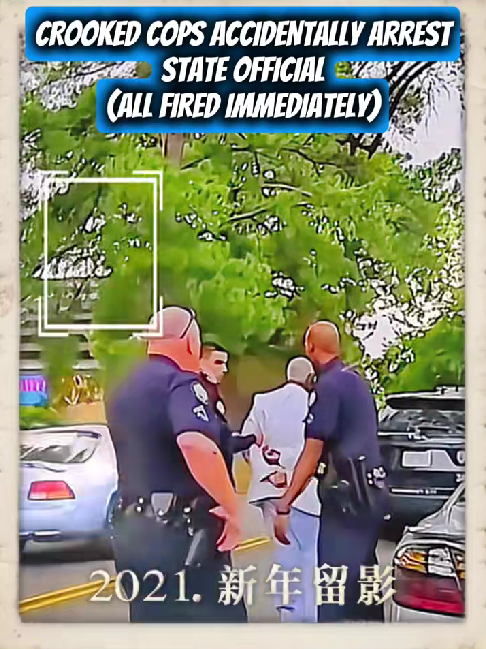
“They Arrested the WRONG Guy!” — Rogue Cops Accidentally Take Down State Official, Instantly Regret It!

In one of the most jaw-dropping law enforcement blunders of the year, a group of police officers has gone viral after mistakenly arresting a state official during what was supposed to be a routine stop. What started as a normal traffic encounter quickly spiraled into chaos, ultimately costing several officers their jobs and igniting a storm of outrage online.

According to reports, the officers—accused by many of being “crooked” or “power-hungry”—pulled over a vehicle they believed was linked to an ongoing investigation. However, within minutes, their supposed suspect turned out to be a high-ranking state official, someone with enough authority to turn their world upside down.

Video footage of the arrest spread like wildfire across social media platforms. In the clip, you can see officers aggressively approaching the car, demanding identification, and handcuffing the official despite repeated attempts to explain the misunderstanding. Witnesses nearby described the situation as “unreal” and “straight out of a movie.”

By the time the officers realized who they were dealing with, the damage was already done. The state official, humiliated and furious, immediately contacted higher authorities. Within hours, the incident had reached the desks of top government figures, and the fallout was swift and merciless. Every officer involved was fired on the spot, pending further investigation into how such a catastrophic mistake could have happened.

The department released a short statement later that day, acknowledging “serious procedural errors” and vowing to “rebuild public trust.” But for many citizens, the apology came too late. The video had already amassed millions of views, sparking debates about accountability, abuse of power, and the growing distrust between law enforcement and the public.

Online commenters have been relentless, using hashtags like #JusticeForTheOfficial and #CopsGoneWild to spread the story. Some viewers claim the footage reveals more than just a mistake—it exposes an alarming pattern of arrogance and carelessness within certain departments. Others believe it was an honest misunderstanding blown out of proportion.

Whatever the truth, the public’s reaction has been explosive. “Imagine being handcuffed by your own employees,” one user wrote. “These officers just ended their careers in 30 seconds.”

The fired officers are reportedly under internal review, and legal experts suggest lawsuits are almost inevitable. Meanwhile, the state official at the center of the chaos has yet to release a full public statement—but insiders say they are “considering all options.”

As this story continues to unfold, one thing is clear: this shocking incident has left a permanent mark on both the officers involved and the reputation of the department. In the age of viral accountability, one wrong move can destroy a career overnight—and this time, the cameras were rolling from start to finish.

“Officers Return for Round Two — Injured Man Confronted as Tension Escalates on Camera”

A newly surfaced body-camera clip labeled “Part 02” has drawn major attention online as viewers try to piece together the events leading up to a tense confrontation between officers and a visibly injured man outside an apartment unit. The video, which shows the man with a bandaged arm stepping out of his doorway, has fueled a storm of speculation — but without full context or official statements, many of the claims attached to the clip remain unverified.

The recording begins with officers approaching a yellow apartment building, its patio filled with everyday items like outdoor chairs, storage bins, and potted plants. The sliding door stands open as the man emerges wearing a white shirt and purple shorts, holding what appears to be a drink while using his uninjured hand to steady himself. The bandage on his arm immediately draws attention, prompting viewers to wonder what happened before the footage began.

Social-media captions surrounding the video often frame the encounter dramatically, hinting at prior conflict or suggesting the man may have been involved in a dispute. But the clip itself does not show any wrongdoing, nor does it reveal the reason for the officers’ return. Instead, it captures the early stages of a conversation, with the officers appearing alert but calm while the man looks confused, defensive, or simply tired.

Experts familiar with law-enforcement interactions emphasize that follow-up visits can occur for many reasons — welfare checks, clarification of earlier statements, ongoing investigations, or even misunderstandings that require officers to confirm additional details. Without audio of the initial call or footage of “Part 01,” viewers are left interpreting body language rather than facts.

The man’s injured arm became a primary focus in comments, with people speculating whether it resulted from an accident, a medical issue, or an earlier confrontation. However, nothing in the clip confirms how the injury occurred. Some viewers expressed concern for his well-being, while others questioned whether the injury played a role in why officers returned to his home.

The setting itself adds to the intensity. The outdoor area is cluttered with bright yellow storage crates, a bike, and a backpack, all of which sparked speculation among online viewers unfamiliar with the situation. Everyday household items can easily be misinterpreted in high-stress viral clips, especially when people try to link them to a dramatic narrative.

Despite the video’s dramatic framing, the officers’ posture suggests a routine interaction rather than an aggressive confrontation. Both seem focused and professional, giving the impression that they are there to clarify information rather than escalate the situation. The man’s expression, meanwhile, shifts between surprise and irritation — a reaction many people might have if officers showed up unexpectedly at their door.

The clip concludes without revealing the outcome, leaving viewers with more questions than answers. Did the officers simply check on the man? Were they following up on a previous call? Was anyone in danger, or was the visit procedural?

As of now, there is no official information confirming the reason for the officers’ return or the final outcome of the interaction. Until those details surface, the clip should be viewed as one part of a larger, unseen story — a reminder that viral videos often provide only a tiny, incomplete window into real-world events.

“Police Rush to Rural Home After Disturbing Call — What Officers Find Sparks Online Firestorm”

A tense body-camera clip from a rural property has gone viral after being posted with a dramatic caption suggesting that a mother was “trying to get away with hurting her children.” While the video has sparked intense debate and emotional reactions online, it’s important to emphasize that the footage does not confirm the accusations claimed in the captions. Still, the atmosphere captured in the clip has fueled a massive public conversation about family welfare calls, police procedure, and the dangers of jumping to conclusions based on incomplete information.

The video opens on a grassy yard leading up to a small wooden porch. A pickup truck is parked in front of the home, and two individuals — appearing to be teens or older children — stand near the steps, watching as officers walk toward them. The body-camera perspective captures the uncertainty of the moment: the officers approach calmly but with purpose, responding to what seems to have been a welfare check or a similar type of call.

Social media captions claim severe wrongdoing, but the footage itself shows only the arrival phase of the encounter. There is no visible conflict, no evidence of harm, and no confirmation of the allegations presented by viral posts. Instead, what viewers see is a family appearing confused, nervous, or overwhelmed as officers attempt to make contact and begin asking questions.

Many viewers online were quick to react, with some expressing concern for the children, while others criticized the dramatic and potentially misleading framing used by content creators. The clip has revived discussions about how quickly unverified accusations can spread on social platforms — often overshadowing the truth or painting people in a harsh light without factual backing.

Family welfare calls are among the most sensitive situations officers respond to. Experts note that even when no wrongdoing has occurred, these moments can feel frightening or invasive for families. Officers typically perform visual checks, speak to household members, and gather information before making any decisions. The viral video, however, only shows a fraction of that process. Missing are the 911 call details, the follow-up conversations, the officers’ full report, and any statements the family may have provided.

Some commenters have pointed out that the rural setting and modest home may lead viewers to make assumptions based purely on appearance — something child-safety advocates warn against. Not every welfare call involves abuse, and not every uncomfortable moment indicates danger. Others argued that the presence of officers is enough to justify concern, while yet another group urged everyone to wait for official details rather than relying on sensational captions.

The video also raises questions about online ethics. When creators attach extreme allegations to real footage without evidence, the individuals involved — including children — can face long-lasting emotional and reputational harm. Many viewers encouraged content creators to avoid jumping to conclusions and to phrase narratives more responsibly, especially when minors are visible.

As of now, no official public records have confirmed whether any crimes were involved or whether the officers’ visit resulted in further action. Until more information emerges, the clip should be viewed as what it is: a moment frozen in time during a welfare call, not definitive proof of wrongdoing. The viral reaction serves as a reminder of how powerful — and potentially damaging — online storytelling can be when it outruns verified facts.

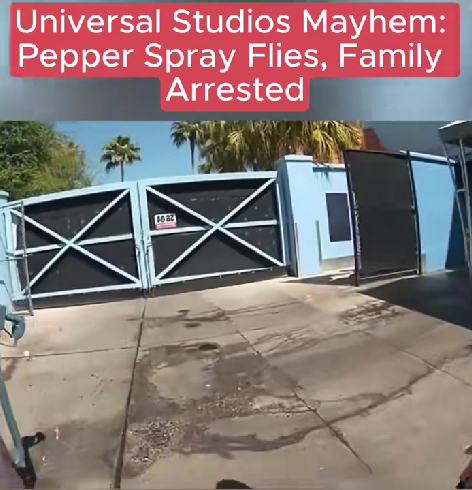
“Mass Chaos at Universal Studios: Pepper Spray, Shouting, and a Family Taken Into Custody”

A viral body-camera clip from Universal Studios has sparked an avalanche of reactions online after the video captured a chaotic confrontation involving officers, pepper spray, and a family that was ultimately taken into custody. Although the video circulating on social platforms shows only fragments of the encounter, it has ignited widespread debate about crowd control, theme-park security, and how quickly vacation outings can spiral into stressful situations.

The footage begins with officers entering a service gate area behind Universal Studios, the sun blazing overhead and palm trees lining the walkway. The ground appears wet, possibly from recent cleaning or earlier activity, adding to the tense atmosphere as the officers approach the restricted back-lot section. The viral caption describes the scene as “mayhem,” and many viewers agree it looks like a moment already in motion before the camera began recording.

While the clip itself does not show the initial conflict, reports circulating online claim that an argument broke out between a family and park employees, escalating into shouting, physical contact, and eventually the use of pepper spray. However, these details come from unverified social media retellings, not official statements. What is captured on video is the fast, urgent movement of officers as they navigate the gated area, suggesting they were responding to a call requiring immediate attention.

Pepper spray incidents in crowded locations can cause confusion and panic even for bystanders, and viral comments reflect how quickly viewers assumed the situation must have escalated. Some believe that emotions ran high due to long lines, heat, or misunderstandings about park rules — common friction points in high-traffic theme parks. Others speculate that the family may have reacted defensively when approached by staff or security. Yet without complete footage, these remain only theories shaped by snippets of video and dramatic captions.

Security experts note that theme parks, while designed for fun and relaxation, are complex environments requiring strict protocols. When confrontations flare, officers must act quickly to prevent harm to guests or employees. In many cases, the use of pepper spray is a last-resort option meant to temporarily reduce aggressive behavior and restore safety. The clip does not show the exact moment the spray was deployed, but online posts suggest this occurred during the altercation before officers arrived at the gated area shown in the footage.

The online reaction has been intense. Some viewers expressed sympathy for the family, questioning whether the response was too forceful. Others argued that ignoring staff instructions — especially in a major theme park — can lead to quick escalation. Several commenters also pointed out the challenges officers face when dealing with emotionally charged groups in public settings.

As with many viral clips, the missing context fuels speculation. There is no official confirmation yet regarding the cause of the conflict, whether the family faced charges, or how Universal Studios staff resolved the aftermath. Theme parks typically keep detailed incident reports, but these are rarely made public unless part of a formal investigation.

What the video does highlight is how quickly a day meant for joy and excitement can transform into a chaotic situation once tempers flare. The viral moment serves as a reminder of the importance of staying calm in crowded public places — and of how incomplete footage can shape dramatic narratives long before full facts emerge.

“Mom Records Simple Kitchen Video — Viewers Shocked by What Happens Next”

A seemingly ordinary kitchen video has taken social media by surprise, capturing the attention of thousands who didn’t expect anything remarkable to come from such a simple moment. The clip shows a woman in a red shirt decorated with white hearts preparing food on a baking tray, and while the scene appears calm and familiar at first glance, viewers quickly turned it into one of the most talked-about posts of the week.

In the video, the woman places small, folded pieces of dough on a sheet-lined tray, carefully spacing them out while focusing on the task. Her kitchen, filled with everyday items like utensils, small appliances, and a window allowing soft daylight inside, creates a cozy and relatable backdrop. It’s the kind of moment many people experience daily — cooking, preparing snacks, or simply enjoying a quiet morning routine.

But as the clip spread across platforms, audiences began reacting intensely, not because of anything outrageous, but precisely because of how real and grounded the moment feels. In an online world dominated by dramatic confrontations, fast-paced edits, and exaggerated reactions, this video stood out as something refreshingly genuine. Commenters described it as comforting, relatable, and even nostalgic, reminding them of home-cooked meals and family kitchens.

Others connected with the woman’s expression — calm, slightly concentrated, almost meditative. Many noted how cooking can act as a grounding ritual, offering peace and routine during hectic days. The simplicity of the scene sparked conversations about slowing down, unplugging, and appreciating smaller daily rituals that people often overlook.

The food itself also became a topic of lively debate. Viewers speculated about what she was making: some guessed they were homemade pizza rolls, others thought they were pastry pockets filled with fruit or cheese. Recipes and variations began circulating, with users sharing their own snack ideas inspired by the video. For many, the clip triggered cravings and memories of childhood snacks pulled out of the oven on a lazy weekend afternoon.

Though the video contains no dramatic twists or shocking reveals, its quiet relatability is exactly what made it go viral. In comment sections, people expressed how rare it feels to see unpolished, everyday life moments online — no filters, no theatrics, just a person preparing food in her kitchen. The natural lighting, the lived-in environment, and the casual, unfussy pace resonated deeply.

This wave of positive engagement has sparked broader conversations about authenticity in social media content. Many users say they’re growing tired of overstaged, high-energy videos and appreciate the return of more genuine, relatable clips. Content creators and influencers have even commented that this type of “soft, simple realism” could mark a shift in what online audiences crave.

Ultimately, the clip is a reminder that not every viral moment needs to be sensational. Sometimes, the most unexpected content to capture the world’s attention is the kind that reflects real life — honest, unfiltered, and quietly meaningful. By sharing a peaceful kitchen moment, the woman unintentionally created a small corner of calm in the fast-moving digital world, proving that simplicity still has the power to connect people everywhere.

“Cops Confront Man in Diner — Have No Idea He’s an FBI Agent Until It’s Too Late”

A striking and highly circulated image has taken over social media, showing a tense moment inside a retro-styled diner where police officers appear to be confronting a man who, according to viral captions, was actually an undercover FBI agent. The story being shared online claims the officers “got fired” after the encounter — but as with many viral posts, these details remain unverified and may be exaggerated for dramatic effect. Still, the scene has captivated millions.

The photo shows a brightly lit diner decorated with framed memorabilia and vintage-style furniture. At a red-and-white table sits a man calmly holding a menu, his expression steady and unfazed. Standing beside him is another individual outfitted in tactical gear, wearing sunglasses and carrying equipment that suggests some kind of law-enforcement role. Other diners can be seen in the background, some quietly watching the interaction unfold.

The viral caption paints a picture of officers approaching or questioning someone without realizing he was allegedly working undercover for a federal agency. The story attached to the image claims that the officers acted improperly and later faced disciplinary consequences. However, no official reports or public statements have confirmed any of these outcomes. As far as documented evidence goes, the image provides only a single frozen moment with no audio, no backstory, and no confirmation about who the individuals are.

What makes the photo so gripping is the contrast in body language. The seated man appears calm, almost indifferent, while the officer-looking figure stands close, adding tension to the scene. Viewers online have interpreted this calmness as confidence — the kind someone might have if they knew they held more authority than the officers confronting them. Others believe the story has been dramatically enhanced by content creators seeking to capitalize on attention-grabbing scenarios.

Experts who study viral media warn that photos like this can easily fuel incorrect narratives. Without full footage or official documentation, it’s impossible to determine whether the man is truly an FBI agent, whether the officers were actually involved in any misconduct, or whether the entire scene is part of a training session, reenactment, or unrelated situation. Viral posts often combine real images with embellished or fictionalized text, making it difficult for viewers to separate fact from storytelling.

Comment sections have been flooded with theories. Some users cheer on the supposed agent, calling the scenario “instant karma” for overstepping officers. Others caution that the narrative is likely exaggerated and encourage people not to assume wrongdoing based on a single image. Many highlight how quickly stories can spread online when titles use dramatic terms, even when the truth remains uncertain.

Regardless of its factual accuracy, the image has struck a cultural chord. People are fascinated by power-shift moments — especially those involving law enforcement and undercover operations. The idea of officers unknowingly confronting someone with higher authority creates a compelling, movie-like storyline that captures attention instantly.

Until officials release concrete details, the real story behind the diner encounter remains unclear. What the image does reveal, however, is how easily a single snapshot can ignite nationwide debate, spark rumors, and become the centerpiece of an online narrative — even when the truth behind it is still hidden out of frame.