“Bodycam Footage: Police Confront Man in Grocery Aisle After Unexpected Call From His Mother-in-Law”

A wildly unexpected bodycam clip is making waves online after officers located a man inside a supermarket following a call reportedly made by his mother-in-law. While the uploader’s caption suggests the man was a “suspect,” the footage itself does not confirm what he was suspected of, whether any crime actually occurred, or why the call was placed. What the video does show is an unusual police approach in one of the most ordinary places imaginable: the snack aisle.

The clip opens with a wide shot of a brightly lit grocery store decorated for Valentine’s Day. Red heart-shaped balloons line the aisles, forming arches over displays of candy and seasonal treats. It’s a cheerful setting that sharply contrasts with the tense atmosphere created by the approaching officers.

As the officers walk down the aisle, their bodycam captures shoppers stepping aside, unsure of what’s happening. In the distance, a man in a dark hoodie walks casually, unaware that the officers are approaching him. It’s at this moment that one officer calls out, “My man, are you Devonte?” The question is direct, but not aggressive — more like someone trying to confirm an identity than someone confronting a dangerous suspect.

The man turns slowly, visibly confused. His body language suggests surprise rather than guilt or fear. Meanwhile, the romantic decorations around them unintentionally amplify the surreal nature of the situation — a police encounter taking place beneath strings of heart-shaped garland.

The video does not include audio explaining what the mother-in-law reported, nor does it show any crime, confrontation, or wrongdoing. Many commenters online have pointed out that family disputes or misunderstandings often lead to welfare checks or identity confirmations, not criminal accusations. Without context from dispatch or from the caller, viewers cannot assume wrongdoing.

As the officers get closer, their demeanor remains calm. No weapons are drawn, no commands are shouted, and no force is used. Instead, the tone resembles an investigative check — the kind officers conduct when they need to verify someone’s identity or gather information. The man appears cooperative, gesturing as if asking what this is all about.

The combination of a low-stress police encounter and the warm Valentine’s Day aesthetic has captivated viewers. Some find the clip humorous, others think it’s awkward, and many speculate about what the mother-in-law might have said to prompt such a response. Was it a misunderstanding? A welfare concern? A domestic dispute? A mistaken identity?

The clip ends abruptly before any explanation is given, leaving viewers with an unresolved mystery. No arrest is shown, no confrontation unfolds, and no details about the relationship dynamics are offered. This has triggered a flood of speculation — and demands for Part 2 — from an audience eager to know what actually happened.

What stands out most is how normal the man appears, calmly shopping for groceries moments before officers approach him. It’s a reminder that police encounters don’t always happen in dramatic settings — sometimes they unfold between shelves of cereal and Valentine candy, leaving everyone scratching their heads.

Until further footage is released, this moment remains a compelling, quirky snapshot of real-life unpredictability — one sparked by a single call from a very concerned, and perhaps very emotional, mother-in-law.
@police.call.911

Police Track Down Suspect at Supermarket After Mother-in-Law Calls Cops #cops #police #copsusa🚔🇺🇸 #policeofficer #foryou

♬ original sound – Police 911
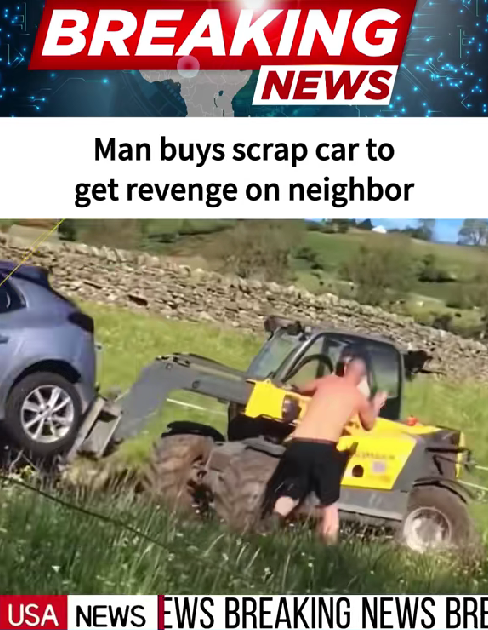
“Viral Showdown: Man Uses Scrap Car in Bizarre Revenge Plot Against Neighbor — Chaos Ensues on Camera”

A shocking — and strangely comedic — clip is circulating online, showing a man using heavy machinery to maneuver what appears to be a scrap car across a grassy field in a heated dispute with his neighbor. The uploader claims the man “bought a junk car just to get revenge,” but the footage itself does not confirm the motive, the history between the neighbors, or whether this was a personal feud, a prank gone wrong, or simply a misunderstanding. What is clear is that the scene unfolds like something straight out of a viral internet meltdown.

The video begins on a sunny day in the countryside. Rolling green hills and stone fences set the stage — an oddly picturesque backdrop for what quickly turns into pure chaos. In the center of the frame, a shirtless man operates a yellow telehandler-style vehicle, a powerful piece of machinery normally used for lifting and moving heavy loads. Suspended from the front is a damaged, likely non-functioning scrap car dangling awkwardly as he drives across the grass.

The man’s posture is tense and deliberate. He looks determined, weaving slowly toward the edge of the property. Another man, partially off-screen, can be heard shouting angrily. Though the audio is unclear, the frustration is unmistakable. The shouting pairs with the operator’s aggressive driving, creating the impression that the scrap car is being used as a dramatic prop in an escalating neighborhood dispute.

Internet commenters have been quick with jokes, memes, and dramatic retellings — but it’s important to note that the actual reason behind the standoff is unknown. The video shows no prior argument, no context about property lines, no history of disagreements, and no confirmation of any intentional revenge. Many viral clips are posted with exaggerated captions designed to amplify drama, and this one is no exception.

Still, the visuals alone make the situation irresistibly wild. At one point, the scrap car swings slightly as the machine lurches forward, prompting the shirtless operator to adjust his grip and posture. It’s clear he’s physically invested in whatever point he’s trying to make — whether that point is revenge, stubborn pride, or simply unfiltered frustration.

Conflict-resolution experts note that rural disputes often involve misunderstandings about land use, noise, property boundaries, or shared access roads. Without details, viewers can only speculate, which has fueled an avalanche of theories in the comments section. Some believe the operator was moving the car onto the neighbor’s land as a symbolic gesture. Others think he was removing the vehicle from his own property. Some even suspect it was staged for entertainment.

The clip ends abruptly, just as the tension seems to peak, leaving viewers with no idea how the confrontation concluded. Did the neighbors resolve the issue peacefully? Did authorities intervene? Was the scrap car ever placed or dumped intentionally? The unanswered questions only add to the clip’s viral momentum.

What’s certain is this: the combination of a junk car, a loud confrontation, and heavy machinery in motion creates a perfect storm of internet gold — a moment so dramatic, absurd, and unexpected that people can’t look away.

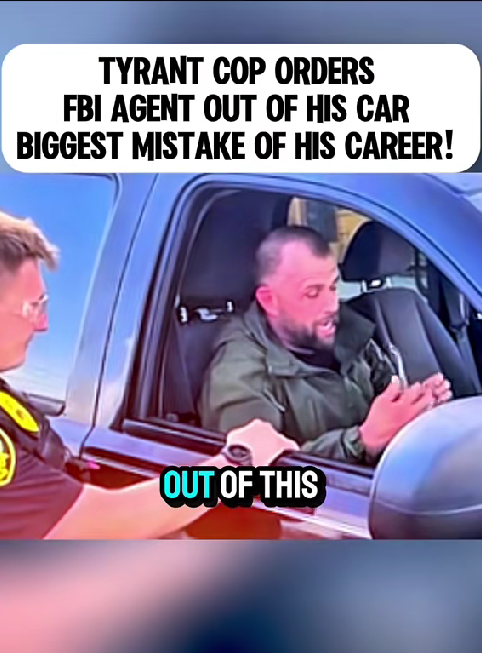
“Bodycam Footage Sparks Debate After Officer Orders Driver Out of Vehicle — What Happens Next No One Expected”

A viral clip is sweeping across social media after capturing a tense roadside interaction between an officer and a driver in a dark pickup truck. The uploader’s caption boldly claims the officer mistakenly ordered an FBI agent out of the vehicle — calling it the “biggest mistake of his career” — but the video never confirms the man’s identity, whether he is affiliated with federal law enforcement, or whether the officer made any professional error. What the footage does show is a heated and unexpected disagreement that immediately grabbed the internet’s attention.

The video begins with the officer standing beside the driver’s window, speaking to a man who appears visibly frustrated. His hands gesture rapidly as he tries to explain something to the officer. The man’s expression shows irritation mixed with disbelief, as if he feels misunderstood or wrongly confronted. Meanwhile, the officer maintains a firm posture, signaling that he expects compliance.

Without audio context, viewers cannot hear the beginning of the exchange, but the moment captured suggests a difference in expectations. The officer instructs the man to step out of the vehicle — a standard command during many traffic stops. Instead of immediately complying, the man becomes animated, leaning forward and talking more urgently. This reaction has fueled debate online, with some viewers believing he felt the stop was unjustified, while others argue the officer was simply following procedure.

The uploader’s caption claims the man is an “FBI agent,” but nothing in the video verifies this. There is no badge displayed, no credentials shown, and no verbal confirmation within the short clip. In fact, many commenters have pointed out that dramatic captions often exaggerate for views. Still, the ambiguity has sparked countless theories and heated discussions about rights, procedure, and miscommunication during traffic stops.

From the body language alone, it’s clear the moment is emotionally charged. The man looks increasingly upset, raising his hands in exasperation and trying to make a point the officer appears unwilling to entertain. The officer, however, remains steady, his tone calm but authoritative. His body stays angled toward the window, showing he isn’t escalating physically — but also isn’t backing down.

Traffic-stop experts note that disagreements like this often stem from a misunderstanding of why a stop is happening or what officers are legally allowed to request. Officers can order drivers out of a vehicle for safety reasons during an investigative stop — a fact many civilians don’t always realize. When someone believes they’re being unfairly stopped, tension rises quickly.

As the clip ends, viewers see the officer reaching toward the door handle, possibly preparing to open it if the driver continues refusing the command. The man inside leans back, visibly agitated. The video abruptly cuts out before showing whether the man ultimately complied, whether credentials were produced, or how the situation resolved.

This lack of resolution has only intensified curiosity. Was he actually a federal agent or simply a frustrated driver? Did the stop escalate or calm down? Was this a misunderstanding that got blown out of proportion?

Until more footage surfaces, the moment remains a snapshot of a heated roadside standoff — a dramatic but incomplete story that leaves viewers wanting answers.

@stupidsheep79

TYRANT COP ORDERS FBI AGENT OUT OF HIS CAR BIGGEST MISTAKE OF HIS CAREER!#Copsoftiktok #police #viral #trending #new

♬ original sound – stupidsheep79
“Dashcam Part 1: Young Driver Panics During Traffic Stop — What Happens Next Shocks Officers”

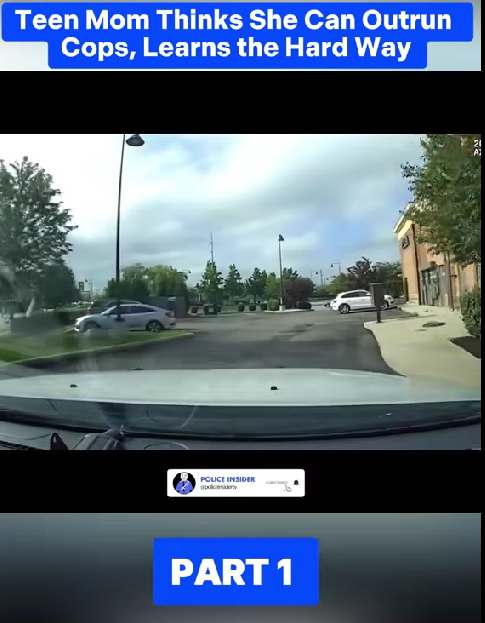
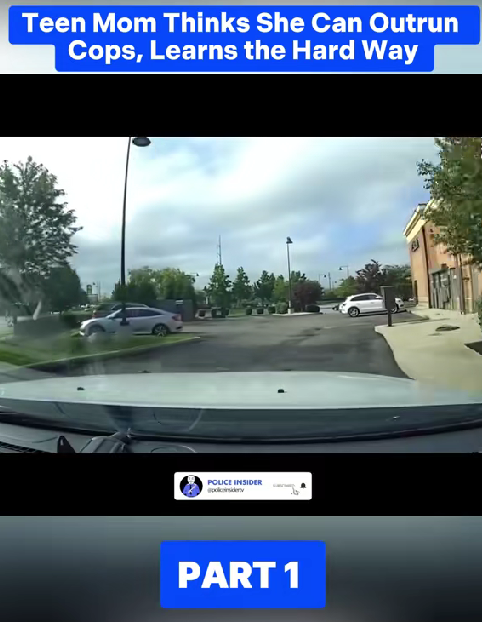
A dashcam video labeled “Teen Mom Thinks She Can Outrun Cops, Learns the Hard Way – Part 1” has exploded across social media, pulling in millions of views within hours. But while the caption paints a dramatic story, the footage itself does not confirm the driver’s age, parental status, or the reason for the initial traffic stop. Instead, the video captures a single intense moment: a young driver making a sudden, risky decision that immediately escalates the situation.

The clip opens with a calm, almost routine scene. The patrol car rolls slowly into a commercial parking lot on a bright, cloudy morning. Trees sway lightly in the wind, a row of vehicles sits quietly at the edge of the lot, and a small storefront reflects the sunlight. At first glance, nothing appears unusual.

Then, out of nowhere, a silver crossover near the building hesitates — then jerks forward.

The driver seems torn between stopping and fleeing. For a split second, her brake lights flicker as if she’s reconsidering, but a moment later, the vehicle swings sharply to the left and accelerates across the parking lot. It’s a sudden, adrenaline-fueled choice that transforms an uneventful moment into a full-speed pursuit.

From inside the patrol car, the dashcam shows the officer snapping into action. Lights and sirens kick on. The tone instantly shifts: calm becomes chaos, and routine becomes risk. The officer radios in the situation, giving rapid updates as he maneuvers through the lot, trying to stay behind the fleeing vehicle without endangering bystanders.

Viewers watching the clip have pointed out that the driver’s movements — swerving toward the exit, clipping a curb, nearly missing a parked car — suggest panic rather than intention. Experts agree that young or inexperienced drivers often react emotionally when confronted by law enforcement, especially if they feel overwhelmed or afraid of consequences. A decision made in fear can spiral quickly into something much bigger.

As the chase exits the parking lot, the officer maintains a steady demeanor. He continues relaying updates, following at a safe distance, and watching for cross-traffic to avoid collisions. His skill contrasts sharply with the erratic driving ahead of him.

Despite the dramatic video and caption, the footage does not reveal:

  • Why the vehicle was initially being approached
  • Whether the driver was wanted, suspended, or simply startled
  • If she had passengers
  • Whether she ultimately stopped on her own or was blocked in
  • Whether any charges were actually filed

The clip ends abruptly as the fleeing vehicle disappears onto a busier roadway, leaving viewers with more questions than answers. Online comment sections have exploded with theories, sympathy, criticism, and pleas for a continuation.

Some viewers believe the caption exaggerates the situation, while others think it reflects common patterns where frightened young drivers make impulsive choices. Many simply want to see Part 2 to understand how the pursuit ended and whether the situation resolved safely.

@daviscops.us

Teen Mom Thinks She Can Outrun Cops, Learns the Hard Way#cops #copsoftiktok #police #bodycam

♬ original sound – daviscops.us
“Dashcam Part 1: Police Pursuit Begins After Young Driver Panics and Tries to Flee a Routine Stop”

A dashcam clip labeled “Teen Mom Thinks She Can Outrun Cops, Learns the Hard Way – Part 1” has quickly gone viral, capturing the tense moment a young driver attempts to pull away from officers during what appears to be a routine traffic encounter. While the caption suggests she was a “teen mom,” the video itself does not confirm her age, her parental status, or the reason for the traffic stop. What it does show is a sudden, risky decision that immediately turns a calm situation into a dangerous one.

The clip opens with a wide view from a patrol car’s dashcam as the officer drives through a quiet commercial area. Morning light reflects off the windows of nearby businesses, and the parking lot appears mostly empty except for a few vehicles. Everything seems calm — until a silver car suddenly swings into view.

The young driver pauses for a moment near the entrance of the lot, as though deciding whether to stop or continue. For a split second, it looks like she may comply with officers. But just as the patrol car closes the distance, the silver vehicle jolts forward, cutting across the lot as the officer activates lights and sirens.

This single impulsive move is what instantly escalates the encounter.

The dashcam footage shows the officer weaving through the parking area, trying to keep sight of the fleeing vehicle. The driver clips a curb, narrowly misses a parked car, and speeds toward the roadway. Her erratic movements suggest panic more than strategy — a dangerous combination for both her and anyone nearby.

Experts in pursuit psychology note that people who flee traffic stops are often overwhelmed by fear, embarrassment, or misunderstanding rather than criminal intent. A young driver, especially one without much life experience, may act impulsively when confronted with authority. That appears consistent with what viewers see here: a split-second decision made under stress.

The officer’s tone over the radio remains steady as he reports the direction of travel and requests assistance. His calm voice contrasts sharply with the chaotic motion unfolding outside the windshield. This is one reason dashcam clips resonate so deeply with viewers — they reveal how officers must manage both the adrenaline of pursuit and the responsibility of keeping the public safe.

While the uploader’s caption implies she “learned the hard way,” Part 1 of the footage stops before showing whether the pursuit ended safely, whether the driver pulled over, or whether additional units became involved. The clip cuts just as the vehicle speeds out of the lot, leaving viewers hanging and eager for the next episode.

This lack of resolution has triggered a flood of speculation online:

  • Was she running because of a suspended license?
  • Was she simply scared of getting a ticket?
  • Did she misunderstand the officer’s instructions?
  • Did the pursuit end peacefully?

Without the full sequence, none of these questions can be answered.

What is clear, however, is that a simple stop escalated into a high-risk situation — a reminder of how quickly moments of fear or panic can turn dangerous for everyone involved.

As viewers wait for Part 2, the first clip stands as a cautionary example: one split-second decision behind the wheel can change everything.

@daviscops.us

Teen Mom Thinks She Can Outrun Cops, Learns the Hard Way#cops #copsoftiktok #police #bodycam

♬ original sound – daviscops.us
“Bodycam Part 1: Workplace Dispute Explodes After Worker Claims Assault — Officers Rush to Calm the Situation”

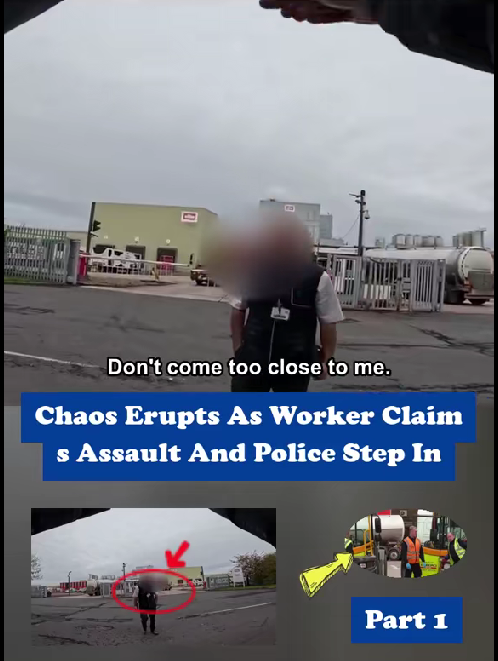
A tense bodycam clip is going viral after capturing the moment officers arrived at an industrial facility where a heated workplace dispute had escalated into accusations of assault. While the uploader’s caption suggests “chaos erupted,” the footage itself presents only the immediate confrontation — not the full story of what happened before police were called or what any investigation later determined.

The video begins in a wide, open parking area outside a commercial warehouse. Large trucks, machinery, and fenced storage areas fill the background, giving the scene an industrial, high-pressure atmosphere. At the center of the frame stands a worker in a reflective vest, facing the camera with visible tension in his posture. His face is blurred, suggesting that personal details have been withheld for privacy.

As the officer approaches, the worker raises a hand and firmly says, “Don’t come too close to me.” His tone is controlled but defensive — the kind of voice people use when they feel overwhelmed or misunderstood. The officer stops at a respectful distance, showing that he’s listening carefully and attempting to de-escalate.

The clip offers little insight into what led to the emotional moment. There are no clear visuals of the original incident, no statements from other workers, and no footage showing how the dispute began. This lack of context has fueled online debate, with viewers offering wildly different interpretations. Some speculate that the worker felt threatened by a coworker, while others believe the argument may have stemmed from workplace stress, miscommunication, or a disagreement that spiraled unexpectedly.

Officers on scene appear calm and methodical. Their posture suggests they are trying to gather facts before taking any action. One officer asks the worker to explain what happened, while another stands back, observing the surroundings and ensuring the interaction stays safe for everyone involved. Industrial settings can be high-tension workplaces, and police often respond to calls where emotions are running high but no crime has yet been established.

Experts in conflict resolution point out that disputes in workplaces — especially around heavy equipment and strict schedules — can escalate quickly. Employees may feel unsafe, unheard, or pressured, causing them to interpret interactions more intensely. Even when no physical altercation occurs, the feeling of being threatened can lead to emergency calls like this one.

The bodycam video also shows a wider angle of the lot, including another worker walking in the distance. The uploader circles this person with a red marker, implying their involvement, but the footage does not confirm whether they played any role in the dispute. Without audio or additional footage, viewers cannot determine whether they were a witness, a supervisor, or unrelated.

As the clip ends, officers continue calmly questioning the worker, trying to separate emotion from fact. No arrests, citations, or conclusions are shown, leaving the outcome entirely unknown. This abrupt cutoff has sparked viewer anticipation for “Part 2,” where many hope to see what the officers discovered and how the situation was ultimately resolved.

For now, the clip stands as a snapshot of a common real-world challenge: workplace conflicts that escalate faster than anyone expects, prompting police intervention not to assign blame, but to restore calm and gather clarity.

The internet waits for the next chapter.

“Chaos Erupts During Traffic Stop After Officers Approach the Wrong Car — Driver’s Reaction Says It All”

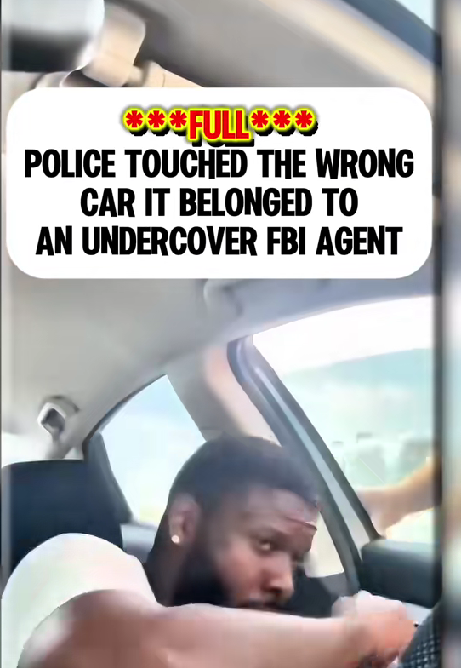
A viral video is sweeping across social media after showing a tense moment during a traffic stop where officers approached a vehicle and the driver reacted with immediate shock and frustration. The uploader dramatically claims the car “belonged to an undercover FBI agent,” but the clip does not confirm the driver’s identity, occupation, or any federal connection. What the footage does show is a surprising and chaotic misunderstanding that unfolds the moment an officer taps on the car window.

The video begins inside a parked sedan where a man sits in the driver’s seat, appearing relaxed and scrolling on his phone. Suddenly, an officer’s hand reaches into the frame, knocking on the window. The driver jolts upright with visible irritation and confusion, looking toward the officer as if unsure why he’s being approached. His reaction — a mix of disbelief, annoyance, and adrenaline — has become the centerpiece of the viral moment.

The uploader’s caption suggests a serious case of mistaken identity, but the footage contains no audio or documentation that identifies the man as an undercover agent. What is clear is the intensity of the driver’s response. He straightens up, clears his throat, and reaches for something out of frame, possibly identification or paperwork, but the video cuts off before revealing anything definitive.

Throughout the clip, the officer’s face remains mostly off-screen, leaving viewers unable to see their expression or hear what prompted the interaction. This lack of context has led to fierce online debate. Was it a routine check? A mistaken vehicle description? A mix-up in communication? Or simply a driver caught off guard during a standard stop?

Body-language experts commenting online note that the driver’s reaction — eyes widening, posture stiffening, rapid movements — suggests he was genuinely surprised. Some viewers believe he simply felt unfairly targeted, while others interpret his reaction as someone who may hold an official or high-responsibility role and wasn’t expecting open contact from local officers.

Meanwhile, law-enforcement analysts emphasize that officers commonly tap on car windows for safety or communication, especially if a vehicle matches a description or is parked suspiciously. Misunderstandings can easily arise, especially when neither party knows what the other is expecting.

The video’s dramatic caption has fueled speculation, memes, and heated threads across TikTok and Instagram. Many viewers are skeptical of the “undercover FBI agent” claim, pointing out that real federal agents typically carry credentials and resolve mix-ups quickly — not through confrontation. Others argue that the uploader may have exaggerated the situation for views, a trend increasingly common in viral policing clips.

Despite the mystery surrounding the incident, the short clip has undeniably captured attention for one reason: the raw, unfiltered reaction of someone who clearly believes officers approached the wrong person. It’s a relatable moment for anyone who has ever felt wrongly singled out, misunderstood, or unexpectedly questioned.

As the clip continues to spread, users are demanding a Part 2 — hoping for bodycam footage, officer statements, or a continuation that explains whether this was a simple mix-up or something far more complicated.

For now, the video remains a snippet of confusion, fast reactions, and unanswered questions — a perfect recipe for viral intrigue.

@tikcom093

POLICE TOUCHED THE WRONG CAR IT BELONGED TO AN UNDERCOVER FBI AGENT #cops #usa🇺🇸 #copsoftiktok #fyp #viralstory

♬ original sound – PoliceInsider