Portland Security Guard Fatally Shoots Man During Confrontation — Footage Raises Serious Questions

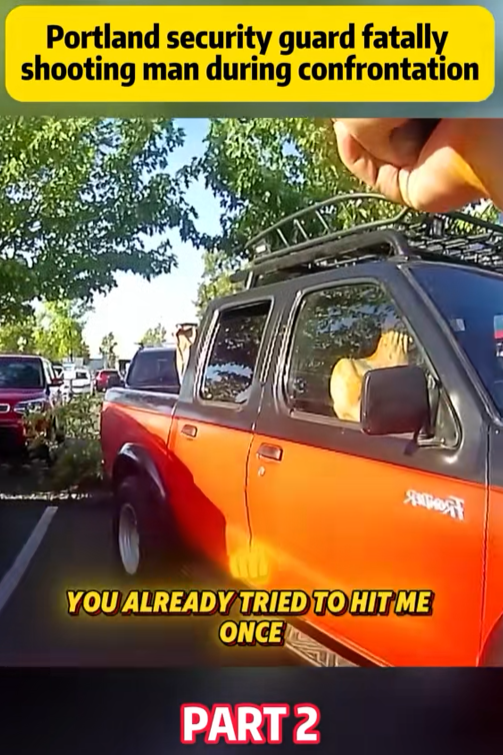
A deadly confrontation involving a private security guard in Portland has sparked widespread concern after footage surfaced showing the moments leading up to a fatal sh**ting. The incident, labeled online as “Part 2,” has reignited debates about the use of force by non-police security personnel and how quickly confrontations can escalate into irreversible tragedy.

The image shows a red pickup truck stopped in a parking area, surrounded by other vehicles. According to captions and audio circulating with the clip, the confrontation became heated after an alleged earlier incident in which the man in the truck was accused of attempting to strike the guard with the vehicle. In the footage, a voice can be heard stating, “You already tried to hit me once,” underscoring the tension and perceived threat that preceded the shooting.

Authorities have confirmed that the man was fatally shot during the encounter. Emergency responders were called, but the victim was pronounced dead at the scene. Police say the security guard involved remained on site and is cooperating with investigators.

Unlike sworn law enforcement officers, private security guards operate under different legal standards, though they may still use deadly force if they reasonably believe their life is in immediate danger. Investigators are now tasked with determining whether that standard was met in this case. This includes reviewing bodycam or dashcam footage, witness statements, and physical evidence such as vehicle positioning and distance at the time shots were fired.

The footage has drawn strong reactions online. Some viewers argue the guard acted in self-defense, pointing to the claim that the truck had been used as a weapon moments earlier. Others question whether de-escalation or retreat was possible and whether lethal force was the only option available in a parking-lot setting.

Legal experts note that cases involving vehicles are particularly complex. A moving vehicle can be considered a deadly threat, but once a vehicle stops or changes direction, the justification for deadly force can quickly come into question. Each second — and each movement — matters in determining whether force was lawful.

Community members in Portland have expressed concern over the growing presence of armed private security and the lack of consistent oversight compared to police departments. Advocacy groups are calling for clearer regulations, better training, and transparency when fatal force is used by non-police personnel.

Officials have emphasized that the investigation is ongoing and that no final determination has been made regarding criminal charges or civil liability. The district attorney’s office is expected to review the case once investigators complete their findings.

For many watching, the most unsettling reality is how fast the situation unraveled. What appears to have started as a confrontation in a parking lot ended with a life lost — a reminder that once firearms are introduced, there is no room for error.

As the investigation continues, the case stands as another sobering example of how confrontations involving vehicles, armed security, and heightened emotions can turn fatal in seconds. The focus now remains on uncovering the full truth of what happened — and whether this loss of life could have been prevented.

This Dad Is Melting Down Thousands of Crayons to Help Children in Need — One Kitchen, One Powerful Idea

What started as a simple project in a home kitchen has grown into a heartwarming effort that’s helping children who need it most. A dad is melting down thousands of used and broken crayons, transforming what would normally be thrown away into brand-new art supplies for kids who otherwise wouldn’t have access to them.

The image shows a pot filled with melted pink crayons, slowly being stirred as the wax blends together. It may look simple, but behind it is a powerful mission: giving children in hospitals, shelters, and underserved communities the chance to create, imagine, and feel joy.

The idea began when this father learned how many crayons are discarded every year. Restaurants, schools, and homes throw away millions of partially used crayons, even though they still have plenty of life left in them. Instead of seeing waste, he saw opportunity.

From his own kitchen, he started collecting broken crayons, melting them down, and remolding them into colorful, usable shapes. These recycled crayons are often thicker, easier to grip, and perfect for young children or kids with limited motor skills. What once ended up in the trash now becomes something meaningful.

Parents and teachers say crayons are more than just art tools. For children going through difficult situations, coloring can be calming, therapeutic, and empowering. It allows kids to express emotions they may not yet have words for. For children in hospitals or crisis situations, something as small as a box of crayons can bring comfort and a sense of normalcy.

As word spread, donations poured in. People began sending bags of old crayons from all over, eager to contribute. What was once a small, personal project turned into a growing movement fueled by kindness and community support.

The dad behind the effort has said the most rewarding part isn’t the melting or molding process — it’s knowing that something made in his kitchen ends up in the hands of a child who truly needs it. Each crayon represents a second chance, not just for the wax, but for the child using it.

Organizations that receive the crayons say the impact is immediate. Kids light up when they’re handed bright, new art supplies. For a moment, worries fade, and creativity takes over. That moment of joy is exactly why this project continues to grow.

In a world often filled with heavy headlines, this story stands out for its simplicity. No large factories. No massive funding. Just a dad, a pot, some heat, and a decision to help.

It’s a reminder that helping others doesn’t always require grand gestures. Sometimes it starts at home, with what you already have, and a willingness to turn something broken into something beautiful.

From melted wax to meaningful impact, this kitchen project proves that small ideas — when driven by heart — can color the world in a much brighter way.

@foodnews626

This dad is melting down thousands of crayons to help children in need

♬ original sound – foodnews626
Woman’s Routine Doctor Visit Takes a Disturbing Turn Inside Exam Room

What was supposed to be a routine visit to the doctor quickly turned into a deeply unsettling experience for a woman, after law enforcement suddenly became involved inside a medical office. The incident, captured on bodycam footage, has sparked intense debate about patient rights, privacy, and how medical settings can unexpectedly become scenes of legal confrontation.

The image shows a small doctor’s office: exam chairs lined against the wall, medical equipment on desks, and a physician seated while reviewing paperwork. Standing nearby is a uniformed police officer. According to captions circulating with the footage, the woman had gone to the doctor for a standard medical reason, with no expectation that police would be present or that questioning would occur during her appointment.

At some point during the visit, officers entered the room and began asking questions unrelated to her medical care. One of the most jarring moments for viewers comes when an officer asks, “Have you ever been arrested?” — a question that immediately shifts the environment from clinical to criminal. For many watching, that single line underscored how dramatically the situation changed.

Details surrounding why police were called to the office remain unclear in short clips, which has fueled speculation and concern. Some reports suggest the visit may have been connected to an outstanding warrant, paperwork discrepancy, or unrelated investigation. Others argue the footage highlights how vulnerable patients can be when authority enters a space meant for care and confidentiality.

Medical ethicists say doctor’s offices are uniquely sensitive environments. Patients are often physically vulnerable, emotionally stressed, and expecting privacy. Introducing law enforcement into that space, especially without clear explanation, can feel intimidating and traumatic — even if the officers are acting lawfully.

Civil rights advocates have raised questions about consent and patient awareness. Was the woman informed police were coming? Did she understand her rights in that moment? Could questioning have been delayed until after the appointment? These are the kinds of issues experts say deserve scrutiny whenever medical care intersects with law enforcement.

Others urge caution, noting that bodycam clips rarely show the full story. Officers may have had legal reasons to be there, and medical staff may have been following protocol. Still, many viewers say the optics alone are troubling, especially when patients are confronted with legal questions while seated in an exam room.

The footage has reignited discussion about boundaries between healthcare and policing. While there are situations where police involvement is necessary — such as immediate threats or mandatory reporting cases — critics argue those moments should be handled with extreme care to preserve patient dignity.

For the woman involved, the experience reportedly left her shaken. A doctor’s visit is meant to provide reassurance and help, not fear and confusion. Watching that expectation collapse in real time is what has made the clip resonate so strongly online.

As the video continues to circulate, many are calling for clearer guidelines on when and how police can engage individuals inside medical facilities. Transparency, communication, and respect for patient rights are central to those demands.

Whether this incident was justified or mishandled may ultimately depend on details not visible in the footage. But the reaction has been clear: people are deeply uncomfortable seeing medical spaces turn into interrogation rooms.

For many viewers, the takeaway is sobering — even the most routine moments can take an unexpected turn, and understanding your rights matters everywhere, even in places meant for healing.

@blue.cam4

Woman’s Trip To The Doctor’s Takes a DISTURBING Turn #cops #police #copsusa🚔🇺🇸 #policeofficer #foryou

♬ original sound – Blue Cam
A Suitcase Appeared at Miami Airport — What Was Found Inside Left Everyone Stunned

A chilling discovery at Miami International Airport has gone viral after a mysterious suitcase was found abandoned — and what people claim was inside has left viewers across social media emotional, confused, and desperate for answers. The images circulating online show a large, zipped suitcase lying on the ground as several people gather around it, hesitating before opening it. Within hours, the story exploded, fueled by shock, speculation, and heart-stopping reactions.

According to viral captions, the suitcase first drew attention after being spotted unattended near airport facilities. With security protocols already heightened, authorities were reportedly alerted, and the bag was removed from public areas. That alone was enough to raise alarm. But the real wave of emotion came later, when images and clips began circulating showing the suitcase opened — not inside the terminal, but outdoors — surrounded by people visibly shaken by what they were seeing.

Social media posts claim the suitcase did not contain ordinary belongings. Instead, viewers were told it held something living, helpless, and completely unexpected. Some posts suggest it was an abandoned animal, while others imply a far darker scenario. The lack of official confirmation has only intensified speculation, allowing the story to morph rapidly as it spread.

In the most widely shared footage, several individuals carefully unzip the suitcase while others step back in disbelief. Their reactions — gasps, hands over mouths, stunned silence — are what convinced many viewers that the discovery was real and deeply upsetting. “You can see it on their faces,” one commenter wrote. “Whatever that was, it changed them.”

However, as with many viral stories, separating fact from exaggeration has proven difficult.

No official statement from Miami airport authorities has confirmed the dramatic claims being attached to the footage. Aviation and law-enforcement experts note that abandoned luggage is taken extremely seriously, but also warn that viral content is often edited, staged, or removed from its original context to generate emotional engagement.

Some fact-checkers suggest the suitcase scene may not have occurred at the airport at all. Similar videos have previously circulated showing animals rescued from bags or containers in rural or border regions, later re-captioned with major airport names to increase shock value and visibility. Miami’s name, in particular, is frequently used because of its international traffic and media reach.

Still, the emotional response has been real.

Animal-welfare advocates say that if a living being truly was transported in a suitcase, it would constitute extreme crlty and potentially a serious felony. Transporting animals — let alone people — in sealed luggage can lead to suffocation, overheating, and dath within minutes. Even the suggestion of such an act has been enough to drive widespread outrage.

Others caution against jumping to conclusions. “We’ve seen this pattern before,” one digital-media analyst explained. “An old or unrelated video gets paired with a dramatic headline, and suddenly millions of people believe something happened at a specific place when there’s no proof.”

What makes this case particularly powerful is how it taps into fear and empathy at the same time. A suitcase is an everyday object — something associated with travel, movement, and normal life. Turning it into a symbol of abandonment or hidden suffering instantly captures attention and emotion.

As of now, no verified reports confirm that a suitcase containing a living being was officially discovered at Miami International Airport. Authorities have not announced arrests, rescues, or investigations tied to the viral claim. That absence of confirmation has led many to believe the story is either incomplete or misleading.

Still, the images continue to circulate, accompanied by captions asking, “What do you think?” — a question designed to keep the debate alive.

Whether this turns out to be a real case of ab*se, a misattributed rescue, or a manufactured hoax, one thing is certain: the story has struck a nerve. It highlights how quickly emotion spreads online — and how important it is to pause before accepting viral headlines as truth.

Until verified details emerge, the suitcase remains less a confirmed incident and more a reminder of the power — and danger — of viral storytelling in the digital age.

@dailynews486

They thought it was a bomb, but what was inside changed everything.#Miami #Maleta #Noticias2025 #Misterio #Emocionall

♬ original sound – dailynews486
“Off My Property — Right Now”: When the Landowner Is a Lawyer, the Entire Stop Unravels

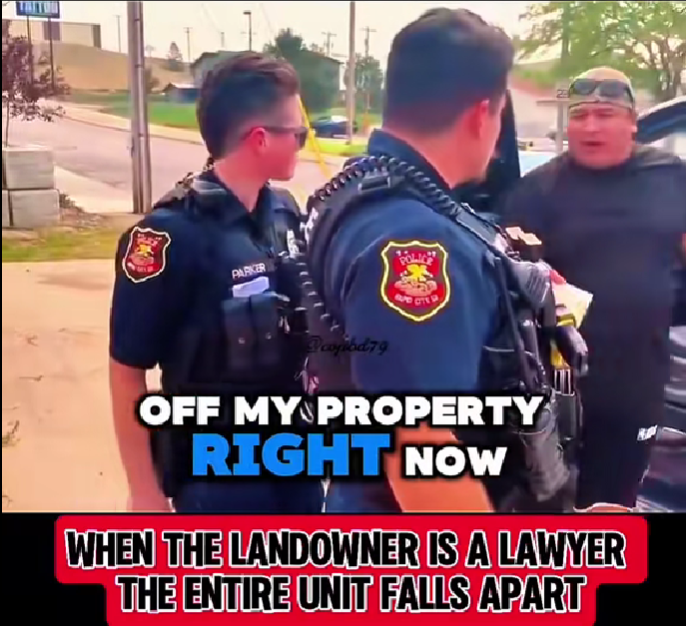
A tense confrontation between police and a homeowner has gone viral after officers were told, firmly and repeatedly, to leave private property — and the situation appeared to fall apart once it became clear the landowner was a lawyer who knew exactly where the legal line was.

The image shows multiple officers standing near a vehicle while the homeowner, visibly confident, challenges their presence. Bold on-screen captions frame the moment as a turning point: the demand to get off the property wasn’t emotional or panicked — it was precise, deliberate, and grounded in law.

According to clips circulating online, officers had entered or remained on the property without a warrant, consent, or clearly stated exigent circumstances. As the exchange continued, the homeowner asserted his rights, reminding officers that private property carries strong constitutional protections. Viewers say the officers’ tone shifted once it became obvious they were dealing with someone who understood search-and-seizure law.

Legal experts explain why moments like this matter. Without a warrant, consent, or an immediate emergency, officers generally cannot remain on private property after being told to leave. Once consent is revoked, continued presence can turn an otherwise lawful encounter into a constitutional violation — and any evidence obtained afterward may be suppressed.

That appears to be what many viewers believe happened here. The homeowner did not raise his voice or threaten anyone. Instead, he set a boundary: leave the property now. Commenters noted that officers began conferring among themselves, reassessing the situation rather than escalating.

The clip has sparked debate online. Supporters of the homeowner say this is exactly how rights are supposed to work — calmly, clearly, and without theatrics. They argue the outcome highlights how often people don’t know they can revoke consent, or feel too intimidated to do so. Critics counter that officers may have had reasons not shown in the short video, cautioning against drawing conclusions from edited clips.

Still, many legal analysts point out a recurring pattern in viral encounters: when civilians confidently and correctly assert their rights, situations often de-escalate — not because officers are embarrassed, but because the legal footing disappears. No warrant, no consent, no emergency means no authority to stay.

The phrase “the entire unit falls apart” resonates because it reflects that moment when leverage shifts. What began as a coordinated police presence suddenly becomes a legal risk. Officers are trained to avoid actions that could expose their department to lawsuits, suppression of evidence, or disciplinary review.

The video has become a teaching moment online, with attorneys and civil rights advocates using it to explain key principles:

  • Private property owners can revoke consent at any time
  • Officers must have a lawful basis to remain once consent is withdrawn
  • Calm, clear language is more effective than confrontation

Importantly, experts also stress that knowing your rights doesn’t mean provoking police. The homeowner’s approach — firm but controlled — is often cited as the safest way to assert boundaries without escalating tension.

Whether the officers ultimately left because of legal realization, policy guidance, or missing context remains unclear. What is clear is how fast authority can evaporate when it rests on assumption rather than law.

For many viewers, the takeaway is simple: rights only work if people know them — and are willing to use them. In this case, one sentence changed the entire encounter.

“Off my property. Right now.”

@copbd79

WHEN THE LANDOWNER IS A LAWYER THE ENTIRE UNIT FALLS APART #Foryou #viral #moment #fyp #trending

♬ original sound – CopBD7939
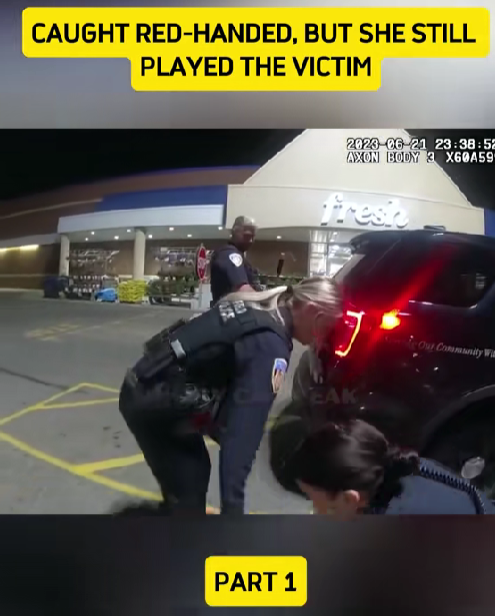
Caught Red-Handed — But She Still Played the Victim | Bodycam Footage Sparks Heated Debate

A tense police encounter outside a grocery store is going viral after bodycam footage appeared to show a woman caught in the middle of an incident — yet repeatedly portraying herself as the victim once officers stepped in. The clip, labeled “Part 1” online, has ignited fierce discussion about accountability, perception, and how quickly narratives can shift when cameras are rolling.

The footage opens late at night in a brightly lit parking lot outside a supermarket. Police vehicles are parked close to a dark SUV, their lights reflecting off the pavement. Officers approach the vehicle cautiously, speaking calmly but firmly as they begin investigating what led to the stop. Within seconds, it becomes clear that something has already gone wrong — and that the woman involved is at the center of it.

According to the video’s captions and visible timestamps, officers appear to be responding to a reported incident involving the SUV. As they move closer, one officer bends down near the rear of the vehicle while another stands guard. The woman, partially visible near the open door, reacts emotionally, raising her voice and insisting she has done nothing wrong.

What has drawn intense scrutiny is what happens next. Viewers claim the footage shows evidence contradicting the woman’s version of events. Officers appear to uncover details that suggest she was directly involved in the situation she is now denying. Despite this, she continues to cry, protest, and accuse police of mistreating her — a reaction that many online describe as an attempt to deflect responsibility.

Supporters of the officers argue that the bodycam tells a clear story. They say the woman was “caught red-handed” and immediately shifted into victim mode once confronted. Comment sections are filled with remarks accusing her of manipulation, exaggeration, and playing on emotion to avoid consequences.

Others, however, urge caution. Civil rights advocates remind viewers that bodycam clips rarely show the full context. Stress, fear, and confusion can cause people to react emotionally, especially during police encounters. They argue that appearing defensive or distressed does not automatically mean someone is lying or guilty.

What makes the clip especially compelling is how familiar the scenario feels to many viewers. Viral police videos often follow the same pattern: confrontation, denial, emotional escalation, and a battle over whose story will be believed. In the age of social media, public opinion can harden long before facts are fully established.

Police experts note that officers are trained to remain focused on evidence, not emotion. In situations like this, their job is to secure the scene, identify facts, and prevent further escalation — even when individuals attempt to redirect attention or control the narrative.

The phrase “played the victim” has become central to the online reaction. Critics say it reflects a broader issue in which people believe emotion alone can override accountability. Others push back, warning that the phrase is often used unfairly and can silence legitimate complaints.

At this stage, “Part 1” leaves more questions than answers. What exactly was the woman caught doing? What led to police being called in the first place? And what happens after the clip ends? As with many viral videos, the absence of full context has only fueled speculation.

What is clear is that the footage has struck a nerve. It highlights how quickly public perception forms, how bodycams shape narratives, and how powerful the role of emotion can be during confrontations with authority.

As the video continues to spread, viewers are waiting for additional footage or official statements that might clarify the situation. Until then, the clip stands as another reminder of the digital age reality: once a moment is caught on camera, every reaction is scrutinized — and the line between accountability and victimhood becomes a battleground played out online.

@brandubros1

Caught Red-Handed, But She Still Played the Victim#cops #police #bodycam #bodycamcops

♬ original sound – BodycamcopsT38
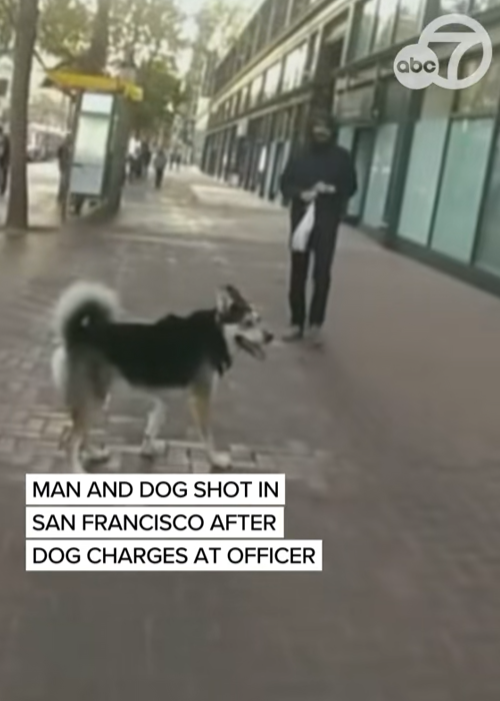
Man and Dog Sh*t in San Francisco After Dog Charges at Officer — A Split-Second Decision With Tragic Consequences

A disturbing incident on a San Francisco sidewalk has sparked outrage and debate after a man and his dog were both sht during a police encounter that unfolded in just seconds. The moment, captured on video and later reported by local news, has reignited difficult conversations about police use of force, public safety, and how quickly ordinary situations can turn dadly.

The image shows a man standing on a city sidewalk holding a bag, while his dog is several feet away, alert and visibly tense. According to reports, the encounter escalated when the dog suddenly charged toward a police officer. Within moments, gunfire rang out — leaving both the dog and its owner injured.

Authorities say the officer perceived an immediate threat and fired in self-defense. Police officials emphasized that officers are trained to respond when they believe their life is in danger, especially in fast-moving situations involving animals. From their perspective, the dog’s sudden movement left little time to react.

But for many viewers, the footage is deeply unsettling.

Witnesses and critics argue that the scene shows a preventable tragedy. The man does not appear to be acting aggressively, and the sidewalk setting raises questions about whether alternative responses — such as retreat, use of non-lethal force, or verbal commands — could have been attempted before lethal force was used.

The dog, described by some as medium-to-large, was reportedly sh*t and later died from its injuries. The man was also struck by gunfire and taken to a hospital. His condition was not immediately released, but officials confirmed he survived.

Animal advocates have reacted with fury, calling the incident another example of unnecessary escalation. “Dogs react instinctively,” one advocate said. “That doesn’t mean someone deserves to be sh*t for being near their own pet.” Others pointed out that urban environments are full of unpredictable stimuli, and animals may react out of fear rather than aggression.

Law enforcement supporters, however, warn against judging the incident solely by a still image or short clip. They argue that officers have only fractions of a second to decide, and a charging dog can cause serious or ftal injuries. Several officers nationwide have been maimed or klled in similar situations, reinforcing the fear such moments provoke.

Legal experts note that cases like this often hinge on whether the officer’s fear was “objectively reasonable” under the circumstances. Investigations typically examine bodycam footage, distance, speed of the dog, prior commands given, and whether less-lethal tools were realistically available.

Still, the emotional fallout is undeniable.

For the man involved, the incident meant being sht in public while watching his dog die — a trauma that will likely stay with him for life. For bystanders, it was a shocking reminder that routine walks can suddenly become scenes of volence.

The city has confirmed that an internal review is underway. As standard procedure, the officer involved has been placed on administrative leave while investigators assess the use of force. Civil rights groups are also monitoring the case closely, calling for transparency and release of all available footage.

Online reaction has been intense and polarized. Some commenters insist the officer had no choice. Others argue that the repeated pattern of police shoting dogs points to a training failure, not isolated mistakes. Statistics show that thousands of dogs are sht by police each year in the U.S., often during routine calls.

At the center of it all is a sobering truth: once a weapon is fired, there is no undoing the outcome.

What began as an everyday moment on a San Francisco sidewalk ended in bloodshed, grief, and unanswered questions. As the investigation continues, many are asking the same thing — could this have ended differently, and how many more times will it take before changes are made?

@abc7newsbayarea

SFPD gave an update on a shooting of a man and his dog on Market Street earlier this month. Police say they were responding to reports of a dog bite victim when a husky charged at them multiple times, and its owner was not compliant, and threw a plastic bottle at the officer. They both survived. For more information, click the link above #sfpd #agressive #dog #shooting #dogshot #bodycam #abc7news

♬ original sound – ABC7 News – ABC7 News
Courtroom Left in Shock as Details Emerge in Case of 5-Year-Old Girl Left for D*ad by Other Children

A courtroom fell into stunned silence as prosecutors revealed horrifying details in a case involving a 5-year-old girl who was allegedly attcked and abandoned by a group of children only a few years older than her. The case has shaken the public and raised painful questions about child safety, supervision, and how such extreme volence could occur at such a young age.

According to information presented in court, a group of children between the ages of 8 and 10 allegedly lured the young girl away before subjecting her to prolonged ab*se. Prosecutors stated that the children then left her alone in an open field, believing she would not survive. The description of events reportedly caused audible gasps inside the courtroom, with several spectators visibly overwhelmed by the details.

Images introduced during the hearing showed the girl in a hospital bed, heavily bandaged but alive. Medical professionals testified that her survival was due to rapid emergency response and what they described as extraordinary physical resilience. Doctors warned that without timely intervention, the injuries could easily have been f*tal.

One of the most emotional moments came when family members addressed the court. Through tears, they described the trauma of learning what had happened to their child and questioned how such cruelty could be inflicted by children so young. “She was five years old,” one relative said. “She trusted them.”

Prosecutors stressed that while the alleged perpetrators are minors, the actions described were not accidental or playful. Officials stated that the harm appeared deliberate and sustained, emphasizing that age alone does not erase the seriousness of the conduct. That statement reportedly marked a turning point in the room, as the reality of the allegations set in.

Because all those accused are underage, the case is being handled within the juvenile justice system. This has sparked widespread debate online and in the community. Many people have expressed anger, arguing that the system may not be equipped to address acts of this severity. Others caution that punishment alone will not solve the deeper issues, calling instead for mental health intervention and long-term supervision.

Footage connected to the investigation shows one of the children being escorted by police at night, surrounded by flashing lights. The image has disturbed many viewers, highlighting the tragic complexity of the situation: children accused of acts typically associated with adults, and a victim barely old enough to understand what happened to her.

Child psychologists following the case warn that incidents like this rarely happen in isolation. Experts point to lack of supervision, exposure to v*olent behavior, and unresolved trauma as possible contributing factors. “Children don’t act in a vacuum,” one specialist noted. “When behavior reaches this level, it often reflects serious failures around them.”

The young girl is now receiving ongoing medical and psychological care. Specialists say her recovery will take time and that emotional healing will be just as critical as physical treatment. Trauma at such an early age can have lasting effects without consistent support and protection.

Public reaction has been intense. Parents across the country say the case has left them shaken, while advocacy groups are calling for stronger child-protection measures and earlier intervention when warning signs appear.

As the case moves forward, it stands as a devastating reminder of how vulnerable children are — and how catastrophic the consequences can be when that vulnerability is exploited. For now, the focus remains on the survival and healing of a little girl who endured unimaginable ab*se, and on ensuring accountability and prevention so that no child ever has to suffer like this again.

@uhji727

A group of children ages 8-10 🍇’d, attacked, and peed on a 5-year old girl then left her alone in a field thinking they unalived her #greenscreen #greenscreenvideo #ComfortSegredos #fyp #breakingnews

♬ original sound – uhji
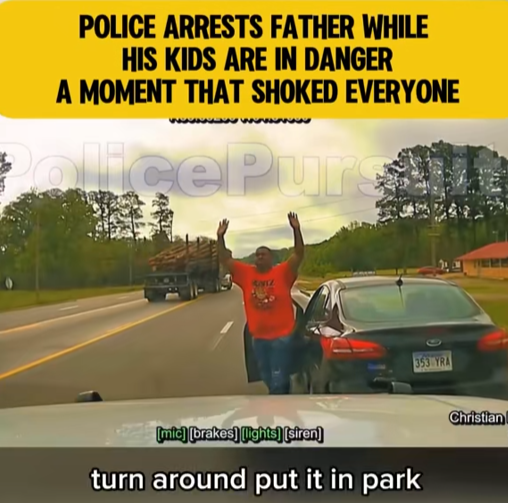
POLICE ARREST FATHER WHILE HIS KIDS ARE IN D*ANGER — THE TRAFFIC STOP THAT LEFT VIEWERS STUNNED

A shocking dashcam video is spreading online after police arrested a father during a roadside stop — even as his children were allegedly in immediate danger nearby. The moment, captured from the patrol car’s perspective, has ignited fierce debate about judgment, priorities, and how quickly routine traffic stops can spiral into situations with devastating consequences.

The footage shows a man stepping out of his vehicle on a two-lane road, hands raised, complying with shouted commands. A second car is stopped ahead of him, and traffic continues to pass at speed. According to captions shared with the clip, the father’s children were inside or near the vehicle and exposed to risk as officers focused on placing him under arrest.

From the very first seconds, tension is obvious. Officers order the man to turn around and put the car in park. He appears confused but compliant, repeatedly raising his hands and trying to explain himself. What alarms many viewers is that, while the father is detained, attention appears diverted away from the children’s safety — a detail that has driven much of the public outrage.

Online, the video is being framed as a moment where enforcement overtook common sense. Critics argue that when minors are present in potentially dangerous roadside conditions, securing their safety should be the immediate priority. “Arrest later, protect kids first,” has become a common refrain in comment sections.

Law enforcement professionals say traffic stops are inherently dangerous, both for officers and civilians. Standard procedure often requires controlling the adult first to reduce uncertainty. However, many experts also acknowledge that situations involving children require rapid reassessment and flexibility. When kids are involved, the margin for error shrinks dramatically.

The clip does not show everything that led up to the arrest, which has fueled arguments on both sides. Some defend the officers, suggesting there may have been legal grounds for detention not visible in the short video. Others counter that even if the arrest was lawful, the optics — and the potential risk to children — are deeply troubling.

Parents watching the footage describe it as “every nightmare at once.” Seeing a father taken into custody while kids remain exposed to traffic, stress, and confusion strikes a visceral nerve. Child-safety advocates stress that high-stress police encounters can have lasting emotional effects on minors, even when no physical harm occurs.

What’s also driving discussion is how quickly authority escalated. The father appears to comply, raising questions about whether alternative approaches — such as temporarily securing the scene, moving vehicles off the roadway, or ensuring a safe adult is with the children — could have reduced risk before any arrest took place.

Civil rights attorneys note that video evidence has changed public expectations. People now expect to see not just lawful actions, but reasonable ones. When footage suggests priorities were misaligned, trust erodes quickly, regardless of legal technicalities.

At the time of writing, no official statement has clarified whether officers faced review or whether policies were followed to the letter. Investigations into incidents like this typically involve internal assessments, dashcam analysis, and consideration of child-welfare protocols.

The broader takeaway is uncomfortable but important: policing requires constant judgment calls, and the presence of children should immediately shift the calculus. Enforcement that ignores visible risk — especially to minors — can turn a routine stop into a moment that shocks the public and haunts families long after the sirens fade.

As the video continues to circulate, many are asking the same question: even if the arrest was lawful, was it necessary right then? For viewers, the image of a father in handcuffs while his kids were allegedly in harm’s way has become a symbol of a system that sometimes forgets the most vulnerable are watching — and paying the price.

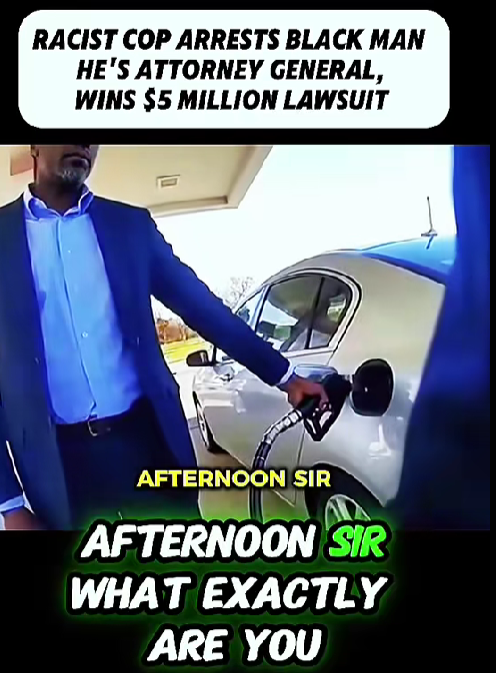
Black Man Wrongfully Arrested While Pumping Gas — Lawsuit Ends With $5 Million Settlement

A routine stop at a gas station turned into a landmark civil rights case after a Black man was wrongfully arrested while simply pumping gas — an encounter that ultimately resulted in a $5 million lawsuit settlement. The incident, captured on police bodycam, has reignited national conversations about racial profiling, unlawful arrests, and accountability in law enforcement.

The image from the footage shows the man calmly holding a gas pump beside his vehicle in broad daylight. He is well-dressed, composed, and clearly engaged in an everyday activity. According to court records, an officer approached him and began questioning him without articulating a clear reason for suspicion. What started as a casual inquiry quickly escalated into detention and arrest.

Despite repeatedly asking what he had done wrong, the man was taken into custody. At no point, attorneys later argued, did he pose a threat, attempt to flee, or interfere with police. Bodycam footage played a critical role in the case, as it contradicted parts of the officer’s written account and showed a lack of lawful justification for the arrest.

As the legal process unfolded, it emerged that the man held a high-level legal position, serving as a senior government attorney. While that status did not prevent the arrest, it did ensure the encounter was aggressively challenged in court. Lawyers argued that the stop violated basic constitutional protections, including the right to be free from unreasonable seizure.

The court ultimately agreed.

Judges found that the officer lacked reasonable suspicion and that the arrest was unlawful. The city chose to settle the case for $5 million, a figure legal experts say reflects both the seriousness of the violation and the strength of the evidence. Settlements of this size are rare and typically signal clear failures in procedure.

Civil rights advocates say the case is troubling not because the man was a government attorney, but because of what it suggests about everyday policing. “If someone with legal expertise, resources, and video evidence can be arrested without cause, imagine what happens to people without those protections,” one advocate noted.

The incident has also fueled discussion about implicit bias. While courts did not officially rule on racial motivation, many critics argue that race played a role in the officer’s decision to escalate the encounter. Law enforcement agencies across the country have faced similar scrutiny in recent years, with advocates calling for stronger bias training and clearer standards for stops.

Police representatives caution that bodycam clips do not always show full context and that officers must make quick decisions in public spaces. Still, many within the profession acknowledge that unclear or unjustified stops erode trust and expose departments to costly legal consequences.

Beyond the financial settlement, the emotional impact of the arrest has been widely discussed. Being handcuffed in public, questioned without cause, and treated as a suspect left lasting effects, the man later stated. Compliance, he said, did not protect him — a reality many others say they recognize all too well.

In response to the case, local officials announced reviews of training protocols and stop procedures. Whether those reviews lead to lasting reform remains to be seen, but the lawsuit has already become a reference point in discussions about civil rights litigation.

At its core, the case underscores a simple principle: everyday actions like pumping gas should never end in handcuffs. When authority is exercised without cause, the consequences can be severe — legally, financially, and socially.

For many watching, the $5 million settlement is not just compensation. It is a reminder that constitutional rights matter, and that accountability, when it comes, often arrives only after damage has already been done.