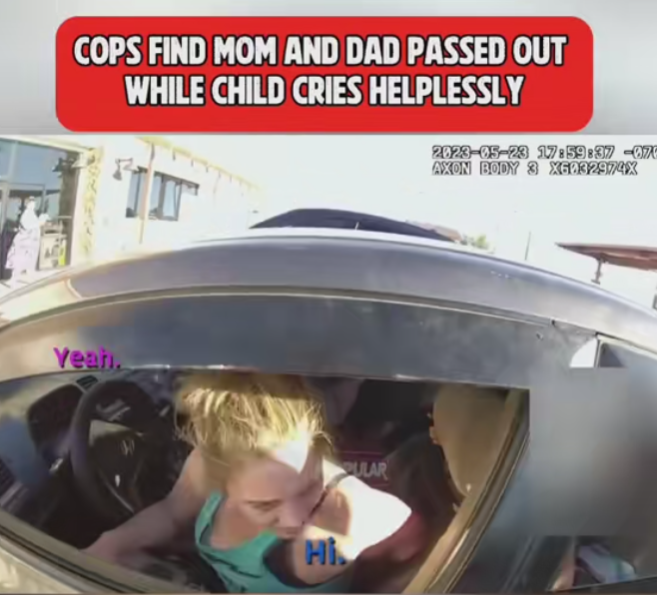
“Bodycam Footage Shows Emotional Rescue After Officers Discover Unresponsive Adults and Crying Child in Backseat”

A heartbreaking bodycam clip has gone viral after showing officers responding to a call involving a young child crying inside a parked vehicle. The uploader’s caption claims that both parents were “passed out,” but the footage itself does not confirm the cause or condition of the adults — only that officers found them unresponsive and immediately took action to check everyone’s safety.

The video opens with the harsh glare of the late afternoon sun beaming into a car’s interior. A small child can be heard crying in the backseat, the sound urgent enough that officers rush toward the vehicle without hesitation. When the door opens, viewers see a woman slumped forward in the driver’s seat. She slowly lifts her head as the officer calls out, clearly startled and disoriented as she tries to understand what’s happening around her.

Officers remain calm, repeatedly asking if she is okay and whether she can hear them. Their tone suggests concern rather than confrontation, as they try to assess whether she is experiencing a medical issue, exhaustion, or another condition. Behind her, the child continues crying, prompting one officer to gently address the toddler in a soothing voice before checking for any signs of distress.

Moments later, the bodycam shows another adult in the passenger seat, also slow to respond. Again, the video does not reveal why the two adults were unresponsive, but officers immediately shift gears into safety mode, ensuring that the child is removed from the backseat and comforted while they continue assessing the situation.

The chaotic scene — a crying child, confused adults, and the tense uncertainty of not knowing whether a medical emergency is unfolding — has struck a deep emotional chord with viewers. Comment sections across platforms are filled with concern, sympathy, and questions about what led to the moment captured on camera.

Experts who analyze emergency-response footage emphasize that officers often encounter situations like these where exhaustion, heat, dehydration, medical complications, or medication reactions may cause adults to become unresponsive. Without official reports, it is impossible to know the reason, and online captions can easily oversimplify complex situations. This is why professionals urge viewers to avoid making assumptions about the family based solely on short clips.

In the video, officers take care to ensure the child’s wellbeing first, offering gentle reassurance and creating distance from the frightening environment inside the car. The child appears alert but visibly upset, clinging to an officer’s hand as they carry them away from the vehicle.

Meanwhile, medics are reportedly contacted off-camera, though the clip cuts before showing whether emergency personnel arrived or whether the adults received medical evaluations. This abrupt ending has prompted thousands of viewers to demand a Part 2 for closure — hoping to learn that the child was safe and that the adults received the care they needed.

What makes the clip so impactful is not just the dramatic tone of the captions but the raw humanity in the officers’ reactions: the urgency, the concern, and the protective instinct toward the child.

Until official updates or additional footage appears, the full story remains unknown. What is clear, however, is that the child’s cry prompted a swift response — one that may have prevented a far more dangerous outcome.
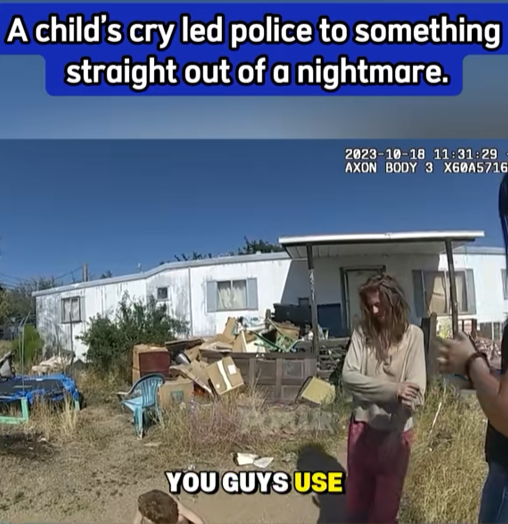
“Bodycam Footage Reveals Haunting Scene After Officers Follow a Child’s Cry to a Remote Property”

A viral bodycam clip has shaken social media after showing officers responding to a report of a child crying near a remote, cluttered property. The uploader’s caption claims the discovery was “straight out of a nightmare,” but the footage itself shows only the initial encounter — not the full investigation or official findings. Still, the dramatic visuals and emotional weight of the scene have fueled intense public reaction.

The video begins under a harsh midday sun. Officers step into a dusty yard scattered with debris: old furniture, broken plastic chairs, cardboard boxes, and discarded household items piled haphazardly around a small white trailer home. The property appears weathered and in disrepair, instantly creating an unsettling atmosphere that has contributed to the clip’s rapid spread online.

As officers approach, they find a woman standing outside. She appears disheveled, anxious, and confused by their presence. Her clothes hang loosely, and her body language suggests exhaustion or stress. Meanwhile, an unseen child nearby can be heard crying off-camera — the sound that reportedly triggered the emergency response. The officers immediately ask questions, their tone direct but controlled, trying to understand what is happening and ensure the child’s safety.

In a brief, partially audible exchange, the woman attempts to answer, but her responses are fragmented, making it difficult for viewers to determine what led officers to the scene. The footage captures only a tiny moment of what is likely a much larger, multi-layered situation. It’s clear, however, that officers are concerned, scanning the property and trying to assess whether anyone needs immediate help.

The clutter surrounding the home has become a major talking point online. Many viewers have expressed worry based on the visible conditions alone, while others caution that appearances can be misleading. Social workers and crisis responders who have seen similar scenarios point out that a messy property does not automatically indicate wrongdoing; it can be the result of poverty, lack of resources, or personal struggles. Without official statements or reports, no assumptions about neglect or danger can be confirmed.

As the clip progresses, viewers see officers kneeling to speak with the child, offering calm reassurance. Their movements are measured, emphasizing the importance of stabilizing emotional distress during calls involving minors. This moment — the juxtaposition of a crying child, a distressed adult, and a chaotic environment — is what has resonated most deeply with audiences.

The video ends abruptly, just as officers begin taking next steps. It does not show whether medical personnel were contacted, whether child protective services arrived, or whether the situation was resolved peacefully. That lack of resolution has only intensified speculation, prompting thousands of users to beg for “Part 2” to understand what truly unfolded.

Experts in online media warn that viral captions often dramatize situations before full facts are known. They urge viewers to remember that bodycam videos provide snapshots, not full context — and that real-life cases involving families, mental health, or poverty must be handled with sensitivity and caution.

For now, the clip remains one of the most discussed videos of the week, leaving millions waiting for the next segment and hoping for clarity — and most of all, safety for the child involved.

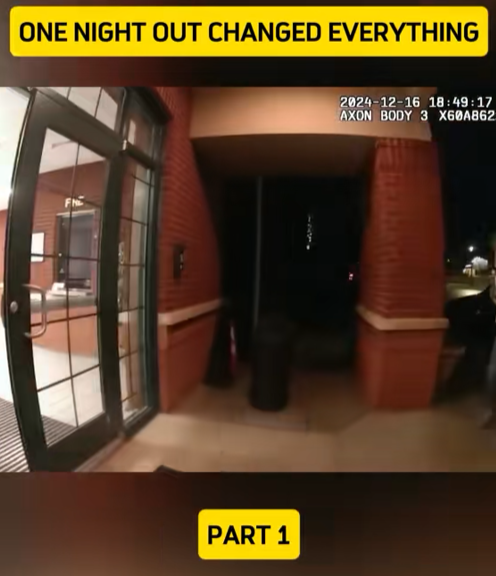
“Bodycam Part 1: A Simple Night Out Turns Into a Life-Changing Police Encounter — What Really Happened at This Door?”

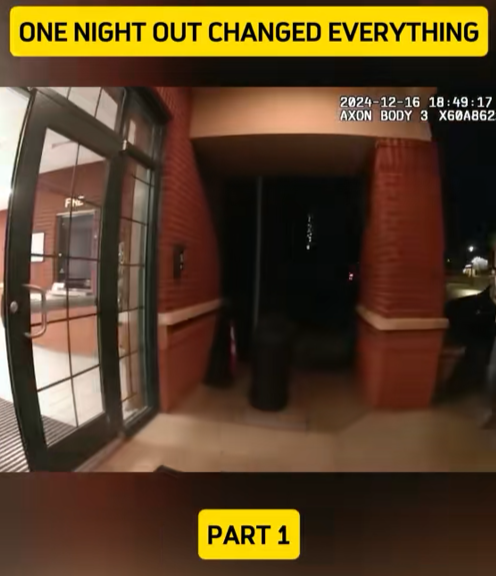
A mysterious bodycam clip titled “ONE NIGHT OUT CHANGED EVERYTHING – PART 1” has ignited a storm of curiosity online after showing the tense moments officers arrived at a quiet building late at night. The footage, recorded on December 16, 2024, begins with the officer approaching a dimly lit entrance—its glass doors reflecting the interior lights while the outdoor walkway sinks into darkness. Nothing explosive happens in the first few seconds, but the atmosphere is so eerie that viewers instantly felt something major was about to unfold.

The clip opens with only the sound of footsteps and distant traffic, creating a sense of suspense. The officer’s bodycam faces the building’s entryway: red brick columns, a security system keypad, and two shadowed corners where anything—or anyone—could be hiding. The scene looks calm at first glance, but experienced viewers of bodycam footage often recognize that the quietest moments sometimes precede the biggest revelations.

As the officer reaches for the door, viewers can see the timestamp blinking in the corner of the screen, grounding the moment in real time. This detail has sparked speculation about what kind of call the officer was responding to. A disturbance? A missing person? A welfare check? The video gives no answers yet—only the unsettling sense that something happened earlier in the night that led to this moment, something serious enough to draw police response.

What stands out most is the way the officer pauses before entering, surveying the silent entryway as if preparing for uncertainty. The reflective glass reveals part of the lobby inside: a check-in desk, bright overhead lights, and an empty waiting area. Everything seems normal, but the tension in the officer’s movements suggests there may be more to the situation than meets the eye.

Comment sections across social platforms quickly filled with theories. Some believe the incident may involve a confrontation that began earlier in the evening, while others suggest it could be tied to a friend group’s night out gone wrong—a scenario many viewers recognized as all too common in real-life emergency calls. Still, others think the eerie setting hints at a mysterious welfare check or a missing-person situation.

However, because the clip shows only the approach to the building and not the actual event that follows, no conclusions can be drawn yet. What is clear is that something unexpected happened earlier in the night, setting in motion a chain of events that would eventually bring officers to this exact doorway. The lack of immediate explanation has only intensified the intrigue, with thousands waiting for Part 2.

Experts in online media note that bodycam footage like this draws attention precisely because it shows the raw, unedited moments before an unfolding event. These quiet seconds—footsteps, pauses, door handles turning—often carry more suspense than action scenes, leaving viewers hungry for the next reveal.

For now, Part 1 simply sets the stage: a silent entrance, a tense pause, and a night that clearly took a dramatic turn long before the officer ever reached that door.

“Bodycam Part 1: A Simple Night Out Turns Into a Life-Changing Police Encounter — What Really Happened at This Door?”

A mysterious bodycam clip titled “ONE NIGHT OUT CHANGED EVERYTHING – PART 1” has ignited a storm of curiosity online after showing the tense moments officers arrived at a quiet building late at night. The footage, recorded on December 16, 2024, begins with the officer approaching a dimly lit entrance—its glass doors reflecting the interior lights while the outdoor walkway sinks into darkness. Nothing explosive happens in the first few seconds, but the atmosphere is so eerie that viewers instantly felt something major was about to unfold.

The clip opens with only the sound of footsteps and distant traffic, creating a sense of suspense. The officer’s bodycam faces the building’s entryway: red brick columns, a security system keypad, and two shadowed corners where anything—or anyone—could be hiding. The scene looks calm at first glance, but experienced viewers of bodycam footage often recognize that the quietest moments sometimes precede the biggest revelations.

As the officer reaches for the door, viewers can see the timestamp blinking in the corner of the screen, grounding the moment in real time. This detail has sparked speculation about what kind of call the officer was responding to. A disturbance? A missing person? A welfare check? The video gives no answers yet—only the unsettling sense that something happened earlier in the night that led to this moment, something serious enough to draw police response.

What stands out most is the way the officer pauses before entering, surveying the silent entryway as if preparing for uncertainty. The reflective glass reveals part of the lobby inside: a check-in desk, bright overhead lights, and an empty waiting area. Everything seems normal, but the tension in the officer’s movements suggests there may be more to the situation than meets the eye.

Comment sections across social platforms quickly filled with theories. Some believe the incident may involve a confrontation that began earlier in the evening, while others suggest it could be tied to a friend group’s night out gone wrong—a scenario many viewers recognized as all too common in real-life emergency calls. Still, others think the eerie setting hints at a mysterious welfare check or a missing-person situation.

However, because the clip shows only the approach to the building and not the actual event that follows, no conclusions can be drawn yet. What is clear is that something unexpected happened earlier in the night, setting in motion a chain of events that would eventually bring officers to this exact doorway. The lack of immediate explanation has only intensified the intrigue, with thousands waiting for Part 2.

Experts in online media note that bodycam footage like this draws attention precisely because it shows the raw, unedited moments before an unfolding event. These quiet seconds—footsteps, pauses, door handles turning—often carry more suspense than action scenes, leaving viewers hungry for the next reveal.

For now, Part 1 simply sets the stage: a silent entrance, a tense pause, and a night that clearly took a dramatic turn long before the officer ever reached that door.

“Bodycam Part 1: Chaotic Parking Lot Showdown Erupts as Officers Confront a Woman Trying to Walk Away!”

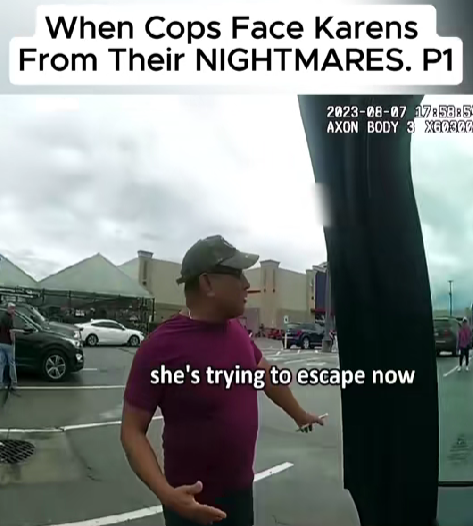
A newly surfaced bodycam clip labeled “When Cops Face Karens From Their Nightmares. P1” has quickly blown up online after capturing a tense and unpredictable encounter in a crowded parking lot. Although the uploader uses dramatic language and claims the woman was “trying to escape,” the footage itself shows only fragments of the situation, offering viewers a chaotic but incomplete picture of what truly happened.

The video opens on a rainy afternoon outside a large retail store. Water glistens across the pavement, shoppers move in and out of the building, and a man in a purple shirt steps forward to speak with officers. His voice is urgent as he gestures toward a woman off-camera, stating, “She’s trying to escape now.” But the clip doesn’t reveal what occurred before the officers arrived, nor what he is referencing — leaving a gap that online audiences have rushed to fill with speculation.

The officers approach the area calmly, scanning the parking lot as they attempt to understand the situation. Their body language suggests they’ve just been briefed and are trying to locate the woman mentioned. The partially obscured audio hints at multiple voices speaking at once — a sign that several witnesses or bystanders may be involved. This kind of multi-person chaos often turns a simple call into a complicated scene.

Moments later, the camera shifts slightly, revealing vehicles, shopping carts, and people looking on from a distance. The tension rises as officers receive conflicting information from different individuals, something that commonly happens in crowded public incidents. Viewers online have pointed out that these moments highlight the difficulty officers face in sorting fact from confusion in real time.

Meanwhile, the dramatic caption has sparked huge reactions across social media. The term “Karen,” while commonly used online, is a label that can oversimplify or unfairly characterize someone without full context. Some viewers have criticized the uploader for using it to frame the narrative before showing what actually took place. Others embraced the theatrics, adding humorous commentary or reaction stitches to the clip.

What the footage does show is a busy, unpredictable scene in which officers are trying to figure out who they need to talk to and what exactly happened. The woman in question does not appear clearly in the first part of the clip, and no actions confirming an attempted “escape” are shown on camera. This has led many viewers to emphasize that the situation may have been less dramatic than the caption suggests.

The lack of clarity has turned the video into a social-media mystery, with people eagerly awaiting Part 2. Many hope it will reveal who the woman is, what prompted the call, and whether she was actually trying to avoid officers — or simply confused, overwhelmed, or attempting to walk to another location during the chaos.

For now, the clip stands as yet another example of how quickly a parking-lot misunderstanding can become a viral moment once bodycam footage hits the internet. With thousands of comments, reaction videos, and endless theories, one thing is certain: viewers won’t rest until they see the next part of the story.

“Bodycam Part 3: Tense Arrest Escalates When Woman Suddenly Collapses — Officers Scramble to Respond!”

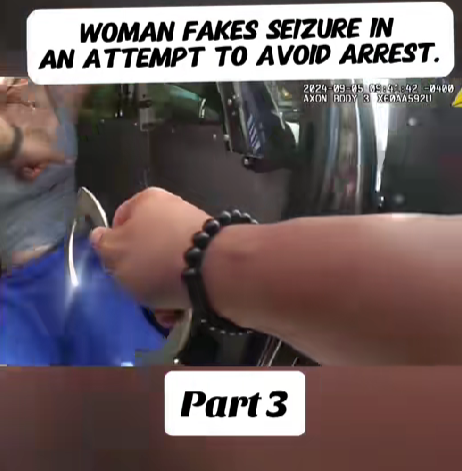
A newly released bodycam clip labeled “Part 3” has set social media ablaze after capturing a chaotic moment during an arrest, in which a woman suddenly collapses while officers are attempting to place her into custody. The uploader claims she was “faking a seizure to avoid arrest,” but the footage itself does not confirm whether the episode was real or staged — leaving viewers intensely divided and sparking a massive online debate.

The clip begins inside the back of a patrol vehicle, where officers are attempting to guide the woman into a secure seated position. She appears agitated, shifting her body and speaking rapidly as officers try to maintain control. Moments later, her body suddenly stiffens and slumps sideways, prompting immediate reaction from the officers around her.

One officer is seen reaching out quickly, attempting to stabilize her as her movements become erratic. The camera shakes slightly during the commotion, making the scene feel even more intense. Viewers can see hands moving into the frame, trying to keep her safe from hitting the vehicle’s metal surfaces. The officers repeatedly attempt verbal communication, asking her to respond and checking whether she is conscious.

The online caption implies the woman intentionally staged the episode, but medical experts caution that bodycam footage alone cannot determine whether a medical event is genuine or not. Situations involving sudden collapses are taken seriously by law enforcement, particularly because real medical emergencies — including fainting, panic-induced episodes, or neurological events — can occur during moments of extreme stress.

In fact, several commenters have pointed out that stressful encounters with police can trigger legitimate physical reactions, especially for individuals with anxiety, trauma histories, or underlying medical conditions. Others, however, believe her movements appear inconsistent with a true seizure, fueling speculation that she may have been attempting to avoid further legal consequences. With no medical report or official statement released in the video, the truth remains unknown.

Throughout the clip, the officers remain surprisingly calm despite the confusion. One officer can be heard instructing the others to “watch her head,” while another adjusts her position to prevent injury. Their immediate shift from arrest procedures to potential medical-response mode has earned praise from many viewers who recognize the challenge of balancing safety, procedure, and uncertainty in real time.

By the end of the video segment, the officers appear to be assessing whether medical assistance is necessary. The footage cuts abruptly before showing whether paramedics were called or whether the woman regained responsiveness. This lack of resolution has only intensified public curiosity, with many users demanding the release of Part 4 to understand what ultimately happened.

The video has sparked conversations about the complexity of policing, the difficulty of evaluating medical events in real time, and the growing trend of dramatic arrests going viral on social platforms. It also highlights how captions can influence perception: many viewers initially accepted the “faked seizure” claim without questioning its accuracy, illustrating how easily online narratives are shaped by phrasing rather than verified facts.

Until more footage or information is released, the incident remains a mystery — one that continues to stir opinions, debates, and speculation across every major platform.

“Bodycam Part 1: Teen Meltdown in Cosmetic Store Leaves Shoppers Stunned — Officers Rush In!”

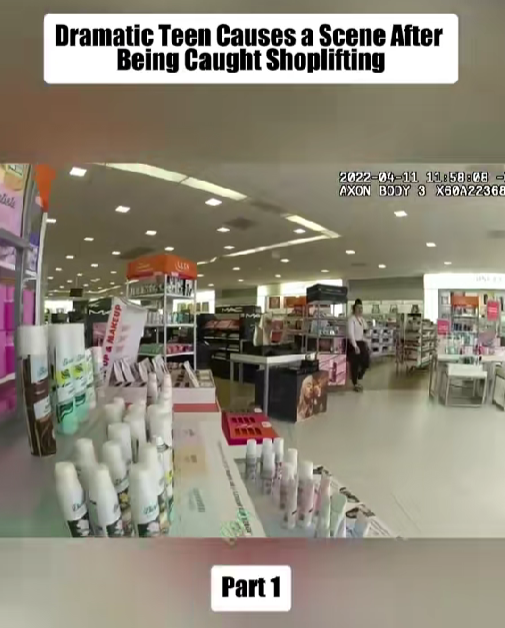
A viral bodycam clip from inside a brightly lit cosmetics store has taken over social media after capturing a teenager’s emotional outburst during a confrontation with store employees. The uploader’s caption claims that the teen was “caught shoplifting,” but the footage itself does not show the alleged act — only the tense aftermath. As the video spreads rapidly, viewers remain divided on what actually happened and who was in the wrong.

The clip begins with a panoramic view of the store: neatly arranged shelves of skincare products, makeup displays, and promotional stands. Everything looks calm until a sudden commotion erupts near the back of the aisle. A teen can be seen raising her voice, pacing anxiously as employees attempt to speak with her. Their tones appear calm but firm, suggesting that something serious has occurred just moments before the camera arrives.

The teen’s emotions boil over quickly. She gestures with her hands, her voice cracking as she insists she “didn’t do anything.” While the video does not show what led to the confrontation, the dramatic reaction has sparked major debates across TikTok and Instagram. Some viewers sympathize with her stress, pointing out that teenagers often panic when confronted or accused — especially in public. Others believe her intensity suggests she may be reacting out of fear of consequences.

As the scene unfolds, officers enter the store. Their body-worn cameras capture the teen turning toward them with wide eyes, her breathing visibly quickening. One officer approaches with a calm, steady tone, instructing her to take a seat so they can talk. The teen’s voice becomes louder and more frantic as she struggles to explain what happened. Her distress increases when she notices other shoppers staring, adding another layer of embarrassment and pressure.

Experts in youth behavior note that teens often respond dramatically when they feel trapped or misunderstood. Even if nothing criminal occurred, the fear of humiliation, authority figures, and the possibility of being blamed can trigger emotional meltdowns. Viewers who watched the clip repeatedly commented on the teen’s body language: shaking hands, rapid speech, and pacing — all signs of overwhelming stress.

The store employees, who appear in brief glimpses, seem to be maintaining distance while communicating with officers. Without the full audio or the initial encounter, it’s impossible to determine the exact nature of the situation. Many commenters have urged caution, reminding others that viral captions often sensationalize events to draw views.

By the end of the clip, officers gently guide the teen toward the front of the store. She appears visibly shaken but compliant as they talk her through what will happen next. The video cuts out before showing any resolution, leaving viewers eager for “Part 2” to understand whether misunderstandings were cleared up or if further action was taken.

The intense moment has now sparked conversations about emotional regulation, youth interactions with police, customer privacy in retail settings, and the ethics of posting such clips online. With only a portion of the event shown, the internet continues searching for clarity — highlighting once again how powerful and complicated viral bodycam footage can be.

Until more footage is released, the full story remains unfinished.

“Internet Erupts After Viral Restaurant Drama — $200 Comped Meal, $6 Tip & a 1-Star Review Leave Followers Furious!”

Social media has exploded into a full-blown debate after a viral video spotlighted an influencer named Famida, known online as medesoo0, following a dramatic restaurant encounter that has captured millions of views across platforms. The situation, as described by online commenters and recap accounts, involves a disputed restaurant bill, a small tip following a partially comped meal, and a controversial 1-star review — but the actual facts remain incomplete, and the story is evolving in real time.

The viral posts claim that Famida’s meal was reduced by $200 after a misunderstanding or complaint at a restaurant. According to the circulating narrative, she allegedly left a $6 tip and later posted a 1-star review, sparking intense backlash from viewers who felt the actions were unfair to the staff. However, the online commentary does not include verified statements from Famida herself, nor the restaurant, leaving much of the situation based on speculation, reactions, and reshared clips.

In a short video making the rounds, Famida appears walking through a city street, confidently addressing the camera with stylish sunglasses and a composed expression. This visual has been widely stitched and reposted as creators add their own commentary, assumptions, and dramatic headlines. The overlayed captions and reactions have further fueled the storm, with some users expressing frustration, while others defend her and caution against taking unverified claims as fact.

This controversy highlights a recurring theme in social media culture: how quickly public opinion can shift based on short clips, partial screenshots, or second-hand retellings. Without full context — including what happened at the restaurant, whether the comped amount was offered voluntarily, how the tip was calculated, or why she left the review she did — creating a definitive narrative becomes nearly impossible. Yet, platforms have still erupted with intense emotion, turning the incident into a trending topic.

Experts in online reputation note that influencer-related controversies often spiral when audiences feel strongly about service industry fairness. Many viewers empathize deeply with restaurant workers, especially when tipping behavior is involved. As a result, even unverified claims can spark massive discussions. But those same experts warn that reacting solely to viral captions risks misrepresenting real people and real events.

Supporters of Famida are urging viewers to wait for her side of the story, pointing out that snippets taken out of context can ignite unnecessary backlash. They emphasize that comped bills often result from customer service policies unrelated to wrongdoing, and tipping behavior — while debated — can vary widely depending on culture, personal preference, and service satisfaction.

Meanwhile, critics argue that influencers carry heightened responsibility because their actions are amplified online, sometimes affecting businesses and workers unintentionally.

The situation remains fluid, with no formal statements issued at the time of the viral explosion. As more creators jump into the conversation, viewers are left sorting through opinions, reactions, and assumptions — all while waiting to see whether Famida herself will address the growing controversy.

For now, the incident stands as yet another reminder of how quickly the internet can turn a small misunderstanding into a trending global debate, and how important it is to approach viral claims with caution until all sides of the story come forward.

@hzds6147

Fahmida, a food influencer from New York city,is in the hot seat after john from @chefpapanyc put her on blast for not posting a review that she promised in exchange for a free meal +drinks.#fyp #new #foodreview #chefpapanyc #drama

♬ original sound – Baonews
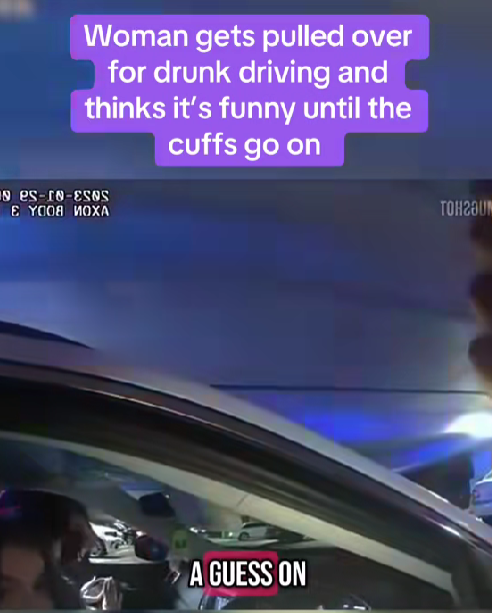
“Bodycam Footage Shows Woman Laughing During Traffic Stop — Until Everything Suddenly Gets Serious”

A viral bodycam clip is circulating across social media after capturing the dramatic shift in a woman’s attitude during a late-night traffic stop. The uploader claims she was pulled over on suspicion of drunk driving, noting that she initially laughed through the interaction — until officers finally placed her in cuffs. While the footage does not show the full roadside investigation or confirm test results, the moment-to-moment reactions have fueled huge online conversations.

The video begins with flashing blue patrol lights illuminating the side of the road. Inside a parked car, a woman can be seen smiling and laughing as officers speak to her through the window. Her tone appears light-hearted, almost playful, as if she doesn’t fully grasp the seriousness of the situation. Viewers have pointed out that nervous laughter is a common reaction when people feel overwhelmed, confused, or anxious during stressful encounters with law enforcement.

An officer can be heard giving instructions, though the audio is partially drowned out by traffic and background noise. The woman continues speaking casually, seemingly unaware that the situation is escalating. Officers remain professional and calm throughout, their body language showing that they are focused on completing the required procedures.

As the video progresses, the tone shifts dramatically. Once officers decide to place her under arrest — a moment not shown in full but hinted at by the uploader — the woman’s demeanor changes instantly. When the cuffs come out, her smile fades, replaced by shock and disbelief. The footage captures that exact moment: the realization that the stop is no longer a casual encounter, but a law-enforcement action with real consequences.

The contrast between her early reactions and her later panic has sparked major conversations across comment sections. Some viewers sympathize with her, saying laughter can be a coping mechanism. Others emphasize that roadside stops are serious situations where cooperation and awareness are crucial. Many have noted that the officers in the video appear composed, careful, and procedural, even as emotions rise inside the vehicle.

Legal commentators online remind viewers that bodycam videos provide only small fragments of what happened. The full context — including why she was pulled over, whether field sobriety tests were conducted, and what led officers to proceed with an arrest — is not visible in the short clip. As a result, they warn against assuming guilt or drawing conclusions based solely on edited segments. Official reports and court findings, not social media captions, determine what actually occurred.

The clip has also reignited discussions about impaired driving awareness, especially among young adults. Advocacy groups stress that even joking or laughing behavior during traffic stops often masks fear or lack of understanding about the potential dangers and legal consequences.

As more footage from the incident is expected to surface, viewers are eager to learn how the situation unfolded after the moment shown in the video. For now, the clip stands as yet another example of how quickly a late-night stop can shift from light-hearted to life-changing — and how bodycams continue to reveal unfiltered human reactions in real time.

One thing is clear: this moment has struck a chord, leaving millions watching and debating what really happened before and after the camera started rolling.

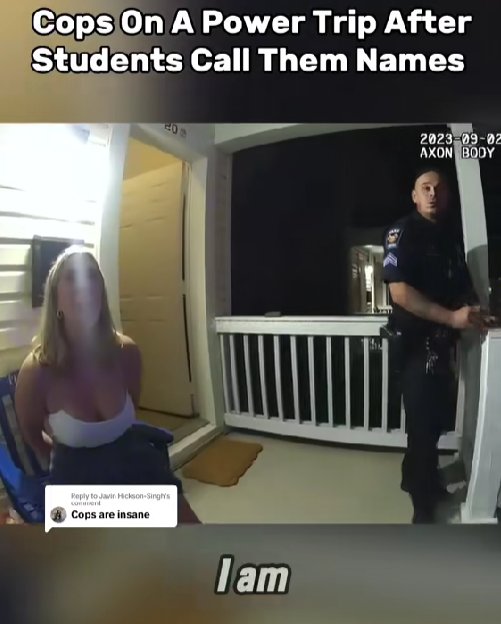
“Bodycam Sparks Outrage Debate: Late-Night Student Encounter Leaves Viewers Divided!”

A late-night bodycam video is causing a massive wave of online debate after capturing a tense interaction between police officers and a group of students outside an apartment complex. The uploader framed the clip with the provocative caption “Cops On A Power Trip After Students Call Them Names,” a line that has fueled heated arguments across TikTok, Instagram, and YouTube. But as with many viral clips, the footage shows only a fraction of what happened, leaving viewers piecing together the context on their own.

The video opens on a dimly lit porch, where a young woman sits in a patio chair with her hands restrained behind her back. Her expression is a mix of frustration and disbelief. She appears to be trying to explain herself as officers stand nearby. The porch light casts sharp shadows across the area, adding to the intensity of the moment. One officer stands near the doorway, maintaining a calm but firm posture as he speaks to someone off-camera.

The clip suggests that the confrontation began after several students allegedly used insulting language toward officers, but the footage does not show the earlier part of the interaction. That missing context has become a major point of discussion online. Without seeing what led up to this moment, viewers are left to interpret the situation based on body language, tone, and snippets of dialogue.

Throughout the footage, the officers appear measured and procedural. They issue instructions without raising their voices, and there is no visible physical conflict. Still, the decision to detain the young woman has sparked intense reactions. Some viewers believe the officers were responding to behavior they deemed disorderly, while others interpret the video as an overreaction to verbal insults.

Experts in police-community relations note that situations involving alcohol, late-night gatherings, and emotional students can escalate quickly. What begins as verbal frustration can sometimes cross into behavior officers feel obligated to address. At the same time, critics argue that officers must show restraint and avoid allowing emotion to influence their decisions. Because the full interaction isn’t shown, both interpretations continue to circulate simultaneously.

The young woman in the clip appears upset but not aggressive. At one point, she leans slightly forward, speaking rapidly as if trying to clarify her side of the story. Her tone is urgent but not confrontational. This has led many viewers to express sympathy, emphasizing the stress and embarrassment a college student might feel in such a moment.

Meanwhile, the comment sections have exploded with strong opinions. Some defend the officers’ professionalism, saying they appeared calm and followed protocol. Others accuse the uploader of exaggerating the situation for views. The lack of beginning-to-end context has only amplified the controversy.

As more bodycam videos surface from the same night, viewers hope to understand what prompted the officers’ response and whether the students’ comments played a significant role. For now, the clip stands as yet another example of how quickly narratives form online—and how one short moment can ignite a nationwide debate about authority, responsibility, and the power of edited footage.

@bodycam.clip

Replying to @Javin Hickson-Singh Part 2. Cops get mad after college students allegedly called them names.The police at first end up going to the wrong residence. Who is in the wrong? #bodycamfootage #fypツ #collegebodycam #copcam

♬ original sound – Bodycam Clips