Warrantless Entry Sparks Violent Confrontation — Officer Left Knocked Out After Crossing the Line

A shocking bodycam-style clip is going viral after an officer was knocked unconscious during what online captions describe as a warrantless entry into a private home. The incident has ignited fierce debate about police authority, self-defense, and where the legal boundaries truly lie when officers enter a residence without judicial approval.

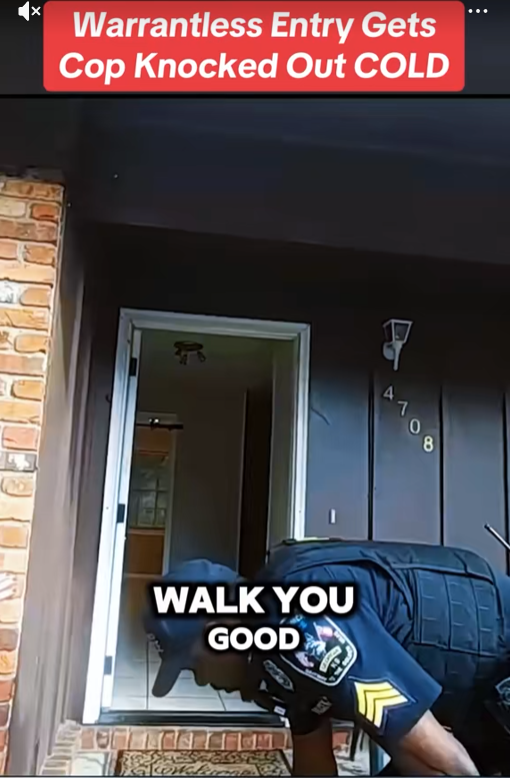
The footage shows an officer crouched at the entrance of a home, partially inside the doorway. The door is open, and the interior of the house is visible behind him. According to captions circulating with the video, the officer attempted to enter the residence without a warrant or clear consent. Moments later, the situation escalated violently, ending with the officer reportedly knocked out cold.

Viewers watching the clip say the officer appeared to underestimate the danger of entering a home without first securing the situation or confirming legal authority. In many jurisdictions, a private residence is given the highest level of constitutional protection. Without a warrant, consent, or exigent circumstances, law enforcement entry can be considered unlawful.

Legal experts explain that warrantless entry is only allowed under specific conditions, such as immediate danger, pursuit of a fleeing suspect, or the imminent destruction of evidence. When none of these apply, stepping inside a home can violate constitutional rights — and dramatically increase the risk of confrontation.

What has fueled outrage online is the implication that the officer’s actions directly triggered the violence. Critics argue that homeowners have the right to defend themselves when they believe someone is unlawfully entering their home, especially in fast-moving, confusing situations where identity and intent are unclear.

Supporters of the officer caution that bodycam clips often lack context. They argue that officers may have had information not visible in the footage, and that violence against police is never justified. However, even among law-enforcement professionals, many acknowledge that entering a residence without proper authority is one of the most dangerous mistakes an officer can make.

Civil rights advocates say the incident highlights a long-standing issue: when constitutional boundaries are ignored, everyone is put at risk — civilians and officers alike. “Homes are not traffic stops,” one attorney wrote. “Once you cross that threshold unlawfully, the rules change fast.”

The phrase “knocked out cold” has dominated headlines, but experts stress that the larger issue is prevention. Proper warrants, clear communication, and distance are critical tools for keeping encounters from turning v*olent. When those safeguards are skipped, chaos can follow in seconds.

Online reaction has been deeply divided. Some viewers see the incident as a textbook example of why warrant requirements exist in the first place. Others fear that glorifying such confrontations encourages dangerous behavior on both sides. Still, the clip continues to spread, amplified by bold captions and emotionally charged commentary.

No official statement has yet clarified whether the officer’s entry was legally justified or whether disciplinary action followed. Investigations into incidents like this typically involve internal review, bodycam analysis, and legal scrutiny to determine if policies were violated.

What remains undeniable is how quickly the situation spiraled. One step over a legal boundary transformed a routine encounter into a violent outcome with serious consequences. For many watching, the takeaway is sobering: constitutional protections are not technicalities — they are safeguards designed to prevent exactly this kind of moment.

As debates continue, the incident stands as a stark reminder that when authority ignores the law, the cost can be immediate, brutal, and irreversible.


Navy SEAL “Checks” Officer After Shoulder Contact — Tense Encounter Sparks Debate Over Authority and Respect

A tense confrontation involving a man identified online as a Navy SEAL and multiple law enforcement officers has gone viral, igniting heated debate about authority, boundaries, and how quickly situations can escalate behind closed doors.

The footage, recorded inside what appears to be a holding or processing room, shows the shirtless man seated against a wall while officers stand nearby in tactical gear. According to captions circulating with the clip, the incident escalated after an officer allegedly touched or grabbed the man’s shoulders. What followed was a sharp verbal response that immediately shifted the tone of the room.

At the center of the moment is a line that has since spread across social media: “Are you guys scared?” The comment, delivered calmly but pointedly, was interpreted by many viewers as a challenge rather than a threat. Supporters say it was a way of asserting boundaries and demanding respect, while critics argue it unnecessarily inflamed an already volatile situation.

Online posts claim the man is a Navy SEAL, a detail that has amplified reactions. Admirers praise his composure, saying he remained controlled despite what they see as an unnecessary physical interaction. They argue that no officer should place hands on someone without clear justification, especially in a confined environment where tensions are already high.

Others see the situation differently. Law enforcement supporters say officers are trained to maintain physical control in custodial settings for safety reasons, and that brief shoulder contact does not automatically constitute misconduct. From this perspective, the verbal confrontation risked escalating a situation that officers were trying to keep contained.

What makes the clip so polarizing is what it represents symbolically. To some viewers, it’s about a highly trained individual refusing to be treated roughly or dismissively. To others, it’s about no one being above standard procedures, regardless of background or military service.

Experts note that detention environments are inherently stressful. Confined spaces, raised voices, and physical proximity can quickly trigger defensive reactions on both sides. Even minor contact can feel threatening, especially when power dynamics are already uneven.

The video does not show what happened before or after the brief exchange, leaving critical context unknown. That hasn’t stopped speculation, however. Comment sections filled rapidly with arguments over whether the officer crossed a line, whether the response was appropriate, and whether military status should matter at all in civilian law enforcement encounters.

Civil rights advocates say the moment highlights a broader issue: physical contact by authority figures, even when routine, can be perceived as intimidation. They argue that clearer communication and distance can prevent unnecessary confrontations. Meanwhile, policing experts stress that officers must maintain control of scenes that can become unpredictable in seconds.

As with many viral clips, the truth likely sits somewhere between extremes. The footage captures only a fragment of a longer interaction, yet that fragment has become a proxy for larger debates about power, respect, and restraint.

What continues to resonate is how fast the energy in the room changed. A single touch, a single sentence, and suddenly the dynamic shifted from procedural to confrontational. For viewers, it’s a reminder that words and actions carry weight — especially in environments where authority and vulnerability collide.

Whether one sees the man’s response as justified or provocative, the incident underscores a reality of modern policing and viral media: every moment can be scrutinized, replayed, and judged by millions. And once a clip catches fire, it often becomes less about what happened in that room — and more about what people believe it represents.

16-Year-Old Girl D*es After Halloween Prank — Friend Fined Just $20,000, Sparking Outrage

A heartbreaking tragedy has left a family shattered and a community demanding answers after a 16-year-old girl d*ed following what was described as a Halloween prank. The case has ignited widespread anger after it was revealed that the friend involved was fined only $20,000, a penalty many believe fails to reflect the severity of what happened.

According to reports and images circulating online, the teenager collapsed shortly after the prank took place. In the photo, she appears slumped in a chair, her body limp, surrounded by people desperately trying to help as emergency responders were called. What began as a moment meant for laughter and fear quickly turned into a nightmare with irreversible consequences.

Authorities say the prank caused extreme distress that led to a medical emergency. While exact medical details have not been fully disclosed, experts note that sudden shocks, panic, or intense fear can trigger fatal reactions in vulnerable individuals, including cardiac arrest or respiratory failure. In young people, these reactions are rare but devastating when they occur.

The victim was rushed for medical attention, but despite efforts to save her, she did not survive. Her d*ath sent shockwaves through her school and neighborhood, where classmates described her as kind, full of life, and excited about Halloween. Vigils were reportedly held as friends and teachers struggled to process how quickly everything changed.

What has fueled public outrage is the legal outcome. Investigators determined that the incident did not meet the threshold for criminal charges beyond negligence. As a result, the friend responsible for the prank was issued a fine of $20,000 rather than facing jail time. For many, that decision feels deeply unjust.

“This was someone’s child,” one commenter wrote. “A fine doesn’t equal a life.” Similar reactions flooded social media, with many arguing that the punishment sends the wrong message about accountability, especially when dangerous pranks result in d*ath.

Legal analysts explain that prank-related cases are often difficult to prosecute unless there is clear intent to cause harm. In this situation, authorities reportedly concluded that the prank was not meant to be deadly, limiting the charges they could pursue under the law. Still, critics argue that intent should not outweigh outcome when a life is lost.

Safety experts warn that pranks have escalated dramatically in recent years, driven by social media trends and pressure to create shocking moments. What once involved harmless scares has, in some cases, crossed into dangerous territory involving physical risk, emotional trauma, or medical emergencies. Halloween, in particular, sees a spike in such incidents.

Parents and educators are now urging teens to think twice before participating in pranks. Many schools have issued reminders about the real-world consequences of “jokes” that go too far, emphasizing that fear and stress can be just as d*adly as physical harm.

For the victim’s family, no fine or legal explanation can ease the loss. They are left grieving a daughter whose life ended far too soon, in a moment that was never supposed to be dangerous. Supporters say the family hopes her story will serve as a warning to others and prevent similar tragedies in the future.

As the debate continues, one message is clear: not all pranks are harmless, and some mistakes cannot be undone. A single moment changed everything — and for many, the punishment feels painfully small compared to the cost of a young life lost.

@cjvvk21

A 16-year-old girl died after a Halloween prank, and her friend was fined only $20,000. #Crime #Criminal #Law #Court #fyp

♬ original sound – cjvvk21
INDIAN WOMAN TARGETED IN AMERICA: Brutal Att*ck on Florida Nurse Sparks Outrage and Urgent Calls for Justice

A shocking case out of Florida is drawing national and international attention after an Indian nurse was violently attcked, leaving her hospitalized and fighting to recover. Images circulating online show the woman in a hospital bed, badly injured and connected to medical equipment, alongside surveillance-style footage that appears to capture the terrifying moment of the assult. The incident has ignited a wave of anger, fear, and concern—especially among immigrant communities and healthcare workers across the United States.

According to information shared by authorities and widely reported by media outlets, the victim is a nurse of Indian origin who was going about her daily routine when she was suddenly targeted. In the footage, the att*ck appears swift and brutal, unfolding in seconds and leaving bystanders stunned. Investigators say the violence was unprovoked, raising serious questions about motive and whether bias played a role.

What has intensified public reaction is the victim’s own reported statement from her hospital bed: “I am an Indian. That’s my only fault.” Those words have spread rapidly across social media, becoming a rallying cry for people who believe the att*ck reflects a broader pattern of xenophobia and racial hostility. While investigators have not yet publicly confirmed a hate-crime designation, the possibility is being actively examined.

Medical professionals treating the nurse say she sustained severe injuries that required immediate and intensive care. Photos show visible trauma to her face and body, along with breathing support and monitoring equipment. Doctors have not released full details about her long-term prognosis, but sources close to the case say recovery will be slow and emotionally taxing. For many healthcare workers, the images are especially disturbing—nurses are caregivers, not combatants, and should never be targets of violence.

Law enforcement officials in Florida confirmed that a suspect has been identified and taken into custody. Charges are expected to include aggravated ass*ult, with prosecutors reviewing evidence to determine whether additional hate-crime enhancements apply. Surveillance footage, witness statements, and forensic evidence are all being analyzed as part of the ongoing investigation.

The case has sparked renewed debate about safety for immigrants and frontline workers in the United States. Advocacy groups note that nurses—many of whom are immigrants—already face high levels of stress, burnout, and workplace risk. Being targeted outside of work only deepens fears and reinforces a sense of vulnerability. “This is not just an attck on one woman,” one advocate said. “It’s an attck on the idea that everyone deserves to feel safe.”

Community leaders have organized vigils and called for stronger protections, urging officials to take swift and transparent action. Many are demanding clearer communication from authorities and harsher penalties if bias is proven. At the same time, experts caution against spreading unverified claims, emphasizing the importance of allowing the investigation to reach factual conclusions.

For the victim and her family, the focus remains on healing. Friends describe her as dedicated, compassionate, and proud of her work as a nurse. They say she came to America to help others and build a better future—never imagining she would become the victim of such violence.

As the story continues to unfold, it stands as a sobering reminder of the dangers that still exist for minorities and essential workers. Whether the att*ck is ultimately classified as a hate crime or not, the impact is undeniable. One woman’s life has been changed forever, and a community is left asking how such violence can be prevented in the future.

Authorities are urging anyone with additional information to come forward. Meanwhile, supporters around the world are sending messages of solidarity, hoping that accountability—and justice—will follow.

@crimeaffair

Part 318 | Indian Woman targeted in America | Florida Nurse Attacked #truecrime #truestory #us #UK #britain

♬ Powerful songs like action movie music – Tansa
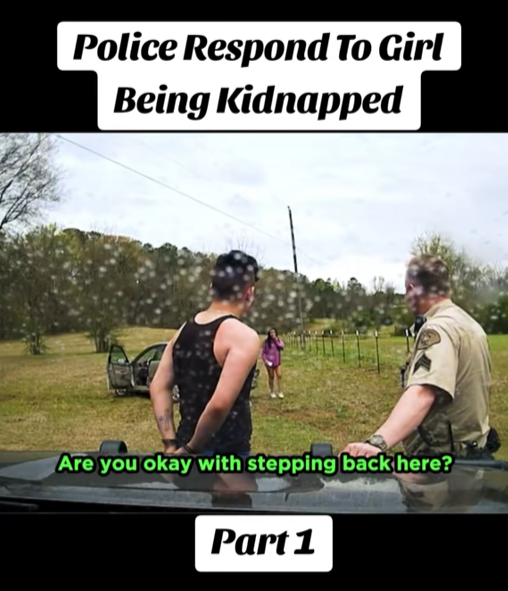
Police Respond After Girl Reports Being Kidn*pped — Bodycam Footage Reveals a Tense First Encounter

A chilling police response captured on bodycam is drawing widespread attention after officers were dispatched to a rural area following reports that a young girl had been kidnap*ed. The footage, labeled “Part 1,” shows the critical first moments when law enforcement attempted to assess what happened — and whether the girl was truly in danger.

The image shows a quiet, open landscape with fields stretching behind a parked vehicle. Two officers stand beside a man with his hands behind his back, while a girl is visible several steps away near a fence line. At first glance, the scene appears calm. But the context behind it is anything but.

According to information shared with the video, police were called after the girl claimed she had been taken against her will. When officers arrived, they faced a complicated and highly sensitive situation. Determining the truth in potential kidnap*ing cases requires extreme caution, especially when emotions are high and stories conflict.

In the footage, officers are heard carefully asking questions, including whether the girl feels safe stepping back to speak privately. That question alone signals how seriously police were treating the situation. In cases involving possible ab*se or abduction, separating individuals is often one of the first steps to ensure statements are not influenced by fear or pressure.

What makes the video especially unsettling is the uncertainty. At this early stage, officers do not yet know who is telling the truth. The man appears restrained but not aggressive, while the girl stands at a distance, visibly nervous. Viewers watching the clip are left trying to read body language, tone, and small details — much like officers must do in real time.

Law enforcement experts note that kidnap*ing calls are among the most high-risk and high-stakes responses. A wrong assumption can either leave a victim in danger or result in an innocent person being wrongfully detained. That is why officers are trained to slow situations down, ask neutral questions, and observe carefully before taking decisive action.

Online reactions to the clip have been intense. Some viewers immediately assumed the worst, expressing anger and fear for the girl’s safety. Others urged caution, reminding people that “Part 1” only shows the beginning and that conclusions should not be drawn until the full story is known. Social media, however, rarely waits for full context.

Child safety advocates stress that every claim of kidnap*ing must be taken seriously, even if it later turns out to be a misunderstanding or custody-related dispute. Many genuine cases begin with confusion, fragmented stories, and emotional distress. Officers are taught to prioritize safety first, then sort out facts.

At the same time, legal experts warn that false or mistaken allegations can also have life-altering consequences. Being accused of kidnap*ing is one of the most serious claims a person can face, often leading to immediate detention, investigation, and public suspicion — even if no crime occurred.

That is what makes this footage so compelling. It captures the fragile moment where truth has not yet been established, but lives are already hanging in the balance. One decision, one statement, or one overlooked detail could change everything for everyone involved.

As “Part 1” continues to circulate, many viewers are waiting to see what happens next. Was the girl truly kidnap*ed? Was there a misunderstanding involving guardianship or consent? Or was something more disturbing unfolding behind the scenes?

For now, the video serves as a stark reminder of how quickly ordinary settings can become scenes of potential crisis. It also highlights the difficult role police play in these moments — balancing urgency with restraint, and protection with fairness.

Whatever the outcome, this first response shows one undeniable truth: when a child says they are not safe, every second matters, and every question counts.

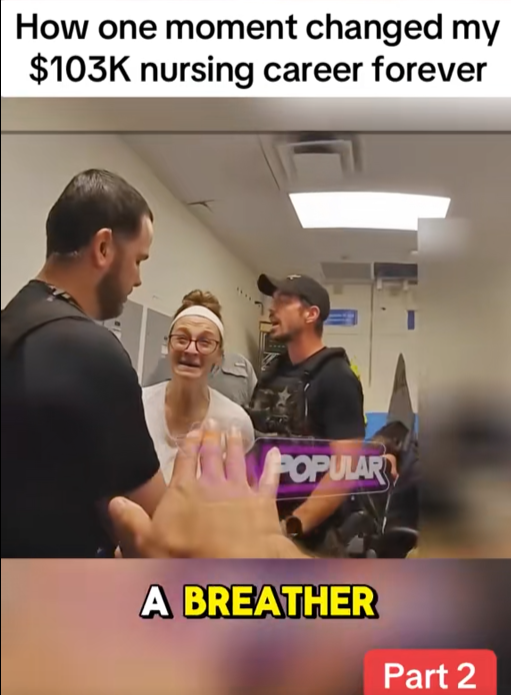
How One Moment Ended a $103K Nursing Career — A Split-Second Decision With Permanent Consequences

A single, emotionally charged moment inside a medical facility has gone viral after footage showed how a nurse’s $103,000-a-year career unraveled almost instantly. The clip, labeled “Part 2” online, has sparked widespread debate about stress in healthcare, professional boundaries, and how quickly years of hard work can disappear.

The image captures a tense hallway scene. A visibly distressed woman, identified online as a nurse, stands surrounded by multiple individuals, including what appear to be law enforcement or security personnel. Her face shows panic and disbelief, while voices around her attempt to control the situation. A hand reaches forward in the frame, signaling an effort to de-escalate as the moment spirals.

According to accounts shared alongside the video, the incident stemmed from a confrontation that escalated unexpectedly. In the chaos, one action — described by the nurse as a “breather,” a moment to pause or reset — was interpreted very differently by those responding. What she may have seen as stress-driven behavior was reportedly viewed as a serious violation of professional conduct.

Healthcare professionals across social media have reacted strongly. Many nurses and medical workers say the footage reflects the intense pressure they face daily: long shifts, understaffing, emotional burnout, and constant exposure to crisis. They argue that while standards must be upheld, the system often fails to account for the mental toll placed on frontline workers.

Others, however, stress that healthcare roles come with strict responsibilities. Patient safety, professionalism, and adherence to protocols are non-negotiable, regardless of stress levels. From this perspective, even a brief lapse can carry severe consequences, especially in clinical environments where lives are at stake.

What makes the story resonate is how fast everything changed. Years of education, certifications, and experience — all built toward a six-figure salary — were reportedly undone in minutes. For many viewers, the clip is a sobering reminder that careers in high-responsibility fields offer little margin for error.

Legal and employment experts note that hospitals and medical boards often act swiftly when incidents occur, particularly if footage exists. Once an investigation begins, outcomes can include suspension, license review, or termination. Even if no criminal wrongdoing is found, reputational damage alone can make it nearly impossible to return to the same role.

The nurse at the center of the video has reportedly stated that the incident does not define who she is or the care she provided throughout her career. Supporters online argue that one moment should not erase years of service, compassion, and dedication. Critics counter that healthcare demands consistency, especially under pressure.

The video has also reopened discussions about mental health support for medical staff. Advocates are calling for better crisis protocols, mandatory counseling access, and de-escalation training that protects both patients and providers. Without systemic change, they warn, similar situations will continue to happen.

As the clip continues to circulate, many healthcare workers say it hits close to home. They see not just a viral scandal, but a cautionary tale. One mistake, one misunderstood action, one moment of overwhelm — and everything can change.

Ultimately, the story is not just about a nurse losing a high-paying job. It is about how unforgiving high-stakes professions can be, and how quickly the line between burnout and breakdown can be crossed. For those watching, the lesson is clear and unsettling: in some careers, there is no reset button — only consequences.

@us.moment7

Part 2 | How one moment changed my $103K nursing career forever #RealStory #policebodycam #viralvideo

♬ original sound – US MOMENT🇺🇸
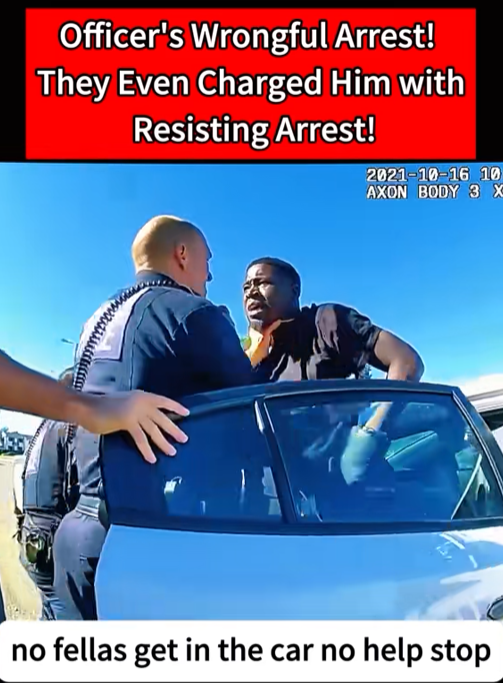
Officer’s Wrongful Arr*st Sparks Outrage After Man Is Also Charged With “Resisting”

A police encounter captured on bodycam is drawing intense backlash after an officer allegedly carried out a wrongful arrst — then added a charge of “resisting arrst,” a move critics say is too often used to justify questionable actions after the fact.

The image shows a tense moment at the side of a vehicle under a clear blue sky. A man is half-seated inside his car with the door open as an officer leans in close, gripping him while issuing commands. Another hand is visible on the car door, suggesting multiple officers were involved. According to captions and timestamps visible in the footage, the incident dates back to October 2021.

What has fueled outrage is the claim that the initial stop lacked proper legal grounds. Viewers who have analyzed the footage say the man appeared confused but not aggressive, repeatedly questioning why he was being detained. At no point, they argue, does he appear to physically fight officers — yet he was still charged with resisting.

Legal experts note that “resisting arrst” charges are frequently added when an encounter escalates, even if the original reason for the stop is weak or later dismissed. In many jurisdictions, almost any movement, hesitation, or verbal protest can be interpreted as resistance once officers decide to make an arrst.

In the video, the man can be heard insisting that he is not resisting and asking officers to explain what he has done wrong. Subtitles circulating with the clip quote him saying variations of “I’m not fighting” and “I don’t understand why you’re doing this.” Despite this, officers proceed with physical restraint.

Civil rights advocates argue this case highlights a systemic problem. “You can’t comply your way out of a bad stop,” one advocate wrote. “Once an officer decides to arrst you, any reaction can be reframed as resistance.” They stress that adding a resisting charge often makes it harder for victims to challenge wrongful arrsts later in court.

Supporters of the man say the footage shows panic and fear — not aggression. Being pulled from a car by armed officers is inherently stressful, and confusion or raised voices should not automatically be treated as criminal behavior. They argue that the bodycam video undermines the justification for both the arr*st and the added charge.

Police defenders counter that bodycam clips do not always capture the full context, including events before recording began. They emphasize that officers must make quick decisions and that noncompliance, even verbal, can escalate situations. However, even some law-enforcement professionals acknowledge that resisting charges are sometimes overused.

What happened after the arrst has only intensified scrutiny. According to online case summaries, questions were later raised about whether the original stop met legal standards. In similar cases, resisting charges have been dropped when courts find the underlying arrst was unlawful, though outcomes vary widely by jurisdiction.

For many viewers, the most troubling aspect is how common the scenario feels. The combination of a questionable stop, physical escalation, and a resisting charge has become a familiar pattern in viral police footage. Critics argue this erodes public trust and discourages accountability.

As the video continues to circulate, it has become another flashpoint in the broader debate about policing, use of force, and legal safeguards for civilians. Whether or not disciplinary action was taken against the officer involved, the footage has already shaped public opinion.

The case stands as a stark reminder of how quickly an ordinary traffic stop can turn into a life-altering encounter — and how a single added charge can change the entire legal narrative. For many watching, the question remains painfully simple: if the arr*st was wrong to begin with, how can “resisting” ever be justified?

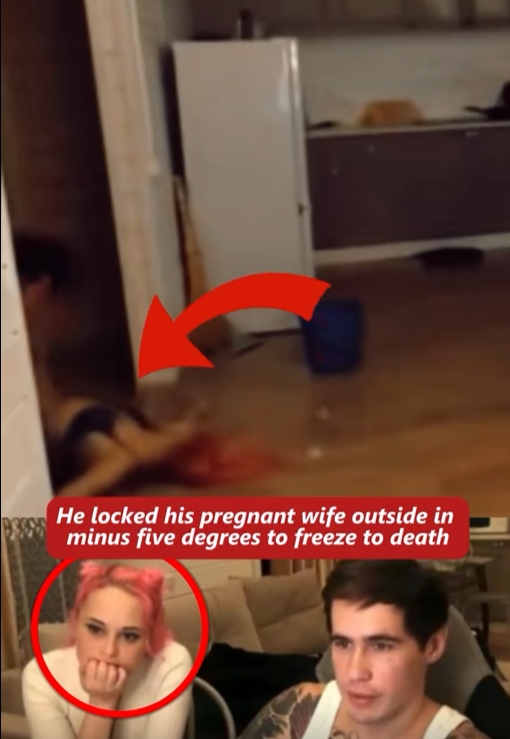
Husband Accused of Locking Pregnant Wife Outside in Freezing Cold in a Case That Has Shocked Viewers

A deeply disturbing story is circulating online after footage and images emerged allegedly showing a man who locked his pregnant wife outside their home in subzero temperatures, leaving her at risk of freezing to dath. The case has sparked widespread outrage, with many calling it one of the most horrifying examples of domestic abse seen in recent viral content.

According to captions and commentary shared alongside the video, the incident occurred during extreme winter conditions, with temperatures reported to be around minus five degrees. The image shows a woman lying on the ground near the entrance of a home, while the door appears closed behind her. A red arrow highlights her position on the floor, emphasizing how exposed and helpless she was at that moment.

Authorities allege that the woman was pregnant at the time of the incident, making the situation even more dangerous. Medical experts warn that prolonged exposure to freezing temperatures can be f*tal within minutes, especially for pregnant women, as hypothermia can quickly threaten both the mother and the unborn child. Even short exposure can cause severe complications, including organ failure and pregnancy loss.

What has intensified public reaction is the context provided by those familiar with the case. Viewers claim the man intentionally locked the door, preventing his wife from re-entering the home. If true, experts say this would constitute extreme domestic abse and reckless endangerment. Many legal analysts note that such actions, if proven, could result in serious criminal charges, including attempted mrder in some jurisdictions.

The lower portion of the image shows two individuals reacting to the footage, appearing visibly distressed as they watch what is unfolding. Their expressions mirror the response of thousands online who described the scene as “unwatchable” and “pure evil.” Comment sections quickly filled with anger, disbelief, and concern for the woman’s survival and well-being.

Domestic violence advocates emphasize that this case highlights how ab*se is not always loud or visibly chaotic. Sometimes it is calculated, deliberate, and carried out in silence. Locking someone outside in freezing conditions removes their ability to protect themselves and turns the environment itself into a weapon. When pregnancy is involved, the level of danger escalates dramatically.

While full official details have not yet been released publicly, cases like this typically trigger immediate intervention from law enforcement and child protective services. Authorities often prioritize emergency medical evaluations, restraining orders, and removal of the victim from further harm. Investigations then focus on intent, prior incidents, and any history of ab*se within the relationship.

Online reaction has also reignited discussions about warning signs in abusive relationships. Experts say controlling behavior, isolation, and escalating cruelty are often present long before extreme acts occur. Many victims stay due to fear, financial dependence, or hope that things will change, especially when a child is involved.

Advocacy groups are using the viral spread of this story to urge people to take domestic violence seriously and to intervene when warning signs appear. Friends, neighbors, and family members are encouraged to report concerns rather than assuming situations will resolve on their own. In cold-weather regions, exposure-related harm can happen frighteningly fast.

If the allegations are confirmed, the case may serve as a grim reminder of how dangerous intimate partner ab*se can become when left unchecked. For many viewers, the most haunting aspect is how close the situation came to irreversible tragedy — not caused by an accident, but by a deliberate choice.

As investigations continue, the focus remains on the safety and recovery of the woman and her unborn child. Advocates stress a clear message: no disagreement, argument, or conflict ever justifies putting someone’s life at risk. What happened here, if proven true, is not a relationship dispute — it is a matter of survival.

Father’s Simple Mistake Nearly Turns Into Every Parent’s Worst Nightmare

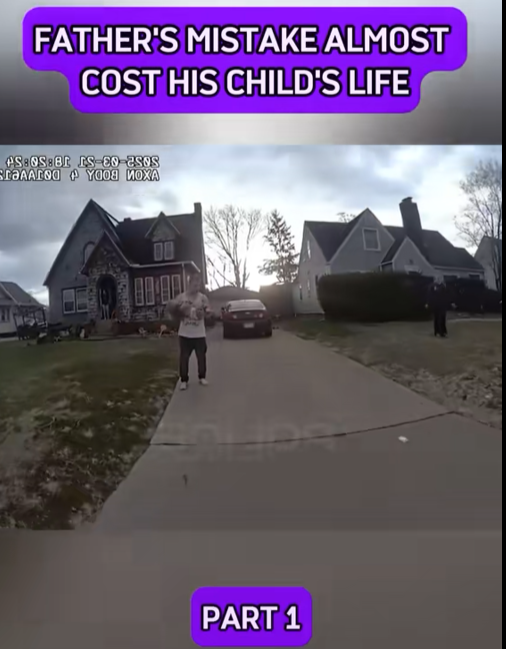
A chilling bodycam clip now circulating online shows how one moment of poor judgment nearly cost a child their life — and left a father facing the consequences of a decision he can never undo. The incident, labeled “Part 1” by those sharing the footage, has sparked intense discussion about parental responsibility, awareness, and how quickly ordinary situations can spiral into d*adly danger.

The footage opens on a quiet residential street lined with family homes. At first glance, nothing seems out of place. A father stands in the driveway, visibly distressed, gesturing frantically as police officers approach. Within moments, it becomes clear that something has gone terribly wrong — and that a child’s safety is at the center of it all.

According to details shared alongside the video, the father made a critical mistake involving his child that placed them in immediate danger. While officials have not released every detail publicly, authorities indicated that the child’s life was at serious risk due to the father’s actions. Officers responding to the scene treated the situation as an emergency, moving quickly to assess the child’s condition and secure the area.

What makes the footage so unsettling is how normal everything looks at first. There is no chaos, no obvious warning signs — just a quiet neighborhood and a parent who appears to realize too late that a terrible error has been made. Viewers have described the moment as “gut-wrenching,” especially as the father’s panic becomes more apparent with each second.

Experts say this is exactly how many tragedies begin. A lapse in judgment, a misunderstanding of risk, or a moment of distraction can have irreversible consequences when children are involved. Whether it involves vehicles, weapons, unsafe environments, or supervision failures, these situations often escalate faster than anyone expects.

Police on the scene reportedly focused first on the child’s safety, ensuring medical attention if needed and removing any immediate threats. Only after stabilizing the situation did officers turn their attention to the father, whose emotional state appeared to shift from panic to shock as the reality of what nearly happened set in.

Online reaction has been swift and divided. Some viewers expressed sympathy, pointing out that parents are human and mistakes can happen — even devastating ones. Others were far less forgiving, arguing that certain errors are simply unacceptable when a child’s life is at stake. The comment sections quickly filled with debates about accountability, negligence, and where the line should be drawn.

Child safety advocates emphasize that these incidents should serve as warnings, not just viral content. They stress that many near-fatal accidents involving children are preventable with proper precautions, education, and vigilance. Once a dangerous situation unfolds, regret comes instantly — but prevention must come before that moment.

Authorities have not yet confirmed whether charges will be filed, but cases like this often trigger investigations by both law enforcement and child protective services. Even when a child survives, the legal and emotional fallout can last for years. Families may face court involvement, mandatory programs, or even temporary separation, depending on the severity of the situation.

What resonates most about this case is how close it came to becoming a headline no parent ever wants to see. One wrong choice, one overlooked risk, and a child’s life hung in the balance. That reality is what has driven the video’s rapid spread across social media.

As “Part 1” continues to circulate, many are waiting to see what happens next — both legally and emotionally — for the family involved. But for viewers, the message is already clear: when it comes to children, there are no small mistakes. Every decision matters, and sometimes the difference between safety and tragedy is only a few seconds long.

BREAKING NEWS: Two High School Athletes Step In for Ostracized Student — What They Did Next Changed Everything

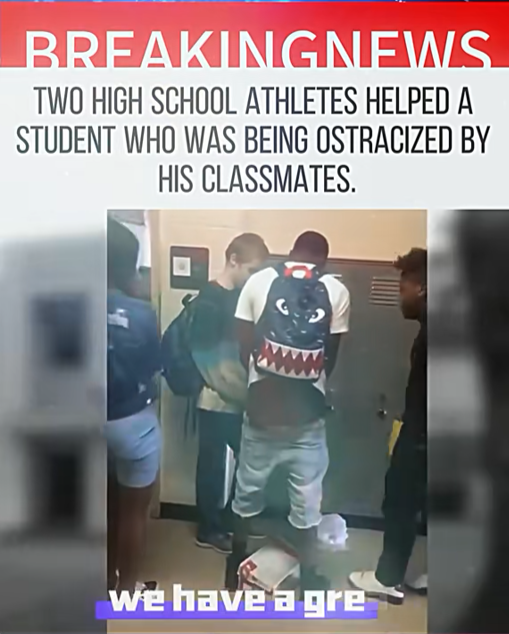
A powerful moment inside a high school hallway is capturing hearts online after two student athletes were seen stepping in to help a classmate who was being ostracized by his peers. What could have remained another quiet moment of isolation instead turned into a reminder of how small acts of courage can make a lasting difference.

The image shows a group of students standing near school lockers. At the center is a student who appears withdrawn and alone, while others nearby watch or pass by. According to the story shared alongside the image, this student had been repeatedly excluded and ignored by classmates, creating a daily environment of discomfort and emotional stress. Like many students who face social isolation, he reportedly kept his head down, trying to make it through the day unnoticed.

That changed when two high school athletes noticed what was happening.

Witnesses say the athletes deliberately chose to stand with the student, engage him in conversation, and physically place themselves beside him in a way that sent a clear message: he was not alone. There was no confrontation, no shouting, and no dramatic scene. Instead, there was quiet solidarity — the kind that speaks louder than words in a school setting where social status often dictates behavior.

Students nearby reportedly took notice. What had once been an invisible situation suddenly became visible. By standing next to the ostracized student, the athletes disrupted the unspoken social rules that allowed exclusion to continue. Their presence shifted the dynamic, making it harder for others to ignore or dismiss him.

School counselors and educators say moments like this are far more impactful than formal assemblies or posters about kindness. Peer-to-peer support, especially when it comes from students who hold social influence, can instantly change how someone is perceived. In this case, the athletes used their status not to dominate, but to protect.

Social isolation among students is a serious issue that often goes unnoticed. Research shows that being excluded can have long-term emotional effects, including anxiety, depression, and a decline in academic performance. Many students suffer silently, believing that asking for help will only make things worse. That is why intervention from peers can be life-changing.

Online reactions to the story have been overwhelmingly positive. Thousands of people praised the athletes for using empathy instead of ego. Parents shared messages saying they hope their own children would act the same way. Former students reflected on moments when they wished someone had stood up for them in similar situations.

Some commenters pointed out that heroism does not always look dramatic. Sometimes it looks like standing still, listening, and refusing to walk away. Others emphasized that inclusion does not require grand gestures — just consistency and awareness.

School administrators have reportedly acknowledged the incident as an example of positive student leadership. While no official disciplinary action was involved, educators say the moment sparked conversations in classrooms about kindness, bullying, and the responsibility students have toward one another.

What makes this story resonate so deeply is its simplicity. There was no camera crew, no planned speech, and no expectation of recognition. Two students saw someone being pushed to the margins and chose to step in.

In a world where negative school stories often dominate headlines, this moment stands out as proof that culture can change from within. One choice, one pause, one act of empathy can interrupt a cycle of exclusion.

For the student who was once standing alone, that hallway moment may be remembered for years to come — not for the isolation, but for the day someone decided he mattered.

@sfnews1213

Two high school athletes helped a student who was being ostracized by his classmates.#breakingnews #tiktok #School #fyppppppppppppppppppppppp #fyp

♬ original sound – sfnews1213