I believed I knew everything about the little girl I raised as my own. I believed there were no secrets left between us. Then, on the night of her wedding, a stranger stepped out of the crowd and quietly told me I had no idea what my daughter had been hiding.
My name is Caleb. I’m fifty-five years old, and more than three decades ago, my life ended and restarted on the same night.
There was a car accident. A phone call. A calm voice that sounded practiced, almost rehearsed, explaining that my wife and my six-year-old daughter were gone. Just like that. Mary and Emma. One moment they were real, warm, alive. The next, they were memories.
I remember standing in my kitchen, phone still in my hand, staring at nothing. The world didn’t shatter loudly. It went quiet. A suffocating, endless quiet that followed me everywhere—into sleep, into work, into every pause between thoughts.
For years, I didn’t live. I existed. I woke up, went to work, came home, and ate frozen dinners in front of the television without tasting them. Friends tried. My sister called every Sunday. None of it filled the space they left behind. The house stayed empty.
I kept Emma’s drawings on the fridge until they yellowed and curled at the edges. I couldn’t bring myself to throw them away. They were proof she’d been real.
I never planned to be a father again. That part of me felt buried with them. I’d already loved once. I’d already failed to protect them.
Then, years later, on a rainy afternoon I still can’t fully explain, I found myself pulling into the parking lot of an orphanage. I told myself I was just curious. I wasn’t looking to replace anyone. I didn’t even know what I was looking for.
Inside, the building smelled like bleach and crayons. Laughter echoed down one hallway. A child cried somewhere behind a closed door. A caseworker walked me through paperwork and procedures with careful honesty.
And then I saw her.
She was sitting quietly in a wheelchair by a window, hair neatly tied back, a notebook resting in her lap. While other children ran and shouted, she just watched. Not sad. Not angry. Just waiting.
Her name was Lily. She was five. A car accident had taken her father and damaged her spine. Her mother had signed away her rights not long after. She couldn’t handle the grief. Or the responsibility.
When Lily looked at me, she didn’t smile or look away. She just watched me like someone watching a door, unsure if it would open or slam shut like all the others.
Something broke open in me.
I didn’t see a diagnosis or a burden. I saw a child who had already learned what it felt like to be left behind.
I started the adoption process immediately. It wasn’t easy. Background checks. Interviews. Home inspections. But I kept coming back to visit her. We talked about animals and books. She showed me her drawings. She loved owls because, she said, they saw everything.
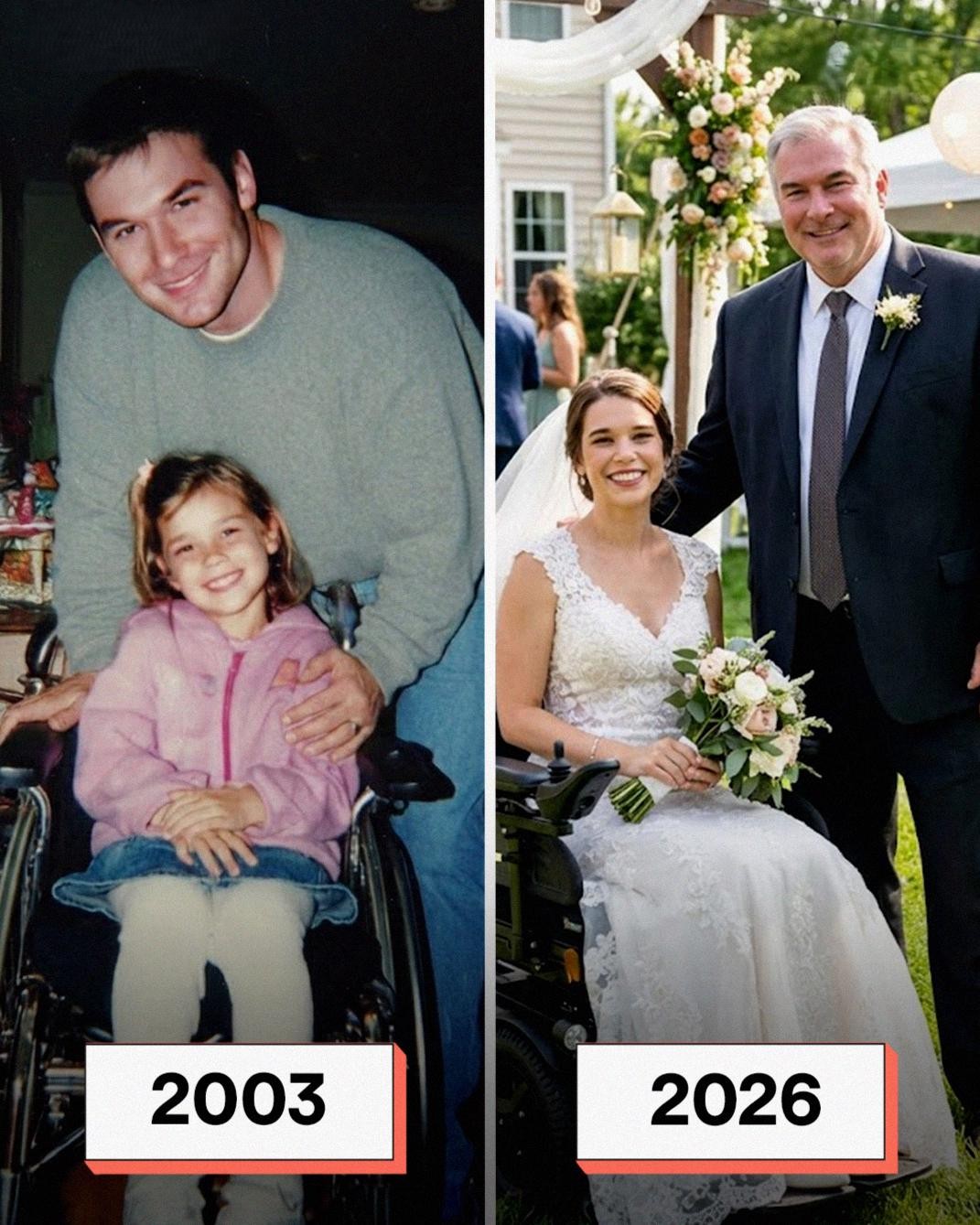
When I finally brought her home, all she owned fit in a worn backpack, a faded stuffed owl, and a notebook full of sketches.
The first night she called me “Dad,” I dropped a towel on the living room floor and laughed and cried at the same time.
From that moment on, we were a team.
Therapy became our routine. I celebrated every inch of progress—ten seconds standing without support, five steps with braces, one more step than the day before. She worked harder than anyone I knew. She refused pity. She hated being underestimated.
She loved science. She studied biology. She volunteered at a wildlife center and once cried for hours when an injured barn owl she cared for was released back into the wild.
At twenty-five, she met Ethan at college. He had an easy smile and a ridiculous laugh. She tested him quietly, the way she tested everyone. He passed.
When she told me they were engaged, I nearly choked on my toast.
The wedding, twenty-three years after I adopted her, was small and beautiful. String lights. White lilies. Laughter. I watched her dance, confident and radiant, surrounded by people who had stayed.
Then I noticed a woman standing near the exit.
She didn’t belong. She wasn’t watching the crowd. She was watching Lily.
Our eyes met. She looked down, then walked toward me.
“You need to listen to me,” she said quietly. “You have no idea what your daughter is hiding from you.”
My stomach tightened.
“I’m her biological mother.”
The room seemed to tilt.
She told me Lily had found her two years earlier. Asked questions. Sought answers. Tried to understand. They spoke for a while. Then Lily stopped responding.
“She deserves to know her whole truth,” the woman said. “And I deserve to be in her life.”
I looked at Lily across the room, laughing, alive, whole.
“You walked away,” I said.
“I was young. Afraid,” she replied. “I thought I was doing the right thing.”
I shook my head. “She rebuilt her life without you. Learned to walk again. Found love. This day belongs to who stayed.”
I asked her to leave.
She did.
Later that night, Lily and I stood outside under the stars. She already knew.
“I needed to meet her,” she said softly. “But I also needed to know I could walk away. And I did.”
I took her hand. “You are my daughter. Not because of blood. Because we stayed.”
She smiled. “Thank you for choosing me. Every day.”
As I watched her dance with Ethan, I finally understood something I’d spent years learning.
Family isn’t blood.
It’s who stays when everything falls apart—and keeps choosing to stay long after.
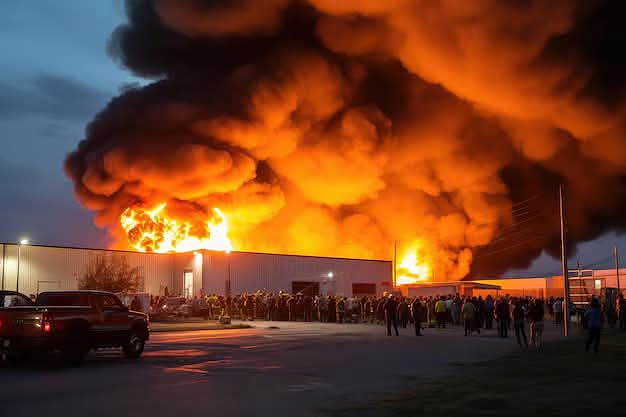
A devastating fire tore through a densely populated hillside community in San Juan de Miraflores, Peru, on Saturday afternoon, leaving widespread destruction and hundreds of residents suddenly without homes. The blaze erupted in the Pamplona Alta sector, an area known for its tightly packed, largely improvised housing, where flames can spread with terrifying speed.
According to early assessments by local authorities and emergency services, at least 300 homes are believed to have been damaged or destroyed. While initial estimates varied widely—ranging from several dozen to over one hundred structures affected—officials later confirmed that the scale of the destruction was significantly larger as crews gained access to more areas and daylight revealed the full extent of the damage.
The fire began in the mid-afternoon and quickly grew out of control, driven by strong winds, steep terrain, and the highly flammable materials used in many of the homes. Sheets of plywood, plastic roofing, scrap wood, and other combustible materials allowed flames to leap rapidly from one structure to the next, creating a wall of fire that overwhelmed residents within minutes.
Firefighters from across Lima were dispatched to the scene, battling the blaze for hours under extremely difficult conditions. Narrow roads, limited access points, and the lack of formal infrastructure slowed emergency response efforts. Water supply issues further complicated containment, forcing crews to rely on tanker trucks and long hose lines stretched uphill through debris and smoke.
Despite the challenges, authorities reported later in the evening that the fire had been confined and was no longer spreading. However, containment did not mean resolution. Smoldering ruins, unstable structures, and lingering hotspots continued to pose risks, and firefighters remained on site through the night to prevent flare-ups.
Hundreds of families were forced to flee their homes with little more than the clothes they were wearing. Many residents described scenes of panic as they rushed to evacuate children, elderly relatives, and pets while flames closed in from multiple directions. Some attempted to salvage personal belongings, only to abandon them as smoke thickened and explosions echoed through the neighborhood.
Those explosions, captured in numerous videos shared on social media, raised immediate alarm. Authorities later confirmed that the fire appeared to have reached an illegal fireworks or pyrotechnics workshop operating within the residential area. Firefighters reported hearing repeated small detonations as the blaze intensified, suggesting the presence of explosive materials that significantly worsened the fire’s behavior.
Investigators have identified the clandestine pyrotechnics workshop as a likely point of origin, though officials stressed that the cause has not yet been formally determined. The presence of such a facility in a densely populated area has sparked renewed concern about safety enforcement and the risks posed by informal and unregulated industries operating within residential zones.
Local officials emphasized that the tragedy highlights longstanding vulnerabilities in hillside communities like Pamplona Alta. Many of these neighborhoods developed through informal settlement, without proper zoning, firebreaks, or access to essential emergency infrastructure. Over time, homes were built closer together, often using whatever materials were available, creating conditions where a single spark can escalate into a large-scale disaster.
Emergency shelters were quickly established in nearby schools and community centers to accommodate displaced residents. Aid organizations and municipal authorities began distributing food, water, blankets, and basic supplies, but the need far exceeds what has been immediately available. Many families have lost everything—homes, furniture, clothing, documents, and years of personal history reduced to ash.
Local government officials toured the affected areas as assessments continued, promising support and assistance for those impacted. Damage evaluations are ongoing, and officials have indicated that the final number of affected homes may rise as more comprehensive inspections are completed.
Residents, meanwhile, expressed a mix of shock, grief, and frustration. Some said they had long warned authorities about unsafe conditions and the presence of illegal activities in the area. Others spoke of the fear that now lingers, knowing how quickly their community can be consumed by disaster.
Firefighters reiterated the urgent need for improved prevention measures, including stricter enforcement against illegal workshops, safer construction practices, and better access routes for emergency vehicles. They also warned that similar neighborhoods across Lima face the same risks, particularly during dry and windy conditions.
As night fell over the charred remains of Pamplona Alta, families gathered around temporary shelters, sharing stories of escape and loss. The immediate danger may have passed, but the road ahead will be long. Rebuilding will require resources many residents do not have, and the emotional toll of displacement and uncertainty weighs heavily.
Authorities continue to investigate the fire’s origin while coordinating relief efforts. For now, hundreds remain without homes, relying on emergency aid and community solidarity as they begin to confront the aftermath of one of the most destructive fires the district has seen in recent years.
What should have been an ordinary drive through one of British Columbia’s most scenic corridors ended in devastation, grief, and unanswered questions when a massive mudslide tore across Highway 99 near Lillooet, claiming four lives and leaving one person unaccounted for. The disaster, which unfolded on November 15, has left a deep scar on the region and stands as a stark reminder of how quickly nature can turn lethal.
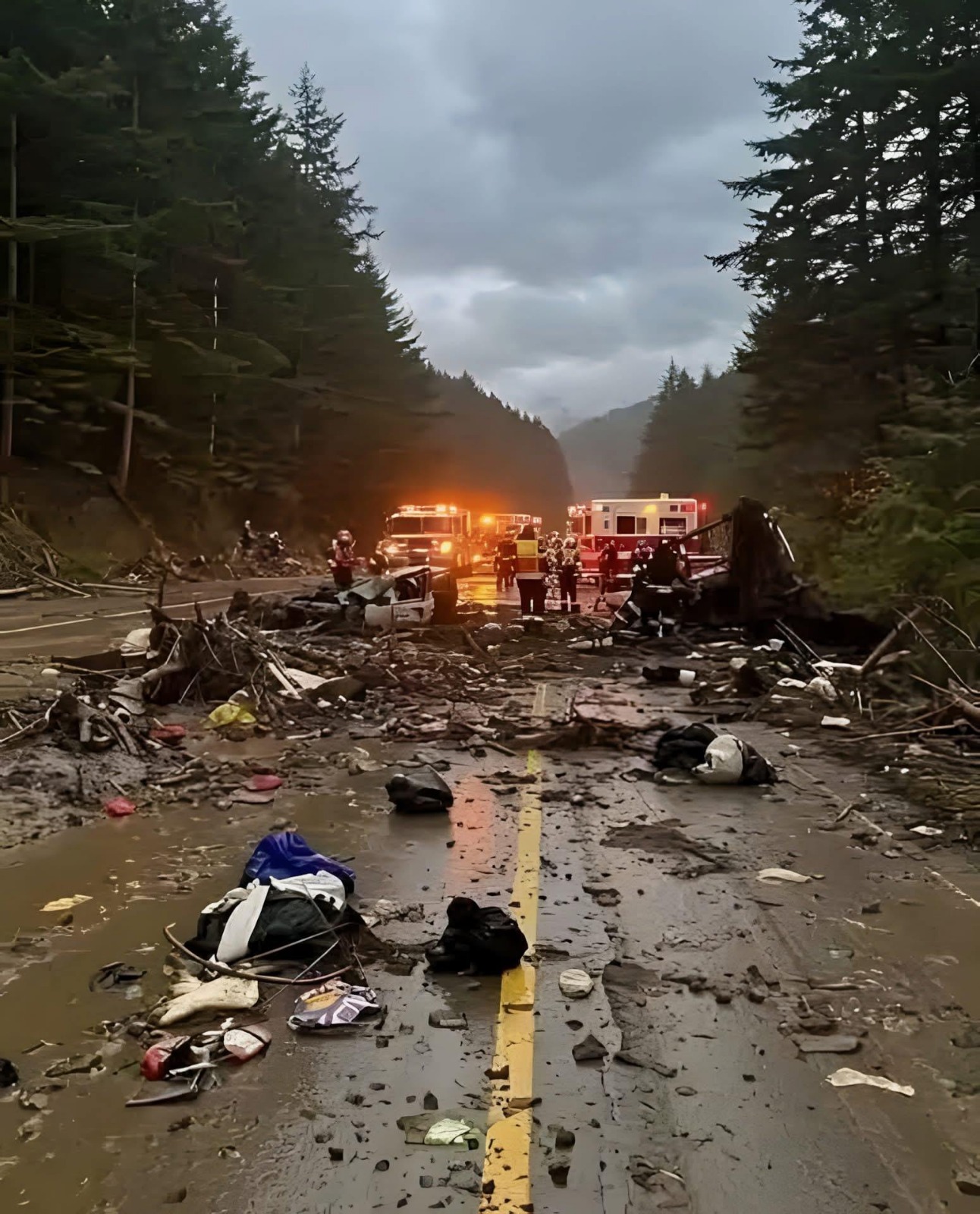
The slide struck without warning, roaring down a steep mountainside and engulfing a section of the highway that winds through rugged terrain. Vehicles traveling the route had no chance to escape. Tons of mud, rock, and debris swept across the road, crushing cars and burying everything in its path. In a matter of moments, a familiar roadway became a deadly trap.
Emergency calls began flooding in almost immediately. First responders, including police, firefighters, and search-and-rescue teams, rushed to the scene despite treacherous conditions. What they encountered was a landscape of chaos: twisted metal, partially buried vehicles, unstable ground, and the constant threat of additional slides. Every step carried risk, yet crews pressed on, knowing lives were at stake.
Over the following days, recovery teams worked methodically and carefully. One by one, the remains of four victims were recovered—three men and one woman. Each discovery brought heartbreak to families and responders alike. The work was slow and painstaking, complicated by rain, loose soil, and the ever-present danger that more debris could come crashing down at any moment.
A fifth person, believed to have been caught in the slide, remained missing. Search efforts continued for days, but the conditions grew increasingly unstable. Geotechnical experts warned that further searching could endanger rescue workers’ lives. Eventually, authorities made the agonizing decision to suspend the search, acknowledging that survival was no longer likely. It was a decision made with heavy hearts, balancing the need for closure with the responsibility to protect those still alive.
The closure of Highway 99 has rippled far beyond the immediate area. The route is a critical artery connecting communities and supporting tourism, commerce, and daily travel through the mountainous region. With the road shut down indefinitely, residents and businesses have been forced to rely on lengthy detours, while officials assess the stability of the surrounding slopes and plan debris removal.
Investigators are now working to understand the precise conditions that led to the slide. While landslides are not uncommon in mountainous areas, this event was particularly severe. Early assessments suggest a combination of saturated soil, recent weather patterns, and natural geological instability may have contributed. However, the remote location and dangerous terrain continue to hamper a full investigation.
For the families of those killed, explanations offer little comfort. Their lives were altered in an instant by an event no one could predict or prevent. Loved ones described the victims as ordinary people simply going about their day—commuting, traveling, living their lives—when tragedy struck. Grief counselors and victim support services have been made available as the community struggles to process the loss.
Local residents have expressed a mix of sorrow and fear. Many know the highway well and have traveled it countless times. The realization that a routine journey can become fatal without warning has shaken confidence and renewed awareness of the risks inherent in living and traveling through mountainous regions.
Emergency officials have emphasized that climate patterns may be increasing the frequency and severity of such events. Heavier rainfall, rapid snowmelt, and shifting freeze-thaw cycles all place additional stress on already fragile slopes. While no single factor can be blamed definitively, the trend raises concerns about infrastructure resilience and the need for ongoing monitoring.
In the days following the disaster, tributes appeared along detour routes and online. Messages of condolence, flowers, and notes honoring the victims served as quiet reminders that behind every headline are real people and real families. For first responders, the emotional toll has also been significant. Many described the operation as one of the most difficult they have faced, not only because of the physical danger but because of the human loss involved.
Authorities have urged the public to respect road closures and avoid the area while assessments continue. The terrain remains unstable, and even small disturbances could trigger additional slides. Heavy machinery will be required to clear debris safely, but that work cannot begin until experts determine the slopes are secure enough to proceed.
As Highway 99 remains closed, the broader conversation has turned to preparedness and prevention. While it is impossible to eliminate all natural risks, officials and experts stress the importance of early warning systems, regular geological surveys, and public awareness. In regions where nature’s power is ever-present, vigilance can mean the difference between inconvenience and catastrophe.
The mudslide near Lillooet will be remembered not just as a natural disaster, but as a human tragedy. Four lives were lost, one remains unaccounted for, and countless others have been affected—families, friends, responders, and an entire community left grappling with sudden loss.
As recovery and investigation efforts continue, the memory of that day lingers heavily over the region. The mountains that draw people for their beauty and solitude also demand respect for their unpredictability. The tragedy on Highway 99 serves as a sobering reminder that even the most familiar roads can become dangerous when nature decides otherwise.
For now, the highway stands silent, blocked by earth and rock, marking the place where ordinary lives intersected with extraordinary force. And as officials work toward restoring safety, the focus remains on honoring those lost and supporting those left behind, ensuring they are not reduced to statistics, but remembered as lives that mattered.
Sometimes the past stays quiet for decades, tucked away where you assume it can’t reach you anymore. And then, without warning, it reminds you that unfinished things have a way of waiting patiently.
I wasn’t looking for her. Not consciously, anyway. But every December, when the days shortened and the house went dark by five in the afternoon, she always drifted back into my thoughts. Like the smell of pine or the flicker of old holiday lights, Sue returned without effort or invitation.
My name is Mark. I’m fifty-nine now. And when I was in my twenties, I lost the woman I was certain I would grow old with.
Not through betrayal. Not through anger. Life simply got loud and fast and complicated in ways we couldn’t anticipate when we were young and making promises under football bleachers, convinced time would always cooperate.
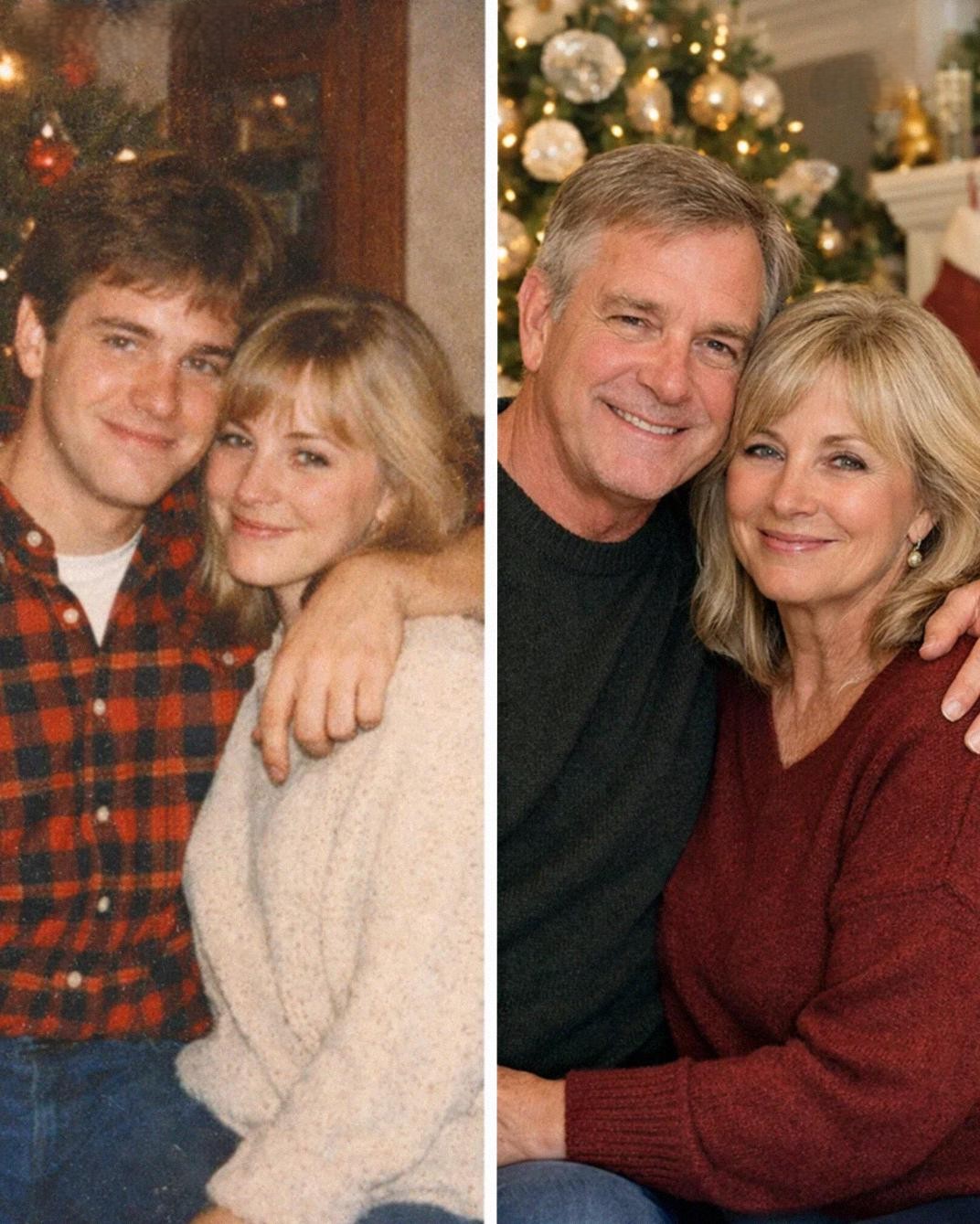
Sue had a quiet strength about her. She wasn’t flashy or dramatic. She listened more than she spoke, and when she looked at you, you felt seen. We met in college when she dropped her pen in class and I picked it up. It sounds insignificant, but that was the moment everything shifted.
We were inseparable after that. Not obnoxious about it, just solid. Easy. Right.
Then graduation arrived. My father fell ill, badly. My mother couldn’t manage alone. I packed my things and moved back home without hesitation. Sue, meanwhile, had just been offered a position at a nonprofit she believed in. It was her dream. I would never have asked her to give it up.
We told each other the distance would be temporary.
We wrote letters. Long ones. Messy handwriting. Hope packed into envelopes. We believed love would handle the rest.
And then, suddenly, she disappeared.
No argument. No goodbye. One week there were letters, the next there was silence. I wrote again. Then again. The last letter I sent was the hardest—I told her I loved her, that I could wait, that none of this changed how I felt. I even called her parents, awkward and nervous, asking them to make sure she received it.
Her father was polite. Distant. He said he would pass it along. I believed him.
Weeks passed. Then months. With no reply, I told myself she had chosen another life. That maybe someone else had come along. Eventually, I did what people do when closure never comes.
I moved forward.
I met Heather. She was steady, practical, grounded in a way I wasn’t. We married. Built a life. Two kids. A dog. Camping trips. School events. It wasn’t a bad life. It just wasn’t the one I once imagined.
Years later, Heather and I divorced quietly. No drama. Just two people who had grown apart. We shook hands in a lawyer’s office and hugged goodbye.
Through it all, Sue never truly left my mind. Especially at Christmas. Some nights I’d lie awake, replaying her laugh, wondering if she ever thought of me.
Then, last winter, everything changed.
I was in the attic searching for decorations when an old yearbook slipped from a shelf and landed at my feet. A thin, yellowed envelope slid out with it.
My full name was written across the front in her handwriting.
I sat down hard on the attic floor. My hands shook as I opened it.
December 1991.
I had never seen that letter before. The envelope had been opened and resealed.
My stomach dropped. There was only one explanation.
I read.
Sue wrote that she had only just found my last letter. Her parents had hidden it from her. Told her I had asked not to be contacted. That I didn’t want to be found.
She wrote that they were pressuring her to marry a family friend. Someone stable. Someone they approved of. She didn’t say she loved him. Only that she was tired, confused, and heartbroken.
I sat there for a long time, holding the truth in my hands decades too late.
That night, I opened my laptop and typed her name into a search bar. I didn’t expect much. But there she was. A private profile. A different last name. A photo of her standing on a mountain trail beside a man my age.
She looked older. Wiser. Still her.
I sent a friend request without thinking.
Five minutes later, it was accepted.
She messaged me first.
I sent a voice message, my voice breaking as I explained everything. The letters. The phone call. The lie I never knew about. I told her I never stopped wondering. That I would have waited forever if I’d known she was still waiting too.
She didn’t reply that night.
The next morning, there was a message.
“We need to meet.”
We chose a small café halfway between us. Neutral. Quiet.
When she walked in, time folded in on itself. She smiled the same way. Her voice hadn’t changed.
We hugged—awkward at first, then familiar.
She told me she had married the man her parents pushed her toward. They had a daughter. They divorced years later. She married once more. That ended too.
I told her about Heather. About my kids.
Christmas, we admitted, had always been the hardest.
I asked about the man in her photo.
She laughed. Her cousin.
I asked the question I’d been holding in my chest for hours. If she would ever consider trying again.
She said she had been hoping I’d ask.
We took it slowly. Introduced our children. Walked trails together on Saturday mornings. Talked about everything—the lost years, the scars, the lives we built apart.
This spring, we’re getting married.
Not because we’re chasing the past. But because sometimes life doesn’t forget what you’re meant to finish.
The city’s central police station typically settled into a steady rhythm each evening. By sunset, the usual quietness seemed to promise a calm night shift, a predictable lull in activity before the hours grew late. But one particular evening, that tranquility shattered, replaced by flashing lights, hurried footsteps, and tension that seemed to seep from every corner of the station.
Rows of patrol cars lined the narrow street outside. Their sirens remained silent, yet the alternating red and blue lights cast a pulsing glow on the brick walls, reflecting off windows and pavement. Officers moved with precise determination, forming a path toward a waiting unmarked vehicle. It was clear to anyone watching from outside that something significant was unfolding.
At the center of the scene was a familiar figure: a decorated officer, known to many in the department for his dedication and years of service. He appeared as professional as ever in his crisp uniform, but the presence of handcuffs on his wrists transformed the familiar image into one of tension and intrigue. His eyes were fixed on the ground, avoiding the cameras, the reporters, and the curious onlookers gathered behind the barricades.
Cameras flashed relentlessly. Questions were shouted. Phones lifted high to record, capturing the spectacle that many assumed would dominate the evening’s headlines. Yet behind the flashing lights and growing crowd, the reality of the situation was far more complex than the public initially understood.
A Glimpse Before the Public Escort
A leaked security camera recording offered a perspective entirely different from what the public saw. Timestamped just minutes before the officer’s escort, the footage captured moments that reframed the story from a simple disciplinary action to a deeply personal dilemma.
In the video, the officer sits alone in a small, dimly lit holding room. The walls are bare, save for a single table and two metal chairs. At first, he paces slowly, hands in pockets, head slightly bowed. His shoulders are squared yet weighed down, as though carrying not just the gravity of the moment, but something much deeper.
After a few steps, he lowers himself into a chair. From a pocket, he pulls out a small, worn photograph, its edges curled and faded from years of being handled. He studies it for long seconds before bringing it close to his lips. His voice is barely audible, caught only faintly by the camera’s microphone:
“Tell them I was trying to protect her.”
It was later confirmed that the photo depicted his young daughter. The intimate, private moment offered a window into the personal motivations behind actions that, at first glance, seemed purely procedural. For those who would later see the footage, it became clear that the story was not simply about an officer in trouble — it was about a man caught between professional duty and personal responsibility.
Official Statements and Public Silence
Following the public escort, authorities released a carefully worded statement. The officer was suspected of interfering with an ongoing investigation, the statement read. Beyond that, details were scarce. There was no mention of the personal context, the photograph, or the emotional stakes revealed in the leaked footage.
This lack of context left a void that the public quickly filled. Speculation ran rampant, fueled by social media, news reports, and local conversations. The narrative shifted depending on who was speaking — for some, it was a clear case of procedural misconduct; for others, it was a story of human complexity and sacrifice.
Divided Public Opinion
Once the footage circulated online, the public response split sharply. One faction argued that law enforcement officers must adhere to rules without exception. Any interference, regardless of intent, could undermine the integrity of the justice system. Uniforms carry trust, they argued, and breaching protocol erodes that trust.
The other side saw a human being navigating an impossible conflict. The photograph of the officer’s daughter, his quiet words, and the visible tension suggested a personal motivation, perhaps even an act of protection he believed justified the risk. It became a conversation not only about law but about the complex intersection of duty, loyalty, and love.
The leaked footage transformed a single, seemingly procedural incident into a story about the human side of law enforcement — a narrative that resonated deeply with many viewers.
Behind the Badge
Colleagues speaking anonymously described the officer as fair, diligent, and deeply committed to both his work and family. Many recalled moments when he had gone above and beyond to protect vulnerable individuals, showing a careful balance of authority and compassion.
“He’s the guy you want on your side in a crisis,” one fellow officer said. “Watching this unfold is difficult because none of us fully understand what pushed him to this point.”
Experts in criminal justice echoed similar sentiments. Dr. Elena Vargas, a professor specializing in ethics in law enforcement, commented on national television:
“When officers face situations that involve their own family or deeply personal stakes, the challenge becomes navigating the impossible intersection of duty and human emotion. Choices made in those moments are rarely simple.”
Community Response
The broader community reflected the divisions seen online. Some residents emphasized the importance of upholding the law above all else, expressing disappointment at the perceived violation of protocol. Others empathized with the officer’s apparent personal stakes, citing experiences where they themselves had acted outside rules to protect loved ones.
Vigils and small gatherings formed outside the station. Candles were lit, and signs read: “Officers Are Human Too” and “We Stand With Truth.” Others protested, advocating for accountability and impartiality, holding placards demanding that personal feelings should never interfere with professional responsibilities.
Ethics and the Role of Leaked Footage
The leaked security video sparked debate over transparency and ethics. Legal analysts warned that such leaks could influence public opinion prematurely or jeopardize ongoing investigations. Advocates for public access argued that the footage provided critical context, revealing dimensions of the story that official statements left out.
Regardless of stance, the footage changed the conversation: the narrative moved from a procedural violation to a human story — one that highlighted the personal struggles hidden behind the uniform.
The Human Side of Law Enforcement
The incident illustrated the tension that officers face daily: the balance between impartial duty and personal compassion. Law enforcement is often portrayed in absolutes — heroes or villains, authority or failure — yet in reality, officers are also parents, siblings, and individuals with vulnerabilities.
The story resonated because it reflected a universal human experience: the struggle when professional obligations collide with personal values. Most will never face this dilemma under the weight of a badge, but many understand the emotional complexity of protecting loved ones while maintaining responsibility to others.
A Case Still in Motion
Investigators confirmed that the officer’s situation remained under review. Witness interviews, record analysis, and procedural examinations were ongoing. No additional charges had been confirmed, and no decisions about his long-term position within the department had been made.
Until the inquiry concludes, public debate and speculation continue. The incident, however, has already left a mark — not only on the city but on the broader conversation about humanity, ethics, and the pressures of public service.
Why the Story Resonates
At its core, this story struck a chord because it reminds audiences that even those entrusted with the law are human. The officer’s actions, visible tension, and quiet words reveal a conflict that transcends uniforms, badges, and protocol. It is a story about love, duty, and the difficult choices people make when these forces collide.
The incident illustrates that even in professions defined by rules and discipline, human emotion plays a powerful role — sometimes powerful enough to alter perceptions, challenge norms, and spark citywide debate in a matter of minutes.
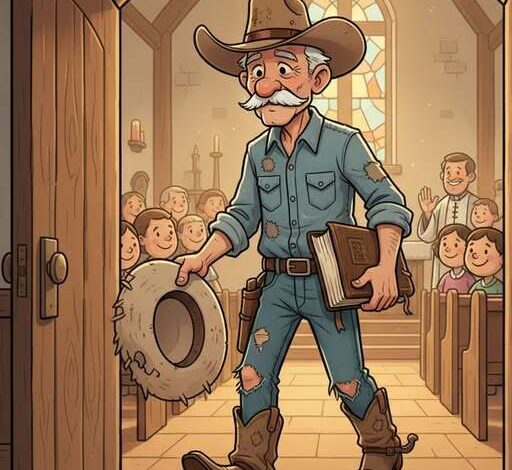
On a quiet Sunday morning, just minutes before the opening hymn, an old cowboy pushed open the heavy doors of a church he had never visited before.
He paused for a moment at the entrance, taking it all in. The building was massive, elegant, and polished to a shine. Sunlight poured through tall stained-glass windows, and everything—from the marble floors to the carved wooden pews—looked expensive.
His clothes were clean but clearly worn thin by time and work. He wore faded jeans, a denim shirt softened by decades of use, and boots so cracked and frayed they looked as if they had crossed deserts and winters alike. In one hand he carried a battered hat, its brim bent and creased. In the other, a Bible so old its leather cover had nearly separated from the spine.
He made his way down the aisle and sat near the middle.
Almost immediately, people shifted away from him. Purses were pulled closer. Coats were adjusted. Quiet glances passed between well-dressed parishioners in tailored suits and elegant dresses. No one smiled. No one offered a greeting. No one welcomed him.
They didn’t whisper their discomfort—they broadcast it.
The service began, flawless and formal. The choir sang beautifully. The sermon was eloquent. The cowboy listened quietly, hands folded over his Bible, eyes steady and respectful. When the final prayer ended, he rose, placed his hat on his head, and walked toward the exit.
Before he could reach the door, the preacher caught up with him.
“Sir,” the preacher said politely, though his tone carried an edge, “I’d like to ask you a favor.”
The cowboy stopped and turned.
“Before you come back next Sunday,” the preacher continued, “I’d like you to have a conversation with God. Ask Him what He thinks would be appropriate attire for worship in this church.”
The cowboy nodded calmly. “Yes, sir,” he said. “I’ll do that.”
The following Sunday, the congregation filled the pews once again, dressed impeccably.
And there, right on time, came the old cowboy.
Same jeans. Same denim shirt. Same worn boots. Same weathered hat. Same Bible.
Once again, he was ignored. Once again, people leaned away as if his clothes might be contagious.
After the service, the preacher approached him again, visibly annoyed.
“I thought I asked you to speak to God about how you should dress before coming back here,” he said.
“I did,” the cowboy replied.
“And what did God tell you?” the preacher asked.
The old man smiled gently. “God told me He wasn’t sure what I ought to wear,” he said. “He said He’s never been inside this church before.”
The preacher had no reply.
—
In another church, far away and far more formal, tradition ruled every word spoken from the pulpit.
Each service began the same way. The officiating clergyman would lift his hands and say, “The Lord be with you.”
And the congregation, trained by years of habit, would respond, “And with thy spirit.”
Eventually, modern language replaced old phrasing. The clergyman still said, “The Lord be with you,” but now the congregation replied, “And also with you.”
It worked smoothly—until one Sunday when a visiting bishop arrived.
The church’s sound system had a reputation. It crackled, popped, and failed at the worst moments. As the bishop stepped up to the microphone, he tapped it once. Nothing. He tapped it again. Still nothing.
Finally, frowning slightly, he leaned in and muttered, “There’s something wrong with this.”
Without missing a beat, the entire congregation replied in unison, “And also with you.”
—
Farther south, in a different kind of church altogether, the atmosphere was lively and loud.
These were “answer-back” churches—places where sermons were less like lectures and more like conversations. When the preacher spoke, the congregation responded instinctively.
One Sunday, a preacher stood before his congregation, filled with fire and determination.
“If this church is going to become better,” he proclaimed, “it must rise up, take up its bed, and walk!”
The congregation roared back, “Let it walk, Preacher! Let it walk!”
Encouraged, the preacher pressed on.
“If this church is going to grow stronger,” he shouted, “it must throw off its burdens and run!”
“Let it run, Preacher! Let it run!” the people answered.
The preacher was sweating now, voice booming.
“If this church is going to become truly great,” he thundered, “it must take up its wings and fly!”
The congregation exploded. “Let it fly, Preacher! Let it fly!”
Then the preacher paused, took a breath, and lowered his voice just slightly.
“If this church is going to fly,” he said, “it’s going to cost money.”
Without hesitation, the congregation replied, “Let it walk, Preacher. Let it walk.”
—
Three churches. Three moments. Three quiet truths wrapped in humor.
Faith, it turns out, has little patience for polish without compassion, ritual without awareness, or passion without honesty. And sometimes, the clearest sermons aren’t preached from pulpits at all—but revealed in laughter, humility, and the uncomfortable space where expectations collide with reality.
In the middle of the night, long-haul trucks vanish into the dark like ships at sea. Headlights shrink, taillights fade, and the highway swallows them whole. Most of them arrive where they’re supposed to. Some don’t. And when a vehicle the size of a small house disappears, it leaves a question that never fully goes away: how does something that big simply stop existing?
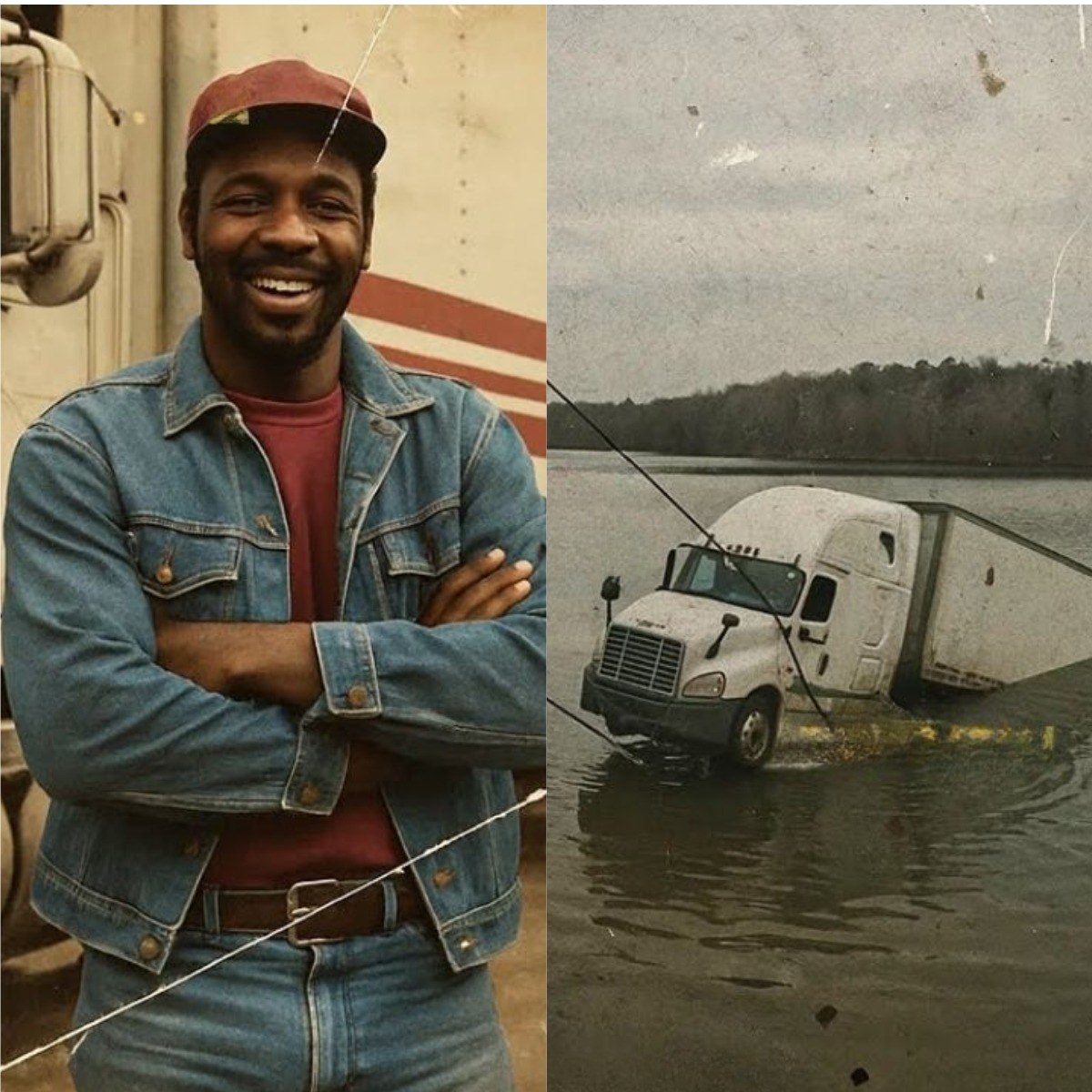
In the summer of 1987, Raymond Hoffman was one of those men you didn’t worry about. Middle-aged, steady, the kind of driver dispatchers trusted because he didn’t cut corners. He wasn’t flashy, wasn’t reckless, didn’t pick fights at truck stops or chase risky side gigs. He ran his routes, logged his miles, delivered on time, and went home. Other drivers respected him because he’d stop for a stranded rig, share a tool, call in a hazard, do the small decent things that keep people alive out there.
That week, Raymond was hauling a semi-trailer full of brand-new refrigerators from California into Nevada, crossing a stretch of heat-baked land where the horizon looks like it’s melting. It should have been routine. No storms. No snow. No ice. Just a long drive and a deadline.
Back then, tracking was primitive compared to today. There was a logbook, and there were rough location entries, sometimes based on older GPS readings that weren’t always precise. Dispatch could usually tell if a truck was on the main path, but if a driver left the route, even by mistake, the trail got fuzzy fast.
Raymond left California early, and a couple of hours in, dispatch saw his signal ping at a large gas station along the way. The cameras later showed him stepping out, grabbing coffee from a vending machine, talking briefly on the radio, then returning to the cab. His body language looked normal. No frantic movements, no scanning the parking lot, no argument with anyone. Store employees remembered him as quiet and polite. Just another driver taking a short break.
Then he pulled back onto the highway and disappeared into the heat.
About two hours later, radio contact dropped. Not a bad connection. Not a crackle. Just silence.
Dispatch tried again. No response. They checked the last known area and narrowed it down to a deserted section near an old bridge over a narrow river. It wasn’t a busy road. That’s what made it worse. On a low-traffic route, a semi stands out. If a truck with a full trailer had rolled by, someone would have remembered it. But when dispatch called local highway services, the answer kept coming back the same: nobody had seen Raymond’s rig.
The alarm didn’t truly catch fire until the unloading point in Nevada called, asking why the shipment hadn’t arrived. Refrigerators don’t just vanish without consequences. The customer started calling the transport company. The transport company started calling Raymond. The police got involved when the missed delivery turned into a missing person.
At first, everyone chased the simplest explanation: accident. They scanned ditches, ravines, gullies—every place a driver might drift off the road after fatigue or a blown tire. They sent units along the suspected route. They even brought in a helicopter to sweep a wide radius. Nothing. No skid marks. No debris field. No trailer on its side. No broken guardrail. No oil slick.
The next theory was theft. But stealing a full trailer of refrigerators is the kind of crime that creates noise. You need a place to unload, people to move the inventory, contacts to sell it. And refrigerators aren’t subtle. They aren’t jewelry you can slip into a bag or electronics you can flip quickly. A shipment like that is bulky, traceable, and hard to hide. Yet no one reported a similar batch turning up. No warehouse raid. No suspicious resale. No tip.
Then the theories got darker. Hijacked. Forced to move contraband. Dragged into someone else’s business. But again, Raymond wasn’t known for that life. His family insisted he would never abandon them, never choose a vanishing act. His friends backed that up. He was reliable to the point of stubbornness.
The case went cold the way cold cases always do: first it’s urgent, then it’s quiet, then it becomes “unsolved,” filed under a number that only a few people still remember. Years passed. A few newspaper stories resurfaced now and then, always with the same old photo, always with the same questions and no answers.
Then time did what time does. It buried the mystery under other headlines.
Until nature dragged it back to the surface.
In 2022, parts of the American West were hit by an intense drought. Rivers shrank. Reservoirs fell. Shorelines retreated by tens of meters, revealing mud and rock where there used to be water deep enough for boats. Near a small Nevada town, locals watched a lake level drop to a point nobody alive had seen before.
A fisherman walking across newly exposed ground noticed something metallic sticking out of the mud. At first, it looked like scrap—maybe the roof of an old van or the remains of a boat. But as he got closer, his stomach tightened. The shape wasn’t random. The angles were wrong for a boat. Too straight. Too industrial.
He called the sheriff.
Rescue crews arrived, and what they uncovered looked like a scene from a crime movie that had been left running for decades. A semi-truck sat half-sunken in the mud, remarkably intact for something that had been underwater so long. The cab wasn’t crushed. The trailer was still connected. The rear doors were closed.
It didn’t look like a rig that had been launched off a cliff. It looked like a rig that had been guided into the water.
Divers checked the cab first, and what they found turned the air heavy. A body was inside, still seated behind the wheel, as if caught in the middle of driving. Time and water had done their work, but the position remained unnaturally preserved. The seatbelt was fastened. The doors appeared locked. The steering wheel, still in place.
When cranes finally lifted the vehicle free, investigators found enough identifying features to match it to Raymond Hoffman’s missing truck. The plates were worn, but the numbers lined up. The engine, fuel tank, and trailer fittings matched old records.
Word spread fast. People who had forgotten suddenly remembered.
The trailer was opened next. If there had ever been a question about whether the cargo was stolen, it died right there. Inside were the refrigerators, rusted and ruined, stacked the way they’d been loaded. No hidden compartments. No contraband. Just a full load sacrificed to the bottom of a lake.
While forensics cataloged the interior, someone reached the front section and opened one of the appliances. Inside, wrapped in plastic, was a rolled piece of paper.
A note.
“I knew I wouldn’t arrive in time. He knew the route better than I did.”
No signature. No explanation. Just a bitter fragment.
That note changed the tone of everything. A driver doesn’t hide a message inside a refrigerator unless he believes someone will search the cab. Unless he believes someone will take the trailer. Unless he thinks the only safe place for truth is somewhere no one will think to look until it’s too late.
Investigators re-opened the old files, pulling dusty folders and faded reports. They dug into the transport company’s history and found something that mattered: Raymond wasn’t the only driver working those contracts. There had been disputes. Old grudges. One name showed up in recollections from former employees—Don, another driver who had clashed with Raymond months before the disappearance. Jealousy over better routes. Accusations that Raymond kept the best orders. Nothing that sounded like murder at first, but enough to plant a seed.
Don was dead by the time the case reopened. Many of the people from that era were gone or scattered. But the investigators found something else in the archive that hit harder: a routing note from the day Raymond vanished.
After the gas station stop, Raymond had reportedly been advised over the radio to take an alternate route due to traffic and roadwork. The record didn’t name the speaker—only a brief notation tied to initials, something like “KL.” It was the kind of vague entry that meant nothing in 1987 and became everything decades later.
A voice on the radio. A suggestion that sounded helpful. A detour that led away from the main road and toward a lake that would later swallow the evidence.
The cab’s condition supported the ugliest possibility: Raymond didn’t crash. He didn’t accidentally drive into the water. The truck likely went down a slope, slowly, without the violent impact you’d expect from a fall. That meant someone could have brought him there, forced him, or tricked him, then ensured he couldn’t escape.
The fractures in the remains were hard to interpret after so many years underwater, but investigators noted injuries that didn’t fit the clean story of a simple accident. And the locked cab raised a final, chilling question: who locks a man inside a truck and sends it into a lake?
The leading theory became the simplest one that matched the facts: this was an intentional killing disguised as a disappearance. A setup using a false route. A controlled entry into the water. A cargo left behind not because it wasn’t valuable, but because hiding the truck mattered more than the merchandise. The motives narrowed to two: revenge, or money.
Insurance fraud hovered over the case like a shadow. If someone wanted a payout, a missing truck and lost cargo could be a jackpot—especially if the paperwork was dirty enough. But the company that handled those contracts had long since collapsed. Records were incomplete. Some financial documents hinted that insurance payments exceeded the value of the shipment, but nothing survived well enough to put real names to decisions. No living defendants. No clean paper trail. No confession.
In the end, the case reached a conclusion without justice. Authorities officially classified Raymond Hoffman’s death as a homicide by unknown persons. With decades passed and key figures dead or unidentified, there was no one left to prosecute.
But for Raymond’s family, even that incomplete ending mattered. For thirty-five years they lived with a hole in the story—a missing man, a missing truck, a silence that never explained itself. Now they had remains to bury, a place to grieve, and a truth that, while brutal, was finally real.
At the funeral, Raymond’s son—once a teenager waiting by the phone—stood as an adult and told reporters he wasn’t celebrating anything. He was relieved. There’s a difference. Relief doesn’t erase pain. It just stops the mind from inventing a thousand worse possibilities. At least now he knew where his father had been all those years.
The lake kept shrinking after the discovery, exposing more debris, more reminders of what water hides when it’s deep enough. Locals began visiting the shoreline out of curiosity, staring at the gouged-out area where the truck had rested for decades. Some said an old access road existed there before the dam raised the water level. If that’s true, it explains how a semi could be guided down without leaving the chaos of an obvious crash.
Among truckers, Raymond’s story became a warning passed from one generation to the next: don’t trust a random voice on the radio, especially if it pushes you off-route. Confirm changes. Stick to known roads. And remember that danger doesn’t always come with flashing lights. Sometimes it comes as “friendly advice.”
The truck and trailer were eventually hauled away and scrapped. The refrigerators, ruined, were disposed of after examination. The note—sealed in plastic, written in a hurry by a man who understood too late—was returned to the family after investigators finished with it. Three sentences. A final signal.
“I knew I wouldn’t arrive in time. He knew the route better than I did.”
It reads like the moment the trap snapped shut. Like the realization that someone else had been steering the whole time.
The mystery of how a semi-truck vanished in 1987 ended because a drought pulled the lake back like a curtain. The culprits, if they ever existed in a form that could be named, were swallowed by time. But the story remains what it always was beneath the headlines: a man doing honest work, expecting to go home, and never getting the chance.
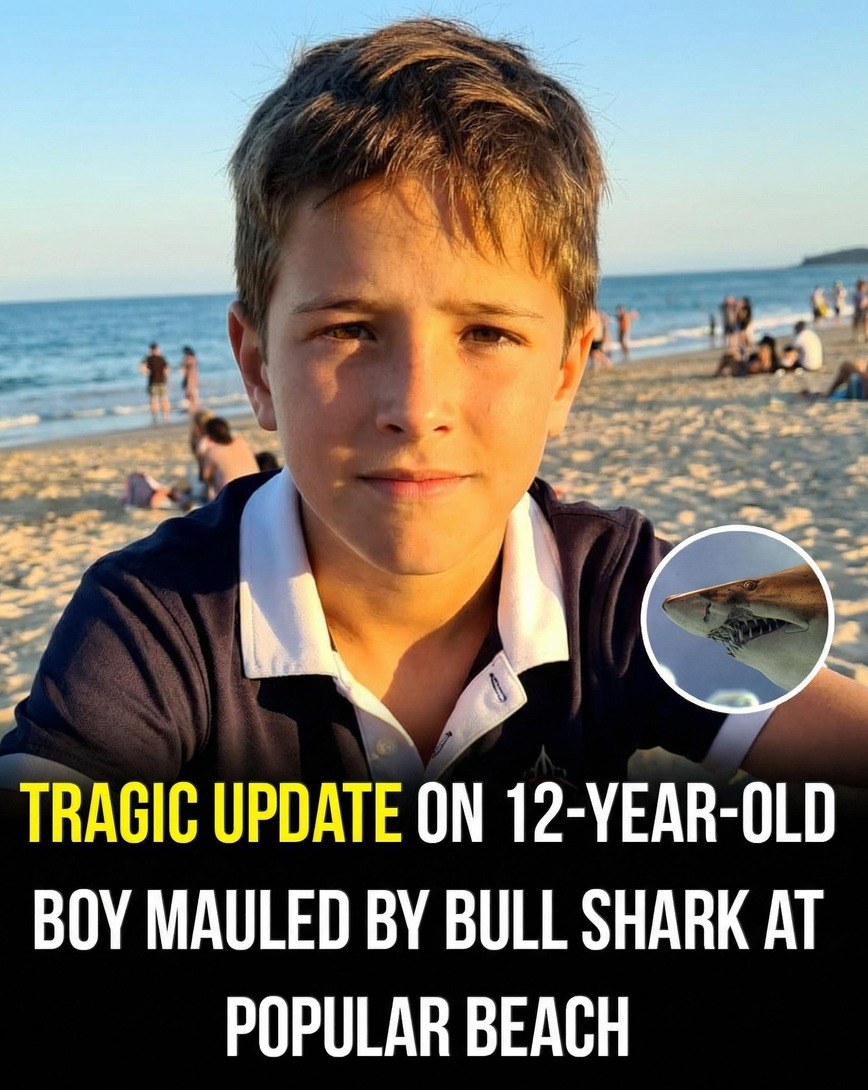
In the vibrant coastal landscape of Sydney, where the rhythm of life is often dictated by the ebb and flow of the Pacific, a sudden and harrowing event has cast a long shadow over the community. Twelve-year-old Nico Antic, a young boy known for his energy and spirit, was enjoying a typical summer afternoon swimming with friends near one of the city’s popular harbor-side beaches when tragedy struck. What began as a day of youthful freedom and laughter transitioned in an instant into a desperate fight for survival, triggering a massive emergency response and leaving a family, a school, and an entire neighborhood in a state of collective shock
The specifics of the incident unfolded with terrifying speed. While Nico was in the water, he encountered a sudden, life-threatening crisis. Though the exact nature of the environmental factor remains a subject of ongoing investigation by local authorities, the response from those on the scene was nothing short of heroic. Nico’s friends, children themselves, demonstrated remarkable presence of mind and bravery, acting with an urgency that likely saved his life in those first critical seconds. Their calls for help and immediate efforts to assist him allowed professional emergency responders to take over almost as soon as they arrived. Paramedics provided intensive on-site stabilization before Nico was rushed to a specialized children’s hospital, where he remains under the vigilant care of the country’s leading medical experts.
As Nico continues to fight in the intensive care unit, the community has transformed its shared grief into a powerful wave of action. The emotional toll on a family in this situation is immeasurable, but the practical toll is also significant. To address this, a close family friend stepped forward to organize a grassroots fundraising initiative. The goal was simple but profound: to ensure that Nico’s parents do not have to worry about the cost of living, transport, or mounting medical-related expenses while they hold a vigil at their son’s bedside. The message from the organizers was clear—this is a family that has always given to others, and now it is the community’s turn to carry them.
The response to the fundraiser has been a testament to the strength of the Sydney spirit. Within mere days, thousands of dollars have been donated by neighbors, classmates, and even strangers who were moved by the story of the twelve-year-old boy. The outpouring of generosity has provided a much-needed buffer for the family, allowing them to focus entirely on Nico’s recovery without the looming shadow of financial instability. Every donation has been accompanied by messages of hope, prayer, and solidarity, creating a digital and physical tapestry of support that the family has described as a vital source of strength during their darkest hours.
Beyond the immediate human drama, the incident has sparked a broader, urgent conversation regarding the safety of Sydney’s waterways. The harbor and its surrounding beaches are the crown jewels of the city, yet they harbor inherent risks that can catch even the most experienced swimmers off guard. In the wake of Nico’s accident, local authorities took the significant step of temporarily closing several nearby beaches. This was not a decision made lightly, but one born of necessity as specialists and marine experts monitor the conditions to ensure no further incidents occur. The presence of surf life-saving officials has been bolstered, and patrols have been increased to remind the public that the ocean is as unpredictable as it is beautiful.
This heightened state of alert was underscored by another near-miss involving a different young swimmer in the same vicinity shortly after Nico’s accident. In that instance, a quick-thinking family member and the rapid intervention of lifeguards prevented a second tragedy. These back-to-back events have served as a sobering wake-up call for the region. Public safety announcements have been amplified, urging families to stick strictly to patrolled areas marked by yellow and red flags and to maintain constant, undistracted supervision of children, regardless of their swimming proficiency. The narrative of Nico Antic has become a focal point for this renewed commitment to vigilance, turning a private tragedy into a public mission to prevent future heartbreak.
In the classrooms of Nico’s school and the local sports clubs where he was a familiar face, the atmosphere is one of somber reflection mixed with a determined hope. Support services have been made available to his peers, many of whom are struggling to process how a routine afternoon at the beach could take such a drastic turn. The incident has touched a nerve far beyond the suburbs of Sydney, with Nico’s story being shared across the country. It is a story that resonates with every parent who has watched their child run toward the surf and every friend who has shared a summer day by the water.
The transition from being a wife and new mother to an outcast occurred with a cold, clinical efficiency that I am still struggling to process. Two days after I buried my husband, Caleb, I found myself standing on the threshold of the apartment we had shared, clutching our three-week-old son, Noah. My mother-in-law, Deborah, stood in the doorway, her face a mask of calculated indifference. “You and your child mean nothing to me,” she said, her voice devoid of even a flicker of mourning. Before I could find the words to ask where a grieving woman with a newborn was supposed to go, the lock clicked shut, severing my last tie to the life I had known.
I am Mia, and at twenty-four, I became a widow and a homeless mother in the span of forty-eight hours. As I walked away with nothing but a suitcase, a diaper bag, and Caleb’s old hoodie—which still carried the faint, heartbreaking scent of him—I felt like a ghost. To understand the depth of Deborah’s cruelty, one has to understand the road Caleb and I traveled to bring Noah into the world. We had spent years navigating the exhausting terrain of infertility, marked by silent tears in bathroom stalls and the crushing weight of negative tests. When we finally conceived, we wept on the floor in sheer relief.
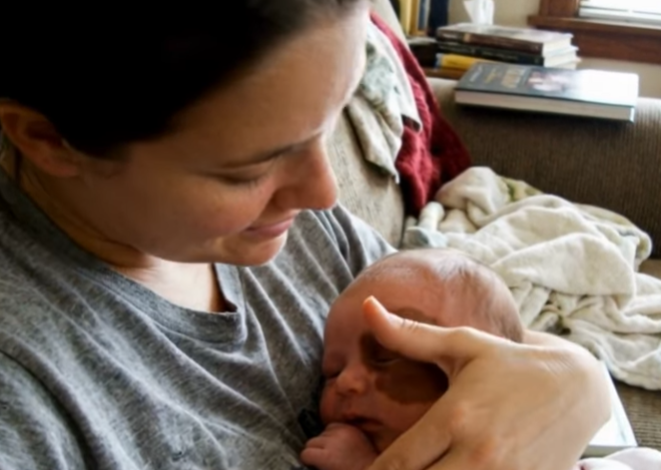
Noah was born with a large, port-wine stain birthmark covering half of his face. In the delivery room, the silence was thick with that brand of pity that feels like an insult. I panicked, already imagining the cruelty the world would inflict on him. But Caleb didn’t hesitate. He kissed our son’s cheek and whispered, “Hey, buddy. We’ve been waiting for you.” He loved Noah without reservation. Deborah, however, saw the birthmark as an opportunity to sow seeds of doubt. She would stare at the infant’s face and make pointed remarks about “not knowing what really happened,” subtly implying that Noah wasn’t Caleb’s child. Caleb always told me to ignore her, believing his mother would eventually come around. He was a man of immense faith in people, a trait that made his sudden death at twenty-seven all the more devastating.
One day he was there, making promises about the future, and the next, a massive heart attack turned my world to ice. The funeral was a fragmented blur of grief, dominated by Deborah’s performative wailing. It was only a week later that she revealed her true nature, informing me that the apartment was in the family’s name and that I was no longer welcome. Her accusation was the final blow: “You got pregnant somewhere else and tried to trap my son.”
For the next several weeks, I existed in survival mode. I drifted between friends’ couches and dilapidated motels, trying to keep a newborn warm and fed while my own spirit was breaking. The turning point came on a rainy afternoon when a car splashed a puddle over us as I walked from a grocery store. The driver, a young woman named Harper, jumped out to apologize, but stopped mid-sentence when she saw my face. I was shattered, and the story poured out of me right there on the sidewalk. Harper, as it turned out, was a lawyer who had experienced a similar betrayal after her own father’s death. She looked at me with a fierce, professional empathy and said the words I hadn’t heard since Caleb died: “I can help you.”
A few days later, Deborah called. Her voice had undergone a miraculous transformation, sounding sweet, warm, and maternal. She invited me to dinner, claiming she wanted us to be “family” again. Despite my intuition, a desperate part of me hoped she had finally seen Caleb’s eyes in Noah’s face. The dinner was a surreal performance of domestic harmony until the masks slipped. Deborah casually mentioned that Caleb had saved a significant sum of money to buy us a house—money he had left to me in his will. Then, her voice turned like a blade. She demanded the majority of the funds, claiming her “sacrifice” as a mother outweighed my rights as a wife. When I demanded to see the legal papers, she threatened to fight me until I was broke.
I left her house shaking, but this time, I wasn’t alone. I called Harper. What followed was a weeks-long legal battle that Deborah was entirely unprepared for. She tried to vilify me in our social circles, painting me as a gold-digging opportunist and even threatening to sue for grandparental visitation rights. But Harper was relentless. We followed the paper trail Caleb had left behind, a trail that proved he had been meticulously planning a secure future for Noah and me. He had structured his assets to ensure that even if he weren’t there to stand between us and his mother’s bitterness, his legacy would.
The day Harper told me it was over, I didn’t feel a rush of triumph. I felt a profound, exhausting relief. The money was mine, and by extension, it was Noah’s. I sat in her office and cried—not for the money itself, but for the realization that love is a force that can reach back from the grave to offer protection. A month later, I signed the deed to a small, modest house with a sun-drenched kitchen and a patch of grass in the back. It wasn’t just a building; it was a sanctuary where Noah would never have to feel like an unwanted guest.
On moving day, I stood in the empty living room and watched the light hit the birthmark on Noah’s face. For the first time, I didn’t see a “mark” or a reason for shame. I saw a beautiful boy who was the living embodiment of his father’s devotion. I whispered a thank you into the silence—to Harper for her strength, to myself for surviving the nights I thought would break me, and to Caleb for building a roof over our heads when he was no longer here to hold it up himself.
Deborah never apologized, and she likely never will. She remains a woman consumed by the need for control, unable to grasp that family isn’t something you can coerce or steal. I learned that real family is defined by the people who show up when the world is at its darkest. Harper became family by choice, standing in the gap when blood relatives walked away. As I rock Noah to sleep in our new home, I realize that Caleb’s love hasn’t ended; it has simply transformed. It exists in the walls of this house, in the legal protections he provided, and in the strength I found to fight for our son. Love doesn’t die; it builds, it protects, and it remains.
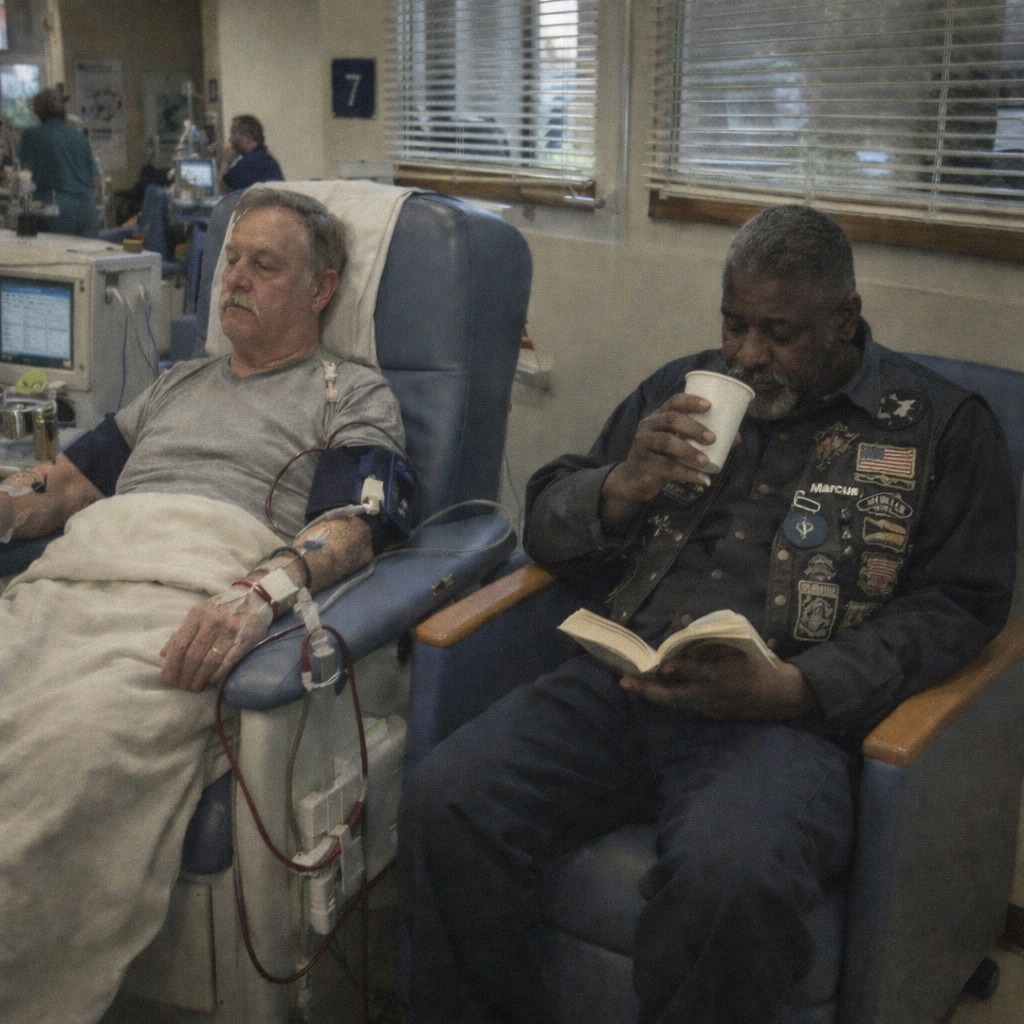
I have no family and no car, yet for four years, a man named Marcus has driven me to dialysis three times a week. He is fifty-eight, a veteran, and a widower who works the night shift as a hospital custodian just so he can be available during my morning sessions. He has never missed a day—not for holidays, not for blizzards, not for the exhaustion that must surely cling to him after a ten-hour shift on his feet. He drinks his coffee black, reads historical fiction, and occupies the visitor’s chair beside my dialysis machine with a constancy that borders on the sacred.
My own family stopped coming after the second month. My daughter visited twice before her children’s activities became too demanding and the drive became too long; eventually, she stopped calling altogether. My son came once, spent twenty minutes scrolling through his phone, and vanished before the machine had even finished cycling my blood. My ex-wife sent flowers on my birthday, but they were withered husks by the time I returned from the clinic. For a long time, I lived in a state of profound abandonment, wondering if my existence had become nothing more than a series of medical appointments and quiet despairs.
Then there was Marcus. At first, I was suspicious. I assumed he was confused or waiting for someone else. When I asked him why he was there, he simply said, “To keep you company.” When I told him I didn’t know him, he replied, “Not yet.” Over the next four years, that “not yet” transformed into a brotherhood. I learned his coffee order, his favorite authors, and the names of his two grown children. I learned that he volunteered at three different charities because staying busy was the only way he knew how to keep the grief of losing his wife at bay.
He researched my kidney-restricted diet and brought me muffins and bagels I could actually eat. He read aloud to me when I was too drained to hold a book. We played over five hundred games of gin rummy, and he kept a meticulous tally of his lead. When my blood pressure crashed during a particularly brutal treatment last year, Marcus was the one who held my hand while the nurses scrambled. My emergency contact was my daughter, but she didn’t answer her phone. Marcus was already there.
Last week marked my four-year anniversary on dialysis—four years of needles, machines, and the slow, grinding realization that I might never make it to the top of a transplant list. Marcus brought a card that said, “Four years of fighting. I’m honored to witness it.” When I told him he didn’t have to keep coming, that I would be okay on my own, he finally told me the truth. He explained that his wife had died waiting for a kidney that never came, and that on the day he first saw me, I was reading the exact same historical fiction novel she had been reading when she passed, with the bookmark in the same place. He took it as a sign that he was supposed to be there for me.
But yesterday, I learned that the sign went much deeper than a book. It started like any other Tuesday. I was hooked up to the machine in Chair 7 when a woman named Dr. Sarah Kellerman from the University Hospital transplant center approached me. She told me that a donor kidney had become available—not from the general list, but through a directed donation. Someone had specifically requested that their kidney go to me.
I was stunned. I knew no one who would make such a sacrifice. My family wouldn’t even visit me, let alone give me an organ. When I asked Marcus if he knew anything about it, he was uncharacteristically quiet. It wasn’t until later that evening, when he visited me in my hospital room before surgery, that the final pieces of the puzzle fell into place.
Marcus sat by my bed and confessed something he had been carrying for eight years. He told me about a night when he was driving home from work, exhausted and distracted. He had drifted into the oncoming lane and clipped a car, sending it spinning off the road. The driver survived the initial crash but suffered catastrophic internal injuries that led to chronic kidney failure. That driver was my wife, Jennifer.
“I’m the reason she needed a transplant,” Marcus whispered, his voice thick with a decade of remorse. “I’m the reason her health fell apart, and I’m the reason she spent two years on dialysis before she died.”
He had attended her funeral in secret. He had watched me from a distance, consumed by a guilt he couldn’t articulate. When he learned that I had developed kidney disease myself and that I was facing the same lonely end Jennifer had, he decided he couldn’t let it happen twice. He didn’t just show up for four years to ease his conscience; he had spent those years undergoing rigorous testing to see if he could be my donor.
“I took your wife’s kidneys,” Marcus said, “and now I’m giving you mine. It won’t bring her back, but it might give you a life beyond this chair.”
I wanted to be angry. I wanted to scream at him for the accident that had stolen my wife and my future. But then I looked at the man who had sat with me for twelve hours every week for four years. I thought of the coffee, the books, the gin rummy, and the hand-held in the dark. I realized that Marcus had been atoning for his mistake long before he signed the surgical consent forms. He had become my family when my real family had walked away.
I told him that Jennifer believed in redemption and that she would have forgiven him long ago. I told him to go through with the surgery, not just for me, but so he could finally begin to forgive himself.
The surgery was a success. Six months have passed since Marcus gave me his kidney, and for the first time in years, I am living a real life. I am no longer tethered to a machine. My daughter has recently re-entered my life, weeping with apologies for her absence. I haven’t told her the full story of Marcus and the accident yet; perhaps someday I will, but for now, it is enough that she is here.
Marcus and I still meet for coffee and cards. We visited Jennifer’s grave together last week, and Marcus stood at the headstone and whispered to her, “I’m taking care of him, like I promised.” I know he still carries the weight of the past, but I also know that he is no longer defined by it. We are two broken men who found a way to heal one another. He wasn’t just there to pay a debt; he was there because he became my friend. My family missed four years of my life, but Marcus never missed a single moment. He taught me that showing up is the greatest act of love there is, and that sometimes, the person who caused your greatest pain is the only one who can truly help you heal.