
Fateful Morning! A Routine Drop-Off Turns Deadly

The arrest happened without drama. No flashing lights cutting through the dark, no raised voices spilling into the street. Neighbors would later say it was so quiet they almost missed it—a single knock, a door opening, a brief exchange too soft to hear from across the road. Then the door closed again. A vehicle rolled away. By the time the sky began to lighten, everything looked unchanged from the outside.

But nothing was the same.

By morning, Becca was no longer simply a woman living with loss. She was a federal defendant.

Only hours earlier, she had been sitting at her kitchen table, scrolling through messages from people who planned to attend the next vigil. She had been thinking about candles, about permits, about whether the weather would hold. She had been thinking about Renee. Every plan she made, every breath she took, still revolved around the absence that had settled into her life like a second atmosphere.

Renee had left that morning like she always did. A routine drop-off. A brief goodbye. Nothing about it felt significant at the time. The kind of ordinary moment that never announces it will be the last. By nightfall, Renee was gone, and the days that followed fractured into police statements, hospital corridors, and a blur of condolences that felt unreal in their volume and emptiness.

Grief did not arrive all at once. It came in layers. First shock. Then anger. Then a deep, restless need to understand how something so final could come from something so ordinary.

Becca refused to disappear into private mourning. She filmed. She spoke. She returned again and again to the place where Renee had last been seen, where the questions still hung unanswered. She organized vigils not as performances, but as anchors—ways to keep memory alive in public space, where it could not be quietly buried.

Supporters began to gather. Some had known Renee. Others had not, but recognized the shape of the story: an ordinary life interrupted, an explanation that felt incomplete, a system that moved on too quickly. Becca became the face of that unresolved tension, not because she wanted to be, but because she would not step aside.

She recorded interactions. She asked for names. She refused to stop filming when told it was “unnecessary.” She spoke in a voice that did not soften with repetition. To those who stood beside her, she was persistent. To those in authority, she became something else: disruptive, uncooperative, unwilling to disengage.

When the arrest came, it came with paperwork, not spectacle. Federal charges framed around procedure, jurisdiction, compliance. No one accused her of violence. No one claimed she was dangerous. The language was clinical, precise, stripped of emotion. It described actions, not intent. Behavior, not grief.

Supporters saw it differently.

They argued that the charges were not about what Becca had done, but about what she refused to stop doing. That her mistake was not breaking the law in spirit, but breaking an unspoken rule: that mourning should be quiet, private, and brief. That persistence should eventually give way to acceptance. That questions should fade once the official version had been issued.

From that perspective, the arrest felt like a warning. Not just to Becca, but to anyone who believed that recording, speaking, and refusing to move on were forms of participation rather than provocation.

Federal authorities rejected that framing. In their statements, they emphasized process. Jurisdiction. Enforcement. They insisted the case had nothing to do with silencing dissent or punishing grief. The law, they said, applied evenly. No one was above it. Emotion could not excuse noncompliance.

Between those positions, the story hardened into two competing narratives, each insisting on its own legitimacy.

In one version, the arrest was inevitable. A necessary response to repeated boundary violations. A demonstration that rules exist for a reason, and that enforcement cannot bend indefinitely to personal circumstance.

In the other, it was retaliatory. A final escalation against someone who would not stop asking uncomfortable questions or allow the story to be closed neatly. A reminder that power does not always need to be loud to be effective—it only needs to be consistent.

As the case moved into court, the focus shifted from Renee’s death to Becca’s actions. Filming became evidence. Statements became exhibits. Context narrowed. The broader emotional landscape—the grief, the confusion, the unanswered questions—was compressed into timelines and citations.

Renee was still gone. That fact did not change.

Becca sat in custody, her world reduced to visiting hours, legal counsel, and the slow recalibration that comes when life is suddenly governed by schedules not your own. The same persistence that had driven her public grief now turned inward, reshaped into endurance.

Outside, the records continued to circulate.

Videos shared online. Clips reposted and analyzed. Screenshots of statements, comments frozen in time. Even as official channels tried to contain the narrative within legal boundaries, fragments of Becca’s voice remained in motion, refusing to disappear.

Memory proved harder to regulate than behavior.

The case raised questions that extended beyond the individuals involved. About where the line sits between documentation and obstruction. About who decides when grief becomes a problem rather than a right. About how power responds to those who refuse to accept closure without clarity.

Some argued that order requires limits, and that without them, chaos follows. Others countered that accountability often begins precisely where comfort ends. That history shows progress rarely comes from silence.

In the end, no version of the story offered resolution. Renee’s absence remained absolute. Becca’s fate now rested with the court. The rest of the world watched from a distance, drawing its own conclusions based on which fears felt more real: the fear of disorder, or the fear of erasure.

What endured were the records. The images. The words that had already been spoken and shared beyond recall. They lingered not because they were loud, but because they existed.

And in their existence, they posed a question that the case itself could not fully answer: when loss refuses to stay private, who gets to decide whether that refusal is a crime—or a form of truth that simply will not be contained.
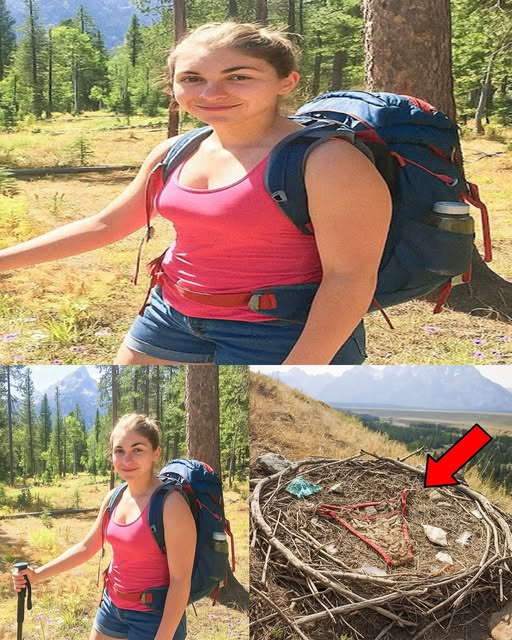
She Sent One Last Text Before Hiking Alone, Nearly a Year Later, an Eagles Nest Revealed the Truth About Her Disappearance!

The text arrived just after sunrise, ordinary in tone and devastating in hindsight.

Sarah Turner stood at her kitchen sink, one hand wrapped around a mug of coffee that had already gone cold, when her phone buzzed against the counter. She smiled when she saw the name on the screen.

Amelia.

Off I go. Mountains are calling. Weather’s perfect. Talk Sunday night.

Sarah felt the familiar mix of pride and unease tighten in her chest. Her daughter had always been this way—drawn to open spaces, to silence, to places where the world felt stripped down to its essentials.

“Be careful,” she typed back. “Love you.”

The message showed as delivered.

It was the last time anyone would hear from Amelia Turner.

Amelia—Amy to friends—was twenty-four and uncommonly certain of herself. She was a photographer by trade and temperament, working freelance jobs that paid just enough to fund the life she actually wanted: long stretches in the wilderness with her camera, her pack, and her thoughts. The mountains were not an escape for her. They were home.

She wasn’t reckless. That would matter later.

Amy planned obsessively. Checklists taped inside her gear bin. Printed maps folded and refolded until they were soft as cloth. Backup batteries. Backup plans. Friends joked that she packed like someone preparing for combat, not a hike.

On the morning of August 12, she pulled into the String Lake trailhead just after seven. The sky over the Tetons was a flawless blue, the kind that made danger feel theoretical. She parked her silver Subaru, checked her phone one last time, and hoisted her pack.

She stood smiling in front of the jagged peaks, hair pulled back, sun lighting her face just right. Confident. Alive.

That image would soon appear on missing-person flyers across the country.

Amy was tackling the Paintbrush Canyon–Cascade Canyon Loop, a demanding four-day route with steep climbs, exposed ridges, and fast-changing weather. She had planned every leg, marked campsites, identified water sources, and told multiple people exactly where she would be each night.

She had done everything right.

Sunday night came.

No message.

At first, Sarah told herself not to panic. Cell service was unreliable. That was expected. But as the hours passed, unease hardened into fear.

Amy never missed a check-in.

By Monday evening, Sarah’s hands shook as she called the sheriff’s office. Rangers drove to the trailhead that night.

Amy’s  car was still there.

By morning, she was officially missing.

Search teams moved in quickly. Helicopters swept the canyons. Dogs worked scent trails. Rangers combed the route Amy had planned.

They found her campsite at Holly Lake.

The tent was pitched neatly. Her sleeping pad laid out. A small daypack rested inside.

But her main pack—and her boots—were gone.

It made no sense. No experienced hiker abandoned essential gear without reason.

Dogs picked up her scent leading off the trail, up a steep slope, across loose rock. Then it stopped, abruptly, as if she had vanished into thin air.

Witnesses mentioned a detail that lingered uneasily: a lone man seen on the trail that morning. Thin. Carrying a military-style pack. Quiet. Unremarkable enough to fade into memory.

A sketch was made.

No name surfaced.

After ten days, storms rolled in, erasing tracks and scent. The official search was suspended.

The mountains had swallowed Amelia Turner.

For Mark Turner, her father, that was unacceptable.

Mark was a surveyor by profession, a man who believed that careful measurement could always reveal the truth. When helicopters stopped flying, he began his own search.

Every weekend, he returned to the Tetons. He studied satellite imagery, geological surveys, erosion patterns. He searched slowly and deliberately, paying attention to what broad searches missed—subtle depressions, disturbed vegetation, places where the land didn’t quite add up.

He wasn’t looking for a miracle anymore.

He was looking to bring his daughter home.

Online, Amy’s disappearance took on a second life. Forums debated theories. Hiking communities retraced her route. Some blamed accidents. Others wildlife.

And some whispered about the man on the trail.

Months passed. Winter locked the mountains under snow. Amy’s story faded from headlines, replaced by newer tragedies.

Nearly a year later, a fisherman found one of Amy’s trekking poles lodged in Cascade Creek. It confirmed her presence, not her fate. Mark searched again, harder than before.

Then, in July, something unexpected happened.

A park ranger assigned to monitor golden eagle nests climbed a remote cliff far off the trail. Eagle nests were built from whatever materials scavengers could find—branches, fur, scraps.

But woven into this nest was fabric that didn’t belong.

Turquoise nylon.

And more.

Clothing.

Investigators knew immediately what that meant. Eagles didn’t hunt humans. They scavenged.

The search area collapsed from hundreds of square miles to one mountainside.

A recovery team moved in. Dogs worked the terrain. On the third day, one dog froze and sat—a trained signal that ended hope and answered questions.

Amelia Turner was found.

The autopsy told the rest of the story. There was no fall. No animal attack.

She had been assaulted. She had been murdered.

The sketch was released again, this time labeled what it truly was: suspect.

Within days, a motel clerk recognized the face. A drifter. Cash payments. Sudden departure. A name surfaced. A trail emerged.

He was arrested quietly at a ranch in Montana.

In his possession were trophies—IDs, jewelry, a camera.

Amy’s camera.

The images on its memory card removed all doubt.

He confessed without emotion.

“She shouldn’t have been alone,” he said.

The trial was swift. The evidence overwhelming. He was sentenced to life without parole. Other families, long waiting, finally received answers.

Amy’s memorial was held on a Teton overlook. Wind moved through the grass. The mountains stood unchanged.

Mark spoke once.

“I just wanted to find my daughter.”

Amelia Turner was found. She was brought home. She was not forgotten.

And her story became a warning written into the landscape itself: not all dangers in the wilderness come from nature.

Sometimes, the predator walks the same trail.

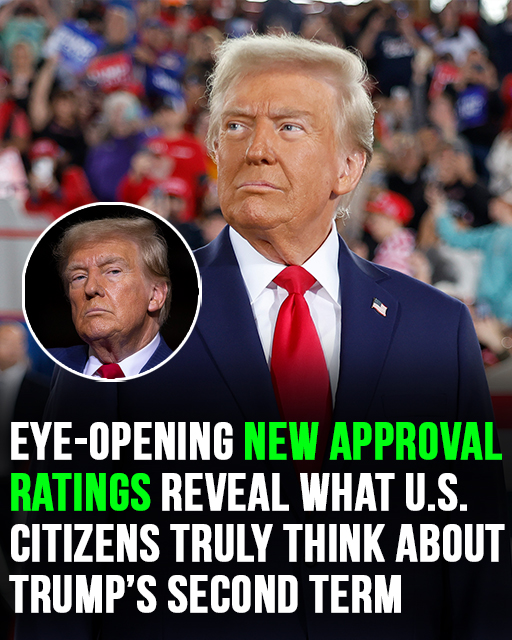
Eye-opening approval ratings reveal what Americans truly think about Trumps second term!

The prevailing narrative from the White House since January 2025 has been one of unmitigated triumph and historical restoration. To listen to President Donald Trump or his senior advisors is to hear a chronicle of a nation transformed: a landscape where aggressive tariff structures have replenished the federal treasury, energy costs have plummeted to historic lows, and the foundational pillars of American prosperity are being rebuilt at a pace that exceeds even the most optimistic campaign promises. This version of the American story is one of rapid-fire executive action and the assertive reclamation of national strength. However, as the administration enters the second year of its second term, a persistent and widening chasm has emerged between the President’s self-authored success story and the cold reality of public sentiment.

Donald Trump has long been a figure defined by his ability to bend the political narrative to his will, often utilizing a blend of hyperbole, selective data, and grand rhetorical gestures to project an image of invincibility. His administration is staffed by loyalists who have tethered their professional legacies to his populist movement, creating a cohesive internal front that insists the “Make America Great Again” agenda is functioning flawlessly.1 Yet, this unified front frequently operates in a vacuum, isolated from a public that remains profoundly skeptical of the administration’s methods and outcomes. The polarization that defined his first term has not only persisted but has calcified, creating a political environment where every policy victory claimed by the Oval Office is met with deep-seated doubt by a majority of the electorate.

This disconnect is most visible when analyzing the President’s exercise of executive power. Since returning to office, Trump has moved with a sense of urgency that his supporters view as decisive leadership and his critics view as an alarming expansion of imperial authority. His foreign policy, in particular, has taken on a tone that oscillates between isolationist “America First” rhetoric and surprisingly aggressive interventionist posturing. The President has frequently claimed that his presence alone serves as a global deterrent, preventing the outbreak of new international conflicts. Nevertheless, recent diplomatic maneuvers have sent shockwaves through the international community and domestic circles alike.

The renewed discourse surrounding the potential annexation of Greenland—a sovereign territory of Denmark, a key NATO ally—has resurfaced as a point of contention, reviving debates over the President’s respect for international norms.2 Simultaneously, the administration’s rhetoric regarding the capture of Venezuelan leader Nicolas Maduro has signaled a shift toward a more confrontational stance in the Western Hemisphere. These moves, while celebrated by his base as evidence of a “strongman” foreign policy, have left many Americans concerned about the long-term stability of traditional alliances and the risk of overextension.

On the domestic front, the administration has doubled down on its most controversial pillars, most notably immigration and trade.3 The hardline approach to border security and mass deportations has remained a focal point of Trump’s daily operations, drawing fierce legal challenges and sparking civil unrest in several states.4 Furthermore, the President’s penchant for remaining entangled in unresolved controversies—such as the lingering questions surrounding the full disclosure of the Epstein files—continues to provide fodder for his detractors. For many, these issues act as a ceiling on his popularity, making it nearly impossible for him to expand his appeal beyond his core demographic.

The statistical reality of this public divide was recently brought into sharp focus by a comprehensive AP-NORC poll conducted in early January 2026.5 The findings offer a sobering counterpoint to the administration’s claims of overwhelming public mandate. Despite a year of high-velocity policy changes and constant media saturation, the President’s approval ratings have remained remarkably stagnant. According to the data, only about four in ten Americans approve of his job performance. Specifically, as of January 8, 2026, 59 percent of U.S. adults expressed disapproval of his presidency, while only 40 percent viewed his performance favorably.

Perhaps most damaging for an administration that prides itself on economic “miracles” is the public’s assessment of the financial state of the union. While the President frequently touts a booming economy fueled by deregulation and trade protectionism, the American public is not feeling the prosperity.6 Only 37 percent of respondents approved of his handling of the economy, while 62 percent disapproved, suggesting that the “kitchen table” issues of inflation and cost of living continue to haunt the administration despite its optimistic messaging.7 This skepticism extends across nearly every major policy area: immigration approval stands at 38 percent against 61 percent disapproval; foreign policy sits at 37 percent approval; and his much-vaunted trade negotiations also hover at a 37 percent approval rating.

These figures illustrate a president who is effectively “stuck.” While Trump possesses an uncanny ability to dominate the news cycle and maintain the unwavering loyalty of a significant minority, he has failed to build the broad-based consensus usually required to sustain long-term national shifts. The data suggests that for every person who views his trade wars as a necessary defense of American labor, there are nearly two who view them as a source of economic instability. For every supporter who sees his immigration policies as a restoration of the rule of law, there are others who see them as a departure from American values.

This stalemate defines the current American political landscape. The President continues to broadcast a reality of “winning” and “unprecedented growth,” using his platform to bypass traditional media and speak directly to a base that views him as a singular savior. Conversely, the majority of the country perceives a nation in flux, characterized by aggressive executive overreach and economic uncertainty. The lack of movement in his approval ratings since March 2025 indicates that the American mind is largely made up; the first year of his second term has neither converted his enemies nor significantly deepened the pool of his supporters.

As the administration moves further into 2026, the question remains whether any shift in policy or global event can break this deadlock. Trump has never been a leader who seeks middle ground, preferring instead to lean into the friction that his policies create.8 He operates on the instinct that confidence is its own form of truth, believing that if he projects success loudly enough, the reality will eventually align with the rhetoric. However, with disapproval ratings holding steady near 60 percent, the administration is navigating a narrow path.

Ultimately, the story of Trump’s second term is not one of a unified nation moving toward a shared goal, but of a deeply fractured society watching two different versions of the same presidency. On one side is a White House convinced of its historic greatness; on the other is a public majority that remains unconvinced, skeptical, and increasingly critical of the direction in which the country is being led. The gap between these two realities is not just a matter of political disagreement—it is the defining characteristic of the modern American era, a period where the perception of truth is as divided as the electorate itself.