What Makes Veins More Noticeable Under the Skin!

The human circulatory system is a marvel of biological engineering, a vast and intricate network of vessels that tirelessly transports life-sustaining blood to every corner of the body. Among these vessels, veins play the critical role of returning deoxygenated blood back to the heart. For many individuals, these pathways are not just internal concepts but visible realities, appearing as delicate blue, green, or purple lines tracing patterns beneath the surface of the skin. While the sudden prominence of veins can sometimes spark concern or self-consciousness, it is essential to understand that visible veins are, in the vast majority of cases, a perfectly normal and healthy manifestation of human physiology. The visibility of one’s vasculature is determined by a complex interplay of genetics, lifestyle, environmental factors, and the natural progression of time.

One of the most immediate and common reasons veins become more apparent is the body’s response to its environment and physical demands. When we engage in strenuous exercise, our muscles require a surge of oxygen and nutrients, leading to increased blood flow. This surge causes the veins to dilate—a process known as vasodilation—to accommodate the higher volume of blood returning to the heart. Similarly, external temperature plays a significant role. In warm weather or during a hot bath, the body seeks to cool itself by sending more blood toward the skin’s surface to dissipate heat. This thermal regulation makes the veins expand and appear closer to the surface. For athletes or individuals with low body fat, this visibility is even more pronounced, as there is less subcutaneous adipose tissue to cushion and obscure the vessels. In these contexts, visible veins are often a sign of a robust and active circulatory system working exactly as it should.

Beyond temporary environmental triggers, the natural aging process is perhaps the most universal factor in changing vein visibility. As we move through the decades, our skin undergoes structural transformations; it gradually loses collagen and elastin, the proteins responsible for thickness and resilience. As the dermis becomes thinner and more translucent, the underlying anatomy becomes more apparent to the naked eye. This is a standard biological shift and is typically most noticeable on the backs of the hands, the forearms, and the feet. Furthermore, genetics play a foundational role. Some individuals are simply born with fairer or thinner skin types that offer less “coverage” for their veins, a trait that is often inherited and entirely benign.

While most visible veins are simply a matter of aesthetics or temporary physiological shifts, there are times when their appearance reflects the internal mechanics of venous health. Within our veins are tiny, one-way valves designed to prevent blood from flowing backward as it fights gravity to return to the heart. When these valves become weakened or damaged—a condition often influenced by prolonged standing, sitting, or pregnancy—blood can begin to pool in the vessels. This accumulation of pressure causes the veins to become distended, twisted, or raised, leading to the development of varicose veins. Unlike the smooth, flat veins associated with exercise or thin skin, varicose veins often have a bulging, rope-like appearance and may be accompanied by a sensation of heaviness, aching, or throbbing in the lower extremities.

The development of more prominent or uncomfortable veins is often a cumulative result of various lifestyle factors. Modern life frequently requires us to remain in static positions for hours on end, whether sitting at a desk or standing on a retail floor. This lack of movement deprives the “calf muscle pump”—the rhythmic contraction of leg muscles that helps push blood upward—of its primary job. Over time, this chronic pressure can strain the vascular walls. Other factors, such as smoking, which damages blood vessel integrity, or carrying excess body weight, which places a heavier burden on the circulatory system, can exacerbate these changes. Hormonal fluctuations, particularly those associated with pregnancy or menopause, can also relax vein walls, making them more prone to stretching and visibility.

Fortunately, supporting the health of the circulatory system is often a matter of making small, sustainable adjustments to daily habits. The key to maintaining efficient blood flow is movement. Incorporating regular walking into one’s routine is one of the most effective ways to strengthen the “second heart” in the calves. For those whose jobs require long periods of sitting or standing, taking short breaks to stretch, flex the ankles, or walk around the room can prevent blood from pooling. Elevating the legs above the level of the heart while resting in the evening is another simple yet powerful technique to assist gravity in moving blood back to the torso. Additionally, staying well-hydrated is crucial; when the body is dehydrated, the blood can become more viscous, making it harder for the veins to transport it efficiently.

https://googleads.g.doubleclick.net/pagead/ads?gdpr=0&client=ca-pub-6638610645332968&output=html&h=280&adk=3343016698&adf=1082561168&pi=t.aa~a.23905774~i.5~rp.4&w=780&fwrn=4&fwrnh=100&lmt=1769442055&rafmt=1&armr=3&sem=mc&pwprc=3462236420&ad_type=text_image&format=780×280&url=https%3A%2F%2Fmardinolay.com%2Fwhat-makes-veins-more-noticeable-under-the-skin%2F&fwr=0&pra=3&rh=195&rw=780&rpe=1&resp_fmts=3&fa=27&uach=WyJXaW5kb3dzIiwiMTkuMC4wIiwieDg2IiwiIiwiMTQzLjAuNzQ5OS4xOTMiLG51bGwsMCxudWxsLCI2NCIsW1siR29vZ2xlIENocm9tZSIsIjE0My4wLjc0OTkuMTkzIl0sWyJDaHJvbWl1bSIsIjE0My4wLjc0OTkuMTkzIl0sWyJOb3QgQShCcmFuZCIsIjI0LjAuMC4wIl1dLDBd&abgtt=6&dt=1769442055678&bpp=1&bdt=640&idt=0&shv=r20260121&mjsv=m202601200101&ptt=9&saldr=aa&abxe=1&cookie=ID%3D446b43db6cb12fb9%3AT%3D1768396080%3ART%3D1769442051%3AS%3DALNI_Maa9bv6pgUc2_kICGwswCGi6_HFmQ&gpic=UID%3D000012e4b2681d9d%3AT%3D1768396080%3ART%3D1769442051%3AS%3DALNI_Ma2bkyXqYbqmCcvk9x92frhGeuLjA&eo_id_str=ID%3De55bf9e984f2a9b9%3AT%3D1768396080%3ART%3D1769442051%3AS%3DAA-AfjaNKqXKxI-iQMXE7JEVENx0&prev_fmts=0x0%2C1200x280%2C780x280%2C780x280&nras=5&correlator=8683486333695&frm=20&pv=1&u_tz=60&u_his=3&u_h=1080&u_w=1920&u_ah=1032&u_aw=1920&u_cd=24&u_sd=1&dmc=8&adx=368&ady=3331&biw=1905&bih=945&scr_x=0&scr_y=0&eid=95379902%2C95381032%2C95381776%2C95372615&oid=2&pvsid=6922552608149824&tmod=226720719&uas=1&nvt=1&ref=https%3A%2F%2Fmardinolay.com%2F%3Fs%3DWhat%2BMakes%2BVeins%2BMore%2BNoticeable%2BUnder%2Bthe%2BSkin%2521%26fbclid%3DIwY2xjawPkalJleHRuA2FlbQIxMABicmlkETFUZEZwWENWN29wbERWQ0Ftc3J0YwZhcHBfaWQQMjIyMDM5MTc4ODIwMDg5MgABHrr7B6cpU9bkc46qS4slAtGAd41dfdeWANWYaT5p-ZYkPsyBV9qdcAHBPh6N_aem_cYeXzyyU_i8jeLWtZxLAFw&fc=1408&brdim=1537%2C1%2C1537%2C1%2C1920%2C0%2C1918%2C1030%2C1920%2C945&vis=1&rsz=%7C%7Cs%7C&abl=NS&fu=128&bc=31&plas=308x742_l%7C366x742_r&bz=1&pgls=CAEQARoFNC45LjM.~CAEaAzYuOQ..~CAEQBBoHMS4xNzAuMA..&num_ads=1&ifi=5&uci=a!5&btvi=3&fsb=1&dtd=177

In some instances, lifestyle modifications are supplemented by therapeutic interventions. Compression therapy, which involves wearing specialized socks or stockings that apply graduated pressure to the legs, is a common and effective method for managing vein visibility and discomfort. These garments help squeeze the vein walls together, allowing the internal valves to close more effectively and move blood upward. For those concerned about the cosmetic appearance of prominent veins, medical advancements offer various minimally invasive options, such as sclerotherapy or laser treatments, which can diminish the appearance of spider veins or varicose veins. However, the primary goal of any intervention should always be the optimization of circulatory function and the relief of physical symptoms.

While most changes in vein appearance are gradual and harmless, it is vital to remain observant of signs that may indicate a need for professional medical evaluation. Sudden swelling in a single leg, persistent pain that does not improve with rest, or skin that feels warm and tender to the touch near a vein can sometimes be indicators of more serious conditions, such as deep vein thrombosis (DVT) or phlebitis. Furthermore, if the skin around visible veins begins to change color, become itchy and dry, or develop sores that are slow to heal, it may suggest chronic venous insufficiency that requires specialized care. Being proactive about these symptoms ensures that minor circulatory issues do not escalate into more complex health challenges.

Ultimately, our veins are a testament to the incredible work our bodies perform every second of the day. Whether they are visible due to a vigorous workout, the natural passage of time, or the unique map of our DNA, they are an essential part of our physical identity. By adopting a lifestyle that prioritizes movement, hydration, and mindful rest, we can support these vital pathways. Understanding the science behind vein visibility helps strip away unnecessary anxiety, allowing us to focus on the true goal: a healthy, active body and a circulatory system that functions with ease. Acknowledging the beauty and complexity of this internal network is the first step toward lifelong vascular health and the confidence that comes with knowing how to care for the body’s most essential transport system.

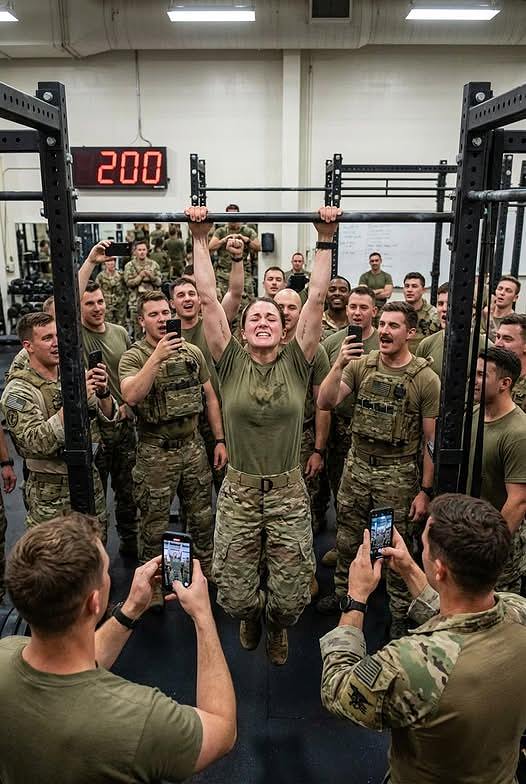
Mind if I try? The Navy SEALs laughed at her, but she went on to break their record, leaving everyone completely stunned

In the sterile, high-stakes environment of the Naval Medical Center in San Diego, Sarah Martinez was a figure of quiet observation. At twenty-five, she possessed a kinetic understanding of the human body that few could rival. While other young women in her home state of Texas might have spent their formative years focused on the ephemeral trends of social media, Sarah had spent hers in a garage, draped in shadow and grease, helping her father rebuild combustion engines. She learned early that every machine, whether made of steel or sinew, operated on the principles of leverage, friction, and precision. As a physical therapist, she applied this mechanical wisdom to the broken bodies of elite warriors, guiding them through the grueling process of reclaiming their lives from catastrophic injury. She was well-acquainted with the threshold of human pain, but she also knew that the mind usually surrendered long before the muscles truly failed.

On an unseasonably humid Wednesday, Sarah found herself in the base gymnasium. The air was thick with the scent of chalk dust and the metallic tang of perspiration. A platoon of Navy SEALs was engaged in a high-volume pull-up assessment. These were men forged in the fires of BUD/S, individuals who viewed physical agony as a mere suggestion rather than a command to stop. Sarah stood at the periphery, her oversized scrubs and white lab coat making her look deceptively fragile against the backdrop of massive power racks and heavy iron.

She watched them with the clinical eye of an engineer. She saw the minute inefficiencies that the men themselves were too exhausted to notice: the slight, energy-sapping lateral sway of the hips; the thumbs gripped too high on the bar, which strained the tendons of the forearm; and the uncontrolled, rapid descents that wasted the potential energy of the eccentric phase. To the SEALs, they were a display of raw power. To Sarah, they were a series of solvable mechanical errors.

Clearing her throat, she stepped into the center of the room. The rhythmic counting died down as twenty of the world’s most dangerous men turned to look at the small woman who had interrupted their sanctuary. With a voice that was steady and devoid of ego, Sarah began to explain the biomechanics of the movement. She detailed how a slight adjustment in hand spacing, the engagement of the scapular stabilizers, and a more controlled descent could effectively double their endurance.

The silence was broken by a wave of low, guttural laughter. Rodriguez, a barrel-chested operator known for his explosive strength, wiped a thick layer of sweat from his forehead and offered a skeptical smirk. “With all due respect, Doc,” he said, his tone more amused than malicious, “there’s a difference between reading about a pull-up in a textbook and actually pulling your own weight against gravity. You think you can do better than the guys who do this for a living?”

Sarah didn’t flinch. The heat rose in her cheeks, but her eyes remained fixed on the pull-up bar. “Mind if I give it a shot?” she asked.

The laughter grew sharper, a mix of incredulity and mocking encouragement. They saw a woman half their size, a non-combatant, suggesting she could outlast men trained to survive the most inhospitable conditions on Earth. However, at the back of the room, Commander Thompson remained silent. He had spent a career learning that the most dangerous person in the room is often the one with the quietest voice. He nodded his approval.

The gym fell into a tense, expectant hush as Sarah approached the bar. She didn’t jump; she accepted a boost from Rodriguez, her small, calloused hands finding a shoulder-width grip. These were not the soft hands of a typical medical professional; they were the hands of a rock climber and a gymnast, refined through years of private, relentless training. She closed her eyes for a heartbeat, initiating a rhythmic breathing pattern—the same diaphragmatic technique she used to help amputees manage phantom limb pain.

The first repetition was a masterpiece of efficiency. There was no kip, no jerk, no wasted motion. She cleared the bar with her chin and lowered herself with the deliberate control of a hydraulic press. A few SEALs exchanged glances. Ten reps passed, then twenty. Her form remained identical, each movement a perfect carbon copy of the last. By the thirtieth rep, the smirks had vanished. Rodriguez stopped his playful muttering and leaned in, his eyes wide.

By fifty reps, the atmosphere had shifted from skepticism to a deep, reverent awe. Sarah was in a flow state, her mind detached from the burning sensation in her lats and forearms. She was no longer a woman in a gym; she was a system of levers and pulleys operating at peak optimization. Seventy-five reps passed, and then eighty-five, tying the base record. When she hit ninety, a new standard was born.

The SEALs, being men of action, recognized greatness when they saw it. The initial teasing was replaced by a rhythmic, tribal chant. Rodriguez was now the loudest voice in the room, counting each rep with a ferocity usually reserved for combat. At 120 reps, Sarah’s scrubs were soaked with sweat, and her white coat had long ago been tossed aside. At 150, her forearms began to cramp into tight, iron-hard knots, but she redistributed the strain by subtly shifting her grip and engaging her core even tighter.

By rep 175, the gymnasium was packed. Word had spread across the base like wildfire. Exercise physiologists and other medical staff stood shoulder-to-shoulder with special operators, all of them witnessing the impossible. Sarah was now operating purely on willpower and biomechanical manipulation. Every muscle fiber in her upper body was screaming in protest, saturated with lactic acid, yet her chin continued to clear the bar.

When she reached 195, her fingers looked like gnarled hooks, and her entire frame trembled with the effort. Commander Thompson paced the floor, his eyes glimmering with a profound admiration. He was watching a blueprint for a new kind of training. Sarah knew that stopping at 199 was an option, but in her world, “almost” was a failure.

Rep number 200 was a monumental struggle against the laws of physics. She rose incrementally, her teeth clenched, her breath coming in ragged gasps. When her chin finally cleared the bar for the two-hundredth time, she didn’t just break a record; she shattered a glass ceiling. She descended slowly, her legs shaking as they hit the floor.

The room erupted into a roar that shook the rafters. Every man in that gym, from the greenest recruit to the most seasoned Commander, snapped to attention and saluted the physical therapist who had just redefined their understanding of human potential.

In the weeks that followed, the story became a legend. Sarah Martinez was officially documented by Guinness World Records, and the Navy promptly invited her to overhaul the biomechanical training protocols for SEAL candidates. But for Sarah, the record wasn’t the point. She returned to her clinic, treating her patients with the same quiet precision as before. When a young sailor would tell her an exercise was impossible, she would simply smile and ask the question that had changed her life: “Mind if I show you how?” She had proven that while elite warriors are made of flesh and blood, a person armed with determination and a perfect understanding of the machine can outlast any giant.

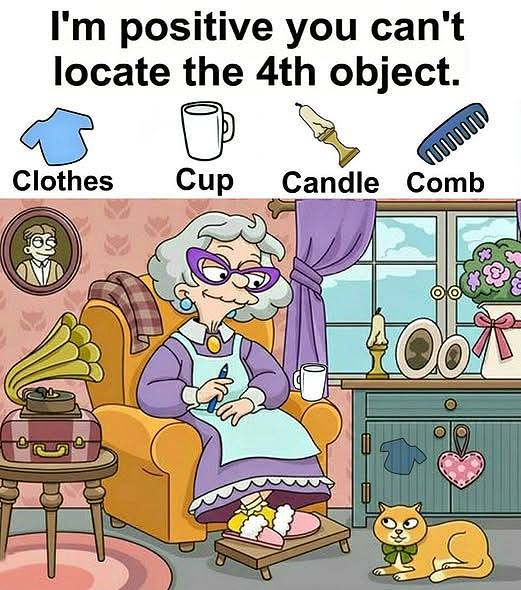
The Enduring Role of Grandmothers: Pillars of Love, Wisdom, and Family Unity

Every family has a figure whose presence is gentle, reassuring, and deeply memorable. Someone whose words, though often soft, leave a lasting impact. That figure is often the grandmother.

Grandmothers are more than the mothers of our parents. They serve as the invisible pillars of their families, connecting generations, preserving cherished memories, and offering unconditional love. In a world that changes rapidly, they provide stability, continuity, and emotional grounding.


1. A Reassuring Presence

From early childhood, grandmothers occupy a special place in the hearts of their grandchildren. Their homes often carry the comforting aromas of home-cooked meals, familiar routines, and the warmth of safety. With a grandmother, life feels slower, softer, and more secure.

Through her presence, a grandmother reassures, comforts, protects, and loves without conditions. She has the ability to calm fears, soothe tears, and restore joy.


2. A Unique, Selfless Love

The love of a grandmother is distinctive: profound, sincere, and selfless. She loves without expecting reciprocation, forgives readily, and understands without judgment. Her support is constant, often providing strength when others cannot.

This type of love leaves an enduring mark, guiding grandchildren through challenges and offering a model of compassion and resilience that lasts a lifetime.


3. Warmth of Home and Tradition

Grandmothers often become the heart of the household, linking family traditions with meals, shared stories, and acts of care. Cooking, for many, represents more than nourishment; it embodies love, cultural heritage, and family history.

Through each recipe and each meal, grandmothers connect generations, celebrate roots, and bring everyone together, creating moments that become lifelong memories.


4. Wisdom Through Experience

Having lived through joys and hardships, grandmothers offer a perspective informed by experience. Their insights teach patience, respect, gratitude, and inner strength.

Advice from a grandmother is often simple but meaningful, drawn from both the heart and a life well-lived. These lessons often resonate more deeply than any textbook knowledge.


5. A Special Bond with Grandchildren

The grandmother-grandchild relationship is built on trust, affection, and closeness. With a grandmother, grandchildren often feel free to express themselves openly, knowing they are understood and loved.

She listens attentively, shares laughter, provides emotional support, and serves as a reliable source of comfort, fostering strong emotional connections that can last a lifetime.


6. Pillar of Family Unity

Grandmothers frequently act as the glue that holds families together. Through her dedication and presence, she helps preserve traditions, sustain memories, and ensure familial connections remain strong.

Her role strengthens bonds across generations, reminding families of their shared history and values, and helping maintain continuity even in changing circumstances.


7. Quiet, Essential Support

Much of a grandmother’s work is behind the scenes. She supports parents, cares for children, offers advice, and invests her time and energy without complaint. Her contributions may go unnoticed at times, yet they are invaluable to the family’s well-being.

Her support demonstrates selflessness and dedication, often forming the foundation upon which family life is built.


8. A Listening Ear and Open Heart

Grandmothers provide a safe space for expression. They listen without judgment, understand emotions, and provide comfort. Their attentive presence can soothe stressed or anxious family members and create a sense of calm and reassurance.


9. The Gift of Shared Time

Grandmothers understand the value of time and the importance of shared moments. They teach the importance of slowing down, savoring experiences, and appreciating life’s simple pleasures.

This perspective encourages grandchildren to enjoy the present and recognize the significance of everyday interactions.


10. Lifelong Impact

Even after a grandmother is no longer physically present, her influence continues. Her guidance, love, and lessons leave a lasting legacy in the hearts and minds of her family.

Her presence shapes memories, reinforces values, and leaves an emotional imprint that extends across generations.


11. Role Model for Future Generations

Through her example, a grandmother teaches qualities such as kindness, patience, generosity, and respect. She embodies a combination of gentleness and strength that inspires younger generations to carry these traits forward in their own lives.


Conclusion: Cherishing Grandmothers

Grandmothers are invaluable treasures within families. They safeguard memories, offer unconditional love, and serve as symbols of continuity. Their guidance, wisdom, and support enrich the lives of their children and grandchildren alike.

A family with a loving grandmother is truly rich in heart. Recognizing, respecting, and appreciating her every day ensures that her influence continues to shape the family positively. Her presence may be quiet, but its impact resonates powerfully, echoing through generations.

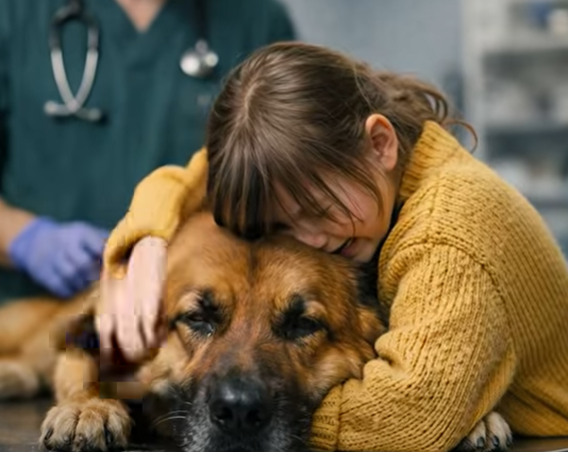
The veterinarian was preparing to euthanize a service dog after it had attacked a police officer, but at the last moment a little girl burst into the examination room, and something unexpected happened!

The sterile walls of the veterinary clinic were cast in a sickly, fluorescent light that hummed with the weight of the inevitable. Outside, the rain was a relentless drumbeat against the windowpane, a chaotic backdrop to the heavy silence that had settled over Examination Room Three. Dr. Ben, a man whose hands had healed thousands of animals over a twenty-year career, stood motionless beside the cold metal table. On it lay Titan, a massive, deep-red service dog whose reputation as a paragon of canine discipline had been shattered in a single afternoon.

Standing across from the doctor was Mark, a police officer whose presence commanded the small room. His arm was encased in a thick white bandage, and his eyes were like flint. He stood with his jaw set, a man betrayed by his most trusted partner. According to the official report, Titan had snapped during a routine duty shift, lunging at Mark and causing a significant injury. The paperwork was already signed; the verdict of “unpredictable aggression” was a death sentence in the world of service animals.

“He’s a liability now, Ben,” Mark said, his voice grating with a mix of frustration and lingering shock. “One minute he’s sitting there, and the next, he’s on me. No warning. No growl. If he can do that to me, he could do it to anyone. Just get it over with.”

Ben didn’t reach for the sedative immediately. He was a veteran of animal behavior, and his instincts were screaming that the scene before him didn’t fit the narrative of an apex predator. Titan wasn’t snarling or snapping at the air. He lay perfectly still, his large paws tucked neatly, but his muscles were corded with a tension that suggested he was bracing for an impact that wasn’t coming from a needle. There was a profound, quiet dignity in the dog’s posture, a look of resigned duty rather than malice.

Standing across from the doctor was Mark, a police officer whose presence commanded the small room. His arm was encased in a thick white bandage, and his eyes were like flint. He stood with his jaw set, a man betrayed by his most trusted partner. According to the official report, Titan had snapped during a routine duty shift, lunging at Mark and causing a significant injury. The paperwork was already signed; the verdict of “unpredictable aggression” was a death sentence in the world of service animals.

“He’s a liability now, Ben,” Mark said, his voice grating with a mix of frustration and lingering shock. “One minute he’s sitting there, and the next, he’s on me. No warning. No growl. If he can do that to me, he could do it to anyone. Just get it over with.”

Ben didn’t reach for the sedative immediately. He was a veteran of animal behavior, and his instincts were screaming that the scene before him didn’t fit the narrative of an apex predator. Titan wasn’t snarling or snapping at the air. He lay perfectly still, his large paws tucked neatly, but his muscles were corded with a tension that suggested he was bracing for an impact that wasn’t coming from a needle. There was a profound, quiet dignity in the dog’s posture, a look of resigned duty rather than malice.

Mark moved to pull her away, his face contorted with fear that the “dangerous” animal would turn on the child, but Ben raised a sharp, commanding hand. “Wait,” the doctor whispered. “Look at him, Mark. Really look at him.”

Ben stepped closer to the table, his eyes scanning the dog’s coat with clinical precision. He began to gently part the thick fur around Titan’s neck and shoulders. Underneath the groomed exterior were the tell-tale signs of hidden trauma—old, faint scars that had been meticulously concealed. But it was what he found tucked beneath the heavy leather service collar that stopped his heart. It was a thin, braided fabric strap, unmistakably a child’s friendship bracelet, tied with a clumsy, permanent knot.

The realization hit Ben with the force of a physical blow. Titan wasn’t just a police dog; he had become a self-appointed guardian to the smallest member of the household. Ben straightened his back, his expression turning from contemplative to iron-clad.

Mark moved to pull her away, his face contorted with fear that the “dangerous” animal would turn on the child, but Ben raised a sharp, commanding hand. “Wait,” the doctor whispered. “Look at him, Mark. Really look at him.”

Kids travel activities

Ben stepped closer to the table, his eyes scanning the dog’s coat with clinical precision. He began to gently part the thick fur around Titan’s neck and shoulders. Underneath the groomed exterior were the tell-tale signs of hidden trauma—old, faint scars that had been meticulously concealed. But it was what he found tucked beneath the heavy leather service collar that stopped his heart. It was a thin, braided fabric strap, unmistakably a child’s friendship bracelet, tied with a clumsy, permanent knot.

The realization hit Ben with the force of a physical blow. Titan wasn’t just a police dog; he had become a self-appointed guardian to the smallest member of the household. Ben straightened his back, his expression turning from contemplative to iron-clad.

The story of the dog who was almost lost became a legend within the precinct—a reminder that even the most disciplined soldiers have a heart that beats for something beyond the uniform. Today, if you visit the park near Mark’s home, you might see a large, reddish dog with a grey-muzzled face resting in the grass. He no longer wears a badge or a heavy leather service collar. Instead, he wears a simple braided fabric strap, and he never takes his eyes off the girl in the yellow sweater, serving the one post he was never willing to abandon.

 “Hot Bath, Soap and Clean Towels?” German Women POWs Couldn’t Believe What They Saw in a U.S. Camp 

The cattle car jerked to a violent stop after 3 days of travel, and Lieutenant Ingred Hoffman pressed her face against the small barred window, trying to see their destination. Around her, 47 other German military women shifted anxiously in the cramped space, their uniforms dirty and their faces hollow with exhaustion.

 “Where are we?” whispered Sergeant Anna Klene, a signals operator who had been captured during the collapse of the Western Front. Through the window, Ingred could see guard towers and barbed wire fencing. But something seemed different from the prison camps described in Nazi propaganda. The buildings looked sturdy and well-maintained, not the crude wooden shacks she had expected.

 It’s an American prison camp, Ingred replied grimly. Prepare yourselves for what we’ve been told to expect. The propaganda had been clear. American capttors would subject German prisoners to deliberate starvation, brutal interrogations, and deliberate humiliation designed to break their spirit.

 As vermocked auxiliaries, they had been taught that capture by Americans meant a slow death through systematic cruelty. The heavy doors of the cattle car slid open with a grinding screech, and American soldiers appeared outside. Ingred tensed, expecting shouting and violence, but instead heard something that caught her completely offguard.

 Ladies, please step down carefully. Watch your footing. The platform is wet. The voice belonged to a tall American sergeant who was actually offering his hand to help the German women down from the train car. His uniform was clean, his demeanor professional, and most surprisingly, he spoke careful German with obvious concern for their safety.

 “I am Sergeant Williams,” he announced to the assembled German prisoners. “You are now at Camp Clinton in Mississippi. You will be processed, assigned quarters, and given an orientation regarding camp procedures. Ingred exchanged glances with Anna. This wasn’t the brutal reception they had been conditioned to expect.

The American guards were armed but relaxed, their weapons lowered, treating the German women more like refugees than dangerous enemies. Sergeant Williams, Ingred said in careful English, “What will happen to us?” The American looked genuinely surprised by the question. Ma’am, you’ll be housed according to Geneva Convention standards, provided with adequate food and medical care, and given opportunities for work and recreation until the war ends, and you can be repatriated.

 But we are German military personnel,” Anna interjected through Ingred’s translation. “Your enemies?” Sergeant Williams nodded seriously. “Yes, ma’am. You were our enemies in wartime. But you’re prisoners of war now, which means you have rights under international law that we’re obligated to respect. As they were marched toward the camp entrance, Ingred noticed details that contradicted everything she had been told about American prisoner camps.

 The grounds were clean and well-maintained. Guards walked casually rather than aggressively. Most disturbing to her preconceptions, she could hear voices from inside the camp. German voices engaged in what sounded like normal conversation rather than cries of despair. “This feels wrong,” Anna whispered. “Where is the brutality we were warned about?” Before Ingred could respond, they passed through the main gate and saw something that made every German woman stop in amazement.

 In the camp courtyard, German prisoners of war were playing soccer while American guards watched with casual interest. The prisoners looked healthy, their uniforms clean, their demeanor relaxed rather than terrorized. My god, whispered Corporal Way, a communication specialist from Bavaria. They look normal, human.

Sergeant Williams noticed their confusion. Ladies, I know this may be different from what you expected, but Camp Clinton operates according to American military standards and international law. Your safety and well-being are our responsibility. As they approached the processing building, Ingred felt her worldview beginning to shift.

 Everything the Nazi regime had taught them about American cruelty toward prisoners was being contradicted by what she witnessed with her own eyes. But the greatest shock was yet to come. Nothing could have prepared these German women for what awaited them inside the camp facilities. Before we discover what these German prisoners experienced in their first hours at Camp Clinton, tell us where you’re watching from today.

 We love connecting with our global community of viewers who share our fascination with these remarkable untold stories of humanity during wartime. Or inside the processing building, Ingred and her fellow German prisoners faced their first real test of American intentions. They were directed to a large room where several American military personnel, including a female officer, waited behind desks loaded with paperwork and supplies.

I am Captain Mary Rodriguez, announced the Americanwoman in fluent German. I will be your primary liaison during your time at Camp Clinton. Each of you will be interviewed individually to establish your identity, rank, and any special medical needs. Ingred was called first, her legs trembling as she approached Captain Rodriguez’s desk.

 Every Nazi training session had warned that American interrogations would involve psychological torture designed to break German resistance. Please sit down, Captain Rodriguez said gently, indicating a wooden chair. Would you like some water? You’ve had a long journey. The offer of refreshment caught Ingrid completely offg guard.

 I Yes, thank you. An American soldier brought her a clean glass of cold water, and Ingred drank gratefully while Captain Rodriguez reviewed her paperwork with professional efficiency. Lieutenant Ingred Hoffman Communications Corps captured near Aen on March 15th. Is this information correct? Yes, Ingred replied carefully.

 Any injuries or medical conditions we should know about? No, Captain. Excellent. Now, I need to inform you of your rights as a prisoner of war under the Geneva Convention. For the next 10 minutes, Captain Rodriguez explained in detail the protections guaranteed to prisoners of war. Adequate food, medical care, correspondence privileges, recreational activities, and protection from mistreatment.

 Most remarkably, she handed Ingred a printed copy of these rights in German. You’ll be housed in barracks 7 with 15 other German military women. Meals are served three times daily in the main dining hall. Male privileges begin after your twoe quarantine period. Quarantine? Ingred asked nervously.

 Standard medical precaution for all new arrivals. We want to ensure you’re healthy and not carrying any communicable diseases. During quarantine, you’ll receive orientation about camp procedures and have access to recreational facilities. As Ingred was escorted from the processing room, she passed Anna, who was entering for her interview.

 “They’re treating us like human beings,” Ingred whispered in amazement. The walk to barrack 7 revealed more surprises. They passed a library where German prisoners were reading books and newspapers. A medical clinic where American doctors were treating German patients. “Most shocking of all, a canteen where prisoners could purchase small luxuries with tokens earned through camp.

 This is impossible, whispered Sergeant Klene as they reached their assigned barracks. This contradicts everything we were taught about American brutality. The barracks itself was another revelation. Clean wooden buildings with real beds, mattresses, and blankets, windows with glass panes rather than bars, individual lockers for personal belongings.

 The space was simple but dignified, more like military quarters than a prison cell. Ladies called an American corporal. You’ll find basic toiletries and clean clothing in your lockers. Dinner is served at 18,800 hours in the main hall. Tomorrow morning, you’ll begin orientation with other German personnel.

 After the Americans left, the German women explored their quarters in stunned silence. Each bed had clean sheets, a pillow, and warm blankets. The lockers contained soap, toothbrushes, towels, and fresh undergarments. Anna, Ingred called softly, look at this. She had discovered something that challenged her understanding of prison camps entirely.

 At the end of the barracks was a communal washroom with individual shower stalls, mirrors, and most incredibly hot running water. Hot water? Anna whispered in disbelief. In a prison camp? Corporal Weber turned on one of the faucets, and steam immediately began rising from the basin. Not just hot, properly hot. When did you last have a hot bath, Ingred? Ingred couldn’t remember.

 During the final months of the war, even German military facilities had lacked adequate heating and hot water. The idea that American prison camps provided such luxuries to enemy prisoners seemed impossible. There are clean towels, observed another prisoner, touching the soft fabric with amazement. And real soap, not the Ersat soap we’ve been using for months.

 As evening approached and the German women prepared for their first meal as American prisoners, Ingred faced a troubling realization. Everything the Nazi regime had taught them about American treatment of prisoners was proving false. If they had lied about this, what else had been propaganda rather than truth? Ingrid, Anna said quietly as they walked toward the dining hall.

 What if we’ve been wrong about everything? The question would haunt Ingred through the coming weeks as she discovered just how dramatically American reality differed from Nazi propaganda. The dining hall at Camp Clinton shattered every expectation Ingred had about prisoner treatment. Long tables filled with German PSWs eating from real plates with metal utensils engaged in normal conversation while American guards supervised from a respectful distance.

 Form a line here,ladies, directed an American cook, a friendly man in his 50s who spoke broken German. We have pot roast tonight with vegetables and bread. Ingred accepted her tray and watched in amazement as the cook ladled generous portions of meat, potatoes, carrots, and green beans onto her plate. The bread was white and fresh, the coffee real rather than the airsot substitutes she’d grown accustomed to during the war’s final months.

 This is more food than I’ve seen in months, whispered Anna as they found seats at a table with other German military women who had been at the camp longer. You’ll get used to it, said Oberafrider Mueller, a signal specialist who had been captured 3 months earlier. They feed us the same rations as American soldiers. Three meals daily, plus access to the canteen for additional items.

 But why? asked Sergeant Klene. We’re prisoners, enemy soldiers. Mueller smiled grimly. That’s what we all asked. The Americans have a saying, you catch more flies with honey than vinegar. They believe well-treated prisoners cause fewer problems and provide better intelligence cooperation. Intelligence cooperation.

 Ingred’s voice sharpened. Nothing treasonous. Mueller clarified quickly. Basic information about German army organization, equipment capabilities, things they can verify from other sources. In exchange, they provide privileges beyond basic Geneva Convention requirements. As they ate, Ingred observed the dynamic between American guards and German prisoners.

The guards were alert but not aggressive, maintaining professional distance while allowing normal social interaction among the prisoners. Fryline Miller Ingred said carefully. Have you experienced any mistreatment, any attempts at coercion or punishment? The opposite. Last month, I became ill with pneumonia.

 They moved me to the camp hospital immediately, provided the same medical care as American personnel, and allowed me to recover completely before returning to general population. Anna leaned forward. What about interrogations? Pressure to reveal military secrets? They interviewed each of us once for basic information. Name, rank, unit, capture circumstances.

Nothing beyond Geneva Convention requirements. No pressure, no threats, no punishment for refusing to answer. After dinner, the German prisoners were allowed recreation time. Ingred watched in fascination as her fellow PS played cards, read books from the camp library, and even engaged in organized sports activities.

 The atmosphere was more like a military base than a prison camp. Lieutenant Hoffman called an American voice behind her. She turned to see Sergeant Williams approaching with a clipboard. Yes, Sergeant. Tomorrow you’ll begin orientation with Lieutenant Patricia Hayes, our camp education officer. She’ll explain work assignments, recreational programs, and correspondence procedures.

 Educational programs. We offer English language classes, vocational training, and academic courses. Many German prisoners use their time here to develop new skills for postwar employment. That evening, as Ingred prepared for bed and clean sheets with hot water available for washing, she faced a profound internal conflict.

 Everything she had been taught about American barbarity was being contradicted by daily experience. Anna,” she said quietly as they settled into their beds. “What if the Americans aren’t the monsters we were told they were? Then what does that say about everything else we believed?” The question hung in the air as Ingred tried to sleep.

 If American treatment of prisoners was humane rather than brutal, if their guards were professional rather than sadistic, if their camps provided dignity rather than degradation, what other Nazi propaganda had been lies? Outside the barracks, she could hear the sound of German voices engaged in normal conversation, the footsteps of guards making their rounds without urgency or aggression, and the general atmosphere of a well-ordered, peaceful facility.

For the first time since her capture, Ingred felt something she hadn’t expected to feel as a prisoner of war, safe. But with that safety came disturbing questions about the regime she had served and the war she had fought. Two weeks into her captivity, Ingred faced her most challenging moment when Lieutenant Patricia Hayes, the American education officer, made an offer that would force her to confront everything she had believed about the war.

 Lieutenant Hoffman, your English is excellent, and your communication skills are impressive, Hayes said during their morning meeting. I’d like to offer you a position assisting with camp administration, translating documents, helping with prisoner orientation, facilitating communication between American staff and German personnel. Ingred felt her stomach tighten.

 You want me to collaborate with American forces? I want you to help ensure your fellow prisoners receive proper treatment and understand their rights. This isn’t collaboration againstGermany. It’s advocacy for German prisoners welfare. The distinction troubled Ingred deeply. Nazi training had been clear that any cooperation with enemy forces constituted treason, regardless of circumstances or intentions.

 What would this position entail? Translating camp regulations, medical forms, and correspondence procedures, helping new arrivals understand American policies, serving as liaison between German prisoners and camp administration when issues arise. Lieutenant Hayes paused, studying Ingred’s expression. I should mention this position comes with additional privileges.

 Private quarters, access to expanded library resources, and increased correspondence allowances. And if I refuse, then you continue as a regular prisoner with all standard Geneva Convention protections. No punishment, no retaliation. This is an opportunity, not an obligation. That evening, Ingred discussed the offer with Anna and other German prisoners she had come to trust.

 It’s a trap, insisted Sergeant Klene. They want to turn you into a collaborator, then use you to gather intelligence about other prisoners. But Ingred, Anna countered. Look around us. They’re already treating us better than our own army treated us during the final months. Maybe they genuinely want to improve conditions. Oberrighter Miller offered a different perspective.

 I’ve been watching the Americans for months. Their behavior is consistent. They follow rules strictly, treat prisoners with professional respect, and seem genuinely committed to Geneva Convention standards. “That doesn’t mean we should betray our country,” Klene argued. “Is helping German prisoners receive better treatment really betrayal?” Ingred asked quietly.

 The debate continued late into the night, reflecting deeper questions about loyalty, survival, and moral responsibility in impossible circumstances. The next morning, Ingred made her decision. Lieutenant Hayes, I’ll accept the position with one condition. What condition? I want written assurance that my role involves only prisoner welfare advocacy, not intelligence gathering or propaganda activities.

 Hayes smiled and handed her a typed document already prepared. This contract specifies your duties exclusively as prisoner advocate and translator for administrative purposes. Ingred’s new position provided insights into camp operations that amazed her. American recordkeeping was meticulous. Every prisoner’s medical needs, dietary requirements, correspondence privileges, and recreational activities were carefully documented and regularly reviewed.

 We have monthly inspections by Red Cross representatives, Hayes explained during Ingred’s first week as translator. Every aspect of prisoner treatment must meet international standards. What happens if violations are discovered? Immediate correction and documentation. Camp commanders who violate Geneva Convention standards face court marshall and career termination.

As Ingred translated orientation materials for newly arrived German prisoners, she witnessed their same shocked reactions to American camp conditions, clean facilities, adequate food, respectful treatment, recreational opportunities, and medical care that often exceeded what German soldiers had received in their own army.

 Lieutenant,” she asked Hayes during a quiet moment. “Why do Americans treat prisoners so well? Most armies consider captives a burden to be managed with minimal resources.” Hayes considered the question carefully. Because we believe that how we treat our enemies reflects who we are as a people. If we become brutal toward prisoners, we become the very thing we’re fighting against.

 That evening, Ingred wrote her first letter home since capture, using expanded correspondence privileges earned through her new position. But as she tried to describe her experiences at Camp Clinton, she realized the fundamental problem she faced. How could she tell her family that American barbarians were treating German prisoners with more dignity and care than the German government had shown its own people during the war’s final desperate months? The truth was becoming clear, but it was a truth that challenged everything she

had been raised to believe. Three. Three months into her captivity, Ingred experienced the most profound challenge to her beliefs when the camp’s Red Cross inspection revealed something that shattered her remaining faith in Nazi propaganda about American brutality. Lieutenant Hoffman, would you assist me with translation during today’s inspection? Asked Dr.

 Elizabeth Warren, the Red Cross representative who conducted monthly reviews of prisoner conditions. As they toured the camp facilities, Dr. Warren documented every aspect of prisoner treatment with professional thoroughess. The medical clinic, dining facilities, recreation areas, sleeping quarters, and work programs all received detailed examination.

 What do you observe about prisoner health and morale? Dr. Warren asked Ingred as they interviewed GermanPS. They appear healthy, well-fed, and content is perhaps too strong a word, but they show no signs of mistreatment or systematic abuse. and how does this compare to conditions you experienced in German military service? Ingred paused, reluctant to answer honestly.

 During the final months of the war, German soldiers often had inadequate food, limited medical care, and poor living conditions due to resource shortages. Dr. Warren made careful notes while conducting interviews with German prisoners, asking about medical treatment, food quality, recreational opportunities, and any complaints about American conduct.

 Oberg writer Mueller. Doctor Warren asked through Ingred’s translation. Have you experienced any violations of Geneva Convention standards? The opposite, Mueller replied firmly. When I was hospitalized with pneumonia, I received better medical care than I ever received in the German army. The doctors treated me exactly as they would treat an American soldier.

 Similar responses came from every prisoner interviewed. No reports of brutality, inadequate food, medical neglect, or systematic mistreatment. Instead, consistent accounts of professional respectful treatment that exceeded minimum Geneva Convention requirements. But the real shock came when Dr. Warren shared her inspection findings with camp administrators in Ingred’s presence.

Camp Clinton receives the highest rating for prisoner treatment standards. Dr. Warren announced to Lieutenant Colonel Anderson, the camp commander. Your facilities and procedures exceed Geneva Convention requirements in every category. Thank you, Dr. Warren. We work hard to maintain proper standards. I have one concern, however.

 Some prisoners report feeling guilty about receiving better treatment as American prisoners than they experienced as German soldiers. This creates psychological distress that may require counseling support. Lieutenant Colonel Anderson nodded seriously. We’ve noticed this issue. Many German prisoners struggle with the realization that their own government provided them with inferior conditions compared to what we provide enemy captives. After Dr.

 Warren departed, Ingred found herself alone with Lieutenant Hayes, grappling with implications she couldn’t ignore. Lieutenant Hayes, may I ask you something personal? Of course. Why do Americans provide such excellent care for enemy prisoners when your own propaganda could easily justify harsh treatment? Hayes considered the question carefully.

 Because maintaining our moral standards isn’t conditional on our enemy’s behavior. If we compromise our values in response to Nazi brutality, then they’ve succeeded in making us like them. That evening, Ingred sat in her private quarters, a privilege earned through her administrative work, writing a letter she knew she might never send.

How could she tell her family that American prison camps provided German prisoners with better living conditions than German citizens had experienced during the war’s final years? Anna, she confided to her friend during evening recreation. I’m beginning to understand something terrible. What? The Americans aren’t treating us well to manipulate us or gather intelligence.

 They’re treating us well because that’s who they are. Their respect for human dignity isn’t propaganda. It’s genuine principle. Anna was quiet for a long moment. And what does that tell us about the people we served? Ingred had no answer, but the question would haunt her as she faced the growing realization that everything she had believed about the moral superiority of the German cause was built on lies.

 The truth was becoming undeniable, but accepting it meant acknowledging that she had fought for the wrong side in a war between civilization and barbarism. Subscribe to follow this extraordinary journey to its stunning conclusion, and discover how these German prisoners grappled with the life-changing realization that their enemies had proven more humane than their own leaders.

 6 months after her capture, Ingred stood in the camp’s communication center, translating the most devastating news she had ever encountered. American radio broadcasts were reporting the liberation of Nazi concentration camps, and the details were too horrific to comprehend. Lieutenant Hoffman, said Lieutenant Hayes quietly.

 We’re receiving reports about German camps for civilian prisoners. The details are disturbing. We want German PS to hear this information from fellow Germans rather than from American sources. Ingred’s hands trembled as she read the intelligence reports. Bergen, Belzen, Dau, Bukinvald, names that would haunt history.

 Places where her own government had committed atrocities that defied human understanding. This can’t be accurate, she whispered. These numbers, mass murder on this scale. It’s impossible. I’m afraid it’s very real, Hayes replied gently. Allied forces are documenting everything. The evidence is overwhelming.

 That evening, Ingred facedthe most difficult task of her life, translating these reports for her fellow German prisoners. The camp’s main hall fell silent as she read aloud about systematic extermination, medical experiments, and industrial scale murder conducted by the regime they had served. 6 million Jews, she read, her voice breaking. Plus millions of other civilians, Poles, Russians, disabled individuals, political prisoners, all murdered by German forces while we fought what we believed was a noble war.

The reaction among German prisoners was immediate and devastating. Some refused to believe the reports, insisting they were American propaganda. Others wept openly, understanding finally why American soldiers had shown such restraint and humanity toward German captives. How could we not have known? Asked Anna, tears streaming down her face.

 Oberrighter Miller, always the pragmatist, provided the terrible answer. We didn’t know because we didn’t want to know. The signs were there. People disappearing. Trains going to camps we never questioned. Policies we accepted without examination. In the days that followed, American camp administrators made an unprecedented decision.

 They arranged for German prisoners to view film documentation from liberated concentration camps. Believing that confronting the truth was essential for Germany’s future, Ingred watched in horror as American cameras revealed the reality of Nazi genocide. skeletal survivors, mass graves, gas chambers designed for efficient murder, medical facilities where human beings had been used for experiments.

 Now you understand, Lieutenant Hayes said after the screening, why American forces have been so determined to treat German prisoners according to Geneva Convention standards. We wanted to prove that civilization and barbarism are choices, not inevitabilities. That night, Ingrid wrote letters she had been unable to write for months.

 Letters acknowledging that she had fought for a regime that represented everything evil in human nature, while being captured by forces that had maintained their humanity, even toward enemies who had lost theirs. The contrast between American prison camps and German concentration camps wasn’t just about different policies.

 It was about different concepts of human worth and dignity. Ah, one year after her capture, as Germany’s surrender became official, Ingred stood in the camp assembly hall listening to Lieutenant Colonel Anderson address the German prisoners for the final time before repatriation began. Ladies and gentlemen, your war is over.

 Many of you will return to Germany to help rebuild your nation. Others may choose to remain in America and start new lives. Either way, you carry with you the experience of what respectful treatment looks like, even between former enemies. Ingred thought about the transformation she had witnessed in herself and her fellow prisoners.

 Women who had arrived expecting brutalization had instead received dignity, medical care, education, and the opportunity to maintain self-respect even in captivity. Lieutenant Hoffman, Colonel Anderson continued. Would you share your perspective with your fellow prisoners about what you’ve experienced here? Ingred rose, her voice steady despite the emotion she felt.

 One year ago, we arrived expecting to be brutalized by barbaric Americans. Instead, we discovered that our capttors maintained higher standards of human decency than our own leadership had shown toward millions of innocent people. She paused, looking at the faces of German women who had shared this transformative experience.

 We learned that hot baths, clean towels, adequate food, and respectful treatment aren’t luxuries. They’re basic human rights that civilized societies provide even to their enemies. What will you tell people when you return to Germany? asked Sergeant Klene. I’ll tell them the truth. That American soldiers proved it’s possible to win a war without losing your humanity.

 That treating prisoners with dignity makes you stronger, not weaker. That the difference between civilization and barbarism is how you treat people who can’t defend themselves. Dr. Warren, making her final Red Cross inspection, approached Ingred with a remarkable document. Lieutenant, this is our complete report on Camp Clinton.

 Would you be willing to help translate it into German for distribution in occupied Germany? The report documented every aspect of prisoner treatment over the past year, medical care statistics, educational programs, recreational activities, correspondence records, and most importantly, zero incidents of prisoner abuse or Geneva Convention violations.

 Why do you want Germans to read this? Ingred asked. Because Germany must understand that strength and victory don’t require cruelty. Your people need to see that it’s possible to build a society based on human dignity rather than domination. As repatriation ships prepared to depart, Ingred packed her few belongings, including lettersfrom American soldiers families who had adopted German prisoners through correspondence programs, photographs from camp recreational activities, and certificates from educational courses she had completed. Anna approached her

with tears in her eyes. Ingred, how do we explain this when we get home? How do we tell Germans that American prison camps provided better conditions than our own army gave us? We tell the truth, Ingred replied firmly. We tell them that we met Americans who proved that human decency isn’t weakness, it’s strength.

That treating enemies with respect makes you more powerful, not less. As the ship carrying German prisoners departed from New York Harbor, Ingred stood at the rail, watching the Statue of Liberty disappear in the distance. She was returning to a destroyed homeland. But she carried with her something invaluable.

 Proof that even in war’s darkest moments, some people choose to maintain their humanity. The hot baths, clean towels, and respectful treatment she had received as a prisoner would forever remind her that civilization and barbarism are choices, not inevitabilities. In American prison camps, German women had learned that their enemies possess the very humanity that their own leadership had abandoned.

It was a lesson that would help rebuild not just Germany, but the possibility of a more decent world.


Highway 99 Disaster Claims Lives as Search Ends for Missing Victim!

The rugged, winding stretch of Highway 99 near Lillooet, British Columbia, is known to locals and travelers alike as the Duffey Lake Road. It is a route of breathtaking beauty, where steep emerald slopes meet the dramatic peaks of the Coast Mountains. However, on a fateful November afternoon, that beauty turned into a terrifying wall of debris as a massive mudslide thundered down the mountainside, transforming a routine drive into a scene of unimaginable chaos and heartbreak. The disaster, which claimed the lives of four individuals and left a fifth person missing, serves as a harrowing reminder of the fragile boundary between modern infrastructure and the raw, unpredictable power of the natural world.

The catastrophe unfolded following a period of relentless, record-breaking rainfall that had saturated the region’s terrain. At approximately mid-day, the earth simply gave way. A torrent of mud, uprooted trees, and massive boulders swept across the asphalt with the force of a tidal wave, catching several vehicles in its path. Those who witnessed the event described a sound like a low-flying jet engine, followed by a sudden, violent transformation of the landscape. For the drivers caught in the slide’s direct trajectory, there was no time to react. The sheer weight and velocity of the debris pushed vehicles off the shoulder and into the ravines below, burying them under meters of unstable earth and tangled forest remains.

Emergency responders, including Search and Rescue teams from across the province, rushed toward the remote site despite the daunting conditions. The scene they encountered was one of absolute devastation. The highway was severed, and the mountainside continued to groan and shift, threatening those attempting to reach the buried  cars. Heavy machinery was brought in to carefully sift through the mud, a painstaking process that required a delicate balance between urgency and the safety of the recovery crews. Over the course of several days, the somber reality of the situation became clear. One by one, the bodies of four victims—one woman and three men—were recovered from the wreckage, their lives cut short on a journey that should have been safe and familiar.

Despite the exhaustive efforts of the recovery teams, a fifth individual remained unaccounted for. For days, crews combed the debris field with K-9 units and specialized equipment, hoping against hope for a miracle. However, as the weather continued to deteriorate and the risk of secondary landslides increased, authorities were forced to make the agonizing decision to halt the search. The terrain had become too perilous to navigate, and the probability of survival had dropped to zero. For the family of the missing victim, the conclusion of the search brought a unique and painful form of grief—a lack of closure in a place where the mountain had claimed one of its own.

In the wake of the disaster, Highway 99 was closed indefinitely. This vital artery, which connects the Lower Mainland to the interior, became a silent monument to the tragedy. Geotechnical engineers and provincial officials were tasked with assessing the stability of the slopes, utilizing drones and aerial surveys to determine if more sections of the mountain were at risk of collapse. The closure sent ripples through the surrounding communities, complicating supply chains and isolating small towns, but the physical inconvenience paled in comparison to the emotional toll on the families involved. The victims were more than just names on a news report; they were parents, friends, and neighbors whose absence left a permanent void in the lives of those who loved them.

Investigators are now working to piece together the specific environmental factors that led to such a catastrophic failure of the slope. While the extreme weather event was the primary catalyst, the disaster has reignited a broader conversation about climate resilience and the safety of mountain corridors. As atmospheric rivers become more frequent and intense, the infrastructure built through these treacherous passes faces unprecedented stress. For the people of British Columbia, the Lillooet slide is a sobering wake-up call regarding the necessity of advanced early-warning systems and more robust slope stabilization efforts along critical transit routes.

The local community near Lillooet has shown remarkable resilience, coming together to support the families of the bereaved and the first responders who witnessed the horror firsthand. Small-town BC is a place where people look out for one another, and the shock of this event has resonated deeply. Memorials, both physical and digital, have begun to appear, honoring the four lives lost and the fifth who remains part of the mountain. Those who regularly travel the Duffey Lake Road now do so with a newfound sense of caution and respect for the land. The familiar curves of the highway, once seen as a scenic highlight of the province, are now viewed through the lens of a tragedy that proved how quickly life can be interrupted by forces far beyond human control.

As the debris is slowly cleared and the highway is eventually fortified and reopened, the memory of that November day will linger. The scars on the mountainside will take years to heal, and the trees that were swept away will be replaced by new growth, but the landscape is forever changed. The Lillooet mudslide is a testament to the fact that even in an age of high-speed travel and advanced technology, we remain at the mercy of the elements. It underscores the fragility of life and the sobering reality that nature does not grant pardons.

The story of the Highway 99 disaster is ultimately one of loss, but it is also one of bravery. From the first responders who waded into the mud to the families who have displayed incredible grace in the face of sudden tragedy, the human spirit has shone through the darkness of the event. As the province moves forward, the lessons learned from this disaster will hopefully inform a safer future for all who traverse the mountains. For now, the focus remains on the families, the mourning, and the quiet dignity of those who were lost in the slide.

Federal Appeals Court Rejects Emergency Bid To Pause Election Case

A federal appeals court delivered a swift and consequential ruling that underscored the seriousness of ongoing legal proceedings involving former President Donald Trump. In a unanimous decision, a three‑judge panel of the U.S. Court of Appeals for the District of Columbia Circuit denied Mr. Trump’s emergency request to temporarily stop his federal criminal case related to alleged election interference. The ruling not only allowed the case to move forward but also used unusually direct language to describe the conduct at the center of the charges, emphasizing its historical significance and the court’s view of its gravity.

A Rapid and Unambiguous Decision

The speed with which the court acted immediately drew attention. Mr. Trump’s legal team submitted their emergency application late at night, shortly before midnight. Within hours—by early morning—the appellate panel issued its decision. The ruling was delivered per curiam, meaning it was issued collectively by the court rather than authored by a single judge. There were no dissents and no individual opinions attached, a sign of complete agreement among the judges.

Equally notable was what did not occur. The court did not schedule oral arguments, did not request additional written submissions from either side, and did not signal that the legal questions presented required extended deliberation. This absence of procedural steps suggested that the judges viewed the matter as straightforward under existing law.

Background of the Emergency Request

The emergency motion filed by Mr. Trump sought to halt proceedings in his federal election interference case while related legal questions were addressed. His attorneys argued that continuing the case posed immediate and irreparable harm, particularly given the unprecedented nature of prosecuting a former president for actions taken while in office.

The defense emphasized constitutional concerns, including issues related to presidential authority and immunity. According to their filing, pausing the case was necessary to avoid setting a precedent that could affect future presidents and the balance of power between branches of government.

Prosecutors countered that delaying the case would undermine the public interest in a timely resolution of serious criminal charges. They argued that no individual, regardless of former office, should be exempt from the judicial process, especially when allegations involve the integrity of democratic elections.

Court’s Assessment of the Allegations

In its ruling, the appellate court used unusually strong language to describe the allegations against Mr. Trump. The panel stated that the alleged efforts to remain in power after losing the 2020 presidential election were “unprecedented in our nation’s history.” This phrasing stood out, signaling the court’s view that the conduct described in the indictment went beyond typical political disputes or legal controversies.

The court made clear that its decision did not determine guilt or innocence. Rather, it focused on whether the legal process should be paused. However, the language chosen by the judges underscored their belief that the case involves matters of exceptional national importance.

Legal analysts noted that appellate courts typically adopt cautious and restrained wording, especially at early stages of litigation. The use of such direct language suggested the judges wanted to emphasize the seriousness of the allegations and the necessity of allowing the judicial process to proceed without delay.

Per Curiam Ruling and Its Significance

A per curiam decision carries particular meaning in the federal court system. By issuing a ruling without attributing it to a specific judge, the court presents a unified institutional voice. This approach is often used when judges agree fully on both the reasoning and the outcome.

In this case, the lack of individual opinions or concurring statements reinforced the perception that the panel saw little room for debate. Legal experts interpreted this as a sign that the court considered the emergency request to lack sufficient merit under established legal standards.

The absence of dissent also limits potential avenues for appealing the decision, as there is no internal disagreement within the panel to highlight differing interpretations of the law.

No Oral Arguments or Additional Briefing

One of the most striking aspects of the ruling was the court’s decision to act without oral arguments or further briefing. In many high‑profile cases, appellate courts schedule hearings to allow attorneys to present arguments and respond to judges’ questions. Here, the panel determined that written submissions alone were sufficient.

This procedural choice suggested that the judges believed the legal principles governing the case were well settled. According to legal scholars, courts typically bypass oral arguments only when they conclude that additional discussion would not alter the outcome.

By moving so quickly, the panel signaled its intent to prevent unnecessary delays in the underlying criminal case. The decision reinforced the judiciary’s interest in ensuring that cases of significant public importance proceed efficiently.

Implications for the Federal Case

With the emergency request denied, the federal election interference case against Mr. Trump is set to continue. This decision clears the way for the trial court to move forward with pretrial proceedings, scheduling, and other preparatory steps.

While Mr. Trump’s legal team may continue to pursue appeals or other motions, the ruling represents a major procedural setback. It demonstrates that higher courts are unwilling to pause the case absent compelling legal justification.

For prosecutors, the decision affirms their position that the case should be resolved on its merits without prolonged delays. They have argued consistently that the public has a strong interest in seeing allegations related to democratic processes addressed promptly and transparently.

Broader Legal and Political Context

The ruling arrives against a backdrop of intense national debate over the rule of law, accountability, and the limits of presidential power. Never before has a former U.S. president faced federal criminal charges related to efforts to overturn an election result.

Supporters of Mr. Trump argue that the prosecution represents political overreach and could discourage decisive action by future presidents. Critics contend that failing to pursue accountability would undermine democratic norms and the principle that no one is above the law.

The appellate court’s language suggests that, at least at this procedural stage, the judiciary views the allegations as serious enough to warrant full consideration by the trial court.

Reactions From Legal Experts

Legal analysts across the political spectrum commented on the speed and tone of the decision. Many noted that emergency requests are granted only in rare circumstances, typically when a party can demonstrate immediate harm and a strong likelihood of success on the merits.

In this instance, experts said the court’s refusal indicated that Mr. Trump’s arguments did not meet that high threshold. The unanimity of the panel further reinforced that interpretation.

Some scholars pointed to the phrase “unprecedented in our nation’s history” as particularly telling. While courts often avoid such sweeping characterizations, the panel appeared intent on emphasizing that the alleged conduct, if proven, would represent a fundamental challenge to democratic institutions.

The Role of the D.C. Circuit

The U.S. Court of Appeals for the District of Columbia Circuit plays a unique role in the federal judiciary. It frequently hears cases involving the federal government, constitutional questions, and matters of national significance.

Decisions from the D.C. Circuit often shape legal doctrine and influence how lower courts handle similar issues. As a result, the panel’s reasoning in this case is likely to be closely studied by legal scholars, practitioners, and policymakers.

The court’s willingness to act decisively may also reflect its institutional responsibility to address issues that affect the functioning of government and the rule of law.

Potential Next Steps

Although the emergency request was denied, Mr. Trump’s legal team retains other options. They may seek review by the full D.C. Circuit or appeal to the U.S. Supreme Court. However, legal experts caution that such efforts face steep odds, particularly given the unanimity and clarity of the appellate panel’s decision.

In the meantime, the trial court is expected to proceed with the case. Pretrial motions, evidence disputes, and scheduling matters will continue to shape the path forward.

The timeline of the case remains subject to change, but the appellate ruling reduces the likelihood of significant delays based on the arguments presented in the emergency motion.

Public Interest and Judicial Independence

The case has drawn intense public scrutiny, raising questions about the intersection of law and politics. Judges involved in the proceedings have emphasized their commitment to impartiality and adherence to legal standards, regardless of political considerations.

The swift denial of the emergency request may be seen as an effort to reinforce judicial independence. By acting quickly and unanimously, the court signaled that legal principles—not political pressure—would guide its decisions.

This approach aligns with longstanding norms within the federal judiciary, which seeks to maintain public confidence by applying the law consistently and transparently.

Historical Perspective

Historians and constitutional scholars have noted that the United States has faced many political crises, but few have involved direct challenges to the peaceful transfer of power. The appellate court’s description of the alleged conduct as unprecedented places the case within this broader historical framework.

While the outcome of the trial remains uncertain, the legal process itself is already shaping how future generations may view this period. Court rulings, filings, and decisions will likely be studied for years to come as examples of how democratic institutions respond under stress.

Media Coverage and Public Discourse

The ruling has been widely covered by national and international media outlets. Coverage has focused not only on the decision itself but also on its implications for the broader legal landscape.

Commentators have highlighted the contrast between the urgency of the court’s response and the complexity of the underlying issues. This juxtaposition reflects the tension between the need for timely justice and the careful deliberation required in cases of historic importance.

Public reaction has been sharply divided, reflecting broader political polarization. However, many observers agree that the decision marks a pivotal moment in the ongoing legal proceedings.

Conclusion

The unanimous ruling by the U.S. Court of Appeals for the District of Columbia Circuit represents a significant development in the federal election interference case involving former President Donald Trump. By denying the emergency request to halt proceedings and characterizing the alleged conduct as unprecedented, the court underscored the seriousness of the issues at stake.

The speed, unanimity, and clarity of the decision suggest that the judiciary is determined to allow the legal process to move forward without unnecessary delay. While further appeals may follow, the ruling reinforces the principle that even the most powerful figures are subject to the rule of law.

As the case continues, it will remain a focal point of national attention, raising fundamental questions about accountability, democracy, and the strength of American institutions. The appellate court’s decision ensures that these questions will be examined through the full and deliberate process of the federal judicial system.

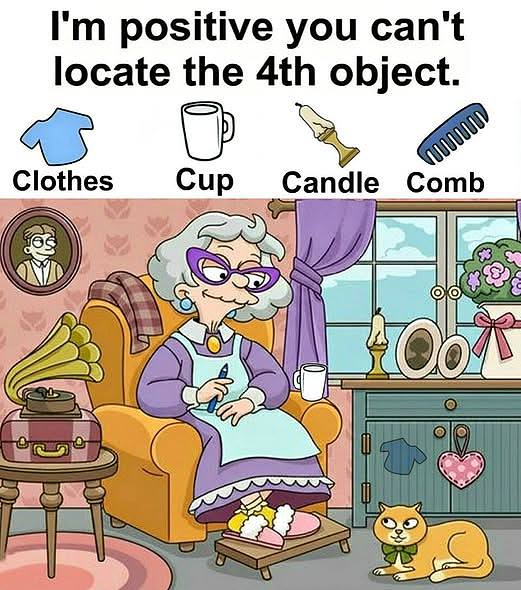
The Enduring Role of Grandmothers: Pillars of Love, Wisdom, and Family Unity

Every family has a figure whose presence is gentle, reassuring, and deeply memorable. Someone whose words, though often soft, leave a lasting impact. That figure is often the grandmother.

Grandmothers are more than the mothers of our parents. They serve as the invisible pillars of their families, connecting generations, preserving cherished memories, and offering unconditional love. In a world that changes rapidly, they provide stability, continuity, and emotional grounding.

From early childhood, grandmothers occupy a special place in the hearts of their grandchildren. Their homes often carry the comforting aromas of home-cooked meals, familiar routines, and the warmth of safety. With a grandmother, life feels slower, softer, and more secure.

Through her presence, a grandmother reassures, comforts, protects, and loves without conditions. She has the ability to calm fears, soothe tears, and restore joy.

The love of a grandmother is distinctive: profound, sincere, and selfless. She loves without expecting reciprocation, forgives readily, and understands without judgment. Her support is constant, often providing strength when others cannot.

This type of love leaves an enduring mark, guiding grandchildren through challenges and offering a model of compassion and resilience that lasts a lifetime.

Grandmothers often become the heart of the household, linking family traditions with meals, shared stories, and acts of care. Cooking, for many, represents more than nourishment; it embodies love, cultural heritage, and family history.

Through each recipe and each meal, grandmothers connect generations, celebrate roots, and bring everyone together, creating moments that become lifelong memories.

Having lived through joys and hardships, grandmothers offer a perspective informed by experience. Their insights teach patience, respect, gratitude, and inner strength.

Advice from a grandmother is often simple but meaningful, drawn from both the heart and a life well-lived. These lessons often resonate more deeply than any textbook knowledge.

The grandmother-grandchild relationship is built on trust, affection, and closeness. With a grandmother, grandchildren often feel free to express themselves openly, knowing they are understood and loved.

She listens attentively, shares laughter, provides emotional support, and serves as a reliable source of comfort, fostering strong emotional connections that can last a lifetime.

Grandmothers frequently act as the glue that holds families together. Through her dedication and presence, she helps preserve traditions, sustain memories, and ensure familial connections remain strong.

Her role strengthens bonds across generations, reminding families of their shared history and values, and helping maintain continuity even in changing circumstances.

Much of a grandmother’s work is behind the scenes. She supports parents, cares for children, offers advice, and invests her time and energy without complaint. Her contributions may go unnoticed at times, yet they are invaluable to the family’s well-being.

Her support demonstrates selflessness and dedication, often forming the foundation upon which family life is built.

Grandmothers provide a safe space for expression. They listen without judgment, understand emotions, and provide comfort. Their attentive presence can soothe stressed or anxious family members and create a sense of calm and reassurance.

Grandmothers understand the value of time and the importance of shared moments. They teach the importance of slowing down, savoring experiences, and appreciating life’s simple pleasures.

This perspective encourages grandchildren to enjoy the present and recognize the significance of everyday interactions.

Even after a grandmother is no longer physically present, her influence continues. Her guidance, love, and lessons leave a lasting legacy in the hearts and minds of her family.

Her presence shapes memories, reinforces values, and leaves an emotional imprint that extends across generations.

Through her example, a grandmother teaches qualities such as kindness, patience, generosity, and respect. She embodies a combination of gentleness and strength that inspires younger generations to carry these traits forward in their own lives.

Grandmothers are invaluable treasures within families. They safeguard memories, offer unconditional love, and serve as symbols of continuity. Their guidance, wisdom, and support enrich the lives of their children and grandchildren alike.

A family with a loving grandmother is truly rich in heart. Recognizing, respecting, and appreciating her every day ensures that her influence continues to shape the family positively. Her presence may be quiet, but its impact resonates powerfully, echoing through generations.

Comedy World Mourns! Popular!

The global comedy community is currently anchored in a state of profound shock and mourning following the sudden, surreal passing of a beloved entertainer whose career was defined by an ability to turn the mundane into the hilarious. On January 24, 2026, news broke that the comedian—a man whose sharp wit and magnetic stage presence had made him a staple of both the club circuit and late-night television—died in a freak outdoor accident. The tragic irony of a man who spent his life bringing joy to others being taken in such a sudden and somber manner has left fans and peers struggling to reconcile the loss.

The incident occurred during an outdoor gathering, a setting that should have been a sanctuary of celebration and leisure. Witnesses describe a sunny afternoon that turned tragic in a matter of seconds. While guests were enjoying the festivities, a massive branch from a nearby tree suffered a catastrophic structural failure, snapping without warning. The comedian, who was standing directly beneath the canopy, was struck with such force that medical personnel could do little to intervene. What was intended to be a day of community and connection was instantly transformed into a site of unimaginable grief.

In the hours following the announcement, the digital landscape became a virtual memorial. Comedians from around the world, ranging from established icons to rising newcomers, took to social media to share anecdotes that painted a portrait of a man far more complex and kind than his stage persona might suggest. While his professional brand was built on a foundation of razor-sharp sarcasm and high-energy observations, his personal life was characterized by a quiet, steadfast generosity. Fellow performers spoke of the “green room mentor” who would spend hours helping young comics refine their timing, never asking for credit or compensation. He possessed that rare quality in show business: a genuine desire to see others succeed.

The timing of the tragedy adds a particularly sharp edge to the pain felt by those who knew him best. Close associates noted that the comedian was currently enjoying what he described as a “creative renaissance.” After years of relentless touring and the inevitable burnout that follows, he had recently found a balance between his professional ambitions and his personal happiness. He was reportedly in the process of developing a new special and had recently expressed to friends how fulfilled he felt by his recent work. To have his life extinguished at the very moment he was most content is a cruelty that has resonated deeply within the tight-knit comedy fraternity.

Beyond the immediate emotional fallout, the accident has raised serious questions regarding public safety and venue maintenance. Local authorities and event organizers have confirmed that an investigation is underway to determine the cause of the tree’s failure. Arborists note that “sudden branch drop,” particularly in seemingly healthy trees, can be caused by a variety of environmental factors, including internal decay or extreme temperature fluctuations. Organizers expressed their deepest condolences to the family, stating that they are conducting a comprehensive review of all safety protocols to ensure that such a freak occurrence never happens again.

The void left by his passing is not just professional; it is existential. Comedy serves a unique function in society, acting as a pressure valve for the stresses of modern life. When a truly gifted comedian dies, the world loses a specific lens through which it views its own absurdities. He had a gift for taking the dark, difficult aspects of human existence and making them palatable, even laughable. He made the world feel a little less lonely for those who felt out of place, and he did so with a warmth that ensured his barbs never left a permanent scar.

His legacy, however, is not one that can be easily erased by a single tragic event. The thousands of hours of footage, the viral clips, and the memories of those who saw him live serve as a permanent archive of his genius. In the comedy clubs of New York, London, and Sydney, empty chairs have been placed in the front rows, and moments of silence have been observed—often followed by a raucous round of applause, the only tribute a comedian truly values.

For his family, the loss is an intimate catastrophe. They have requested privacy during this agonizing period, though they acknowledged the “tsunami of love” that has flowed toward them from every corner of the globe. They described him as a man who loved life with a ferocity that was contagious, a man who viewed every conversation as an opportunity for a connection and every stranger as a potential friend.

As the comedy world prepares to say its final goodbyes, the focus has shifted from the manner of his death to the brilliance of his life. The laughter he generated was not a fleeting thing; it was a gift that continues to resonate. He taught us that even in a world that can be unpredictable and occasionally cruel, there is always room for a punchline. He reminded us to look up, to stay present, and to find the humor in the chaos.

The funeral, expected to be a private affair, will likely be followed by a public memorial where the industry he helped shape can celebrate his contributions properly. While the stage is now dark and the spotlight has dimmed, the echoes of his performances remain. He lived his life with the volume turned up, making sure every person in the back of the room felt seen and heard. While he may have been taken by a freak act of nature, his impact was a force of nature in its own right—one that will continue to influence and inspire the next generation of storytellers. He left us as he lived: in the company of friends, under an open sky, and at the height of his powers. He will be remembered not for the branch that fell, but for the countless times he stood tall and made a room full of strangers feel like family through the shared, healing power of a laugh.

WHY DOES THIS MAN LOOK PREGNANT? DOCTORS SAY THE REASON IS MORE DISTURBING THAN YOU THINK

At first glance, it looks shocking. A grown man with a stomach so swollen it resembles late-stage pregnancy. People online laugh, joke, and assume it’s just weight gain or overeating. Memes spread fast, and comments are often cruel. But doctors say this appearance is frequently not about fat at all, and the real cause can be far more serious and life-threatening.

In many cases, the belly grows rapidly. Not over years, but sometimes over weeks or even days. The skin stretches tightly, veins may become more visible, and the abdomen feels hard and tense rather than soft. Normal movements such as bending, walking, or even breathing can become uncomfortable. Clothes suddenly no longer fit. This is usually the point when doctors begin asking urgent and uncomfortable questions.

One of the most alarming explanations is fluid buildup inside the abdomen, a condition known medically as ascites. Physicians monitor this condition closely because it often signals a deeper problem occurring inside the body. Unlike normal weight gain, the stomach does not sag downward. Instead, it pushes outward, round and firm, creating an unnatural appearance that looks almost inflated.

Ascites is not a disease on its own. It is usually a symptom of serious underlying conditions. The most common cause is advanced liver disease, particularly cirrhosis. When the liver becomes damaged, it can no longer regulate fluids properly, leading to leakage into the abdominal cavity. Other causes include heart failure, kidney disease, infections, and certain types of cancer. In many of these cases, the swelling is only the visible warning sign of a much larger internal crisis.

What makes this condition especially dangerous is that people often ignore it or misinterpret it. Because the swelling is painless at first, many delay seeking medical help. Some feel embarrassed or fear being judged for “letting themselves go.” Others assume it will resolve on its own. Unfortunately, by the time discomfort becomes severe, the underlying disease may already be advanced.

Doctors diagnose the condition through physical exams, imaging tests, and sometimes by removing a small amount of fluid for analysis. Treatment depends entirely on the cause. It may involve medication, dietary changes, procedures to drain the fluid, or treatment of the underlying disease itself. In severe cases, hospitalization is required.

This is why medical professionals stress the importance of paying attention to sudden body changes. A rapidly expanding abdomen, especially when paired with fatigue, shortness of breath, yellowing of the skin, or swelling in the legs, should never be ignored.

What looks shocking on the outside is often a silent emergency on the inside. Behind the jokes and viral images may be someone facing a serious health battle. The body has ways of signaling distress — and sometimes, a swollen stomach is not about appearance at all, but a final warning asking to be taken seriously.