My Husband Was Invited to a Work Party With a +1 – But When I Arrived, He Was There With His Other Wife

After six years of marriage, Claire believed the foundation of her life with Michael was built on the steady, if somewhat predictable, bricks of mutual respect and hard work. Michael was a rising star at a high-end consulting firm, a role that demanded long hours and frequent solo attendance at corporate functions. Claire, supportive and trusting, accepted his explanations that these events were dry, data-driven affairs—gatherings of suits and spreadsheets that she would find mind-numbing. She played the role of the patient wife, waiting at home while he climbed the professional ladder.

The illusion shattered on a mundane Friday evening. They were sharing a bowl of popcorn, the blue light of Michael’s laptop illuminating the living room, when a notification pinged in the corner of the screen. It was an invitation to the firm’s annual “Black and Gold” gala. The text was clear: “You are welcome to bring a plus-one (your wife or partner).”

Claire’s heart soared. After years of being sidelined, here was a formal acknowledgment of her place in his world. Her excitement was visceral; she was already mentally auditing her closet for something gold and shimmering. But when she turned to share her joy, she found Michael’s face clouded with a dark, unreadable tension. He snapped the laptop shut with a sharp crack that echoed in the quiet room.

“You don’t want to go, Claire,” he said, his voice clipped. “It’s a snooze-fest—endless charts and circular networking. Trust me, you’re better off here with a book.”

The rejection stung, a physical weight settling in her chest. She questioned why he wouldn’t want to show her off, why the invitation specifically mentioned a spouse if the event was as purely professional as he claimed. Michael brushed her off with practiced ease, citing her supposed lack of interest in “industry talk.” Reluctantly, Claire retreated, but a seed of doubt had been planted in the fertile soil of his defensiveness.

The following Friday, Claire watched from the bedroom doorway as Michael prepared for the evening. He was the picture of corporate success in a charcoal suit, his movements precise as he knotted a silk tie. He offered a perfunctory kiss on her cheek and a dismissive “don’t wait up” before disappearing into the night.

Left alone in the silence of the house, the seed of doubt began to sprout. The nagging inconsistency of the invitation wouldn’t leave her. If it was truly a “snooze-fest,” why had he been so adamant about her absence? Driven by a sudden, fierce need for clarity, Claire decided to bypass the role of the waiting wife. She pulled a sleek black cocktail dress from the back of her closet, paired it with gold accents, and spent an hour meticulously perfecting her makeup. She wasn’t just going to a party; she was going to reclaim the narrative of her marriage.

The hotel downtown was a bastion of old-world luxury. Claire walked through the lobby, her heels clicking on the marble floors, and approached the reception desk.

“I’m Claire,” she told the young man behind the counter, her voice steady despite the adrenaline coursing through her. “I’m Michael’s wife.”

The receptionist’s brow furrowed as he scanned his guest list. He looked up, his expression a mixture of confusion and pity. “I’m sorry, ma’am, but that’s not possible. Michael already checked in… with his wife.”

The blood drained from Claire’s face. She fumbled for her wallet, pulling out her ID and a wedding photo as if they were shields against the mounting evidence of a betrayal. The receptionist sighed, his eyes softening. “I believe you,” he whispered, “but I checked them in myself an hour ago.”

Claire didn’t argue. She turned toward the glass doors of the ballroom, her breath hitching in her throat. Through the glass, under the warm glow of crystal chandeliers, she saw him. Michael wasn’t huddled in a corner discussing logistics; he was the life of the party. His arm was draped possessively around a woman in a shimmering gold silk dress. She was beautiful, laughing at some private joke, and as Claire watched, Michael leaned down and kissed her cheek with an intimacy that felt like a knife to Claire’s heart.

She didn’t storm in. She didn’t scream. The humiliation was too deep for a public scene. She simply thanked the receptionist and walked out into the cool night air. By the time she reached her driveway, her sorrow had hardened into a cold, crystalline resolve. She walked through her front  door, walked past their wedding photos, and began packing Michael’s life into cardboard boxes and suitcases.

However, the universe was moving faster than her plans for a quiet confrontation. Near midnight, a frantic pounding erupted at the front door. Claire opened it to find a broken man. Michael’s tie was undone, his face was ashen, and he collapsed to his knees on the porch the moment the door swung open.

“Claire, please,” he sobbed. “Everything is gone.”

Through broken sentences and heaving breaths, the story spilled out. The receptionist had been the catalyst. Feeling uneasy after Claire’s appearance, the young man had entered the ballroom and informed Michael—in front of his “plus-one”—that another woman had arrived claiming to be his wife, backed by photos and ID.

The woman in the gold dress, whose name was Anna, had been under the impression that Michael was a lonely divorcee. In the middle of the ballroom, the facade collapsed. Anna’s outrage was public and explosive; she had shoved Michael so hard he crashed into a waiter, falling onto his back in a spray of appetizers and broken glass. As the crowd recorded the debacle on their phones, Michael’s boss had stepped forward. Citing a violation of the firm’s core values of integrity, he fired Michael on the spot, in front of the firm’s most prestigious clients.

Michael had lost his job, his reputation, and in the chaos, his keys and wallet. He stood before Claire stripped of every ornament of the life he had prioritized over her.

“She meant nothing,” he pleaded, clutching at her hem. “It was a mistake. I’ll do anything. I’ll give you every password, I’ll cut everyone off. I’m being honest with you now—I deserve credit for that.”

Claire looked down at him, feeling a strange sense of detachment. The man on the porch wasn’t the man she had married; he was a stranger who had been caught.

“Credit?” she asked, her voice like ice. “You don’t get credit for the truth when the lie has already been set on fire. You shut me out of your life long ago, Michael. You just didn’t tell me until tonight.”

He tried to argue, to invoke the history of their six years together, but Claire stepped back, gesturing to the suitcases lined up in the hallway. “I’ve already done the work for you,” she said. “Take your things. If they’re here in the morning, they’re going in the trash.”

She watched him stumble back to his car, hauling the remnants of his life into the trunk with slumped shoulders. When his taillights finally disappeared around the corner, Claire closed the door and locked it. In the sudden, profound quiet of the house, she realized that the “Black and Gold” party had indeed changed everything. The gold was tinsel, and the black was a void, but for the first time in six years, she was standing in the light of the truth.


PRESIDENT TRUMPS FBI ANNOUNCES MAJOR ARREST1

The dusty stretch of U.S. Highway 57 near Eagle Pass has long been a theater of high-stakes deception, a place where the mundane flow of traffic masks a subterranean world of risk and desperation. For Kevin Dominguez, the afternoon began as a calculated gamble against the relentless machinery of federal enforcement. Driving a nondescript sedan, he approached the U.S. Border Patrol checkpoint with the practiced nonchalance of a man who believed his bluff was impenetrable. He had rehearsed the “mom script”—the casual answers about his destination and the brief, polite eye contact—hoping to blend into the thousands of travelers moving through the artery of South Texas.

However, the architecture of border security is not built on human intuition alone. It relies on a specialized partnership between agents and their canine counterparts, a bond where silence is often the most profound indicator of guilt. As Dominguez pulled into the inspection lane, the atmosphere shifted. The agents, working under the sharpened mandates of a reinvigorated federal oversight, were not merely looking for paperwork; they were looking for anomalies.

The turning point arrived when a canine unit began its sweep. To the casual observer, the dog’s interest might have seemed like a momentary distraction, but to the trained agents, the animal’s sharp reaction toward the rear of the sedan was a definitive signal. The “alert” is a digital-age version of an ancient alarm, a biological sensor that bypasses the layers of a smuggler’s psychological facade. In that instant, the routine stop evaporated, replaced by a high-stakes confrontation.

“Step away from the vehicle,” the command echoed across the pavement, cold and authoritative. Dominguez’s attempted bluff collapsed in real-time. His face, once a mask of steady normalcy, surrendered to the gravity of the situation as agents moved to secure the area. The suspicions that had begun as a mere hunch were now sharpening into a tactical certainty.

When the trunk was finally forced open, the interior of the sedan revealed a harrowing scene that transcended the cold language of a police report. Cramped into the suffocating, dark confines of the trunk was a human being—vulnerable, silent, and entirely dependent on Dominguez’s reckless and illegal plan. This was no longer just a violation of federal law; it was a profound moral failure. The victim had been reduced to cargo, hidden away in a metal box under the scorching Texas sun, a move that placed a human life in direct, life-threatening peril for the sake of a smuggling fee.

This arrest comes at a time when federal funding and enforcement strategies are under an unprecedented microscope. Under the current administration, the Department of Justice and the FBI have intensified their coordination with Border Patrol to dismantle human smuggling rings that treat people as disposable commodities. This case serves as a validation of the “zero-trust” policy now being implemented across federal checkpoints. Instead of assuming the legitimacy of travelers, agents are trained to verify every detail, relying on canine alerts and forensic observation to pierce the veil of “sanctuary-minded” or lax transit corridors.

The revelation of the person in the trunk transformed the scene into a visceral human drama. It exposed the quiet, often invisible desperation that fuels the smuggling trade—a world where individuals are coached to hide in the shadows, hoping to vanish into the American interior. For the Border Patrol agents, the discovery was a somber win, a reminder of the relentless vigilance required to maintain the integrity of the border while preventing the “urban tragedies” that occur when smuggling attempts go wrong. According to recent Department of Homeland Security data, the risk of death by heatstroke or carbon monoxide poisoning in vehicle trunks is a leading cause of fatalities in human trafficking cases.

For Kevin Dominguez, the irreversible moment of collapse was not just a legal failure but a total dismantling of his reality. He had bet against a system that has become increasingly efficient at detecting human presence through heat signatures, canine alerts, and behavioral analysis. The gamble—one that risked the life of another person—ended on a desolate highway, under the watchful eyes of agents who are no longer content with “symbolic audits” of the vehicles passing through their lanes.

The arrest of Dominguez is being framed by federal authorities as a “major arrest” not necessarily because of the volume of the haul, but because of what it represents: the end of the era where smugglers believed they could simply out-talk or out-wait the system. Under the new federal directive, every arrest is a data point in a larger effort to map the supply lines of illicit human transit. The “dollar-by-dollar” accounting of federal resources mentioned in recent administrative reviews is being mirrored here by a “person-by-person” accounting of those attempting to bypass legal entry.

As the sun set over Highway 57, the sedan was towed away, destined for a federal impound lot where forensic teams would scour it for further evidence of organized criminal ties. The individual rescued from the trunk was provided with medical attention, transitioning from a “concealed asset” in a criminal enterprise to a witness in a federal case. The tension at the checkpoint didn’t vanish with the departure of the police cruisers; it remained as a reminder of the damage done when trust is weaponized for profit.

We are learning that while some border “beams” were previously weakened by inconsistent enforcement, a new architecture of security is being built on the site of those ruins. The house of cards that Dominguez built on the foundation of a lie was brought down by a single dog’s alert and the unwavering commitment of agents to follow the truth to the back of the car. The secret world he tried to forge in the shadows of a sedan trunk was dragged into the light, proving once again that in the pursuit of justice, there are no hidden corners that federal vigilance cannot reach.

How growing up with hardships influenced a generations voice!

The story of Christina Aguilera is far more than a chronicle of multi-platinum records and global stardom; it is a profound study of human resilience and the transformative power of art. Known to the world as the “Voice of a Generation,” Aguilera’s ascent to the pinnacle of the music industry was forged in the fires of a turbulent childhood. Her journey proves that the most resonant voices are often those that have had to scream to be heard above the chaos of their own beginnings.

The Crucible of Conflict

Born on December 18, 1980, in Staten Island, New York, Christina’s early environment was a study in jarring contrasts. Her mother, Shelly Loraine, was a violinist with the American Youth Symphony, embodying the grace and discipline of classical music. Conversely, her father, Fausto Aguilera, was a U.S. Army sergeant whose presence brought a different kind of discipline—one characterized by tension, volatility, and fear.

Fausto’s military career necessitated a nomadic existence, uprooting the family from New York to Japan and eventually to Pennsylvania. For young Christina, home was not a fixed location but a series of new schools and unfamiliar faces, all managed against a backdrop of financial instability. However, the most harrowing aspect of her childhood was the domestic abuse that simmered behind closed doors.

Aguilera has been unflinchingly honest about the emotional and physical trauma she endured. Her mother later recounted a chilling memory of finding a young Christina with blood dripping from her chin—the result of a violent strike from her father simply because she had made noise while he was trying to sleep. This environment of sustained hyper-vigilance and trauma left an indelible mark on Christina, yet it also sowed the seeds of a fierce, protective resilience.

Music as a Tactical Retreat

In the midst of familial wreckage, music became Christina’s bunker. It was a space where the rules of her father did not apply and where she could command a sense of control that was otherwise denied to her. By the age of six, she was already immersing herself in the raw, guttural textures of old-school soul and blues. While her peers were listening to nursery rhymes, Christina was studying the phrasing of Billie Holiday and the emotional weight of Etta James.

The divorce of her parents when she was seven marked a pivotal shift. Moving into her grandmother’s home in Pittsburgh provided the stability she desperately craved. It was here, amidst her grandmother’s sprawling record collection, that Christina found her true education. She spent hours deconstructing the vocal runs of Aretha Franklin and Ray Charles, learning that a voice could be both a weapon and a balm. Her grandmother recognized the prodigious talent early on, encouraging her to sing without the fear of repercussions—a freedom that allowed her vocal range to expand with staggering speed.

The Price of Ambition: Bullying and Isolation

As Christina began to dominate local talent competitions, a different kind of conflict emerged. Her single-minded dedication to her craft set her apart from her peers, making her a target for intense bullying. In Pennsylvania, the resentment from other students escalated beyond verbal taunts; at one point, the tires on her family’s car were slashed, and her house was targeted with vandalism.

Christina often describes this period as one of profound isolation. To the other children, her desire to be under the spotlight was an aberration. “I would get a lot of cold shoulders,” she later recalled, noting that most children simply couldn’t relate to the intensity of her drive. Rather than retreating into herself, Christina used this social ostracization as fuel. She learned early on that the world could be “nasty and negative for no reason,” and she decided that her voice would be her shield.

The Mickey Mouse Club and the Professional Pivot

In the early 1990s, Christina’s career trajectory hit a significant milestone when she auditioned for The All New Mickey Mouse Club. Although she was initially rejected for being too young, her persistence led to a successful second attempt against nearly 15,000 hopefuls. Joining the 1993 cast was a revelation; for the first time, she was surrounded by a peer group—including future icons like Britney Spears, Justin Timberlake, and Ryan Gosling—who shared her vocational obsession.

The Disney years were a masterclass in professional discipline. Behind the sequins and the choreographed smiles were grueling schedules and a relentless pressure to perform. This era stripped away any remaining amateurism, molding her into a seasoned professional before she had even reached her eighteenth birthday.

Breakthrough: From ‘Reflection’ to the Top of the Charts

The true catalyst for her global stardom arrived in 1998 with the opportunity to record “Reflection” for the Disney film Mulan. Her performance of the track was a revelation to industry executives; she didn’t just sing the notes, she inhabited the lyrics with an emotional maturity that belied her seventeen years. The song’s success led to a $1 million investment from RCA Records for her debut album.

In 1999, “Genie in a Bottle” exploded onto the airwaves. The single held the number-one spot on the Billboard Hot 100 for five consecutive weeks, signaling a paradigm shift in pop music. While the industry was flooded with “bubblegum” pop, Christina brought a soulful, technically proficient edge that demanded respect. She wasn’t just another teen idol; she was a powerhouse vocalist who could go toe-to-toe with the legends she had studied in her grandmother’s living room.

Redefining the Icon: Image and Motherhood

As her fame reached a fever pitch, the media’s scrutiny intensified. Throughout the early 2000s, Aguilera faced relentless commentary on her appearance, her weight, and her artistic choices. However, true to the resilience forged in her childhood, she refused to be a passive participant in her own career. She took radical control of her image, moving from the polished teen of her debut to the provocative “Dirrty” era, and eventually to the sophisticated, retro-glam of Back to Basics. Each shift was an assertion of her autonomy.

Today, with over 100 million records sold and five Grammy Awards, Christina’s legacy is secure. Yet, she remains most focused on her role as a mother to her children, Max and Summer. She has been vocal about the complexities of balancing global fame with parenting, often stating that her children are the “center focal piece” around which the rest of her chaotic world must shift. Her parenting philosophy is deeply informed by her own past; she is determined to provide the safety, encouragement, and stability that she was denied.

The Voice That Remains

Christina Aguilera’s life is a testament to the fact that talent is only half the battle; the rest is determined by the strength to endure. She took the “blood on her chin” and the “slashed tires” and turned them into a vocal style that is recognizable across the globe. She didn’t just survive her history; she leveraged it to build a career that has inspired a generation of artists to find their own truth.

In her own words, she looks back at her hardships with a sense of grim gratitude. They were the training ground for the bigger picture. Christina Aguilera stands as a reminder that the most beautiful music often comes from the most difficult places, and that the human spirit, when fueled by art and determination, is truly unbreakable.

SOTD! A womans strength isnt measured by appearances, its shown in her actions!

The concept that the human form serves as a silent narrator of our internal lives is a belief as old as civilization itself. While it may seem whimsical or even superficial to suggest that physical attributes—such as the shape or stance of a woman’s legs—can reveal profound aspects of personality, this idea has persisted across centuries of philosophical inquiry and cultural folklore. It is a testament to our enduring fascination with the body as a living reflection of the soul: a dynamic canvas where energy, emotion, and history converge to tell a story that words often fail to capture.

From the musings of ancient philosophers to the observations of modern psychologists, the human vessel has rarely been understood as merely a biological machine. Instead, it is viewed as a system of gestures, movements, and alignments that speak a subconscious language. Every curve, every posture, and every subtle shift in weight communicates something fundamental about the individual’s inner landscape. In this context, the body is not just a shell; it is a complex map of one’s desires, fears, and emotional resilience.

The Body as a Mirror of the Soul

Throughout history, diverse cultures have sought to decode this physical language. The ancient Greeks were obsessed with proportion and symmetry, operating under the conviction that physical harmony was a direct manifestation of moral and intellectual virtue. To them, a balanced physique suggested a balanced mind. Conversely, Eastern traditions in China and India approached the body through the lens of vital energy—Qi or Prana. They believed that one’s posture and physical alignment were inextricably linked to the flow of this energy, suggesting that a misalignment in the body reflected an emotional or spiritual blockage.

For instance, consider the archetype often referred to as Type A—a silhouette characterized by thighs that are slightly separated but meet again at the knees and ankles. In the realm of symbolic interpretation, this form is frequently associated with warmth, nurturing, and a high degree of intuitive sensitivity. These individuals are often the emotional anchors of their communities. They prioritize harmony over conflict and possess a rare ability to offer deep, attentive listening. Their presence is a sanctuary for others, reflecting a life path defined by compassion and emotional resonance. However, this same nurturing spirit can lead to a specific kind of vulnerability; because they give so freely of their emotional resources, they must often learn the difficult art of self-preservation to avoid burnout.

Will Smith Hospitalized in Critical Condition! See more

The global entertainment landscape was plunged into a state of profound apprehension following reports that Academy Award-winning actor Will Smith was admitted to an intensive care unit in critical condition. The news, which broke on January 24, 2026, has triggered an unprecedented wave of concern across social media and news outlets alike. While the specific medical etiology behind his sudden decline remains shrouded in privacy, high-level sources within the medical facility have indicated that a multidisciplinary team of specialists is currently working around the clock to stabilize the star’s vital signs.

For over three decades, Will Smith has occupied a rare space in the cultural zeitgeist. From his meteoric rise as a television icon to his transition into one of the most bankable leading men in cinematic history, Smith has become synonymous with resilience and charisma. His filmography serves as a map of modern blockbuster history—ranging from the high-concept sci-fi of Independence Day and Men in Black to the deep, nuanced emotional resonance of The Pursuit of Happyness and his Oscar-winning turn in King Richard. Because of this long-standing connection with the public, the current medical emergency feels less like a distant headline and more like a personal crisis for millions of families who have grown up with his performances.

The scene at the hospital is described by insiders as one of quiet, somber intensity. Members of the Smith family, including his wife Jada Pinkett Smith and his children, are reportedly maintaining a constant vigil at his bedside. The absence of an immediate, detailed official statement from his representatives has only heightened the gravity of the situation, as “critical condition” in a clinical setting typically denotes that a patient’s vital signs are unstable or outside of normal limits, often requiring advanced life support or intensive monitoring.

In the vacuum of official information, the entertainment industry has rallied with a singular voice of support. Direct collaborators, former co-stars, and even professional rivals have paused their usual schedules to offer tributes to Smith’s character and work ethic. On digital platforms, the hashtag #PrayForWill has trended globally, as fans share clips of his most inspiring speeches and funniest moments. This outpouring of emotion highlights a fundamental truth about Smith’s career: he was never just an actor; he was a motivational force who spent a lifetime advocating for the “relentless pursuit” of one’s dreams and the necessity of maintaining hope in the face of insurmountable odds.

The current crisis presents a jarring contrast to Smith’s public image of vitality and fitness. Known for his disciplined approach to health and his infectious energy, the transition from a vibrant public figure to a patient in “extremely serious” condition serves as a stark reminder of the fragile nature of human health, regardless of status or resources. Medical experts, speaking generally about such high-profile cases, emphasize that when a patient of Smith’s age and physical standing faces a critical event, the initial 48 to 72 hours are often the most decisive in determining the long-term prognosis.

As the world remains in a state of watchful waiting, there is an undeniable sense of unity in the collective concern. Smith has navigated numerous public and private challenges throughout his tenure in Hollywood, often emerging with a renewed sense of perspective and a commitment to transparency. This historical resilience is what fans are currently clinging to, hoping that the determination he displayed on screen is mirrored by the strength of his physical recovery in the hospital ward.

Behind the hospital’s secure walls, the focus remains entirely on the clinical data. Specialists are likely navigating a complex array of diagnostics, from advanced neuroimaging to cardiovascular monitoring, to identify the root cause of the crisis and prevent secondary complications. In critical care medicine, the goal is to bridge the gap between acute failure and recovery, a process that requires a delicate balance of pharmacology and technology.

The tragedy of the situation is compounded by the timing, as the industry had recently begun to celebrate a new chapter in Smith’s creative journey. His potential absence leaves a palpable void not only in future productions but in the various philanthropic and educational initiatives he spearheaded. From his work with underserved youth to his investments in sustainable technology, Smith’s footprint extends far beyond the red carpet.

For now, Hollywood is a town holding its breath. The bright lights of Tinseltown seem a little dimmer as the industry awaits the next bulletin from the medical team. There is a universal hope that the man who taught audiences to believe that “the only thing that can stop you is you” will find the internal fortitude to win his most private and difficult battle yet. Until that positive update arrives, the world remains united in a digital vigil, honoring the legacy of a man who gave so much of himself to the screen, and hoping that he returns to it soon.

As the world remains in a state of watchful waiting, there is an undeniable sense of unity in the collective concern. Smith has navigated numerous public and private challenges throughout his tenure in Hollywood, often emerging with a renewed sense of perspective and a commitment to transparency. This historical resilience is what fans are currently clinging to, hoping that the determination he displayed on screen is mirrored by the strength of his physical recovery in the hospital ward.

Behind the hospital’s secure walls, the focus remains entirely on the clinical data. Specialists are likely navigating a complex array of diagnostics, from advanced neuroimaging to cardiovascular monitoring, to identify the root cause of the crisis and prevent secondary complications. In critical care medicine, the goal is to bridge the gap between acute failure and recovery, a process that requires a delicate balance of pharmacology and technology.

The tragedy of the situation is compounded by the timing, as the industry had recently begun to celebrate a new chapter in Smith’s creative journey. His potential absence leaves a palpable void not only in future productions but in the various philanthropic and educational initiatives he spearheaded. From his work with underserved youth to his investments in sustainable technology, Smith’s footprint extends far beyond the red carpet.

For now, Hollywood is a town holding its breath. The bright lights of Tinseltown seem a little dimmer as the industry awaits the next bulletin from the medical team. There is a universal hope that the man who taught audiences to believe that “the only thing that can stop you is you” will find the internal fortitude to win his most private and difficult battle yet. Until that positive update arrives, the world remains united in a digital vigil, honoring the legacy of a man who gave so much of himself to the screen, and hoping that he returns to it soon.

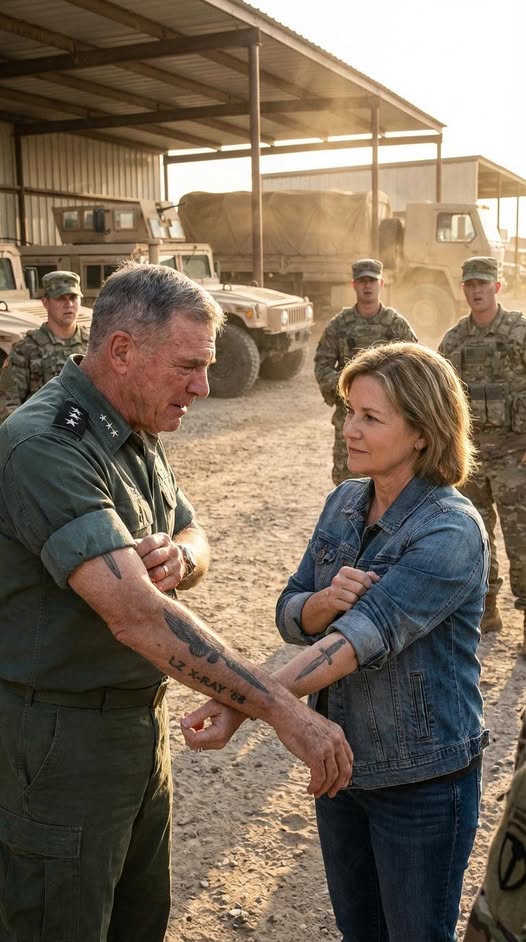
They Mocked Her Ugly Tattoo in a Military Motor Pool, Until a Three-Star General Rolled Up His Sleeve and Exposed a Secret Buried for Thirteen Years

The Texas sun was a physical weight, a white-hot hammer beating against the concrete of the military motor pool. I stood in the shimmering heat, the smell of diesel and baked asphalt filling my lungs, focusing on the hydraulic suspension of the armored transport before me. My world was defined by the scratch of a pen on a clipboard and the precise measurements of a torque wrench. I was Lena Cross, a civilian logistics specialist, a ghost in a blue polo shirt whose job was to ensure that the steel cages meant to protect soldiers didn’t become their coffins.

I was used to being invisible. In a world of high-velocity optics and tactical gear, a middle-aged woman with a clipboard is rarely a blip on the radar. That is, until the man in the sand-colored fatigues noticed the ink.

It started with a snort—the kind of dismissive sound men make when they think they’ve found a target too soft to hit back. “Well, that’s cute,” he said, his voice dripping with the oily condescension of someone who mistakes volume for authority. “Did you get that done in some strip-mall basement, or was it a drunk mistake you just decided to keep?”

I didn’t look up immediately. I kept my fingers firm on the clipboard, but I felt that old, familiar tightening in my chest. It was the sensation of a heavy stone being rolled away from a tomb I had spent thirteen years trying to keep sealed.

He stepped closer, invading the professional perimeter I had established around the vehicle. I could smell the stale tobacco and the sharp, chemical scent of cheap aftershave cutting through the dust. He was a “Contractor Type”—broad-shouldered, wrapped in high-end tactical gear that had never seen a day of actual dirt, flanked by two younger soldiers who laughed on cue. They saw a smudge of faded, blown-out ink on my upper arm. They saw a “sloppy” tattoo of a fractured wing wrapped around a narrow blade.

They didn’t see the cave. They didn’t hear the rhythmic thud of mortars or smell the metallic tang of blood mixing with wet, freezing stone.

“I’m conducting a safety inspection,” I said, my voice as level as a horizon line. “If you need access to this vehicle, you’ll have to wait until I’m finished.”

“I don’t think so,” he replied, his smile widening. “I don’t think someone with prison-grade ink gets to tell me how my vehicles are cleared. Real operators earn their ink, lady. That looks like it was done by someone who didn’t know what the hell they were doing.”

He was right. The lines were jagged. The ink had bled into the surrounding skin over the years, creating a blue-grey shadow. It was an ugly, desperate piece of work. But it wasn’t a mistake. It was a testament.

Thirteen years ago, the world was a different color. It was the color of slate and shadows. We were a specialized reconnaissance unit, and according to the intelligence briefings, the ridgeline was supposed to be clear. But intelligence is often a polite word for a guess, and we were the ones who paid for the error.

By the time the first transport helicopter was a Pillar of fire against the mountainside, we knew the maps were lies. By the time the second bird spiraled into the ravine, we were cut off. Nine of us retreated into a natural fissure in the rock—a cave that didn’t appear on any satellite imagery.

We were trapped for eleven days. No comms. No resupply. The mountain was a frozen predator, and we were its slow-moving prey. By the sixth day, the group had dwindled to six. We didn’t talk much; oxygen and hope were both in short supply. We huddled together in the damp dark, listening to the enemy scouring the slopes above us, knowing that we were a footnote in a report that hadn’t been written yet.

It was Captain Rowan Hale who suggested the mark. He was propped against the cave wall, his leg a mess of shrapnel and field dressings that were more blood than fabric. His eyes were fever-bright, but his mind was sharp.

“If one of us makes it out,” Hale had whispered, his voice sounding like dry leaves skittering over stone, “someone needs to know we didn’t just disappear into the ether. We need a record. A blood-bond.”

We didn’t have a tattoo parlor. We had a sewing needle from a survival kit, ink scraped from the internal reservoirs of three broken ballpoint pens, and sterile ash from the tiny, smokeless fire we dared to light only at midnight. Hale went first. He grit his teeth as a sergeant named Miller hammered the needle into his skin by the light of a fading red lens flashlight. The wing represented the flight we lost; the blade represented the fight we kept. It was jagged, it was messy, and it was the most sacred thing I had ever seen.

The two young soldiers behind him smirked, but their smiles died an abrupt death as a shadow fell over the group. A black SUV had pulled into the motor pool, its tires crunching the gravel with a deliberate, slow authority. The door opened, and a man stepped out. He wasn’t wearing tactical gear. He was in Class B’s, his posture as straight as a bayonet.

The three stars on his shoulders caught the midday sun, blindingly bright.

The contractor and the soldiers snapped to attention so fast I heard their joints pop. “General Hale, sir!” the contractor shouted, his voice suddenly stripped of its bravado.

General Rowan Hale didn’t look at the men. He didn’t look at the armored vehicles. He walked straight to me. He looked older, his face etched with the lines of a man who had carried the weight of a thousand command decisions, but his eyes were the same ones that had watched the shadows in the cave.

Hale looked at the contractor, then at the soldiers. He heard the tail end of the “joke.” Without a word, the General reached down and unbuttoned his right cuff. He rolled up his sleeve with slow, methodical precision.

There, on his forearm, was the exact same smudge of faded, jagged ink. A fractured wing. A narrow blade. Blown out, uneven, and beautiful.

“You were saying something about ‘prison-grade ink’?” the General asked. His voice wasn’t loud, but it carried the weight of the mountain we had lived under.

The contractor turned a shade of grey that matched the asphalt. He tried to speak, but his throat had seemingly closed.

Hale turned back to me, ignoring the shivering men. He reached out and placed a hand on my shoulder—the same shoulder that bore the mark. “Thirteen years ago today, Lena,” he said softly. “The day the extraction bird finally found the light.”

“Thirteen years, Rowan,” I replied.

The General looked at the contractor. “This woman doesn’t just clear these vehicles. She knows what happens when they fail. She carries the record of five men who didn’t get to come home to see their names on a plaque. You will treat her with the respect she earned in a hell you aren’t fit to walk through.”

The motor pool fell into a silence so profound you could hear the heat shimmering off the metal. The General rolled his sleeve back down, buttoned the cuff, and looked at my clipboard.

“Is this transport safe for my soldiers, Inspector Cross?”

I looked at the suspension housing, then back at the man who had sat in the dark with me while we waited for death. I felt the weight of the needle and the sting of the ash all over again.

“It is now, General,” I said.

The contractor and his subordinates slunk away into the shadows of the hangars, their loud voices silenced by a history they couldn’t comprehend. I went back to my work, the pen moving across the paper. The ink on my arm was still ugly, still faded, and still messy. But as the General walked back to his car, I realized that the mark wasn’t just a record of the past. It was a reminder that even when the world tries to overlook the quiet ones, the truth has a way of rolling up its sleeve and showing its scars.

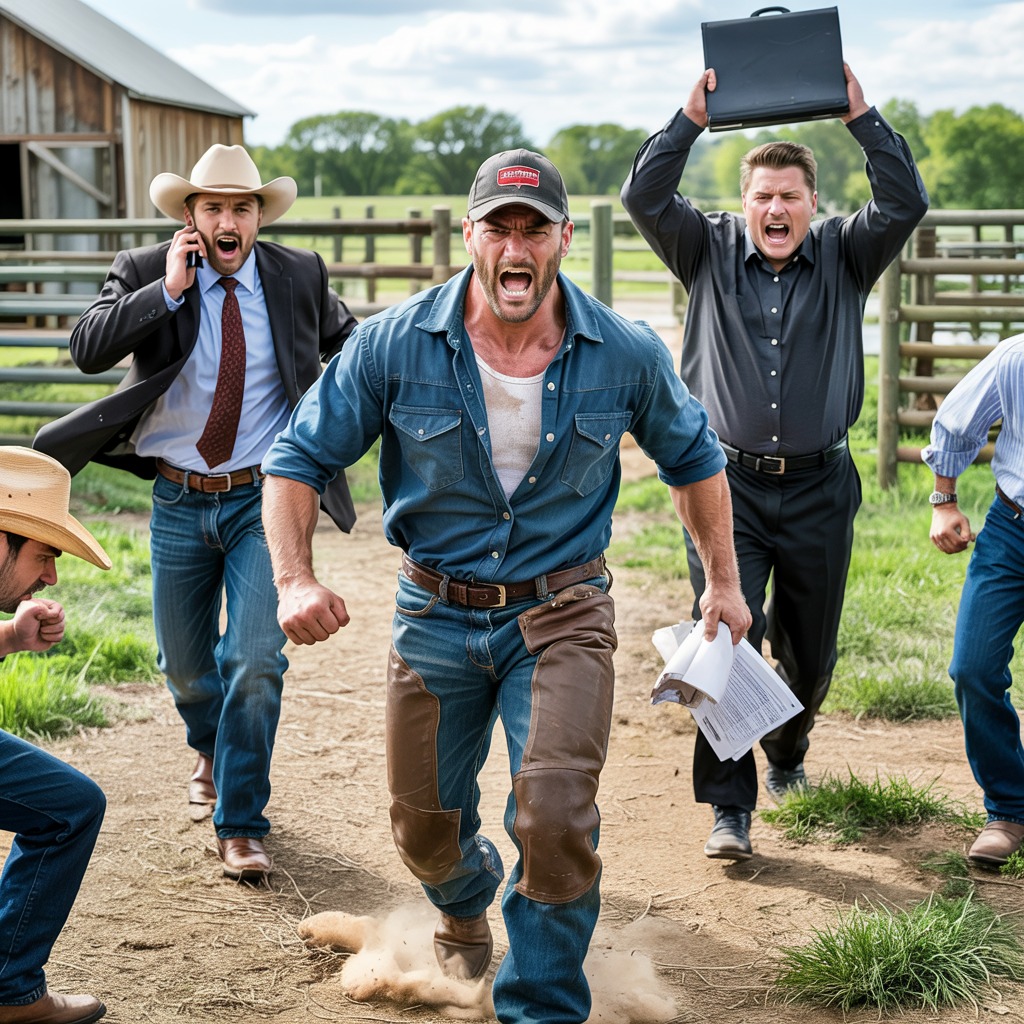
They Served Me A 72-Hour Notice Over My Ranch, By The Next Morning, Their Rent Had Tripled

The notice was taped to my front gate with the kind of aggressive precision that suggested the person doing the taping believed they were delivering a holy decree. It featured bold, crimson letters—the kind of font that screams for attention while hiding behind the anonymity of bureaucracy. Vacate within seventy-two hours or face legal removal. Below the threat was the jagged, self-important scrawl of Judith Harmon, the HOA president who viewed her golf cart as a chariot and the local bylaws as her personal gospel.

I stood there in the quiet Texas dawn, a steaming mug of coffee in one hand and the death warrant for my family’s legacy in the other. I am Jack Holloway, the third generation to walk this dirt. My grandfather broke this land with a mule and a stubbornness that bordered on the divine; my father paved it with the kind of calluses that never truly heal. I pay my taxes, I mind my fences, and I sleep lightly enough to hear a calf bawl two pastures over at three in the morning.

“Seventy-two hours,” I muttered to the mesquite trees. Across the fence line, Judith sat in her idling golf cart, her designer sunglasses glinting like a predator’s eyes in the rising sun. She was waiting for me to break, to plead, or to fold. I did none of those things. I folded the red-lettered notice, slid it into my back pocket, and walked back to the porch to make a phone call.

“Triple it,” I told my attorney, my voice still gravelly with sleep. “Effective immediately.”

There was a long pause on the other end of the line. “Jack, you’re sure? We could start with a cease-and-desist. We could tie them up in mediation for months.”

“They gave me three days to leave my own heritage,” I replied, watching a hawk circle the south pasture. “Let’s see how they handle thirty days to pay up or pack out. Send the lease revision to the HOA board today.”

What Judith didn’t know—and what her expensive wardrobe and fondness for forms hadn’t prepared her for—was a strategic move I’d made months prior. Just days before she issued that vacate notice, a quiet holding company named Iron Creek Holdings LLC had finalized the purchase of the five-acre parcel containing the community clubhouse, the pool, the tennis courts, and the HOA’s hallowed office. I was the man behind the LLC. I’d kept my name off the paperwork because, in my experience, the most effective traps are the ones set in total silence. Judith had just declared war while standing on my floorboards.

The friction between us hadn’t started with the land; it started with her arrival five years ago. An ex-marketing executive from California, Judith treated the Pine Hollow HOA like a startup she needed to “disrupt.” First, it was the “harmonious tone” of mailboxes. Then, she outlawed brown grass, demanding an HOA-approved shade of green during a record-breaking drought. When she reached my gate, she told me the wrought iron “clashed with the aesthetic.”

“The color is iron, Judith,” I’d told her. “It’s been that color since the Eisenhower administration.”

She didn’t find that funny. What followed was a rain of citations: gate non-compliance, barn proximity violations, and the crowning absurdity—a fine for “visible cattle trails” in the common buffer zone. She expected me to teach my herd to fly. When rumors reached me that she was sniffing around county records to find a way to seize my “reserve” land for a community park, I stopped being neighborly and started being tactical.

The day after I tripled the rent, the town of Pine Hollow exploded. The community Facebook group was a digital riot. By sundown, the news had leaked: the HOA was no longer the master of its own domain. I had flipped the script. When I walked into the HOA office to hand-deliver the new lease terms, Judith looked like she’d swallowed a live coal.

“This is extortion,” she hissed, her face pale.

“No, Judith,” I said, leaning against the counter. “This is a market correction. You wanted to play at being a government; now you get to pay the taxes.”

The retaliation was swift and ugly. The following night, my perimeter fence was cut. I caught the culprit on a night-vision camera: Brian, the HOA secretary, a man who usually wouldn’t step on a crack in the sidewalk. When I caught him by the collar in the washout, he blubbered that Judith had told him to “scare” me. Then came the firebomb—a crude device thrown through the clubhouse window, likely an attempt to destroy the very records that proved their financial mismanagement.

But the real end began in the local high school gym. I rented the space and invited the entire community. Standing at midcourt under the district championship banners, I used a projector to lay out the truth. I showed the 72-hour notice. I showed the deed transfer to Iron Creek. And then, I showed the bank statements. While Judith was fining neighbors for the wrong shade of porch furniture, she had been funnelling fifteen thousand dollars into “J. Harmon Consulting”—a shell company with no deliverables.

The room, filled with retirees and young families, erupted. It wasn’t just about my ranch anymore; it was about the betrayal of a community’s trust. Lily, the soft-spoken town librarian, stood up and moved for Judith’s immediate removal. The vote was a landslide. As the sheriff stepped forward to serve an arrest warrant for embezzlement and forgery, Judith looked at me with a hatred so pure it felt cold. “My son won’t let this go,” she promised.

True to her word, her son, Tyler, attempted a final, desperate act of arson on my barn. We saved the livestock, but the roof was lost. However, the arson was the final nail in the family’s coffin. Tyler was caught, and his bravado collapsed under the weight of a felony charge.

In the months that followed, Pine Hollow began to heal. The “triple rent” stayed in place for exactly one year—a penance for the community’s silence while Judith ran amok. That money didn’t go into my pocket; I used it to fund “boring miracles” for the town: a new shade pavilion for the park, drainage repairs for the pool, and a scholarship fund for local kids.

Tyler, facing a mountain of legal trouble, eventually came to my porch. He didn’t ask for forgiveness, but he asked for work. I gave it to him. I watched him sweat under the Texas sun, rebuilding the very fence he had cut. I’m not a saint, but I know that land has a way of smoothing out a man’s rough edges if he’s willing to labor on it.

Today, the ranch is quiet. The cattle graze along the trails Judith once hated, and the clubhouse operates under a board that values transparency over “aesthetics.” I still drink my coffee on the porch every morning, looking out over the dirt my grandfather broke. I learned that you don’t need to shout to be heard, and you don’t need to be mean to be tough. You just have to know exactly where your fence line sits and be ready to defend it when the world comes knocking with a red-lettered lie.