Diabetic foot: what it is and how to treat one of the most serious complications of diabetes

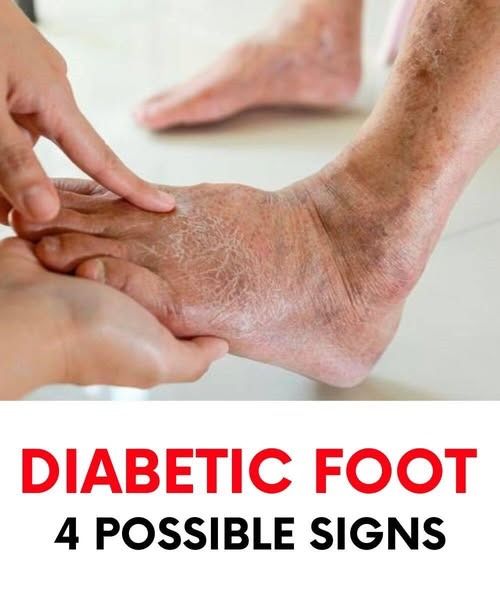
Diabetic foot is one of the most serious and potentially life-altering complications associated with diabetes mellitus. It typically manifests in the form of open wounds, ulcers, or persistent sores on the feet that heal very slowly—or sometimes do not heal at all. These wounds may seem minor at first, but when ignored or improperly treated, they can develop into deep infections that affect muscle, bone, and tissue. In the most severe cases, this can result in gangrene and ultimately lead to partial or complete amputation of the affected limb.

This condition primarily affects individuals who have been living with diabetes for many years, especially those with poorly managed type 1 or type 2 diabetes. The major contributors to diabetic foot problems are two common complications of diabetes: peripheral neuropathy and poor blood circulation. Neuropathy causes a loss of sensation in the feet, making it difficult to feel pain, pressure, or injuries. This means that cuts, blisters, or pressure sores can go unnoticed and untreated. At the same time, reduced blood flow to the lower limbs delays the healing process and increases the risk of infection.

Because of these factors, prevention and early detection are essential. People living with diabetes should inspect their feet every single day. This daily habit can significantly reduce the risk of complications. Look closely for signs of trouble—such as redness, swelling, cuts, cracks, or any areas of skin breakdown. Don’t forget to check between the toes, under the soles, and around the heels. Even small blisters or calluses can become dangerous if not treated properly.

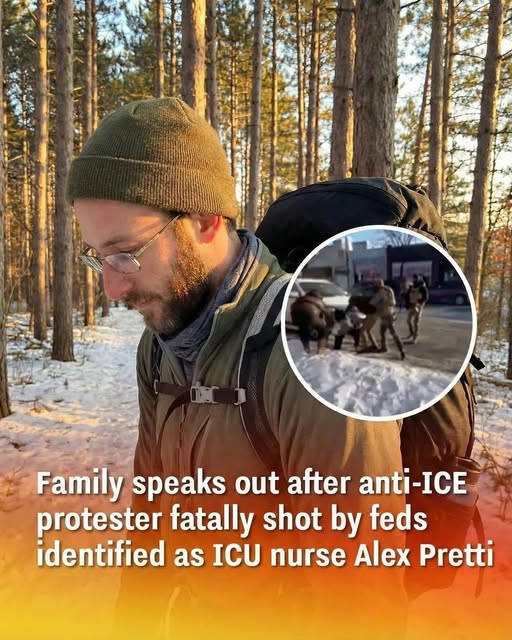
After a deadly federal enforcement operation in Minneapolis, the community mourns Renee Nicole Good

Shock, grief, and unanswered questions have rippled through Minneapolis following the death of Renee Nicole Good, a 37-year-old mother of three.

Who died during a federal immigration enforcement operation earlier this month. What began as a seemingly ordinary day on a residential street quickly turned into a tragedy that has captured national attention.

Reignited debates over federal enforcement practices, and sparked vigils across the city in memory of a devoted parent and community member. Good, remembered by neighbors as a creative and caring individual, leaves behind three children and a grieving family.

Her death has prompted an outpouring of emotion from the Minneapolis community, many of whom are struggling to comprehend how a routine law enforcement encounter could escalate to a fatal outcome.

Residents have described the neighborhood as a typically quiet area, with families and children accustomed to daily routines interrupted by the sudden arrival of heavily equipped federal officers.

The incident has intensified discussions about the presence of such enforcement operations in residential areas and the broader implications for public safety.

Video Footage and the Timeline of Events

Recently released video footage provides crucial context for understanding the moments leading up to Good’s death. In the recording, she appears seated calmly inside her vehicle, engaging in conversation with a federal officer before attempting to leave the area.

According to official statements, what initially seemed like a controlled situation escalated rapidly, resulting in the tragic outcome.

https://googleads.g.doubleclick.net/pagead/ads?gdpr=0&client=ca-pub-1627359692766378&output=html&h=280&adk=2889964073&adf=844630511&pi=t.aa~a.1381849204~i.19~rp.4&w=600&fwrn=4&fwrnh=100&lmt=1769527740&rafmt=1&armr=3&sem=mc&pwprc=7170447173&ad_type=text_image&format=600×280&url=https%3A%2F%2Fcehre.net%2Fafter-a-deadly-federal-enforcement-operation-in-minneapolis-the-community-mourns-renee-nicole-good%2F&fwr=0&pra=3&rh=150&rw=600&rpe=1&resp_fmts=3&fa=27&uach=WyJXaW5kb3dzIiwiMTkuMC4wIiwieDg2IiwiIiwiMTQzLjAuNzQ5OS4xOTMiLG51bGwsMCxudWxsLCI2NCIsW1siR29vZ2xlIENocm9tZSIsIjE0My4wLjc0OTkuMTkzIl0sWyJDaHJvbWl1bSIsIjE0My4wLjc0OTkuMTkzIl0sWyJOb3QgQShCcmFuZCIsIjI0LjAuMC4wIl1dLDBd&abgtt=6&dt=1769527740227&bpp=1&bdt=536&idt=-M&shv=r20260123&mjsv=m202601210101&ptt=9&saldr=aa&abxe=1&cookie=ID%3Ddf8f9cbf460b1a2e%3AT%3D1768299484%3ART%3D1769527699%3AS%3DALNI_Mb8LGBzrIxVmXZ9AiMPMk3VYfwyyQ&gpic=UID%3D0000132687c04bbd%3AT%3D1768299484%3ART%3D1769527699%3AS%3DALNI_MbGBa78U-f4Xa_DKLXNhFL4goanrQ&eo_id_str=ID%3Dc05a828c3b526166%3AT%3D1768299484%3ART%3D1769527699%3AS%3DAA-AfjZNK87vPFVdNiAh1D0YYTJj&prev_fmts=0x0%2C1200x280%2C600x280&nras=4&correlator=952810841534&frm=20&pv=1&u_tz=60&u_his=3&u_h=1080&u_w=1920&u_ah=1032&u_aw=1920&u_cd=24&u_sd=1&dmc=8&adx=653&ady=1882&biw=1905&bih=945&scr_x=0&scr_y=9&eid=95378425%2C95380918%2C95381032%2C31096379%2C95381362&oid=2&pvsid=5861734359267118&tmod=1249976349&uas=1&nvt=1&ref=https%3A%2F%2Fcehre.net%2F%3Fs%3DAfter%2Ba%2Bdeadly%2Bfederal%2Benforcement%2Boperation%2Bin%2BMinneapolis%252C%2Bthe%2Bcommunity%2Bmourns%2BRenee%2BNicole%2BGood%26fbclid%3DIwY2xjawPluOJleHRuA2FlbQIxMABicmlkETFXV05WN2tBekFrcjlRempNc3J0YwZhcHBfaWQQMjIyMDM5MTc4ODIwMDg5MgABHhmWCu_TpP8xSbI-qzBM0NDi8WC5HDVh1aAYREMkDIFoUH123KvXe6BTJN6B_aem_4H8sxlJk26r3kmjXME3L0w&fc=1408&brdim=1537%2C1%2C1537%2C1%2C1920%2C0%2C1918%2C1030%2C1920%2C945&vis=1&rsz=%7C%7Cs%7C&abl=NS&fu=128&bc=31&plas=279x848_l%7C279x848_r&bz=1&pgls=CAEaAzYuOQ..&num_ads=1&ifi=4&uci=a!4&btvi=2&fsb=1&dtd=120

Federal, state, and local authorities are reviewing the incident, including operational protocols and the decisions made in real time.

While officials have cautioned against drawing conclusions prior to the completion of investigations, the footage has already sparked significant public debate about the tactics used by federal agencies in civilian neighborhoods and whether alternative methods could have prevented the fatal outcome.

https://googleads.g.doubleclick.net/pagead/ads?gdpr=0&client=ca-pub-1627359692766378&output=html&h=280&adk=2889964073&adf=1040488428&pi=t.aa~a.1381849204~i.23~rp.4&w=600&fwrn=4&fwrnh=100&lmt=1769527740&rafmt=1&armr=3&sem=mc&pwprc=7170447173&ad_type=text_image&format=600×280&url=https%3A%2F%2Fcehre.net%2Fafter-a-deadly-federal-enforcement-operation-in-minneapolis-the-community-mourns-renee-nicole-good%2F&fwr=0&pra=3&rh=150&rw=600&rpe=1&resp_fmts=3&fa=27&uach=WyJXaW5kb3dzIiwiMTkuMC4wIiwieDg2IiwiIiwiMTQzLjAuNzQ5OS4xOTMiLG51bGwsMCxudWxsLCI2NCIsW1siR29vZ2xlIENocm9tZSIsIjE0My4wLjc0OTkuMTkzIl0sWyJDaHJvbWl1bSIsIjE0My4wLjc0OTkuMTkzIl0sWyJOb3QgQShCcmFuZCIsIjI0LjAuMC4wIl1dLDBd&abgtt=6&dt=1769527740227&bpp=1&bdt=535&idt=-M&shv=r20260123&mjsv=m202601210101&ptt=9&saldr=aa&abxe=1&cookie=ID%3Ddf8f9cbf460b1a2e%3AT%3D1768299484%3ART%3D1769527699%3AS%3DALNI_Mb8LGBzrIxVmXZ9AiMPMk3VYfwyyQ&gpic=UID%3D0000132687c04bbd%3AT%3D1768299484%3ART%3D1769527699%3AS%3DALNI_MbGBa78U-f4Xa_DKLXNhFL4goanrQ&eo_id_str=ID%3Dc05a828c3b526166%3AT%3D1768299484%3ART%3D1769527699%3AS%3DAA-AfjZNK87vPFVdNiAh1D0YYTJj&prev_fmts=0x0%2C1200x280%2C600x280%2C600x280&nras=5&correlator=952810841534&frm=20&pv=1&u_tz=60&u_his=3&u_h=1080&u_w=1920&u_ah=1032&u_aw=1920&u_cd=24&u_sd=1&dmc=8&adx=653&ady=2422&biw=1905&bih=945&scr_x=0&scr_y=9&eid=95378425%2C95380918%2C95381032%2C31096379%2C95381362&oid=2&pvsid=5861734359267118&tmod=1249976349&uas=1&nvt=1&ref=https%3A%2F%2Fcehre.net%2F%3Fs%3DAfter%2Ba%2Bdeadly%2Bfederal%2Benforcement%2Boperation%2Bin%2BMinneapolis%252C%2Bthe%2Bcommunity%2Bmourns%2BRenee%2BNicole%2BGood%26fbclid%3DIwY2xjawPluOJleHRuA2FlbQIxMABicmlkETFXV05WN2tBekFrcjlRempNc3J0YwZhcHBfaWQQMjIyMDM5MTc4ODIwMDg5MgABHhmWCu_TpP8xSbI-qzBM0NDi8WC5HDVh1aAYREMkDIFoUH123KvXe6BTJN6B_aem_4H8sxlJk26r3kmjXME3L0w&fc=1408&brdim=1537%2C1%2C1537%2C1%2C1920%2C0%2C1918%2C1030%2C1920%2C945&vis=1&rsz=%7C%7Cs%7C&abl=NS&fu=128&bc=31&plas=279x848_l%7C279x848_r&bz=1&pgls=CAEaAzYuOQ..&num_ads=1&ifi=5&uci=a!5&btvi=3&fsb=1&dtd=122

The suddenness of the incident, coupled with video evidence, has left residents with many questions: Why did the situation escalate so quickly? Were proper procedures followed? And how do federal agencies ensure accountability when operations intersect with civilian life?

The Officer Involved: Jonathan Ross

The federal agent involved in the operation has been identified as Jonathan Ross, a 43-year-old officer with U.S. Immigration and Customs Enforcement (ICE) Enforcement and Removal Operations stationed in Minnesota.

Ross is a military veteran, having served in Iraq before joining the U.S. Border Patrol and later ICE in 2015. His law enforcement career has included specialized roles in enforcement operations, firearms training, and high-risk interventions.

This extensive experience has raised questions about how officers are trained to de-escalate tense encounters and whether the protocols in place adequately address interactions with civilians in non-threatening situations.

https://googleads.g.doubleclick.net/pagead/ads?gdpr=0&client=ca-pub-1627359692766378&output=html&h=280&adk=2889964073&adf=1349357207&pi=t.aa~a.1381849204~i.35~rp.4&w=600&fwrn=4&fwrnh=100&lmt=1769527740&rafmt=1&armr=3&sem=mc&pwprc=7170447173&ad_type=text_image&format=600×280&url=https%3A%2F%2Fcehre.net%2Fafter-a-deadly-federal-enforcement-operation-in-minneapolis-the-community-mourns-renee-nicole-good%2F&fwr=0&pra=3&rh=150&rw=600&rpe=1&resp_fmts=3&fa=27&uach=WyJXaW5kb3dzIiwiMTkuMC4wIiwieDg2IiwiIiwiMTQzLjAuNzQ5OS4xOTMiLG51bGwsMCxudWxsLCI2NCIsW1siR29vZ2xlIENocm9tZSIsIjE0My4wLjc0OTkuMTkzIl0sWyJDaHJvbWl1bSIsIjE0My4wLjc0OTkuMTkzIl0sWyJOb3QgQShCcmFuZCIsIjI0LjAuMC4wIl1dLDBd&abgtt=6&dt=1769527740227&bpp=1&bdt=536&idt=0&shv=r20260123&mjsv=m202601210101&ptt=9&saldr=aa&abxe=1&cookie=ID%3Ddf8f9cbf460b1a2e%3AT%3D1768299484%3ART%3D1769527699%3AS%3DALNI_Mb8LGBzrIxVmXZ9AiMPMk3VYfwyyQ&gpic=UID%3D0000132687c04bbd%3AT%3D1768299484%3ART%3D1769527699%3AS%3DALNI_MbGBa78U-f4Xa_DKLXNhFL4goanrQ&eo_id_str=ID%3Dc05a828c3b526166%3AT%3D1768299484%3ART%3D1769527699%3AS%3DAA-AfjZNK87vPFVdNiAh1D0YYTJj&prev_fmts=0x0%2C1200x280%2C600x280%2C600x280%2C600x280&nras=6&correlator=952810841534&frm=20&pv=1&u_tz=60&u_his=3&u_h=1080&u_w=1920&u_ah=1032&u_aw=1920&u_cd=24&u_sd=1&dmc=8&adx=653&ady=3459&biw=1905&bih=945&scr_x=0&scr_y=9&eid=95378425%2C95380918%2C95381032%2C31096379%2C95381362&oid=2&pvsid=5861734359267118&tmod=1249976349&uas=1&nvt=1&ref=https%3A%2F%2Fcehre.net%2F%3Fs%3DAfter%2Ba%2Bdeadly%2Bfederal%2Benforcement%2Boperation%2Bin%2BMinneapolis%252C%2Bthe%2Bcommunity%2Bmourns%2BRenee%2BNicole%2BGood%26fbclid%3DIwY2xjawPluOJleHRuA2FlbQIxMABicmlkETFXV05WN2tBekFrcjlRempNc3J0YwZhcHBfaWQQMjIyMDM5MTc4ODIwMDg5MgABHhmWCu_TpP8xSbI-qzBM0NDi8WC5HDVh1aAYREMkDIFoUH123KvXe6BTJN6B_aem_4H8sxlJk26r3kmjXME3L0w&fc=1408&brdim=1537%2C1%2C1537%2C1%2C1920%2C0%2C1918%2C1030%2C1920%2C945&vis=1&rsz=%7C%7Cs%7C&abl=NS&fu=128&bc=31&plas=279x848_l%7C279x848_r&bz=1&pgls=CAEaAzYuOQ..&num_ads=1&ifi=6&uci=a!6&btvi=4&fsb=1&dtd=123

Public attention has also revisited a previous on-duty incident involving Ross in 2025, during which he was injured during an enforcement operation involving a vehicle stop.

Testimony and records from that event have resurfaced in news reports, adding layers of complexity to the ongoing discussion about his judgment, training, and the pressures faced by federal officers in high-stakes operations.

Community Response: Vigils, Remembrance, and Calls for Accountability

The community response to Renee Good’s death has been profound and immediate. Neighbors, friends, and advocacy groups have organized vigils to honor her memory and support her grieving family.

Candles, flowers, and personal notes line local streets, serving as visible reminders of the human cost behind headlines and statistics.

https://googleads.g.doubleclick.net/pagead/ads?gdpr=0&client=ca-pub-1627359692766378&output=html&h=280&adk=2889964073&adf=704363841&pi=t.aa~a.1381849204~i.45~rp.4&w=600&fwrn=4&fwrnh=100&lmt=1769527769&rafmt=1&armr=3&sem=mc&pwprc=7170447173&ad_type=text_image&format=600×280&url=https%3A%2F%2Fcehre.net%2Fafter-a-deadly-federal-enforcement-operation-in-minneapolis-the-community-mourns-renee-nicole-good%2F&fwr=0&pra=3&rh=150&rw=600&rpe=1&resp_fmts=3&fa=27&uach=WyJXaW5kb3dzIiwiMTkuMC4wIiwieDg2IiwiIiwiMTQzLjAuNzQ5OS4xOTMiLG51bGwsMCxudWxsLCI2NCIsW1siR29vZ2xlIENocm9tZSIsIjE0My4wLjc0OTkuMTkzIl0sWyJDaHJvbWl1bSIsIjE0My4wLjc0OTkuMTkzIl0sWyJOb3QgQShCcmFuZCIsIjI0LjAuMC4wIl1dLDBd&abgtt=6&dt=1769527740229&bpp=1&bdt=537&idt=0&shv=r20260123&mjsv=m202601210101&ptt=9&saldr=aa&abxe=1&cookie=ID%3Ddf8f9cbf460b1a2e%3AT%3D1768299484%3ART%3D1769527699%3AS%3DALNI_Mb8LGBzrIxVmXZ9AiMPMk3VYfwyyQ&gpic=UID%3D0000132687c04bbd%3AT%3D1768299484%3ART%3D1769527699%3AS%3DALNI_MbGBa78U-f4Xa_DKLXNhFL4goanrQ&eo_id_str=ID%3Dc05a828c3b526166%3AT%3D1768299484%3ART%3D1769527699%3AS%3DAA-AfjZNK87vPFVdNiAh1D0YYTJj&prev_fmts=0x0%2C1200x280%2C600x280%2C600x280%2C600x280%2C600x280&nras=7&correlator=952810841534&frm=20&pv=1&u_tz=60&u_his=3&u_h=1080&u_w=1920&u_ah=1032&u_aw=1920&u_cd=24&u_sd=1&dmc=8&adx=653&ady=4542&biw=1905&bih=945&scr_x=0&scr_y=789&eid=95378425%2C95380918%2C95381032%2C31096379%2C95381362&oid=2&pvsid=5861734359267118&tmod=1249976349&uas=3&nvt=1&ref=https%3A%2F%2Fcehre.net%2F%3Fs%3DAfter%2Ba%2Bdeadly%2Bfederal%2Benforcement%2Boperation%2Bin%2BMinneapolis%252C%2Bthe%2Bcommunity%2Bmourns%2BRenee%2BNicole%2BGood%26fbclid%3DIwY2xjawPluOJleHRuA2FlbQIxMABicmlkETFXV05WN2tBekFrcjlRempNc3J0YwZhcHBfaWQQMjIyMDM5MTc4ODIwMDg5MgABHhmWCu_TpP8xSbI-qzBM0NDi8WC5HDVh1aAYREMkDIFoUH123KvXe6BTJN6B_aem_4H8sxlJk26r3kmjXME3L0w&fc=1408&brdim=1537%2C1%2C1537%2C1%2C1920%2C0%2C1918%2C1030%2C1920%2C945&vis=1&rsz=%7C%7Cs%7C&abl=NS&fu=128&bc=31&plas=279x848_l%7C279x848_r&bz=1&pgls=CAEaAzYuOQ..&num_ads=1&ifi=7&uci=a!7&btvi=5&fsb=1&dtd=29651

Good is remembered by those who knew her as a devoted parent, a nurturing figure, and someone deeply engaged with her community.

Friends recall her creativity, generosity, and tireless commitment to her children, describing her as a mother who consistently prioritized her family while fostering meaningful connections with neighbors.

As public mourning continues, local leaders, activists, and advocacy groups are urging patience while investigations unfold.

https://googleads.g.doubleclick.net/pagead/ads?gdpr=0&client=ca-pub-1627359692766378&output=html&h=280&adk=2889964073&adf=2395211401&pi=t.aa~a.1381849204~i.53~rp.4&w=600&fwrn=4&fwrnh=100&lmt=1769527776&rafmt=1&armr=3&sem=mc&pwprc=7170447173&ad_type=text_image&format=600×280&url=https%3A%2F%2Fcehre.net%2Fafter-a-deadly-federal-enforcement-operation-in-minneapolis-the-community-mourns-renee-nicole-good%2F&fwr=0&pra=3&rh=150&rw=600&rpe=1&resp_fmts=3&fa=27&uach=WyJXaW5kb3dzIiwiMTkuMC4wIiwieDg2IiwiIiwiMTQzLjAuNzQ5OS4xOTMiLG51bGwsMCxudWxsLCI2NCIsW1siR29vZ2xlIENocm9tZSIsIjE0My4wLjc0OTkuMTkzIl0sWyJDaHJvbWl1bSIsIjE0My4wLjc0OTkuMTkzIl0sWyJOb3QgQShCcmFuZCIsIjI0LjAuMC4wIl1dLDBd&abgtt=6&dt=1769527740231&bpp=1&bdt=539&idt=1&shv=r20260123&mjsv=m202601210101&ptt=9&saldr=aa&abxe=1&cookie=ID%3Ddf8f9cbf460b1a2e%3AT%3D1768299484%3ART%3D1769527699%3AS%3DALNI_Mb8LGBzrIxVmXZ9AiMPMk3VYfwyyQ&gpic=UID%3D0000132687c04bbd%3AT%3D1768299484%3ART%3D1769527699%3AS%3DALNI_MbGBa78U-f4Xa_DKLXNhFL4goanrQ&eo_id_str=ID%3Dc05a828c3b526166%3AT%3D1768299484%3ART%3D1769527699%3AS%3DAA-AfjZNK87vPFVdNiAh1D0YYTJj&prev_fmts=0x0%2C1200x280%2C600x280%2C600x280%2C600x280%2C600x280%2C600x280&nras=8&correlator=952810841534&frm=20&pv=1&u_tz=60&u_his=3&u_h=1080&u_w=1920&u_ah=1032&u_aw=1920&u_cd=24&u_sd=1&dmc=8&adx=653&ady=5393&biw=1905&bih=945&scr_x=0&scr_y=1624&eid=95378425%2C95380918%2C95381032%2C31096379%2C95381362&oid=2&pvsid=5861734359267118&tmod=1249976349&uas=3&nvt=1&ref=https%3A%2F%2Fcehre.net%2F%3Fs%3DAfter%2Ba%2Bdeadly%2Bfederal%2Benforcement%2Boperation%2Bin%2BMinneapolis%252C%2Bthe%2Bcommunity%2Bmourns%2BRenee%2BNicole%2BGood%26fbclid%3DIwY2xjawPluOJleHRuA2FlbQIxMABicmlkETFXV05WN2tBekFrcjlRempNc3J0YwZhcHBfaWQQMjIyMDM5MTc4ODIwMDg5MgABHhmWCu_TpP8xSbI-qzBM0NDi8WC5HDVh1aAYREMkDIFoUH123KvXe6BTJN6B_aem_4H8sxlJk26r3kmjXME3L0w&fc=1408&brdim=1537%2C1%2C1537%2C1%2C1920%2C0%2C1918%2C1030%2C1920%2C945&vis=1&rsz=%7C%7Cs%7C&abl=NS&fu=128&bc=31&plas=279x848_l%7C279x848_r&bz=1&pgls=CAEaAzYuOQ..&num_ads=1&ifi=8&uci=a!8&btvi=6&fsb=1&dtd=36114

However, many families and residents are expressing frustration at the slow pace of accountability in federal operations and law enforcement investigations, emphasizing the need for timely and transparent reporting.

Broader Implications: Federal Enforcement in Residential Areas

The tragic death of Renee Good has reignited national conversations about the role of federal enforcement agencies operating in residential neighborhoods.

While ICE and similar agencies are tasked with carrying out national immigration and enforcement policies, their presence in community spaces raises questions about safety, oversight, and the potential for civilian harm.

https://googleads.g.doubleclick.net/pagead/ads?gdpr=0&client=ca-pub-1627359692766378&output=html&h=280&adk=2889964073&adf=2017351661&pi=t.aa~a.1381849204~i.61~rp.4&w=600&fwrn=4&fwrnh=100&lmt=1769527777&rafmt=1&armr=3&sem=mc&pwprc=7170447173&ad_type=text_image&format=600×280&url=https%3A%2F%2Fcehre.net%2Fafter-a-deadly-federal-enforcement-operation-in-minneapolis-the-community-mourns-renee-nicole-good%2F&fwr=0&pra=3&rh=150&rw=600&rpe=1&resp_fmts=3&fa=27&uach=WyJXaW5kb3dzIiwiMTkuMC4wIiwieDg2IiwiIiwiMTQzLjAuNzQ5OS4xOTMiLG51bGwsMCxudWxsLCI2NCIsW1siR29vZ2xlIENocm9tZSIsIjE0My4wLjc0OTkuMTkzIl0sWyJDaHJvbWl1bSIsIjE0My4wLjc0OTkuMTkzIl0sWyJOb3QgQShCcmFuZCIsIjI0LjAuMC4wIl1dLDBd&abgtt=6&dt=1769527740233&bpp=1&bdt=541&idt=1&shv=r20260123&mjsv=m202601210101&ptt=9&saldr=aa&abxe=1&cookie=ID%3Ddf8f9cbf460b1a2e%3AT%3D1768299484%3ART%3D1769527699%3AS%3DALNI_Mb8LGBzrIxVmXZ9AiMPMk3VYfwyyQ&gpic=UID%3D0000132687c04bbd%3AT%3D1768299484%3ART%3D1769527699%3AS%3DALNI_MbGBa78U-f4Xa_DKLXNhFL4goanrQ&eo_id_str=ID%3Dc05a828c3b526166%3AT%3D1768299484%3ART%3D1769527699%3AS%3DAA-AfjZNK87vPFVdNiAh1D0YYTJj&prev_fmts=0x0%2C1200x280%2C600x280%2C600x280%2C600x280%2C600x280%2C600x280%2C600x280&nras=9&correlator=952810841534&frm=20&pv=1&u_tz=60&u_his=3&u_h=1080&u_w=1920&u_ah=1032&u_aw=1920&u_cd=24&u_sd=1&dmc=8&adx=653&ady=5871&biw=1905&bih=945&scr_x=0&scr_y=2103&eid=95378425%2C95380918%2C95381032%2C31096379%2C95381362&oid=2&pvsid=5861734359267118&tmod=1249976349&uas=3&nvt=1&ref=https%3A%2F%2Fcehre.net%2F%3Fs%3DAfter%2Ba%2Bdeadly%2Bfederal%2Benforcement%2Boperation%2Bin%2BMinneapolis%252C%2Bthe%2Bcommunity%2Bmourns%2BRenee%2BNicole%2BGood%26fbclid%3DIwY2xjawPluOJleHRuA2FlbQIxMABicmlkETFXV05WN2tBekFrcjlRempNc3J0YwZhcHBfaWQQMjIyMDM5MTc4ODIwMDg5MgABHhmWCu_TpP8xSbI-qzBM0NDi8WC5HDVh1aAYREMkDIFoUH123KvXe6BTJN6B_aem_4H8sxlJk26r3kmjXME3L0w&fc=1408&brdim=1537%2C1%2C1537%2C1%2C1920%2C0%2C1918%2C1030%2C1920%2C945&vis=1&rsz=%7C%7Cs%7C&abl=NS&fu=128&bc=31&plas=279x848_l%7C279x848_r&bz=1&pgls=CAEaAzYuOQ..&num_ads=1&ifi=9&uci=a!9&btvi=7&fsb=1&dtd=37293

Critics argue that heavily armed officers operating in everyday neighborhoods may escalate situations unnecessarily, particularly when interactions involve nonviolent civilians.

Advocates for reform are calling for stricter protocols, enhanced training in de-escalation, and greater transparency to ensure that enforcement actions do not inadvertently endanger lives.

The incident has also highlighted the broader debate over the balance between federal authority and community safety, prompting calls for clearer guidelines and accountability measures when enforcement intersects with ordinary residents’ daily lives.

Multiple agencies are now reviewing the incident from different angles. The Department of Homeland Security’s Office of Inspector General, along with local and state authorities, are conducting thorough investigations to determine the precise sequence of events, whether established procedures were followed, and what measures could have prevented the fatal outcome.

Investigators are examining everything from body camera footage to witness statements, training records, and prior operational history of officers involved.

While no conclusions have yet been released, officials have emphasized the importance of a careful, evidence-based approach to ensure that the investigation is comprehensive and unbiased.

Public transparency remains a central concern. Advocacy groups and city leaders are pushing for timely updates and accountability mechanisms to ensure that the family of Renee Good—and the wider community—receives answers about the circumstances surrounding her death.

Remembering Renee Nicole Good

Beyond the controversy and scrutiny, Renee Good’s life and legacy remain at the forefront of community remembrance. Her friends and neighbors describe her as a creative, compassionate, and resilient individual who dedicated herself to her children and community.

Her three children, now grappling with the sudden loss of their mother, are surrounded by family, friends, and support networks that emphasize care, stability, and understanding. Community vigils and memorials continue to honor her memory, offering spaces for collective grieving and reflection.

The incident has also prompted conversations about the emotional toll of federal enforcement actions on families, particularly those who may already be vulnerable or facing systemic challenges.

Advocates stress the importance of community support and mental health resources in the wake of such traumatic events.

Public Dialogue and National Attention

The tragic event has sparked widespread discussion not only in Minneapolis but across the nation. Media coverage has explored multiple angles: the specifics of the incident, the history and training of the officer involved, the broader implications for federal enforcement practices, and the personal story of Renee Good and her family.

This national attention has elevated conversations about safety, accountability, and the human consequences of law enforcement operations.

Lawmakers, advocacy groups, and community leaders are weighing policy reforms that could prevent similar tragedies, such as stricter oversight, better de-escalation training, and greater transparency in high-risk enforcement operations.

At the same time, public response has been a mixture of grief, outrage, and calls for measured investigation. While many demand immediate answers, others emphasize the need for careful review to ensure that findings are accurate and evidence-based.

Moving Forward: Accountability, Healing, and Policy Reform

As investigations continue, Minneapolis residents and advocates are seeking accountability and clarity. There is a growing call for federal and local agencies to review operational protocols, improve training on nonviolent engagement, and provide clear guidance to officers operating in civilian neighborhoods.

Community leaders are also highlighting the importance of healing and support for families affected by such incidents.

Vigils, counseling services, and community outreach programs have become crucial resources, offering spaces for grieving families, neighbors, and the broader public to process the impact of the tragedy.

The hope among many in Minneapolis is that Renee Good’s death will not be in vain—that it will lead to meaningful reforms, increased awareness of the risks associated with federal enforcement operations, and policies designed to protect civilians while still allowing agencies to carry out their mandates safely and responsibly.

Conclusion

The death of Renee Nicole Good in Minneapolis represents more than a single tragic event. It underscores the human cost of enforcement operations, the vulnerabilities faced by families in residential neighborhoods, and the critical need for accountability, transparency, and reform.

While the investigation continues, the city of Minneapolis has rallied around her family, honoring her life through vigils, memorials, and public support.

Her legacy as a devoted mother and vibrant community member is now intertwined with broader national discussions on law enforcement practices and public safety.

The incident serves as a poignant reminder of the delicate balance between federal authority and civilian protection.

As federal, state, and local agencies work to provide answers, the hope of many residents is that these efforts will lead to meaningful change, ensuring that tragedies like the death of Renee Good are not repeated.

For the family, the community, and the city at large, the pursuit of truth, justice, and healing continues—anchored by the memory of a mother whose life touched so many and whose death has sparked urgent reflection on safety, responsibility, and the value of human life.

The separation between a woman’s legs means that she is… See more

Although it may seem surprising, the shape of your legs can reveal more than you imagine about your personality, your lifestyle, and even your romantic relationships. Since ancient times, different cultures have associated

physical features with psychological characteristics, and although there is no absolute truth, many women are amazed at how accurate this type of analysis can be. Want to know what the shape of your legs says about you? We’ll tell you here.

These types of legs denote an independent and confident personality. Women with type B legs aren’t afraid of being alone; they enjoy their autonomy and

have clear goals. Their confidence can intimidate some, but those who get to know them well discover a loyal friend and a passionate partner. In love, they look for someone who respects their freedom

BREAKING NEWS: Celebration Turns to Horror After Deadly Shooting at Child’s Birthday Party

What was meant to be a simple moment of happiness—a child’s birthday surrounded by family, friends, music, and laughter—ended in devastation in Stockton when gunfire erupted without warning. In a matter of seconds, joy was replaced by terror, and a gathering created to celebrate life became the setting of irreversible loss.

The party had been unfolding like countless others before it. Children ran freely across the yard, their laughter floating through the air as colorful balloons swayed gently above tables stacked with food, gifts, and decorations. Parents chatted nearby, watching over the festivities with the quiet comfort that comes from familiar faces and a shared sense of safety. It was an ordinary scene, one that felt protected by its innocence.

That sense of security shattered abruptly.

Witnesses recall the sudden crack of gunfire cutting through the music, stopping conversations mid-sentence and freezing smiles in place. At first, some struggled to understand what they were hearing. Fireworks? A car backfiring? But the panic that followed left no room for doubt. Screams filled the air as parents instinctively moved to shield their children, pulling them close or pushing them toward cover.

Within moments, the yard transformed into chaos.

Guests ran in every direction, some dropping personal belongings in their rush to escape. Shoes were left scattered across the grass. Party favors spilled from overturned tables. Half-opened gifts lay forgotten as survival became the only priority. For many, the images of those frantic seconds would later replay endlessly, refusing to fade.

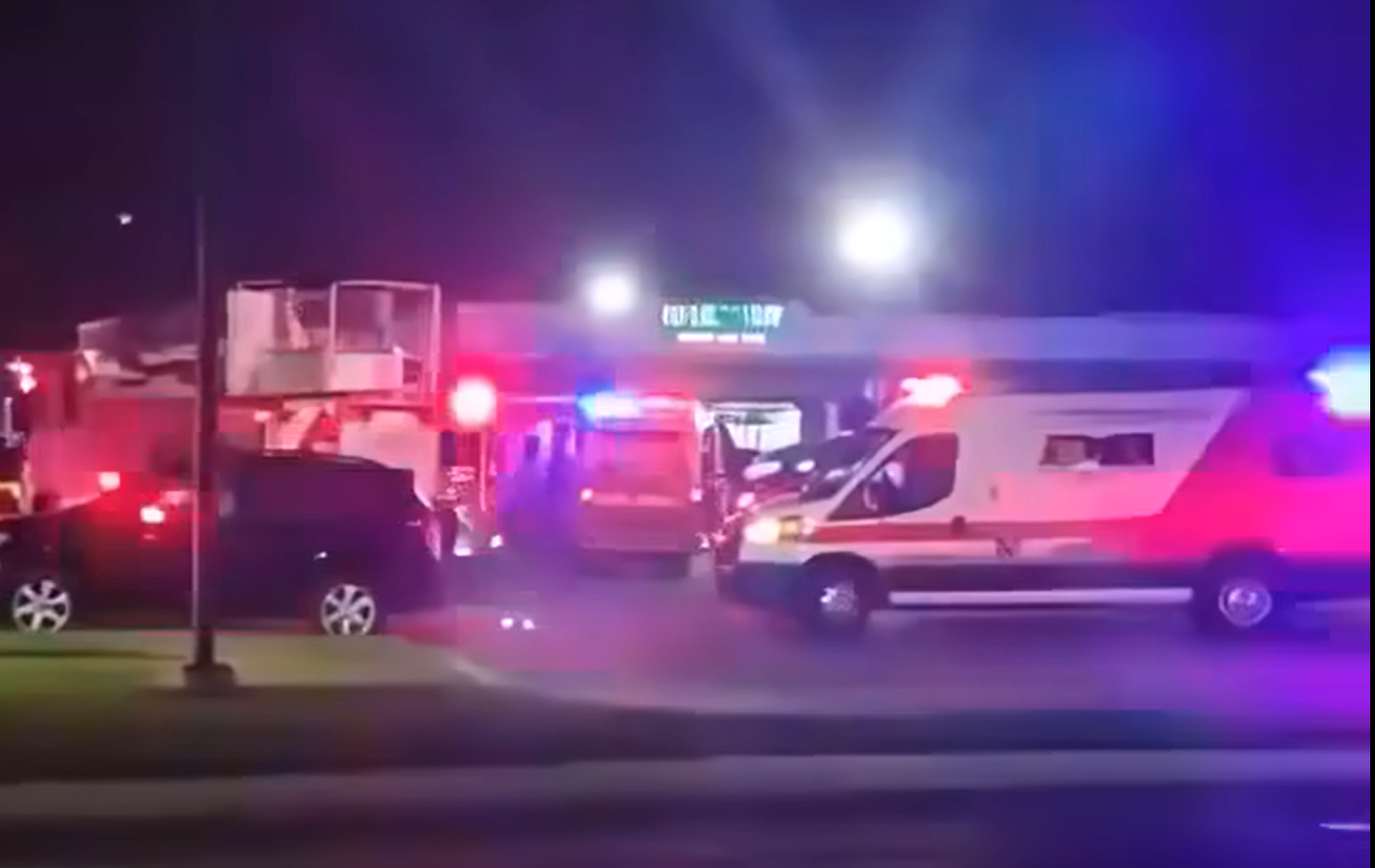
By the time the gunfire stopped, the damage was beyond comprehension. Four people lost their lives that night, and ten others were injured, some critically, and rushed to nearby hospitals. Emergency sirens pierced the darkness as first responders arrived, stepping into a scene that bore little resemblance to the celebration that had taken place just minutes earlier.

For families, the shock was overwhelming.

Parents clutched their children tightly, checking them again and again for injuries while struggling to control their own trembling hands. Some searched desperately for loved ones, calling names that went unanswered. Others stood in stunned silence, unable to process what they had just witnessed. A birthday party—a symbol of growth, hope, and innocence—had been irrevocably stained by violence.

Neighbors, alerted by the noise and the sudden flood of emergency vehicles, gathered nearby, watching in disbelief. Many described a feeling of helplessness as they observed the scene unfold, knowing that a family’s most private and joyful moment had been destroyed. For a community already familiar with loss, this tragedy cut especially deep because of where it occurred.

This was not a public venue or a crowded downtown event. It was a child’s birthday.

As investigators secured the area, officers began the difficult task of piecing together what had happened. Surveillance footage from nearby homes and businesses was collected, and authorities followed up on reports of a suspicious vehicle seen leaving the area around the time of the shooting. While leads are being pursued, officials cautioned that answers may take time.

For the families affected, time feels suspended.

Those who survived described the haunting quiet that followed the chaos—a silence filled with shock and disbelief. Many replayed the moments leading up to the shooting, questioning whether there were warning signs they missed or decisions they could have made differently. These thoughts, they said, linger long after the physical danger has passed.

The home where the party took place will eventually be cleaned. Decorations will be taken down. The yard will be restored. But the memories attached to that space will not be so easily removed. What was once a place of celebration now carries the weight of grief, and returning to normal life feels almost impossible.

The birthday cake, once meant to be shared amid laughter and photos, became an unspoken symbol of what was lost. For the family, that day will forever mark a before and an after—a clear dividing line separating life as it was from life as it now must be.

City leaders and community members expressed sorrow and outrage in the wake of the shooting, offering condolences to the families and calling for unity during a time of profound pain. Vigils were organized, bringing residents together to mourn, light candles, and stand in solidarity with those affected. Flowers, cards, and stuffed animals appeared near the site, small gestures of compassion in the face of overwhelming grief.

Yet alongside the mourning, a deeper question emerged—one that echoed far beyond Stockton.

How does a community heal when even the most innocent gatherings no longer feel safe?

For many parents, the tragedy has intensified existing fears. Birthdays, school events, and family celebrations are supposed to be moments of comfort, not anxiety. The realization that violence can intrude anywhere, without warning, has left families questioning how to protect their children in a world that feels increasingly unpredictable.

Mental health professionals note that events like this leave lasting emotional scars, not only on those directly involved but on the broader community as well. Children who were present may struggle with fear, sleep disturbances, or confusion, while adults grapple with guilt, anger, and grief. Healing, experts say, requires time, support, and open conversations.

As the investigation continues, officials urge anyone with information to come forward, emphasizing that accountability is a crucial step toward closure. Still, no arrest or explanation can undo what happened or restore the lives that were lost.

For those who were there, this was not simply a breaking news alert or a statistic to be read and forgotten. It was a life-altering experience, etched permanently into memory. The sounds, the panic, the faces of loved ones in distress—these details remain vivid, resisting the passage of time.

Stockton now joins a growing list of communities forced to confront the painful reality of violence invading everyday life. Each incident leaves behind more than headlines; it leaves behind families struggling to rebuild, children learning fear too early, and neighborhoods searching for answers that may never fully come.

As the city mourns, one truth stands painfully clear: the impact of that night will extend far beyond the yard where the party was held. It will live on in anniversaries that no longer feel celebratory, in moments of hesitation before gatherings, and in the collective memory of a community changed forever.

In the aftermath of unimaginable loss, residents are left holding onto one another, trying to find strength amid sorrow. Healing may come slowly, but the shared resolve to remember the victims and support the survivors remains strong.

Because for those families, and for Stockton as a whole, that night was not just a tragedy—it was a reminder of how fragile joy can be, and how deeply violence can wound even the most innocent moments of life.

They had no idea the fury of a father was about to burn their entire world to the ground!

I was halfway into a dream—lake water flat as glass, a fishing line cutting a clean arc through the air—when that harsh digital trill ripped me awake. Old instincts from my paramedic days kicked in before my brain fully caught up. Late-night calls are never casual. They’re never good.

The screen showed one name: Emily.

My daughter never called this late. Emily was twenty-four, married just over a year, living three states away. We had routines: Sunday afternoons, coffee in my kitchen, her voice bright and careful as she told me about the library where she worked, the little ordinary wins she collected like they were enough to keep her steady.

I swiped to answer. “Em? Everything okay?”

For a beat there was only breathing. Not sleep-breathing. Not steady. This was ragged, wet, the sound of someone trying to keep quiet while their body demanded they fall apart.

“Dad,” she whispered. Then the whisper broke. “Dad, please. Please come get me.”

I sat up so fast the room tilted. “Emily—where are you? What’s happening?”

“I’m at Mark’s parents’ house,” she said, voice thin and shaking. Like she was speaking from somewhere small, somewhere hidden. “I can’t… I can’t leave.”

“What do you mean you can’t leave? Put Mark on the phone.”

“No!” The panic spiked sharp enough to cut. “No, don’t. Just… please, Dad. I need you.”

Then the line went dead.

I didn’t call back. That wasn’t fear; it was experience. I’d heard the difference between a bad connection and a deliberate cut-off. And I’d spent too many years watching scared people get punished for trying to reach help. If she’d risked calling me once, she’d already stepped into danger. Calling back could have made it worse.

I was moving before I finished thinking. Jeans. Boots. Keys. Wallet. Heavy flashlight from the utility drawer. That flashlight had lived in my hand through blackout wrecks and roadside rescues; I wasn’t bringing it to be dramatic. I was bringing it because dark hides things, and I didn’t plan on being blind.

Four hundred miles is nothing when your kid asks you to save her.

I hit the interstate at midnight, the road a black ribbon under a sky without moonlight. The white lines blurred into a steady pulse as the miles fell away. I drove too fast and didn’t care. My chest felt tight, like someone had cinched a strap around my ribs.

In the quiet between exits, memories started clawing up, unwanted and sharp.

Mark Wilson. Junior architect. Polite smile. Firm handshake. The kind of man who knew how to look respectable. At their wedding he’d held Emily’s waist a little too tightly, like she might float away if he loosened his grip. I’d noticed. I’d filed it away. I’d done what too many fathers do: told myself it was just intensity, just new love, just nerves.

When Emily mentioned a “family bonding weekend” at his parents’ place, she hadn’t sounded excited. She’d sounded tired.

“It’s fine, Dad. Just a weekend. I’ll be back Sunday.”

Now, with the highway humming beneath my tires, that word—fine—felt like a lie she’d trained herself to say.

Why didn’t I hear it then? Why do we raise girls to be polite even when their gut is screaming?

The GPS announced my arrival at 4:15 a.m. The neighborhood was the kind where lawns are manicured into obedience and the silence feels enforced. Big houses, big windows, big money. The kind of place where people call the cops when a car they don’t recognize slows down.

I pulled up in front of a sprawling colonial. Dark, imposing, too perfect. But there were lights on—thin slivers of yellow leaking from behind heavy curtains.

I killed the engine and sat for half a second, listening. Nothing. Not even wind. Just that thick, privileged quiet.

I got out, boots heavy on the driveway, and walked up to the porch. I didn’t ring the bell. I pounded on the oak door—three hard strikes, the kind that say I’m not here to negotiate.

Open the door, I thought. Open it or I’ll make my own entrance.

Two minutes passed. Two full minutes of shadows shifting behind frosted glass. They were stalling. They were deciding how to spin this.

Finally the lock turned. The door opened four inches, stopped by a security chain.

Linda Wilson peered out. Silk blouse. Slacks. Hair done. Not a woman startled awake—an actress already in costume. Her eyes were hard and annoyed, like I’d interrupted something important.

“It is four in the morning,” she hissed. “What are you doing here?”

“Open the door, Linda,” I said. My voice was low and flat. “I’m here for Emily.”

“Emily is sleeping,” she lied smoothly. “She had a bit of an episode earlier. She’s emotional. She needs rest, not her father barging in like a maniac.”

“She called me,” I said. “She asked me to come. You can undo that chain, or I can kick this door in and we can explain the damage to the police. Your choice.”

Her mouth tightened. She looked over her shoulder, exchanged a glance with someone I couldn’t see.

“This is a private family matter,” she said, tone icy. “You’re an outsider. You’ll only make it worse.”

“I am her father,” I said, stepping closer to the crack. “Open. The. Door.”

Another long second of her measuring me, realizing I wasn’t bluffing. With a sharp huff she slid the chain off and swung the door wide. She didn’t move aside. She forced me to brush past her like I didn’t belong in the house where my daughter was trapped.

The foyer smelled like lemon polish trying to bury something sour underneath. Stale coffee. Sweat. A faint metallic edge that made the back of my throat tighten.

“Mark!” Linda called, too loud. “He’s here.”

I walked into the living room. Beige furniture arranged like a showroom. Expensive art chosen for taste, not love. Air thick with tension.

Mark stood by the fireplace, pale and rigid, hands jammed into his pockets. He stared at the rug like it could save him. His jaw worked as if he was chewing words he didn’t want to swallow.

And then I saw her.

Emily wasn’t on the couch. She wasn’t in a chair. She was curled on the floor in the corner between the sofa and the wall, knees pulled tight to her chest, trying to fold herself into nothing.

“Em,” I said, and it came out like a prayer.

She looked up.

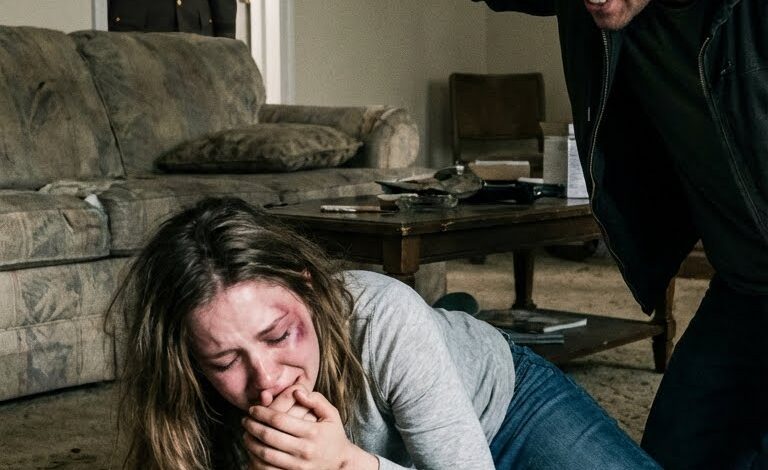
Her face was swollen. Left eye nearly shut, purple and black. Her lip split. But it wasn’t the bruises that stole my breath. It was her eyes—wide, flat, disconnected. The stare of someone who’s been taught that making noise costs you.

“Dad?” she whispered, like she didn’t trust her own reality.

I dropped to my knees and closed the space between us. “I’m here,” I said. “I’ve got you. I’ve got you.”

Linda marched in behind me. Robert followed, tall and soft in an expensive robe, the kind of man who’d never lifted anything heavier than his own ego.

“She fell,” Linda announced, loud and practiced. “She was hysterical. Screaming, throwing things. She tripped over the rug and hit the coffee table. We’ve been up all night trying to calm her down.”

I didn’t look at Linda. I looked straight at Mark. “Did she fall, Mark?”

He flinched like the question hit him in the throat. He glanced at his mother, then dropped his gaze again. His silence was an answer.

“Don’t you interrogate my son,” Robert boomed, finally deciding he was the authority here. “You have no idea what we’ve been dealing with. Emily is unstable. She’s been off the rails for months.”

Emily tried to stand when I helped her. She winced so hard her breath caught.

“Ow,” she gasped, pulling away.

I froze. Slowly, gently, I pushed up the sleeve of her sweater.

Welts on her forearm—raised, red, finger-shaped. Above them, older bruises in yellow-green shades, healing maps of violence that hadn’t started tonight.

My vision narrowed. The room tilted.

This wasn’t a fall. This wasn’t one bad moment.

This was a pattern.

I stood, pulled Emily to my side, and wrapped my jacket around her shoulders. It swallowed her. She clutched it like armor.

“We’re leaving,” I said.

Linda stepped in front of us like a gate. “You can’t just take her. She’s a married woman. She belongs with her husband.”

I laughed once, dry and cold. “Belongs? She’s not furniture.”

“She needs help,” Robert insisted, puffing up. “Professional help. Taking her away is kidnapping.”

I turned to face all three of them. The perpetrator. The enabler. The bulldozer in a robe.

“Mark,” I said.

He finally lifted his eyes. They were wet. Not with remorse—fear.

“If you come near her again,” I told him, keeping my voice quiet on purpose, “I won’t call the police. Do you understand me?”

He swallowed. He understood.

“And you two,” I said to his parents, “if you ever call my daughter unstable again without explaining the fingerprints on her body, I will make sure everyone you know learns what happens behind these curtains.”

“You’re overreacting,” Linda snapped, her composure cracking. “Families handle things internally. We don’t air dirty laundry.”

That sentence hit like a chill straight through bone. Families handle things internally. The favorite hymn of every household that hides rot behind locked doors.

“This isn’t a family,” I said, guiding Emily toward the front door. “This is a crime scene.”

We crossed the foyer. Linda didn’t block us this time. She just watched, furious and offended, like the real injustice was my refusal to play along.

Outside, the cold air hit Emily’s face and she inhaled like she’d been underwater.

At the bottom of the steps she paused and turned back once, eyes locking on Mark.

“Why?” she whispered, small and broken. “Why did you let them do this?”

Mark’s mouth opened. Nothing came out.

Emily turned away. I kept my arm around her and walked her to my truck.

And as I drove us out of that perfect, quiet neighborhood, the fury finally settled into something sharper than rage.

Focus.

Because saving my daughter tonight was step one.

Burning their whole world down the legal way was step two.
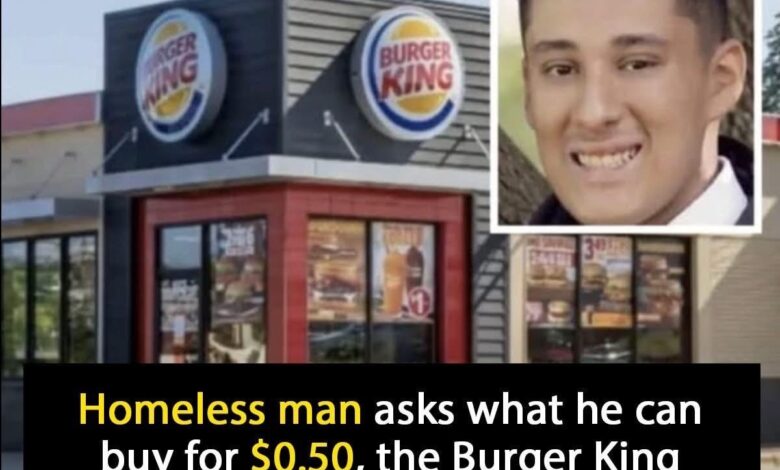
Homeless man enters Burger King and asks worker What can I get for $0,50?

Acts of kindness rarely announce themselves. Most of the time, they unfold quietly, witnessed by only a few people, and then disappear into the background noise of everyday life. But every so often, a small, ordinary moment breaks through the cynicism and reminds people what decency looks like when no one is asking for applause.

This is one of those moments.

On an unremarkable day in May, Matthew Resendez was working a routine shift at a local Burger King. The restaurant sat in an area where homelessness was a familiar reality, and employees were used to seeing people come in not to order meals, but to warm up, ask for water, or quietly stand near the counter before leaving again. Nothing about the shift suggested it would be memorable.

Then a man walked in holding a handful of coins.

He didn’t look angry or demanding. He didn’t cause a scene. He simply approached the counter and gently asked a question that stopped Matthew cold.

“What can I get for fifty cents?”

The man wasn’t begging. He wasn’t asking for free food. He was ready to pay with everything he had, even though he clearly didn’t know that fifty cents wouldn’t cover the cheapest item on the menu. There was no entitlement in his voice, just hunger and uncertainty.

For Matthew, the answer should have been simple. Company policy didn’t allow employees to hand out food. The register wouldn’t accept that amount. He could have apologized and sent the man on his way, like so many others had probably done before.

But he didn’t.

Instead, Matthew asked a different question.

“What would you order if you could?”

The man hesitated, then quietly replied that anything would help. He just needed something to stop the hunger pains.

That was all Matthew needed to hear.

Without making a show of it, he rang up a full, hearty meal. He didn’t announce what he was doing. He didn’t ask permission. When the total came up, Matthew pulled out his own debit card and paid for the order himself.

He handed the man the receipt, smiled, and told him to take a seat and relax while the food was prepared.

For the man, the moment was overwhelming. He hadn’t asked for generosity. He hadn’t expected kindness. He had simply hoped that fifty cents might be enough to buy a small piece of dignity for the day. Instead, he was given a full meal and something far rarer: respect.

Matthew went back to work as if nothing extraordinary had happened.

The story could have ended there. A good deed completed, two lives briefly intersecting, then moving on. But someone else had been watching.

A woman seated in the restaurant noticed everything. She saw how Matthew treated the man, how there was no judgment in his voice and no hesitation in his actions. Afterward, she didn’t just leave impressed. She wrote to the company to let them know what kind of employee they had behind the counter that day. And she left Matthew a generous tip as a quiet thank-you for doing the right thing.

When Matthew got home and told his mother, Michelle Resendez, about the incident, he mentioned it casually, as if it were nothing worth highlighting.

But Michelle saw it differently.

She shared the story on social media, never imagining it would travel far beyond her circle of friends. Her words were simple and full of pride.

A homeless man had walked into the restaurant with fifty cents. Matthew asked what he would order if he could. Then he paid for the meal himself and told the man to sit down and eat. A stranger witnessed the kindness and made sure Matthew’s employer knew about it. Michelle ended her post by saying how proud she was to have raised a son with such a big heart.

The post spread faster than anyone expected.

Within hours, thousands of people were sharing it. Comments poured in from across the country, many from people who felt worn down by constant bad news and desperate for something good to believe in again. They saw in Matthew’s actions a reminder that compassion doesn’t require wealth, power, or influence—only awareness and choice.

What struck many readers wasn’t just that Matthew paid for the meal. It was how he treated the man before and after. There was no sense of charity as superiority, no implication that the man should feel grateful or indebted. Matthew didn’t “save” him. He met him where he was and responded with humanity.

Matthew himself didn’t see his actions as heroic. To him, it was obvious. Someone was hungry. He had the ability to help. So he did.

That mindset didn’t come from nowhere. According to those who know him, Matthew grew up learning that people are people first, no matter their circumstances. His mother has said that empathy was always part of how he saw the world—that he understood early on that hardship isn’t a moral failing and that dignity shouldn’t be conditional.

As the story continued to circulate, people praised Matthew’s character and Michelle’s parenting. Many said the story restored their faith in young people. Others pointed out how rare it felt to see someone act purely out of kindness without expecting anything in return.

What made the moment even more powerful was its simplicity. There were no cameras set up. No viral challenge. No staged generosity. Just a young man at work, confronted with a human need, choosing compassion over convenience.

For the homeless man, the impact went beyond a full stomach. Being treated with respect—spoken to directly, asked what he wanted, and trusted enough to sit and eat—meant something deeper. In a world that often looks past people like him, Matthew looked straight at him and saw someone worth caring about.

That kind of recognition lingers.

Stories like this resonate because they cut through the noise. They remind people that kindness doesn’t have to be dramatic to matter. It doesn’t require grand gestures or endless resources. Sometimes, it’s a meal paid for quietly, a question asked sincerely, and a decision made in a split second to do better than what’s required.

Matthew didn’t change the world that day. He didn’t solve homelessness or hunger. But he changed one moment for one person—and that was enough.

And for millions who read about it later, his small act became something larger: proof that empathy still exists, that decency hasn’t disappeared, and that even in places as ordinary as a fast-food counter, humanity can still show up when it’s needed most.

In a time when so many feel disconnected and disillusioned, that reminder mattered more than Matthew probably ever realized.

A Beloved Hollywood Legend Leaves Us at 65!

A Beloved Hollywood Legend Leaves Us at 65

Val Kilmer lived a life marked by extraordinary talent, profound loss, and a relentless devotion to his craft. His journey through Hollywood was never a straight line toward fame or comfort. Instead, it was shaped by intensity, discipline, and an almost obsessive commitment to becoming the people he portrayed on screen. He did not chase stardom in the traditional sense. He chased truth, even when that pursuit came at a personal cost.

Born into a family fractured early by separation and tragedy, Kilmer learned young how fragile stability could be. The death of his younger brother left a wound that never fully healed, and that grief quietly followed him into adulthood. Yet even in sorrow, he moved forward with fierce determination. His acceptance into Juilliard, one of the most prestigious acting conservatories in the world, marked the beginning of a serious, disciplined relationship with performance. He was not interested in shortcuts or easy praise. Acting, to him, was a calling that demanded total immersion.

When Hollywood came knocking, Kilmer arrived fully formed. In the 1980s and 1990s, he became one of the most recognizable and compelling faces in film, but what set him apart was not just his charisma—it was his refusal to play characters halfway. In Top Gun, he transformed a supporting role into something unforgettable. His portrayal of the cool, controlled rival was precise and restrained, turning minimal dialogue into maximum presence. He understood how silence, posture, and gaze could speak louder than words.

That intensity reached new heights when he stepped into the role of Jim Morrison in The Doors. Kilmer did not simply play the legendary musician; he inhabited him. He studied Morrison’s voice, movements, and psyche so thoroughly that even longtime fans struggled to distinguish actor from icon. He sang the songs himself, absorbed the contradictions of genius and self-destruction, and delivered a performance that was raw, hypnotic, and fearless. It was not a role meant to be safe or comfortable, and that was exactly why Kilmer embraced it.

Perhaps no performance captured his singular power more clearly than his turn as Doc Holliday in Tombstone. Fragile, lethal, witty, and tragic all at once, his Holliday remains one of the most quoted and admired characters in modern Western cinema. Kilmer infused the role with elegance and menace, humor and decay, creating a portrait of a man already halfway to death yet fully alive in every scene. It was a masterclass in balance, restraint, and emotional precision.

Behind the scenes, Kilmer was known to be demanding—of himself first and foremost, and sometimes of those around him. He could be uncompromising, deeply focused, and resistant to anything that felt dishonest. That reputation followed him, often overshadowing the fact that his intensity came from respect for the work, not ego. He believed that storytelling mattered, that characters deserved full commitment, and that art should never be casual.

As the years passed, his life took a turn far removed from red carpets and box office numbers. His battle with throat cancer became public, and with it came a new chapter defined not by roles, but by resilience. The illness took his natural voice, altered his appearance, and forced him to confront vulnerability in a way no script ever could. A tracheostomy changed how he spoke, how he breathed, and how he moved through the world. Yet it did not diminish his spirit or his identity as an artist.

Rather than retreat into silence, Kilmer chose openness. He shared his struggles, his fears, and his reflections on mortality with a rare honesty. His later years became a different kind of performance—not one of illusion, but of truth. He adapted, learned new ways to communicate, and continued creating. His return to the screen in Top Gun: Maverick was especially poignant. With the help of technology reconstructing his voice, he appeared not as a symbol of nostalgia, but as a testament to endurance. The moment resonated deeply, not because of spectacle, but because it carried the weight of everything he had survived.

Beyond the public figure was a man deeply devoted to his children. Fatherhood grounded him in ways fame never could. Those closest to him spoke of his curiosity, his tenderness, and his constant search for meaning. He was a collaborator who valued ideas, a thinker who questioned everything, and a soul who never stopped exploring what it meant to be human.

Kilmer’s life was never simple, and his legacy resists easy summaries. He was brilliant and difficult, vulnerable and fierce, playful and serious. He chased beauty and truth with equal intensity, whether through Shakespearean monologues, cinematic icons, or quiet moments of reflection far from Hollywood sets. He accepted loss as part of life but never allowed it to define the limits of his creativity.

At 65, his passing leaves a space that cannot be filled by imitation or tribute alone. His work endures because it was never superficial. Every role carried intention. Every performance bore his unmistakable stamp. He reminded audiences that acting is not about being liked, but about being honest.

Val Kilmer did not simply appear on screen. He arrived, fully present, unguarded, and willing to give more than was comfortable. His absence will be felt not only in film history, but in the quieter understanding that true artistry demands courage—especially when the spotlight fades.

He leaves behind a body of work that continues to speak, long after his own voice was taken from him, and a legacy defined not by perfection, but by fearless commitment to the art he loved.

The Science of Skin Revitalization: Exploring the Benefits of Coffee and Petroleum Jelly

In the evolving landscape of personal care, there is a growing movement toward “back-to-basics” skincare. Consumers are increasingly looking for transparent, effective, and accessible ingredients that can be integrated into a daily routine without the premium price tag of luxury brands. One such combination that has gained significant attention is the blend of White Petrolatum (Vaseline) and Coffee grounds.

While it may seem like a simple kitchen DIY, the synergy between these two components addresses several physiological needs of the skin: mechanical exfoliation, moisture retention, and antioxidant protection. This guide explores the dermatological benefits, proper application techniques, and the science behind why this duo works.

To understand why coffee and Vaseline are effective together, we must look at how they interact with the stratum corneum—the outermost layer of the skin.

1. Mechanical Exfoliation via Coffee Grounds

The skin naturally sheds dead cells in a process called desquamation. However, factors like age, pollution, and dehydration can slow this process, leading to a dull complexion and clogged pores. Coffee grounds serve as a natural physical exfoliant. Unlike plastic microbeads (which are environmentally harmful) or some fruit pits (which can have jagged edges), coffee grounds have a varied texture that effectively lifts dead skin without being overly abrasive when applied with light pressure.

2. Moisture Retention via Petrolatum

The primary challenge with many exfoliants—especially chemical ones or salt scrubs—is that they can strip the skin’s natural oils, leading to “Transepidermal Water Loss” (TEWL). Vaseline is an occlusive agent. It doesn’t necessarily add moisture to the skin; instead, it creates a physical barrier that prevents existing moisture from evaporating. By mixing coffee with Vaseline, you are exfoliating and sealing the skin simultaneously, ensuring the fresh layer of skin revealed is immediately protected.

The Biological Power of Caffeine and Antioxidants

The benefits of coffee in skincare go beyond the physical texture of the grounds. Coffee is a powerhouse of bioactive compounds.

Boosting Microcirculation

Caffeine is a vasoconstrictor, meaning it can temporarily shrink blood vessels. When applied topically to areas like the under-eyes or legs, it can help reduce the appearance of puffiness and redness. This “tightening” effect is why caffeine is a staple ingredient in high-end cellulite creams and eye serums.

Neutralizing Free Radicals

Coffee is exceptionally rich in antioxidants, specifically polyphenols and ferulic acid. These compounds help neutralize free radicals—unstable molecules caused by UV rays and pollution that break down collagen and lead to premature aging. Applying these antioxidants directly to the skin surface provides a localized defense against environmental stressors.

Targeted Applications for Total Body Car

The versatility of the Vaseline and coffee mixture allows it to be used across various parts of the body, each addressing a specific concern.

1. Revitalizing the Under-Eye Area

Lack of sleep and poor circulation often manifest as dark circles and bags.

  • The Method: A mixture of finely ground coffee and a thin layer of Vaseline can be applied under the eyes for 5–10 minutes.
  • The Result: The caffeine helps “wake up” the skin by reducing fluid retention, while the petrolatum ensures the delicate skin remains hydrated, smoothing out fine lines.

2. Lip Polishing and Hydration

The skin on our lips is much thinner than the rest of our face and lacks oil glands, making it prone to chapping.

  • The Method: Using a small amount of the blend as a lip scrub.
  • The Result: The coffee removes dry, flaky skin, while the Vaseline provides a long-lasting protective coat, ideal for harsh winter weather.

3. Softening Rough Heels and Elbows

The skin on the feet and elbows is often thick and prone to cracking.

  • The Method: Apply a thicker layer of the coffee-Vaseline scrub to the heels before a shower, or leave it on overnight (with socks).
  • The Result: The exfoliation breaks down callouses, and the occlusive properties of the Vaseline deeply soften the thickened skin.

Best Practices for Preparation and Safety

To achieve the best results while maintaining skin health, it is important to follow specific preparation and application guidelines.

Recipe and Texture

For a balanced scrub, use a 1:1 ratio.

  • 1 Tablespoon of fresh coffee grounds (Fresh grounds contain more caffeine and antioxidants than used grounds).
  • 1 Tablespoon of 100% Pure Petroleum Jelly.
  • Optional: A few drops of Vitamin E oil for added shelf-stability and nourishment.

Application Technique

Always apply the mixture to clean, slightly damp skin. Use gentle, circular motions. The goal is to stimulate the skin, not to cause irritation. If you are using it on the face, avoid the immediate eye socket and be extra light with your pressure.

Frequency of Use

Because physical exfoliation is a significant intervention for the skin barrier, it should not be done daily.

  • Oily Skin: 2–3 times per week.
  • Dry/Sensitive Skin: Once per week or every other week.

Safety Considerations and Dermatological Advice

While natural treatments are generally safe, skin chemistry varies from person to person.

  • Patch Test: Before applying the mixture to your face or large areas of your body, test a small amount on the inside of your wrist to ensure no allergic reaction occurs.
  • Avoid on Broken Skin: Never use an exfoliant on sunburns, active acne breakouts, or open wounds, as this can lead to infection or scarring.
  • Sun Sensitivity: Exfoliated skin is more susceptible to UV damage. Always follow up your routine with a broad-spectrum SPF during the day.

Comparison: DIY vs. Commercial Scrubs

FeatureCoffee & Vaseline DIYCommercial Premium Scrub
Active IngredientsCaffeine, Polyphenols, PetrolatumVaries (often includes fragrances)
Moisture RetentionHigh (Occlusive)Moderate to Low
CostVery LowHigh ($20 – $60+)
PreservativesNone (Make in small batches)High (For shelf-life)
Eco-FriendlinessBiodegradable exfoliantMay contain microplastics

Conclusion: Sustainable and Effective Skincare

The combination of Vaseline and coffee is a testament to the fact that effective skincare does not always require a complex chemical formula or an expensive price tag. By leveraging the physical exfoliating power of coffee and the barrier-protecting properties of petroleum jelly, you can achieve a radiant, smooth complexion at home.

This treatment bridges the gap between traditional beauty secrets and modern dermatological needs. It encourages a mindful approach to self-care, where the focus is on nourishing the skin and respecting its natural cycles.

The beloved star has died, leaving the world in shock. Fans from all over have gathered to say their final goodbyes.

On Monday, Jason Momoa made his new girlfriend’s introduction to the public on Instagram, and ever since, the couple has been the buzz of the internet.

He has been hinting to fans about their long-simmering romance for a while, however this may surprise some.

The 44-year-old actor first became acquainted with the 32-year-old actress on the set of the 2021 Netflix film Sweet Girl while he was still married to Lisa Bonet. There’s a catch, though!

Momoa and his spouse remained legally married despite having been apart for over five years.

When he and Arjona got hot, there was no overlap with his marriage because Bonet and Momoa made their separation official on October 7, 2020.

Bonet filed for divorce on January 8 of this year, and their cases were settled amicably the following day.

Now that he could finally show everyone how much he loved them, Momoa went all out with a carousel of photos from their most recent trip to Japan.

In the text, he affectionately called Arjona “mi amor,” but if you’re not sure what that means, just take a look at their sweet photos of each other.

Dog Shot With Arrows Makes Recovery And It’s Incredible

A dog was shot through the chest and neck by a Chinese meat trade hunter. He was rescued by animal rights campaigners when animal lover Qiao Wei saw the dog covered in blood on the streets of Chengdu, China. Wei took the wounded dog to a hospital where he got treated for his serious injuries.

Reportedly, the dog had been part of the hunting that is involved in  China’s dog meat trade. Wei is being called a ‘hero’ for saving the animal, but the images posted of the dog after the attack has really struck a nerve with activists everywhere.

Animal activist groups, such as Guardians of Chinese Animal Protection, have sent messages of concern.The shelter finally disclosed an update on how the dog was doing, and thankfully the treatment had been successful. Updates suggest that the dog will make a full recovery from the horrific incident.