NBA Game in London Sees Crowd Moment During National Anthem!

The atmosphere inside London’s O2 Arena felt electric long before tipoff. Thousands of fans poured into the venue hours ahead of time, buzzing with the kind of anticipation that only a rare NBA regular-season game on European soil can generate. For many in attendance, this was more than just basketball. It was proof that the global reach of the NBA continues to expand, bringing the sport closer to fans who usually experience it from afar.

The matchup between the Orlando Magic and the Memphis Grizzlies was part of the league’s long-term effort to deepen its presence in Europe. Jerseys from across the league dotted the crowd, accents blended together in concession lines, and the pregame music echoed through the arena with a celebratory tone. It felt less like a neutral-site game and more like a festival built around basketball.

As the teams completed their warmups, the arena lights dimmed and the noise softened. The crowd gradually settled into a respectful hush as pregame ceremonies began. Onto the court stepped Vanessa Williams, invited to perform the United States national anthem. Her presence added a sense of formality to the moment, and as the first notes rang out, the audience grew quiet. For a brief stretch, the scene was polished and unified, reflecting the ritualistic calm that usually surrounds an anthem performance.

Then, unexpectedly, a single voice cut through the stillness.

From somewhere in the stands, a man shouted a short remark referencing Donald Trump and his previously reported interest in Greenland. The comment itself was fleeting, lasting no more than a second or two, but its timing made it impossible to ignore. It echoed clearly across the arena, momentarily breaking the solemn mood of the anthem.

The reaction was immediate and mixed. A few scattered boos rang out in response, followed almost instantly by louder cheers that rolled through sections of the crowd. Some fans laughed, others clapped, and many simply looked around, surprised that such a moment had erupted during a ceremony typically treated with restraint. The interruption was brief, but the ripple it caused was unmistakable.

On the court, Williams never faltered. She remained composed, continued the anthem without pause, and carried it through to its conclusion with professionalism. When the final note faded, the applause was strong and sustained, signaling appreciation not just for her performance, but for her ability to maintain focus in the face of an unexpected disruption.

Although the moment passed quickly, it became an immediate topic of conversation among spectators and viewers watching from home. Clips circulated online within minutes, drawing commentary from fans on both sides of the Atlantic. For some, it was a humorous example of how global audiences sometimes inject their own perspectives into American sporting traditions. For others, it highlighted how political discourse has a way of surfacing even in spaces meant to be apolitical.

The shouted remark referenced long-standing public discussions that began years earlier, when Trump publicly suggested the United States should consider acquiring Greenland, a semi-autonomous territory of Denmark. The idea sparked widespread criticism at the time, particularly among European leaders, who firmly rejected the notion and emphasized national sovereignty. While those debates belong squarely in the realm of diplomacy and politics, their echo inside a London basketball arena illustrated how interconnected global conversations have become.

International sporting events, especially those involving American teams abroad, often serve as cultural crossroads. Fans from different countries bring their own histories, humor, and political awareness into shared spaces. In that sense, the crowd’s reaction reflected the diversity of perspectives present in the arena rather than a unified political statement. It was spontaneous, unplanned, and quickly overtaken by the return to sport.

Once the anthem concluded and the ball was finally tipped, attention shifted decisively back to basketball. The game itself delivered the fast pace and athletic intensity fans had hoped for. The Grizzlies controlled much of the contest, executing with confidence and energy, while the Magic fought to keep pace in front of an enthusiastic crowd eager for highlights. Every big play drew cheers, regardless of which team made it, reinforcing the idea that many in attendance were there for the spectacle as much as the score.

By the final buzzer, Memphis emerged with a victory, capping off an entertaining night that reaffirmed the appetite for NBA action in the United Kingdom. Fans lingered after the game, taking photos, debating plays, and savoring the experience of having witnessed top-level basketball without crossing an ocean.

From the league’s perspective, the night was another successful step in its international strategy. The NBA has already announced plans to stage future regular-season games in cities such as Manchester, Paris, and Berlin, signaling a continued commitment to global expansion. These games are designed not just to showcase talent, but to strengthen long-term connections with international fan bases.

While the brief anthem interruption became a memorable footnote, it ultimately did little to overshadow the event itself. Instead, it served as a reminder that large sporting stages sometimes attract moments of unscripted expression, especially when global audiences are involved. In the end, the defining elements of the evening were athletic performance, shared excitement, and the unmistakable energy of a crowd united by love for the game.

As fans filed out of the O2 Arena, the chatter returned to buzzer-beaters, standout performances, and hopes for the NBA’s next visit to London. The unexpected shout during the anthem would be remembered, replayed, and debated online, but it remained just that—a brief interruption in a night that, at its core, celebrated basketball’s ability to bring people together across borders, cultures, and perspectives.

SOTD – Kelly Ripa – Hospitalized in Critical Condition!

The entertainment world was cast into a state of profound shock and collective concern following reports that Kelly Ripa, the quintessential face of morning television, had been hospitalized in critical condition. For over two decades, Ripa has been a beacon of vibrant energy, sharp wit, and relatability, making her sudden transition from the bright lights of the “Live with Kelly and Mark” set to a sterile hospital room all the more jarring for her millions of devoted viewers. The news broke with a suddenness that felt incongruous with Ripa’s public persona—a woman who has long been celebrated as a paragon of health, fitness, and disciplined wellness.

While the specific medical details surrounding her admission remain closely guarded by her family and medical team, the gravity of the term “critical condition” has sent ripples of anxiety through the industry. Sources close to the production of her morning show indicate that the crisis unfolded with terrifying speed, leaving colleagues and staff in a state of disbelief. Ripa, 55, has spent a lifetime in the public eye, evolving from a soap opera star into a daytime icon whose morning routine—shared with the world—seemed to be an unbreakable ritual of laughter and lighthearted banter. To see that ritual interrupted by a high-stakes health battle has forced a sobering pause in the fast-paced world of celebrity media.

By her side throughout this ordeal has been her husband and co-host, Mark Consuelos. The pair, whose enduring marriage is often cited as one of the most stable and romantic in Hollywood, have shared a life defined by mutual support and a deep-seated connection to their three children. Since Ripa’s admission, Consuelos has reportedly remained a constant presence at her bedside, a pillar of strength during a time of immense uncertainty. The couple’s chemistry on screen has always felt like an extension of their genuine bond, and the absence of their playful back-and-forth on “Live” has created a palpable void for viewers who consider the duo a part of their own morning families.

In the digital age, news of this magnitude travels with lightning speed, and social media platforms were immediately inundated with a deluge of support. From fellow daytime legends to Hollywood A-listers, the outpouring of love has been a testament to Ripa’s extensive impact and the kindness she has historically extended to her peers. Heartfelt messages, prayer circles, and memories of Ripa’s most hilarious segments have trended globally, as fans attempt to process the vulnerability of a woman who always seemed invincible. For many, Kelly Ripa isn’t just a host; she is a friend they have had coffee with every weekday morning for twenty years.

The timing of the crisis has added an extra layer of bewilderment for those who follow her closely. Only days prior, Ripa had appeared in peak form, engaging in her usual high-energy interviews and sharing anecdotes about her family life with her signature comedic timing. There were no visible outward signs of a lingering ailment, leading many medical experts to speculate—albeit without official confirmation—that the hospitalization may have been the result of an acute medical emergency, such as a severe, fast-acting infection or a sudden cardiac event. The lack of an official statement from her representatives has only intensified the speculation, though most outlets have remained respectful of the family’s explicit plea for privacy during this harrowing time.

Beyond the immediate health concerns, the situation highlights the unique position Ripa holds in the American cultural landscape. She stepped into the massive shoes of Kathie Lee Gifford and eventually the legendary Regis Philbin, not just filling the vacancy but redefining the role of the daytime host for a new generation. Her ability to pivot from deeply emotional human-interest stories to irreverent humor has made her irreplaceable. Her absence from the airwaves is more than just a scheduling conflict; it is a disruption of a cultural habit that millions rely on for a sense of normalcy and joy.

As the medical team works tirelessly to stabilize her condition, the entertainment community remains in a holding pattern. Production at “Live” has naturally shifted to accommodate the crisis, with guest hosts and pre-recorded segments filling the time as the team rallies around their leader. The atmosphere behind the scenes is described as somber, with many staff members having worked alongside Ripa for her entire tenure. They describe a woman who is as hardworking and compassionate off-camera as she is charismatic on-camera—a “boss” who treats her crew like an extended family.

The gravity of “critical condition” implies a battle that requires every ounce of the resilience Ripa has cultivated through years of intense physical training and a high-pressure career. She has often joked on air about her “stubbornness” and her refusal to quit, traits that her supporters are now hoping will serve her well in the ultimate fight for recovery. The resilience of the human spirit is often tested in the quietest moments of a hospital ward, far from the applause of a studio audience, and those who know Ripa best are confident in her tenacity.

While the world waits for a glimmer of positive news, the situation serves as a poignant reminder of the fragility of life, even for those who seemingly have it all. It has sparked broader conversations about the pressures placed on public figures to maintain an image of perpetual wellness and the importance of grace when that image is shattered by the realities of biology.

The rallying cry from fans remains a singular, unified wish for her return. Whether through the hashtag #PrayForKelly or quiet moments of reflection from viewers at home, the sentiment is the same: the morning just isn’t the same without her. As the days pass, the hope is that the next update will be one of progress, stability, and a path toward the vibrant life she has lived so publicly and so well. For now, the lights on the set of “Live” may be dimmed, but the collective hope of an entire audience remains focused on a full and swift recovery for the woman who taught a nation how to start its day with a smile.

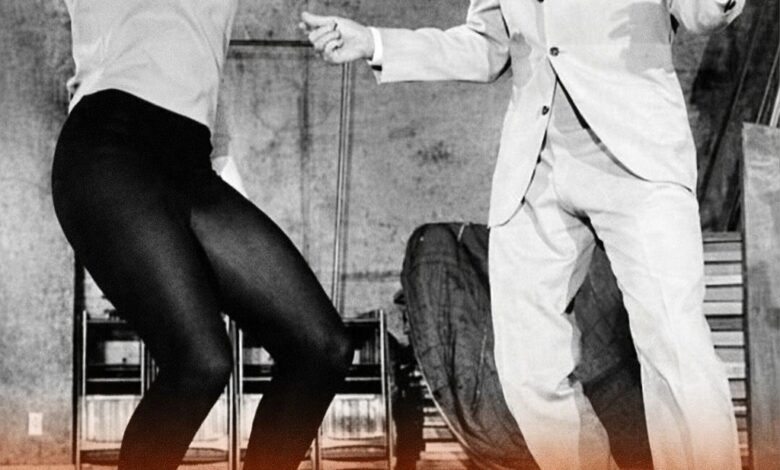
Viva Las Vegas! Behind-the-Scenes Mistakes You Might Have Overlooked

In the glittering annals of 1960s Hollywood, few films capture the effervescent spirit of an era quite like the 1964 classic Viva Las Vegas. While Elvis Presley’s filmography is often dismissed as a series of formulaic musicals, this specific production stands as a towering exception—a cinematic lightning strike where music, romance, and the neon-soaked energy of mid-century Las Vegas collided to create something timeless. At the center of this whirlwind was an undeniable, almost magnetic chemistry between Elvis and his co-star, Ann-Margret, a pairing that elevated the film from a standard celebrity vehicle to a genuine cultural touchstone.

The narrative framework of Viva Las Vegas is deceptively simple: Presley stars as Lucky Jackson, a charismatic race car driver who arrives in town with the singular goal of winning the inaugural Las Vegas Grand Prix. However, his focus is immediately diverted when he encounters Rusty Martin, a vivacious swim instructor played by Ann-Margret. What follows is a vibrant tug-of-war between ambition and romance, set against the backdrop of iconic landmarks like the Flamingo and the Sahara—hotels that have since become ghosts of a bygone Vegas.

What truly distinguishes Viva Las Vegas from Presley’s earlier hits, such as Blue Hawaii, is the power dynamic between its leads. Ann-Margret was not merely a love interest; she was a force of nature. At only twenty-two years old, she possessed a “fiery” energy that matched Presley’s “cool” charisma beat for beat. Studio executives were so aware of her burgeoning star power that some theaters famously billed her name above Elvis’s—a rare occurrence in the King’s career. This parity created a palpable on-screen tension that felt less like a scripted romance and more like a genuine meeting of equals. Nowhere is this more evident than in their playful duet, “The Lady Loves Me,” where their flirtatious banter and synchronized movement suggest a level of spontaneous joy that is rarely captured on film.

However, the electric connection visible on screen was mirrored by an equally intense relationship behind the scenes. The production was a pressure cooker of professional and personal complexities. Elvis was at the time in a committed, high-profile relationship with Priscilla Presley, yet the rumors of a deep romantic involvement with Ann-Margret were so persistent that they became part of Hollywood lore. Ann-Margret would later confirm that their bond was profound, built on mutual respect and a shared work ethic. They were both perfectionists; crew members recounted stories of the duo rehearsing dance sequences under the sweltering Nevada sun until their timing, spins, and lifts were flawless. Despite the media scrutiny and the complicated nature of their personal lives, they maintained a standard of professionalism that ensured the film’s success.

The technical aspects of the film also contribute to its enduring legacy. At just eighty-five minutes, it is one of Presley’s shortest features, yet its tight pacing ensures that every frame is saturated with entertainment. The cinematography captured a version of Las Vegas that was at its aesthetic peak—a city of sleek mid-century architecture and desert expanses before the advent of the modern mega-resort. Watching the film today provides a rare historical snapshot of a lost world. Furthermore, the production was a breeding ground for future talent. Background dancers in the elaborate musical numbers included individuals who would eventually go on to receive Academy Award nominations in their own right, and the soundtrack featured a then-emerging artist named Glen Campbell, adding a layer of musical pedigree that scholars of American cinema still admire.

One of the more fascinating elements for modern fans to explore is the collection of “perfect mistakes” that remained in the final cut. Because the chemistry between the leads was so volatile and alive, director George Sidney often kept improvised moments—a playful eye roll, a spontaneous gesture, or a line delivered with a smirk—that weren’t in the script. These “bloopers” didn’t detract from the film; they added a layer of authenticity that made Lucky and Rusty feel like real people rather than cardboard cutouts. Presley himself was known to be a bit frustrated by certain camera angles that he felt favored Ann-Margret, but his competitive drive only pushed him to perform with more athleticism and musical precision, leading to the definitive performance of the title track, “Viva Las Vegas.”

The film’s financial performance underscored its cultural impact. Despite mixed reviews from critics who found the plot light, audiences responded with overwhelming enthusiasm. Viva Las Vegas became Presley’s highest-grossing film, out-earning Blue Hawaii by approximately $450,000—a significant sum in the mid-sixties. It proved that the public wasn’t just coming to see “The King”; they were coming to see the combustion of two superstars at the height of their powers.

The legacy of Viva Las Vegas is perhaps best understood through the enduring friendship between its stars. After the cameras stopped rolling and the years passed, the bond between Elvis and Ann-Margret never truly faded. Ann-Margret remained one of the few people from his Hollywood years who maintained a genuine connection with him until his untimely death in 1977. Her presence at his funeral was a quiet, somber postscript to the high-octane romance they had shared on screen thirteen years earlier.

Statistically, the film’s success was a landmark for the era. In a time when the average movie ticket cost around $0.90, Viva Las Vegas grossed over $9 million at the domestic box office. In terms of audience demographics, the film successfully bridged the gap between Presley’s core teenage female fanbase and a broader adult audience attracted by the race car culture and the sophisticated allure of the Las Vegas setting. While African American representation in the film followed the unfortunate Hollywood trends of the mid-1960s—where minority groups were predominantly relegated to background roles or service positions—the film remains a subject of study for how it marketed a specific vision of “The American Dream” to a white, middle-class audience during a period of massive social upheaval.

Ultimately, Viva Las Vegas remains an American classic because it represents a moment of pure, unadulterated cinematic joy. It captures Elvis Presley not just as a singer, but as a physical, comedic, and romantic lead who had finally found a partner capable of challenging him. Ann-Margret’s Rusty Martin was a character ahead of her time—independent, witty, and fiercely talented—providing a template for the modern female lead in musical cinema. Together, they turned a race-track romance into a visual and auditory feast that continues to inspire. Whether through the iconic title song or the sun-drenched spectacle of the Nevada desert, the film remains a testament to the fact that when performance, chemistry, and legendary star power align, the result is nothing short of magic.

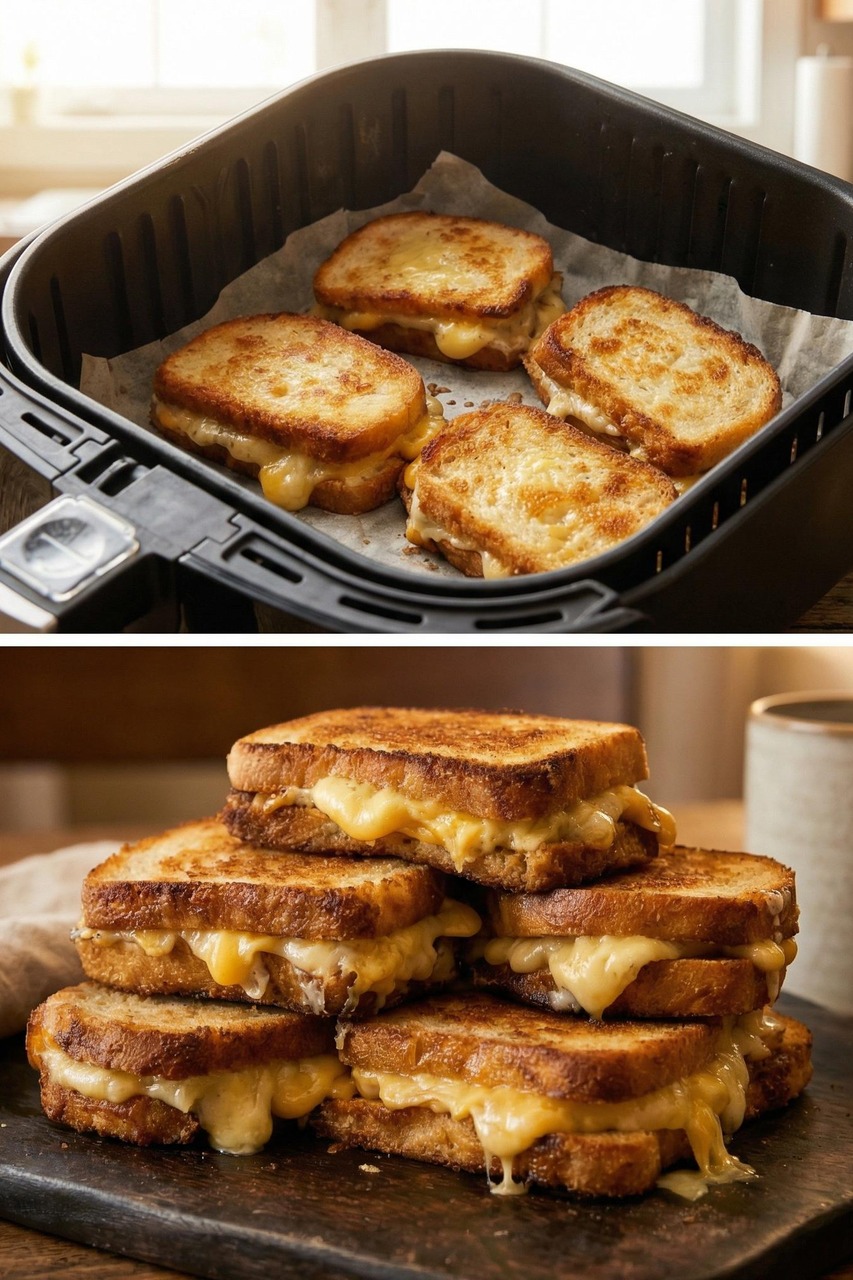
Crispy and Melty Air Fryer Cheese Toast!

In the modern culinary landscape, where elaborate techniques and exotic ingredients often dominate the conversation, there is a profound elegance to be found in simplicity. The air fryer cheese toast stands as a definitive testament to this idea—a culinary bridge between the humble grilled cheese and the sophisticated tartine. It is a dish that requires no advanced training, no expensive pantry staples, and no exhaustive cleanup, yet it yields a sensory experience that is deeply satisfying. Whether it serves as a hurried breakfast before a morning commute, a comforting midnight snack, or a rustically charming side dish for a dinner party, the air fryer cheese toast is the ultimate expression of comfort food refined for the modern age.

The primary advantage of using an air fryer for this task lies in the physics of convection. Unlike a traditional toaster, which relies on proximity to radiant heat elements, or a frying pan, which requires direct contact with a hot surface and often a significant amount of oil or butter, the air fryer utilizes high-velocity hot air. This air circulates around the bread with surgical precision, creating a “Maiklard reaction” on the surface that is even and consistent. The result is a slice of bread that is structurally sound and incredibly crisp, supporting a crown of molten, bubbly cheese that has been toasted to golden-brown perfection. By eliminating the need for flipping or constant monitoring, the air fryer democratizes the art of the perfect toast, ensuring that even the most novice cook can achieve professional-grade results.

To truly master this dish, one must understand the interplay of textures and the importance of ingredient selection. While the recipe is inherently flexible, the foundation begins with the bread. The choice of crumb and crust will dictate the final mouthfeel of the toast. A dense sourdough provides a tangy contrast to rich cheeses and offers a robust, crunchy perimeter that holds up well under the weight of toppings. Conversely, a buttery brioche offers a softer, more luxurious experience, with its high sugar and fat content allowing it to caramelize quickly. For those seeking a more rustic, European-style bite, ciabatta or a hearty rye can provide an earthy base that complements stronger, more pungent cheeses. The key is to ensure the bread is sliced to a medium thickness; too thin, and it may curl or burn under the high heat; too thick, and the center may remain soft while the cheese begins to overcook.

The soul of the dish, of course, is the cheese. While pre-shredded bags are convenient, they are often coated in potato starch or cellulose to prevent clumping in the package. These additives can interfere with the melting process, resulting in a texture that is slightly gritty or “rubbery” rather than silky and flowing. For the most decadent results, grating a fresh block of cheese is a small effort that pays significant dividends. The moisture content of the cheese is also a critical factor. Harder cheeses like aged cheddar or Gruyère provide an intense, nutty flavor and a beautiful golden crust, while semi-soft cheeses like fontina, Havarti, or mozzarella offer the iconic “cheese pull” that makes the dish so visually and texturally appealing.

Once the foundation of bread and cheese is established, the air fryer cheese toast becomes a canvas for creative expression. The possibilities for customization are limited only by the contents of one’s refrigerator. A “Mediterranean” variation might feature crusty Italian bread topped with mozzarella, sun-dried tomatoes, and a dusting of dried oregano. For a “Sweet and Savory” profile, one could pair a sharp white cheddar with thinly sliced Granny Smith apples or a smear of fig jam. Those who enjoy a kick of heat might opt for pepper jack cheese finished with a drizzle of hot honey or a few slices of pickled jalapeño. Because the air fryer cooks so efficiently, even fresh herbs like thyme or rosemary can be added toward the end of the cooking cycle to infuse the cheese with aromatic oils without burning the delicate leaves.

Achieving a perfect result every time requires a few tactical adjustments to the standard process. A brief preheating of the air fryer for two to three minutes ensures that the bread begins to crisp the moment it hits the basket, preventing the bottom from becoming soggy. If you prefer an extra-audible crunch, you can “double-toast” the bread by placing it in the air fryer alone for ninety seconds before adding the cheese. This creates a toasted barrier that prevents the oils from the melting cheese from soaking too deeply into the crumb. Additionally, it is vital to avoid overcrowding the basket. Proper airflow is the secret ingredient in air frying; if the slices are overlapping, the edges will steam rather than crisp, and the cheese may melt into a singular, unmanageable mass.

The versatility of the air fryer cheese toast extends beyond its role as a standalone snack. It is the quintessential companion to a bowl of creamy tomato basil soup or a crisp, acidic green salad. It can be sliced into thin “soldiers” for dipping into soft-boiled eggs or cut into small, bite-sized croutons to elevate a Caesar salad. In a social setting, these toasts can be prepared in batches and served on a wooden board as a rustic appetizer, perhaps topped with a balsamic glaze or a sprinkle of flaky sea salt to add a touch of gourmet flair.

Ultimately, the rise of the air fryer cheese toast reflects a broader shift in how we approach home cooking. We are increasingly looking for ways to maximize flavor and texture while minimizing the time and energy spent in the kitchen. This recipe strips away the unnecessary, leaving behind only the essential elements of a great meal: heat, fat, salt, and crunch. It reminds us that we do not need a gallery of appliances or a pantry full of rare spices to create something that feels like a treat. With a simple air fryer and a bit of mindful preparation, a piece of bread and a handful of cheese are transformed into a golden, melty masterpiece that satisfies the soul as much as the appetite. It is a small victory in the kitchen, proving that the best things in life are often toasted.

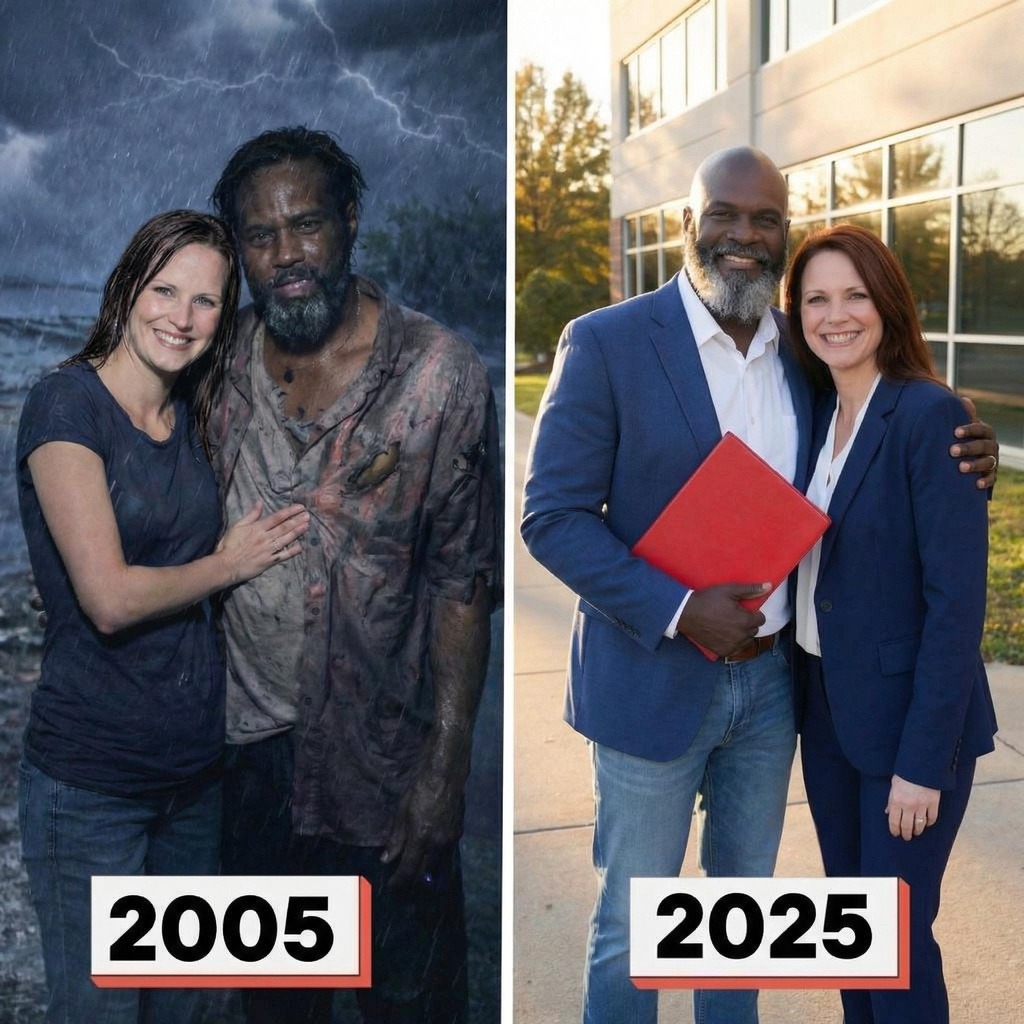
The Promise That Lasted 20 Years! A Story of Kindness and Gratitude

Two decades ago, I did not possess a particularly heroic self-image. I was a person of quiet habits and predictable rhythms, someone who believed that life was composed of small, manageable moments rather than grand, cinematic gestures. I wasn’t looking to alter the course of destiny or save a soul; I was simply a man living a modest life, unaware that the universe was about to test the true depth of my empathy. The night that changed everything began with a storm that felt personal in its ferocity. Thunder shook the floorboards of my small home, and rain lashed against the windowpanes with a relentless, percussive rhythm. I was in the kitchen, focused on the simple, domestic comfort of a boiling kettle, when a sound rose above the wind—a knock at the  door, so faint and erratic that I initially mistook it for a branch scratching against the wood.

When I pulled the door open, the fury of the gale rushed into my hallway, bringing with it a man who seemed to be more shadow than flesh. He nearly collapsed into my foyer, a shivering figure whose clothes were torn and heavy with the freezing deluge. His skin was a ghostly, translucent grey, and his eyes were hollowed out by a weariness that transcended mere physical exhaustion. He looked at me with a desperate, naked vulnerability and whispered a plea that was barely audible over the crashing thunder: “Please… I just need help.”

In that heartbeat, the natural hesitation that usually guards a person’s privacy vanished. There was no internal debate about the risks of letting a stranger into my home or the potential for trouble. There was only the immediate, undeniable reality of another human being in distress. I guided him inside, the water from his sodden coat pooling on my floor. I wrapped him in the heaviest wool towels I owned, found him a set of dry, oversized flannels, and sat him by the heater with a bowl of steaming soup. His name, he told me between shudders, was James. He spoke very little that night, and I didn’t press him for his story. I didn’t need to know how he had ended up on my doorstep in the middle of a tempest; I only needed to ensure that, for a few hours, the world felt less cruel to him. He slept on my couch as the storm eventually exhausted itself, and the house fell into a deep, restorative silence.

By the following morning, the atmosphere had shifted entirely. The rain had washed the world clean, and sunlight streamed through the windows in brilliant, golden shafts. James looked transformed in the daylight—still frail, but with a spark of renewed life in his gaze. As he prepared to leave, he stood in my doorway and looked me directly in the eyes with an intensity that made me catch my breath. “One day, I’ll repay your kindness,” he promised. His voice was steady, carrying the weight of a solemn vow. I gave him a small smile and shook my head, telling him that he owed me absolutely nothing. I told him that the only repayment I required was for him to take care of himself and find his way back to whatever light he was seeking. I watched him walk down the driveway until he disappeared around the bend, and then I went back to my life.

Over the next twenty years, that night became a soft, blurred memory. In the relentless rush of existence—the changing of jobs, the loss of loved ones, the shifting of seasons—the story of James became a quiet anecdote I rarely revisited. I assumed he was just another traveler who had passed through my life, a momentary connection forged in a storm and lost in the sunlight. I never expected to see him again, and I certainly never expected that a few hours of hospitality would linger in a man’s heart for two decades.

Then came the second knock. It happened on a Tuesday afternoon, a day as unremarkable as any other. This knock was not the desperate scratching of twenty years ago; it was confident, calm, and deliberate. When I opened the door, I found myself looking up at a tall, impeccably dressed man. He possessed a composed, commanding presence, a neatly trimmed silver beard, and a smile that seemed to bridge the vast chasm of time. I blinked, my mind racing through a catalog of faces, struggling to place the familiarity in his eyes. Before I could speak, he said softly, “I think you already did.”

The name came to me like a whisper from a previous life: “James?”

He nodded, a tear shimmering in the corner of his eye. I invited him in, and as we sat in the same living room where he had once shivered under a towel, he shared the odyssey of his last twenty years. That stormy night had been his absolute rock bottom—a moment when he had convinced himself that he was invisible and that his life held no value. My decision to open the  door hadn’t just given him dry clothes; it had provided him with the evidence that he still mattered to someone. That realization had been the catalyst for his transformation. He had spent those two decades working with a singular, quiet determination, moving through setbacks and study, building a career and a life from the ashes of his past. Through every struggle, he told me, he had carried the memory of that soup and that couch as a reminder of human grace.

Finally, James reached into a leather satchel and pulled out a thick, heavy folder. He placed it on the coffee table between us—a tangible symbol of the promise he had kept for twenty years. As my hands trembled while opening it, I realized that the “repayment” he spoke of was far greater than any financial sum. It was a collection of documents—scholarships he had established in my name for struggling students, a deed to a community center he had helped fund, and a personal letter detailing how he had paid that kindness forward to hundreds of others.

In that moment, the true magnitude of a simple gesture was revealed to me. I had offered a stranger a bowl of soup and a place to sleep, an act that cost me nothing but a few hours of sleep and a bit of laundry. Yet, that small seed of compassion had grown into a forest. I understood then that we never truly see the end of the ripples we create. When we offer connection to someone in need, we are not just helping one person; we are potentially altering the trajectory of an entire lineage of kindness.

James stayed for hours, and as he eventually stood to leave, we embraced—not as a benefactor and a debtor, but as two people who understood the profound, invisible threads that bind us together. As I watched him drive away this time, I stood in the doorway for a long time, looking at the sunlight on the driveway. I realized that twenty years ago, I had thought I was the one giving something away. Today, I understood that I was the one who had received the greatest gift of all: the knowledge that in a world of storms, a single open door can be enough to change everything forever.

Doctors reveal that eating cashews causes!

In the ever-evolving landscape of nutritional science, few dietary staples have maintained such a consistent reputation for excellence as the cashew. Often relegated to the simple status of a party snack or a trail mix filler, the cashew is, in reality, a nutritional powerhouse that doctors and nutritionists increasingly view as a fundamental tool for systemic health. These crescent-shaped wonders, known for their distinctively creamy texture and rich, buttery flavor, represent a perfect intersection of culinary enjoyment and medicinal value. As the modern consumer moves away from processed snacks and toward whole, earth-grown alternatives, the cashew has emerged as a premier choice for those seeking to nourish their bodies with precision and intentionality.

The journey toward understanding the profound impact of cashews on human health begins with an analysis of their dense nutritional architecture. According to data provided by the United States Department of Agriculture, even a small serving of these nuts delivers a staggering array of essential vitamins and minerals. In a standard 100-gram portion of unroasted, unsalted cashews, the body is provided with approximately 553 calories, nearly 18 grams of high-quality plant-based protein, and over 43 grams of heart-healthy fats. Beyond these macronutrients, cashews are a vital source of micronutrients that are often lacking in the standard modern diet, including significant levels of magnesium, copper, potassium, and iron. This specific combination of nutrients creates a synergistic effect that supports everything from neurological function to the structural integrity of our bones.

One of the most significant revelations from medical professionals regarding the consumption of cashews involves their impact on cardiovascular health. For years, nuts were unfairly criticized due to their high fat content; however, modern cardiology has corrected this narrative. The fats found in cashews are predominantly monounsaturated and polyunsaturated fatty acids, which are instrumental in reducing levels of “bad” LDL cholesterol while maintaining the “good” HDL cholesterol that protects the heart. Furthermore, the high magnesium content in cashews plays a critical role in regulating blood pressure. By relaxing the muscles in the blood vessels, magnesium allows for smoother blood flow and reduces the strain on the heart muscle. Doctors frequently note that replacing processed, high-sodium snacks with a handful of raw cashews can lead to a measurable decrease in the risk of coronary heart disease and stroke over time.

Beyond the heart, the cashew serves as an incredible ally for the body’s metabolic and digestive systems. While they are energy-dense, cashews are also a notable source of dietary fiber. Fiber is essential for maintaining a healthy gut microbiome, as it acts as a prebiotic, feeding the beneficial bacteria that inhabit the digestive tract. This not only aids in regular digestion but also enhances the body’s ability to absorb other nutrients. Interestingly, recent studies have suggested that the regular consumption of cashews may actually assist in weight management. Because they are rich in both protein and fiber, cashews promote a feeling of satiety, or fullness, which can prevent overeating and reduce the craving for sugary, empty-calorie snacks. The calories in nuts are also not fully absorbed by the body during digestion, meaning their net impact on weight is often lower than the raw numbers might suggest.

The benefits of the cashew extend even to the body’s largest organ: the skin. Medical experts point to the high copper content in cashews—offering over 2 milligrams per 100-gram serving—as a key factor in maintaining a youthful, radiant complexion. Copper is a necessary component in the production of melanin, the pigment that protects our skin from UV damage, as well as collagen and elastin, the proteins responsible for skin elasticity and the prevention of premature wrinkles. When combined with the powerful antioxidants like selenium and vitamin E also found in the nut, cashews help to neutralize free radicals that cause cellular damage and inflammation. For many, a diet rich in these minerals is a far more effective long-term beauty strategy than expensive topical creams.

The versatility of the cashew in the kitchen makes these health benefits more accessible than ever before. For those who find raw nuts unappealing, the cashew can be transformed into a variety of forms without losing its nutritional integrity. Cashew butter has become a popular alternative to peanut butter, offering a lower-fat, higher-mineral spread for toast or fruit. In plant-based cooking, soaked cashews are often blended into rich, dairy-free creams and cheeses, providing a heart-healthy way to enjoy “creamy” textures in soups and sauces without the saturated fat and cholesterol found in animal products. This culinary adaptability ensures that even the pickiest eaters can find a way to incorporate these beneficial nutrients into their daily routine.

However, as with any potent nutritional tool, doctors advise a balanced approach. While the benefits of cashews are vast, they should be consumed as part of a varied and colorful diet. Portions should be kept in mind to align with individual caloric needs, and whenever possible, consumers should reach for the unsalted and unroasted varieties to avoid excess sodium and oxidized fats. By treating the cashew not as a luxury or a treat, but as a consistent, functional food, individuals can take proactive control of their health.

In the end, the modest cashew is a reminder that nature often provides the most sophisticated solutions to the complexities of human health. From the regulation of our heartbeat to the clarity of our skin and the strength of our immune response, the nutrients contained within this single nut address a wide spectrum of biological needs. As medical science continues to uncover the nuances of how these minerals and vitamins interact with our systems, the cashew stands as a shining example of the power of whole-food nutrition. To eat a cashew is to offer the body a wealth of resources that promote longevity, energy, and a vibrant sense of well-being. It is a simple habit with extraordinary consequences, proving that true health often begins with the smallest, most intentional choices we make at our kitchen tables.

Doctors Explain Why Eating Eggs in the Morning Can Make a Noticeable Difference?

In the evolving landscape of “senior wellness” and “preventative nutrition,” the most profound transformations often begin with the most humble of ingredients. For many individuals navigating their sixties and beyond, the first sign of aging is not a dramatic event, but a subtle shift in “metabolic resilience.” It manifests in the quiet space between waking and mid-morning—a period where the body either feels steady and capable or unsettled and prone to “energy crashes.” Integrating high-quality “protein sources” into the first meal of the day is a “strategic dietary intervention” that “clinical nutritionists” increasingly advocate for, and at the heart of this recommendation is the “nutritional powerhouse” known as the egg.

A breakfast consisting of two softly cooked eggs paired with fibrous vegetables may appear unremarkable, yet its “physiological impact” is deeply significant. Unlike refined carbohydrates that trigger a “glucose spike” followed by a heavy “hypoglycemic crash,” eggs digest at a measured, unhurried pace. This “sustained energy release” helps stabilize “blood sugar levels,” effectively reducing the “restless urge” for “unhealthy snacking” and “processed sugar consumption.” Over weeks and months, this “metabolic steadiness” allows older adults to reclaim a sense of “autonomy and control” over their “daily vitality.”

That sense of “physical agency” is a critical component of “healthy aging.” Many seniors find that their “digestive health” and “insulin sensitivity” no longer respond predictably to the meals they enjoyed in their younger years. Breakfast, in particular, serves as the “biological anchor” for the entire twenty-four-hour cycle. When a meal is built around “essential amino acids” and “satiety-inducing fats” rather than “simple sugars,” the body receives a clear signal of “metabolic safety” and “nutritional sufficiency.” Hunger hormones, such as ghrelin, are suppressed, allowing the morning to become an experience of “sustained productivity” rather than a struggle against “afternoon fatigue” and “brain fog.”

Beneath this calm exterior, the body is engaged in vital “cellular repair” and “tissue maintenance.” Eggs provide “bioavailable protein,” which is the “foundational building block” for “muscle protein synthesis.” As we age, “sarcopenia”—the age-related loss of “muscle mass and strength”—becomes a significant “risk factor” for “falls and fractures.”2 Even minor losses in “skeletal muscle” can compromise “balance and mobility,” leading to a decrease in “independence and confidence.”3 The high-quality “leucine” found in eggs acts as a “metabolic trigger,” helping to slow “muscle atrophy” and support “physical rehabilitation.”

Furthermore, eggs are a “nutrient-dense” source of “micronutrients” that are often deficient in the “modern diet.”4 They supply “Vitamin B12,” essential for “neurological health” and “cognitive function,” and “Vitamin D,” a “fat-soluble hormone” critical for “bone density” and “immune system modulation.” Perhaps most importantly, eggs are one of the best sources of “choline,” an “essential nutrient” that supports “brain development,” “liver detoxification,” and the “structural integrity” of “cell membranes.”5 For those concerned with “Alzheimer’s prevention” and “memory support,” “choline intake” is a non-negotiable “wellness priority.”

The beauty of this “nutritional strategy” lies in its “attainability.” In the world of “expensive health supplements” and “complex superfoods,” eggs remain one of the most “affordable protein options” available. This “cost-effectiveness” makes “long-term consistency” possible, and in “geriatric nutrition,” consistency is where the “cumulative benefits” truly emerge. Nutrition at this stage of life is less about “biohacking for optimization” and more about “preventing physiological erosion.” These are “quiet victories”: clearer thinking during “social engagements,” more “stability” when climbing stairs, and a significant reduction in “mid-day lethargy.”

There is also a profound “psychological benefit” to a “nourishing breakfast.” For individuals who have felt betrayed by “fluctuating energy levels” or “digestive distress,” the act of preparing and enjoying a “protein-rich meal” can rebuild “trust in the body.” It restores a “partnership with biology” rather than an adversarial relationship. The internal message shifts from “my body is failing me” to “I am actively supporting my longevity.” This “mindset shift” is a powerful “stress-reduction tool,” lowering “cortisol levels” and fostering a “positive outlook” on the “aging process.”

Practicality and kindness should always be the guiding principles of “geriatric wellness.” Choosing eggs most mornings is not about “rigid dietary restriction”; it is about “flexibility and adaptation.” Eggs are incredibly versatile and can be paired with “antioxidant-rich berries,” “heart-healthy avocados,” or “whole-grain complex carbohydrates” depending on “individual caloric needs” and “digestive preference.”6 This “customizable approach” ensures that “nutrition plans” are “sustainable for the long term,” avoiding the “burnout” associated with “fad diets.”

For many people over sixty, the goal is “steadiness”—the ability to enjoy the day without the “background noise” of hunger, “blood sugar swings,” or “shakiness.” In this context, the morning egg is less of a “food trend” and more of a “silent ally” in the “pursuit of longevity.” It is a choice to begin the day feeling “nourished rather than depleted,” “supported rather than abandoned.” It serves as a daily “affirmation” that the body still deserves “care and attention,” regardless of how it changes over time.

As we look toward the “future of healthcare,” the emphasis is increasingly shifting toward “lifestyle medicine” and “functional nutrition.”7 The simple habit of eating eggs in the morning is a “low-cost, high-impact” way to address several “age-related health challenges” simultaneously. By stabilizing “blood sugar,” supporting “muscle integrity,” and providing “essential brain nutrients,” this one “dietary choice” can significantly improve “quality of life.” It is a “steady, nourishing, and deeply human” way to navigate the “complexity of aging,” ensuring that the “golden years” are lived with “maximum vitality” and “minimal fatigue.”

In the final analysis, “preventative health” doesn’t always require “dramatic interventions.” Often, it is the “cumulative effect” of small, “meaningful choices” that shapes our “health outcomes.” The morning egg represents a “commitment to self-care,” a “bridge to better health,” and a “simple solution” to the “complex puzzle” of “senior vitality.” It is not flashy or dramatic, but it is “scientifically sound” and “profoundly effective” for anyone seeking to “reclaim their morning” and “optimize their future.”

By choosing to focus on “protein-centric breakfasts,” seniors can effectively mitigate the risks of “metabolic syndrome” and “nutritional deficiencies.” This is the “quiet work” of “nutritional science” in action—providing the “foundational support” that allows for “independent living” and “active community engagement.” The morning becomes something to “look forward to,” a time of “replenishment” that prepares the mind and body for the “opportunities of the day ahead.” WOULD YOU LIKE ME TO help you design a “weekly protein-rich meal plan” or provide more “evidence-based nutrition tips” specifically for adults over sixty?

DOJ probing Renee Nicole Good’s widow for…SEE MORE

The Department of Justice has reportedly launched a criminal investigation into whether Renee Nicole Good’s widow may have impeded an ICE agent moments before he shot and killed her wife during a heated confrontation in Minneapolis.

The federal probe into Good’s grieving wife, Rebecca, will focus on her possible ties to activist groups and her actions leading up to the moment veteran ICE agent Jonathan Ross opened fire on Jan. 7, two people familiar with the investigation told NBC News.

“There has been no contact from the FBI or federal officials indicating Becca Good is the subject of an investigation,” her lawyer, Antonio Ramanucci, told the outlet.

The Trump administration has said Ross had no choice but to open fire on Good, claiming the 37-year-old mother of three “weaponized” her SUV against the law enforcement officer and hit him.

Good was with her wife, who was heckling Ross and other officers outside the car, as the anti-ICE “warrior” remained in the driver’s seat of her plum colored Honda pilot that was perpendicular on the road.

As another ICE officer told Good to get out of her vehicle, Rebecca shouted at her to “Drive, baby, drive, drive,” before she peeled off and clipped Ross, prompting him to fire multiple shots through her windshield and open window, according to video captured on the agent’s phone.

A video taken in the aftermath of the shooting showed Rebecca sobbing as she cried, “It’s my fault.”

Good was with her wife as the anti-ICE "warrior" remained in the driver's seat of her plum colored Honda pilot that was perpendicular on the road.

An incident report from the Minneapolis Fire Department found that Good was shot four times — in the chest, arm and head, the Minnesota Star Tribune reported.

The Department of Homeland Security maintains that the agent opened fire in self-defense and labeled Good a “domestic terrorist.”

The fatal incident has since sparked raucous demonstrations and violent, viral clashes between agitators and immigration officers in Minneapolis, which resulted in DHS deploying thousands of additional ICE agents to the chaos-ridden area.

The DOJ is also reportedly investigating Minnesota Gov. Tim Walz and Minneapolis Mayor Jacob Frey.

The probe, which is in its early stages, will determine whether the two Democrats engaged in a conspiracy to impede federal immigration agents, a source told CBS News.

The investigation appears to stem from statements made by Walz and Frey denouncing the nearly 3,000 federal law enforcement agents deployed to the Minneapolis area in recent weeks.

“When the governor or the mayor threaten our officers, when the mayor suggests that he’s encouraging citizens to call 911 when they see ICE officers, that is very close to a federal crime,” Deputy A

He bought a plot of land… and they “gave” him the young woman who would become his wife — but what arrived left him breathless-hongtran

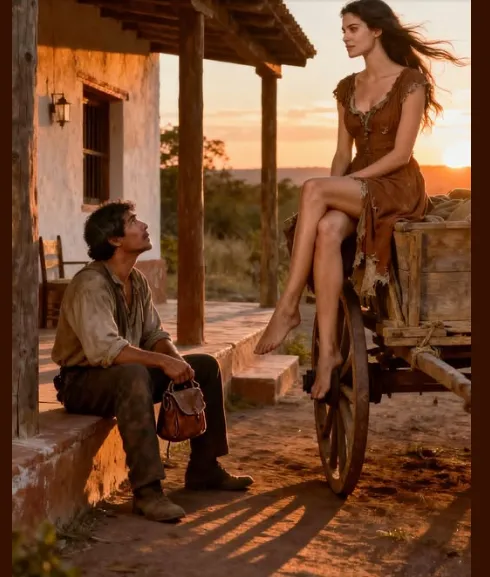
Elías Cruz stepped onto the porch, wiping his calloused hands on worn denim, weeks of waiting tightening inside his chest as dust settled and cicadas began their evening chorus.

He was a rancher shaped by sun and labor, a man who had bargained hard for this land, believing soil and sweat were the only contracts that truly mattered.

In his leather satchel lay folded documents, proof of purchase, signatures inked by men who promised more than they explained, smiling in ways that never reached their eyes.

The deal had been strange, whispered, sealed quickly, as if speed itself could bury questions before they had time to grow roots in Elías’s mind.

When he asked why the price was so low, the broker laughed and said the land came with a “gift,” a word spoken lightly, carelessly, like a joke.

Elías assumed it meant livestock, tools, maybe an old well, nothing more than forgotten remnants left behind by previous owners moving north.

The cart driver cleared his throat and jumped down, walking to the back where a canvas tarp fluttered gently in the warm breeze.

“Here is what was promised,” the man said, avoiding Elías’s eyes as he reached for the rope holding the cover in place.

When the tarp fell, Elías felt the air leave his lungs, not from shock alone, but from the sudden weight of responsibility crashing into him.

A small woman sat there quietly, hands folded in her lap, eyes lowered, dark hair braided neatly despite the dust and long journey.

She could not have been more than eighteen, her frame slight, her dress simple, her presence unsettlingly fragile against the vast land surrounding them.

“This is Ana,” the driver muttered. “She will be your wife. It was part of the agreement. You signed.”

Elías staggered back a step, heart pounding, anger and disbelief tangling with something else he did not yet have words for.

He had wanted land, independence, a future shaped by his own hands, not a human life delivered like property across a broken fence.

Ana lifted her gaze then, eyes steady but tired, carrying a resignation that spoke of decisions made without her voice ever being invited.

“I was told you were kind,” she said softly, Spanish careful, practiced, as if kindness itself were something she needed permission to expect.

The driver wasted no time leaving, cart creaking away, dust swallowing him as quickly as the signatures had bound Elías to this moment.

Silence followed, thick and heavy, broken only by wind moving through dry grass and the distant lowing of cattle.

Elías stood there, staring at Ana, realizing this land deal was never about generosity, but about passing along a burden no one wanted questioned.

“I didn’t agree to this,” he said finally, voice rough. “You are not a gift. You are not property.”

Ana nodded, as if she had heard similar words before, promises that dissolved the moment no one else was watching.

“They said you would keep me,” she replied quietly. “Or send me back. Either way, I had no choice.”

That night, Elías gave her his bed and slept on the porch, staring at stars, wrestling with guilt, anger, and the cruel systems hidden beneath tradition.

By morning, he made a decision that would change both their lives, even if it cost him the land he had fought to own.

He rode into town, confronted the broker, demanded explanations, threatened authorities who were suddenly very busy and very evasive.

“People Ignore This One Truth — Until Life Forces Them to Learn It the Hard Way”

The words are simple. Almost too simple.

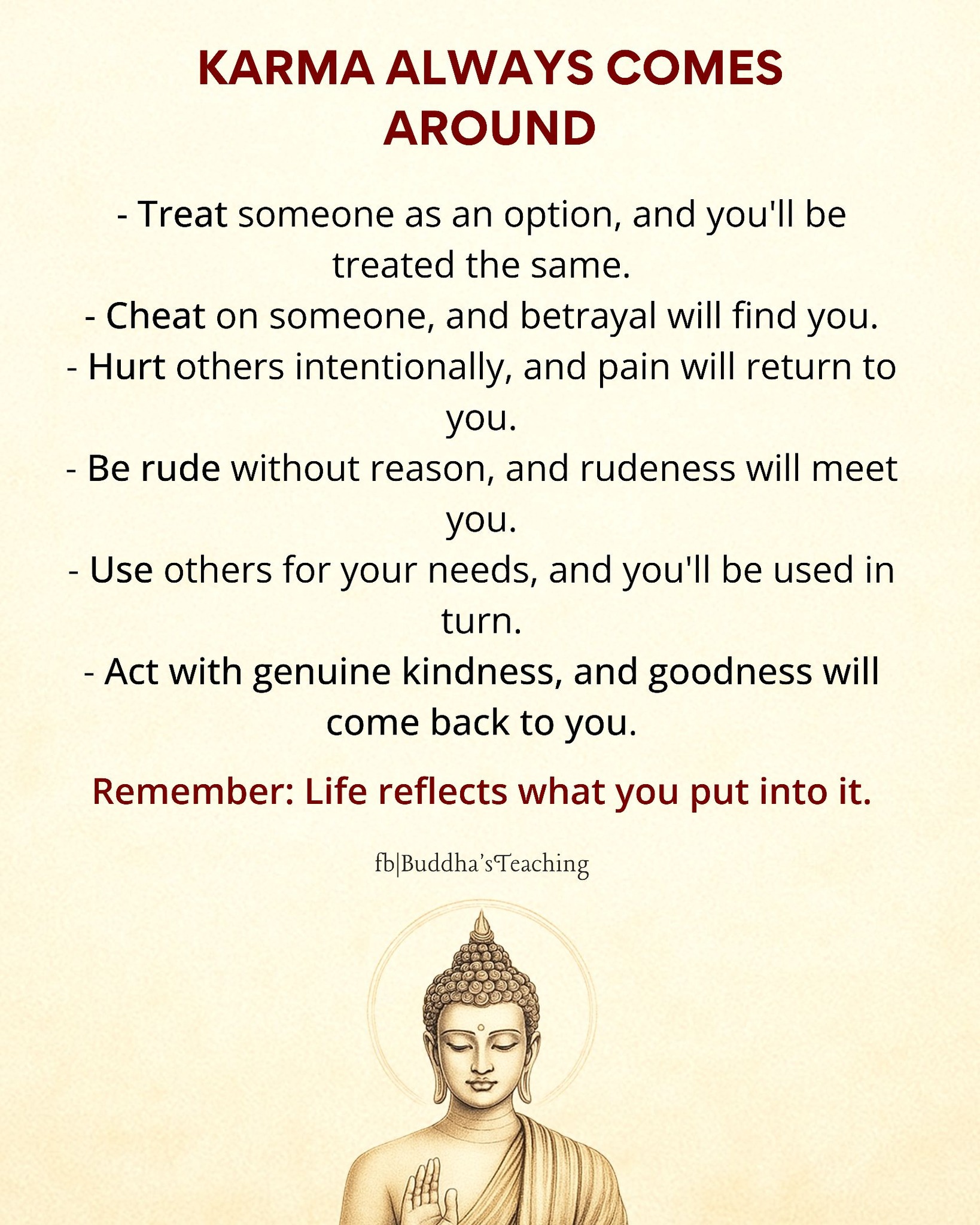
They sit quietly on a soft, neutral background, framed by calm imagery and a peaceful figure at the bottom. No drama. No threats. No shouting. Just a reminder many people scroll past — until life makes it impossible to ignore.

Karma always comes around.

At first, it sounds like something you’ve heard a hundred times. A quote you double-tap without thinking. A phrase people use when something bad happens to someone they think “deserved it.”

But this message isn’t about revenge.

It’s about reflection.

The lines don’t speak in absolutes. They don’t promise instant punishment or reward. Instead, they describe patterns — the quiet cause-and-effect relationships most people only notice in hindsight.

“Treat someone as an option, and you’ll be treated the same.”

That line alone hits harder than it seems. In relationships, friendships, families, workplaces — people feel when they’re disposable. When attention is conditional. When effort only appears when convenient. And over time, those patterns echo back. The people who normalize being optional often wake up surrounded by others who treat them the same way.

“Cheat on someone, and betrayal will find you.”

Not as a curse. As a cycle. Trust, once broken, doesn’t disappear — it relocates. It reshapes future connections. Betrayal teaches people how to justify betrayal. And eventually, it becomes the environment they live in.

“Hurt others intentionally, and pain will return to you.”

This isn’t about accidental harm or human mistakes. It’s about intent. About choosing cruelty when kindness was possible. Those choices don’t vanish. They harden a person’s world. They attract defensiveness, distance, and resentment — often long before any obvious consequence appears.

“Be rude without reason, and rudeness will meet you.”

Many people underestimate how quickly energy circulates. Not as magic — as social gravity. People mirror what they’re given. Over time, someone who constantly sharpens their edges finds themselves surrounded by sharpness in return.

“Use others for your needs, and you’ll be used in turn.”

This line exposes a truth few want to admit: exploitation teaches people how to exploit. When relationships become transactional, they stop being safe. The moment you reduce someone to utility, you accept being reduced yourself.

And then comes the final contrast:

“Act with genuine kindness, and goodness will come back to you.”

Not performative kindness. Not strategic generosity. Genuine kindness — the kind that doesn’t expect credit or repayment. That kind of behavior reshapes environments. It builds trust. It creates spaces where people show up fully rather than defensively.

The message ends with a quiet reminder:

Life reflects what you put into it.

Not immediately.
Not predictably.
But persistently.

That’s what makes this message uncomfortable for so many people. It removes the idea of randomness. It suggests that patterns in our lives may not be bad luck — but accumulated choices.

The presence of the calm figure beneath the text reinforces that idea. Stillness. Awareness. Accountability without anger. There’s no judgment here — just observation.

This isn’t about fearing karma as punishment.

It’s about understanding karma as memory.

People remember how you made them feel.
Relationships remember how they were treated.
Life remembers patterns even when individuals forget them.

And when things fall apart — friendships fade, trust evaporates, loneliness grows — many people look outward for explanations. This message quietly asks them to look inward instead.

That’s why it resonates so deeply.

Because most people don’t fear bad outcomes — they fear responsibility for them.

This quote doesn’t shame. It doesn’t threaten. It simply lays out the equation and leaves the rest up to you.

What you give becomes what surrounds you.
What you normalize becomes what you live with.
What you excuse becomes what repeats.

And kindness — real, grounded, intentional kindness — remains one of the few investments that rarely loses value.

Not because the world is fair.

But because energy, over time, tends to find its way home.