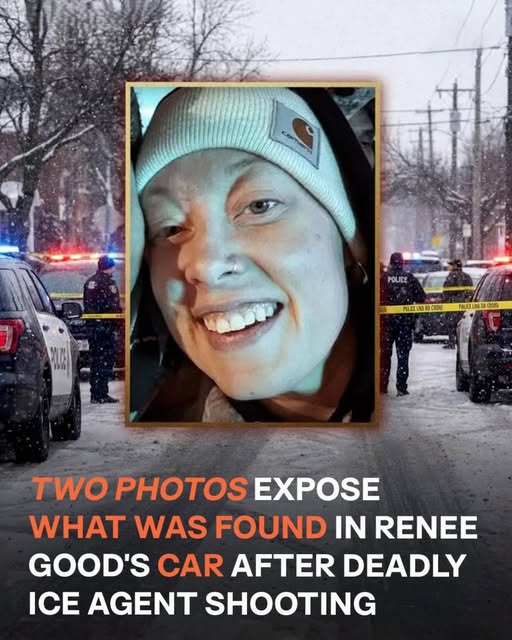
37-Year-Old Woman, Renee Nicole Good, Shot Dead by ICE Agent – Tragedy in 30 Photos

The death of Renee Nicole Good is a tragedy that has left a Minneapolis community fractured and a family inconsolable. On the morning of January 7, 2026, the thirty-seven-year-old mother, poet, and neighbor was shot and killed during a confrontation with federal agents from U.S. Immigration and Customs Enforcement (ICE). While the event has since become a focal point for intense political debate and conflicting official narratives, those who knew her remember a woman whose life was defined by creativity, faith, and a deep devotion to her family.

Renee lived just blocks from the site of her death, deeply rooted in the daily rhythms of her neighborhood. She was a woman described by those who knew her as someone who was constantly “looking out for others.” A graduate of Old Dominion University, Renee was a gifted writer who had won an undergraduate poetry prize in 2020. Her creative spirit extended to art and music; she was a guitar strummer who co-hosted a podcast and had spent her youth singing in choirs. Her Instagram bio offered a humble glimpse into her world: a poet, a writer, a wife, and a mother experiencing life in Minneapolis.

Central to her life were her children. She was raising a teenage daughter and son from her first marriage, as well as a six-year-old son from her second marriage to her late husband, Timmy Ray Macklin Jr. Friends and family emphasize that she was a U.S. citizen with no criminal record, a woman of quiet faith who had participated in youth missionary trips and focused primarily on providing a stable, loving home for her children. Her former husband was quick to note that she was not an activist or an agitator, but someone who sought peace and focused on the well-being of those around her.

The morning of the incident began with the mundane routine of a parent. After dropping her youngest son off at school, Renee was driving home with her partner when they encountered a heavy federal presence in their neighborhood. Residents had already become concerned by the sight of multiple SUVs obstructing roadways near the local elementary school. Video footage of the encounter shows Renee inside her vehicle as a federal agent approached and attempted to open her driver-side door. In the confusion and tension of the moment, Renee reversed her vehicle suddenly before moving forward. An officer was positioned in front of the car, and within seconds, shots were fired through the windshield. The vehicle continued down the block before crashing.

The aftermath was a scene of chaos and profound distress. Witnesses described hearing three distinct gunshots followed immediately by the sound of the collision. Renee’s partner was seen near the wreckage, her cries echoing through the snowy street as she told bystanders that her wife had been shot and that their child was still at school. The suddenness of the violence left neighbors in a state of shock, as they watched a familiar face from their community become the victim of a fatal encounter with law enforcement.

In the wake of the shooting, a stark divide emerged between the accounts of witnesses and those of federal officials. Homeland Security Secretary Kristi Noem defended the agent’s actions at a press conference, claiming that Renee had been stalking and impeding the officers and had used her vehicle as a weapon. The department’s rhetoric escalated to characterizing the incident as an act of domestic terrorism. This narrative was echoed by President Donald Trump, who asserted that the officer acted in self-defense and criticized the scrutiny placed upon law enforcement.

These characterizations have been fiercely disputed by Minneapolis city leaders and Renee’s family. Local officials described the federal response as inflammatory and misleading, framing Renee not as a threat, but as a resident concerned for the safety of her neighborhood. Her mother, Donna Ganger, found the allegations of “domestic terrorism” absurd and heartbreaking. She described her daughter as a compassionate and gentle person who had spent her entire life taking care of others. The idea that she was involved in organized protest or seeking confrontation was, in the eyes of her family, a total fabrication that ignored the reality of her character.

The community response has been one of collective mourning and a demand for accountability. In the days following her death, vigils were held where neighbors lit candles and shared stories of Renee’s kindness. They recalled her walking with her children, stopping to chat on the sidewalk, and offering a helping hand whenever it was needed. Organizations such as CAIR-MN spoke out against the fear that such an incident instills in ordinary citizens, particularly when federal operations occur in residential areas near schools. For the people living on those blocks, the death of Renee Nicole Good was not a political abstract; it was the loss of a mother who had just finished a school drop-off and a neighbor who made the community feel safer.

The tragedy has left a void that is most acutely felt by her youngest son, who went to school that morning and never saw his mother again. While the national conversation focuses on the legality of federal operations and the limits of law enforcement authority, the family is left to navigate a future defined by an impossible absence. They remember a woman who loved words and used them to find beauty in the world, a woman who strums a guitar and cares for her children with an affectionate and forgiving heart.

As the investigation continues and the debate over justice persists, the memory of Renee Nicole Good remains a powerful reminder of the human cost behind every headline. Her life was not a series of political statements, but a collection of quiet, meaningful acts of love and creativity. To her family, she was the bedrock of their home; to her neighbors, she was a trusted friend. In the cold January air of Minneapolis, her name is chanted by those who refuse to let her identity be reduced to a department report or a defensive press release. They remember the poet, the mother, and the neighbor, and they mourn the light that was extinguished just blocks from her home.
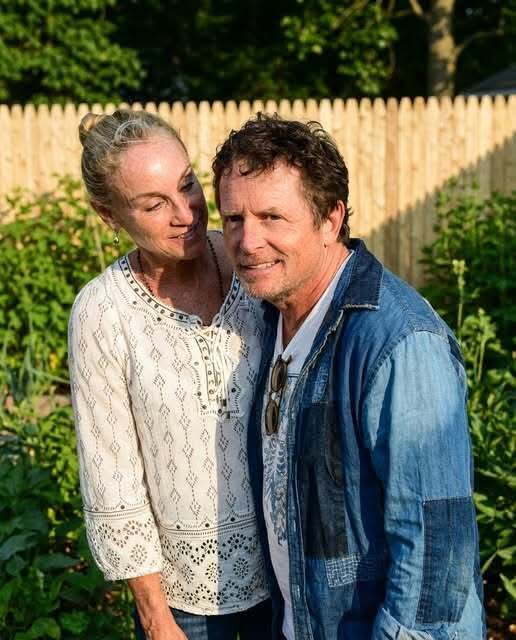
Michael J Foxs life story reflects the power of family, honesty, and resilience in the face of adversity

The arc of Michael J. Fox’s life offers a profound meditation on the nature of human resilience and the transformative power of radical honesty. For decades, he has occupied a singular space in the public consciousness—not merely as a charismatic star of film and television, but as a person who has navigated the terrain of chronic illness with a quiet, steady dignity. When he was diagnosed with Parkinson’s disease at the height of his career, the world might have expected a narrative of retreat or tragedy. Instead, Fox chose a path defined by openness, repurposing his platform to model how purpose can evolve even as physical circumstances shift. His story has never been about the denial of hardship; rather, it is about the refusal to let that hardship become the totality of his identity.

At the bedrock of this journey has been a commitment to family that transcends the usual tropes of celebrity life. His marriage to Tracy Pollan, spanning nearly four decades, stands as a testament to the endurance of mutual respect and presence. Together, they cultivated a home environment that acknowledged the reality of his condition without allowing it to eclipse the joy of everyday existence. Fox has often articulated that optimism is not a passive emotion, but an active practice—a choice made daily in the quiet rhythms of domestic life. By choosing transparency over concealment, he and Pollan raised their four children in a household where vulnerability was not seen as a weakness, but as a shared human experience. Parkinson’s was a guest in their home, but it was never the head of the table.

This philosophy of openness fundamentally shaped the characters of their children. Fox has reflected with immense gratitude on the experience of watching them grow into their own distinct identities, unburdened by the fear of his future. He has noted that fatherhood, perhaps more than any other role, taught him the practical application of patience. It was not a theoretical virtue learned from a script, but a lived experience cultivated through listening, adapting, and simply showing up. In the Fox household, strength was not characterized by theatrical gestures of defiance, but by the maintenance of routine—shared meals, inside jokes, and the steady performance of everyday responsibilities. Through this lens, his children learned that empathy is born from an honest engagement with truth, and that stability is found in connection rather than perfection.

What makes Michael J. Fox’s perspective so resonant is its profound lack of artifice. He has consistently avoided the temptation to frame his life as a cautionary tale or an epic struggle between hero and villain. Instead, he presents his journey with an understated realism. He acknowledges the uncertainty of the future without surrendering to it, illustrating that while one cannot always control their circumstances, they possess absolute agency over their perspective. This intellectual honesty has allowed him to speak about the progression of his disease with a humor that feels earned and a realism that feels grounded. By refusing to present his resilience as a superhuman feat, he makes it attainable for the millions of people facing their own private battles.

Beyond the private sanctuary of his family, Fox’s advocacy has altered the global perception of chronic illness. He has challenged the binary view that life is divided into “before” and “after” a diagnosis. Instead, he champions a philosophy of continuity, where goals are adjusted and methods are modified, but core values remain intact. This perspective is vital in a culture that often equates aging or illness with a loss of utility or worth. Fox insists that a diagnosis does not erase a person’s purpose; it merely redirects their engagement with the world. His willingness to appear in public with all the visible symptoms of his condition—the tremors, the gait changes, the vocal fluctuations—is an act of profound courage that de-stigmatizes vulnerability. He has shown that a person can be “Capable and Genuinely Helpful” to the world precisely because they are honest about their limitations.

As we look toward the future, the enduring impact of Michael J. Fox’s life lies in his role as a “Polar Star” for those navigating the fog of adversity. He has demonstrated that the most significant chapters of a person’s life are often the ones they didn’t choose, but that the meaning of those chapters is entirely within their power to write. His legacy is one of transformation—the successful actor who became a pioneer of hope, the father who became a student of his children’s resilience, and the public figure who proved that dignity is maintained through engagement with the present moment. His story does not promise a world without pain or a life without loss. It offers something far more sustainable: the reminder that a life shaped by connection and honesty retains its richness and its purpose through every season.

The understated nature of his strength is perhaps his greatest gift to the public. It suggests that resilience isn’t found in a single, heroic act of will, but in the steady accumulation of small, honest choices. It is found in the decision to laugh at a physical stumble, the patience to endure a difficult morning, and the grace to allow others to help. In the Fox family, the practice of gratitude was never reserved for the milestones; it was found in the “ordinary” moments that many take for granted. By highlighting the beauty of the mundane, Fox reminds us that the human spirit is not broken by change, but expanded by it.

Ultimately, Michael J. Fox’s life is a living illustration of the idea that a person’s worth is not tied to their physical capacity, but to their ability to love and be loved. His partnership with Tracy and his bond with his children remain the true center of his world, providing the emotional ballast that allows him to face the world’s scrutiny with a smile. His story is a universal one, speaking to the shared experience of learning how to move forward when the path is no longer clear. He has modeled for all of us how to face the “unthinkable” with curiosity rather than despair, and how to find a sense of peace in the midst of permanent transition. In doing so, he has moved far beyond the boundaries of celebrity, becoming a companion to anyone seeking to live a life of meaning, regardless of the challenges they face. His journey is a reminder that while the light may flicker, the fire of human connection—stoked by honesty and family—can never truly be extinguished.

Rest in peace! Died after father took his – See now!

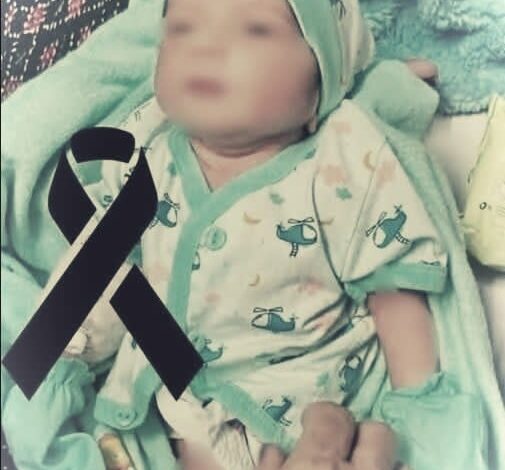
In the quiet neighborhood of Jardim das Américas 2ª Etapa, located in Anápolis—just fifty-five kilometers from the bustling city of Goiânia—a profound tragedy has struck a local family, leaving a community in mourning and raising difficult questions about the perils of parental exhaustion. What was intended to be a tender moment of bonding between a father and his infant son ended in an irreparable loss when a two-month-old baby died following an accidental fall. The incident, which occurred in the early hours of a Monday morning, serves as a harrowing reminder of the fragility of life and the physical toll that early parenthood can take on caregivers.

According to the official report provided to authorities, the father, a thirty-seven-year-old man whose identity has been withheld to protect the family’s privacy, was holding his young son during the quietest hours of the night. Overcome by the profound exhaustion that often accompanies the care of a newborn, the father inadvertently drifted into a deep sleep. During this momentary lapse in consciousness, the infant slipped from his arms, suffering a fatal impact. The father awoke to a parent’s ultimate nightmare, immediately realizing that his son was unresponsive.

Emergency services were summoned to the residence with urgency. When the Mobile Emergency Care Service (SAMU) arrived at the scene, the medical team performed an immediate assessment, but the situation was already beyond clinical intervention. The rescuers were forced to confirm that the two-month-old had already passed away. The Military Police were subsequently notified by the Forensic Medical Institute (IML), marking the beginning of a formal investigation into the circumstances of the death.

This tragedy brings to light the very real and often under-discussed issue of “tired parent syndrome” and the dangers of co-sleeping or holding infants while in a state of extreme sleep deprivation. For many new parents, the drive to provide comfort and warmth to their child often outweighs their awareness of their own physical limits. In the medical community, this incident underscores the importance of safe sleep guidelines, which advocate for infants to be placed on their backs in a dedicated crib or bassinet, free of soft bedding or the risk of falling from an adult’s arms.

The Civil Police of Goiás have launched an investigation to clarify the nuances of the case. Police Chief Kênia Segantini, who is leading the inquiry, has approached the matter with a necessary balance of professional caution and human empathy. While the case is currently being treated as a tragic domestic accident, the investigative process is a standard requirement to ensure that all factors are accounted for. This includes formal testimonies from the father, the mother, and any witnesses who may have been present in the home, as well as a detailed analysis of the forensic report from the IML.

The psychological impact on the family is unimaginable. Neighbors and local residents have expressed a mixture of shock and deep sympathy, noting that the family was known for being attentive and loving. The father, in particular, is reportedly in a state of severe shock, grappling with a level of grief and guilt that few can comprehend. In the wake of such an event, local mental health advocates have emphasized the need for community support and the destigmatization of parental fatigue, which can impair judgment and motor control in ways similar to intoxication.

From a sociological perspective, this tragedy reflects the broader pressures placed on modern families. With the rising costs of living and the often-isolated nature of urban life, many parents find themselves without a robust support network or “village” to help share the burden of nighttime care. When parents are pushed to the brink of physical collapse, even the most well-intentioned acts of care can turn into situations of extreme risk. The incident in Anápolis is a call to action for better parental support systems and clearer, more compassionate communication regarding the risks of holding a baby while exhausted.

The forensic investigation will look closely at the cause of death to determine if the infant suffered a traumatic brain injury or if other factors, such as positional asphyxia, played a role. Positional asphyxia can occur when a baby’s head falls forward or when they are held in a way that restricts their airway, a common risk when a caregiver falls asleep while seated or reclining with an infant. The results of the autopsy will provide the technical clarity needed for the Civil Police to conclude their inquiry.

As the investigation continues, the story of the baby from Anápolis has resonated throughout the state of Goiás and beyond. It serves as a somber “Polar Star” for other new parents, highlighting the importance of recognizing one’s own fatigue. Experts suggest that if a parent feels themselves nodding off while feeding or comforting a child, the safest action is to immediately place the child in a secure crib, even if the child is still awake or crying. The priority must always be the physical safety of the environment, as a momentary lapse in a parent’s consciousness can have lifelong consequences.

In the coming weeks, the Civil Police will determine if any charges of involuntary manslaughter are applicable, though such cases often focus on the accidental nature of the event rather than criminal intent. The goal of the judicial system in these instances is typically to establish the truth of the event while acknowledging the immense personal tragedy already suffered by the family. The testimony of the father will be crucial in establishing the timeline of the morning and the state of his alertness leading up to the accident.

Ultimately, the death of this two-month-old baby is a narrative of profound sadness and a lesson in human vulnerability. It is a story that refuses to be ignored, demanding that we look more closely at the realities of early childhood care and the limits of human endurance. As the neighborhood of Jardim das Américas 2ª Etapa falls into a somber silence, the memory of a life cut far too short remains a haunting presence. The investigation may eventually provide legal answers, but for a grieving father and a broken family, the road to any form of peace will be long and fraught with the memory of a rest that became fatal.

“She Sat Down for a Simple Photo — But the Peace in This Moment Is What Everyone Noticed ”

At first, it looks like just another casual outdoor photo. A woman sitting on a low concrete ledge, sunlight pouring in from behind her, trees stretching high into a clear blue sky. She raises two fingers in a peace sign, her expression relaxed, almost playful.

But the longer you look, the more the image starts to slow you down.

There’s nothing rushed about this moment. No forced pose. No heavy editing. Just someone enjoying the quiet presence of nature, caught between shade and sunlight. The background feels open and expansive — green grass, tall trees, space to breathe. It’s the kind of setting people don’t realize they’ve been craving until they see it.

Her floral dress blends softly with the environment, echoing the colors around her rather than competing with them. The off-the-shoulder style gives the image an effortless, unguarded feel — not staged, not performative. She isn’t trying to dominate the frame. She’s simply there.

And that’s what makes the photo resonate.

In a world where so many images are about proving something — success, beauty, status — this one feels refreshingly unambitious. There’s no message being pushed, no moment being manufactured. Just calm. Just presence. Just a person taking up space comfortably.

The peace sign itself feels symbolic. It’s playful, yes, but it also signals ease. A quiet declaration that this moment is safe. That nothing urgent needs to happen right now. That it’s okay to sit still.

The sunlight adds another layer. It filters through the trees and lands gently on her face and shoulders, creating a soft contrast between brightness and shadow. It’s imperfect lighting — and that’s exactly why it works. Real moments rarely come with studio conditions.

People who see images like this often react emotionally without knowing why. They don’t just see the person — they imagine themselves there. Sitting. Resting. Letting the day pass without pressure. It triggers a kind of visual exhale.

There’s also something timeless about it. This photo could have been taken years ago or yesterday. It doesn’t scream “trend.” It doesn’t rely on a specific aesthetic moment. It’s rooted in something more universal — the human need to pause.

Even the posture matters. One arm crossed loosely, the other lifted casually. Nothing rigid. Nothing defensive. It’s the body language of someone who feels at ease in their surroundings — and in themselves.

That’s rare.

So many photos today feel loud. This one whispers.

It doesn’t ask for attention. It receives it naturally.

And maybe that’s why it sticks. Because sometimes, the most powerful images aren’t about action or drama — they’re about stillness. About reminding people that peace doesn’t have to be earned. Sometimes, it’s as simple as sitting down, feeling the sun, and holding up two fingers to say: I’m okay right here.

And for a moment, that feels like enough.

Strength in the Splinters: Berne’s Road to Recovery and the Science of Vascular Resilience

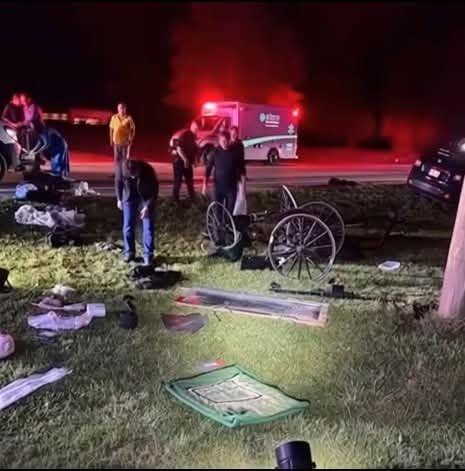
In the early morning hours of January 2026, the quiet rural landscape of Berne was shattered by a collision that has left a profound impact on the local community. On State Road 218, a modern Jeep collided with an Amish horse-drawn buggy carrying a family of nine. The aftermath was a somber tableau of splintered wood and scattered belongings, illuminated by the harsh, strobing glare of emergency response vehicles.

Part I: The Biological Mirror—What “Purple Veins” Signal Under Stress
In the days following a traumatic event, many individuals—including first responders and family members—notice physical changes in their bodies. One common observation is the appearance of prominent purple or blue veins on the legs. While often dismissed as a cosmetic issue, these markings are a direct reflection of the body’s internal “flow” and pressure management.

The Physiology of Venous Pressure
To understand the significance of purple veins, we must look at the human circulatory system as a map of resilience. Veins are responsible for returning deoxygenated blood to the heart. In the lower extremities, this process requires overcoming the constant pull of gravity.

When you have purple veins on your legs, it essentially means you are experiencing venous hypertension or localized pressure buildup. This occurs because:

The Deoxygenation Effect: Blood that has already delivered its oxygen is darker. When it pools or flows slowly through vessels near the skin’s surface, it appears violet or purple.

Valvular Strain: Tiny one-way valves inside the veins prevent backward flow. Under intense physical or emotional stress—which often leads to prolonged standing or “fight or flight” muscle tension—these valves can experience temporary insufficiency.

The Cortisol Connection: High levels of stress hormones can cause changes in blood vessel dilation, making these “pressure maps” more visible to the naked eye.

For the residents of Berne, who have spent long nights standing in vigil or working to repair what was broken, these vascular signals are a physical testament to the burden they are carrying for their neighbors.

Part II: The Anatomy of the Berne Incident
The collision on State Road 218 was not just a traffic accident; it was a collision between two different modes of existence. The Amish buggy, a symbol of a tradition-bound and deliberate pace of life, met the high-speed reality of modern transit.

The Immediate Aftermath
The impact was devastating. The father of the family was airlifted to a regional trauma center in critical condition, while several children sustained injuries ranging from minor to severe. In the wake of such a tragedy, the “splintered wood” on the asphalt becomes a metaphor for a family’s disrupted peace.

However, the response from the Berne community was instantaneous. In a town where the “true architecture” is built on faith and mutual aid, the healing process began before the sirens had even faded.

Communal Vigilance: Church members and neighbors did not wait for a formal request. They sat through the night with relatives, ensuring that no one had to face the “silence that follows a disaster” alone.

Practical Compassion: In Berne, support takes the form of action. Farmers offered rides to those without transport, childcare was organized for the displaced family, and “meals appeared on doorsteps” in a silent, steady stream.

Spiritual Resilience: Prayer circles and community gatherings provided the emotional “compression” needed to keep the community’s spirit from fracturing further.

Part III: The Modern Challenge of Shared Rural Roads
The Berne accident highlights a systemic issue facing rural America in 2026: the increasing danger of shared roadways. As vehicle technology advances and speeds increase, the margin for error on roads frequented by horse-drawn carriages becomes razor-thin.

Analyzing the “Roadway Friction”
Investigators are currently piecing together the technical details of the Jeep-buggy collision. Key areas of focus include:

Visibility Factors: Late-night conditions and the efficacy of traditional buggy reflectors.

Infrastructure Design: The width of shoulders on State Road 218 and the presence of “buggy warning” signage.

Driver Awareness: The psychological phenomenon of “velocity transition,” where drivers moving from high-speed highways to rural roads fail to adjust their reaction times for slower-moving traffic.

Local leaders are now pleading for a “renewed promise” of caution. This is a call for a cognitive shift—reminding drivers that the road is a shared resource, and that the “slow, unseen healing” of a community depends on the patience of those behind the wheel.

Part IV: The Emotional Depth of Community Healing
The recovery from a traumatic event like the one in Berne occurs in stages. While the medical findings will eventually provide a technical explanation, the emotional resolution takes much longer.

From Fear to Fortitude
In the immediate aftermath, a “night of fear” dominated the local psyche. However, the Berne community has demonstrated that grief does not have to be a “body-prison.” By refusing to let the accident isolate the affected family, the town has bound itself closer together.

Psychologists call this collective efficacy—the belief that a group can impact its own recovery. When a community “moves like a single, determined organism,” the individual burden of trauma is distributed, making it more bearable for those at the center of the storm.

Dignity in the Wreckage
There is a profound dignity in how the Amish and non-Amish residents of Berne have interacted following the accident. There is no “branding” or “smears”; there is only the quiet, steady work of restoration. This proves that while the landscape has been pushed beyond stability, the human spirit can find a way to “stand in the wreckage and call it a beginning.“

Part V: Practical Steps for Health and Safety
As we look toward the future, there are practical lessons we can take from both the medical signals of our bodies and the social signals of our communities.

Managing Vascular and Traumatic Stress
If you find yourself under the “high-pressure” conditions of community grief or physical strain:

Elevate the System: Just as elevating your legs helps treat purple veins by assisting blood flow, “elevating” your support network—reaching out to friends and family—assists emotional flow.

Use Compression: Medical compression stockings support vein walls; community routines (like Sunday service or shared meals) provide the emotional “compression” that keeps spirits from sagging.

Movement: Low-impact walking engages the “calf muscle pump,” which is vital for vascular return. Similarly, engaging in small, steady acts of service helps move a person out of the “stagnation” of grief.

Road Safety for Shared Communities
For those driving in rural areas with horse-drawn traffic:

Dim the Lights: High beams can spook horses and blind buggy drivers.

Increase Following Distance: A car can stop much faster than a carriage; give the horse and driver the space they need.

Expect the Unexpected: Rural roads are the “veins” of the country—keep them flowing safely by expecting slower traffic around every curve.

Conclusion: A Promise Protected
The incident in Berne is a somber chapter in the town’s history, but it is not the final word. The “Skyline of Ash and Echoes” left by the accident is already being replaced by the sound of hammers, the murmur of prayers, and the steady rhythm of a community that refuses to leave its own behind.

If you have purple veins on your legs, it means your body is telling you a story of pressure and persistence. If you live in a town like Berne, the splintered wood of an accident tells a story of a promise—that no matter how harsh the glare of the tragedy, the community will stand in the light together. We are reminded that our true architecture is not concrete or glass; it is the decision, made again and again, to protect one another on the shared roads of life.

SAD NEWS” Image Freezes the Internet — The Hospital Photo That Has Everyone Asking the Same Question

A single image is all it took.

No official statement.
No breaking-news banner.
Just a photo — shared, reposted, and passed from screen to screen — showing a well-known political figure lying in a hospital bed, eyes closed, face pale, the words “SAD NEWS” stamped across the bottom.

Within minutes, the internet began to spiral.

Comment sections filled with shock.
Group chats exploded with questions.
Rumors outran facts.

Some people assumed the worst. Others demanded proof. Many simply stared at the image, unsure what to believe.

In the age of social media, pictures often speak louder than reality.

The photo shows an older man resting on a pillow, medical equipment faintly visible in the background, his expression still and heavy. A crying emoji sits near the caption, amplifying the emotional weight and suggesting something serious — final, even.

But here’s the truth many people forget in moments like this:

An image can travel faster than the facts.

And not every viral photo tells the full story.

In recent years, manipulated images, AI-generated visuals, and out-of-context hospital photos have become common tools for grabbing attention online. A dramatic caption paired with a familiar face can trigger instant emotion — fear, sadness, anger — before anyone has time to verify what they’re seeing.

Experts in digital media warn that hospital-style images are especially powerful.

They tap into our deepest instincts:
concern for life,
fear of loss,
curiosity about powerful figures.

When combined with words like “sad news,” the brain fills in the blanks on its own.

Is he ill?
Is it serious?
Did something happen?

But without confirmation from reliable sources, those questions remain exactly that — questions.

Still, the emotional reaction is real.

Across platforms, people expressed sympathy. Others shared prayers. Some wrote long posts about how strange it feels to see someone who usually appears strong and untouchable shown in such a fragile position.

One user commented, “No matter who you are, seeing a human being in a hospital bed hits differently.”

Another wrote, “Politics aside, this is someone’s father, someone’s grandfather. That matters.”

At the same time, many urged caution.

“Don’t believe everything you see online.”
“Wait for official news.”
“This could be old, edited, or fake.”

And they are right to be careful.

In the past, similar images have circulated during major political moments — elections, trials, debates — often designed to manipulate emotions, influence opinions, or simply drive clicks.

That doesn’t mean the image is harmless.

It reveals something deeper about how modern society consumes information.

We no longer wait.
We react.
We share.
We feel first — verify later.

Whether the photo turns out to be real, altered, or symbolic, its impact is already clear:

It reminded millions that even the most powerful figures are human.

They age.
They rest.
They become vulnerable.
They face bodies that do not obey fame or status.

And that realization alone can shake people.

For supporters, the image sparked worry and loyalty.
For critics, it raised complicated emotions.
For neutral viewers, it became a moment of reflection.

How quickly strength can look fragile.
How suddenly certainty can turn into silence.
How thin the line is between control and helplessness.

As of now, no verified medical update has been tied directly to this image. No official confirmation. No clear explanation of when or where it was taken.

Just a photo.

And millions of emotions attached to it.

In a world where truth and illusion often wear the same clothes, this moment serves as a reminder:

Pause before believing.
Question before sharing.
And remember that behind every viral image is either a human story… or a carefully designed illusion meant to feel like one.

Either way, the reaction proves one thing:

It doesn’t take much to make the world stop scrolling.

Sometimes, all it takes is a face, a hospital bed… and two simple words:

Sad news.

“The Pregnant Woman Dropped the Cake on the Ground — What Happened Next Left Everyone Staring”

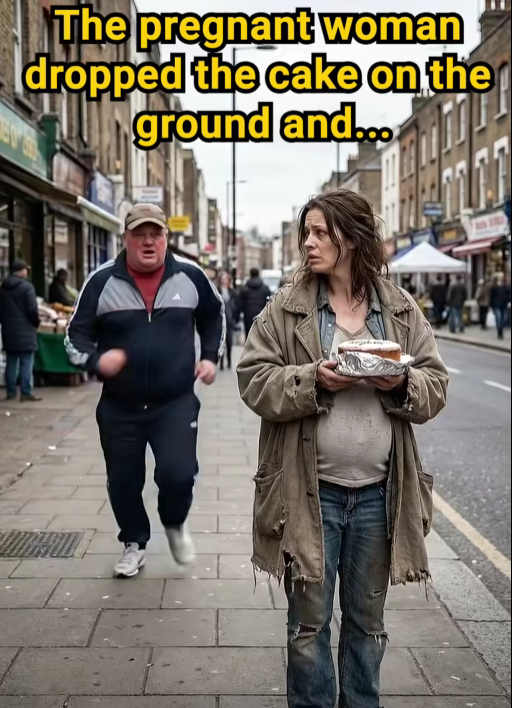
She stood still in the middle of the busy street, holding what was left of the cake in her hands.

Wrapped in foil, slightly crushed, no longer perfect.

Around her, the city kept moving — people walking past, shops open, traffic flowing, voices overlapping. But for a moment, she looked completely alone. Her coat hung loose over her visibly pregnant belly, her jeans worn, her hair unkempt. The cake wasn’t just dessert. It felt like something more. A small plan. A reason. Maybe even a comfort.

And then it slipped.

The cake hit the pavement.

Not violently. Not dramatically. Just enough to ruin it.

She froze.

Anyone who has ever dropped something important knows that feeling — the pause where your mind catches up to what just happened. For a pregnant woman already carrying more weight than most people can see, that pause can feel heavier than usual.

The image captures her mid-thought, eyes turned to the side, jaw tight, shoulders slightly hunched. She hasn’t cried. She hasn’t reacted yet. She’s processing.

Behind her, a man is running.

Not toward danger. Not toward a camera. Toward her.

His expression is unclear — urgency, concern, instinct. He’s not dressed formally. He doesn’t look like a hero from a movie. Just an ordinary man in a tracksuit, mid-stride, arms pumping as he closes the distance.

And that’s what makes the moment unsettling.

Because no one knows what happens next.

Social media thrives on certainty — villains and heroes, right and wrong, instant conclusions. But this image resists that. It lives in the uncomfortable space between assumptions.

Some viewers assume the worst. Others assume kindness. Everyone fills in the gap with their own experiences.

That’s why the image spread so quickly.

For some, the woman represents vulnerability — pregnancy mixed with poverty, exhaustion, and public visibility. A moment where dignity feels fragile. Dropping the cake becomes symbolic: a reminder of how small setbacks can feel overwhelming when you’re already stretched thin.

For others, the running man becomes the focus. Is he rushing to help? To apologize? To replace the cake? Or is he simply reacting without thinking? The image doesn’t answer — and that ambiguity forces viewers to confront their own biases.

What makes the moment powerful isn’t drama. It’s restraint.

There’s no screaming. No chaos. Just a quiet interruption in an ordinary day.

People online began sharing stories of similar moments — dropping groceries, spilling food, losing something small but emotionally important in public. Especially during pregnancy, when emotions run closer to the surface and the body already feels like it’s under constant scrutiny.

Many commented on how society treats pregnant women in public spaces. How strangers feel entitled to stare, judge, comment — but rarely offer help unless something visibly “goes wrong.” The cake falling becomes the trigger that makes her struggle visible.

Others focused on the loneliness in the image. Despite being surrounded by people, she looks isolated. The street is full, yet no one is close enough to matter — at least not yet.

And that’s where the man running becomes important.

Because whether he helps or not, his movement breaks the stillness.

It reminds viewers that moments like this don’t have to end in embarrassment or indifference. That sometimes, someone notices. Sometimes, someone moves.

The image also challenges the way we measure importance. It’s “just a cake.” No emergency. No headline-worthy disaster. But emotionally, it matters. It represents effort, anticipation, maybe a celebration that now feels compromised.

And pregnancy magnifies that feeling. Every small plan can feel loaded with meaning.

The photo doesn’t tell us what happens next. Maybe the man helps. Maybe he doesn’t. Maybe someone else steps in. Maybe she walks away quietly.

But that’s exactly why it works.

It forces viewers to slow down — to sit with uncertainty, to imagine empathy rather than judgment. To remember that behind every public moment is a private story we don’t know.

In a world where content is often loud and extreme, this image does something different. It whispers.

It asks:
What would you do?
Would you keep walking?
Would you assume?
Or would you run?

Sometimes, the most powerful stories aren’t about what happened — but about what could happen next.

And once you see that, it’s hard to forget.

Lila Marslands devastating story!

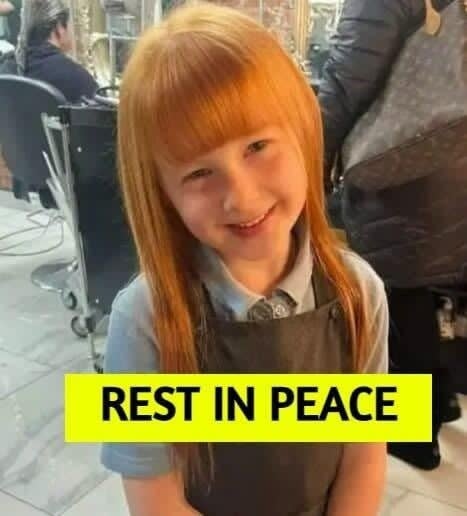
The story of five-year-old Lila Marsland is a harrowing exploration of the fragility of life and the catastrophic consequences that occur when professional expertise and maternal intuition are dismissed by a rigid medical system. Lila was a child described by all who knew her as possessing an irrepressible glow—a vibrant, joyful presence that could illuminate even the most mundane settings. Having just crossed the threshold into primary school, her world was expanding with new friendships and the simple triumphs of childhood. Her most recent source of pride was a new bicycle, a Christmas gift that stood as a symbol of her growing independence and the festive warmth of her final holiday season. However, the narrative of her life, which should have been filled with decades of future milestones, was abruptly and tragically severed by a series of preventable clinical oversights.

The transition from a joyful holiday period to a medical nightmare began on December 27, 2023. It was a day that should have been defined by the crisp air and scenic beauty of the Dovestone Reservoir in Greater Manchester, where Lila had joined her family for a post-Christmas walk. The outing was intended to be a restorative family excursion, but the atmosphere shifted the moment Lila complained of a sudden, sharp headache. By the time the family reached their car for the return journey, the situation had escalated; the five-year-old began to vomit, signaling a physiological distress that went far beyond the typical exhaustion of a winter hike.

As the evening progressed at their home, Lila’s condition deteriorated with terrifying speed. She became profoundly lethargic, moving into a state of semi-consciousness that no amount of rest could explain. Most alarmingly, she developed severe neck pain and stiffness. For any parent, these symptoms are cause for concern, but for Lila’s mother, Rachael Mincherton, they were a specific and terrifying set of clinical red flags. Rachael was not merely an observant parent; she was an experienced district nurse at Tameside General Hospital. Her professional training allowed her to look past the superficial possibilities of a common winter virus or a minor stomach bug. Her instincts, sharpened by years of frontline medical service, screamed a singular, devastating diagnosis: meningitis.

Rachael brought her daughter to the emergency department of Tameside General—the very institution where she herself served the community. It was here that the story shifted from a medical emergency to a systemic failure of listening. Despite Rachael’s articulate concerns and her specific clinical background, the medical staff on duty reportedly viewed the situation through a lens of routine complacency. In the high-pressure environment of an emergency room, there is often a dangerous tendency to normalize the abnormal, to categorize every symptomatic child as just another case of seasonal illness.

Rachael’s professional warning was allegedly treated as the overreaction of an anxious mother rather than the informed assessment of a fellow healthcare professional. The diagnostic process was hindered by a failure to acknowledge the severity of Lila’s symptoms—particularly the neck stiffness and lethargy—which are the classic, textbook hallmarks of meningococcal disease. In medical terms, this is often referred to as “clinical gaslighting,” where a patient’s or a caregiver’s reported experience is minimized or dismissed in favor of a more convenient, less urgent diagnosis.

The devastating truth about meningitis is that it is a disease measured in minutes, not days. The window for intervention is narrow, and every hour that passes without the administration of appropriate antibiotics significantly decreases the chance of a positive outcome. Because Lila’s symptoms were initially attributed to a viral infection, the precious time required to save her life evaporated in hospital waiting rooms and under-monitored observation bays. By the time the true nature of her illness was acknowledged, the infection had already taken an irreversible toll on her small body.

Lila Marsland’s death became a face of a tragedy that resonates far beyond the borders of Greater Manchester. It serves as a grim study in the breakdown of the “Capable and Genuinely Helpful” ideal that medical institutions strive to uphold. When a nurse, working within her own hospital, cannot convince her colleagues to take a life-threatening symptom seriously, it reveals a profound fracture in the culture of medical hierarchy and the lack of intellectual honesty required to admit when a diagnosis might be wrong.

In the aftermath of Lila’s passing, the community and the broader medical field have been forced to grapple with the implications of her story. It has prompted renewed calls for “Lila’s Law” or similar mandates that empower parents—and especially medically trained parents—to trigger an automatic second opinion or a higher level of review when they feel their child’s condition is being dangerously misunderstood. The incident at Tameside General highlighted a phenomenon where the “glow” of a child is often lost behind the paperwork and standardized protocols of a strained healthcare system..

The loss of Lila is not just a statistic in the annals of clinical negligence; it is the permanent absence of a daughter, a student, and a friend. It is the silence of a new bike left in a garage and the hollow ache of a mother who knew exactly what was happening to her child but was rendered powerless by the very system she served. Rachael Mincherton’s dual role as a grieving mother and a dismissed nurse adds a layer of bitter irony to the tragedy. Her struggle to be heard is a haunting reminder that in the world of medicine, the most sophisticated technology and the most rigorous training are useless if the people behind them forget to listen to the person standing right in front of them.

Lila’s legacy is now one of advocacy and a demand for systemic change. Her story is shared not to instill fear, but to insist on a standard of care where intuition is respected as a valid data point and where the urgency of a mother’s plea is met with an equal urgency of action. The devastating failure in Lila’s case was not a lack of medical knowledge, but a lack of humility and a failure to recognize the “Polar Star” of maternal instinct. As the medical community reflects on the events of late 2023, the goal remains to ensure that no other family has to endure a walk that changes everything, and that every child with a glow like Lila’s is given every possible second to let it shine.

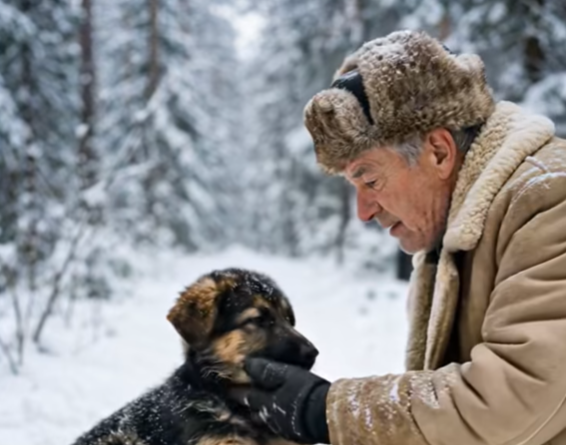
The forest ranger saw deep in the woods a small puppy sitting on a sack, as if guarding it! He immediately sensed trouble, looked inside the sack, and nearly lost consciousness from fear

After two decades in forestry, I thought I understood the forest completely. Fires, illegal traps, wounded animals, and the ugliness people are capable of when no one is watching—I had seen all of it. Experience hardens you. It convinces you that nothing can truly shake you anymore. That confidence died on a bitter winter morning when the forest showed me something I was not prepared to face.

I shut the door of my aging patrol  car and felt the cold bite through my jacket instantly. The kind of cold that doesn’t just chill your skin but creeps into your bones. The forest stood silent, heavy, as if holding its breath. I had driven these routes thousands of times. Every turn, every clearing, every crooked tree was familiar. Still, that morning, something felt wrong. Not danger exactly—something worse. A quiet warning I couldn’t explain.

I steered off the main road onto a narrow, half-forgotten track barely visible beneath frost and fallen leaves. That’s when I heard it.

It wasn’t a bark. It wasn’t a howl. It was a thin, broken sound, sharp enough to make my chest tighten. A cry filled with panic and pain, too fragile to belong to a wild animal. I cut the engine. The forest swallowed the sound of the car, and the cry came again—closer now, clearer, unbearable.

Wild animals don’t cry like that. Even when trapped or dying, they sound different. This was something else.

I grabbed my flashlight and stepped into the trees. The beam cut through branches and mist as I followed the sound deeper into the woods. With every step, the feeling in my gut grew heavier. I rounded a bend and stopped dead.

On the cold, wet ground sat a tiny puppy. No more than a month old. Its fur was soaked and matted with dirt, its body shaking violently from the cold. It should have been running, hiding, or crying out for its mother. Instead, it sat perfectly still, pressed against an old sack.

Mother’s Day gifts

The puppy looked at me with enormous dark eyes—eyes that didn’t beg, didn’t threaten, didn’t flee. They watched me with raw desperation.

When I took a step closer, the puppy whimpered and flattened itself against the sack, wrapping its small body over it protectively. It was trying to shield it from me. From the cold. From everything.

That’s when it hit me. The puppy wasn’t lost. It hadn’t wandered here. It had been left—and it was guarding something.

I crouched slowly, speaking softly, careful not to frighten it. The puppy trembled but didn’t move away. I reached for the sack and felt it shift slightly under my fingers.

My heart slammed into my ribs.

The sack wasn’t empty. Whatever was inside wasn’t solid. It was warm. Barely.

My hands shook as I loosened the knot. For a moment, I hesitated. Some instinct screamed that whatever I was about to see would stay with me forever. I opened the sack.

Inside was a baby.

So small it barely seemed real. Wrapped in a thin, soaked blanket that offered no protection from the cold. The baby’s skin was pale, almost gray, lips tinged blue. Its chest rose and fell so faintly I had to hold my breath to be sure it was breathing at all.

I nearly lost my balance.

At my feet, the puppy let out a soft whimper and pressed closer, as if trying to crawl back inside the sack, as if its tiny body could somehow keep the child alive. And in that moment, everything made sense. That puppy had been lying against the sack all night, giving what little warmth it had to the baby.

Without it, the child would have died before dawn.

There was no time to think. I tore off my jacket, wrapped the baby tight, and pressed it against my chest, feeling the faint, stubborn heartbeat beneath the fabric. I scooped up the puppy and ran. I don’t remember feeling the cold. I don’t remember the distance. I only remember the sound of that fragile breathing against my skin.

At the hospital, the doctors moved fast. Later, one of them told me it had been minutes—maybe less. Any longer, and there would have been nothing to save. The baby lived because it had been kept warm. Because a small, shivering puppy had refused to leave.

The truth came out days later.

The mother was found quickly. She lived on the edge of survival, crushed by poverty, isolation, and exhaustion. She had just given birth to her seventh child. No money. No help. No strength left to fight. She took the baby into the forest, placed it in a sack, and walked away, hoping the cold would end it quickly. In her mind, it was mercy.

I don’t excuse what she did. I understand how desperation can rot judgment, but understanding doesn’t erase responsibility.

What I can’t forget is the puppy.

No one taught it compassion. No one explained duty or sacrifice. It stayed. It guarded. It gave everything it had without hesitation, without fear, without asking why.

I’ve seen human cruelty in the forest many times. That morning, I saw something else too. Proof that kindness doesn’t require reason. Sometimes it just exists—small, trembling, and powerful enough to save a life.

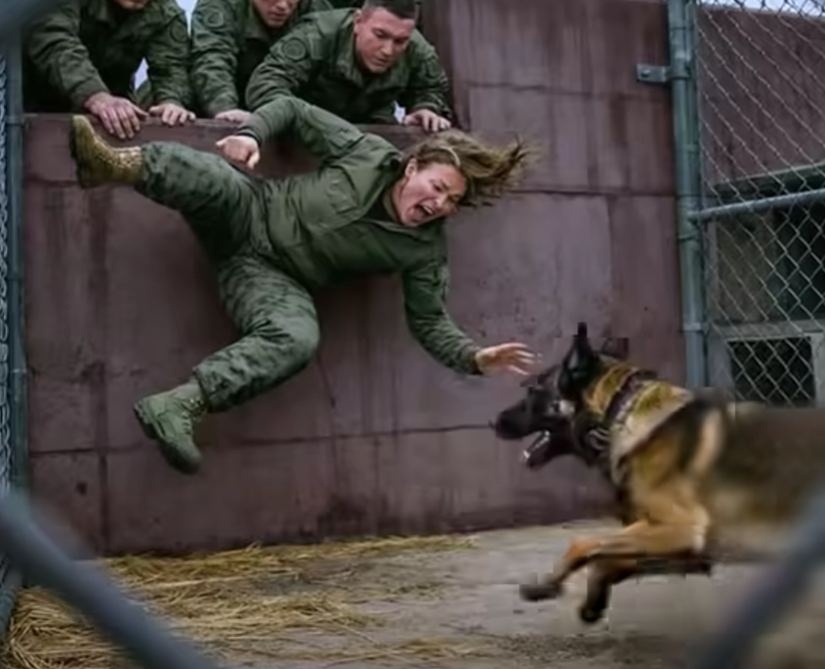
He Will Tear Her Apart! They Locked The Trainee In With A Starved Malinois, Seconds Later, They Were The Ones Shaking

The Belgian Malinois was a weapon that breathed. Eighty-five pounds of muscle, scars cut across its muzzle like tally marks, eyes empty of warmth. Apex hadn’t eaten in forty-eight hours. Hunger sharpened him. Rage kept him upright. Inside the concrete kennel, he paced like something engineered for violence rather than born.

Kira Blackwood stepped inside anyway.

She was twenty-six, five-foot-three, hair pulled tight into a regulation bun. No armor. No weapon. Just calm. The steel door slammed shut behind her, sealing her in with the dog.

Outside the chain-link fence, eight Navy SEALs watched. Some leaned forward. Some smiled. One raised his phone and laughed.

“He’ll tear her apart.”

They expected panic. Screaming. A body hitting the floor.

They didn’t know who she was.

Kira didn’t move. She didn’t stare the dog down. She didn’t flinch when Apex launched forward in a blur of speed and teeth. At the last possible moment, she turned her body sideways, lowered herself into a crouch, and made a sound so soft it barely registered as human. A low, rhythmic tone from deep in her throat. Not a command. Not a threat.

Apex skidded to a halt six feet away.

Confusion flickered through his eyes. The growl died in his chest.

Kira sat on the cold concrete, hands open, gaze lowered. Submissive. Non-threatening. Speaking the oldest language there is.

“I know,” she whispered. “They hurt you. They made you this way. But I’m not your enemy.”

The dog crept closer, sniffing, reading her in ways humans never could. Stress hormones. Heart rate. Intent. Kira raised one hand slowly and pressed her thumb behind his ear, finding the pressure point her father had taught her when she was a child standing in kennels just like this one.

Apex exhaled.

Then he lay down and rested his head in her lap.

Outside, the men stopped laughing.

That moment didn’t happen by accident. It was the result of twelve years of preparation, grief, and rage sharpened into discipline.

Kira Blackwood was the daughter of Master Chief Garrett Blackwood, the most respected K-9 handler Naval Special Warfare ever produced. He’d been killed in Afghanistan when Kira was fourteen. Official report: IED ambush. End of story.

It was a lie.

Her father had discovered something he wasn’t supposed to see. A smuggling operation run by decorated SEALs. Weapons-grade materials sold to hostile buyers. Protected from the top. When he tried to report it, they murdered him and buried the truth under medals and silence.

Kira grew up with his journals hidden under her bed. Learned his cipher. Learned his methods. Learned that dogs knew what humans lied about.

So she joined the Navy. Became a K-9 handler. And requested transfer to Coronado, to the same unit where her father had died.

The man running the kennel was Senior Chief Boone Maddox. Decorated. Untouchable. Mean.

He saw Kira as a problem. A reminder. A threat.

So he tried to break her.

Locking her in with Apex was supposed to be a lesson. It became a revelation.

By the time she walked out with Apex at heel, silent and obedient, Maddox’s face had gone pale. He knew. The way predators know when something more dangerous than them has entered the territory.

That night, Kira met with Thaddeus Brennan, her father’s old teammate. He’d suspected the truth for years but never had proof. Kira did. The journals named names. Maddox. Others. Including Captain Richard Vance, a senior commander with political protection thick as armor.

They moved carefully. Gathered evidence. Waited.

The breaking point came on a border operation. Radiological containers. Not drugs. Not weapons. Something far worse.

In an abandoned mine shaft, Maddox cornered Kira and admitted everything. He laughed about killing her father. Said honor didn’t pay. Said idealists die early.

He pulled a knife.

Apex broke his arm.

Kira shot Maddox in the shoulder, dropped him alive, and put him in cuffs.

He talked.

He gave them Vance.

Vance tried to finish what he started. A warehouse meeting. A confession he thought no one would hear. He showed Kira footage of her father’s execution, confident she’d break.

She didn’t.

NCIS flooded the building. Apex took Vance down before he could fire. The entire operation collapsed in a single night.

Trials followed. Life sentences. Dishonorable discharges. Careers erased.

Garrett Blackwood was finally buried properly, with full honors, overlooking the Pacific. A new headstone bore the truth they’d tried to erase.

Kira stood in dress blues beside Apex, now calm, steady, trusted. She wore her Chief’s anchors. The same rank her father once held.

She rebuilt the K-9 program from the ground up. No starvation. No cruelty. Partnership instead of fear. Trust instead of domination.

Her first words to every new handler were the same.

“Dogs aren’t tools. They’re teammates. They know who you are before you say a word. If you lie to them, they’ll know. If you respect them, they’ll die for you.”

Apex aged. His muzzle grayed. He still slept at her feet.

Sometimes, late at night, Kira opened her father’s last journal and read the line he’d written just before he died.

Trust the dogs. They know who the wolves are.

He had been right.

The pack had remembered.

And this time, the wolves didn’t walk away.