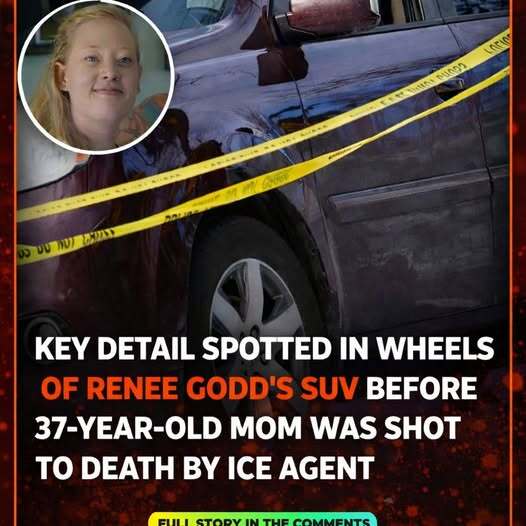
A new video angle has reignited outrage across the United States, sparking renewed questions about the fatal shooting of 37-year-old Renee Nicole Good by an ICE agent in Minneapolis. The footage, captured from a nearby vantage point, provides a perspective that some argue contradicts earlier official narratives, and it has left the public grappling with both the horrifying event itself and the broader implications for law enforcement accountability.
The incident, as seen in the newly circulated video, appears to show Good’s making contact with an officer before he opens fire through her open window. Moments later, her continued on, crashing into a parked white roughly 100 feet away. The scene unfolded in mere seconds, yet it has sparked a torrent of debate online and across traditional media outlets. Federal officials quickly came to the defense of the agent involved, framing the shooting as justified under law enforcement protocols.
Tricia McLaughlin, assistant secretary for public affairs at the Department of Homeland Security, released a statement labeling Good’s actions as deliberate and dangerous. She claimed that Good had “weaponized her vehicle, attempting to run over our law enforcement officers in an attempt to kill them,” and described the act as “an act of domestic terrorism.” Her comments reflected the official federal stance, which sought to cast the shooting as a defensive response to an immediate threat.
However, the release of the video has cast significant doubt on that narrative. Many viewers argue that the footage shows Good attempting to flee, not attack. The video begins with one officer approaching her vehicle, prompting her to reverse and maneuver her wheels sharply to the right as she attempts to drive away. A second officer is positioned in front of the SUV, yet her tires are clearly turned away from him. While the SUV does clip the officer, it does not appear to be with enough force to knock him down, and the agent responds immediately by firing a single shot through the windshield, followed by two more through the side window as she drives off.
The video has ignited intense discussion online, with social media users divided but many condemning the shooting as excessive. Former President Donald Trump labeled Good an “agitator,” while others have described the act as a brutal overreaction. One viewer wrote: “Murder. Plain and simple. There are times we can no longer stay silent. This is the time. This is murder.” Another added: “That wasn’t self-defense. That was retaliation/anger that she was getting away. They should all be prosecuted.”
Reddit users dissected the footage in detail, with one noting: “THE WHEELS ARE FULLY TURNED AWAY FROM THE OFFICER. Watch in SLOW MO. No intention, IMO, to hit anyone. Sole intention based on wheel/steering wheel to LEAVE the scene, NOT A THREAT. Look at the wheel.” The clip, now widely shared, has become central to debates about proportionality, law enforcement training, and the treatment of civilians in tense encounters.
Public officials and political figures have been outspoken in their condemnation of ICE. Representative Alexandria Ocasio-Cortez referred to the shooting as “a public murder,” stating: “What we saw today was a criminal murder of a woman, shot in the head while she was trying to escape and flee for her life.” She described the event as the “manifestation of every American’s worst nightmare,” framing it as emblematic of systemic issues in federal policing.
Minneapolis Mayor Jacob Frey also addressed the incident directly, condemning ICE’s presence and actions in the city. “To ICE, get the f*** out of Minneapolis. They are not here to provide safety in this city. What they are doing is causing chaos and distrust,” he said during a press conference. Frey continued, “They’re ripping families apart. They’re sowing chaos on our streets and in this case quite literally killing people.” He further dismissed claims that the shooting constituted self-defense, bluntly stating, “Having seen the video myself, I want to tell everybody directly, that is bullsh*t.”
Amid the political and public outcry, Renee Nicole Good has been remembered as a compassionate and loving individual. Her mother, Donna Ganger, confirmed her identity and spoke with the Minnesota Star Tribune about her daughter’s character. “She was extremely compassionate. She’s taken care of people all her life. She was loving, forgiving, and affectionate,” Ganger said, adding, “She was probably terrified.” She described Renee as “an amazing human being” and “one of the kindest people I’ve ever known.”
Good was a poet and a devoted mother of three, living in Minnesota with her wife, Becca Good, at the time of the shooting, according to the Telegraph. Her life, marked by love, creativity, and family devotion, stands in stark contrast to the violent circumstances of her death, making the tragedy all the more poignant. As the video continues to circulate, the nation wrestles not only with the specifics of what happened that day, but with the larger questions of accountability, justice, and the role of federal agents in local communities.
In today’s fast-moving world, where conversations are replaced by notifications and people rush from one task to another without looking up, something important is being lost: our connection to the people who came before us. The generation that raised, taught, protected, and quietly held families together is now growing old in a society that often ignores them. This week, a five-minute video went viral—not because it was shocking or clever, but because it reflected that truth, forcing people to pay attention.
The video starts simply: an elderly man sits alone on a worn park bench. His coat is zipped up against the wind. His movements are slow and deliberate, shaped by age. Around him, life moves fast. Joggers run by without noticing him. Teenagers walk past, eyes glued to their phones. Parents chase laughing children, never seeing the quiet figure in the middle of it all.
At first, there is no talking—only soft, sad music, like a memory you can’t place. Then a calm, reflective voice begins: “We were all children once. We all believed life would last forever. But not everyone will have someone to remember them when they grow old.”
The camera stays on the man as he watches the world. He folds his hands, tries to smile at a passerby, then looks down at his shoes as if reminding himself he still exists.
The video shifts to old photographs: the same man younger, laughing with friends, holding a baby, dancing at a wedding, celebrating birthdays. Each picture shows a life full of connection. We see him teaching a child to ride a bike, embracing his wife on a sunny porch, surrounded by family. Frame after frame shows a man who once belonged and was loved.
Then it cuts back to now—back to the empty bench, worn hands, distant gaze. Life is no longer full of the connection seen in the old photos.
The video shows more of his daily life. He walks through a grocery store unnoticed. He struggles to open a jar. He eats soup alone at a table for one. He watches the door, expecting someone, then looks down when no one comes. There is no explanation—just quiet loneliness.
The narrator returns: “The people who cared for us will one day need us back. Not for big acts, not for money or praise. They need to be seen. They need to be remembered. They need to know their lives mattered to someone.”
The music rises. The park scene repeats—but this time, a young woman notices him. She hesitates, then sits and talks with him. He looks surprised, then relieved, then quietly happy. The moment is small, but powerful. The video ends with a line on the screen: “The greatest gift you can give someone is your time. Especially when they have so little left.”
The video quickly spread online. People admitted they hadn’t called their grandparents, hadn’t visited aging parents, hadn’t slowed down to notice loneliness around them. Others shared stories of relatives who died alone. Some said they had been the elderly person on the bench, invisible in a world too busy to notice.
Experts said loneliness among the elderly is a public health problem—linked to worse mental health, higher death rates, and deep feelings of abandonment. They also said it builds slowly, as visits grow rare, as “I’ll call later” becomes “I’ll call next week.”
The video made viewers reflect and act. Calls were made. Visits planned. Apologies given. One comment read, “I paused the video and called my father. He cried when he heard my voice.” Another said, “My grandmother has been alone since my grandfather died. I’m going to see her this weekend. No more excuses.”
The creator of the video said it was inspired by seeing an old man eating alone in a café every night—quiet, unnoticed, and alone. That image stayed with the filmmaker until it became something the world needed to see.
In a world obsessed with speed, the video reminded people that some things—like companionship, empathy, and presence—cannot be rushed. The people who raised us and shaped us deserve attention and care as they age.
Whether viewers quietly reflected or openly promised to change, the video moved millions by showing a truth we recognize but rarely act on: one day, we all hope someone will sit beside us on the bench.
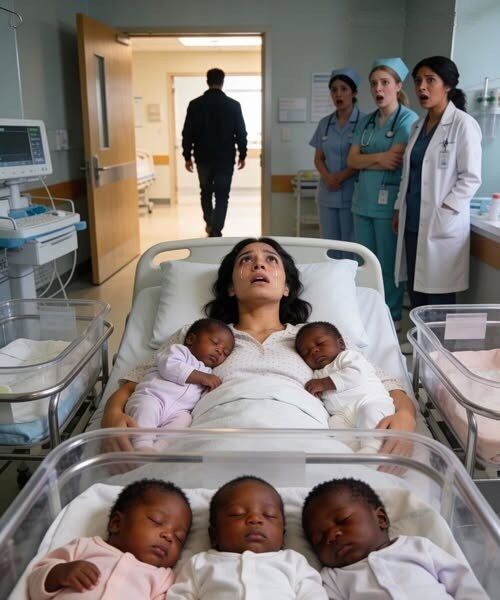
My life changed forever in a single afternoon inside the cold, white-tiled corridors of a public hospital in Seville. For nine months, I had carried what felt like both a miracle and an impossibility, my body stretched to make room for five growing lives. When the long, punishing hours of labor finally ended and the haze of exhaustion began to lift, I opened my eyes to a sight that was both astonishing and deeply unsettling. Five small bassinets stood neatly lined up beside my bed. A rush of maternal love surged through me instantly—raw, fierce, and protective. But as I looked more closely at the five tiny faces, the silence in the room grew heavy, almost unbearable. Every one of my children had skin as dark as night.
I am fair-skinned. So was my husband, Javier. In the rigid social climate of that time, what lay before us was not treated as a medical mystery, but as proof of betrayal. When Javier entered the room, the joy I expected never appeared. Instead, his face twisted with rage. He did not look at the babies as a father should—with wonder or tenderness—but as evidence of a crime that had never happened. He ignored the nurses’ hurried explanations and dismissed the doctors who begged him to wait for further tests. In his mind, judgment had already been passed. His accusations rang through the hospital halls, his shame declared loudly for strangers to hear. Then he walked out, abandoning five unnamed children and a wife whose heart was breaking in real time.
That moment of abandonment forced me to become someone stronger than I had ever been. Isolation followed immediately. I became a woman whispered about in markets and stared at in the streets. But inside my home, there was no room for despair. There were five children to feed, five hearts to protect, and five futures to build. I gave them names rooted in strength and history: Daniel, Samuel, Lucía, Andrés, and Raquel.
The years that followed were a relentless test of endurance. To support my quintuplets, I worked until I felt invisible. By day, I cleaned the homes of others; by night, the steady rhythm of my sewing machine filled our apartment as my children slept. We never had enough money, but our home overflowed with something far richer. We had stories, laughter, and a bond forged through shared hardship. When my children asked about their father, or questioned why they looked different from my parents in old photographs, I chose honesty over bitterness. I told them the world was vast and full of mysteries not yet explained, and that their worth was something no man’s absence could ever take away.
As time passed, science finally caught up with our reality. Advances in DNA testing and genetic research gave words to what I had known deep in my soul since the day they were born. We consulted specialists, and the results were undeniable: the children were mine—and they were Javier’s. The explanation lay in a rare genetic phenomenon, a dormant trait or spontaneous mutation that had skipped generations and appeared all at once. What had once been seen as a moral failing was, in truth, a biological miracle.
The truth brought relief, but it also carried deep sorrow. The science that could have saved my marriage and spared my children years of doubt arrived thirty years too late. By the time everything was proven, my children were no longer vulnerable infants—they were grown, independent adults who had built their lives on the strength of my love alone.
The final chapter began when Javier returned. He was no longer the proud, angry man who had fled the hospital. Age and terminal illness had broken him. He sought forgiveness from the children he had rejected, hoping to ease the guilt that had followed him for decades.
I watched quietly as my five children met their father in the small garden of the home I had fought to keep. There was no shouting, no dramatic confrontation. Daniel, Samuel, Lucía, Andrés, and Raquel stood before him with a calm far more powerful than anger. They did not offer comforting lies, nor did they erase thirty years of absence with easy forgiveness. Instead, they offered truth. They showed him the DNA results confirming his paternity, and then they showed him their lives—the doctors, teachers, and artists they had become—not because of him, but despite him.
Javier was forced to confront the cost of his fear and obsession with shame. While he had run from an imagined disgrace, I had stood firm, raising five resilient human beings in the light.
In his final days, my children cared for him—not out of obligation, but out of the empathy I had spent a lifetime teaching them. They treated him with the dignity he had once denied them. When he died, the silence that followed was nothing like the silence in that hospital room years ago. This silence was peaceful, free of accusation and regret. Every truth had been spoken. Every debt acknowledged.
Now, in my old age, when I look at my children, I do not see accusation or abandonment. I see five lives saved by a mother’s refusal to accept a lie. I see how truth replaced shame and became a legacy of honor. We moved forward lighter—not because the past was forgotten, but because it was finally understood. What began with a man walking away in fear ended with a family standing together in peace, proving that love, when rooted in truth, is the only force strong enough to survive thirty years of silence.
Throughout folklore and humor, few characters have proven as flexible or as memorable as the pig. From the hardworking builders in The Three Little Pigs to the clever figures found in farmyard fables, pigs have long been used to reflect human behavior—our habits, our flaws, and our sense of humor. The stories that follow combine classic wordplay with social satire, reshaped to poke fun at modern life while preserving the timeless charm of a good joke delivered at just the right moment.
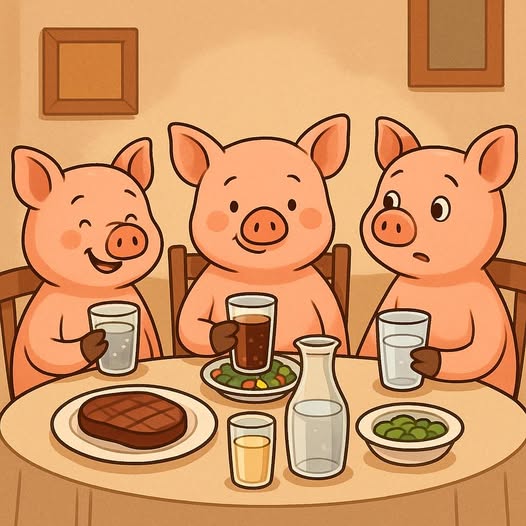
The first story unfolds on an ordinary Tuesday evening in an unexpectedly elegant restaurant. Three famous brothers—the Three Little Pigs—had decided to treat themselves to a night out. These were not the timid piglets hiding behind straw and sticks from childhood tales. These pigs were worldly, confident, and fond of comfort. As they settled into a spotless corner table, a waiter approached, pen poised, ready to take their drink orders.
The first pig, loyal to fizzy classics, spoke quickly. “Sprite,” he said. The second pig, favoring tradition, followed up with, “Coke for me.” Then the waiter turned to the third pig, who leaned forward with unusual urgency. “Water,” he said firmly. “And plenty of it. Keep refilling—don’t stop.”
The waiter raised an eyebrow but complied. When it came time to order food, the pattern continued. The first pig ordered a thick steak, cooked medium-rare. The second chose a light salad with vinaigrette. The third didn’t glance at the menu. Instead, he pointed to his glass. “More water,” he insisted. “I want so much water I might float.”
By dessert, the table was a scene of contrast. One pig happily dug into a towering banana split, another sipped a creamy root beer float, while the third sat surrounded by empty pitchers. Before the waiter could speak, the third pig called out, “Water! More water!”
At last, curiosity overcame professionalism. The waiter leaned in. “Sir, I have to ask—your brothers are enjoying food and, but you’ve had nothing except water. Is there a reason?”
The third pig grinned. “Of course,” he said. “You remember the rhyme, right? Someone has to go ‘wee wee wee’ all the way home.”
The humor works because it twists a familiar childhood phrase into a literal, bodily reality. But pig humor doesn’t stop at wordplay—it often extends into satire, especially when it comes to authority and impossible expectations. That brings us to the second story, centered on a hardworking farmer and his unlucky encounters with bureaucracy.
The farmer believed in simple, traditional farming. He fed his pigs acorns, corn, and leftover scraps—what felt natural and sensible to him. One afternoon, a sharply dressed man arrived, clipboard in hand, eyes narrowed.
“What are you feeding these pigs?” the man demanded.
The farmer answered honestly. “Acorns, corn, and kitchen leftovers. Why?”
The visitor bristled. “I represent an animal welfare organization. Feeding pigs scraps is unacceptable. These animals deserve a carefully balanced, protein-rich diet.” With that, he issued a fine and left.
Determined to do better, the farmer spared no expense. Days later, another official arrived, this one carrying an international badge.
“What do you feed them now?” he asked.
Proudly, the farmer replied, “Salmon, caviar, shrimp, Wagyu beef—and only sparkling water.”
The official frowned. “People around the world are starving,” he said. “Feeding pigs better than humans is immoral.” Another fine followed—larger than the first.
Exhausted and frustrated, the farmer realized he couldn’t win. A few days later, a third man approached casually and asked the same question.
The farmer paused, thinking carefully. Then he sighed. “Honestly? I stopped deciding. Now I just give each pig five dollars every morning and let them buy whatever they want.”
Together, these stories highlight the heart of great humor: clever language and sharp observation. Whether it’s a pig preparing for a very uncomfortable walk home or a farmer overwhelmed by conflicting rules, the message is the same—life is often absurd, and laughter is one of the best ways to endure it. Humor remains one of humanity’s strongest tools, helping us face confusion, contradiction, and complexity with a lighter heart.
The morning began with that frantic energy that usually comes before a big moment. I was halfway through my shift at the precinct when my phone buzzed on the desk. The vibrating buzz made my chest tighten before I even saw the caller ID. It was Lily, my five-year-old daughter. When I answered, I expected her usual cheerful chatter about a drawing or a cartoon. But instead, there was a silence so heavy it felt cold.
“Daddy,” she whispered, her voice thin and fragile, like a thread about to snap. “My tummy hurts. It hurts really bad.”
Parental instinct is sharp, instinctive. Without thinking, I grabbed my keys and ran. I didn’t wait to check out or notify my sergeant. The ten-minute drive home was a blur of near-misses and adrenaline. When I burst through the door, I found Lily curled into a ball on the sofa, her small face pale and slick with sweat. But it was her stomach that froze me. Her midsection was distended, hard and swollen, as if she had swallowed a small basketball.
I scooped her up, her weight terrifyingly light against my chest, and drove to the emergency room with my heart pounding in my ears. I kept telling her everything would be okay—a lie every parent tells when they know deep down something is terribly wrong.
At the ER, the triage nurse looked at Lily’s abdomen and immediately moved us to the front of the line. Within minutes, we were in a small, sterile room under harsh fluorescent lights. A young doctor with tired eyes entered, introduced himself as Dr. Aris, and began his examination. I watched his hands—steady, professional—as they pressed against Lily’s swollen belly. Then I saw the shift in his expression: from clinical concern to something darker.
“We need an ultrasound, right now,” he said, his voice tight. “Immediately.”
They wheeled Lily away, and I was left to pace the room. My mind raced with possibilities: a burst appendix, an internal blockage, some rare illness I’d only read about in textbooks. I tried to stay calm, to use my training as an officer. But at that moment, I wasn’t a cop. I was just a father, watching his world crumble.
An hour later, Dr. Aris returned, flanked by two uniformed officers. Confusion hit me like a cold wave. I stood up, instinctively reaching for where my badge would be if I weren’t in civilian clothes.
“Doctor? What’s going on? How is she?” I asked, my voice cracking.
Dr. Aris didn’t look at me with sympathy. He looked at me with a mixture of disgust and cold fury. “I’ve seen a lot of things in this ER,” he said, holding up an ultrasound image. “But this… this is a new low. I’ve already called Child Protective Services. These officers are here to take you into custody.”
I froze, unable to comprehend. “Custody? For what? My daughter is sick!”
“Your daughter isn’t sick,” the doctor snapped, thrusting the ultrasound toward me. “Look at this. Look at the density of the mass in her lower abdomen. It’s not a tumor. It’s not an organ. Those are packets. Narcotics. You used your own daughter as a drug mule.”
The world tilted. I stared at the grainy black-and-white image, seeing the unnatural shapes nestled deep within her body. Nausea hit so violently that I had to lean against the wall. The officers moved in, reaching for their handcuffs.
“Wait!” I screamed, the realization hitting like a physical blow. “I’m a cop! I’m with the 4th Precinct! Check my ID!”
One of the officers paused, squinting at me. “I don’t care if you’re the Commissioner. If you put drugs in a kid—”
“I didn’t!” I roared, the pieces clicking into place in the most horrific way imaginable. “I’ve been undercover for six months, investigating a narcotics ring. My ex-wife… her new boyfriend… he’s one of the targets. I was supposed to pick Lily up yesterday, but they missed the drop-off. They said she was staying for an extra night at a ‘birthday party.’”
The room went quiet. The officers exchanged looks, and the tension shifted from aggression to disbelief. I explained, breathless, that the ring used “untraceable” couriers. I had never, in my worst nightmares, imagined they would use my daughter.
While the officers called my precinct to verify my identity, Lily was rushed into surgery. The next four hours were a descent into a private hell. I sat in the waiting room, flanked by guards, staring at my hands. I thought about the “birthday party” Lily had supposedly attended. I thought about her mother and how she could stand by while her new boyfriend forced our daughter to carry lethal drugs.
Finally, the surgeon emerged, his scrubs stained with blood. He gave a small, weary nod. “We got them all out. One of the packets had started to leak—if you had arrived thirty minutes later, the toxicity would have been fatal. She’s stable, but she has a long road ahead.”
I collapsed, sobbing onto the industrial carpet. But the relief was fleeting, replaced by a burning, vengeful fire. With my identity confirmed, the investigation turned into a manhunt.
Six hours later, we had a tactical team at my ex-wife’s apartment. We found her boyfriend trying to escape through a back window. Searching the premises, we found the plastic and heat-sealer they’d used to prepare the shipments. My ex-wife sat at the kitchen table, staring blankly at a half-eaten cake. She didn’t resist when the cuffs went on.
In the weeks that followed, the case became a national scandal. But for me, the headlines didn’t matter. What mattered was the quiet afternoon when Lily finally woke up in the recovery ward.
She looked at me, her eyes clear of pain and medication. “Daddy,” she whispered.
“I’m here, baby,” I said, taking her small hand.
“The bad man told me they were ‘magic beans’ for my birthday,” she said, a single tear rolling down her cheek. “But they didn’t feel like magic.”
I stayed by her side through every minute of her recovery, sleeping in the uncomfortable hospital chair, holding her hand through the night. Dr. Aris eventually came by to apologize, but I told him there was no need. He had done his job. He had seen a child in danger and acted to save her.
I ended up leaving the force. I couldn’t look at a badge or a precinct without seeing those ultrasound images. I took Lily to a small town by the coast, where the air is clean and the people kind. We have a little garden now, and sometimes we sit outside and watch the sunset. Lily still has a scar on her stomach, a thin silver line that reminds us of the day the world tried to break her. But when she laughs, the sound is full and bright, no longer thin, and I’m reminded that even the most heartbreaking stories can lead to second chances. I am no longer an officer of the law; I am just a father—and that’s the only title I ever truly wanted.
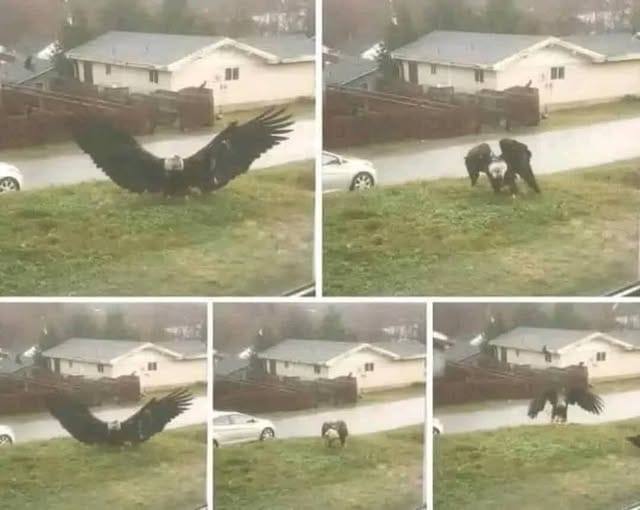
Brownsville, Texas – In an extraordinary and unprecedented event that has captured both scientific curiosity and public imagination, a massive eagle of astonishing proportions has been reportedly captured near Brownsville, Texas. The discovery has left wildlife experts, ornithologists, and local residents utterly astonished. This gigantic bird, which appears to far exceed the known size limits of any eagle species on record, has sparked waves of fascination, disbelief, and excitement throughout the global scientific community.
Eyewitnesses and experts alike describe the event as nothing short of historic. The eagle, whose enormous wingspan is estimated to reach nearly 10 feet (about 3 meters), was first spotted by a group of hikers during a weekend expedition in a remote wooded region near the U.S.-Mexico border. The hikers reported that the bird was perched high atop a large mesquite tree, its golden eyes scanning the horizon with an air of dominance and quiet intelligence. One witness recalled feeling “a mix of fear and wonder” upon realizing the sheer scale of the creature — its talons gripping the branch like iron hooks, and its beak shining sharply in the sunlight.
Local wildlife photographers and bird enthusiasts quickly flocked to the area, hoping to catch a glimpse of the extraordinary raptor. Reports describe the bird’s flight as breathtaking: powerful, graceful, and silent, cutting through the air with an ease that defied its enormous size. Many compared it to something out of folklore — an echo of the legendary “thunderbird” often mentioned in Native American myths.
After nearly half a day of careful tracking and planning, a coordinated team consisting of state wildlife officers, biologists, and conservationists succeeded in safely capturing the eagle using specialized equipment designed to minimize stress and harm. The operation, conducted with precision and deep respect for the animal, drew applause from those observing nearby. The bird was then carefully transported to a wildlife rehabilitation and research facility in South Texas, where it is now being examined and cared for by a team of ornithologists and veterinary specialists.
Initial assessments confirm that the eagle is in stable condition and appears to be in good health, though slightly dehydrated. Scientists have begun a series of biological and genetic analyses to determine its origins — including its age, gender, DNA composition, and potential relation to known eagle species such as the golden eagle or harpy eagle. Early observations have already revealed anatomical differences that challenge current scientific classifications.
Experts remain divided about the creature’s identity. Some propose that it could represent a previously undocumented or relict population, possibly surviving from an ancient lineage once thought extinct. Others suggest that the eagle’s extraordinary size might be the result of an unusual genetic mutation or a consequence of environmental changes that have altered its natural range. A few more cautious voices insist that further testing is essential before drawing any conclusions, emphasizing the need for verified data and peer-reviewed studies.
The capture of this colossal eagle has generated intense media coverage, both in the United States and internationally. News outlets have flooded social media with images and speculative commentary, while thousands of people have expressed amazement and curiosity about the discovery. Birdwatching groups, research institutions, and wildlife organizations from around the world have reached out, offering collaboration and assistance in studying this mysterious specimen.
Locally, the event has brought an unusual sense of pride and wonder to Brownsville residents. Many have described the eagle’s appearance as a “once-in-a-lifetime phenomenon,” and local tourism offices have already reported a rise in visitors hoping to learn more about the sighting. Still, authorities are urging caution. Officials have warned the public to respect the surrounding ecosystem and not attempt to approach the bird’s capture site, as the area is now being monitored by wildlife protection teams.
Environmentalists are also raising questions about the broader implications of this finding. Could this massive bird be a sign of shifting ecosystems, perhaps influenced by climate change or habitat disruption? Or is it a rare survivor from an ancient genetic pool, accidentally discovered in modern times? The mystery deepens with each passing day.
As of now, the eagle remains under observation in a secured habitat. Discussions are underway among conservation authorities regarding its future — whether it should be released into a protected wildlife reserve, transferred to a national park, or kept temporarily for ongoing research. Specialists emphasize that any decision will prioritize the bird’s welfare and long-term safety above all else.
Meanwhile, leading institutions such as the U.S. Fish and Wildlife Service and the Audubon Society have been contacted for official verification and commentary. Until they release their findings, the story remains in the realm of scientific uncertainty — balanced between fact, discovery, and possibility.
What is certain, however, is that this remarkable event has reignited the world’s fascination with nature’s hidden wonders. Whether it turns out to be a new species, an oversized variant, or a misunderstood creature, the sighting of this giant eagle in Texas serves as a powerful reminder of how much of our natural world remains unknown — waiting, just beyond the edges of what we think we understand.
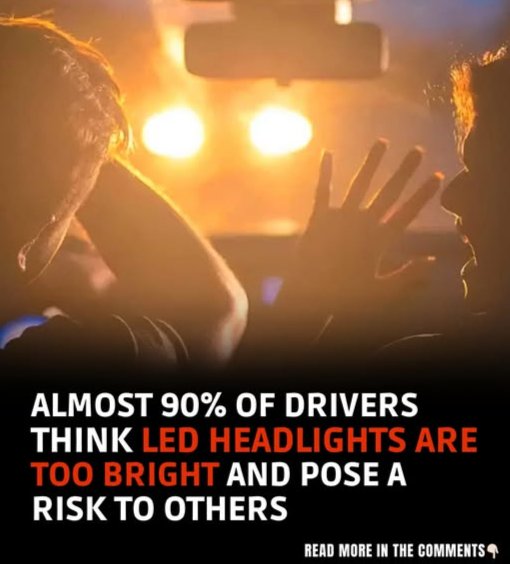
e glare hits you before you even fully register what’s coming. A sudden blast of white floods your windshield, your pupils fail to adjust fast enough, and for a terrifying split second, you’re driving half-blind at highway speed. Your grip tightens on the steering wheel. Your heart jumps. Instinct takes over as you slow down or avert your eyes, hoping the lane ahead is still clear. Drivers around the world are describing the exact same experience, again and again. This is no longer just about headlight being “too bright.” For many, it has crossed into something far more serious: a daily, unavoidable safety threat.
Vehicle electronics
As complaints pile up, frustration grows. Regulators hesitate, citing incomplete data. Engineers debate measurements, angles, and standards. Automakers defend designs that meet technical requirements on paper. Meanwhile, drivers keep asking the same unresolved question: how did something meant to improve safety make night driving feel more dangerous than ever?
were once hailed as a breakthrough. Compared to older halogen bulbs, they offered whiter light, better energy efficiency, and significantly longer lifespans. In theory, they allowed drivers to see farther and react faster. And for the person behind the wheel of a car equipped with LEDs, that promise often feels true. The road ahead appears crisp and sharply defined. Signs glow clearly. Dark stretches feel less intimidating.
But for everyone else—the oncoming driver, the person in the next lane, the driver in a lower sedan facing a lifted SUV—the experience is completely different.
The intense, blue-white light emitted by many LED systems is far harsher on human eyes, especially at night. When those lights are mounted higher on trucks and SUVs, or when they’re misaligned by even a small margin, the beam hits directly at eye level. The result is glare so strong it can cause squinting, headaches, slowed reaction times, and brief moments of disorientation. At 60 or 70 miles per hour, even a second of impaired vision is not trivial. It’s the difference between correcting your lane position and drifting. Between braking in time and reacting too late.
hat makes the situation more alarming is how common it has become. This isn’t a rare defect or an edge case. It’s a widespread, everyday experience for millions of drivers. Night driving, once merely tiring, has become stressful. Some people avoid driving after dark altogether. Others describe feeling tense every time headlights appear in the distance, bracing for the flash of light that will wash out the road ahead.
A young man named Joven was rushed to the hospital following a shocking incident that left him in both severe physical pain and deep emotional distress. The situation unfolded suddenly, prompting immediate medical intervention as emergency responders rushed to stabilize his condition. While authorities have withheld certain details to protect the integrity of the investigation, officials have confirmed that the incident involved serious misconduct by another individual and is being treated as a major criminal case.
Medical sources familiar with the situation report that Joven arrived at the hospital in critical condition. He exhibited intense physical injuries alongside trauma-related shock, with noting internal injuries that required urgent intervention. Emergency teams worked swiftly to stabilize him and subsequently transferred him to a specialized unit equipped to provide intensive care. From the moment he arrived, Joven was placed under close medical supervision to ensure his safety and maximize his chances of recovery.
Hospital representatives emphasized that cases involving injuries of this severity demand more than routine emergency treatment. Alongside physical care, Joven was immediately connected with trauma-informed specialists trained in crisis intervention, psychological recovery, and victim support services. Medical professionals highlighted that early mental health support is crucial in shaping long-term outcomes for victims of violent incidents, helping them process trauma while managing physical recovery.
As treatment progressed, Joven’s condition gradually improved. Doctor later confirmed that he was no longer in immediate danger and had regained the ability to communicate with both family members and investigators. Although his path to full recovery is expected to be lengthy, expressed cautious optimism, noting that his responsiveness, stability, and engagement with care providers were positive signs.
Law enforcement agencies launched a thorough investigation shortly after the incident was reported. Authorities are currently working to reconstruct the sequence of events, collect and preserve evidence, and identify those responsible. Officials stressed that cases involving serious personal harm are handled with heightened urgency and discretion, particularly when victim safety and dignity are at stake. Investigators also urged anyone with relevant information to come forward, highlighting that public cooperation can be vital in securing justice.
Community response to the incident has been immediate and heartfelt. News of what happened spread rapidly, prompting widespread concern, solidarity, and messages of support across social media and local networks. Advocacy groups focused on personal safety, violence prevention, and survivor rights have spoken out, stressing the importance of awareness, accountability, and preventative measures to reduce the risk of similar events.
Joven’s family released a brief statement thanking the medical staff and first responders for their professionalism and quick action. They also expressed appreciation for the overwhelming support and encouraging messages they have received from the public. At the same time, they requested privacy as Joven continues his recovery, emphasizing the need for space, reflection, and healing during this difficult period.
Medical experts note that recovery from traumatic injury often extends well beyond hospital discharge. Survivors may require ongoing physical therapy, counseling, and emotional support. Specialists involved in Joven’s care reiterated that healing is rarely linear, and that patience, strong support systems, and access to professional healthcare resources are critical for full rehabilitation.
The incident has also reignited broader conversations surrounding personal safety, consent, and accountability. Legal analysts emphasize that public education and awareness are key factors in reducing violent behavior and ensuring that victims feel empowered to seek help without fear or stigma. Community leaders echoed these concerns, advocating for ongoing dialogue, stronger preventive measures, and greater access to resources that support safe environments.
As the investigation continues, officials have declined to release further specifics, citing the need to protect the integrity of the case and the privacy of those involved. They confirmed, however, that the matter is being taken with the utmost seriousness and that appropriate legal action will follow once the investigation is concluded.
For now, the focus remains squarely on Joven’s recovery. Those close to him report that he is demonstrating remarkable resilience despite the trauma, supported by family members, healthcare professionals, and counselors dedicated to his well-being. His story serves as a sobering reminder of how quickly lives can be disrupted and why vigilance, compassion, and timely intervention are essential.
Incidents like this highlight the critical importance of accessible emergency healthcare, trauma-informed medical practices, and a justice system that prioritizes the protection of victims. They also underscore the responsibility communities bear in creating environments where safety is valued, harmful behavior is addressed, and misconduct is neither ignored nor excused.
As Joven continues to heal, there is hope that increased awareness, responsible reporting, and community engagement will contribute to meaningful change. While the road ahead is expected to be challenging, his progress thus far illustrates the impact of rapid medical care, professional support, and collective concern. The coming weeks and months will be pivotal, not only for Joven’s recovery, but also for ensuring accountability, preventing further harm, and reinforcing the social and legal structures that protect vulnerable individuals.
Letting go is never easy—especially when it involves the belongings of someone who is no longer here. Objects hold more than utility; they carry memory, emotion, and presence. They linger quietly on shelves, in drawers, and in the corners of rooms, holding fragments of a life that once filled the space. Yet there comes a moment when holding on no longer comforts—it weighs heavily instead. Reclaiming your environment can become one of the most understated but powerful steps toward rebuilding yourself after loss.
Our living space is far from neutral. It shapes our mood, energy, and thoughts. Research in interior design psychology, minimalist living, and emotional wellness all point to the same truth: cluttered spaces often mirror cluttered minds. When grief enters a home, the environment absorbs it. Rearranging furniture, repainting walls, or repurposing a room is not about erasing the past—it is about allowing life to continue in a way that supports mental health, emotional recovery, and long-term well-being.
Grief is not linear. There is no universal timeline or rulebook. Some days, touching a familiar object brings comfort; other days, the same object feels unbearably heavy. That contrast matters. When an item causes more pain than peace, it may be time to release it—not out of disrespect, but as an act of self-preservation.
Letting go of possessions does not mean forgetting a loved one. Memory lives in you, not in objects. Neuroscience and grief counseling emphasize that emotional bonds are internal, not physical. While items can serve as bridges early in the grieving process, they are not meant to become anchors that prevent forward movement.
One practical and compassionate approach is to begin with objects that carry minimal emotional weight. Everyday clothing, duplicate household items, old paperwork, or unused furniture are often easier to sort through. As physical space opens, a subtle internal shift occurs: breathing feels lighter, the home begins to feel less heavy, and the mind gradually follows suit.
From there, it becomes possible to select a small number of deeply meaningful items—a photograph, a handwritten note, a piece of jewelry, or a book with notes in the margins. These objects act as intentional memory holders rather than overwhelming reminders. They can be displayed thoughtfully, stored respectfully, or placed in a dedicated memory box: contained, honored, and no longer dominating the space.
Donating belongings can also support healing. When items are given to charities, shelters, or people in need, they gain a second life. This act transforms grief into generosity, offering comfort in knowing that a loved one’s possessions continue to serve a meaningful purpose. It also aligns with values of sustainability, conscious living, and emotional closure.
From a mental health perspective, this process mirrors trauma-informed decluttering and grief-informed home organization. Therapists often note that creating calm, functional living spaces helps regulate the nervous system. A home that supports you—rather than constantly triggering overwhelming memories—can once again feel like a sanctuary.
It is important to distinguish between honoring memory and living in a memorial. When every room remains frozen in time, it can unintentionally reinforce emotional stagnation. Redesigning a room, changing its function, or introducing new light does not dishonor the past—it acknowledges it. Life continues, and you are allowed to participate in it fully.
Minimalist living is often misunderstood as cold or detached. In reality, intentional minimalism is about clarity and purpose. Keeping what truly matters and releasing what no longer serves you is an act of self-respect—a declaration that your present and future deserve space alongside your past.
Emotionally, the process is deeply symbolic. Clearing a shelf mirrors clearing a thought loop. Opening a window mirrors letting hope back in. Painting a wall signals the start of a fresh chapter. These small physical changes send powerful messages to the subconscious: I am allowed to heal. I am allowed to move forward.
There is no requirement to complete this process all at once. Grief work cannot be rushed. Take weeks, months, or even years if needed. The goal is not speed—it is alignment. Every decision should feel intentional, not forced. Pause when necessary. Seek support when needed—from family, friends, or trained grief counselors.
Rebuilding yourself after loss is not about forgetting who you were—it is about redefining who you are now. Your home should reflect that evolution. A living space that promotes emotional resilience, clarity, and calm becomes a quiet ally in your journey toward healing.
Making room around you often creates room within you. As the environment shifts, so does your internal landscape. Light returns—not all at once, but gradually. In that light, memory can exist without pain, love can exist without loss dominating it, and life can once again feel inhabitable.
Letting go is not an ending. It is a transition—one that honors the past while making space for what comes next.
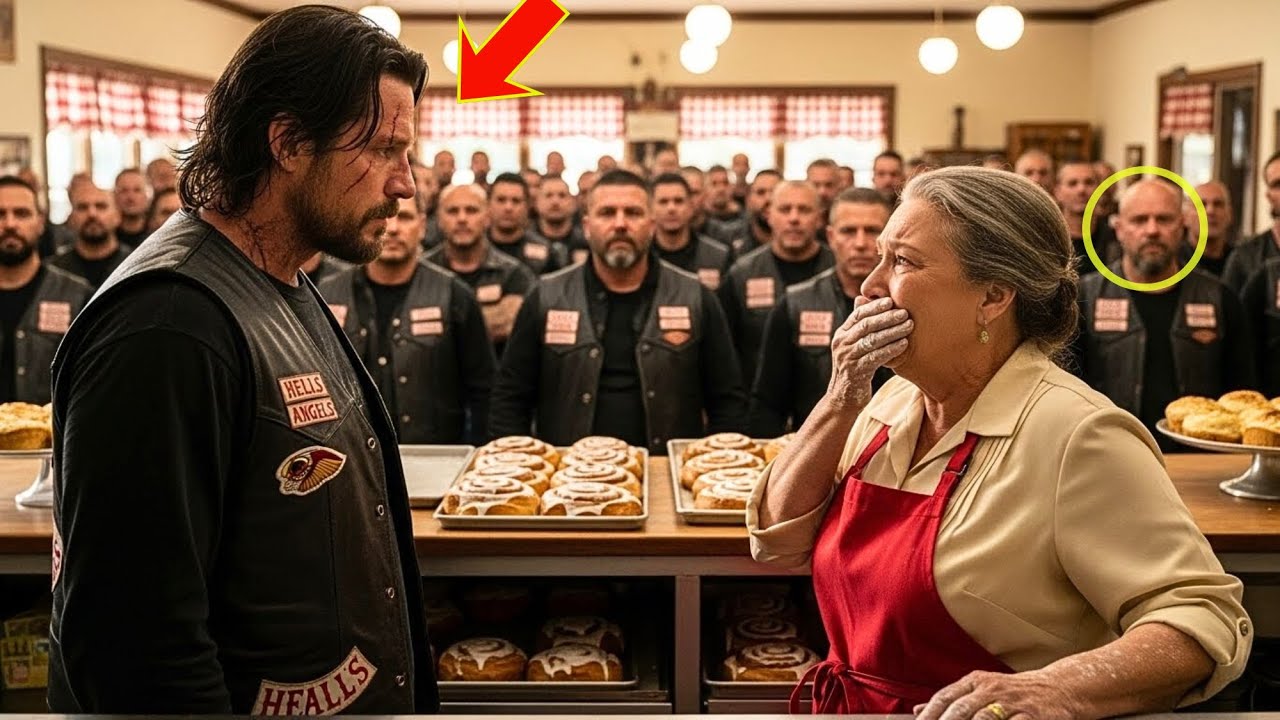
Diane Morris heard them before she saw them. 97 Harley-Davidsons rolling down Maple Street in formation, heading straight for her small bakery. The entire town of Milbrook froze. Hell’s Angels didn’t just show up in rural Pennsylvania. Not like this. Not 97 of them. Dian’s hands shook as she locked the register.
21 years ago, she’d fed a starving teenager with a black eye and a stolen jacket. She’d given him bread, asked no questions, told him he mattered. Then he vanished. Now the lead writer was removing his helmet. And when Diane saw his face, every single year collapsed into nothing. What she’d done for a broken boy was about to change everything.
If you love stories that remind you kindness never dies, would you take just a moment to hit that like button and tell us where you are watching from. If you believe these stories deserve to be heard, subscribe and share this with someone who needs hope today. It means the world. Welcome to Heart of Bikers. Let’s get started. The rumble started low, like distant thunder rolling across the Pennsylvania hills.
Then it grew louder, closer, a sound that didn’t belong in Milbrook on a Tuesday morning. Diane Morris was restocking the cinnamon roll display when Mrs. Patterson burst through the bakery , eyes wide, face pale. Diane, you need to see this. The 64year-old baker wiped her hands on her apron and followed her customer to the window.
What she saw made her blood turn to ice. motorcycles. Dozens of them. No, not dozens. She counted three rows, each stretching the length of Main Street. 97 Harley-Davidsons rolling toward her bakery in perfect formation. Chrome glinting in the morning sun. Leatherclad riders sitting tall in their saddles. Every single one wore the same patch on their backs.
The Hell’s Angel’s death’s head, skull grinning, wings spread wide. This didn’t happen in towns like Milbrook. Population 2400, one stoplight, free churches, a place where everyone knew everyone, where the biggest news was usually who won the pie contest at the county fair. The motorcycles pulled up outside Dian’s bakery and stopped.
The engines cut off one by one, and the sudden silence felt heavier than the noise. Dian’s hands found the edge of the counter and gripped it. Her register was open. She’d been in the middle of counting yesterday’s receipts. Through the window, she watched the lead rider dismount. Tall, maybe 6’2, weathered face, early 40s.
A scar ran from his left temple down to his jawline. He wore black leather from head to toe, his vest covered in patches she didn’t understand. When he removed his helmet, dark hair fell past his shoulders. He looked directly at the bakery, directly at her, and started walking toward the door. Behind him, 96 other men did the same. Diane’s mind raced.
What had she done? Who had she offended? She’d lived in this town for 43 years, ran this bakery for 25, paid her taxes, went to church, helped her neighbors. She wasn’t the kind of person who attracted this kind of attention. But then something flickered in the back of her memory. A different winter.
21 years ago, a boy with a black eye and empty stomach. A stolen jacket that looked just like the ones these men wore. She’d given him bread. She’d given him shelter. She told him something she couldn’t quite remember now, something that had made him cry. Then he’d vanished without a trace, and she’d spent years wondering if he’d survived.
The lead rider reached for the door handle. Diane’s heart hammered against her ribs. Every customer in the bakery had gone silent. Mrs. Patterson grabbed her purse like she was preparing to run. Old Mr. Henderson, who’d been reading his newspaper in the corner booth for the past 30 years every Tuesday morning, folded it slowly and set it down.
The door opened. The man stepped inside. He was bigger up close, broader. But his eyes, his eyes weren’t hard. They were searching, looking at her like he was trying to solve a puzzle. If you’ve ever wondered whether small acts of kindness really matter, stay with me, because what Diane did in 2003 is about to come full circle in a way she never imagined.
The man removed his sunglasses. His voice was deep, grally, but not unkind. “Dian Morris?” she nodded. Her throat had closed up. No words would come. He looked around the bakery slowly taking in every detail. The cinnamon rolls cooling on wire racks. The photographs on the wall, faded pictures of the grand opening of her late husband Tom standing proud in front of the storefront.
The chalkboard menu written in her careful handwriting. The red and white checkered curtains she’d sewn herself. The smell of yeast and sugar and coffee that had defined this place for a quarter century. You remember feeding a kid in 2003? His eyes came back to her face. 17 years old, beat to hell. No place to go.
Dian’s hand flew to her chest. The memory that had been flickering grew sharper, clearer. The boy, the January cold snap, the knock on the beforesunrise. You gave him bread, the man continued. His voice had softened. You gave him a place to sleep. You told him something he never forgot. Behind him, more men filed into the bakery.
They moved quietly, respectfully, but they filled the small space until there was barely room to breathe. Leather and denim, and the smell of road dust, tattoos covering arms, necks, hands, patches declaring chapters from cities she’d never been to. Faces that had seen hard living, hard years, hard choices. But none of them looked threatening.
They looked like men waiting for something important. Diane’s hands were trembling now. She pressed them flat against the counter to stop the shaking. “I remember,” she whispered. The man’s face changed. Something in his expression cracked open. “Good,” he said. “Because that kid never forgot you either.
” The other customers were frozen. Mrs. Patterson had her phone out, probably texting half the town. Mr. Henderson was staring with his mouth slightly open. A young mother with two children had pulled them close. Protective. Watching these strange men invade their quiet morning, but the man only had eyes for Diane. “What you told that boy,” he said, became the foundation of everything he built.
He paused, glanced at the men behind him. Then back to her. “But before I explain why we’re here, I need to take you back. Back to that winter, because you need to understand what you did and why it changed everything.” 21 years earlier, Diane Morris had been a different woman. Younger, yes, 43 instead of 64.
But more than that, she’d been hollowed out by grief, scraped raw by loss, barely holding herself together with routines and responsibilities, and the stubborn refusal to give up on her dead husband’s dream. Tom Morris died in November 2002. Construction accident, a scaffolding collapse on a job site in Harrisburg.
He was 45 years old. They’d been married 22 years. He died instantly, the doctors said. Didn’t suffer like that was supposed to make it better. The bakery had been his idea. Tom worked construction his whole adult life, but he’d always talked about opening a business, something they could run together, something they could leave to their daughter, Jenny, when they were gone.
In 1998, they bought the failing bakery on Main Street, poured their savings into renovations, and opened Diane’s Bakery the following spring. Tom did all the carpentry work himself. Built the display cases, the shelves, the counter, installed the industrial, painted the walls. His fingerprints were all over that building.
After he died, Diane thought about selling it. Walking away, what was the point of running a bakery alone, but Jenny was at Penn State sophomore year studying to be a teacher? The tuition wasn’t going to pay itself. The mortgage on the bakery wasn’t going to pay itself. The medical bills from Tom’s accident, even with insurance, weren’t going to pay themselves.
So Diane got up every morning at 4:00 a.m. She mixed dough. She baked bread. She made cinnamon rolls using Tom’s mother’s recipe. She opened at 6:00 and closed at 6 and pretended she was fine. The town knew better. Small towns always know. They saw the dark circles under her eyes. They saw how thin she’d gotten. They saw her sitting alone in the empty bakery after closing, staring at nothing.
But what could they do? They bought their bread. They offered their condolences. They told her if she needed anything, anything at all to just ask. And then they went home to their intact families and their living husbands and their uncomplicated grief-free lives. By January 2003, Diane had been running the bakery alone for 14 months.
Family games
She developed a rhythm. 4:00 a.m. wake up, shower, drive to the bakery in the dark, unlock the , turn on the , start the first batch of bread, cinnamon rolls next, then the pastries, coffee brewing by 5:30, lights on, door unlocked at 6 sharp. She could do it all in her sleep now.
Sometimes she wondered if she was sleeping. If this whole life was just a dream, she’d wake up from to find Tom alive. The accident, a nightmare, everything back to normal. The winter was brutal that year. Pennsylvania cold, the kind that seeped into your bones and wouldn’t let go. Temperatures dropped below 10° for two weeks straight.
The bakery’s heating system struggled to keep up. Diane wore layers, thermal underwear under her jeans, two sweaters under her apron. She kept the ovens running constantly just for the warmth. Behind the register, she taped a photograph of Tom, young Tom, 20some Tom, before the gray hair and the bad knee and the high blood pressure.
He was smiling in that picture. Really smiling. The kind of smile that made you want to smile back. She talked to that photograph sometimes late at night when she was cashing out. She’d tell him about her day, about the customers, about Jenny’s phone calls from college, about how tired she was, how lonely, how some days she wasn’t sure why she wasdoing any of this.
The bakery didn’t answer. Tom didn’t answer, but it helped somehow. Saying the words out loud, pretending someone was listening. She’d lost everything that mattered. Her husband, her partner, her best friend, the future they’d planned together, the retirement they’d been saving for, the grandchildren they’d hoped to spoil someday.
All of it gone in one November afternoon when a safety inspector had missed a faulty bolt and scaffolding came crashing down. So when the boy walked in that frozen January morning, when she saw something in his eyes, she recognized someone who’d been knocked down and wasn’t sure how to get back up, she made a choice.
Maybe it was because she couldn’t save Tom. Maybe it was because she needed to save someone, anyone, to prove that matching was still possible. Maybe it was just because Tom had always told her, “Feed first. Ask questions later.” Whatever the reason, Diane Morris opened that door and everything changed. The knocking started at 5:30 a.m.
Diane was elbowed deep in dough, kneading the second batch of bread when she heard it. Sharp, insistent, unusual. The bakery didn’t open for another 30 minutes. No one came by this early. She wiped her flowercovered hands on her apron and walked to the front, peering through the glass door. A boy stood outside. Teenager, maybe 17, maybe 18.
Hard to tell with the damage to his face. His left eye was swollen nearly shut, purple and black spreading across his cheekbone. His lip was split, crusted blood at the corner of his mouth. He wore a jacket two sizes too big. Black leather with patches she recognized. Hell’s Angel’s Prospect rocker across the top, Pennsylvania bottom rocker, death’s head center patch.
But it was his eyes, the right one still visible, that stopped her. Not angry eyes, not criminal eyes, just exhausted. The kind of tired that came from running too long with nowhere to run to. He wasn’t wearing gloves. His hands, pressed against the glass, were red from cold, knuckles bruised and scabbed. No hat. His hair, dark and shaggy, was dusted with frost.
The temperature outside was 12°. 12°. And this kid was standing at her door at 5:30 in the morning looking like someone had used his face for punching practice. Dian’s first thought was to call the police. Her second thought was Tom. Tom Morris had grown up rough. Foster care, group homes, juvenile detention for stealing a car when he was 16.
He’d turned his life around, but he never forgot where he came from. Never forgot what it felt like to be young and scared and convinced the whole world had given up on you. Feed first, he used to say. Ask questions later. You never know whose life you’re saving. She unlocked the. The boy flinched like he expected her to yell, to tell him to get lost, to threaten him.
Instead, she said, “Get inside before you freeze to death.” He hesitated, looked behind him like he was checking if someone was watching. Then stepped into the warmth of the bakery. Up close, he was worse than she’d thought. The jacket was definitely stolen. It hung off his thin frame, sleeves past his fingertips. His jeans were torn at both knees.
His sneakers had holes in them, no socks visible. He was shaking. Full body tremors. Hypothermia probably. I’m not here to rob you, he said. His voice was horsearo. I just I’m hungry. I can work. I’ll wash dishes, mop, whatever you need. I’m good with my hands. I can fix things. Diane noticed those hands again. The bruised knuckles, the split skin, the way they trembled.
Sit down, she said, pointed to the corner booth. Sit down before you collapse. He obeyed, moved like every muscle hurt, slid into the booth and wrapped his arms around himself, still shaking. Diane went to the kitchen. She didn’t think, didn’t weigh her options, just cooked scrambled eggs for eggs, butter, salt, pepper, bacon, six strips, crispy the way Jenny liked it, toast, wheat bread, fresh from yesterday’s batch, a mug of hot chocolate, extra marshmallows, and a cinnamon roll, still warm, glaze dripping down the sides. She brought it
all to the booth on Tom’s favorite serving tray, the blue one with the white rim. Set it in front of the boy. Eat,” she said. He stared at the food like he didn’t believe it was real. Then he picked up the fork and ate fast, desperate, like someone who hadn’t seen a meal in days. Diane turned away, gave him privacy, went back to her bread dough, but she watched him in the reflection of the display case glass.
He ate everything, every bite, licked the glaze off his fingers, drained the hot chocolate. When he finished, he just sat there staring at the empty plate, and then his shoulders started shaking. Not from cold this time. He was crying silently, tears running down his damaged face. “Thank you,” he whispered.
“Thank you.” Diane brought him a glass of water and sat across from him. “What’s your name?” He wiped his face with the back of his hand. “Jake.” She didn’t believehim, but she didn’t push. Where are you from, Jake? He shrugged around. The jacket caught her eye again. Hell’s Angels prospect patch. Either he’d stolen it or he’d been trying to join and it went wrong.
Either way, someone had beaten him badly. You have family? He shook his head, aged out of foster care 4 months ago. Been on my own since Dian knew that story. Tom had lived it. The system dumped you at 18 with nothing. No support, no safety net, no plan. Just good luck and don’t let the door hit you on the way out. Some kids made it. Most didn’t.
Family games
How long since you ate? She asked. Jake looked at his hands. Three days, maybe four. Three days. This child had been starving for 3 days. Diane made a decision. Maybe it was stupid. Maybe it was dangerous. Maybe it would come back to bite her. But Tom’s voice was in her head. Feed first. Ask questions later. I’ve got a storage room in back, she said.
There’s a space heater, some boxes, but I can clear space. It’s dry and it’s warm. You can stay there if you work. Wash dishes. Mop floors. Prep ingredients. I’ll pay you minimum wage and feed you three meals a day. Jake’s head snapped up. Why would you do that? Diane looked at Tom’s photograph behind the register.
Because it’s cold, she said. Because you’re somebody’s son. Because I can, Jake’s eyes filled again. I’ll work hard. I promise. I won’t steal. I won’t cause trouble. I know, Diane said, though she didn’t know. Not really. She was just choosing to believe. in the bakery. 21 years later, the lead biker reached up and unzipped his leather vest, pulled it off.
Underneath, he wore a black t-shirt. His arms were covered in tattoos. Full sleeves, both sides, intricate designs, skulls, and flames, and script she couldn’t read from this distance, but it was his chest that made Diane’s breath catch. Right over his heart, visible through the thin fabric of his shirt, was a tattoo of a cinnamon roll, perfectly detailed, golden brown swirls, white glaze dripping, and behind it, angel wings, enormous, spread wide, done in such fine detail, she could see individual feathers.
The man saw her staring. He smiled. It transformed his face, made him look younger, vulnerable. “You told me something that January,” he said quietly. The bakery had gone completely silent. Even the coffee maker had stopped gurgling. You said you matter, kid. The world beat you down. But that doesn’t mean you don’t matter.
Somebody should tell you that. Diane’s hand flew to her mouth. Those words. She’d said those exact words. Late one night when the boy Jake had been ready to give up. When he told her he had nothing, was nothing would always be nothing. She’d stopped what she was doing and looked him dead in the eye and told him he mattered. “Jake.
” Her voice cracked. The man’s smile widened. “My real name is Marcus.” “Marcus Cole.” “But yeah, I was Jake when I walked into your bakery 21 years ago. When you fed me. When you let me sleep in your storage room. When you paid me for work, I barely did. When you talked to me like I was a human being instead of garbage.
” He took a step closer. When you saved my life, Diane couldn’t breathe. Couldn’t think. This man, this tall, scarred, tattooed man, was the skinny 17-year-old boy she’d worried about for two decades. The one who’d left a note and vanished. The one she’d prayed for. The one she’d hoped had found his way.
You’re alive, she whispered. You’re alive. Marcus nodded. Because of you. The other bikers were watching. 96 men crowded into her small bakery witnessing this moment. Some of them had tears in their eyes. hard men, roadworn men, men who’d seen things and done things and survived things. And they were crying. If you believe in the power of second chances, hit that subscribe button because Marcus’ story is about to show you what happens when someone sees worth in the broken.
Trolls won’t understand this, but you will. I’ve been looking for you for 3 years. Marcus said, “We’ve been looking for you, all of us, and we finally found you because we needed to say thank you. We needed to show you what you built. We needed you to see what happens when one person chooses kindness. Marcus gestured to the men filling the bakery.
These are my brothers. Hell’s Angels. East Coast chapters. 97 of us. Diane looked at them with new eyes. They weren’t threatening. They were reverent. Standing in her bakery like they were in church. We rode here from eight different states. Pennsylvania, New York, New Jersey, Maryland, Virginia, Ohio, West Virginia, Massachusetts.
Some of these guys left at 4:00 a.m. yesterday, rode through the night because I told them about you, about what you did, about the woman who fed a starving prospect and asked no questions. Diane’s mind was spinning. 97 97 men had ridden hundreds of miles to her bakery. For her, because of a kid she’d helped two decades ago.
I don’t understand, she said. Why? Marcus’s expression turned serious. That winter in 2003, I was running from a bad club.Wannabe 1enters, not real Hell’s Angels. They recruited kids out of foster care. Promised family, promised belonging, then used us as drug mules, beat us when we didn’t comply.
I tried to leave and they nearly killed me. I stole that prospect jacket off a clothesline because it was the only warm thing I could find. I’d been on the streets for 4 months. He paused. Looked down. I was done, Diane. That morning, I knocked on your. I was done. I decided that day was my last day. I was going to walk into the woods outside town and not come back.
I knocked on your bakery because it was the only place with lights on. I thought maybe, maybe I could steal some food, get one more meal before I ended it. The words hit Diane like a physical blow. He’d been planning suicide. This boy, this child, but then you opened the door, Marcus continued, “You didn’t call the cops. You didn’t chase me off.
You fed me. You looked at me like I was worth feeding. And that broke something open. Something I’d shut down after my mom died. He rubbed his face. The scar on his temple caught the light. You let me stay for 2 weeks. You paid me. You talked to me. You told me about your husband, about grief, about choosing to keep going even when everything hurt.
You gave me permission to be broken. And then you gave me permission to heal. You told me I mattered. And nobody nobody in my entire life had ever said that to me. and meant it. The bakery was so quiet, Diane could hear the clock ticking on the wall. When I left, Marcus said, “I kept your business card.
I kept it in my wallet for 16 years until it disintegrated. I swear I’d find you again. I’d come back when I’d done something worth showing you. When I’d become someone worth knowing, but life happened. I got sober. I prospected for a real charter. I earned my patch legitimately. I built a business. I built a life.
And the years kept passing. I kept meaning to come back. Kept meaning to find you, but I was scared. Scared? Diane’s voice was barely audible. Marcus nodded. Scared you’d be disappointed. Scared I hadn’t done enough. Scared you wouldn’t remember me. But then last year, one of my brothers asked me why I started the foundation.
Why I cared so much about lost kids. And I told him about you. And he said, “Brother, you need to find that woman. You need to show her what she built.” The first few days, Jake barely spoke. He worked like someone terrified of being kicked out. Up before Diane arrived, already sweeping when she unlocked the door at 4:30 a.m.
He washed every dish twice. Mopped the floors until they gleamed. Organized the storage room with a precision that surprised her. He ate what she gave him. Always said thank you, then disappeared into the back room. She’d hear him moving around late at night, restless, unable to settle. On the third day, he fixed the .
Diane had been meaning to call a repair guy for weeks. The temperature gauge was wonky, running 20° too hot, burning the bottom of her bread. She’d adapted, learned to compensate, but Jake noticed. Didn’t ask permission. Just took the panel off and started troubleshooting. 2 hours later, the oven was running perfectly. How’d you learn to do that? Diane asked.
He shrugged. Foster Homes. You fix things yourself or they stay broken? Learned plumbing, electrical, carpentry. Whatever kept me useful, useful like his value was determined by what he could provide. Diane recognized that mindset. Tom had been the same way. Week one turned into week two. The bruises on Jake’s face faded from purple black to yellow green.
He started eating more, filling out. The constant shaking stopped. He slept through the night instead of startling awake every hour. Diane found herself looking forward to the quiet companionship, having someone in the bakery who needed her, who gave her purpose beyond just going through the motions. She told him about Tom late one night while they were cleaning up, about the construction accident, about the scaffolding that wasn’t inspected properly, about the funeral where half the town showed up because Tom Morris knew everybody and everybody liked him,
about the crushing weight of trying to keep the bakery running alone. He was a good man, she said, wiping down the counter for the third time. Grew up rough like you. Made something of himself. Always said people weren’t disposable. Said everybody deserved a shot. Jake was quiet for a long moment. Then my mom died when I was 9. Overdose.
Found her in the bathroom. Called 911, but she was already gone. Diane’s heart broke. 9 years old. I’m sorry, she said. That’s too young. Too much to carry. He nodded. kept washing dishes, foster care after that. 11 different homes in eight years. Some were okay. Most weren’t. Aged out at 18.
They give you a trash bag of clothes and a bus ticket and say good luck. That’s it. No family, no support, no plan. Diane set down her rag. What about the jacket? The Hell’s Angels patch. His jaw tightened. Metsome guys outside Pittsburgh. They said they were Hell’s Angels. Said they’d take care of me. Give me family. Turned out they were wannabes.
Family games
Small-time dealers using the name. They wanted drug runners. I said no. They beat me. I ran. Stole the jacket off a line because winter was coming and I didn’t have a coat. He touched the split in his lip. Already healing. They caught up with me in Harrisburg. Did this. Told me next time they’d kill me. So I kept running.
The conversation that changed everything happened on day 13. Jake was frustrated, angry at himself. He dropped a tray of cooling bread, ruined six loaves. It was an accident, but he was spiraling. “I’m worthless,” he muttered, cleaning up the mess. “Can’t do anything right. Can’t keep a job. Can’t stay in one place.
Can’t even carry a damn tray without screwing it up. Diane stopped what she was doing.” Walked over. Made him look at her. Listen to me. The world beat you down. I get it. Life dealt you garbage cards. Your mom dying. Foster care failing you. men who should have protected you hurting you instead. But that doesn’t erase your value.
You matter, Marcus. He blinked. My name’s Jake. No, she said softly. Your name’s Marcus. You told me 3 days ago when you were half asleep, you called yourself Marcus, so I’m calling you Marcus. And I’m telling you that you matter. You matter because you’re here. Because you’re trying. Because underneath all that pain, there’s a good kid who deserves a shot.
Tears welled in his eyes. Nobody’s ever said that to me. Diane’s voice was fierce. Then they were wrong. Every single person who made you feel like you didn’t matter was wrong. She sat across from him in the booth. The same booth where she’d fed him that first morning. You think I kept you here because I needed the help? Honey, I’ve been running this bakery alone for over a year. I can manage.
I kept you here because I needed someone to help more than I needed help. You gave me purpose when I lost mine. You gave me a reason to get up in the morning beyond just routine. So don’t you dare tell me you’re worthless. You saved me as much as I saved you. Marcus broke completely sobbed like the child he still was. Diane didn’t hug him since he wasn’t ready for that.
But she sat with him, handed him napkins, let him cry until there was nothing left. When he finally looked up, eyes red and swollen, she spoke again. Tomorrow you’re going to wake up and choose. Stay broken or start building. I can’t make that choice for you. But if you choose to build, I’ll help however I can.
That conversation lasted 17 minutes, but it gave Marcus a foundation he’d spend the next 21 years building on. 3 days later, he left. Diane found the note at 5:00 a.m. tucked under the register. You saved my life. I’m going to make you proud. I’ll find you again when I’ve done something worth showing you.
She kept that note in a drawer for two decades. Never threw it away. Never stopped hoping he was okay. The morning Marcus left, Diane arrived at 4:00 a.m. to find the storage room empty, clean, organized better than it had been before he arrived. The space heater was unplugged and pushed against the wall. The blankets were folded.
His few possessions were gone. For a moment, panic seized her. Had something happened? Had the men who had heard him found him? Then she saw the envelope on the counter, her name written in careful block letters. Inside was the note and $200 cash. every cent she’d paid him, plus the 20 extra she’d slipped into his last paycheck. He’d left it all.
Diane’s hands shook as she read his words. “You saved my life. I’m going to make you proud. I’ll find you again when I’ve done something worth showing you. Thank you for seeing me. Thank you for feeding me. Thank you for telling me I matter. I’ll never forget.” Marcus, she cried into her coffee that morning. Cried while she mixed dough.
Cried while the first batch of bread baked. Mrs. Patterson came in at 6:30 and found her redeyed and exhausted. You all right, honey? The older woman asked. Diane nodded, lied, just tired. She wanted to tell someone about Marcus, about the boy she’d helped about the hope she had that he’d be okay.
But what if she was wrong? What if he didn’t make it? What if telling the story jinxed it somehow? So, she kept it to herself. Kept his note in a drawer. Kept his business card, the one she’d written her number on, tucked in the register, hoping he’d call. He never did. Days turned to weeks. Weeks turned to months.
Diane went back to her routine. Baking bread, serving customers, keeping Tom’s dream alive. She thought about Marcus often, wondered if he’d found work, if he was eating enough, if he was safe. She prayed for him, though she wasn’t particularly religious. just sent hopes out into the universe that whoever was listening would look after him.
Jenny came home from college for spring break and noticed something different. “You seem lighter, Mom,” she said. Diane smiled.”Maybe I am.” She didn’t explain, couldn’t explain, but Marcus had given her something. Purpose, hope. The reminder that kindness mattered, that she mattered. That Tom’s philosophy, feed first and ask questions later, could change lives.
She just never imagined how many lives. or that 21 years later, Marcus would bring 96 brothers to her to prove it. After I left, Marcus said, standing in the center of Diane’s bakery. I went to Pittsburgh, got work on a construction crew, under the table, cash pay, no questions asked. I was good with my hands, like I told you.
Framing, electrical, plumbing, worked 12-hour days. Slept in a room I rented week to week. Saved every dollar. Started thinking maybe I could make it. Maybe you were right. Maybe I mattered. He smiled at the memory. Then I met Dutch. One of the bikers, an older man with a gray beard down to his chest, raised his hand. That’s me, he said.
His voice was surprisingly gentle. Dutch Keller, Pittsburgh charter. Marcus gestured to him. Dutch was working the same site. Vietnam vet. Hell’s Angel since 1973. He saw me eating lunch alone one day and sat down, started talking, found out I was 18, living alone, had nobody. He didn’t pry, didn’t judge, just talked. And when the job ended, he gave me his card, said, “If I ever needed anything, call.” Dutch spoke up.
Kid was sleeping in a room with no heat. Winter in Pittsburgh. I couldn’t let that go. Marcus continued, “6 months later, I took him up on it. Called Dutch, asked if he knew anyone hiring. He said, “Better than that. Come prospect for us. Real Hell’s Angels, not the trash you ran from.” I almost said, “No, the trauma from the wannabe club, it was still raw.
But Dutch promised me this was different. Real brotherhood, real loyalty, real family.” He paused, looked at Diane. Everything you taught me about value, about deserving a shot. I held on to that. So I said, “Yes.” Prospected for 2 years, 2003 to 2005. Earned my patch legitimately. Proved I had character. Proved I had heart.
Family games
Became a full member at 20 years old. The pride in his voice was unmistakable. Worked legitimate jobs. Mechanic. Walder. Eventually opened my own custom motorcycle shop in 2009. Built it from nothing. Called it Second Chance Cycles. Dian’s throat tightened. Second Chance. The shop did well. Marcus said really well.
high-end custom builds, celebrity clients, magazine features. But the whole time, I couldn’t stop thinking about what you told me, that I mattered, that broken doesn’t mean worthless. So, I started bringing in kids, kids aging out of foster care, street kids, kids everybody else had given up on. I taught them mechanics, gave them work, paid them fair wages, treated them like humans.
Another biker stepped forward, younger, maybe mid-30s, with kind eyes. I’m Tommy. Marcus hired me eight years ago. I was 25, fresh out of prison. Nobody would touch me. He gave me a shot. Now I run my own shop in Baltimore. I prospect for the club because of him. Marcus put a hand on Tommy’s shoulder. Tommy wasn’t the first, wasn’t the last.
Over 15 years, I’ve hired maybe 60 kids. Some didn’t make it, some couldn’t handle it, but some some became incredible. Mechanics, welders, shop owners, hell’s angels. Every one of them heard the same thing I heard from you. You matter. He pulled down his t-shirt collar showing more of the cinnamon roll tattoo.
Got this in 2006, 3 years after I left your bakery. The artist thought I was crazy. A cinnamon roll with angel wings. But I told him the story about the woman who fed me. About the cinnamon rolls every morning. About how it was the first time I felt like someone cared if I lived or died. He did it for free.
said it was the most beautiful thing he’d ever heard. Diane was crying now. Couldn’t stop. Tears running down her face, dripping onto her apron. I didn’t do anything special, she whispered. Marcus shook his head. You did everything. You saw value in nothing. You gave hope to the hopeless. You saved a life that went on to save 60 more.
And those 60 will save 600. And those 600 will save 6,000. Because kindness doesn’t end, Diane. It multiplies. Comment, “Second chances matter if you believe broken people can build beautiful things because what Marcus built next is going to blow your mind.” 10 years ago, Marcus continued, “I started something bigger, something that would have made you proud, something that’s going to change your life today.
” Marcus pulled out his phone, tapped the screen, brought up a website, turned it to Face Diane. The header read Second Wind Foundation, established 2014. Below it, photographs, kids learning to weld, kids in classrooms, kids in transitional housing, kids smiling, thriving, alive. This is what I built, Marcus said. With Dutch’s help, with my chapter’s help, with chapters across the East Coast, a foundation that helps kids aging out of foster care.
We give them housing, job training, mentorship, therapy, everything I didn’t have, everything youtried to give me. Diane stared at the screen at the faces of teenagers who looked like Marcus had looked lost, scared, hoping for something better. “We’ve helped over 400 kids in 10 years,” Marcus continued. 400 kids who aged out of the system with nothing.
We gave them something, a place to land. People who gave a damn. And you know what? We tell every single one of them. We tell them what you told me. You matter. The world beat you down, but that doesn’t mean you don’t matter. He scrolled through the website. Success stories. A girl named Maya, now a nurse. A boy named Dante, now a welder.
A non-binary kid named River, now a graphic designer. Faces, names, futures that almost didn’t happen. Every single one of these kids knows about you. Marcus said, “I tell your story at every intake about the woman in Pennsylvania who fed a starving prospect, who asked no questions, who saw value in nothing. Your story is the foundation story.
The reason we do this, Diane couldn’t speak. Her hands covered her mouth. The magnitude of it, the ripple effect of feeding one boy 21 years ago was too much to process. Marcus gestured to the 96 men filling the bakery. You want to know why there’s 97 of us here. His voice rose, filling the space. Because I told your story at a regional meeting last year.
Told them about you, about what you did. And 72 of these men raised their hands. 72 said they had similar stories. Someone who helped them when they had nothing, a meal, a place to stay, a kind word, someone who saw them when they were invisible. One by one, men started speaking. Quick testimonies, voices rough with emotion.
Woman in Delaware gave me a job when I got out of prison. Man in New York let me sleep in his garage for 3 months. Teacher in New Jersey paid for my GED test. waitress in Maryland fed me breakfast every day for a week when I was homeless. On and on. Stories of strangers who’d shown kindness to broken boys who grew up to be hell’s angels, who became brothers, who became men who paid it forward.
“We’ve been looking for you for 3 years,” Marcus said when the last man finished. You moved, sold your old house, changed your phone number, deleted your Facebook. We hired a private investigator. Finally tracked you through property records. Found out you still own this bakery. So we planned this.
All 97 of us rode from eight states. Pennsylvania, New York, New Jersey, Maryland, Virginia, Ohio, West Virginia, Massachusetts. Left at different times. Met up outside town. came in together because we needed to do this right. Diane found her voice. Do what right. Marcus’s expression turned serious, purposeful. Three things. First, to say thank you on behalf of every kid you ever helped, every meal you ever gave, every kind word.
Thank you. You changed my life. You changed 400 lives. You changed the lives of everyone in this room. We rode here to say thank you in person, to show you that kindness ripples. that one person choosing to see value can change the world. He continued second to introduce you to the family. Every man in this room is part of Second Wind Foundation.
Family games
Either as a mentor or as someone who came through the program. We wanted you to meet them to see what you built to understand that you’re not just some woman who ran a bakery. You’re the reason 400 kids have futures. The men nodded. Some wiped their eyes. Hard men, dangerous men, men who’d lived rough lives.
and they were crying in a small town Pennsylvania bakery because of a widow who’d fed a homeless kid. And third, Marcus said, reaching into his vest pocket, pulling out a thick envelope to present you with something, something that’s going to change your life, something you absolutely deserve, something that will let you keep doing what you do best, seeing value in people everyone else overlooks.
He handed her the envelope. Heavy official looking. Diane’s hands shook as she took it. What is this? she asked. Marcus smiled. That same vulnerable smile from when he was 17. “Open it,” he said. “Because what’s inside is going to show you what 400 kids, 97 Hell’s Angels, and one grateful man think you’re worth.
” But before Diane could open it, the bakery opened again. Someone else walked in. Someone Diane didn’t expect. Someone who made Marcus turn and smile. “Perfect timing,” he said. And Diane’s heart stopped when she saw who it was. The young woman was in her mid20s. Nervous eyes. She held a baby on her hip, maybe 6 months old, wearing a pink onesie.
She looked around at the 97 bikers and froze. Marcus waved her forward. It’s okay, Sarah. Come in. This is her. This is Diane. The woman, Sarah, took a tentative step inside. The baby gurgled, reached for the cinnamon rolls in the display case. Sarah smiled despite her nerves. Mrs. Morris? Her voice was soft, uncertain. I’m Sarah. Sarah Freriedman.
Diane shook her head. I’m sorry. I don’t think we’ve met. Sarah’s eyes welled up. No, we haven’t. But you knew my brother.2008. He was homeless, addicted, trying to get clean. You gave him day old bread every morning for 2 months. You never asked for anything. Just handed him a bag through the back door before you opened. The memories surfaced slowly.
A kid early 20s. track marks on his arms, hollow eyes. He’d knocked on the back door one morning. Asked if she had any old bread, anything she was going to throw away. She’d been throwing away day old bread for years. Health regulations, but it was still good, still edible. So, she started saving it for him.
I remember, Diane said quietly. Blonde hair. Finn told me his name was Chris. Sarah nodded, tears spilling over. Christopher Freriedman, my older brother. He died for years ago. overdose. He’d been clean for 18 months. Longest stretch of his life, but he relapsed. One time it killed him. The words hung in the air.
Another life lost. Another family broken. I’m so sorry, Diane whispered. Sarah shook her head. Don’t be sorry. Those 18 months, he was himself again. He got an apartment, a job. He called me. We talked. He told me about you. about the woman at the bakery who treated him like a person, who didn’t judge him, who fed him when he was starving.
She shifted the baby to her other hip. He said, “You saved his life.” That those two months of knowing someone cared, it gave him the strength to try rehab. He went, he got clean. And even though he didn’t stay clean forever, he had 18 good months. 18 months where he was my brother again, where I got to know him, where he got to be human.
That’s because of you, Dian’s heart achd. I wish I could have done more. Sarah smiled through tears. You did enough. More than enough. And that’s why I’m here. She looked at Marcus. I found the Second Wind Foundation on social media. 2 years ago, I was pregnant, alone, terrified. My boyfriend left. My family, they’d cut me off because of Chris’s addiction.
I had nothing. The foundation helped me, gave me a place to stay, helped me get my GED, found me job training, childare. Now I work as a medical assistant. I have my own apartment. I’m raising my daughter. I’m stable and it’s because of the foundation Marcus built. The foundation you inspired. The baby reached for Diane. Sarah laughed.
She likes you. Diane took the baby without thinking. Held her close. Smelled that sweet baby smell. The child grabbed her apron strings and smiled a gummy smile. Her name’s Diane. Sarah said quietly. I named her after you. After the woman who saw my brother as human, who gave him dignity when he had none, I’ll never be able to thank you enough.
But I can make sure she knows who you are. Make sure she knows kindness matters.” Marcus let Diane hold baby Diane for a long moment. “Let the weight of it settle.” Then he gently took the envelope from where she’d set it on the counter and held it out again. “Sarah isn’t the only one here because of you,” he said.
“There are 17 people in this bakery right now who were directly impacted by your kindness.” 17 people whose lives changed because you chose to see them, to feed them, to tell them they mattered. He pressed the envelope into her free hand. Open it. Diane juggled the baby and the envelope. Mrs.
Patterson came over, arms outstretched. Here, honey, let me hold her while you look. Diane handed over baby Diane and opened the envelope with shaking hands. Inside, legal documents, financial statements, photographs of a building. Her breath caught. The first document was a deed. Commercial property, downtown Pittsburgh, three stories, brick facade, beautiful architecture, and at the top in bold letters, property owner Diane Morris.
She looked up, confused. What is this? Marcus stepped closer. We bought a building. 72 Hell’s Angels chapters pulled money. Corporate sponsors, private donations, $3.2 million. We bought a building in Pittsburgh and it’s yours. Diane’s knees went weak. Mr. Henderson jumped up, brought her a chair. She sat down hard.
I don’t understand. Marcus knelt beside her, looked her in the eye. We’re opening the Dian Morris second wind center, housing for kids, aging out of foster care, job training, counseling, everything in one place. First floor, vocational training, mechanics, welding, carpentry. Second floor, transitional housing, 12 beds.
third floor counseling center and administrative offices. Diane stared at the papers at her name on the deed. But I can’t. I don’t know how to run something like that. Marcus smiled. You already did right here. For 25 years, you ran a place where broken people felt safe, where they were fed, where they were valued. That’s the program.
Everything else is just logistics. You pulled out more papers. We’ve hired staff, a director, counselors, vocational instructors. But here’s the thing, Diane. We don’t want you to just own it. We want you to run it. Be the heart of it. Do what you do best. See people. Feed them. Tell them they matter. Diane couldn’t breathe.
Couldn’t think. The magnitude of what they wereasking, what they were offering was crushing. I can’t, she whispered. Marcus squeezed her hand. Yes, you can. Diane sat down at one of the bakery tables. Her legs wouldn’t hold her anymore. The envelope lay open in front of her. Papers spread across the surface like evidence of something impossible.
97 Hell’s Angels stood watching, waiting. She felt the weight of their expectation pressing down on her shoulders like a physical thing. “I can’t,” she said. Her voice was small, weak. “I can’t do this. I’m just a baker. I don’t know how to run a program like that. I don’t know anything about transitional housing or job training or counseling.
I make cinnamon rolls. That’s what I do. Marcus pulled out a chair and sat across from her the same way she’d sat across from him 21 years ago when he’d been falling apart in this very booth. You already did, he said quietly. Right here for 21 years. You were in a program. You just didn’t call it that.
Diane shook her head. I gave you some bread and a place to sleep. That’s not running a program. Marcus leaned forward. You saw me. That’s the program. Everything else is just logistics. Buildings, budgets, staff. Those are details. The heart of it is seeing people, valuing them, telling them they matter. You already know how to do that.
Dutch, the veteran with the gray beard, stepped forward. His voice was gentle but firm. Ma’am, you taught this man to see value in broken things. He taught us. We teach the kids. That’s the program. That’s all it ever was. One person seeing another person and deciding they’re worth the effort. Another biker spoke up.
Jesse, a road captain with kind eyes and a scar across his throat. I mentor six kids right now through the foundation. Learned everything I know from Marcus. He learned it from you. I tell those kids the same thing you told him. You matter. And you know what? Three of them are thriving now. One’s in college. One’s working construction.
One’s about to prospect for my chapter. Tommy, the young biker who’d spoken earlier, moved closer. Mrs. Morris, I was one of those kids. Two years ago, aged out of foster care with $300 and a garbage bag of clothes. The foundation took me in. Marcus taught me to weld, gave me a job, treated me like I had value.
Now I run my own shop in Baltimore. I’m Patchton. I have brothers. I have a life. That’s because Marcus saw me the way you saw him. You started this. You just didn’t know it. One by one, other men shared quick stories. Fragments of lives changed by strangers who’d shown kindness. A woman in Delaware, a man in New York, a teacher, a waitress, a mechanic.
People who’d seen value in nothing and changed everything. Diane listened to them all. Heard the pattern, the thread connecting every story. Someone cared when no one else did. Someone saw them when they were invisible. Someone shows kindness when it would have been easier to look away. But the fear was still there, coiled tight in her chest.
“What if I fail?” she asked. Her voice cracked. “What if I can’t do what you think I can? What if I let those kids down? What if I’m not enough?” Marcus reached across the table and took her hand. His grip was strong, steady. You think I wasn’t terrified when Dutch invited me to prospect? You think I didn’t lie awake at night wondering if I’d screw it up? You think those first kids I tried to help didn’t scare me to death? I had no idea what I was doing.
I just knew what you’d done for me and I tried to do the same thing. He held her gaze. You told me something else that night when I was sitting right here convinced I was worthless. You said, “Tomorrow you wake up and choose. Stay broken or start building. I can’t make that choice for you. Remember?” Diane nodded. She remembered.
I’m asking you to choose, Diane. You can stay here. Keep running this bakery. A quiet life. There’s no shame in that. Where you can build something, something that will outlive you. something that will save kids who are sitting in storage rooms right now wondering if they matter. I can’t make that choice for you.
But I can tell you that you’re capable, that you’re exactly who those kids need, that you’ve been doing this work your whole life without knowing it. Before Diane could answer, the bakery flew open. A woman pushed through the crowd of bikers, eyes wild with worry and confusion. Mom Jenny Morris shoved past two bikers who quickly stepped aside.
She was 43 now, a teacher at Milbrook Elementary, still living 20 minutes outside town with her husband and two teenagers. Mrs. Patterson had called her 10 minutes ago, breathless and dramatic, saying Hell’s Angels were surrounding the bakery, and Diane was crying. Jenny had left school mid lesson, driven like a maniac, expecting the worst.
What the hell is going on? Are you okay? Did they hurt you? She stopped when she saw her mother’s face. Not hurt, not scared, just overwhelmed. Tears, yes, but not frightened. Tears. And the man sittingacross from her. He wasn’t threatening. He was looking at Diane like she was something precious.
Jenny’s protective instincts flared. Anyway, u what did you do to my mother? Marcus stood slowly, held up his hands in a gesture of peace. Your mom saved my life 21 years ago. We’re here to say thank you. That’s all. Just thank you. Diane found her voice. Jenny. Honey, it’s okay. This is Marcus. He’s the boy I told you about.
The one who stayed in the storage room in 2003. Jenny’s face changed. Shock. Recognition. She’d heard that story. Her mother had talked about the homeless kid for years. Wondered if he was okay. Prayed he’d found his way. The one who left the note, she asked. Diane nodded. Jenny looked at Marcus with new eyes.
Saw past the leather and the tattoos and the scars. Saw the boy her mother had helped. My mom talked about you for years. Wondered if you were okay. I’m glad you are. Marcus smiled. More than okay because of her. Jenny walked over to the table, looked at the papers spread across it. The deed, the financial statements, the photographs of the Pittsburgh building.
She read quickly, her teacher’s brain processing information fast. Her eyes widened. Mom, is this real? Diane nodded. Couldn’t speak. Jenny looked at Marcus. You want her to run this? He nodded. She’s the only one who can. Jenny sat down next to her mother, took her hand. Do you remember that winter 2003 when he stayed here? Diane nodded.
Jenny continued, “You were drowning, Mom. After Dad died, you were barely functioning, going through the motions. I was at school, but I called every night and I could hear it in your voice. You were giving up. And then you helped this kid and something changed. You came back to life. You had purpose again.
He saved you too, Mom. You never said it, but I saw it. Diane’s tears came harder. Jenny was right. She’d been dying slowly, and Marcus had given her a reason to live, a reminder that kindness still mattered, that she still mattered. Jenny picked up the deed, studied it, looked at her mother.
Dad would want you to do this. Diane shook her head. How do you know? Jenny smiled through her own tears. Because he taught you to see people, to value them, to help them. And now 97 bikers rode here from eight states to prove that you did, that it worked, that it changed lives. Dad would be so proud. Mom, do this. Do it for him. Do it for Marcus.
Do it for all those kids who need someone to see them. Diane stood slowly. Her whole body felt heavy, like she was moving through water. She looked around the bakery at the walls Tom had painted at the display cases he’d built with his own hands. at the photograph of him behind the register. Forever young, forever smiling.
At the KitchenAid mixer he bought her for their 20th anniversary. Still working, still mixing dough every morning. At the cinnamon roll display case, the recipe from his mother, the thing that had saved Marcus’s life without her even knowing it. She looked at Marcus, at the man he’d become, strong, scarred, alive, a leader, someone who’d taken the broken pieces of his life and built something beautiful.
She looked at the 96 other men standing in her bakery. Hell’s angels, outlaws, men the world judged and dismissed and feared. And every single one of them had written here to say thank you, to honor kindness, to prove that broken people could build magnificent things. She looked at Jenny, her daughter, her pride, her future, at Sarah holding baby Diane, at the papers on the table promising a building, a program, a chance to help 400 more kids.
Tom’s philosophy echoed in her mind. Feed first, ask questions later. You never know whose life you’re saving. She thought about Marcus at 17. Convinced he was worthless, ready to die, and how one conversation, 17 minutes long, had given him a foundation to build on. She thought about the 400 kids already helped.
The ones thriving now because Marcus had passed on what she taught him. She thought about all the future kids, the ones still sleeping in storage rooms, still standing outside bakeries at 5:30 a.m. with black eyes and empty stomachs, still believing they didn’t matter. Marcus, she said, her voice was stronger now, clearer.
He looked at her, waiting. That night, I told you that you mattered. Did you believe me? He thought about it honest. Not at first. No, I wanted to. I wanted to believe it so badly, but I’d spent so many years being told the opposite. Being treated like garbage that I didn’t believe it right away, but wanting to believe was enough.
It kept me alive. It kept me trying. And eventually, I did believe it because you kept showing me it was true. Diane nodded, understanding, “Then I’ll do the same. I don’t believe I can do this yet. I don’t believe I’m capable of running a program that big, but I want to. I want to believe I can.
And maybe that’s enough. Maybe wanting to is the first step. The bakery held its breath. I’ll run your center, Diane said. The wordsfelt huge. Terrifying. Right. On one condition, Marcus smiled. Anything. She pointed to the papers. We named the first vocational program after my husband. The Tom Moore’s mechanics program. He believed in second chances.
He lived a second chance. His name should be on this. Marcus’ eyes glistened. Done. Absolutely done. Diane turned to Jenny and the bakery training kitchen on the first floor gets named after my daughter. The Jenny Morris culinary program. She’s a teacher. She knows how to see potential in kids. Her name should be there too.
Jenny gasped, started crying, threw her arms around her mother. Diane held her, then looked at Marcus. And the cinnamon rolls are on me forever. Every kid who walks through those doors gets a cinnamon roll. fresh, warm, with extra glaze. Because that’s where it started with you eating a cinnamon roll and believing just for a minute that someone cared if you lived or died.
Marcus crossed the distance between them and pulled Diane into a hug. Strong, grateful. 21 years of thank you compressed into one embrace. The bakery exploded. 97 voices cheering, whistling, applauding. The sound was deafening, joyful. Diane laughed and cried at the same time. Marcus held her. Then Jenny joined the hug. Then Sarah with baby Diane. Then Dutch. Then Tommy.
Then others until it became a mass of bodies and leather and tears and laughter. Broken people made whole. Lost people found. A family built from nothing. Everyone eats. Diane shouted when they finally let her go. That’s the rule in my bakery. Everyone eats. She went behind the counter, started pulling out cinnamon rolls, loading them onto trays.
Family games
The bikers helped, passed them around. Coffee brewing, pastries distributed. Someone opened the bakery, and the celebration spilled onto the sidewalk. Town’s people, who’d been watching nervously from across the street, cautiously approached. Mrs. Patterson first, of course, never want to miss drama, then Mr. Henderson, then others. Curious, concerned, confused.
But the bikers weren’t threatening. They were laughing, eating cinnamon rolls, talking about programs and hope and kids who needed help. Children from town, braver than their parents, walked right up. A little boy, maybe 6 years old, pointed at a motorcycle. Can I sit on it? The biker, a mountain of a man with a beard to his chest, grinned.
Sure, kid. Let me lift you up. Soon there were children on motorcycles, parents taking photos, the fear transforming into curiosity, then into celebration. Marcus spread blueprints across a bakery table. Diane leaned over them, asking questions. Where would the kids sleep? How many staff? What about security? Dutch offered to run it.
Former military knew how to keep kids safe without making them feel imprisoned. Jesse offered to coordinate mentorship. He had connections across 15 chapters. Tommy offered to teach mechanics. He’d been where these kids were. He knew what they needed to hear. Someone brought in a leather vest. Customate Hell’s Angels support gear.
Not a patch because Diane wasn’t a member, but a show of respect. On the back, embroidered in beautiful script. Diane Morris where it started. She put it on over her flower dusted apron. The juxtaposition was perfect. Baker and biker, gentle and fierce, kindness wrapped in leather. Someone took a photo. Diane standing between Marcus and Dutch, cinnamon roll in one hand, coffee in the other, wearing her honorary vest, and the biggest smile she’d worn since Tom died.
The party lasted 3 hours. Story shared, plans made, promises given. By the time the sun started setting, Diane was exhausted, overwhelmed, happier than she’d been in 21 years. The bikers prepared to leave. 97 engines fired up in sequence. The rumble shook windows, but this time the town didn’t fear it. They waved. The bikers waved back.
Marcus was the last to leave. He hugged Diane one more time. See you in Pittsburgh next week. We’ve got work to do. She nodded. I’ll bring cinnamon rolls. He laughed. I know you will. 6 months later, the Dian Morris second wind center opened its doors in downtown Pittsburgh. The building was beautiful. Restored brick facade.
Three stories of possibility. 200 people attended the grand opening. Local politicians giving speeches about second chances and community support. Business owners pledging donations. Foster care advocates praising the model. And in the center of it all, Diane Morris, 65 years old, wearing her honorary vest, surrounded by the first cohort of eight kids who’d moved into transitional housing the week before.
The Tom Morris mechanics program launched with 12 students enrolled. Dutch ran it with military precision, tempered by genuine care. The kids learned to fix engines, weld frames, build things with their hands. Learned they were capable. The Jenny Moore’s culinary program launched with 10 students. They learned to bake bread, make cinnamon rolls, cook meals that fed body and soul.
And everymorning before classes started, Diane showed up with fresh cinnamon rolls. Warm glazed dripping. The same recipe that had saved Marcus 21 years ago. One year later, 34 kids had gone through the program. 28 had secured stable housing and employment for had gone on to college, something they’d never imagined possible. Two had started their own businesses, small but growing.
Marcus stood beside Diane at the annual fundraiser. Hell’s Angel’s chapters from 15 states attended. They raised $340,000 in one night, enough to fund operations for another year, enough to start planning the second location. Two years later, that second location opened in Philadelphia. A third was planned for Baltimore. Diane was 66 now.
She transitioned to part-time, training six staff members to run daily operations. But she still showed up every morning. Still brought cinnamon rolls. Still sat with kids who didn’t believe they mattered and told them the same thing. She told Marcus, “You’re worth saving.” Some traditions don’t change.
Success stories multiplied. A girl who’d come in at 18, homeless, and addicted, was now a nursing student, clean, stable, thriving. A boy who’d aged out of foster care with nothing, was now a welding instructor, teaching other kids the skills that had saved him. A trans youth, rejected by their family, was now a graphic designer with their own apartment and a growing client list.
A former addict, clean for 3 years, worked as a peer counselor, helping new kids navigate the same darkness he’d survived. At his custom motorcycle shop, Marcus gave an interview to a local reporter doing a story on the foundation. People ask me why bikers do charity work. He said, “Why we care? They look at the leather and the patches and they assume we’re criminals.
Here’s the answer. Because somebody cared about us. Somebody saw past the surface, past the mistakes, past the rough edges. They saw human beings worth saving. And now we do the same thing. He held up a cinnamon roll. Diane brought him a box every week. This isn’t just a pastry. It’s a symbol.
It means somebody thinks you’re worth feeding, worth saving, worth investing in. And once you understand that about yourself, you spend the rest of your life helping other people understand it about themselves. The foundation kept growing. More chapters joined. More kids helped. More lives changed. The ripples spread wider and wider.
Touching people Diane would never meet. Solving problems she’d never see. Building futures she’d never imagine. All because one morning in 2003, a widow chose to open her. All because kindness became a cinnamon roll. All because broken didn’t have to mean finished. 3 years after the center opened, Diane drove back to Milbrook for a weekend.
She’d sold the bakery to a young couple from Harrisburg, but she still owned the building. Still checked in occasionally, still felt Tom’s presence in those walls. She parked on Main Street and walked to the front door. The new owners had kept the name, Diane’s Bakery, kept the red and white checkered curtains, kept the photographs of Tom, kept the cinnamon roll recipe.
It felt like coming home. She walked through the space slowly, touched the counter Tom had built, looked at the display cases, smelled the yeast and sugar and coffee that had defined so much of her life. Then she walked to the back to the storage room. It was just storage again now. Boxes of supplies, extra flour, paper goods.
But she stood in the doorway and remembered a 17-year-old boy with a black eye and an empty stomach, a space heater and a sleeping bag. A conversation that lasted 17 minutes and changed everything. I didn’t set out to change lives, she thought. I set out to get through the day, to honor Tom’s memory, to not drown in grief.
She touched the door frame, the same doorframe Marcus had leaned against that first morning, shaking from cold and hunger and fear. But here’s what I learned. Purpose finds you. When you choose kindness, even when you’re broken yourself, you start building something bigger than your pain. You start creating ripples that spread farther than you’ll ever know.
From her purse, she pulled out a framed letter. Marcus had written it for the cent’s opening day. She’d kept it, brought it with her today. She read it again, standing in the storage room where it all began. Dear Diane, you told me I mattered when I believed I was nothing. You fed me when I was starving. You gave me shelter when I was cold.
But most importantly, you gave me something to build toward. You showed me that broken doesn’t mean worthless. that where you start doesn’t determine where you finish. That one person choosing to see you can change everything. I’m not special. I’m just one of millions of people who needed someone to believe in them. You were that someone for me.
And now I get to be that someone for others. That’s not my legacy. That’s yours. Diane folded the letterfully, put it back in her purse, touched the doorframe one more time. I didn’t save Marcus. She thought he saved himself. I just reminded him he was worth saving. She smiled. The weight she’d carried for so long.
The grief and loneliness and doubt felt lighter now. Not gone, never gone, but manageable, transformed into something else, something useful. Turns out reminding people they matter is the most important work anyone can do. She walked out of the storage room, out of the bakery, into the Pennsylvania sunshine, ready for whatever came next.
The screen splits. Two images side by side. Left side. 2003. Young Marcus sitting in the storage room, 19 years old, eating a cinnamon roll. His face still bruised. His eyes still haunted, but something new there now. A flicker. Hope so fragile it could blow out like a candle. He’s holding Diane’s business card, reading the address, memorizing it like a promise he’s making to himself.
Someday, someday I’ll come back. Someday I’ll be someone worth knowing. The space heater glows orange beside him. The sleeping bag is unrolled. Outside it’s 12°. Inside for the first time in months, he’s warm. Right side, present day, the Dian Morris second wind center. Marcus, now 40, standing in the common area.
A 17-year-old kid sits across from him. Blackeyed, split lip, scared, hungry, wearing clothes that don’t fit right, clutching a backpack that holds everything he owns. Marcus hands him a cinnamon roll. Warm, fresh, glaze dripping just like the one Diane gave him. “You matter, kid.” Marcus says. The same words Diane said. The same tone. Gentle but firm. Believing it.
Absolutely. Don’t forget that. I know you don’t believe it yet. That’s okay. You don’t have to believe it today. Just don’t give up before you get the chance to. The kid takes a bite. His face changes. The exact moment something shifts. The exact moment, hope flickers to life. Behind them, the common area fills with 15 other kids, all eating cinnamon rolls, all watching, all remembering their first day when they didn’t believe either.
When someone told them they mattered and they wanted to believe it so badly, but couldn’t until they could. The camera pulls back slowly, showing the full space. The Tom Morris mechanics program sign the Jenny Morris culinary program kitchen. The photographs on the wall of kids who’d graduated who were thriving now. The Hell’s Angels patches displayed with honor.
The frame note Marcus had left Diane in 2003. In 2003, Diane Morris fed one homeless boy. That boy grew up and fed 400 more. Those 400 will feed thousands. Because kindness doesn’t end. It multiplies. It ripples through time. touching lives you’ll never meet. Solving problems you’ll never see. Building futures you’ll never imagine. All because one woman chose to see value in nothing.
All because 97 bikers chose to say thank you. All because a cinnamon roll became a symbol of hope. The image freezes on the new kid’s face. The moment hope registers. Fade to black. Text appears. The Diane Morris second wind center has helped over 600 youth since 2022. It operates in Pittsburgh, Philadelphia, and Baltimore. 97 Hell’s Angels chapters across 15 states support the program.
They’re still looking for people who fed them cinnamon rolls. Here’s the truth. Diane Morris isn’t special because she’s extraordinary. She’s special because she’s ordinary. She’s a baker from a small town who chose kindness when it would have been easier to look away. She didn’t have money. She didn’t have power. She didn’t have resources.
She had eggs and bread in a storage room with a space heater and she chose to share them. That’s it. That’s the whole story. One person choosing to see another person and deciding they’re worth the effort. If you believe people deserve second chances, hit that subscribe button right now because every view on this channel supports stories that challenge the stereotypes about bikers, about broken people, about who deserves help and who doesn’t.
The world wants you to believe that some people are disposable. That mistakes define you forever. That broken means finished. This story proves them wrong. Subscribe if you refuse to accept that lie. Comment second chances matter. If you’ve ever been counted out and prove people wrong, or if you’ve ever helped someone everyone else gave up on, tell us where you’re watching from.
Let’s build a community of people who refuse to ride off human beings. people who understand that where you start doesn’t determine where you finish. Share this video with someone who needs to hear it. Someone who’s struggling, someone who thinks they don’t matter because Marcus heard it from Diane. You heard it from me.
And maybe the person you share it with needs to hear it next. To everyone who’s ever looked at a homeless kid and crossed the street. To everyone who’s ever assumed bikers are just criminals. To everyone who’s ever decided someone’s not worth saving, this story proves you wrong. Don’t let them keep spreading that lie. Subscribe ifyou stand against that.
This is Heart of a Biker, where we tell the stories nobody else will tell. About the kindness the world doesn’t expect. About the people the world writes off. About the second chances that change everything. See you in the next one. Stay kind. Stay loud. Stay on two wheels.