Highway Collision in State of Mexico Renews Urgency for Road Safety Measures

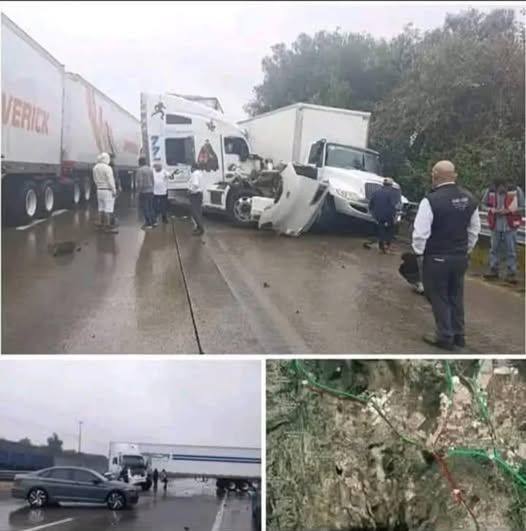
On Wednesday, November 20, a major traffic collision disrupted one of Mexico’s busiest roadways: the Mexico-Querétaro Highway. The incident, which took place near kilometer 59 in the municipality of Huehuetoca, State of Mexico, involved a trailer and several smaller vehicles. While the crash caused significant disruption and left multiple individuals with minor injuries, authorities confirmed that no lives were lost.

Even without fatalities, the accident has rekindled national debates over road safety, infrastructure maintenance, and the unique risks that heavy cargo vehicles pose on Mexico’s highways.

Sequence of Events

Preliminary reports suggest that the collision began when a large trailer, traveling toward Mexico City, approached the busy Jorobas intersection. Witnesses said the driver attempted to brake but appeared unable to stop in time, possibly due to road conditions.

The vehicle first struck a roadside embankment before colliding with multiple cars and a pickup truck. The trailer came to rest across all three northbound lanes, effectively blocking traffic and creating severe congestion that lasted for several hours.

Emergency services arrived quickly, providing assistance to those involved. Several passengers sustained minor injuries and were taken for precautionary medical evaluations. Tow trucks were eventually used to remove the damaged vehicles, allowing the highway to reopen later in the day.

Emergency Landing in Italy: Condor Boeing 757 Diverts After Engine Irregularities Mid-Flight

Air travel is often considered one of the safest modes of transportation, but when something unusual occurs thousands of feet above the ground, the experience can be unnerving for passengers and crew alike. On August 16, 2025, a Condor Boeing 757 flying from Corfu, Greece, to Düsseldorf, Germany, had to divert and perform an emergency landing in Brindisi, Italy, after pilots observed irregularities in one of the aircraft’s engines.

Although initial passenger accounts suggested flames and sparks, Condor Airlines and aviation specialists later clarified that the incident was the result of a technical reaction in the engine system rather than an actual fire. The situation serves as a reminder of both the challenges and the strengths of modern aviation safety protocols.


The Flight and Initial Events

The Boeing 757 departed from Corfu International Airport in the early evening with more than 200 passengers on board. Roughly 40 minutes into the journey, while cruising at an altitude of 36,000 feet, several passengers and crew members reported hearing loud booms and observing flashes of light coming from the right-hand engine.

Understandably, these observations created fear among those onboard. Some passengers later admitted that they prepared for the worst, sending urgent text messages to loved ones. The cabin atmosphere was tense, though the crew remained composed and quickly implemented emergency procedures.

According to reports, the cockpit crew followed established safety protocols, shutting down the affected engine and contacting air traffic control to request the nearest suitable diversion airport. Brindisi, located in southern Italy, was identified as the safest option.

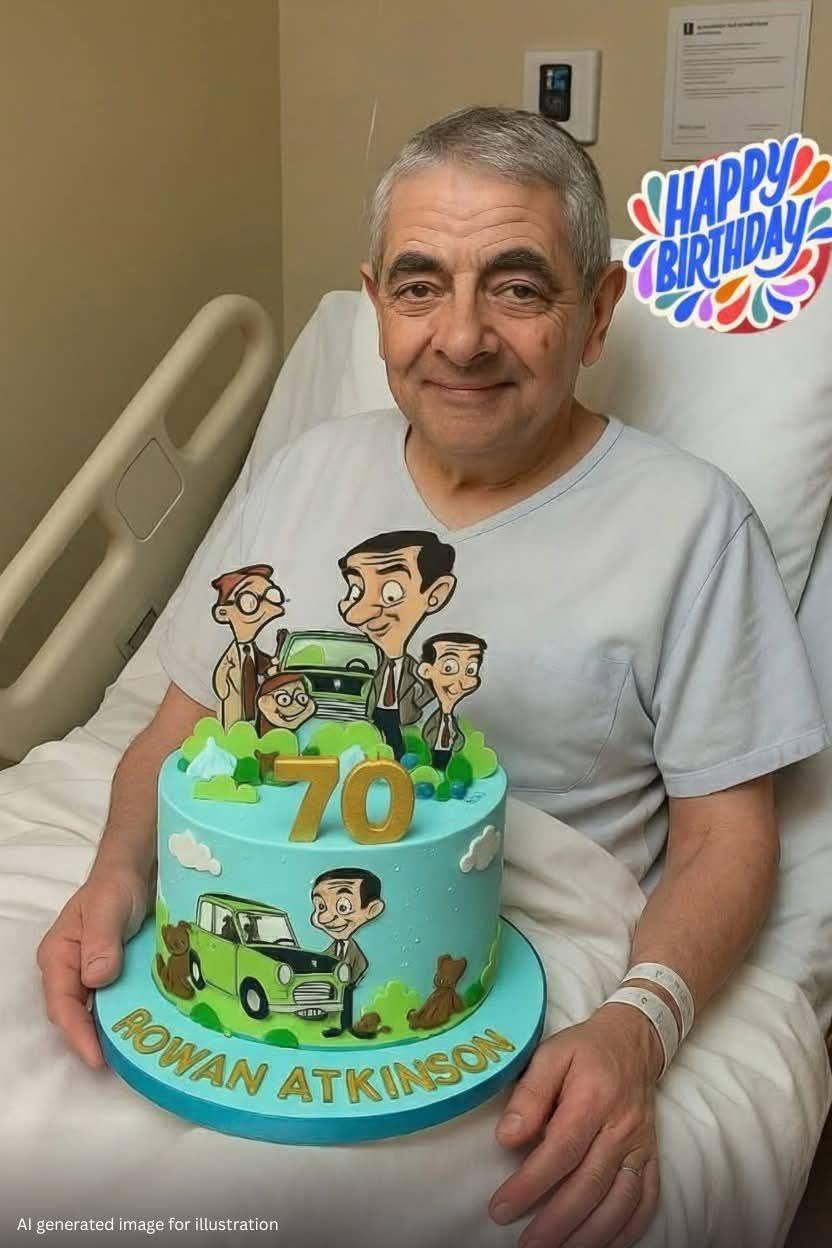
Happy Belated 70th Birthday, Rowan Atkinson — The Man Who Made the World Laugh

Few comedians have left as deep and lasting a mark on global culture as Rowan Atkinson. From the bumbling brilliance of Mr. Bean to the razor-sharp sarcasm of Blackadder, Atkinson has spent decades proving that true comedy doesn’t need translation — only timing, talent, and a touch of chaos.

A Global Icon of Laughter 

Born on January 6, 1955, Rowan Atkinson’s career has been a masterclass in versatility. Whether it’s a raised eyebrow, an awkward silence, or a perfectly timed pratfall, his humor speaks to audiences of all ages and backgrounds.

While Mr. Bean made him a household name, Atkinson’s range goes far beyond physical comedy. His early work on Not the Nine O’Clock News and his legendary performance as the cunning Edmund Blackadder revealed a wit as sharp as it was intelligent — a rare combination that few comedians ever achieve.

The Art of Wordless Comedy 

What makes Rowan Atkinson truly remarkable is his ability to make millions laugh without saying a single wordMr. Bean’s universal appeal comes from pure expression — exaggerated yet human, ridiculous yet relatable. It’s why the character remains just as funny today as it was three decades ago.

In a world divided by language, politics, and culture, Rowan Atkinson’s comedy reminds us that laughter is the one thing we all share.

A Legacy That Endures

At 70, Atkinson continues to inspire generations of comedians and creators. His work has been translated into over 190 countries, spawning memes, gifs, and references that live on in the digital age. For fans who grew up watching his antics, every clumsy fall and exaggerated grimace is a nostalgic trip back to simpler times.

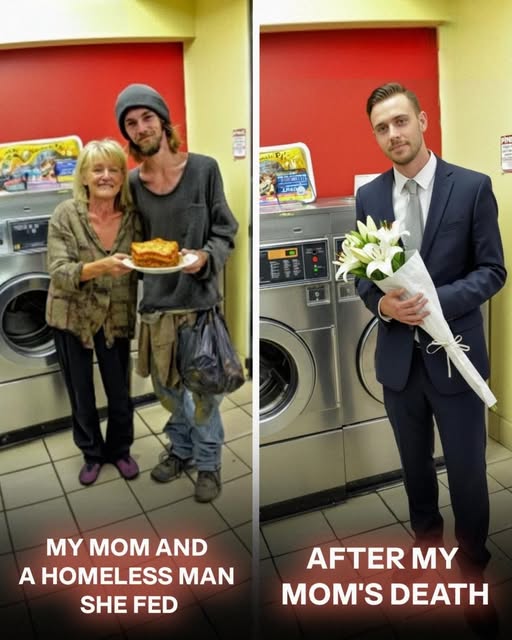
SOTD – Every Christmas, My Mom Fed a Homeless Man at Our Local Laundromat – but This Year, Seeing Him Changed Everything!

Every Christmas, My Mom Fed a Homeless Man at Our Local Laundromat — but This Year, Seeing Him Changed Everything

People love posting Christmas traditions like they’re proof that life is neat and predictable. Matching pajamas, coordinated cookies, perfect lighting. The kind of holiday you can package and sell.

Ours never looked like that.

Every Christmas Eve, my mom cooked a dinner that made our apartment smell like the version of home she was always trying to build—warm, steady, safe. If money was good, there’d be honey-glazed ham. If it wasn’t, she still made it feel like a feast. Mashed potatoes heavy with butter. Green beans fried with bacon. Cornbread that came out of the oven with a crust so golden it crackled when you cut it.

But the most important plate wasn’t ours.

She wrapped it in foil like it mattered more than everything else on the table, set it into a grocery bag, and tied the handles into a tight knot. She moved slowly when she did it, careful, like she didn’t want the warmth to leak out before it reached whoever was waiting.

I was eight the first time I asked.

“Who’s that for?” I said, watching her tuck the bag under her arm.

She didn’t look at me right away. She just pulled on her coat, checked that the bag was sealed, and said, “That one’s not for us.”

That answer didn’t satisfy me. Not then, not later. By fourteen, I was stubborn enough to demand the truth.

“Who is it for, Mom?”

She handed me my jacket. “Someone who needs it, baby.”

That was her whole explanation. No big speech. No moral lesson. Just a simple fact, like feeding somebody hungry was as normal as brushing your teeth.

We lived in a small town where everyone knew your business unless you were invisible. The invisible people were the ones you stepped around without noticing. The ones you pretended not to see so you wouldn’t have to deal with your own guilt.

There was an old laundromat at the end of our street, open twenty-four hours, lights always buzzing, air always damp with the smell of detergent and hot metal. That’s where he stayed.

His name was Eli.

The first year I saw him, he looked barely older than my cousin—late twenties, maybe. He wore the same battered hoodie every time, sleeves stretched thin at the wrists. He kept everything he owned in one plastic bag and a torn backpack that had seen too many winters. He slept curled in the corner near the soda machine, tucked into himself like he was trying to take up as little space in the world as possible.

He never begged. Never called out. Never even looked up when people walked in.

But my mom walked straight to him every year like he was expected.

She’d kneel down beside him so she wasn’t towering over him. She’d set the bag near his hands and speak softly, the way she spoke to me when I was sick.

“Hey,” she’d say. “I brought you dinner.”

Eli would sit up slowly, blinking like he wasn’t sure this was real. Then he’d say the same thing every time, voice hoarse, polite like he was trying not to be a burden.

“Thank you, ma’am. You don’t have to.”

And my mom would always answer the same way, calm and certain.

“I know. But I want to.”

When I was a teenager, I didn’t get it. I thought kindness had to come with a reason you could justify. I thought danger lived in people on the edges.

One year, as we walked back to the car, I whispered, “Mom, what if he’s dangerous?”

She didn’t flinch. She didn’t laugh. She just stared straight ahead, hands steady on the steering wheel.

“Dangerous is a hungry person the world forgot,” she said. “Not a man who says thank you.”

Over the years, pieces of Eli’s story slipped out, never all at once. My mom didn’t interrogate him. She didn’t pry. She just kept showing up. That’s what built trust.

When I was sixteen, Eli was awake when we arrived. He looked like he hadn’t slept in days, eyes raw, shoulders tense. Mom handed him the bag and asked, “You okay, Eli?”

He didn’t answer right away. Then, like something cracked open and fell out before he could catch it, he said, “I used to have a little sister.”

The words landed heavy.

“We aged out of foster care together,” he added quietly. “Then a car crash took her.”

He stopped there. He didn’t need to say more. Grief that old doesn’t come with neat details. It just sits in you.

That year my mom brought gloves with the dinner. Thick socks too. The next year there was a grocery card tucked inside the bag, and she lied badly, saying it “came in the mail.” Another year she offered to help him find a room.

Eli flinched like she’d offered him a trap.

“I can’t,” he said.

“Why not?” I asked, too blunt.

He looked down. “Because I’d rather freeze than owe anyone.”

I didn’t know if it was pride or fear, but my mom didn’t push. She just nodded.

“Okay. Dinner still stands.”

Then cancer came for my mother.

At first it was small things—tiredness, weight loss, her laugh sounding thinner. She tried to brush it off. “Probably my thyroid,” she said. It wasn’t.

She was gone in under a year.

We didn’t get one last Christmas together. We got a blurry fall full of doctors, paperwork, and watching the strongest person I knew disappear in pieces. By December, I was functioning, barely. Showering. Paying bills. Answering texts I didn’t care about. Pretending I was okay because people didn’t know what else to do with grief except expect you to tidy it up.

On Christmas Eve, I stood in her kitchen staring at the old roasting pan like it was a relic. I almost didn’t cook. I didn’t have the energy to recreate her rituals without her. But I could hear her voice in my head, steady and stubborn.

“It’s for someone who needs it.”

So I made what I could. Baked chicken instead of ham. Instant mashed potatoes. Canned green beans. Boxed cornbread. Not perfect, but warm.

I wrapped the plate in foil the way she always did. Tied the grocery bag handles tight. Got in my car and drove to the laundromat with my hands clenched around the wheel like the motion itself was keeping me from falling apart.

The laundromat looked the same from the outside. Flickering sign. Harsh fluorescent glow. The familiar smell of soap and damp air.

But inside, nothing was the same.

Eli was there—same place—but he wasn’t curled in a corner.

He was standing.

No hoodie. No blanket. No plastic bag. He wore a dark suit that fit him cleanly, pressed and sharp, like he’d borrowed it for something sacred. In one hand he held white lilies.

I stopped so abruptly my chest hurt.

He turned and saw me, and his face shifted—softened—like he’d been holding himself together by force and my presence loosened the grip. His eyes filled with tears.

“You came,” he said.

My throat tightened. “Eli?”

He nodded. “Yeah. It’s me.”

I lifted the grocery bag like I didn’t know what else to do. “I brought food.”

He smiled, but it was shaky. “She taught you well. Your mother.”

I stared at the flowers. “Why are you dressed like that?”

Eli looked down at the lilies, then back at me. “They’re for her.”

My heart lurched. “She’s gone.”

“I know,” he said quietly. “I tried to find you after the funeral. I didn’t want to intrude. But I needed you to know something. Something she asked me not to tell you until I could prove I wasn’t just the guy in the corner anymore.”

We sat down on the hard plastic chairs near the dryers, the machines thumping in the background like distant heartbeats. Eli placed the lilies beside him like they were fragile.

Then he asked, “Do you remember getting lost at the county fair when you were little?”

A cold shiver slid up my spine. I nodded slowly. “I… barely. I thought I imagined it.”

“You didn’t,” he said. “You ran up to me crying. You had a glitter butterfly painted on your cheek.”

My breath caught. That detail was too precise to fake.

“I held your hand and walked you toward security,” he continued. “A cop took you from me. Your mom came running when she saw you. She didn’t look at me like I was dangerous. She looked at me like I mattered. She thanked me, then asked my name. No one had asked my name in a long time.”

Tears blurred my vision.

“She came back the next week,” Eli said. “Found me here. Brought me a sandwich. She didn’t act like I owed her anything. She just fed me.”

He paused, swallowing hard. “And over the years, when she brought dinner, she’d tell me about you. Little things. ‘Abby passed her driver’s test.’ ‘She’s off to college.’ ‘She got her first real job.’ Like you were her whole world.”

My chest felt cracked open. “She talked about me? To you?”

Eli nodded. “All the time.”

Then he took a breath and said, “She also helped me. Not loudly. Not like a hero. She connected me to counseling. A job program. Training. It took years, but I got my footing. I worked. Saved. Stayed clean. Kept going.”

His eyes lifted to mine, steady now. “I promised her that if I ever made it, I’d wear a suit. So she could see I was okay.”

He reached into his coat and pulled out an envelope, worn at the edges like it had been handled a hundred times.

“She told me to give you this if I ever saw you again.”

Inside was a photo of me and my mom at the fair, young and smiling, cotton candy in our hands. And in the corner, slightly blurred, was Eli—standing nearby, watching like a quiet guard.

I pressed the photo to my chest and sobbed.

“She didn’t just feed me,” Eli whispered. “She saved me.”

He picked up the lilies, hands trembling. “Can I come with you? Just to say goodbye?”

I nodded because words didn’t work anymore.

We drove to the cemetery together, the food still warm on the passenger seat like proof that tradition could survive loss. Eli placed the lilies carefully on my mom’s grave and whispered something I couldn’t hear.

Then he looked at me, tears running down his face. “Before she got too sick, she asked me one more thing.”

“What?” I managed.

“She asked me to look out for you,” he said. “Not like a shadow. Not like a stranger. Like family. She said, ‘Be her guardian. Be the brother she never had. Be someone she can call when the world feels too heavy.’ And I promised.”

I broke down right there in the cold grass, grief hitting me full force, but something else too—relief. Because my mom was gone, but her choices hadn’t vanished. They were still moving through the world, still building bridges between people who needed one.

Eli knelt beside me and rested a hand on my shoulder, gentle and solid. “You’re not alone,” he said. “I know what it’s like to be alone. And I won’t let that happen to you.”

We went back to my place and ate together in silence, the kind that doesn’t demand anything, the kind that feels like understanding.

When he stood to leave, he paused at the door. “I’m not asking for anything,” he said. “I just needed you to know who your mother really was. And that I’m here if you ever need me.”

I heard my mom’s voice again, clear as if she were in the kitchen behind me.

“It’s for someone who needs it.”

So I opened the door wider.

“Don’t be alone tonight, Eli.”

His smile was small, grateful, almost disbelieving. “Okay.”

We sat on the couch and watched an old movie neither of us really followed. Somewhere around midnight, I realized the truth I’d been circling all night: my mom hadn’t just saved Eli all those years.

She’d saved me too.

She taught me that love doesn’t end when someone dies. It just changes shape. It keeps showing up—one plate, one person, one steady act at a time.

And now, in the quiet after grief, I had proof that family isn’t only blood.

Sometimes it’s the people who were fed by the same hands that raised you.

Sometimes it’s the people your mother refused to let the world throw away.

Sometimes it’s the person who shows up when it matters—because that’s what she taught them to do.
Woman comes out as abrosexual after 30-year journey!

The human experience of attraction is often portrayed as a fixed compass point, a settled identity that once discovered, remains static throughout a person’s life. However, for many individuals, the landscape of desire is not a permanent map but a shifting tide. This phenomenon of evolving attraction is more common than societal narratives often suggest, and it has a specific name: abrosexuality. While the term may be new to some, for those who live it, the label represents a vital lifeline of understanding after years of confusion.

The power of finding the right language is perhaps best illustrated by the journey of writer Emma Flint. In a deeply personal narrative shared with the public, Flint detailed a thirty-year odyssey of self-discovery that culminated in the realization that she was abrosexual. For decades, Flint navigated a world that demanded a singular “lane” of attraction, leaving her feeling perpetually adrift. At thirty-two, she reflected on a youth spent trying on various identities like ill-fitting clothes, wondering why none of them seemed to stay comfortable for long.

For a significant portion of her life, Flint identified as a lesbian, a label that seemed to fit until the internal weather changed. There were periods when she felt exclusively drawn to women, followed by unexpected intervals where she found herself attracted to men. At other times, her sexual desire would vanish entirely, leaving her in a state of asexuality, only for the cycle to begin anew weeks or months later. This constant flux created a sense of internal instability. Flint described feeling like a fraud, as if she were constantly changing her mind or failing to “commit” to an identity, rather than simply experiencing a natural internal shift.

“I felt lost, as if out at sea,” Flint explained, describing the psychological toll of being unable to pin down her own nature. The frustration didn’t stem from an inability to choose, but from the fact that her identity was inherently fluid. On any given day, she might wake up feeling entirely aligned with one sexual orientation, only to have that alignment drift toward another shortly after. It was only when she encountered the term “abrosexual” in an online forum that the decades of uncertainty finally resolved into a coherent picture. For the first time, she wasn’t “confused” or “inconsistent”; she was simply abrosexual.

Abrosexuality is a distinct identity within the LGBTQ+ spectrum that refers specifically to sexual fluidity. Unlike terms such as bisexuality or pansexuality, which describe the genders of the people one is attracted to, abrosexuality describes the nature of the attraction itself. It is a label that denotes change. An abrosexual person finds that their orientation fluctuates over time. They may move through phases that resemble homosexuality, heterosexuality, bisexuality, or asexuality, but the defining characteristic is the movement between these states.

Because abrosexuality is a personalized experience, it manifests in diverse ways. For some, the shifts occur on a day-to-day basis, with preferences changing as quickly as a mood. For others, the evolution is more gradual, with attractions toward specific genders lasting for months or even years before shifting toward another. Some abrosexual individuals also experience periods of gray-sexuality or asexuality, where the intensity of their attraction wanes significantly before returning in a new form. This lack of a “one-size-fits-all” pattern is what makes the identity both unique and, at times, difficult for others to grasp.

One of the most significant challenges abrosexual individuals face is the social pressure to provide a definitive, unchanging answer. Flint noted that even after explaining her fluidity, she encountered people who demanded she “pick a lane” to make her identity more digestible for them. This societal discomfort with ambiguity often leads to the dismissal of fluid identities as being “on trend” or a sign of indecision. However, as Flint argued, the lack of understanding from others does not diminish the authenticity of the experience. Growth and self-development often involve learning new things about one’s internal makeup, and fluidity is a legitimate way to exist in the world.

The importance of the abrosexual label lies in its ability to validate a person’s lived reality. For thirty years, Flint felt “broken” because her experience did not match the rigid categories presented to her. Finding a community and a name for her experience allowed her to stop viewing her fluidity as a flaw and start seeing it as a facet of her humanity. This visibility is crucial, as many people may spend their entire lives feeling out of place simply because they lack the vocabulary to describe their internal lives.

Flint’s story highlights a broader truth about the evolution of identity. As we develop more nuanced language to describe the spectrum of human attraction, more people are finding the courage to step out of traditional boxes. For Flint, her primary focus remains on the individual rather than their gender, allowing her to maintain deep connections even as her specific sexual attraction fluctuates. She hopes that by sharing her journey, she can help normalize abrosexuality, moving it from a misunderstood or “trendy” concept into a recognized and respected identity.

Ultimately, the journey toward self-acceptance is paved with the words we use to define ourselves. For those who find that their hearts and desires do not stay in one place, abrosexuality offers a sense of home. It serves as a reminder that attraction is not always a straight line; for some, it is a winding path, and there is profound beauty and authenticity in the journey itself. As society continues to learn and grow, the goal is for every person, regardless of how often their identity shifts, to feel seen, understood, and entirely at peace with who they are in the moment.

Don’t look if you can’t handle lt

Appearance style is an integral part of one’s image. It carries a vast amount of information about a woman. Through style, one can influence a woman’s personality, preferences, emotions, intelligence, social status, and, of course, age. Style is the collective concept of the image a woman has chosen for herself. It represents the harmonious unity of outward appearance and inner content.
“Fashion passes, style remains,” these words belong to Coco Chanel. By choosing a specific clothing and makeup style, a woman can follow fashion changes as much as she wants, while still preserving her own style. Stylists distinguish the following main styles: classic, business, “Chanel,” romantic, sporty, avant-garde, folklore, fantasy, diffuse, and “Glamour” style. Each of these styles has its own characteristics.

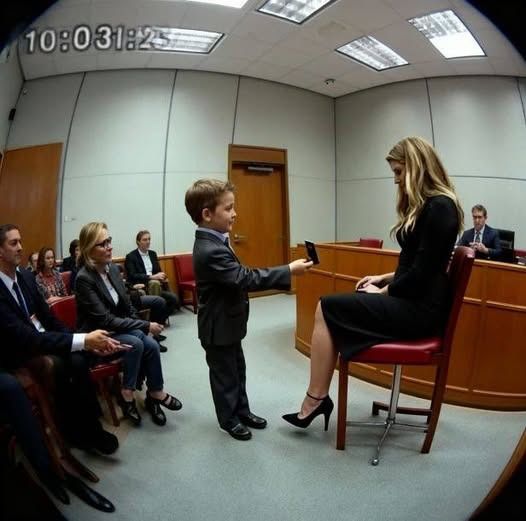
My 8-Year-Old’s Words in Court Left a Lasting Impact

The courtroom was unusually quiet, heavy with anticipation. My ex-husband stood confidently beside his lawyer, telling the judge our eight-year-old son wanted to live with him. Across the room, my son sat alone, small and composed, legs swinging gently.

When the judge asked if he wanted to speak, my son calmly asked to play something on his phone. His steady voice cut through the tension, surprising everyone more than any legal argument could.

A recording began. He explained he had recorded his thoughts so he wouldn’t forget them. He spoke about school, friends, and the comfort of familiar routines that made him feel safe and calm.

He described quiet mornings, consistency, and the reassurance of knowing what to expect. He never criticized his father or showed anger—only honesty and careful reflection far beyond his years.

When the recording ended, the courtroom fell silent. The judge’s expression softened, recognizing the courage it took for a child to speak so clearly and respectfully.

My ex shifted in his seat, clearly unprepared for what he had heard. Without drama or confrontation, the case quietly changed direction.

The judge thanked my son and focused the decision on his well-being, guided by his own words rather than adult assumptions.

Outside, the air felt lighter. My son took my hand, calm and certain. In that moment, I understood that true strength can come from a child’s honest voice—and the power of simply being heard.

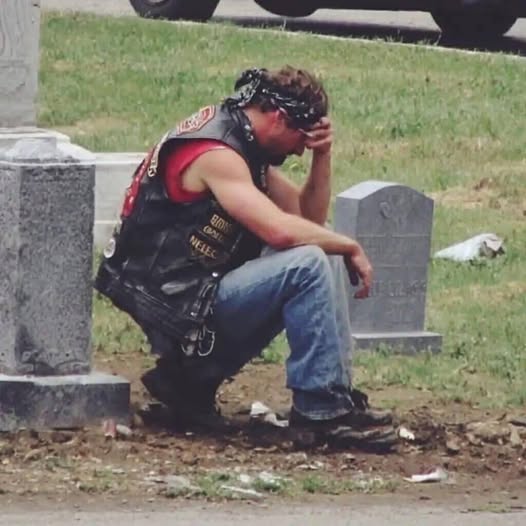
A mysterious biker visited my late wife’s grave every Saturday at exactly 2 PM, sitting silently by her headstone for an hour before disappearing again

Grief is a solitary architecture, a house built of memories where the living dwell in the silence of the departed. After my wife, Sarah, passed away, my world contracted to the size of a cemetery plot. I spent my Saturdays anchored to the passenger seat of my car, parked a respectful distance from her headstone, unable to fully let go but also unable to find peace. It was during these long, hollow afternoons that I first noticed the interloper.

Every Saturday, at exactly two o’clock, the low, rhythmic rumble of a motorcycle would cut through the cemetery’s hushed stillness. A man clad in worn leather would park beneath a sprawling, ancient maple tree near the edge of the section. With practiced, solemn precision, he would dismount, remove his helmet, and walk with a steady, heavy gait toward Sarah’s grave. He didn’t look around or check his surroundings; his focus was singular and unwavering.

He would sit on the grass beside her headstone, his posture stoic yet burdened. He never brought the traditional tokens of mourning—no lilies, no cards, no trinkets. Instead, he simply rested his palms against the earth, his eyes fixed on the marble as if reading a story only the two of them knew. After exactly sixty minutes, he would stand, press a hand firmly against the cold stone, and let out a long, shuddering exhale. It was a sound that carried the weight of a profound, jagged loss.

For months, I watched him through the windshield, my emotions cycling through a turbulent spectrum. Initially, I convinced myself he was a confused stranger or perhaps a distant relative I had never met. But as the weeks turned into months, my confusion curdled into a cold, sharp-edged anger. Who was this man to lay claim to her memory? Why did he mourn her with a devotion that felt as deep, if not deeper, than my own? In the fragile state of my mourning, his presence felt like an intrusion, a secret chapter of Sarah’s life that I had been excluded from. Every time he touched her headstone, it felt like a trespass.

The suspicion gnawed at me. I began to invent narratives of betrayal and hidden lives, fueled by the irrationality that often accompanies deep sorrow. I questioned whether I had truly known the woman I spent fifteen years with. Grief is a master of distortion, and it had turned a stranger’s quiet reverence into a threat to the sanctity of my marriage.

One overcast Saturday in November, the anger finally boiled over. As the biker turned to leave at three o’clock, I stepped out of my car, my heart hammering against my ribs. I intended to demand an explanation, to confront him about his business with my wife. But as I drew closer, the sight of his broad shoulders shaking with silent, rhythmic sobs stopped me in my tracks. He wasn’t a threat; he was a man in ruins. I retreated back to my car, haunted by the raw vulnerability of his grief, my anger replaced by a hollow, unsettling curiosity.

The following week, I waited for him at the grave. When he arrived and saw me standing there, he didn’t look surprised. He took off his helmet, revealing a face lined with years of hardship and a gaze that was remarkably clear despite his evident sadness.

“I’m her husband,” I said, my voice steadier than I felt.

He looked at the headstone, then back at me, a faint, sad smile touching his lips. “I know,” he replied softly. “She spoke of you with so much light.”

His name was Mark. As we sat together on the grass—the first time I had actually touched the ground near her since the funeral—he told me a story that shattered my perception of Sarah’s life and legacy. Two years prior, long before the illness took her, Sarah had been driving home late on a rainy Tuesday. She had seen a man standing on the edge of the Heights Bridge, his silhouette a dark omen against the gray sky. Most people would have driven on, perhaps calling the police from a safe distance, but Sarah had stopped.

Mark told me how she had sat with him on that cold concrete for three hours. He was a man broken by the loss of his daughter and a spiraling addiction that had stripped him of his dignity. Sarah didn’t lecture him or offer platitudes. She simply listened. She told him that the world was heavy, but that he didn’t have to carry it all at once. She stayed until the sun began to peek through the clouds, and she didn’t leave until he promised to check into a local clinic.

“She never told me,” I whispered, the realization of her secret heroism washing over me.

“She wouldn’t,” Mark said, his hand resting on the grass. “She told me that kindness loses its power if you use it for credit. She just wanted me to see another Saturday. So, I come here every Saturday to show her that I’m still here. I’m clean now. I have a job. I’m living because of her.”

As the sun began to dip below the horizon, the tension that had gripped my chest for months finally began to ease. I realized that my anger had been a protective shell, a way to keep my grief small and contained. I had viewed Sarah’s love as a finite resource, something that belonged only to me, but Mark showed me that her love was an expansive, living force that continued to ripple through the world long after her heart had stopped beating.

In the weeks that followed, our Saturday ritual changed. I no longer watched from the car. Instead, I sat with Mark. We shared stories—I told him about her laugh and her love of old jazz, and he told me about the night she saved his soul. We found a strange, beautiful fellowship in our shared mourning. Mark’s presence didn’t diminish my bond with Sarah; it amplified it. He was living proof of her spirit, a testament to the fact that the smallest acts of grace can have the most monumental consequences.

Sarah had been a woman of quiet depths, a person who understood that the true measure of a life is not found in grand gestures, but in the silent moments when we choose to stand by someone in the dark. Mark had been the recipient of that grace, and in turn, he had unintentionally offered it back to me. He taught me that grief is not a competition of who loved more, but a communal garden where we all tend to the memories of those who planted seeds of kindness in our lives.

The biker still comes every Saturday at two o’clock. The rumble of his motorcycle is no longer a sound that brings anger, but a welcome signal of a friend’s arrival. We sit by the maple tree, two men from entirely different worlds, bound together by the extraordinary heart of a woman who saw the light in everyone. I learned that while death may end a life, it does not end a relationship. Sarah’s love continues to grow in the lives of those she touched, proving that even in the silence of a cemetery, there is a profound, enduring conversation between the living and the dead.

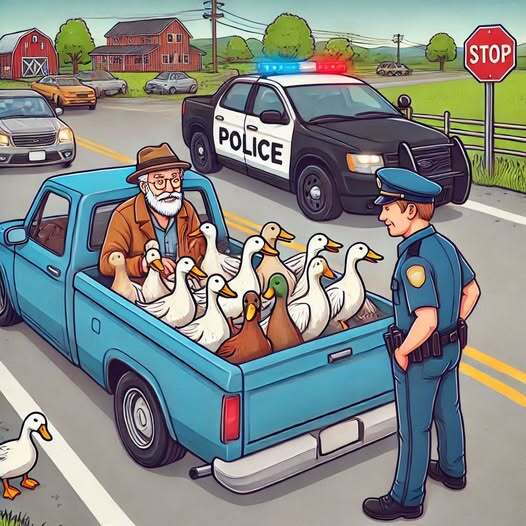
A policeman pulls over an old man driving a pickup truck!

The following collection of narratives explores the lighthearted and often ironic nature of human interactions, focusing on those moments where authority meets the unexpected with humorous results. Through the lens of these two distinct encounters, we see how misunderstandings and hidden truths can transform a standard police stop into a lasting local legend.

In a quiet, sun-drenched downtown district, where the pace of life usually moved with the rhythm of a slow-turning clock, Officer Miller prided himself on maintaining an orderly beat. He believed he had seen every possible iteration of traffic violation, from the mundane to the bizarre. However, nothing in his training manual had prepared him for the sight of a weathered, vintage pickup truck cruising down the boulevard with a cargo bed overflowing with dozens of white ducks. The ducks weren’t crated or restrained; they were simply standing in the back, shifting their weight as the truck turned and occasionally letting out a chorus of enthusiastic quacks that echoed off the storefront windows.

Miller signaled the driver to pull over. The truck came to a rattling halt, and an elderly gentleman with a shock of white hair and a mischievous twinkle in his eye leaned out the window. Miller, trying to maintain a professional demeanor despite the absurd audience peering at him from the truck bed, cleared his throat. He informed the driver that a bustling downtown was no place for a mobile poultry farm and that the presence of the flock was creating a significant distraction for other motorists. With a firm but fair tone, the officer gave a direct order: “Sir, you need to take these ducks to the zoo immediately. They belong in a proper habitat, not in traffic.” The old man nodded solemnly, promised to comply, and tipped his hat before pulling away.

Satisfied that the situation had been handled, Officer Miller returned to his patrol. Yet, the following afternoon, his jaw dropped when he saw the same familiar truck rolling down the very same street. The ducks were all still there, packed tightly into the bed, but Miller had to rub his eyes to believe what he was seeing. Every single duck in the flock was wearing a tiny, perfectly fitted pair of dark sunglasses.

Incensed by what he perceived as blatant defiance, Miller flipped on his lights and sirens. He marched up to the driver’s side and exclaimed, “I thought I told you yesterday to take these ducks to the zoo!” The old man beamed at the officer with a look of pure contentment. “I did, Officer! We had a marvelous time yesterday at the zoo. The little rascals enjoyed it so much that today, I decided to take them to the beach!” In that moment, the officer realized that the old man’s interpretation of “taking them to the zoo” had been a matter of recreation rather than relocation, turning a stern directive into a permanent vacation for a very lucky flock of waterfowl.

While the story of the ducks became a favorite at the local precinct, another tale of a police stop in a neighboring small town carried a much sharper edge of irony. This town was the kind of place where everyone knew everyone else’s business, but Officer Higgins was a relatively new recruit, eager to prove his commitment to the letter of the law. He had staked out a prime spot on Main Street, determined to catch any motorist bold enough to exceed the modest speed limit.

His opportunity arrived in the form of a sedan zipping past him at a clip that was clearly inappropriate for the residential stretch. Higgins gave chase and pulled the car over. The driver, a young man dressed in a sharp, somewhat rumpled tuxedo, looked frantic. As Higgins approached the window, the man began to speak. “But Officer, I can explain—”

Higgins, who had decided that morning to adopt a “no-nonsense” persona, snapped back, “Just save it. I’ve heard every excuse in the book.” The man tried again, his voice rising in desperation. “Please, it’s really important. I just wanted to say—”

“And I said to keep quiet!” Higgins interrupted, opening the car door. “You’re going to jail to cool your heels until the chief gets back. We don’t tolerate reckless driving on my watch.” He ignored the man’s continued pleas, handcuffed him, and escorted him to the local holding cell. The driver sat on the wooden bench, head in his hands, silent and defeated.

A few hours passed. The sun began to set, casting long shadows through the bars of the cell. Higgins, feeling a slight twinge of guilt for his earlier harshness, decided to check in on his prisoner. He figured a little bit of good news might ease the tension before the paperwork was processed. “You should consider yourself lucky,” Higgins said, leaning against the cell door. “The Chief is out at his daughter’s wedding today. He’ll be in a fantastic mood when he gets back tonight. He’ll probably let you off with a stern warning and a fine.”

The prisoner looked up, his expression a mix of exhaustion and dark amusement. He adjusted the bow tie that was now hanging loosely around his neck. “I wouldn’t count on that,” the man replied.

Higgins frowned. “Why not? Like I said, the Chief is a family man. He’s celebrating one of the happiest days of his life.”

The man leaned back against the cold stone wall of the cell and sighed. “Because, Officer, the Chief isn’t just at the wedding. He’s the father of the bride. And I? I’m the groom.”

The silence that followed was heavy with the weight of Higgins’s sudden realization. In his zeal to enforce the law, he hadn’t just caught a speeder; he had kidnapped the guest of honor and left the town’s highest-ranking official waiting at the altar for a man who was currently behind bars. The irony of the situation was absolute: the Chief’s “good mood” was currently being dismantled by the minute, and Higgins’s career was likely to follow suit once the cell door was finally opened.

Both stories serve as a testament to the unpredictable nature of the “human element” in law enforcement. Whether it is an old man treating his ducks to a summer holiday or a groom racing against the clock to reach his own wedding, these moments remind us that the world rarely follows a strict script. Sometimes, the best way to handle a situation isn’t with a set of handcuffs or a stern command, but with a bit of patience and a willingness to listen—before the ducks put on their sunglasses or the groom misses his “I do.

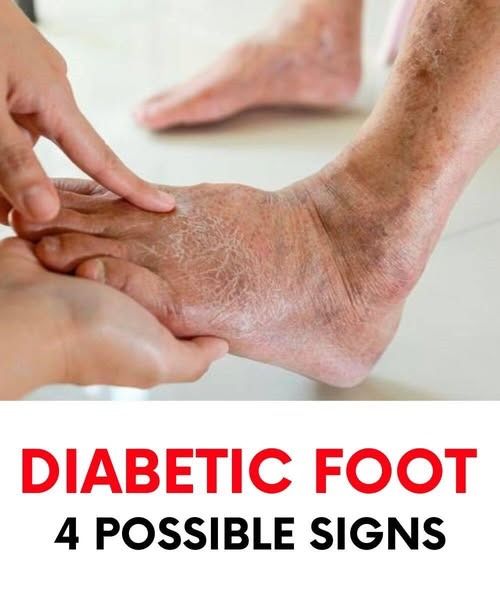
Diabetic foot: what it is and how to treat one of the most serious complications of diabetes

Diabetic foot is one of the most serious and potentially life-altering complications associated with diabetes mellitus. It typically manifests in the form of open wounds, ulcers, or persistent sores on the feet that heal very slowly—or sometimes do not heal at all. These wounds may seem minor at first, but when ignored or improperly treated, they can develop into deep infections that affect muscle, bone, and tissue. In the most severe cases, this can result in gangrene and ultimately lead to partial or complete amputation of the affected limb.

This condition primarily affects individuals who have been living with diabetes for many years, especially those with poorly managed type 1 or type 2 diabetes. The major contributors to diabetic foot problems are two common complications of diabetes: peripheral neuropathy and poor blood circulation. Neuropathy causes a loss of sensation in the feet, making it difficult to feel pain, pressure, or injuries. This means that cuts, blisters, or pressure sores can go unnoticed and untreated. At the same time, reduced blood flow to the lower limbs delays the healing process and increases the risk of infection.

Because of these factors, prevention and early detection are essential. People living with diabetes should inspect their feet every single day. This daily habit can significantly reduce the risk of complications. Look closely for signs of trouble—such as redness, swelling, cuts, cracks, or any areas of skin breakdown. Don’t forget to check between the toes, under the soles, and around the heels. Even small blisters or calluses can become dangerous if not treated properly.