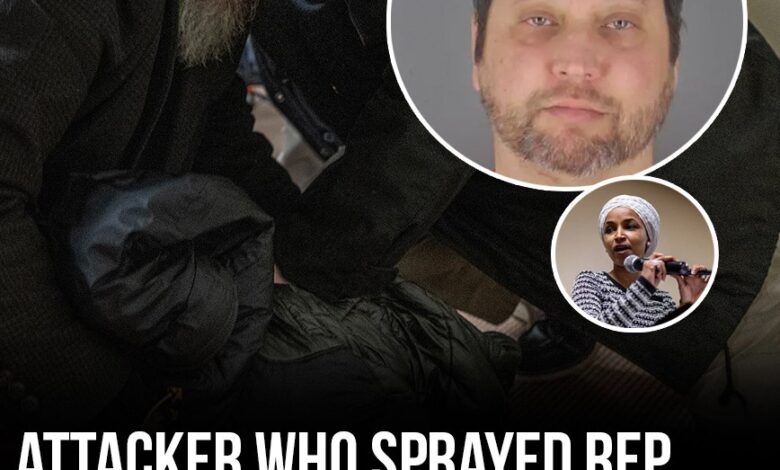
Man Who Attacked Rep Omar Identified, Background Reveals Alarming Details

The security of public officials and the sanctity of the democratic process have once again become the focal point of national conversation following a jarring assault on Representative Ilhan Omar. The incident occurred earlier this week during what was intended to be a routine town hall event in Minneapolis, Minnesota. As constituents gathered to engage in a dialogue regarding immigration enforcement and the recent localized actions of Immigration and Customs Enforcement (ICE), the atmosphere of civic engagement was shattered by a sudden act of physical intimidation. The assault has not only prompted a deep dive into the background of the perpetrator but has also reignited a broader debate about the rising tide of hostility directed at elected representatives in the United States.

The event, designed to be an open forum for community members to voice their concerns and receive updates on federal policy, was in full swing when the disruption occurred. According to eyewitness accounts and official reports, a man later identified as 55-year-old Anthony Kazmierczak moved toward the stage with a deliberate speed that caught many in the audience off guard. Before security could intervene, Kazmierczak deployed a liquid substance, spraying it directly toward Representative Omar. The immediate reaction was one of confusion and alarm as security personnel moved with practiced efficiency to neutralize the threat, successfully restraining Kazmierczak and removing him from the premises.

In the immediate aftermath, the primary concern was the nature of the liquid used in the attack. Witnesses described a pungent, overwhelming odor that filled the front of the room, raising fears of a chemical or biological threat. Per standard emergency protocols, a hazardous materials (hazmat) team was dispatched to the scene to conduct a thorough evaluation of the substance. While the hall remained under a cloud of uncertainty, Representative Omar displayed a level of composure that has become a hallmark of her public identity. After a brief assessment by the hazmat specialists, it was determined that the liquid did not pose a significant health risk or long-term toxic threat. Despite the harrowing nature of the encounter, Omar declined medical transport, opting instead to return briefly to the podium to reassure her constituents. Her message was clear: while the physical space had been violated, her commitment to the work would not be shaken by acts of cowardice.

The legal fallout for Anthony Kazmierczak began almost immediately. He was booked into custody on suspicion of third-degree assault, though law enforcement officials have signaled that the investigation is far from over. As detectives and federal agents peel back the layers of Kazmierczak’s life, a troubling portrait is beginning to emerge. Authorities have confirmed that he is no stranger to the legal system, possessing a criminal record that includes felony and misdemeanor offenses dating back several years. Furthermore, a review of his personal history revealed a trajectory marked by significant financial instability and social isolation—factors that investigators often look at when trying to understand the catalysts for erratic behavior.

Perhaps more alarming are the digital footprints Kazmierczak left behind. Investigators have spent the last several days scouring publicly available online posts associated with him, which reportedly contain a litany of intense and highly polarized political opinions. While the FBI and local police have been careful to state that they have not yet officially determined if a specific ideology served as the direct motivation for the assault, the presence of such rhetoric provides a somber context for the attack. In an age where digital echo chambers can amplify grievances, the transition from online vitriol to physical confrontation remains a primary concern for domestic intelligence agencies.

Following the incident, Representative Omar spoke candidly about the environment in which she and her colleagues must now operate. She noted that the volume and intensity of threats against her person have reached unprecedented levels, often spiking in direct correlation with specific political narratives or high-profile media coverage. She argued that the assault in Minneapolis cannot be viewed in a vacuum; rather, it is the physical manifestation of a sustained period of inflammatory rhetoric directed not just at her, but at the diverse communities she represents. For Omar, the incident serves as a grim validation of her long-standing warning that words, when weaponized by those in power, eventually find their way into the hands of those willing to act on them.

The broader context of this attack is part of a documented and disturbing trend. Over the last several years, there has been a measurable increase in threats and physical confrontations targeting public servants across the political spectrum. What were once considered safe spaces for democratic exchange—town halls, school board meetings, and local rallies—have increasingly required the kind of heavy security presence usually reserved for high-stakes international summits. Lawmakers from both sides of the aisle have expressed a growing anxiety that the very openness that makes American democracy unique is now being used as a vulnerability by those looking to bypass the ballot box in favor of intimidation.

The investigation into the Minneapolis assault is now a multi-agency effort, with the Federal Bureau of Investigation working alongside local police to determine if Kazmierczak acted alone or if he was part of a larger network of radicalized individuals. This review extends beyond the individual to the very nature of public safety at civic events. Security experts are currently analyzing the breach to see how Kazmierczak was able to get so close to the stage with a concealed substance, a finding that will likely influence how town halls are protected moving forward. There is a delicate balance to be struck: if security becomes too claustrophobic, the vital connection between a representative and their constituents is lost; if it remains too relaxed, the risk to life becomes untenable.

Representative Omar has remained undeterred, continuing her legislative schedule and appearing at scheduled events with a visible security detail but an unchanged message. She has doubled down on the idea that the “theater of democracy” must remain open to all, insisting that to retreat in the face of violence is to give the aggressor exactly what they want. As the case against Kazmierczak moves toward the prosecutorial phase, the findings of the inquiry will be watched closely by officials nationwide.

The Minneapolis incident stands as a stark reminder of the challenges inherent in modern governance. It highlights the volatile intersection of mental health, political polarization, and the ease of access to public figures. As the investigation continues, the focus remains on ensuring that the public square remains a place of debate rather than a site of violence. For Representative Omar and her colleagues, the goal is to ensure that the facts of the case dictate the legal outcome, while the values of the democratic process continue to dictate the nature of their service—free from the shadow of fear and the escalation of unchecked hostility.

I Spent Weeks Preparing a Surprise Party for My Husband but He Walked in Holding Another Womans Hand – So I Took the One Thing He Valued Most!

For five years, I believed my marriage was a fortress. It wasn’t just the shared mortgage on our three-bedroom Craftsman or the weekend projects spent stripping wallpaper and choosing the perfect shade of eggshell white that gave me this confidence. It was the rhythm of our life: the shared custody of our golden retriever, Benny, the late-night takeout eaten on the living room floor, and the quiet, whispered conversations about what we would name our first child. Aaron and I were the couple our friends called “goals,” a steady anchor in a sea of fleeting modern romances.

But in the months leading up to his thirty-fifth birthday, the air in our home grew thin. Aaron, a medical sales representative often on the road, became a ghost even when he was physically present. Our conversations felt like they were being filtered through a thick pane of soundproof glass. I blamed the distance on work stress and the long hours I spent grading English essays, telling myself that every marriage has its seasons of winter. To thaw the ice, I decided to go all out for his birthday. I spent six weeks meticulously planning a surprise party that I hoped would act as a reset button for our relationship.

I coordinated flights for his childhood friends, secured a chocolate cake from a bakery with a six-month waiting list, and spent hours creating a slideshow of our decade-long journey together. I wanted to remind him of the laughter we had shared in rain-soaked tents and sun-drenched European plazas. On the evening of the party, I transformed our backyard into an ethereal wonderland of fairy lights and lanterns. I wore a deep green dress—the one he once told me made me look like a goddess—and curled my hair for the first time in a year.

As the sun dipped below the horizon, our home filled with the muffled laughter of forty people. Megan, Aaron’s sister, squeezed my hand in the kitchen. “He’s going to be floored, Lara. You’ve outdone yourself.” We waited in the shadows of the patio furniture, wine glasses poised, as the sound of Aaron’s key turned in the lock. When the door swung open, we erupted. “Surprise!” echoed off the fences, confetti cannons popped, and cheers filled the night air.

The celebration died in an instant.

Aaron stood in the amber glow of the fairy lights, but he wasn’t alone. Clinging to his arm was a woman who looked like she had been airbrushed into existence. She was younger, a sleek vision with platinum-blonde waves and a smile that radiated a predatory confidence. They were holding hands—not casually, but with the interlaced fingers of a couple in a deep, established romance. The silence that followed was visceral, broken only by the soft wagging of Benny’s tail against a wooden chair.

Aaron didn’t look ashamed. In fact, he looked triumphant. He raised his free hand, signaling for silence as if he were about to give a toast. “First, I want to thank Lara for this incredible effort,” he said, his voice smooth and devoid of remorse. “But since everyone is here, I have an announcement. Lara and I are divorcing. And I’d like you all to meet Beverly, my fiancée.”

The world tilted on its axis. The word “fiancée” rang in my ears like a physical blow. Beside him, Beverly tilted her head, her eyes scanning the room with smug satisfaction, reveling in the shock she had helped orchestrate. I felt the heat of humiliation crawling up my neck, and for a second, my knees threatened to buckle. But then, a cold, hard clarity took hold. I realized Aaron hadn’t just cheated; he had timed this reveal to maximize his own “main character” moment, hoping to use my own party as a stage to debut his new life while I was too stunned to fight back.

He was wrong.

I straightened my shoulders, stepped out of the shadows, and picked up a silver knife. I tapped it against my champagne flute, the sharp clink-clink-clink cutting through the frantic whispering of our friends. “Attention, everyone,” I said, my voice steady and clear. Beverly smirked, likely expecting a tearful plea or a scream of rage.

“Congratulations, Beverly,” I continued, walking toward them until I was inches away. “But you aren’t just marrying a man who doesn’t know how to keep a vow. You’re becoming a stepmother.” I placed my hand gently over my stomach. “I’m eight weeks pregnant. Surprise, Aaron.”

The transformation in the yard was instantaneous. Aaron’s smug mask crumbled, the blood draining from his face as his glass slipped slightly in his hand. Beverly’s eyes narrowed, her practiced smile freezing into a mask of pure panic. The silence that followed was so thick you could hear the bubbles fizzing in the glasses.

“I planned this night for the man I thought I knew,” I said, addressing the room but looking directly into Aaron’s hollow eyes. “But it turns out I hosted a party for a coward and his mistress. So, to all of you who actually care about me: let’s toast to real fresh starts. One where the dead weight is finally gone.”

I raised my glass, and to my surprise, Megan and dozens of our friends raised theirs in return. Aaron and Beverly fled the party shortly after, retreating into the darkness as the very people they intended to impress turned their backs.

In the weeks that followed, I didn’t just mourn; I mobilized. I hired Janelle, a divorce attorney known for her “scorched earth” policy. We discovered that Aaron had been funneling our joint savings into a secret account for months, calling it a “wedding fund” for Beverly. He even had the audacity to ask for the house, claiming Beverly needed the “aesthetic” for her social media work.

I wasn’t having any of it. Janelle laid out the hotel receipts, the falsified business trips, and the financial betrayal with surgical precision. By the time we were finished in court, I didn’t just keep the house; I walked away with the majority of the assets and the one thing Aaron truly loved: his restored 1967 Mustang. It was a car he had spent three years obsessing over in the garage. When I took the keys, I didn’t even plan to drive it. I just wanted him to know that the cost of his “new life” was everything he had built in his old one.

Aaron sent one final text: “You didn’t have to humiliate me like that.”

I replied: “You didn’t have to lie. But you did, in the home we built. Enjoy your fiancée.”

Today, the Craftsman looks different. I repainted the master bedroom in a vibrant coral and turned the “fiancée’s dream office” into a nursery filled with stars and galaxies. I still take Benny to the beach, and sometimes, standing on the porch under those same fairy lights, I realize that Aaron didn’t just lose a wife. He lost the only person who would have ever thrown him a party. I lost a liar, but I gained a future that is entirely mine.

My Dad Died a Hero in My Eyes – the Next Day, a Stranger Knocked and Said My Whole Life Was Built on a Lie!

Kevin was my Superman. He didn’t wear a cape or possess the ability to fly, but he performed a far more difficult feat: he showed up every single day of my life without fail. Growing up in a cramped, drafty apartment, our circumstances were modest, yet Dad had a way of making our four walls feel like a palace. He was the master of Saturday morning pancakes, flipping them dangerously high into the air and pretending to fumble just to elicit a belly laugh from me. He was the man who squeezed his large frame into tiny elementary school chairs during parent-teacher conferences, nodding with grave seriousness as he discussed my math progress. He was the one who arrived at my baseball games straight from a grueling second shift, work boots still caked in mud, clutching a thermos of coffee and cheering louder than any other parent in the stands.

My mother had passed away when I was an infant—or so I was told. I had no memory of her, only a single, framed photograph on the mantle and Dad’s occasional whispers that I had her eyes. “It’s just you and me, buddy,” he would say, ruffling my hair. “And that’s more than enough.” When I was seven and plagued by nightmares of monsters lurking beneath my bed, he would sit on the edge of my mattress at two in the morning, rubbing steady circles on my back. “Breathe with me, Brian,” he’d whisper. “In and out. I’ve got you.” I believed him because he never gave me a reason not to.

Then, the world stopped turning. On a nondescript Tuesday, while I was stocking shelves at the local grocery store, my manager pulled me aside with a look of profound pity. A construction accident. A scaffolding collapse. My father was gone before the ambulance even reached the hospital. One moment he was the sun in my sky, and the next, there was only a cold, hollowing eclipse.

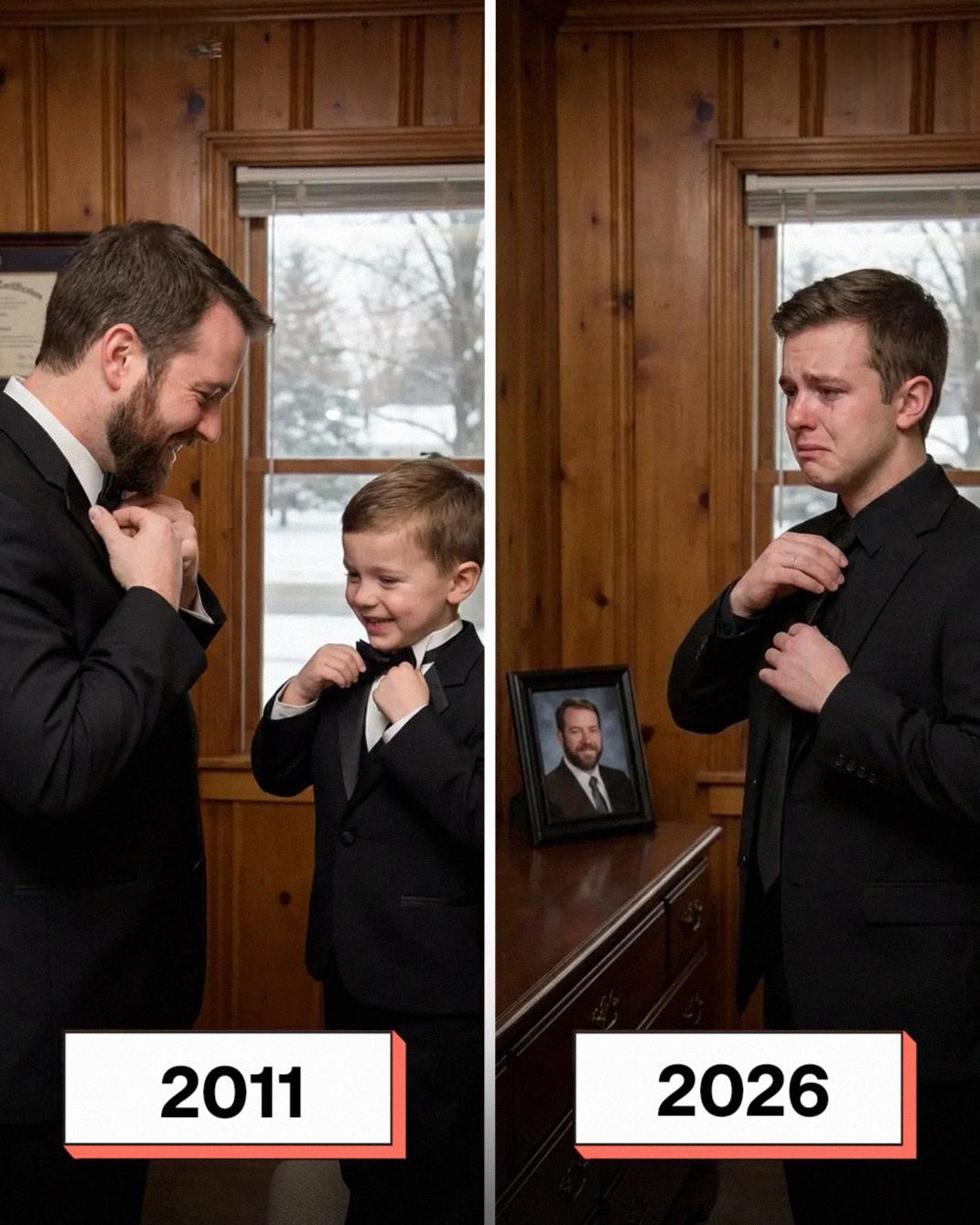
The funeral was a blur of navy blue and stifling grief. I wore his favorite tie, the one he’d taught me to knot when I was sixteen. I stood by his casket feeling as though the air had been sucked out of the room, listening to his construction crew describe how I was his entire world. I returned to our quiet house and sat among his things, staring at his boots by the bed, unable to fathom a future without him.

The next morning, a sharp ring of the doorbell jolted me from a fitful sleep on the couch. I dragged myself to the door, expecting a neighbor with a casserole. Instead, I found a woman in her mid-forties, her eyes red-rimmed and her hands trembling as she clutched her purse.

“Are you Kevin’s son?” she asked. When I confirmed I was Brian, she took a shaky breath. “My name is Ella. I’m your father’s sister.”

I stared at her, baffled. Dad had never mentioned a sister. “Dad was an only child,” I countered.

“We were estranged,” she said, her voice dropping to a low, urgent tone. “But I need to talk to you. Your father wasn’t who you think he was. Kevin owed me money—fifteen thousand dollars. I helped him with the adoption fees eighteen years ago, and he never paid me back.”

The word “adoption” hit me like a physical blow. I let her in, my mind racing, certain this woman was a con artist. We sat in the living room where she laid out a story that felt like a fever dream. She claimed that eighteen years ago, a catastrophic car accident on a rainy night had claimed the life of Kevin’s pregnant wife. In the other vehicle, a young couple had also perished. But a baby—me—had been thrown from the wreckage in a carrier and survived.

“Kevin arrived at the scene,” Ella whispered, her bitterness momentarily giving way to awe. “He had just lost his wife and his unborn child. He was at his absolute breaking point. But a friend on the force told him you were headed for the foster system because your biological parents had no living relatives. Kevin went to see you the next day. He told me that when they put you in his arms, it felt like you were meant to find each other. He spent every cent he had—and fifteen thousand of mine—to fight through the legal paperwork and background checks to bring you home.”

I sat in stunned silence, clutching a folded, yellowing document she had produced: a copy of my adoption papers. The names and dates were undeniable. “I told him it was a mistake,” Ella admitted, her eyes filling with tears. “I told him he should move on, remarry, and have his ‘own’ children. He cut me off for that. He wouldn’t let anyone suggest you were anything less than his true son.”

After Ella left, apologizing for her cold approach but leaving the truth behind, I remained in Dad’s armchair for hours. The revelation was staggering, but as I replayed the memories of my life, the “lie” didn’t feel like a lie at all. It felt like the ultimate truth. Kevin hadn’t just been a father by circumstance; he had been a father by choice. In the middle of his deepest agony, when he had every reason to turn inward and drown in his own grief, he chose to reach out and save a stranger’s child. He didn’t owe me his name, his protection, or his Saturday mornings. Yet, he gave them all to me, working double shifts and wearing old clothes just so I could have a baseball jersey and a future.

I grabbed his old jersey from the closet and drove to the cemetery. The grass over his grave was still fresh. I collapsed beside the headstone that simply read: Kevin. Beloved Father.

“You didn’t owe me anything,” I choked out, pressing my forehead against the cold stone. “You could have walked away. You could have let the system take me. But you showed up. You chose me.”

I realized then that my life wasn’t built on a lie. It was built on a foundation of love so fierce that it had rewritten the laws of biology. He had turned the worst night of his life into the salvation of mine. I didn’t care about the blood in my veins; I cared about the man who had rubbed my back during nightmares and left notes in my lunchbox.

I stood up, wiping my face and draping his jersey over my shoulder. I felt a strange new strength. I knew how to be a man, how to show up, and how to love without reservation because I had been raised by a hero. As I walked back to my car, I looked at the sky and whispered, “See you later, Superman.” I finally understood that some legacies aren’t passed down through DNA; they are forged in sacrifice and carried forward by those who remember that being a father isn’t about who you are born to, but who you choose to love.

A Biker Sat Down At My Empty Thanksgiving Table And Ate With Me!

Thanksgiving used to be a season of noise, a chaotic symphony of laughter, clinking silverware, and the rich, savory scent of Patricia’s slow-roasted turkey. My house, once a sanctuary of family life, echoed with the footsteps of children and the boisterous stories of neighbors. But time is a thief. My wife passed away three years ago, taking the heart of the home with her. My son moved to California, his life measured in fleeting FaceTime calls, and my daughter had become a ghost, lost to a six-year silence born from a disagreement I could no longer even recall with clarity.

At seventy-eight, I had resigned myself to the quiet. I was a Vietnam veteran, a man who had survived the humidity of the jungle only to be marooned in the sterile stillness of a suburban living room. This year, I didn’t bother with the traditions. I bought a frozen turkey dinner—a sad, compartmentalized tray of processed meat and watery gravy. I sat at the mahogany table, which was designed to seat eight but now held only one. I had laid out a single paper napkin and a solitary fork, staring at the empty chairs that felt like monuments to everything I had lost.

I was about to bow my head to say grace when a heavy knock thundered against the front door. It wasn’t the tentative tap of a neighbor; it was a command.

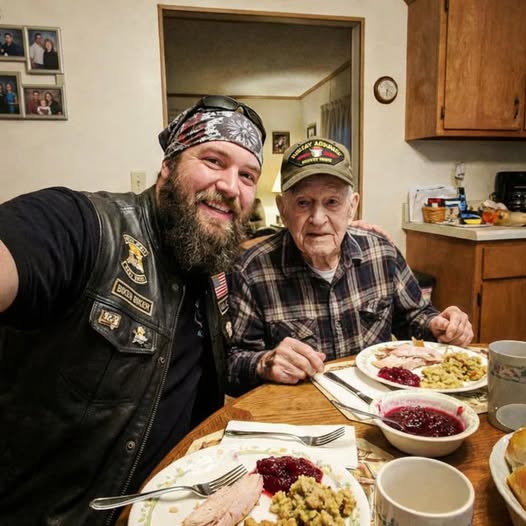
On my porch stood a man who looked like he had been carved out of granite and road asphalt. He was in his late fifties, sporting a graying beard and a leather vest heavy with patches. A motorcycle—a sprawling, chrome-heavy beast—idled at the curb.

“Donald Fletcher?” he asked, his voice a low rumble.

“I am,” I replied, leaning on the doorframe.

“Army, 1st Infantry Division? 1967 to 1969?”

I stiffened. Those years were a locked box in my mind. “How do you know that?”

“I need to talk to you,” the man said, lifting a heavy grocery bag. “Can I come in?”

I stepped aside, propelled by a curiosity I hadn’t felt in years. He walked into my kitchen and took one look at my plastic tray of frozen food. Without asking permission, he set his bag down and began unpacking a feast: a bird that was still steaming, real mashed potatoes with a well of melted butter, fresh green beans, and a whole pumpkin pie.

“My name is Curtis Webb,” he said, setting two plates. “You want to say grace?”

I said the prayer Patricia had used for forty years, my voice cracking on the final Amen. Only then did Curtis look me in the eye. “Forty-nine years ago, you saved my father’s life.”

The room went cold. I felt the phantom weight of a rucksack on my shoulders. Curtis continued, “April 12, 1968. Phu Loi. An ambush. My father took shrapnel to the chest. You carried him two miles through the bush to the evac zone while the world was ending around you.”

I remembered the day, though I had never known the name. I remembered the heat, the smell of copper and rot, and the desperate, ragged breathing of the kid on my back. I remembered telling him he wasn’t allowed to die because he had a life to live.

“My father, James Webb, passed away last month,” Curtis said quietly. He pulled a folded letter from his vest. “He made me promise I’d find you. He said I couldn’t let another Thanksgiving pass without you knowing what you did.”

With trembling hands, I opened the letter. The handwriting was shaky, the script of a man reaching the end of his strength.

“Dear Donald Fletcher,” it began. “You don’t know me, but you gave me fifty-six years. You gave me a wife named Helen, three children, and seven grandchildren. A whole life that wouldn’t have existed if you’d left me in that jungle. I’ve thought about you every birthday, every Christmas, and every time I held one of my babies. I thought: this moment exists because a man I barely knew carried me when I couldn’t walk.”

The letter went on to explain how James had searched for me for decades, but I had gone quiet, retreating into the anonymity that many veterans seek. “Whatever happened over there, whatever keeps you up at night,” the letter whispered from the page, “you mattered. You brought me home. An entire family tree branches out from that one moment. That is your legacy, Donald. Not the war. The life.”

I had to stop reading. The tears I had suppressed since Vietnam finally broke the levee. Curtis sat in silence, a stoic guardian of my grief. When I finally looked up, he was showing me photos on his phone—a teenage girl named Emma who wanted to be a doctor, a boy named Marcus who loved dinosaurs. Each face was a miracle, a living testament to a choice I had made when I was just a twenty-two-year-old kid terrified of the dark.

“I told him he’d have three kids,” I whispered, the memory surfacing. “I told him he’d die old and happy just to keep him awake.”

“Every word you said came true,” Curtis replied.

We spent the afternoon eating real food and talking about the men who didn’t make it back. Curtis told me he was traveling the country to find twenty-three other men on his father’s list—men who had shared rations, written letters, or stood guard. He was a son on a mission of gratitude. Before he left to ride back to Tennessee, he did something I hadn’t experienced in years: he hugged me. “You’re family now, Donald. Family doesn’t leave family alone.”

That afternoon changed the chemistry of my house. The silence no longer felt like a weight; it felt like a pause. Inspired by James Webb’s fifty-six-year journey of gratitude, I sat down and wrote a letter of my own to my daughter, Sarah. I told her I was sorry for the time we had wasted and that I loved her more than my own pride.

The response wasn’t immediate, but a week later, my phone rang. “Dad?”

Today, four years have passed. I am eighty-two. My Thanksgiving table is no longer empty. Sarah is here with her husband; my son Michael flies in from the coast; and Curtis, who has become as much a son to me as my own, brings his family up from Tennessee. We have to add card tables to the living room just to fit everyone.

James Webb gave me fifty-six years of his life through that letter, and Curtis gave me back the meaning of my own. I still have the nightmares sometimes, but now, I have people to call when the jungle gets too loud. I look around at the fourteen people laughing in my home and I realize that James was right. My legacy isn’t the combat or the trauma. My legacy is sitting right here, passing the gravy and sharing the pie. We carry each other—then, now, and always.

Rainbow Shimmer on Deli Ham! How to Tell If Its Safe or Spoiled

It is a common kitchen phenomenon that has sparked countless moments of hesitation at the deli counter: you peel back the plastic of a fresh pack of ham, only to find a vibrant, metallic rainbow shimmering across the surface of the meat. Shifting hues of oil-slick green, iridescent purple, and neon blue dance across the pink slices, looking more like a chemical spill or a petri dish experiment than a sandwich ingredient. For many, this visual display is an immediate deal-breaker, a neon sign flashing “danger” that sends the expensive cold cuts straight into the trash. However, the science behind this “meat rainbow” reveals a fascinating intersection of physics and anatomy that is far more benign than it appears—provided you know how to distinguish a harmless light show from a genuine health hazard.

To understand the rainbow shimmer, one must look at the structural architecture of the meat itself. This effect is known in the scientific community as iridescence, and it is a physical phenomenon rather than a chemical or biological one. Meat is composed of densely packed muscle fibers that are bundled together in a highly organized, parallel fashion. When ham is sliced—particularly when it is sliced thinly against the grain—the knife blades cut across these muscle fibrils, exposing their cross-sections. These exposed fibers create a microscopic, ridged surface.

When light hits these moist, aligned fibers, the meat acts as a natural diffraction grating. The light is physically split into its component colors, much like the surface of a CD or the shimmer on a soap bubble. The specific colors you see are determined by the spacing between the muscle fibers and the angle at which the light hits the surface. Because deli ham is often cured, the addition of salts and nitrates helps preserve the moisture on the surface of the meat, which further enhances the light’s ability to refract. Consequently, that unsettling green or blue glow is usually just a sign that the ham was sliced with precision and contains a healthy amount of moisture. It is an optical illusion of the highest order, having nothing to do with the quality or safety of the product.

However, the presence of an iridescent shimmer does not grant the meat a permanent “safe” status. While the rainbow itself is harmless, it can coexist with actual spoilage, and the real danger lies in a consumer becoming so accustomed to the shimmer that they ignore the legitimate red flags of bacterial growth. Because deli meats are highly processed and often handled in environments prone to cross-contamination, they are particularly susceptible to spoilage and foodborne pathogens like Listeria monocytogenes. Unlike the rainbow effect, which is purely structural, the signs of true spoilage are chemical and biological.

To accurately assess the safety of your deli meat, you must employ a multi-sensory approach that goes beyond a simple visual check for color. The first and most reliable indicator is texture. Fresh deli ham should feel firm and slightly damp, but not wet. If the surface of the meat feels sticky, tacky, or coated in a thick, translucent film of slime, it is a definitive sign that bacteria have begun to colonize the surface. These biofilms are produced by spoilage bacteria as they break down the proteins and sugars in the meat. If your fingers leave a “string” of slime when you pull them away from a slice, the meat is no longer fit for consumption.

The second line of defense is the sense of smell. Freshly sliced ham should have a mild, salty, or slightly smoky aroma. Any deviation into the territory of “off” odors is a reason for immediate disposal. Look for sharp, pungent scents that resemble ammonia, vinegar, or sulfur. A sour or “yeasty” smell is often the first indication that lactic acid-producing bacteria have taken hold, even if the meat still looks perfectly pink. In the world of food safety, the nose is often more accurate than the eyes; if your instinct tells you the smell is even slightly “funky,” trust it.

Color, while often deceptive due to the aforementioned iridescence, can still provide clues when the change is foundational rather than superficial. While a rainbow shimmer is localized and shifts as you move the meat, true spoilage often results in a permanent, dull color change. If the vibrant pink of the ham begins to fade into a muddy gray, a sickly brown, or develops distinct fuzzy patches of white or green, mold or oxidation has occurred. Graying meat is often a sign that the preservatives have failed and the fats are beginning to turn rancid.

Time is the final, invisible factor in the safety equation. Even if the ham looks like a shimmering masterpiece and smells like a fresh smokehouse, it has a strict shelf life once the original packaging is breached. The United States Department of Agriculture (USDA) generally recommends that opened deli meats be consumed within three to five days. Even in a cold refrigerator, certain psychrotrophic bacteria can continue to grow. Because Listeria can grow at refrigeration temperatures and often produces no smell or change in appearance, adhering to the “five-day rule” is the only way to mitigate the risk of a silent infection.+2

Proper storage can extend the quality—though not necessarily the safety—of the meat. To prevent the ham from drying out and to minimize exposure to oxygen (which accelerates spoilage), deli meat should be wrapped tightly in foil or plastic wrap and then placed in an airtight container. Storing it in the “meat drawer” of the refrigerator, which is typically a few degrees cooler than the rest of the unit, can also help slow the metabolic processes of spoilage organisms.

In summary, the next time you see a green or purple glow on your ham, take a deep breath and realize you are likely looking at the physics of light rather than a toxic chemical. The “meat rainbow” is a testament to the intricate, fibrous beauty of animal protein. However, do not let that shimmering distraction blind you to the tactile and olfactory evidence of decay. If the meat is slimy, if it smells like a laboratory, or if it has been sitting in your fridge for a week, no amount of iridescent beauty can make it safe to eat. By combining an understanding of diffraction with a rigorous check of texture and scent, you can enjoy your sandwich with the confidence that you are feeding your body, not a colony of bacteria.

What happened after that was beyond any courtrooms reach!

Most men fear the call at midnight—the sudden ringing that splits the silence of a peaceful life. But for a soldier, the real terror isn’t the noise of war. It isn’t the crack of a sniper rifle or the concussive thud of mortar fire. The true terror is the silence of coming home to an empty house. I have seen bodies torn apart by IEDs in the shifting sands of the desert; I have watched entire villages burn to ash under a relentless sun. But nothing—absolutely nothing—prepared me for the sight of my wife, Tessa, dismantled in a hospital bed. Thirty-one fractures. That was the tally the doctors gave me. A face I had kissed a thousand times, the face that haunted my dreams during long nights in the sandbox, had been transformed into a map of purple and black ruin. The worst part? The people who had done this were standing right outside her door, smiling at me.

The flight back from deployment usually feels like the longest hours of a man’s life. You sit there, vibrating with the engine, projecting a movie of the moment you walk through the front door. I had been gone for six months on a rotation that, on paper, did not exist. Delta Force work means you do not call home. You do not tell your wife where you are. You simply disappear and pray she is still there when you return. I had replayed the reunion a hundred times: the heavy thud of my gear in the hall, Tessa sliding in her socks on the hardwood floor to jump into my arms. But when my taxi pulled up to our driveway at 0200 hours, the house was a black void. Tessa never turned the porch light off when she knew I was coming. She called it her lighthouse. Tonight, the house was a tomb.

The front door was unlocked, cracked open by an inch. My hand went to my waistband instinctively, reaching for a sidearm that wasn’t there. As I pushed inside, the smell hit me. It wasn’t dinner or her perfume; it was the sharp, chemical sting of bleach, and underneath that, the metallic tang of old pennies. It is the scent of violence. I cleared the rooms out of habit until I reached the dining room. The rug was gone. The floor was wet. Someone had scrubbed it, but in the moonlight, I could see the dark stains the chemicals couldn’t lift. My phone buzzed. It was a Detective Miller, telling me to get to the ICU at St. Jude’s.

At the hospital, the nurse looked at me with pity—the second warning that the news was catastrophic. Outside Room 404 stood a blockade: Victor Wolf and his seven sons. The Wolf Pack. Victor owned half the real estate in the county and the souls of the politicians who ran it. His sons—Dominic, Evan, Felix, Grant, Ian, Kyle, and Mason—were arrogant men who treated the world as something to be bought or broken. They had never liked me; to them, I was a “government dog” unworthy of their princess.

“Finally,” Victor said, smoothing his Italian suit. “The soldier returns.”

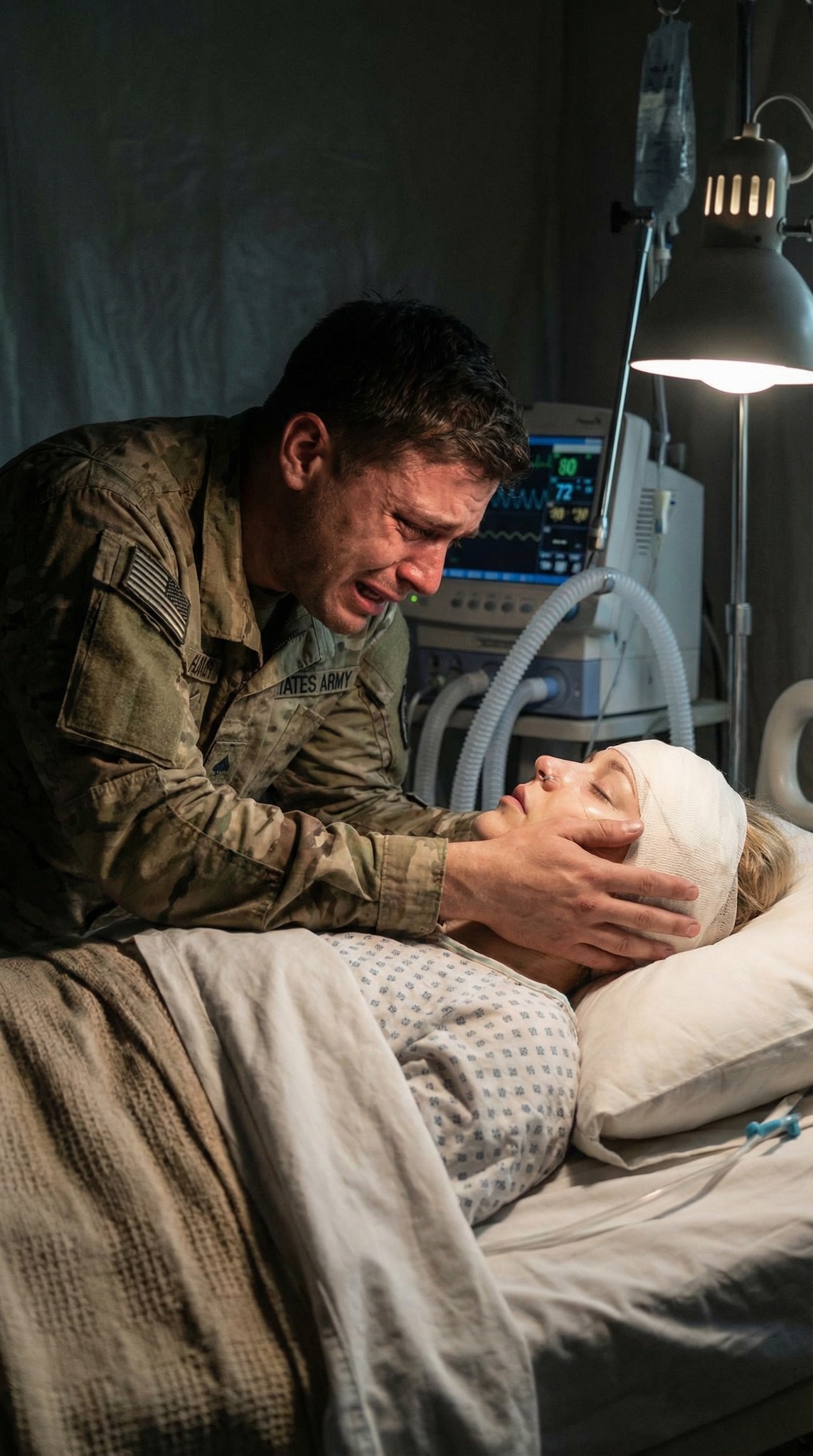
Dominic tried to block my path, but he saw the predator in my eyes and stepped back. Inside the room, the only sound was the rhythmic hiss and click of a ventilator. Tessa’s face was swollen to twice its size, her jaw wired shut, one eye sealed into a bulbous mass. One side of her head was shaved to accommodate railroad tracks of stitches. I touched her shoulder—the only place that didn’t look broken. Detective Miller followed me in, muttering about a “robbery gone wrong.”

“A robbery,” I repeated, my voice dangerously calm. I looked at Tessa’s fingernails. They were clean. “My wife is a kickboxer, Detective. If a stranger attacked her, she would have clawed his eyes out. There would be skin under her nails. She didn’t fight back because she knew the people in the room. Or she was held down.”

I walked back out to the pack. They were laughing. Mason, the youngest, was the only one shaking, his coffee cup rippling in his hand. Victor told me to go back to my base, that he would “handle” his daughter. I stepped into his space. “That’s the problem, Victor. You’re handling it too well. You look inconvenienced, not sad.” I looked at the medical chart. “Thirty-one strikes with a blunt object. A robber hits once or twice to get what they want. Thirty-one times is hate.”

I left the hospital and drove back to the house. I needed to switch off the husband and wake up the operator. I knelt in the dining room, analyzing the blood patterns. Vertical drops. No long arcs. This wasn’t a wild struggle; it was a disciplined punishment. I saw the scuff marks on the floor—four distinct sets of heavy treads around the blood pool. They had pinned her.

Tessa had warned me before I deployed that her father was becoming paranoid about what she knew regarding his shipping business. “Check the table,” she had said. I crawled under the heavy oak dining table and found it: a digital voice recorder taped to the frame. I swapped the batteries and hit play.

Static. Then Victor’s voice: “Hello, sweetheart. Daddy’s home.” Then the sound of the pack entering. Tessa’s voice was resigned. She refused to sign papers letting them use my name for shell companies. She called me honorable. Victor’s response was a command: “Grab her.” Then the thud. I stopped the tape. I didn’t need to hear her pain to know the truth. The police report was a work of fiction.

I moved to the garage, pushing a hidden latch behind my tool pegboard. Inside the steel safe was my past. I didn’t take a gun—a gun is quick, a gun is mercy. I took my plate carrier, a KA-BAR knife, and heavy-duty flex-cuffs. I drove to an all-night hardware store and bought industrial plastic sheeting, a staple gun, and a framing hammer.

At 02:45, I sat in the shadows near The Velvet Lounge, Victor’s private club. The pack spilled out, celebratory and drunk. Mason trailed behind, refusing a ride, wanting to “clear his head.” He started walking down a quiet street, his hands shaking as he lit a cigarette. He was the weak link. He was the one who had held her legs while the others broke her.

I stepped out of the darkness behind him. The silence of the night was about to end. Mason was going to speak, and by the time I was finished, the Wolf Pack would realize they had made a fatal miscalculation. They had left her alive, and they had left me with nothing to lose.