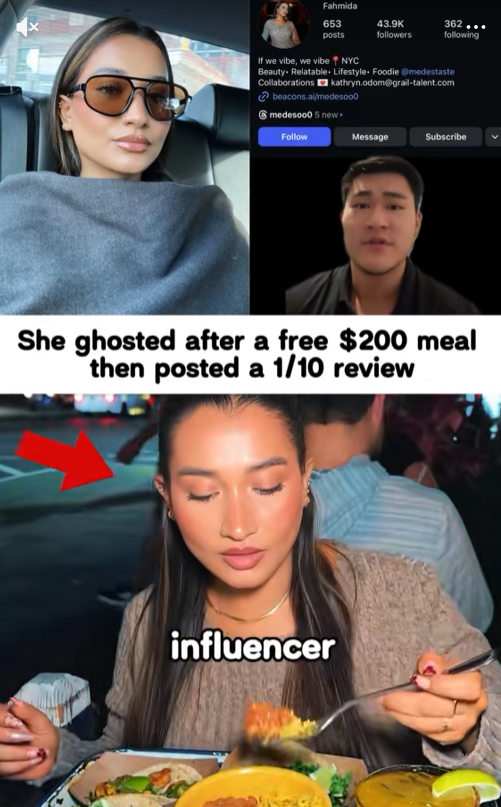

“Restaurant Calls Out Influencer After Collaboration Goes Wrong — Viral Video Sparks Massive Online Debate”
A viral video is taking over social media after a restaurant owner publicly accused an influencer of vanishing after receiving a complimentary $200 meal — and then allegedly posting a harsh 1/10 review. The situation has sparked a heated debate online, with thousands weighing in on influencer ethics, brand expectations, and what really happened behind the scenes.
The clip, which features screenshots of the influencer’s public profile and footage of her dining at an outdoor restaurant, tells only one side of the story — the business owner’s. In the video, he claims he offered the influencer a free meal as part of a promotional collaboration. According to him, the expectation was that she would create content featuring the restaurant in exchange for the comped meal.
However, the restaurant owner says the influencer never followed up, never responded to messages, and then unexpectedly posted a harsh 1/10 review days later. The video suggests that the negative rating came without any communication or attempt at resolution, frustrating the business and prompting them to share the story publicly.
But it’s important to note that none of these claims have been independently verified, and the influencer herself has not released a statement explaining her side of the incident. Because the situation involves real identities, viewers are urged to remember that viral posts often simplify complex events.
Still, the video has exploded online, inspiring thousands of comments from both sides of the debate. Some viewers sympathize with the restaurant, arguing that influencer collaborations should be honored professionally and that accepting a $200 meal — only to post a harsh review — appears unfair. Others say influencers are not obligated to give positive reviews and that honesty matters more than promotional agreements.
Marketing professionals who weighed in online explained that influencer-business collaborations often lead to misunderstandings when expectations aren’t documented clearly. Many noted that without a signed agreement, both parties may interpret the arrangement differently. What one party considers “ghosting,” another may see as simply reviewing their authentic experience.
Meanwhile, supporters of the influencer say that a meal being free does not guarantee a positive experience — or a positive rating. They argue that transparency in reviews is crucial and that businesses shouldn’t expect glowing promotions in exchange for freebies.
Food critics online emphasized that customer feedback — including negative feedback — is a normal part of running a restaurant. They also reminded viewers that social media videos often highlight the most dramatic version of a story to gain traction.
As the video continues to spread, some users are calling for the influencer to respond and clarify what happened. Others argue that the internet should refrain from attacking individuals based on one-sided claims. The comment sections across multiple platforms reflect a split audience: some believe the business was wronged, others believe the influencer is being unfairly targeted, and many believe the truth is likely somewhere in between.
For now, the incident serves as a reminder of how fragile — and public — brand collaborations can become in the age of social media. A single disagreement, especially when broadcast online, can trigger a viral storm long before the full story is known.
Whether this situation resolves privately or continues unfolding publicly, one thing is certain: the internet is watching closely.