
Explosive Claim Sparks Panic: Is Campbell’s Soup Really Using “3D-Printed M*at” for the Poor?
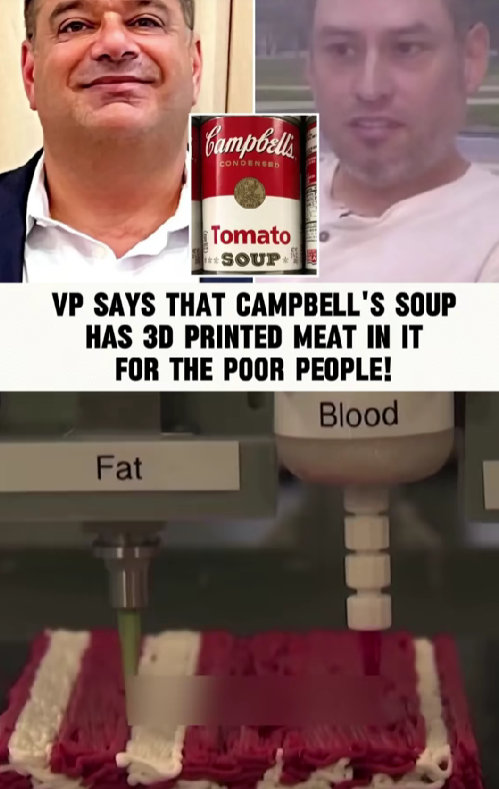
A shocking image spreading rapidly online has ignited confusion, anger, and fear after a bold claim suggested that Campbell’s soup contains “3D-printed m*at” allegedly intended for poor people. The image shows two men side by side, a can of Campbell’s Tomato Soup in the center, and below it a graphic of what appears to be a laboratory-style food printing process labeled with words like “fat” and “blood.” The caption across the image states: “VP says that Campbell’s soup has 3D printed meat in it for the poor people!”
The wording alone was enough to trigger outrage.
Social media users reacted instantly, with many accusing corporations and governments of secretly experimenting on low-income communities. Others expressed disgust, fear, and betrayal, claiming this was proof of a hidden agenda surrounding food production. The phrase “for the poor people” intensified the backlash, framing the claim as not only disturbing but deeply discriminatory.
However, experts and fact-checkers urge extreme caution.
There is no verified evidence that Campbell’s uses 3D-printed m*at in its products, nor that any government official has made such a statement. Campbell’s Tomato Soup ingredients are publicly listed and regulated, and the company has repeatedly stated that its products comply with strict food-safety laws. Viral images like this often combine unrelated visuals — such as experimental lab footage of food technology — with brand logos and misleading captions to create maximum emotional impact.
The lower portion of the image appears to reference experimental food-printing technology, which is currently being researched in controlled environments for future applications like alternative proteins or space missions. These technologies are not secretly deployed in mass-market canned foods. Scientists stress that even when 3D food printing is used, it involves plant-based or lab-grown materials under transparent testing conditions — not hidden additives slipped into grocery products.
So why does content like this spread so fast?
Fear and distrust around food is powerful. In times of economic pressure, rising food prices, and declining trust in institutions, people are more likely to believe narratives suggesting exploitation of vulnerable groups. Adding a recognizable brand name amplifies the emotional reaction and encourages rapid sharing — often without verification.
Media literacy experts warn that this type of post is designed to provoke outrage, not inform. The use of authoritative language (“VP says”), combined with shocking visuals and moral framing, creates the illusion of credibility. But without named sources, official statements, or reputable reporting, such claims should be treated as misinformation.
Campbell’s has not announced any use of 3D-printed food ingredients, and food regulators would legally require clear disclosure if such technology were ever introduced. Claims suggesting secret experimentation on specific populations fall into the category of conspiracy-style misinformation, which can cause unnecessary panic and harm.
That said, the viral reaction does highlight a real issue: people are deeply concerned about what they eat and who controls food systems. Transparency, labeling, and ethical innovation matter — and companies are increasingly under pressure to communicate clearly about ingredients and processes.
If you see alarming food claims online, experts recommend:
- Check official company statements
- Look for coverage from reputable news outlets
- Be cautious of images without sources
- Avoid resharing content designed to provoke fear
In the end, while the image is shocking, the claim itself lacks evidence. The real danger isn’t hidden ingredients — it’s how fast unverified information can spread, shaping fear before facts ever catch up.