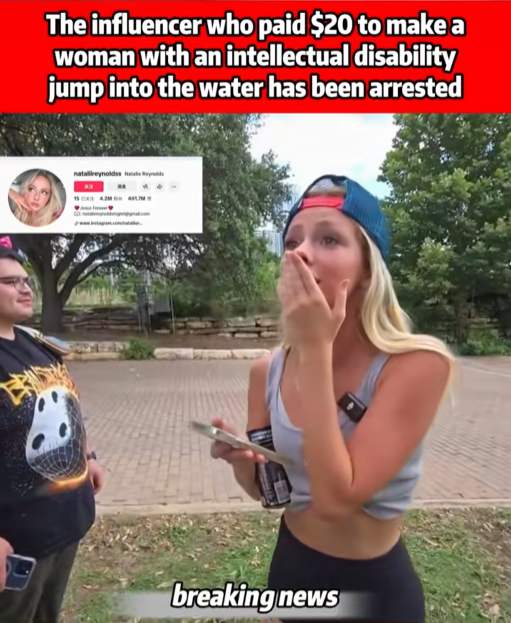

Influencer Arrested After Shocking $20 Stunt Exploits Woman With Intellectual Disability
What began as a disturbing viral clip has now taken a serious legal turn. An influencer at the center of a growing online backlash has reportedly been arrested after allegedly paying a woman with an intellectual disability just $20 to jump into the water — a stunt many viewers immediately condemned as exploitative, dangerous, and deeply unethical.
The footage, which spread rapidly across social media, shows the influencer interacting casually in a public space, appearing relaxed and confident as the situation unfolds. At first glance, it looks like just another piece of online content. But context quickly changed everything. As more details emerged, viewers realized the woman involved may not have fully understood the risks or the intent behind the stunt.
That realization sparked outrage.
Advocacy groups, disability-rights activists, and everyday users flooded comment sections demanding accountability. Many argued that this was not harmless content creation, but an example of someone abusing their platform and power for clicks, views, and profit — at the expense of a vulnerable individual.
According to reports, the influencer allegedly offered the woman $20 as an incentive, a sum critics described as insulting and predatory given the potential danger involved. What made the situation even more troubling was the apparent lack of safeguards, consent clarity, or concern for the woman’s well-being. Viewers questioned whether she was pressured, manipulated, or simply treated as a prop for viral engagement.
As the backlash intensified, authorities began looking into the incident.
Law enforcement sources later confirmed that the influencer had been taken into custody in connection with the stunt. While official charges and court details are still developing, the arrest itself marked a major shift in how such online behavior is being treated. For many, it signaled that viral fame does not place influencers above the law.
Online reaction to the arrest was swift and divided.
Some users expressed relief, saying the situation never should have escalated to this point and that the influencer had crossed a clear moral and legal line. Others debated where responsibility lies in influencer culture, questioning how platforms continue to reward increasingly extreme behavior with visibility and monetization.
What’s undeniable is that this case has reignited a larger conversation about ethics in content creation.
In recent years, stunts involving humiliation, risk, or manipulation have become disturbingly common, especially when vulnerable people are involved. Critics argue that the pressure to go viral has pushed some influencers to abandon basic human decency, replacing empathy with engagement metrics.
Disability advocates emphasized that people with intellectual disabilities are especially at risk of being exploited in public settings. They stressed that true consent requires understanding, freedom from pressure, and respect — not a small cash offer dangled in front of someone for entertainment.
As the legal process continues, many are watching closely to see what consequences follow. Will this case become a warning to other influencers? Or will it fade into the endless cycle of online outrage?
For now, one thing is clear: the era of “anything for content” is colliding head-on with real-world accountability. And this time, the internet spectacle didn’t end with likes and shares — it ended with an arrest.