I Raised My Best Friends Children, Years Later, a Hidden Truth Came to Light!
I had always believed that the measure of a person’s life could be found in the promises they kept. For me, that promise was etched into the quiet, sterilized air of a hospice room where my best friend, Rachel, spent her final days. We had been inseparable since the third grade, moving through life in a synchronized dance of shared classrooms, first heartbreaks, and the chaotic joy of motherhood. When Rachel lost her husband to a sudden accident and was subsequently diagnosed with a terminal illness, the world felt as though it were collapsing. In those final, whispered conversations, she gripped my hand with a strength that defied her frailty and made me swear that her four children would never be separated. I gave her my word without a second of hesitation. To me, it wasn’t just an obligation; it was the ultimate act of love for the sister I had chosen.
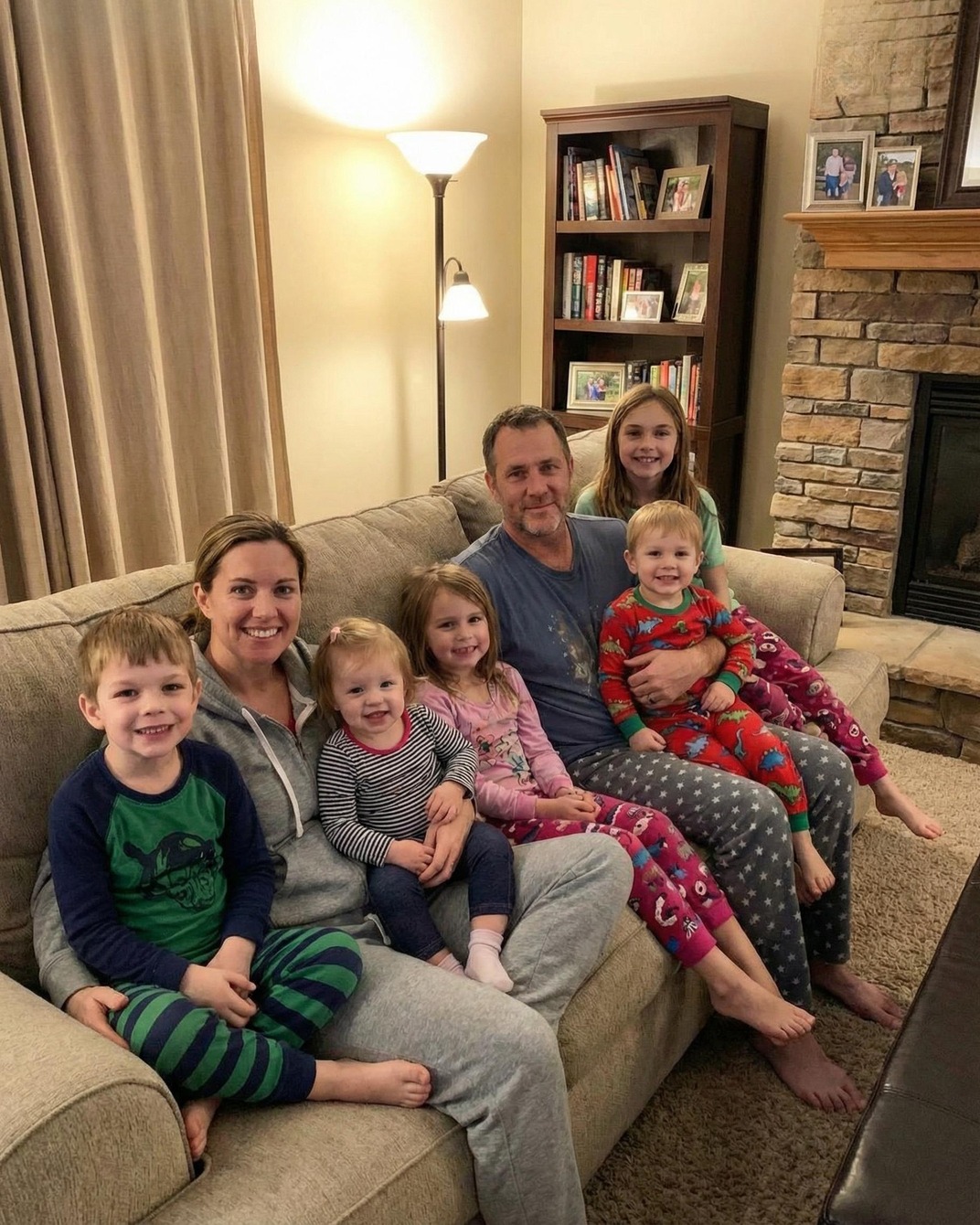
When the funeral ended and the casseroles stopped arriving, my husband and I folded Rachel’s four children into our own family of two. Our modest house suddenly groaned under the weight of six children, but over the years, the sharp edges of grief were worn smooth by the relentless march of routine. The tears at bedtime eventually turned into laughter over burnt pancakes, and the sprawling chaos of school schedules and soccer practices became our new normal. I took pride in the fact that we had built a fortress of stability. I thought I knew every corner of Rachel’s heart, and I believed our family was built on a foundation of absolute truth.
That belief shattered on a Tuesday afternoon, ten years after Rachel had passed.
The woman standing on my porch was around my age, dressed in a sharp coat that looked out of place in our suburban driveway. She looked exhausted, her eyes rimmed with a redness that suggested she had been rehearsing this moment for a very long time. When she handed me a thick, cream-colored envelope, I recognized the handwriting instantly. It was Rachel’s—the familiar, loopy cursive that had once filled my birthday cards and grocery lists.
I retreated to the kitchen, my heart thumping against my ribs like a trapped bird. As I unfolded the letter, the room seemed to grow cold. Rachel’s voice poured off the page, desperate and confiding. She confessed that Leo, the youngest of the four children I was currently raising, was not biologically hers. Years earlier, a woman Rachel worked with had found herself in a desperate situation, overwhelmed by a life that was falling apart and unable to care for a newborn. Rachel, whose heart had always been too big for her own good, had agreed to take the baby in and raise him as her own, bypassing the formal channels to protect the biological mother from the judgment of her family.
The letter detailed a pact: Rachel had promised that if the mother ever found her footing and could provide a stable life, they would “revisit the arrangement.” Rachel had written the letter just before she died, intending to give it to me, but she had ultimately hidden it away, perhaps paralyzed by the fear that I would refuse to take Leo if I knew the truth, or that the siblings would be torn apart.
The woman on my porch, whose name was Sarah, spoke with a voice that trembled but held a terrifying resolve. She told me about a decade of recovery, of a life painstakingly rebuilt from the ashes of addiction and poverty. She spoke of the hollow ache that had followed her every day since she handed her baby to Rachel. She told me she was ready now. She wanted her son back.
I looked past her, through the window to the backyard where Leo was currently wrestling with his older brother in the grass. I saw the way he laughed—that deep, belly-shaking sound that filled our house with light. I thought of the night terrors I had soothed, the math homework we had puzzled over together, and the way he reached for my hand whenever he felt unsure. To Sarah, Leo was a possibility, a chance at redemption for a past mistake. To me, Leo was the boy whose favorite color was orange, who hated peas, and who had been my son in every way that mattered for ten years.
“I understand your pain,” I told her, my voice surprising me with its steadiness. “And I can’t imagine the strength it took to get where you are today. But Rachel’s promise wasn’t the only one made. For ten years, I have been the one to kiss his scraped knees. I am the only mother he remembers. Biology is a fact, Sarah, but it isn’t a family. Leo is legally my son through the adoption we finalized after Rachel’s death, and more importantly, he is part of a pack of siblings who are his entire world.”
The conversation that followed was agonizing. Sarah spoke of legal rights and the “truth” that Leo deserved to know. I spoke of psychological stability and the cruelty of uprooting a child from the only home he had ever known. When she finally left, she left a warning—a threat of lawyers and courtrooms that lingered in the air like a coming storm.
That night, after the house had finally gone quiet, I sat at the kitchen table with Rachel’s letter. I felt a surge of anger toward my friend for leaving me with such a jagged secret, for the burden of a choice she should have made while she was still alive. But as the anger subsided, I realized that Rachel had been acting out of the same fierce, protective instinct that was currently surging through me. She had been a woman trying to navigate an impossible situation with the only tool she had: love.
I realized then that some truths arrive late not to destroy us, but to test what we are made of. Rachel’s hidden truth didn’t change the last ten years. It didn’t change the fact that Leo’s siblings were his best friends, or that my husband was the man he looked to for guidance. Love is often a messy, complicated tapestry of mistakes and desperate choices, but the warmth it provides is real.
The legal battle that followed was long and draining, a series of cold rooms and clinical evaluations that threatened to pull our family apart at the seams. But through it all, we remained a united front. We eventually reached a mediation that allowed Leo to remain in our home while gradually being introduced to Sarah—not as a replacement mother, but as a part of his history that he had a right to understand when he was ready.
Standing in the hallway now, watching the children head off to school, I feel the weight of the burden I carry, but I also feel an immense, quiet certainty. Rachel gave me her children, and in doing so, she gave me a life I never expected. The truth didn’t rewrite our future; it only made the foundation of our family stronger. We are not bound by blood, but by the promises we keep and the fierce resolve to protect the home we built from the wreckage of the past.