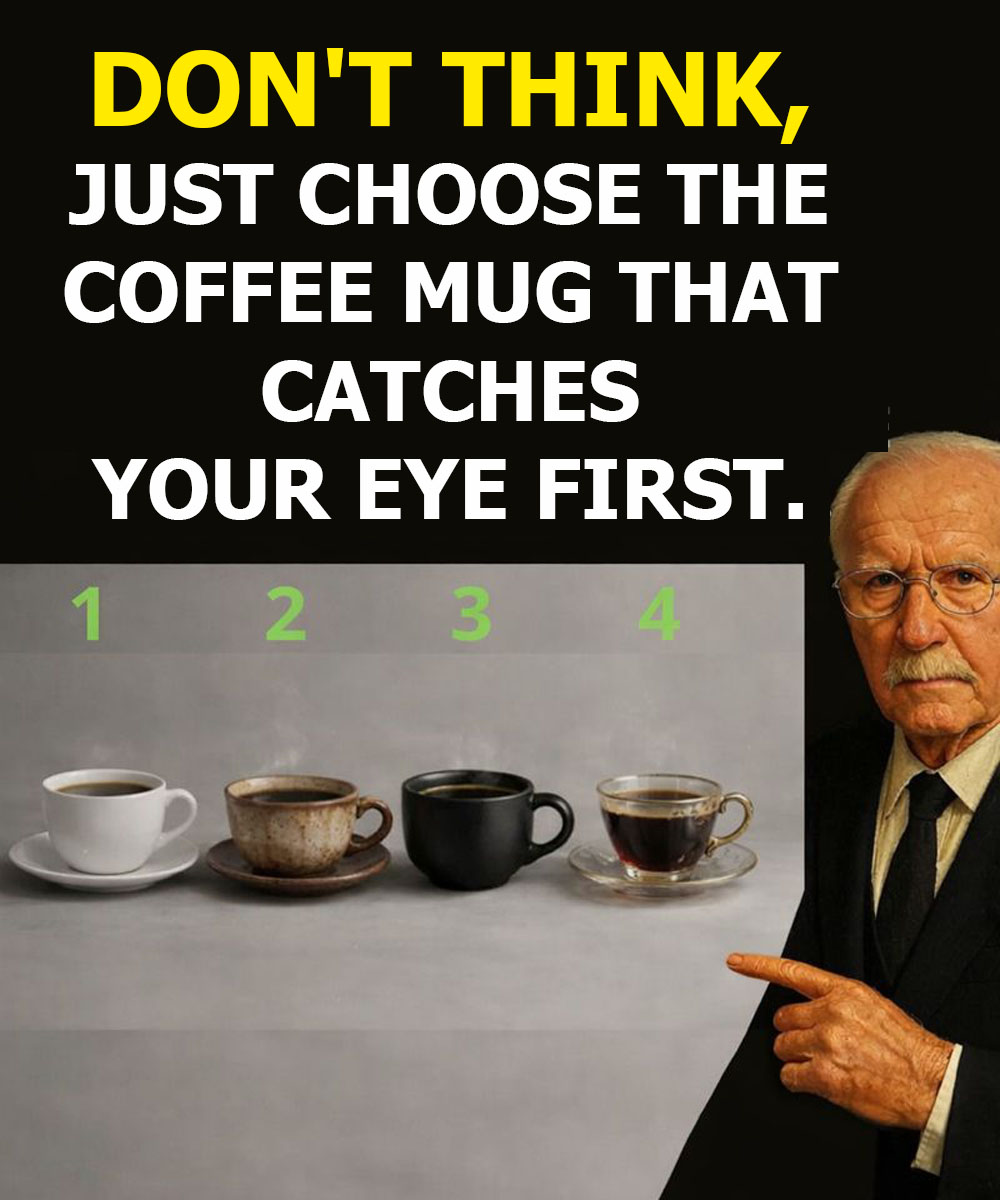

Choose a coffee cup! A psychological test of your inner world
Before logic has time to intervene, before you can explain your reasoning or weigh pros and cons, your hand has already moved in your mind. The choice is made quietly, instinctively. This is how the psyche often operates: the unconscious responds first, guided by emotion, memory, and inner need, long before the rational mind steps in to justify the decision.
What seems like a trivial preference—being drawn to a particular coffee cup—is rarely accidental. Ordinary objects carry symbolic weight. They absorb meaning through repeated use, emotional association, and personal ritual. The cup that attracts you is not just a vessel for coffee; it becomes a mirror, reflecting what is most active within your inner world at this moment.
Coffee itself is more than a drink. It represents pause and permission. It appears in moments of solitude and in moments of connection, during stress and during calm. Over time, the mind links coffee with comfort, containment, alertness, and emotional grounding. When you choose a cup, you are unconsciously choosing how you want to hold your inner experience.
From the perspective of depth psychology, humans constantly project internal states onto the external world. Color, texture, shape, and simplicity act as symbols. We are drawn not to what defines us forever, but to what resonates with our current emotional climate. That is what makes this exercise simple, yet revealing.
Imagine four cups placed in front of you. Do not evaluate them. Do not think about aesthetics or practicality. Notice which one captures your attention first, which one seems to speak to you without explanation. That immediate pull matters more than any reasoning that follows.
If you were drawn to the first cup, your inner world values clarity, order, and emotional regulation. You feel safest when things make sense, when chaos is minimized and emotions can be named, understood, and placed in context. You tend to pause before reacting, preferring reflection over impulse.
Others often experience you as steady and dependable. You are someone who can remain composed under pressure, offering structure when situations feel overwhelming. You do not reject emotion, but you approach it through understanding rather than raw expression.
The challenge with this orientation is that control can quietly become suppression. You may carry pain without sharing it, believing you should handle things on your own. Asking for help can feel like weakness, even when it is not. Vulnerability may feel risky because it disrupts your internal order.
This cup does not suggest rigidity, but awareness. It hints that allowing softness does not threaten balance. Sometimes feeling without immediately organizing can be an act of trust rather than loss of control.
If the second cup called to you, your inner world is deeply shaped by memory and emotional continuity. You value authenticity more than polish. Experiences leave lasting impressions, and you carry them with care. The past is not something you discard; it is something you integrate.
You tend to sense emotional undercurrents easily. Empathy comes naturally to you because you remember how things felt, not just what happened. You listen with presence and connect through shared emotional truth rather than surface conversation.
The difficulty arises when release becomes hard. You may linger in memories, relationships, or moments that once mattered deeply but no longer serve your growth. Nostalgia can offer comfort, but it can also anchor you when movement is needed.