A chaotic late-night incident involving the Island Boys and popular rapper 6ix9ine has ignited intense debate across social media, with fans scrambling to understand what actually happened and how events escalated so quickly.
According to multiple circulating videos and eyewitness claims, the confrontation unfolded during a nightclub appearance where security, artists, and attendees were packed into a tight backstage area. Footage shows heightened tension, raised voices, and a sudden physical struggle that quickly drew attention online. Soon after the clips began spreading, claims emerged alleging that the Island Boys were involved in a r*bbery targeting the rapper.
Sources close to the situation say the disagreement began as a verbal exchange before turning physical. In the videos, several security personnel appear to intervene as chaos erupts, with individuals attempting to restrain those involved. While exact details remain unclear, online commentators claim jewelry and personal items may have been taken during the altercation.
Neither side has released a full, verified timeline of events. Representatives connected to the rapper have not issued an official statement confirming losses or identifying suspects, and no formal police report has been publicly detailed at the time of writing. Still, the footage alone has fueled speculation, with millions of views amplifying every frame and gesture.
Fans of the rapper expressed outrage, arguing that the incident highlights ongoing safety concerns at high-profile nightlife events. “This could have ended much worse,” one commenter wrote. “Security barely had control of the situation.” Others questioned why tensions were allowed to escalate at all, calling for stricter backstage protocols.
Meanwhile, supporters of the Island Boys pushed back against the accusations, warning against jumping to conclusions based on short, edited clips. Some claimed the videos lack context and do not clearly show any theft taking place. “Online narratives get written before facts are known,” another user commented. “Let the truth come out.”
Legal analysts following the story note that viral accusations can complicate investigations. Once claims spread, witnesses may be influenced by what they think they saw online rather than what actually happened. “Social media pressure often forces faster responses,” one former investigator explained, “but it doesn’t replace evidence.”
This incident also underscores a broader issue within celebrity culture: how quickly unverified claims can become accepted truth. In the age of instant uploads and reaction-driven platforms, public opinion can shift long before official confirmations are made.
As of now, no arrests have been announced and no charges publicly filed. Authorities have not confirmed whether an investigation is ongoing. Until more concrete information emerges, much of what’s circulating remains allegation rather than established fact.
What is clear is the impact. The videos have reignited discussions about artist security, accountability in nightlife venues, and the dangers of letting viral narratives outrun verified information. Fans on all sides are watching closely, waiting to see whether statements, evidence, or legal action will clarify what truly happened that night.
For now, the story remains unresolved—but the attention surrounding it shows no sign of slowing down.
A routine traffic stop in Chicago turned into an emotional moment no one could have predicted, after officers pulled over a driver for behavior linked to Tourette Syndrome — only to uncover a shocking personal connection that stopped everything in its tracks.
According to body-camera footage circulating online, the incident began like many others. Officers initiated a traffic stop after observing what they believed were erratic movements and vocal outbursts coming from the vehicle. From a law-enforcement perspective, the behavior raised immediate red flags, prompting concerns about impairment or reckless driving.
As the officer approached the car, the driver appeared nervous but cooperative. She explained that she has Tourette Syndrome, a neurological condition that can cause involuntary movements and vocal tics. These symptoms, while harmless, are often misunderstood — especially in high-stress situations like traffic stops.
What happened next stunned everyone.
While reviewing the driver’s identification, one of the officers paused. His demeanor visibly changed. He looked again at the name, then at the driver, and then back at the document. The bodycam footage captures a brief silence — the kind that signals something far bigger than a traffic violation.
The realization hit: the driver was his long-lost brother.
According to sources familiar with the situation, the siblings had been separated years earlier due to family circumstances and had lost contact entirely. Neither expected that their reunion would come under flashing police lights, during a stop that could have easily escalated if not handled with care.
The officer reportedly stepped back, calling over his partner, who independently confirmed the connection. Emotions quickly replaced procedure. What began as a stop rooted in suspicion transformed into a deeply human moment — confusion, disbelief, and finally, recognition.
Tourette Syndrome advocacy groups have since pointed to the video as a powerful example of both the dangers of misunderstanding neurological conditions and the importance of de-escalation. “People with Tourette Syndrome are frequently misjudged,” one advocate explained. “Their symptoms can look alarming to someone unfamiliar, especially to police trained to look for signs of impairment.”
Viewers online have reacted strongly. Some expressed relief that the stop did not end in an arr*st or worse. Others focused on the emotional weight of the reunion itself, calling it something “you’d expect to see in a movie, not real life.”
Former officers and legal analysts also weighed in, noting how easily the situation could have gone differently. “Without communication and patience, this could have escalated,” one expert said. “Instead, it became a reminder that behind every badge and every steering wheel is a human being with a story.”
Police officials have not released further details, citing privacy concerns. No charges were filed, and the stop concluded without incident.
In the end, this unexpected reunion highlights more than coincidence. It exposes how thin the line can be between enforcement and empathy — and how quickly assumptions can unravel when real lives intersect in unforeseen ways.
For many watching, the video serves as both a cautionary tale and a moment of hope: proof that even in the most procedural settings, humanity can still break through.
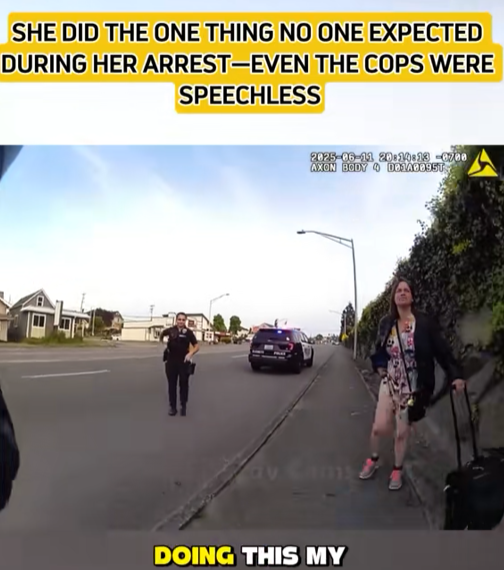
Body-camera footage from a routine roadside arr*st has gone viral after capturing a moment that no one — including the responding officers — seemed prepared for. What began as a standard police interaction quickly turned into a scene that viewers online are calling shocking, surreal, and completely unexpected.
The video opens on a wide suburban street, with patrol cars parked along the curb and lights flashing in the background. An officer is seen approaching on foot while a woman stands near the sidewalk, holding personal belongings. At first glance, nothing appears out of the ordinary. The situation looks calm, controlled, and procedural — exactly what one would expect during a typical arr*st.
But as the interaction continues, everything changes.
According to the on-screen text and timestamp from the bodycam footage, the woman suddenly does something no one anticipated. Instead of resisting, arguing, or panicking — which officers often prepare for — she makes a move that immediately shifts the tone of the encounter. The officers pause, visibly confused, and one can be heard hesitating before responding.
Viewers have been split on how to interpret her actions. Some believe it was an emotional response brought on by stress and shock. Others argue it was a calculated decision meant to assert control in a moment where she felt powerless. Regardless of intent, the reaction from law enforcement speaks volumes: the officers stop mid-motion, reassess the situation, and appear momentarily unsure of how to proceed.
Legal analysts online have weighed in, noting that police training prepares officers for a wide range of behaviors — aggression, flight, non-compliance — but not necessarily for actions that fall completely outside expected patterns. “When someone does something unexpected but non-violent, it can actually disrupt the entire enforcement process,” one former officer commented. “You have to stop and rethink every next step.”
The footage has reignited debate around police procedures, citizen behavior during arr*sts, and how unpredictable human reactions can be under pressure. Some viewers praised the officers for not escalating the situation, pointing out that they maintained composure and avoided force. Others criticized the handling, saying the moment exposed gaps in training when encounters don’t follow the usual script.
Social media reactions have ranged from disbelief to dark humor. “I’ve seen a lot of bodycam videos, but this one genuinely caught me off guard,” one user wrote. Another commented, “This is proof that real life is stranger than anything you can script.”
What makes the clip particularly compelling is its silence — the brief pause where no one speaks. In that moment, authority, expectation, and control all seem suspended. It’s a rare glimpse into how fragile routine can be when human behavior defies assumptions.
Officials have not released additional details about the woman’s charges or the final outcome of the arr*st. Police departments typically avoid commenting extensively on viral footage until internal reviews are complete. However, the video continues to circulate, drawing millions of views and sparking conversations far beyond the original incident.
Ultimately, the clip serves as a reminder that arr*sts are not just legal procedures — they are deeply human moments. Fear, defiance, confusion, and emotion can all surface in unpredictable ways. And sometimes, one unexpected action is enough to leave everyone involved — even seasoned officers — completely speechless.
A restaurant is facing intense backlash after disturbing footage surfaced showing an employee throwing frozen r*bs directly onto the ground during what appears to be a food-handling process. The video, now circulating widely online, has left customers shocked and questioning how such behavior could happen behind the scenes of a business meant to serve food safely.
The footage appears to be taken from an elevated angle, possibly a security camera, showing an employee lifting a large box filled with frozen r*bs and dumping them onto the dirty ground outside a service area. Cardboard, debris, and stains are clearly visible on the floor, raising immediate concerns about contamination and basic food safety standards.
According to captions shared alongside the video, the incident took place at a restaurant during a delivery or storage process. Instead of handling the meat with care, the employee is seen repeatedly dropping and sliding the frozen r*bs across the ground before placing them back into containers. At no point does the footage show any effort to discard the contaminated food.
Once the video went public, reaction was swift and furious. Many viewers expressed disgust, saying the footage made them question how often similar practices go unseen. “This is exactly why people are afraid to eat out,” one commenter wrote. “If this is what happens when they think no one is watching, imagine the rest.”
Food safety experts weighed in, emphasizing that meat making contact with unsanitary surfaces should be immediately discarded. Even when frozen, raw meat can pick up harmful bacteria, dirt, and chemical residues from the ground. Reintroducing such food into the supply chain poses serious health risks, including foodborne illness outbreaks.
Local health officials confirmed they are aware of the footage and are reviewing the situation. While they have not yet publicly named the restaurant, authorities stated that any verified violation of food-handling regulations could result in fines, temporary closure, or license suspension. Inspectors are reportedly determining whether the incident was isolated or part of a broader pattern of unsafe practices.
The restaurant released a short statement acknowledging the video and claiming the employee’s actions violated company policy. Management said the worker has been suspended pending investigation and insisted that food safety is taken seriously. However, critics argue that blaming a single employee may overlook deeper issues, such as lack of training, supervision, or enforcement of hygiene standards.
Consumer advocates stress that restaurants are responsible not just for how food tastes, but for ensuring it is safe from the moment it enters the building to the moment it reaches a customer’s plate. “This isn’t a small mistake,” one advocate said. “This is a fundamental breakdown in food safety.”
The incident has reignited calls for stricter inspections and harsher penalties when violations are caught on camera. Many customers say transparency is key and want restaurants to publicly disclose what corrective steps are being taken to prevent similar incidents in the future.
Beyond the immediate outrage, the video serves as a reminder of how much trust consumers place in food establishments. Most diners never see kitchens, storage areas, or delivery zones. They rely on health codes, inspections, and professional standards to protect them.
As the investigation continues, health officials urge anyone who recently ate at the restaurant and feels unwell to seek medical advice. While no illnesses have been officially linked to the incident yet, authorities say caution is warranted.
For many viewers, the damage is already done. One short clip was enough to permanently change how they view that restaurant — and to remind everyone that food safety is not optional, it’s essential.
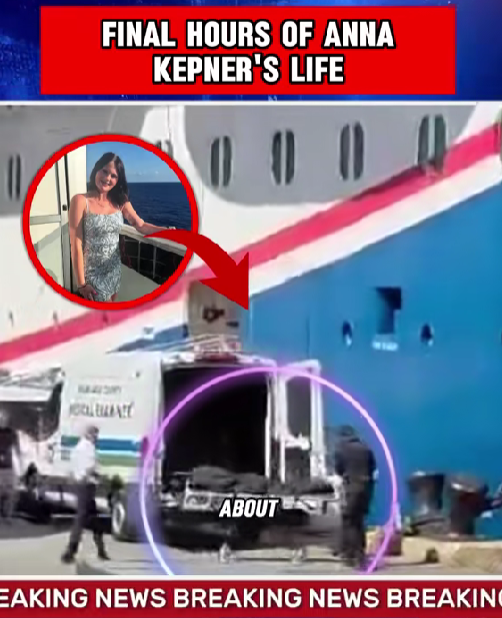
The final hours of Anna Kepner’s life have become the focus of intense public attention after new details surfaced surrounding her dath aboard a cruise ship. What was supposed to be a joyful vacation at sea instead ended in trgedy, leaving her family searching for answers and investigators piecing together her last known moments.
Anna Kepner was seen smiling in photos taken earlier during the trip, enjoying the open deck and ocean views. Friends and family say she was excited about the cruise and had shown no signs of distress before boarding. But somewhere between celebration and return, something went terribly wrong.
According to reports, Anna was last seen during the final stretch of the voyage. When the ship later docked, crew members made a disturbing discovery inside a restricted vehicle-access area of the vessel. Emergency services were called immediately, but Anna was pronounced d*ad at the scene.
Authorities have not released all details, but they confirmed that the circumstances surrounding her d*ath were unusual enough to warrant a full investigation. Surveillance footage, crew logs, and passenger statements are all being reviewed to determine exactly how she ended up where she was found — and whether negligence or foul play played a role.
What has made this case particularly unsettling is the timeline. Investigators believe there were several critical hours where Anna’s whereabouts are unaccounted for. During that time, no distress call was reported, and no official alert was issued to passengers. Family members have questioned how someone could vanish on a cruise ship without immediate detection.
Cruise ships are often described as floating cities, equipped with extensive security systems and cameras. Yet cases like this raise uncomfortable questions about blind spots, response protocols, and accountability. Maritime safety experts note that while ships are heavily monitored, access-restricted zones still exist — areas passengers should never enter under normal circumstances.
Public reaction has been swift and emotional. Many online commenters expressed outrage, asking how such an incident could occur without intervention. Others focused on Anna herself, remembering her not for the mystery of her d*ath, but for the life she lived — her warmth, her joy, and her love for travel.
The cruise line involved released a brief statement expressing condolences and confirming cooperation with authorities. However, they declined to comment on specifics, citing the ongoing investigation. That silence has only fueled speculation and frustration among those following the case closely.
Legal experts say cases involving cruise ship fatalities can be complex. Jurisdiction often depends on where the ship was registered, where the incident occurred, and which country’s waters were involved. This can slow investigations and complicate legal accountability for families seeking justice.
For Anna’s loved ones, the legal complexities matter far less than the unanswered questions. They want to know how her final hours unfolded, whether she was alone, and if anything could have been done to save her. “She deserved to come home,” one family member reportedly said. “We just want the truth.”
Advocates for cruise safety argue that incidents like this highlight the need for stronger passenger tracking, faster missing-person alerts onboard ships, and clearer communication during emergencies. They stress that vacations should never end in uncertainty and loss.
As investigators continue their work, the image of Anna smiling on the deck stands in painful contrast to the mystery that followed. Her final hours remain shrouded in unanswered questions — questions that her family, and the public, are determined not to let fade away.
What happened aboard that ship may take time to fully uncover. But one thing is already clear: Anna Kepner’s story is a sobering reminder that even in places meant for relaxation and escape, vigilance, transparency, and accountability are essential — because every life matters.
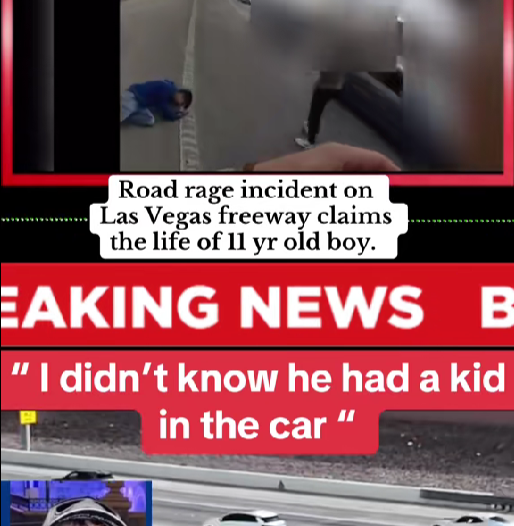
A devastating road rge incident on a Las Vegas freeway has left a community in mourning after an 11-year-old boy lost his life in a confrontation that escalated in seconds. What began as a routine drive ended in irreversible trgedy, underscoring how quickly anger behind the wheel can destroy innocent lives.
According to authorities, the incident unfolded during a heated exchange between two drivers on a busy stretch of freeway traffic. Investigators say aggressive driving, shouting, and reckless maneuvers preceded the deadly moment. At some point during the confrontation, one driver allegedly fired a sh*t into the other vehicle.
Inside that car was an 11-year-old boy.
Emergency responders rushed to the scene after reports of a shooting. The child was transported to a nearby hospital, but despite lifesaving efforts, he did not survive his injuries. Officials later confirmed that the boy had been seated in the vehicle when the rad rge escalated into v*olence.
One of the most chilling aspects of the case came from statements attributed to the suspect. According to early reports, the individual claimed, “I didn’t know he had a kid in the car.” Prosecutors and legal experts stress that this detail does not lessen responsibility. Firing a weapon during a traffic dispute is considered an extreme and reckless act, regardless of who may be inside the vehicle.
Police have not released all details about the suspect or charges yet, citing the ongoing investigation, but authorities confirmed that the case is being treated as a homicide. Detectives are reviewing dashcam footage, surveillance cameras, and witness accounts to reconstruct exactly how the incident escalated so quickly.
Community reaction has been one of shock and grief. Vigils have been held in honor of the young victim, with family members describing him as joyful, kind, and full of life. “He was just a kid,” one mourner said. “He didn’t even understand what was happening.”
Road r*ge incidents involving firearms have been increasing across the country, according to law enforcement agencies. Experts warn that everyday frustrations — traffic delays, lane changes, or perceived slights — can become deadly when combined with anger and access to weapons. What might have once ended with yelling or a rude gesture can now end in irreversible loss.
Child safety advocates emphasize that children are often the unseen victims of adult decisions. “Kids don’t choose the situations they’re placed in,” one advocate said. “They rely on adults to keep them safe — including strangers on the road.”
Legal analysts note that cases like this often carry severe consequences. Even if the shooting was not intended to harm a child, the law focuses on the act itself and the foreseeable danger created. Using a firearm in traffic is widely considered an act of extreme negligence.
As the investigation continues, authorities are urging drivers to step away from confrontations. Police remind the public that no argument on the road is worth a life. If a situation escalates, drivers are encouraged to disengage, slow down, and call for help rather than respond with anger.
For one family, that warning came too late.
An 11-year-old boy will never grow up because of a moment of uncontrolled rage. His death now stands as a painful reminder that road r*ge doesn’t just endanger drivers — it endangers everyone, especially the most innocent passengers of all.
Las Vegas police released body camera footage capturing the aftermath of a deadly road rage shooting in Henderson, NV that claimed the life of an 11-year-old. “My kid is dead!” Ayala wailed as the officer placed Johns under arrest. During the video, the officer clarified that Dominguez-Chavarria was Ayala’s stepson. Authorities said Brandon Dominguez who was shot in the head, died at the hospital. Rip in peace Brandon. #lasvegasfreeway#accidents#roadrage#deadlycrash#tylerjohns
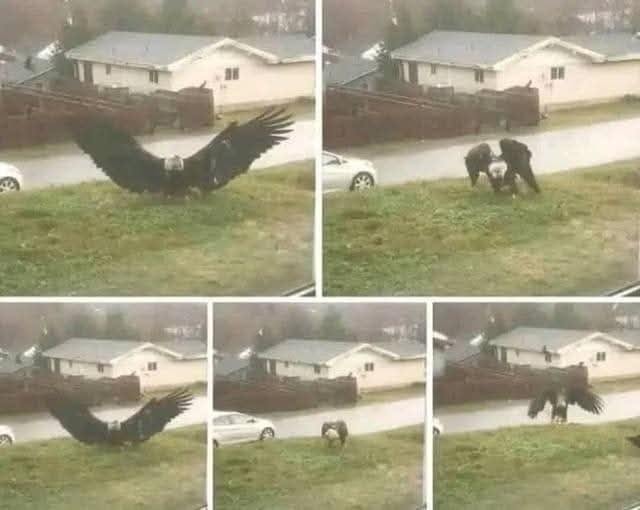
In recent weeks, the Lower Rio Grande Valley, near Brownsville, Texas, has been the subject of heightened attention from wildlife experts, ornithologists, and conservationists after multiple reports surfaced describing the presence of a massive bird of prey in the region. Hikers, birdwatchers, and local residents independently described seeing a raptor with an extraordinarily large wingspan—vastly exceeding that of known species such as the bald eagle or California condor. Although the initial response from experts was cautious, the consistency of these reports has spurred a structured and formalized investigation into the phenomenon.
This article delves into the details of the mysterious sightings, the methods used by wildlife officials to investigate them, and the broader scientific implications of this unusual event. We will explore the potential causes of these sightings, the scientific approach to verifying such claims, and the lessons that can be learned from this investigation in the context of wildlife monitoring.
The Sightings: Eyewitness Accounts and Public Interest
The first reports of the unusually large raptor came from hikers and locals living near the Rio Grande River. These eyewitnesses independently described seeing a bird of prey with a wingspan far surpassing that of any known raptor species commonly found in the region. Witnesses were quick to note the bird’s size, with some estimates putting the wingspan well over 12 feet, far larger than the approximately 7-8 feet typical of a bald eagle or the 9-10 feet of a California condor.
As the sightings continued to surface, the consistent nature of the accounts—despite being reported from different parts of the region—caught the attention of both wildlife enthusiasts and professional ornithologists. However, the question remained: Was the bird truly an undiscovered species, or was there another explanation for the reports?
Initial Skepticism and Caution from Experts
Initially, the reports were met with some skepticism. Scientists and wildlife officials, aware of the history of hoaxes and exaggerated claims, were cautious in responding to the sightings. Ornithologists have long dealt with misidentifications, especially in regions rich in wildlife. For instance, large birds such as the golden eagle or the ferruginous hawk, while impressive in their own right, could be misinterpreted under certain conditions as larger, more unusual species.
Moreover, natural phenomena like changes in weather, lighting, or optical illusions could distort the appearance of birds, particularly at a distance. Therefore, experts advised the public to remain cautious in their interpretations and await further verification before jumping to conclusions.
Despite these initial reservations, the consistency of the eyewitness reports prompted a more organized investigation. This included gathering additional testimony from locals, as well as conducting field observations with the assistance of wildlife experts, aiming to gather reliable data that could either confirm or debunk the claims.
The Investigation: Scientific Monitoring Efforts
To probe the validity of the sightings, wildlife officials, in collaboration with ornithologists and other wildlife experts, began a comprehensive monitoring campaign in the area. The Lower Rio Grande Valley, known for its rich biodiversity and mix of habitats—ranging from river systems and farmland to protected wildlife corridors—offers both a challenge and an opportunity for wildlife study.
The investigation was based on scientific principles and employed a variety of noninvasive methods, including motion-activated cameras, long-range optical equipment, and thermal imaging technology. These tools were used in an effort to capture footage of the bird without disturbing its natural behavior.
One of the main challenges was the terrain itself. The region’s mix of dense vegetation, winding rivers, and agricultural fields created an environment that was both ideal for large birds of prey and difficult to monitor. Additionally, the large areas covered by these habitats meant that tracking the bird’s movements required careful planning, as well as the coordination of various teams in different locations.
Key Findings: The Footage and Analysis
After several weeks of monitoring, researchers reviewed the footage collected through motion-activated cameras and other high-tech equipment. The results were intriguing. Some of the captured images appeared to show a bird of prey with a wingspan far larger than any species commonly documented in the area. These preliminary findings, combined with eyewitness accounts, have led experts to take the situation seriously, shifting the investigation from a question of skepticism to one of scientific curiosity.
However, even with the available footage, the bird has not been conclusively identified. Wildlife officials and ornithologists have refrained from speculating on the nature of the bird without further verification. The bird has been formally described in reports as an “unidentified large raptor.” This description underscores the need for more data and confirmation before drawing any conclusions about the species.
The fact that the bird’s identity remains unclear has only added to the intrigue surrounding the sightings. Despite the compelling evidence, wildlife experts have emphasized that they are committed to a thorough investigation, grounded in careful analysis and evidence, rather than jumping to sensational conclusions.
Rather than immediately assuming the presence of a new or unknown species, experts have suggested several potential explanations for the sightings. These possibilities include misidentifications, rare genetic mutations, and the presence of an unusually large individual within a known species.
Misidentification of Known Species
One of the most likely explanations is that the bird identified by witnesses is, in fact, a known species, but with some variation in size or appearance. Large raptors such as the golden eagle, the ferruginous hawk, and the red-tailed hawk are common in the region, and it is possible that one of these species was mistaken for something more exotic.
Eagle species, for example, can exhibit significant variation in size, particularly in regions with abundant prey. The juvenile bald eagle, for example, can be difficult to differentiate from other large raptors at a distance. Additionally, lighting and environmental factors may distort the appearance of birds, making them seem larger than they are.
Rare Genetic Mutations
Another possibility is that the bird spotted in the region may belong to a species already known but is simply an individual with a rare genetic mutation that causes it to grow larger than the typical size for its kind. Genetic variation is a well-documented phenomenon in wildlife, and raptors are no exception.
This hypothesis is bolstered by the fact that some species of birds—particularly raptors—are known to exhibit variation in body size due to genetic factors. While a bird with a wingspan well over 12 feet would be unusual, it is not beyond the realm of possibility for a genetically atypical individual to exhibit such characteristics.
A New or Undocumented Species
The most sensational possibility is that the bird represents a previously undiscovered species of raptor. However, this remains the least likely scenario. Ornithologists are quick to point out that the field of birdwatching and wildlife monitoring is highly advanced, and new species are extremely rare, especially in well-studied regions like the Lower Rio Grande Valley.
Additionally, the bird would have had to evade detection by researchers for a long time, which raises questions about how such a large, potentially conspicuous species could remain hidden in a region frequented by wildlife researchers and birdwatchers. While new species do occasionally emerge, the process of confirming their existence involves rigorous scientific inquiry and a large body of evidence.
The Challenges of Wildlife Monitoring
This investigation underscores the challenges inherent in wildlife monitoring, particularly when it comes to elusive species. Despite the availability of advanced technology and the efforts of dedicated researchers, animals in the wild can be difficult to observe and track. Many species are solitary, nocturnal, or highly mobile, making them challenging to capture on camera or monitor consistently.
The case also highlights the importance of patience and discipline in scientific research. While the initial findings may be intriguing, the process of verifying the identity of the large raptor is far from over. Scientists stress that jumping to conclusions based on partial data can undermine the credibility of the research process.
The ongoing investigation emphasizes the need for careful documentation, peer-reviewed analysis, and caution in interpreting unusual sightings. As researchers continue their work, it serves as a reminder of the complexities of wildlife monitoring and the value of maintaining scientific rigor even in the face of mystery.
The Bigger Picture: What This Investigation Tells Us About Biodiversity
Regardless of whether the large raptor turns out to be a new species or simply a misidentified bird, the case serves as an important reminder of the value of biodiversity research. Even in areas that are well studied, new and unexpected observations can emerge, shedding light on the incredible diversity of life that remains to be understood.
Moreover, the investigation emphasizes the need for continued conservation efforts. The Lower Rio Grande Valley is a vital area for wildlife and is home to numerous species, some of which are endangered or at risk of habitat loss. Protecting these ecosystems requires ongoing research, monitoring, and a willingness to adapt to new discoveries.
In a world increasingly impacted by climate change, habitat destruction, and human activity, the continued study of wildlife and ecosystems is critical to ensuring that we can preserve the planet’s biodiversity for future generations.
Conclusion: A Call for Patience and Scientific Rigor
The investigation into the sightings of the large raptor near Brownsville, Texas, is a fascinating example of the complexities of wildlife research. While initial reports sparked excitement and curiosity, the response from scientists and wildlife officials has been measured and methodical. Through careful monitoring and evidence gathering, researchers are working to piece together the puzzle, using technology and scientific expertise to confirm the bird’s identity.
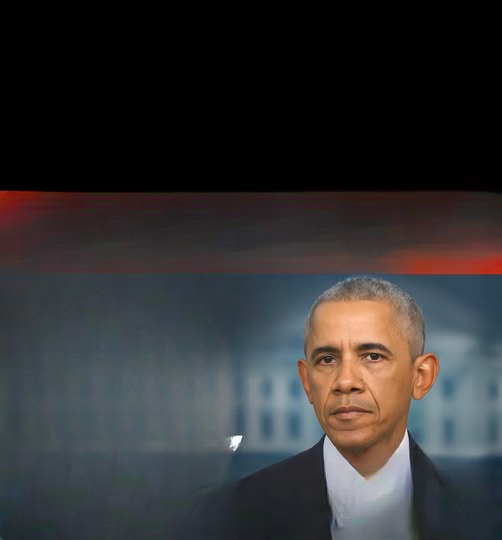
Recent reporting has highlighted a scenario in which former President Barack Obama could potentially be called to testify before a grand jury concerning events related to the investigation into Russian interference in the 2016 U.S. presidential election. While this topic has attracted significant media attention, the situation is legally complex and involves multiple facets of U.S. law, presidential immunity, and ongoing political debate.
Presidential Immunity and Its Limits
Former presidents of the United States enjoy certain legal protections known as presidential immunity. These protections generally shield presidents from civil lawsuits related to official actions taken while in office. However, experts note that this immunity does not extend indefinitely and may not protect a former president if questions arise regarding personal conduct outside official duties or if a witness is subpoenaed to testify under oath about actions as a private citizen.
Legal analysts have emphasized that, should a former president provide false testimony under oath, any legal protections related to presidential immunity could be impacted. Even one instance of knowingly providing false statements could carry serious consequences under U.S. law, including potential charges for perjury.
Context: The 2016 Russian Interference Investigation
The investigation into Russian interference in the 2016 U.S. election, often referred to in the media as the “Russiagate” investigation, involved multiple agencies, including the Federal Bureau of Investigation (FBI) and the National Security Agency (NSA). Key issues centered around potential contacts between individuals associated with the Trump campaign and Russian officials, as well as whether there was any coordination or influence intended to affect the election outcome.
According to reporting from various sources, including investigative journalists, there are claims that former administration officials engaged in planning discussions regarding the questioning of certain incoming officials. For example, in early January 2017, reports suggest there were internal meetings to discuss the investigation of Michael Flynn, the incoming National Security Advisor. These meetings reportedly included discussions on the strategy for interviews and how information should be handled in compliance with federal law.
Subpoenas and Grand Jury Procedures
Grand juries play a critical role in the U.S. legal system. They are tasked with evaluating evidence and determining whether there is sufficient cause to pursue criminal charges. Subpoenas issued by grand juries compel individuals to testify or provide documentation. Failure to comply with a subpoena can result in legal penalties, including fines or potential contempt of court charges.
A subpoena to a former president would be unprecedented but legally feasible under certain circumstances. While the former president could invoke legal arguments regarding the scope of questioning and the protections of executive privilege, federal legal experts note that these defenses are not absolute. Questions concerning personal knowledge or actions outside official presidential duties could fall outside immunity protections, requiring careful legal navigation.
Tulsi Gabbard and the Release of Documents
Adding to the political and media attention, former Congresswoman Tulsi Gabbard released documents alleging that certain narratives surrounding Russian interference in the 2016 election were exaggerated or misrepresented. Gabbard’s release of these documents has been interpreted by some as a challenge to the credibility of prior investigations and has intensified public discussion about the roles of various officials at the time.
The documents claim to provide evidence that key decisions were influenced by political considerations, including efforts to evaluate and possibly undermine incoming administration officials. While these claims are currently under review and subject to verification, they have fueled debate among political observers, legal analysts, and journalists regarding the potential implications for former administration officials.
Political Reactions and Media Coverage
The prospect of a former president being called to testify before a grand jury has elicited reactions from across the political spectrum. Some commentators have framed the scenario as a potential legal challenge for Obama, emphasizing the complexity of presidential immunity and the risks associated with testifying under oath. Others have noted that these discussions are largely speculative and subject to legal safeguards that protect both due process and constitutional rights.
Media coverage has focused on both the legal implications and the political narrative, often highlighting statements from political figures, journalists, and investigative reporters. While some sources use assertive language to describe the situation, a neutral analysis must emphasize that no formal charges or proceedings have been initiated against the former president at this time.
Legal Implications of Testifying Under Oath
Providing testimony under oath carries significant responsibilities. In U.S. law, knowingly providing false statements to a grand jury constitutes perjury, a serious criminal offense. For any witness, including a former president, the legal system imposes an expectation of truthfulness and accuracy. Even if a witness believes that certain information is politically sensitive, legal counsel would guide responses to ensure compliance with federal statutes and procedural rules.
Legal experts note that immunity for actions taken while in office may not protect testimony regarding personal actions or knowledge as a private citizen. This distinction can create complex legal scenarios, where questions of scope, relevance, and privilege must be carefully evaluated.
Historical Context of Presidential Legal Protections
Throughout U.S. history, the balance between presidential immunity and legal accountability has been tested. Presidents such as Richard Nixon, Bill Clinton, and George W. Bush have faced legal scrutiny for actions taken in office or in private capacities. These cases demonstrate the legal principle that while presidents have broad authority while in office, they are not above the law once their term concludes, particularly regarding personal conduct.
Additionally, the use of subpoenas and grand jury testimony has precedent in high-profile political investigations. While no former president has ever been compelled to testify in a criminal investigation, the legal mechanisms exist and are governed by established constitutional principles.
The investigation into Russian interference in the 2016 U.S. presidential election has remained one of the most widely discussed political and legal events in recent history. Initiated by U.S. intelligence agencies, including the FBI and NSA, the inquiry sought to determine the scope of Russian efforts to influence the election and whether any individuals associated with political campaigns were involved.
Key figures such as Michael Flynn, the incoming National Security Advisor, became focal points in the investigation due to alleged contacts with foreign officials. Flynn’s case attracted particular attention because of claims that meetings and communications were misrepresented or misunderstood. The process of interviewing incoming officials, gathering intelligence, and coordinating between agencies was both legally sensitive and politically charged.
Investigative reporting has suggested that meetings in the final days of the Obama administration involved discussions about the handling of intelligence related to Flynn. According to some accounts, officials debated the appropriate approach to questioning, documentation, and potential consequences if false statements were made. These discussions highlight the complexity of managing intelligence and legal processes during a transition between presidential administrations.
Subpoenas and Grand Jury Authority
A grand jury has the legal authority to subpoena witnesses and documents to determine whether criminal activity has occurred. In general, witnesses are legally required to comply with subpoenas and testify truthfully under oath. Failure to comply can lead to legal penalties, including contempt of court charges.
For a former president, the scenario is unprecedented but legally conceivable. While executive privilege and immunity provide certain protections for actions taken while in office, these do not necessarily shield a former president from questions about personal knowledge, decision-making outside official duties, or actions undertaken after leaving office. Legal scholars have emphasized that any testimony must be truthful and complete, and perjury laws apply to all witnesses regardless of status.
The issuance of a subpoena to a former president would likely involve careful negotiation between legal teams, congressional or judicial authorities, and federal prosecutors. Lawyers representing the former president would likely seek to limit the scope of questioning to protect sensitive information, while prosecutors would aim to gather relevant testimony to evaluate potential legal exposure for involved parties.
The Role of New Documents
Recent releases of documents by former Congresswoman Tulsi Gabbard have added additional layers of complexity to public discussions about the 2016 investigation. These documents allege that certain narratives regarding Russian interference and connections to political campaigns were influenced by political considerations.
While the authenticity and context of these documents are subject to verification, their release has contributed to ongoing debate about the origins and handling of intelligence during the transition between the Obama and Trump administrations. Some observers suggest that the documents may provide insight into how decisions were made regarding interviews, investigations, and public messaging related to national security concerns.
The availability of these documents also highlights the evolving nature of information in high-profile investigations. Evidence, reports, and internal communications often emerge over time, prompting renewed analysis and debate among legal experts, journalists, and political commentators.
Legal Risks of Testifying
Testifying under oath carries inherent legal risks. In the case of any individual, knowingly providing false information to a grand jury constitutes perjury, which is a criminal offense under federal law. For a former president, the stakes are particularly high due to the prominence of the office and the visibility of any potential legal action.
Legal analysts note that while presidential immunity protects actions taken in the scope of official duties, it does not cover false statements given as a private citizen or in contexts unrelated to official presidential actions. This distinction emphasizes the importance of accuracy, careful legal counsel, and adherence to procedural requirements.
Experts also point out that testimony before a grand jury is conducted in a confidential setting, meaning public interpretations or media coverage may not fully capture the nuance of legal proceedings. The grand jury’s role is to evaluate evidence and determine whether further legal action is warranted, not to serve as a forum for public opinion or political debate.
Political Implications and Public Perception
The idea of a former president potentially testifying before a grand jury has naturally attracted attention from political commentators and the media. Reactions vary widely, often influenced by partisan perspectives. Some observers frame the scenario as a legal challenge with significant consequences for Obama, emphasizing the potential loss of immunity if false statements are made. Others caution that speculation should be tempered until formal legal actions occur.
Public perception is also shaped by media coverage, political commentary, and social media discussions. High-profile investigations tend to generate intense public interest, with narratives often framed around political consequences, rather than strictly legal considerations. This dynamic underscores the importance of analyzing developments carefully, distinguishing between verified facts and speculative claims.
Historical Context
While no former U.S. president has ever been subpoenaed to testify in a criminal investigation, history provides some relevant examples of how legal scrutiny applies to high-level officials. Richard Nixon, Bill Clinton, and other former presidents faced legal investigations regarding their conduct in office or related matters. These cases illustrate the principle that no individual is entirely beyond the reach of the law once their official term concludes.
Moreover, congressional investigations and grand jury proceedings involving government officials frequently require careful navigation of executive privilege, immunity, and legal protections. Legal experts stress that precedent exists for balancing accountability with constitutional safeguards, which would likely be applied in any situation involving a former president.
Approaching women can be a nerve-wracking experience for many men.However, with the right mindset and approach,it can become an enjoyable and successful endeavor. Here are some techniques to help you confidently approach women:Approaching women can be a nerve-wracking experience for many men.However, with the right mindset and approach,it can become an enjoyable and successful endeavor.
Here are some techniques to help you confidently approach women…
Approaching women can be a nerve-wracking experience for many men.However, with the right mindset and approach,it can become an enjoyable and successful endeavor. WATCH PICTURE BELOW
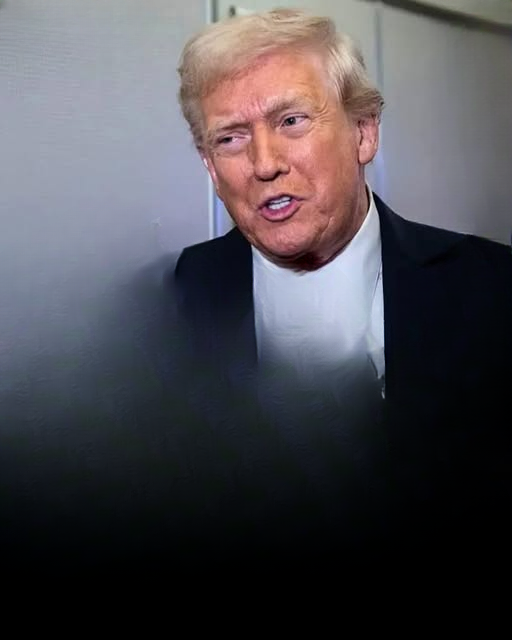
At first glance, the idea sounded straightforward and appealing. Former President Donald Trump proposed that tariffs on imported goods could generate enough money to provide a $2,000 payment to American households—a kind of “dividend” drawn from what he described as revenue collected from foreign countries. The pitch was intentionally simple: trade penalties make the nation wealthier, and that added revenue can be returned directly to working families.
But beneath the simplicity of the message lies a complex web of economic calculations, legal constraints, and political hurdles. When examined closely, the proposal faces significant challenges that complicate its feasibility and raise questions about whether such payments could realistically materialize.
This article takes a detailed look at how tariff revenue works, what the numbers actually show, the legal battles surrounding executive authority, and why congressional approval remains a critical—and uncertain—factor.
The Core Claim: Tariffs as a Source of Direct Payments
The foundation of the proposal rests on a basic premise: tariffs generate large sums of money for the federal government, and those funds could be redistributed to Americans in the form of direct payments.
Tariffs are taxes imposed on imported goods. While they are often described politically as costs paid by foreign exporters, economists generally agree that much of the burden ultimately falls on domestic consumers and businesses through higher prices.
Nevertheless, tariffs do generate revenue for the U.S. Treasury. The question is whether that revenue is sufficient—and legally accessible—to fund large-scale payments to the public.
What the Numbers Actually Show
According to publicly available data, tariff collections during Trump-era trade policies generated under $200 billion in total revenue over several years. While that figure may sound substantial, it falls well short of what would be required to fund $2,000 payments on a national scale.
To put the math into perspective:
There are roughly 130 million U.S. households.
Providing each household with $2,000 would require approximately $260 billion.
That amount exceeds total tariff revenue collected to date, even before accounting for administrative costs or other budgetary obligations.
This gap between revenue and promised payments highlights a fundamental mismatch between the proposal’s scale and the resources available to support it.
Revenue vs. Availability: Why Collected Funds Aren’t “Free Money”
Even if tariff revenue were sufficient on paper, it would not automatically be available for redistribution. Federal funds are subject to budgetary rules that dictate how money is allocated, spent, or returned.
Tariff revenue typically flows into the general Treasury, where it becomes part of the broader federal budget. Those funds are often used to offset other costs, such as:
Subsidies to industries affected by trade disputes
Federal operations and programs
Debt servicing
In other words, tariff revenue is already spoken for in many cases. Redirecting it toward direct payments would require legislative action and reallocation of existing funds.
Legal Challenges: Executive Authority Under Scrutiny
Beyond the financial math, there is a significant legal dimension to the proposal. Many of the tariffs in question were imposed using emergency powers granted to the president under existing trade and national security laws.
These authorities allow the executive branch to act quickly in certain circumstances, but they are not unlimited. Over time, legal challenges have questioned whether such powers were used appropriately or exceeded statutory boundaries.
The Supreme Court has signaled skepticism about broad interpretations of emergency authority, particularly when those interpretations result in long-term economic policies rather than short-term crisis responses.
A ruling that limits or overturns these tariff authorities could have far-reaching consequences.
The Possibility of Refunds Instead of Rebates
One of the less-discussed but highly consequential outcomes of an unfavorable court ruling is the possibility that tariffs could be invalidated retroactively.
If courts determine that certain tariffs were unlawfully imposed, the government could be required to refund money collected from importers. That scenario would reverse the revenue flow entirely, turning anticipated “dividends” into liabilities.
Such refunds would not go to consumers directly, but to the companies that paid the tariffs—further undermining the idea that the money could be redistributed to households.
Congress Still Holds the Power of the Purse
Even if the legal issues were resolved favorably, the proposal would still face a major procedural obstacle: congressional approval.
Under the U.S. Constitution, Congress controls federal spending. No large-scale payment program can be implemented without legislation that specifies:
Who qualifies to receive payments
How payments are distributed
Whether they take the form of checks, tax credits, or rebates
How the program is funded and administered
At present, there is no consensus in Congress on any of these questions. Lawmakers remain divided not only on the concept of tariff-funded payments, but on broader trade and tax policy priorities.
Eligibility Questions Remain Unanswered
One of the most significant unknowns involves eligibility. Trump has suggested that high-income earners would be excluded, but has not provided specific thresholds or criteria.
Key questions include:
Would eligibility be based on income, household size, or tax status?
Would retirees or non-tax filers qualify?
Would payments be one-time or recurring?
Without clear guidelines, the proposal remains more conceptual than actionable.
Delivery Mechanisms: Checks, Credits, or Something Else?
Another unresolved issue is how the money would reach recipients. Possible mechanisms include:
Direct checks mailed to households
Direct deposit payments
Refundable tax credits
Reductions in payroll or income taxes
Each option carries administrative costs, timelines, and equity considerations. Implementing any of them would require coordination between multiple federal agencies and detailed legislative instructions.
“We’ll Do Something Else”: Flexibility or Uncertainty?
Trump has stated that if courts block his tariff approach, he would pursue alternative methods to deliver benefits. While this flexibility may appeal to supporters, it also introduces uncertainty.
Without specifics, it is unclear:
What alternative funding sources would be used
Whether new taxes or spending cuts would be required
How quickly any new plan could be implemented
For households evaluating their finances, such uncertainty makes it difficult to plan or rely on promised benefits.
The Broader Economic Context
The proposal also raises broader economic questions about tariffs as a policy tool. While tariffs can protect certain domestic industries, they can also:
Increase prices for consumers
Disrupt supply chains
Invite retaliatory measures from trading partners
Any evaluation of tariff-funded payments must consider these downstream effects, particularly for working families who may already face higher costs as a result of trade restrictions.
Public Reaction: Familiar Patterns
For many Americans, the proposal evokes a sense of déjà vu. High-profile promises of direct payments have become a recurring feature of modern political campaigns, often generating headlines before details are finalized.
While some voters welcome ambitious ideas, others remain skeptical, having seen similar proposals stall due to legal, fiscal, or political constraints.
This skepticism is reinforced when announcements precede clear legislative pathways.
Political Strategy vs. Policy Reality
From a strategic standpoint, the simplicity of the message is part of its appeal. Framing tariffs as “found money” that can be returned to the public is easy to communicate and emotionally resonant.
However, policy implementation rarely aligns with campaign messaging. Translating broad ideas into workable programs requires navigating institutions designed to slow, scrutinize, and refine proposals.
This tension between messaging and mechanics is not unique to this proposal, but it is particularly pronounced given the scale and novelty of the idea.
What Would Need to Happen for Payments to Materialize
For tariff-funded payments to become reality, several conditions would need to be met:
Courts would need to uphold the legality of existing tariffs
Tariff revenue would need to increase significantly
Congress would need to pass authorizing legislation
Eligibility and delivery systems would need to be established
Funding gaps would need to be addressed
Each step presents its own challenges, making the overall path uncertain.
A Promise Without a Timeline
One of the most notable aspects of the proposal is the absence of a clear timeline. No specific date has been offered for when payments might occur, reinforcing the sense that the idea remains aspirational rather than imminent.
In public policy, timelines matter. They signal readiness, feasibility, and seriousness. Without them, proposals risk being perceived as symbolic rather than substantive.
Conclusion: Between Vision and Viability
The concept of a $2,000 tariff dividend is built on an appealing narrative of national wealth being returned to citizens. However, the economic data, legal landscape, and legislative realities paint a far more complicated picture.
Tariff revenue to date falls short of what would be required. Legal challenges threaten the very foundation of the funding mechanism. Congressional approval remains uncertain, and key details about eligibility and delivery are unresolved.
For now, the proposal exists more as a political idea than a concrete policy. Americans are left weighing the promise against the practical obstacles—recognizing a familiar gap between headline-grabbing announcements and the slow, methodical process required to turn them into law.
Until those obstacles are addressed with specificity and consensus, the $2,000 dividend remains an idea on paper, not money in hand.
Ultimately, proposals like this highlight the ongoing tension between political messaging and policy execution. While bold ideas can capture attention and shape debate, lasting impact depends on clear legal authority, sustainable funding, and bipartisan cooperation. Until those elements align, such promises are likely to remain aspirational rather than actionable.