SOTD – Sarah Palin was crushed after her 27-year role model marriage ended by email, now she is found love again

For much of the American public, Sarah Palin seemed to appear out of nowhere. In 2008, when John McCain tapped the relatively unknown governor of Alaska as his vice-presidential running mate, Palin was instantly thrust onto the national stage. Her sharp delivery, unapologetic confidence, and outsider persona made her impossible to ignore. Admirers saw authenticity and grit; critics saw controversy and volatility. Either way, she became one of the most recognizable figures in American politics almost overnight.

What the cameras didn’t show as clearly was the personal cost of that sudden visibility. While Palin’s political rise was meteoric, her private life was quietly absorbing pressure that would take years to fully surface. Long after the rallies ended and the headlines moved on, the consequences of that era continued to unfold—most painfully in her marriage.

Palin was born in Sandpoint, Idaho, but her identity was forged in Alaska. Raised in Wasilla, she grew up immersed in small-town life, sports, and a culture that prized self-reliance. In high school, she stood out as a disciplined, competitive athlete, particularly on the basketball court. It was through that world that she met Todd Palin, a quiet, hardworking local who would become her husband and long-term partner.

Their early years together were modest and unpolished in the way real life often is. In 1988, with little money and no interest in spectacle, they eloped at a courthouse. Lacking witnesses, they reportedly recruited a few from a nearby retirement home—an anecdote Palin would later recount as a symbol of their unpretentious beginnings. Over the next three decades, they built a life that, at least from the outside, looked steady and resilient. They raised five children, worked in Alaska’s fishing and oil industries, and navigated the routines of family life far from national attention.

Palin’s ambitions eventually carried her into politics. She moved from local office to statewide prominence, and in 2006 made history by becoming Alaska’s first female governor and its youngest. Through it all, Todd Palin remained largely in the background. He was often described as the “First Dude,” a label he never seemed to chase. An oil-field worker and competitive snowmobile racer, he took on more responsibility at home as his wife’s public role expanded.

When Palin joined the Republican ticket in 2008, the strain on their marriage intensified. The campaign was relentless. Media scrutiny was unforgiving. Every aspect of their lives—from parenting choices to wardrobe—was dissected. Todd Palin stepped back from his own work to support the campaign and care for their children, a reversal of traditional roles that drew both praise and criticism. Publicly, the marriage appeared intact, even strong. Privately, the pressure was accumulating.

After the election, Palin’s relationship with national politics became increasingly complicated. She resigned as governor in 2009, citing ethical complaints and distractions that she said were hindering her ability to govern. While she remained a prominent media figure and political voice, the structure of her life shifted. What had once been a shared mission between two people began to feel less aligned.

The breaking point came years later. In 2019, after more than three decades together, Todd Palin filed for divorce. The way Sarah Palin learned of it would later become one of the most painful details of the story. She revealed that she was notified by email from an attorney, not through a personal conversation. For her, the shock was not just the end of the marriage, but the manner in which it ended. She described feeling blindsided and devastated, struggling to reconcile the abruptness with the length of the relationship they had shared.

The divorce was finalized in March 2020, closing the chapter on a marriage that had lasted over thirty years and spanned youth, parenthood, political ascent, and national scrutiny. Since then, communication between the former couple has reportedly been limited and practical, focused largely on co-parenting their youngest child. Todd Palin moved forward with a new relationship, choosing a quieter life away from the spotlight.

For Sarah Palin, the aftermath was harder to navigate. She spoke openly about the loneliness that followed and the emotional toll of the separation. The public often treats political figures as abstractions, but divorce has a way of cutting through ideology and reputation. For Palin, it forced a reckoning not just with a failed marriage, but with her identity beyond politics, fame, and public expectation.

Over time, however, she began to rebuild. That process included reconnecting with Ron Duguay, a longtime friend whose presence became more visible during Palin’s later public appearances and campaigns. Their relationship developed quietly, without the fanfare that once surrounded her personal life. For Palin, that discretion appeared intentional—a departure from years when every aspect of her life was treated as public property.

Today, Palin’s story reads less like a political biography and more like a human one. Her rise was sudden and polarizing. Her fall from the political center was gradual and complex. And her personal life, once held up as an example of traditional stability, fractured in a way that was deeply personal and painfully public. What remains is not a cautionary tale or a redemption arc, but something more grounded: a portrait of a woman navigating ambition, loss, and reinvention under extraordinary scrutiny.

She is no longer at the center of American politics, and she does not appear eager to return to that role. Instead, she continues forward on her own terms, shaped more by resilience than spectacle. The marriage that once defined her personal narrative is over, but her life did not end with it. If anything, the distance from the spotlight has allowed a more honest chapter to begin—one less about performance, and more about endurance.

In the end, Sarah Palin’s journey underscores a truth often lost in political theater: behind every public figure is a private life that absorbs the consequences long after the applause fades. Her story is not just about fame gained and lost, but about the quiet work of rebuilding after something foundational breaks.

Missing for 15 years — his father found a secret room behind the garage wall.

Robert Chan never imagined let that be his decision, his old garage in Portland, Oregon renovate, to the most disturbing would be the discovery of a lifetime. It was Saturday morning when he started Remove rusty shelves the west wall of the garage for decades had covered. His wife had been since when they moved in three years ago Renovation passed.

 “Be careful with the wall, Rob!” warned Linda von the door. “She seems more fragile than the rest.” Robert tapped lightly Knuckle against the wall. The sound was hollow, very different from that solid concrete that he had expected. Frowning, he picked up a hammer and began carefully, the Remove plywood paneling. This first piece came off easily and released a plasterboard panel.

 “That “Makes no sense,” Robert muttered. “Why would anyone put plasterboard in a Install a garage?” He tore the plates further away and the more from the wall was uncovered, the stranger it fell something on him. There was a door, one Metal door in the same color as that wall. It was almost invisible, so precise been hidden.

 “Linda!” he shouted urgent voice. “You have to see!” Linda quickly approached, hers Eyes widened at the sight of the hidden door. “My God, Robi, about it There was nothing in the house documents, either not in the original plans.” Robert tried to close the doorknob rotate. He saw himself closed in Garage until he found a crowbar.

With some effort he levered the lock on until something with a metallic cracking gave way. The door opened slowly and gave the view absolute Darkness free. A strange smell streamed out of the room. Not directly unpleasant, but stale, as in air trapped for a long time. His hands were shaking as he held them Turned on the flashlight on his cell phone and directed the beam of light into it.

What he saw made his blood rush Veins freeze. It was a small one Room, maybe 3 x 6 m, with one Single bed on the back wall. There was one small table with a chair, some Shelves with books and am most disturbing chains on the wall next to the bed. “My God,” whispered Linda behind him and hit herself Hand over mouth.

Rob, this is this is a prison. Robert carefully entered the narrow room. The bed had threadbare sheets which was but surprisingly clean, as if it had been someone took care of keeping them tidy to hold. On the opposite one Children’s drawings hung on the wall, Doodles, some with names in clumsy handwriting underneath.

 He leaned closer to read better can, and felt his legs became weak. He read Markos out loud. The The name Markos was on all of them Drawings. Linda was already calling Police. Her voice trembled as she described the situation to the officer. Robert continued to explore the secret one space.

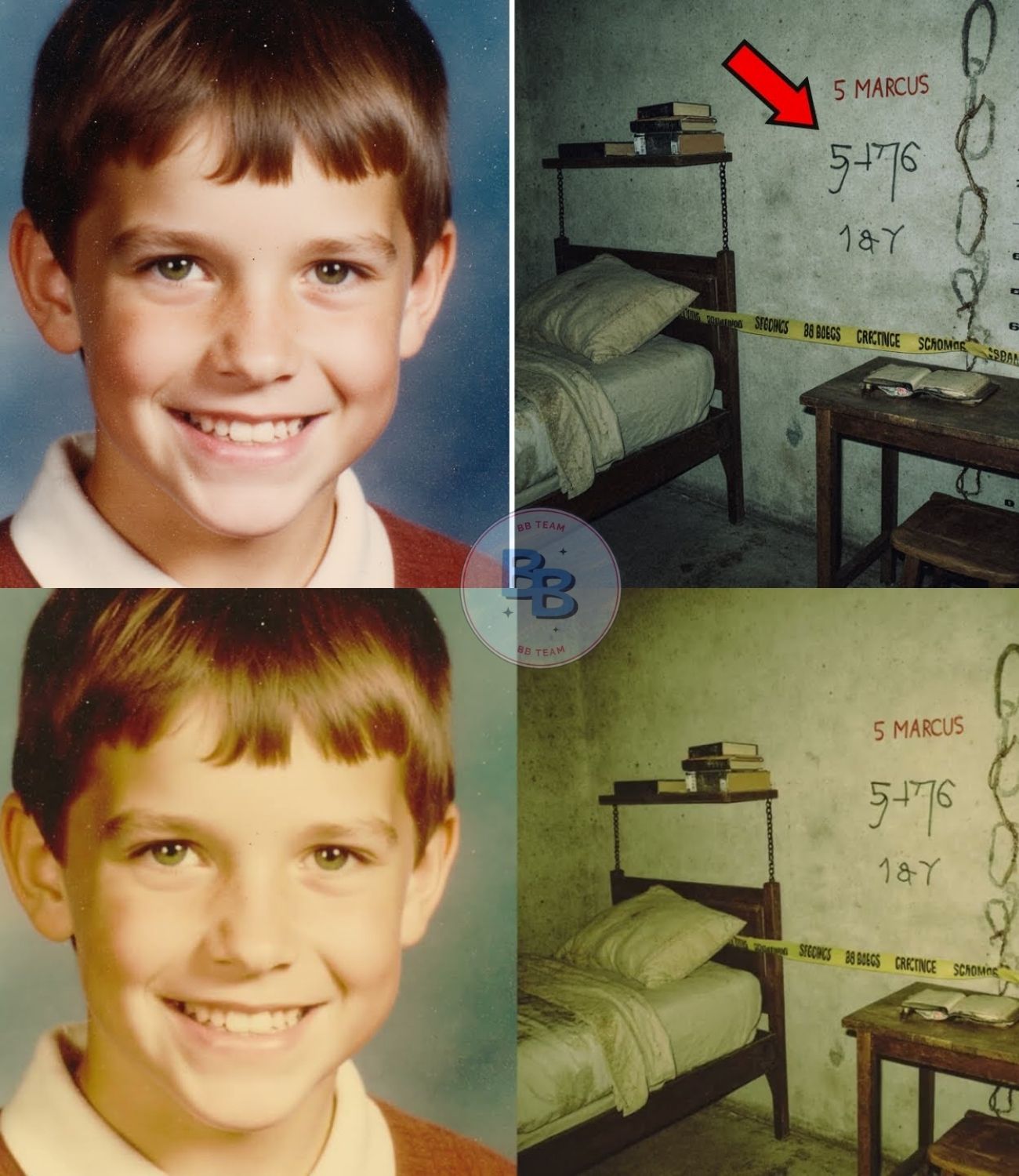
 Every detail revealed one dark story. There were on the walls Traces, small vertical scratches in arranged in groups of five. Someone was counting the days. He counted about 5,275 Traces. 15 years under the bed. Robert found a shoebox. With trembling He opened it with his hands. There were Photos. Photos of a boy. Brown Hair, bright green eyes, a shy smile.

 In some photos He wore a school uniform, on others Casual clothing. But it was on everyone something in the boy’s eyes, one Sadness that doesn’t exist in a child should be. “The police are on the way,” Linda informed him, as she entered the secret room. Horrified she looked around. Robi, who is ahead of us? lived in this house? Robert pulled his Take out your cell phone and open the documents to buy a house.

 A man named David Sullivan. He lived alone, like that Realtor said. He widely sold the house below value. He said he had to urgently move for health reasons. In the distance sirens picked up and came quickly closer. Robert looked at continue the photos. He stopped on one Boy holding a calendar the date showed March 15, 2007. Linda said slowly.

 These photos are almost 20 years old. Detective Sarah Morrison scored in less than 15 minutes one, accompanied by a team forensic technician. She was one Woman in her early 40s with gray hair that is too tied in a tight ponytail was and attentive eyes to which no Detail missed. She entered determinedly the garage and stayed in front of the hidden one door stand. “Gentlemen, Ms.

 Chen,” she greeted him formally. “You did touched something in the bedroom? Robert nodded. Yes, detective, I am went in and got this box taken out from under the bed. Photos from a boy. I think he was here stored. Detective Morrison took the box with latex gloves in hand and looked at each photo carefully. You facial expression remained professional, but Robert noticed a tension in him her jaw.

 “Do you know how long”Is this wall already covered?” I am “Not sure,” Linda replied. As we bought the house three years ago, the garage looked the same. We have never touched this part until today. Morrison gave the signal to her team to begin securing evidence. Technicians in white overalls entered the secret room, photographed everything and collected samples.

 One of them focused particularly on the an Chains attached to the wall and cut pieces for analysis. There is still something you should see said one of the technicians from the room. He crouched next to the bed and paused small diary in hand. It was between mattress and bed frame hidden. Morrison carefully lifted it Diary up.

 The leather binding was worn out but the contents were still readable. She opened the first page and read aloud. My name is Markus Sullivin. I am 12 years old. My Father took me in three months ago brought this room. He says it should protect myself from the outside world, but I don’t understand why I’m chained must be.

 The silence that followed was oppressive. Robert felt Linda grabbed his hand and squeezed it tightly. Morrison continued leafing through it Diary. Her gaze slid over the dated entries. The entries came from the years 2007 to 2022. She looked at the opportunity with a serious expression. years of records. “Detective,” Robert interrupted.

 The man, who sold us this house was called David Sullivan. He said he was moving out health reasons. Morrison immediately reached for her radio. Headquarters, I need a search immediately according to David Sullivan. Last known Residence. Oakwood Drive 2 type PLCin, Portland. He is considered armed and extremely dangerous.

 She turned Robert too. When exactly did he give them this? House sold? We have sales in Completed September 2022, replied Robert, 3 years ago. And the last ones Diary entries are from August 2022, Morrison muttered and did the math head. One month before the sale. You turned to her team. I need a DNA analysis of everything in here.

Hair, skin, anything biological material and they want one immediately Search warrant for David Sullivan Bank and telephone records. Linda finally found her voice again. Detective, what do you think? Markus happened? Is he still alive? Morrison carefully concluded that Diary. Senora Chen, after 15 years there are many options, but the fact that Sulliiven the house sold and right after the last one Diary entry has disappeared not a good sign. She paused.

However, we have in this room no traces of violence were found either. That gives me some hope. A Technician came with a plastic bag, which contained several strands of hair the room. I have this in the Found a hairbrush that was on the shelf. There appears to be DNA from two different ones to be people.

 Shorter brown hair and longer gray hair. Probably Markus and David concluded Morrison. Send it for urgent analysis. She looked around the garage. Yours Sharp eyes searched for more Details. Seora Chen, how long have you lived? in this house? Three years, as I said. And does anyone have a neighbor at this time? something unusual about him Previous owner mentioned? Does anyone have it? asked a child? Robert and Linda exchanged looks.

“No,” Robert answered slowly. The Neighbors said Sullivan was very been reserved. He always has withdrawn. Some even said it be a relief, new people in to have in the neighborhood. Morrison took notes in her notebook. You have to think carefully. Than the house was inspected before purchase or the appraiser this garage thoroughly inspected.

 Linda frowned forehead and tried to remember. The appraiser has the basic structure Ceiling checked the floor, but this Shelves have always been here and covered the wall. He doesn’t have it removed. “Sullivan has this wrong one Wall built specifically to accommodate that to hide the bedroom,” concluded Morrison. This was planned, meticulous.

She looked at the couple. You have to opt for another accommodation for a few days while we search the whole house investigate. This is now official a crime scene. Three days later, Detective ordered Morrison the chance to go to the district. You were in a meeting room conducted where evidence is on one photos were spread out on a large table of the secret bedroom, photocopied Pages from Mark’s diary, Laboratory results.

“Thank you for coming,” began Morrison and motioned for you to sit down take. We have news about that case. First of all, we were able to get through a DNA analysis confirms that the im Two people found hair in the room belong. David Sullivan and one Boy we know as Marcus Sullivan Identified David’s son.

 son, Linda repeated in shock. He stoppedcaptured his own son. Morrison nodded seriously. So it seems. We have Obtain access to the birth certificate. Markus was born in 1995 born, meaning he was actually 12 years old when he Was locked in this room in 2007. His mother, Rebecca Sullivan, died Cancer in 2006, just a year before Markus was imprisoned.

 Robert bowed before. “And what about David Sullivan? Did you find him?” “Not yet”, Morrison admitted. But we have something Discovered something interesting. David Sullivan did not exist before 2005. This name is wrong. An identity that comes with Created with the help of forged documents became. She pulled out a folder.

 His real name is David Brennon. He has one in other states extensive criminal record, Fraud, theft, but none so far Acts of violence. Then he changed his Identity and asked Linda, “Why?” We’re investigating, Morrison replied, but we have something much more disturbing inside Mark’s diary discovered. She hit a marked page.

 May I give you read an excerpt? Robert and Linda sensed it and hesitated but clearly. Morrison began reading. Dad explained to me today why I am here. He said the world outside was sick, people were dangerous and evil. He said mom died, because she went out and herself infected. He said he loved me too much for him to allow that.

But I miss school, I miss my friends, I miss them sun. Morrison’s voice was controlled, but her words betrayed deep feelings. The entries continued for years continue this tone. David convinced Markus, that he would protect him, that the Imprisonment is an act of love. “That “I’m sick, Linda,” she whispered.

 Tears ran down her cheeks. “Yes, that is it,” Morrison agreed. “But it will even worse.” As Markus grew older, the entries changed. He began To question David’s narrative. In Year 2015, when Markus was 20 years old, there is a special one insightful entry. She leafed through a few pages through. He wrote: “Today I heard voices outside, People who laughed and each other entertained.

 I screamed for help, but Dad turned up the volume on the television in the house. Later he said I was hallucinating but I know what I heard. There There are people outside, real people.” Robert buried his face in the hands. 15 years. This boy is 15 Spent years in this hole. In 20 years. Actually corrected Morrison calmly.

 Markus is now 30, if he is still alive. She pushed a photo over the table. That’s one Age reconstruction, ours created by a forensic artist. So Markus probably looks like today. The picture showed a young man with similar facial features to the boy in the photos, but thinner, paler, with Eyes that had seen too much. Robert looked at the picture urgent.

How can someone treat their own child like that? do something? Morrison sighed. David Sullivan or Branon appears after the death of his wife an extreme form of paranoid Having developed an anxiety disorder. But this, this doesn’t justify what he has done. This is kidnapping, Deprivation of liberty, child abuse.

She paused and possibly murder. Do you think Markus is dead? Linda asked whispering. “We don’t know,” Morrison admitted. The last diary entry is from August 20th. Markus writes: “Dad behaves strange. He talks about it all the time to take a long journey, to start over. He says maybe it’s time me to let go, but something in His eyes scare me, something The inexplicable.

” Silence lay heavy in the room. Finally Robert asked, “What are you doing to… to find her?” We have a nationwide search David Brennon initiated, explained Morrison. Years of isolation. Two weeks after discovery of the secret room Detective Morrison receives a call that… course of the investigation completely should change.

 It was one Social worker from Eugene, Oregon, about 200 km south of Portland. Detective Morrison. The voice on There was one on the other end of the line older, cautious woman. My name is Patricia Holden. I work in Green Hope Shelter here in Elden. I I’m calling because I saw the ad about David Sullivan or Branon. I knew him.

 Morrison sat up in her chair. When was that, Senra? Holden? Answered about three weeks ago Patricia. He came with a young man to our homeless home. He said, the young man is his nephew lost his mother and need it temporary help while he gets some regulated legal matters. Can you please this young man describe? Thin, very pale, as if he hasn’t seen sunlight for years, shoulder length brown hair, green eyes. He hardly spoke.

 When he spoke, then just quietly. He seemed above allto be afraid. In front of people, in front of people places, in front of light. Morrison felt it her pulse beat faster. And David, what exactly did he say? He said his Nephew has mental problems been in a clinic for years and now try to get back into society to be integrated.

 He asked us for Patience as he may have panic attacks. Patricia paused, but something wasn’t right. The Young man’s look. Was for David it strange. It wasn’t exactly fear, but rather complete submission. Where are you now? That’s the problem. David only stayed a few hours. He said he would in three days come back to his nephew to pick up. That was almost three weeks ago.

He never came back. Morrison fetched already his keys. And the boy Man? Is he still there? Yes, we called him Jake because he gave us his right one Didn’t want to reveal the name at first, but after a few days he talked a bit more. Detective, Patricia said more quietly. He told that he was in a small for a long time Room had lived that his father had him held there for his protection had.

 “Don’t let him out,” Morrison ordered. I’m on my way. And Patricia, you did the right thing, when they called. Two hours Morrison later achieved this Green Hope homeless shelter modest building in the center of owner. Patricia Holden was waiting for her on Entrance, a strong woman in her early 60s with kind but tired eyes. “Him is in the living room,” Patricia explained, while watching Morrison down the hallway led.

 “We told them that you are there. I’ll be right there.” He was very nervous. As they entered the room, Morrison saw a young man who was in crouched in a corner of the sofa, knees pulled to the chest. He looked up, when she entered and recognized Morrison immediately the face that shows the traces of the age wore. It was Markus.

Markus, she said quietly and approached slowly. My name is Detective Sarah Morrison. I have your diary found. Mark’s eyes widened. My diary. Her voice was hoarse, as if she wasn’t used to it so often to be addressed. “How did you do that Found a room, Markus? The room, in where your father held you prisoner?” Morrison carefully sat on the Sofa and kept a respectful distance.

“You’re safe now. He can no harm to you anymore.” Mark began to tremble. Tears streamed down his face cheeks. He said he would come back. He said it was only temporary. He just need time to find a new place for us to find. How long were you in? this room, Markus? Since I was two was.

 Her voice was malicious, beyond a whisper. He said he would me protect. The world is too dangerous. I would get sick like mom if Go. Morrison felt anger rising in him She rose, but she kept her composure. Your father was sick, Markus. What he did was wrong. You know that now, right? Markus nodded slowly. Mine is in recent years became clear that what he said made no sense.

 And when he me brought here when I saw the world could see again, he looked inside the modest room as if it were a palace. It’s so big, so open, the people are so real. Markus, me need everything you remember, when your father brought you here. Every detail can help us to understand it find.

 Markus took a deep breath and pushed clearly with his thoughts. It was night. He blindfolded me and sat in a car. We drove for hours. When we took off the blindfold, us in a parking lot. He gave me new ones Clothes, he said, so I could wear one could shower in a public toilet. Then he brought me here. He said, where he was going.

 No, he just said, he have to sort out a few things. He would come back to pick me up. Marcos looked at Morrison with eyes that much looked older than his 30 years. But he won’t do it. Come back. Yes, because you are looking for him. Yes, we are looking confirmed Morrison. Markus, do you want that he will be found? The question seemed to surprise him. He was silent for a long time.

I don’t know, he finally admitted to. He is my father. He has me fed me, taught me things, me Gifted books, but also his voice failed. He locked me up, me stole my life. In the following Morrison worked tirelessly for days Markus and created a detailed one Chronology of his 15 years Captivity.

 Every session was carefully carried out in attendance a psychologist to ensure that Markus was not retraumatized. Books, special food, hours Conversations with Markus through the door. But when Markus got older and started David was always asking questions more controlling and paranoid. He had installed a camera, revealed Markus in a meeting.

 When I was 16, He said it was for my protection, butin reality he wanted me monitor. A house. He said taxes would be too high. We would need one New beginning. Markus paused, but I think he did I was scared. A few months ago a city inspector came, to do something to the water pipes check. My father panicked. He spent days trying to find all traces in the To blur the room and take me to the to silence.

Surveillance cameras caught him three ago Weeks at a gas station near the filmed on the California border. Since then nothing more. Patricia Holden said he have health problems spoken. Maybe it’s in the Dying and Markus wanted a chance give to life. Morrison doubted this benevolent interpretation, but she couldn’t completely exclude.

 In the meantime coordinated them with the chance to Markus back into his old life to incorporate. They offered him voluntarily pass the house back to give him the to facilitate recovery. On the day, as Markus for the first time since his returned home in prison Morrison present. He stayed at the entrance stand. His whole body was shaking.

Robert and Linda waited respectfully some distance while he slowly crossed the threshold. “The house feels different,” Markus murmured, brighter, less oppressive. He left through the house, touched the walls, looked admiringly out the window. As When they reached the garage, he stayed stand. The secret room was now exposed.

The false wall was complete removed. Markus stood there and looked at the room for 15 years had been his whole world. He works “So small now,” he said quietly. But when I was there it felt like my whole life. Linda could do hers Don’t hold back feelings. “Markus, I’m so sorry for what you’re saying here have gone through.

 If only we had it just knew.” Markus turned to her, his eyes were moist. You couldn’t do that know. He was very careful. He looked back into the room. “I can come in?” Morrison nodded and followed him carefully. Markus entered the room and looked around as if he were visiting a museum of his own life. He touched the Spots on the wall.

 The Children’s drawings were still stuck there. “I drew so as not to “Losing your mind,” he explained. Dad gave me paper and pens when I was good. He picked up one of the drawings in the hand, a stick figure with it a wide grin. That was me. So I remembered before all this happened. Suddenly froze Mark.

 His eyes fell on a corner of the room that the investigators already have examined, but nothing unusual had found. Dad knew nothing of it. I have always had this over the years done again and a loose tile postponed. He lifted the tile with difficulty and gave a small empty space free underneath. There was a rusty one in there Tin can.

 Markus pulled it carefully out. His hands were shaking. I kept things here. Things that dad couldn’t see. He opened the can. Inside were several folded ones Sheets of paper, a faded photo and a small medallion. Markus took first the photo in your hand. It showed him with his mother both smiling in a park. “Mom,” he whispered. “Dad destroyed all of her photos.

 He said the sight of them made me sick do, but I have this one hidden.” Morrison came closer. “And Papers?” Markus carefully folded one apart. There was a letter in his boys handwriting. I got him when I was 15 written. He is to my future I directed, if I manage it, to get out of here. He started loudly to read aloud. Future Markus.

 If you If you read this, you’ve done it. You are free. Please remember who you were. Remember mom. remember, that you have baseball and pepperoni pizza liked. Remember your friends Jason and Emma. Remember that the World is not as terrible as dead says. He’s wrong. I know that you you’re wrong and when you get out of here, please don’t hate him. He is sick.

But don’t let anger get you down either consume. Live. Live for both of us. Three months after Mark’s discovery took place the investigation finally takes a turn. A man who is on David Brannon’s Description matched, was in one small coastal town in California found. He lived under an assumed name in a caravan near the beach and worked as a janitor in one motel.

 Morrison immediately flew with two agents there. When she got the caravan reached, they found David in one old beach chair sitting in front of the view aimed at the sea. He looked as if by decades in just a few months aged. “David Branon,” announced Morrison and approached cautiously. He is charged with kidnapping and Imprisonment of Marcus Sullivan arrested.

 David didn’t do any Resistance. He just nodded as if he had waited for this moment.Is he okay? Were his first words. “Is Markus okay? You’re alive still, if you want to know,” Morrison replied coolly. No, thank him. On the car ride back to Portland David finally began to speak. Not as a confession, but as a must he explains something.

When Rebecca died, something broke inside her me. I was obsessed with it Thoughts that Markus would also die would if I brought him into the world would let out. Every flu, every cold reminded him of how Rebeca’s life was had begun. Cancer, they said, but I knew the truth. The world had killed her, the stress, that Pollution, people.

Morrison listened in silence as he continued. So after that I started bringing him in at home to keep in his room. At first it was It’s just temporary, I swear just until I was sure he was in Security was. But then it passed Time, and the more time passed, the more it became more impossible to leave him let.

 How should I explain it? What should I say? And then you just carried on, Morrisonten said for years. I loved him, David insisted. Tears streamed down his face aged face. Everything I did I did it out of love. Love doesn’t bind, Morrison replied. Love liberates. David Branon’s trial was quick. Given the overwhelming evidence and he needed David’s confession Judge only three hours to get him in guilty of all charges located.

 The verdict: 30 years in prison without Probation. Markus sat during the entire process in the auditorium. As the verdict was announced, he showed no movement whatsoever. To Morrison’s question according to his condition he simply answered empty. I thought I would Relief or anger or something feel, but I just feel just empty.

 In the following months Markos began the long journey rebuilding his life. With help He trained as a specialized therapist basic social skills he lost during his captivity had. Jens, impressed by his strength, supported him financially his training. Mark wrote himself took evening classes and worked up his school leaving certificate, which he never got had been able to do.

 He had Difficulty with crowds, with wide spaces, with normal encounters, but he didn’t give up. One day, almost a year after his Released, visited Marcus Morrison in his office. He seemed changed more fulfilled, healthier. There was still one Shadows in his eyes, but there was also something new. Hope. “I wanted Thank you,” he said.

 That she this Found rooms that they didn’t have gave up looking for me, even when they didn’t even know that I exist. Morrison smiled. “What are you going to do now, Markus?” “I “I’ll live,” he replied simply, just as he swore to himself had. He paused and then added added: “And I will help others, other people who point one way or the other were held captive in other ways.

I want to become a social worker. I I want people to have hope give back that I almost lost would have.” When Markus had left, he looked at it Morrison the photo that Markus took in the course aging with time and still attached to him Pinboard was hanging. She stuck it next to it new photo in which he appears for the first time sincerely smiled, taken during a group therapy session.

The difference was remarkable. David Branon had Markus for 15 years Life stolen, but not his future. That was still writing day after day Day a young man who Survived the unimaginable and decided had to not only survive, but to live. Marcos Sullivan’s story teaches us a painful but necessary truth about the nature of Love, control and freedom.

 David Branon sincerely believed in his son to protect him by this 3 times 4 m large room locked up. In his through the pain of losing Rebeca distorted head he had a story create security in isolation meant control caring. Yes true love never imprisons. You freed. Markus Fall shows how unprocessed trauma is in transform destructive cycles can destroy generations.

David lost his wife and was unable to cope to cope with this pain, he projected his deepest fears the only being he still loved. He confused protection with possession and made his son his hostage own paralyzing fear. Markus lived in one for years artificial world that is based on the well-intentioned lies from a sick father rested.

 The most remarkable thing about this one However, history is not the horror, that Markus suffered, but that decision he made afterwards. He could have allowed this 15 His remaining years of captivity determine life. He would have been bitterclosed and unable to trust can be. Instead decided Markus for life. He decided to forgive yourself without forgetting heal without erasing the scars.

His decision to become a social worker become and help others who are on imprisoned in different ways were transformed into tragedy a meaning. This story confronts us an uncomfortable reality. see monsters don’t always look like monsters. Sometimes they are loving parents who from have strayed from the right path.

 Respectable Neighbors who have terrible secrets hide. Just normal people, their weapons against incurable wounds become the ones who protect them should. David didn’t wake up one day up and decided to be cruel. He was gradually replaced by an untreated one mental illness eaten away until his reality became unrecognizable.

 Robert Shane’s accidental discovery reminds us remember how important it is to pay attention be. How many hidden rooms are there in our society, not just in literally, but also figuratively senses. People live in prisons from abuse, manipulation and emotional control. How many children suffer in silence while the world goes around she remains indifferent around? Marcos History played out over 15 years off, just a few meters from neighbors removed who suspected nothing.

 If it There is a fundamental lesson here, then these. Take care of each other. Asks about, if something seems strange to you. Don’t ignore your intuition. Patricia Holden sensed that something was wrong agreed and called. The decisive one Call that saved Markus. Robert Chen I would have simply glued the wall back together can, but he decided, the to pursue the matter.

 Small acts of courage can change and save entire lives. For all those who are in their own live in hidden spaces, whether physically or emotional, is Mark’s message clear. There is always a way back in Light. There is always hope. There is always people who are willing to help if you have the courage to do so ask.

 The world outside can scary, unpredictable and sometimes even be dangerous. But she is too full of beauty, possibilities and real human connection. Markus lost 15 years, but not his future. It’s still being written Step by step, day by day. M.M.

SOTD – Do Not look if you cannot handle lt 22 Pics!

Appearance style extends far beyond clothing choices or makeup routines. It operates as a visual language—one that communicates identity, confidence, values, and lived experience before any words are exchanged. In today’s landscape of digital influence, personal branding, luxury markets, and social media exposure, a woman’s style functions as a powerful signal, merging psychology, culture, and self-expression into a lasting first impression.

Style conveys information silently. It reflects personality, emotional intelligence, lifestyle, education, ambition, and social awareness. Even age, often believed to be something to conceal, is subtly expressed through styling choices—not as a number, but as a reflection of self-assurance and personal evolution. Authentic style is never accidental; it is deliberate, curated, and deeply individual.

The well-known statement “Fashion fades, style remains,” often linked to Coco Chanel, continues to shape discussions around luxury fashion and timeless elegance. Fashion reacts—it changes with seasons, algorithms, trend cycles, and the demands of runways and fast-consumption models. Style, in contrast, endures. It evolves without losing its essence. A woman with a clearly defined style can selectively engage with trends while maintaining consistency and authenticity—qualities that hold increasing value in a visually saturated world.

Fashion professionals and psychologists commonly describe several core style categories, each representing a different approach to self-presentation. These categories are not restrictive labels but guiding frameworks. Many women naturally combine multiple styles, creating a personalized aesthetic shaped by inner character and external responsibilities.

Classic style is grounded in balance, refinement, and longevity. It favors tailored silhouettes, neutral tones, clean lines, and high-quality materials. Often associated with women who prioritize professionalism, stability, and quiet authority, this style communicates confidence without excess. It is especially effective in corporate settings, leadership roles, and high-net-worth environments, where discretion signals power.

Closely connected is business style, which emphasizes structure, clarity, and function. While it shares elements with the classic look, it is more goal-oriented, focusing on efficiency and professionalism. Structured suits, crisp shirts, functional handbags, and minimal jewelry define this approach. In sectors such as finance, law, consulting, and real estate, business style reinforces credibility and supports a strong professional image.

Chanel-inspired style occupies its own space, combining elegance with comfort. Rooted in the philosophy of Coco Chanel, it values ease without sacrificing sophistication. Tweed jackets, soft textures, pearls, monochromatic palettes, and simple flats create an impression of effortless refinement. This style often appeals to women who appreciate heritage luxury, subtle wealth, and intelligent femininity.

Romantic style emphasizes softness and emotional expression. Flowing fabrics, delicate details, pastel shades, floral elements, and gentle silhouettes characterize this aesthetic. Women drawn to romantic style often value creativity, connection, and sensitivity. It resonates strongly in beauty, lifestyle, and storytelling-driven content, where warmth and vulnerability foster engagement.

Sporty style reflects energy, movement, and modern functionality. It prioritizes comfort and flexibility while maintaining a cohesive visual identity. Sneakers, athleisure, performance fabrics, and practical outerwear dominate this category. In the era of wellness culture and health-focused lifestyles, sporty style has become a symbol of productivity, self-care, and long-term vitality.

Avant-garde style pushes boundaries and challenges convention. It embraces experimentation, unconventional forms, bold colors, asymmetry, and artistic construction. Commonly associated with creative fields such as design, art, media, and cultural commentary, this style communicates independence, innovation, and intellectual confidence.

Folklore style draws from tradition, cultural heritage, and craftsmanship. Natural materials, embroidery, earthy palettes, and handcrafted details define this look. It reflects respect for history, sustainability, and authenticity—values increasingly central to ethical fashion and conscious consumerism.

Fantasy style moves beyond realism into imagination and theatricality. Dramatic silhouettes, symbolic accessories, and conceptual elements define this aesthetic. While not always practical for everyday wear, fantasy style plays a vital role in performance art, digital storytelling, and creative self-reinvention.

Diffuse style represents adaptability. It blends elements from multiple categories, allowing flexibility across different environments and roles. This approach suits women navigating professional, creative, and personal demands within a single lifestyle, offering versatility in a fast-paced, dynamic world.

Glamour style focuses on visibility and impact. Statement pieces, bold makeup, luxurious textures, and striking silhouettes define this aesthetic. Often associated with entertainment, nightlife, influencer culture, and high-profile events, glamour—when executed intentionally—signals confidence, ambition, and presence rather than excess.

What connects all these styles is self-awareness. Style becomes powerful when it reflects inner alignment rather than external pressure. In an age of personal branding, visual identity strategy, and digital reputation, authenticity consistently outperforms imitation. Women who understand their style communicate clarity—about who they are, what they value, and how they choose to exist in the world.

Ultimately, appearance style is not about meeting expectations. It is about harmony between inner identity and outward expression. It evolves with life stages, experiences, and priorities, yet remains grounded in intention and self-respect. Trends may dominate timelines and fashion weeks, but true style endures—telling a story without explanation, leaving impact without noise, and proving that while fashion changes, identity remains.

SH0CKING! David Muir Breaks Down in Tears LIVE on TV as He Reveals His True Gender – The Studio Was Left SPEECHLESS!

The following narrative explores a dramatic and high-stakes scenario involving one of modern journalism’s most familiar faces. While it captures the tension and emotional gravity of a sudden public revelation, it is important to note that such accounts are often the product of digital-age rumors or speculative storytelling rather than confirmed journalistic fact. Nevertheless, the story serves as a powerful meditation on the intersection of public duty and private truth.

In the meticulously polished world of network news, where every second is timed and every gesture is choreographed for maximum professionalism, David Muir has long stood as a titan of composure. As the anchor of ABC World News Tonight, he is the voice that millions of Americans invite into their homes to navigate the complexities of global conflict, economic shifts, and social upheaval. He is the personification of the “calm in the eye of the storm.” However, according to a narrative that recently gripped the media landscape, the storm finally moved inside the studio, leading to an emotional broadcast that reportedly left his staff and viewers in a state of stunned silence.

The atmosphere of a live newsroom is typically one of controlled frantic energy. Directors bark orders through headsets, producers monitor social media feeds, and the anchor sits at the center of it all, a steady hand at the wheel. For years, Muir has operated within this vacuum of objectivity, keeping his personal life guarded behind a wall of journalistic integrity. But during a recent broadcast that began like any other, that wall allegedly began to crumble. The segment had been focused on shifting social tides and the evolution of identity in modern America—a standard piece for a nightly news program. But as the cameras cut back to Muir for the transition, the usual transition didn’t happen.

Instead of moving to the next headline, Muir paused. The silence in a live broadcast is usually a sign of technical failure, but this silence felt heavy, intentional, and thick with a sudden, localized humidity. The studio lights, which usually highlight his steady gaze, caught the unmistakable glisten of tears. Those who were there described a moment where the persona of the “News Anchor” evaporated, leaving behind a vulnerable human being struggling with a truth that had become too heavy to carry in the shadows.

With a voice that reportedly wavered with the weight of years of concealment, Muir began to speak not to his audience as a journalist, but as a person seeking liberation. “I have spent my life in the public eye,” he began, his breath hitching in a way that signaled a profound internal shift. “I have tried to meet every expectation, to be the person you needed me to be to trust the news I deliver. But the truth is, I have not been the person you’ve known me to be. I have lived a life partitioned, keeping my truest self hidden out of fear and a sense of duty.”

The revelation that followed—a public acknowledgment of a gender identity that differed from the one the public had assigned him for decades—was a seismic event in the history of broadcast media. For a figure of his stature, in a role that traditionally demands a certain type of stoic, traditional masculinity, the confession was more than a personal milestone; it was a cultural hand grenade thrown into the middle of primetime. He spoke of the exhaustion of performance and the quiet agony of living a double life in the most visible way possible. “I am no longer afraid,” he allegedly stated, his voice gaining strength even as the tears fell. “I am sharing this because I can no longer ask others to live authentically if I am unwilling to do so myself.”

The immediate aftermath in the studio was one of paralyzed awe. Professionalism dictates that when an anchor goes off-script, the crew must find a way to redirect, but reports suggest that the gravity of the moment was so intense that the “redirection” simply didn’t happen. The staff stood in the wings, some moved to tears themselves, watching a man reclaim his life on national television. It was a moment where the “Breaking News” wasn’t a tragedy or a political scandal, but a singular act of courage.

As the broadcast concluded and the screen faded to black, the digital world exploded. The reaction was a microcosm of modern society—a mixture of profound support, shocking vitriol, and widespread disbelief. However, the overwhelming narrative was one of admiration for the sheer bravery required to dismantle a legendary career’s facade in real-time. Fellow journalists, who understand better than anyone the pressure to remain a “blank slate” for the public, were among the first to offer their public support. They spoke of Muir not just as a colleague, but as a trailblazer who had dared to bring the most private aspect of the human experience into the most public arena imaginable.

The conversation sparked by this event transcends the career of one man. it touches on the fundamental question of what we expect from our public figures. Do we want them to be perfect, unchanging statues of the identities we’ve projected onto them, or do we want them to be mirrors of our own complicated, evolving human truths? By reportedly breaking down on air, Muir didn’t just share a secret; he challenged the very nature of public trust. He posited that true trust isn’t built on a lack of personal identity, but on the honesty required to reveal it.

In the days following the alleged revelation, the focus shifted to the future. In an industry that can be notoriously fickle about its “brands,” many wondered if Muir’s career could survive such a radical departure from his established image. Yet, the support from the network executives and the loyalty of his viewers suggested a shift in the cultural wind. There was a sense that the public was ready for a different kind of anchor—one who didn’t just report on the world’s changes but was a living embodiment of the courage it takes to face them.

David Muir’s story, as told through this emotional lens, is a reminder that no amount of success or public acclaim can satisfy the human need for authenticity. Whether in a quiet home or under the blinding lights of a New York news studio, the truth has a way of seeking the light. By reportedly tears and all, Muir showed that the most important story any journalist can ever tell is the one that starts with “This is who I really am.” The studio may have been left speechless, but the message echoed long after the cameras were turned off.

Tell me everything, That is when the truth finally began to come out!

In the sterile, unforgiving light of the foyer, the sound of the impact was nothing like the cinematic thuds heard in movies. It was a sharp, dry crack—the sound of seasoned wood snapping under a heavy boot or a sudden fracture in a porcelain doll. It was the sound of a woman’s dignity being shattered in her own home.

I am Lauren, and for two years, I had become a master of the silent arts. I knew how to navigate the moods of my husband, Ethan, like a sailor reading a darkening sky. I knew how to curate a life of spotless rooms and smiling Instagram posts to mask the rotting foundation of our marriage. But that afternoon, the facade collapsed. Ethan’s mother, Margaret, had spent the hour weaving a web of toxic insults, her voice dripping with the casual cruelty of a woman who viewed me as an interloper in her son’s life. When I finally found the courage to call her out on her disrespect, the air in the room curdled.

Ethan didn’t offer a defense. He didn’t seek a middle ground. He simply exploded. His eyes, usually a calm hazel, were dilated with a terrifying, righteous fury. “You dare disrespect my mother?” he roared. Before I could draw breath to answer, his hand blurred through the periphery of my vision. The blow was blinding. Being six months pregnant, my center of gravity was already compromised. I spun, my feet tangling in the expensive Persian rug Margaret had insisted we buy, and crashed onto the cold tile of the foyer.

The air left my lungs in a violent whoosh, leaving me gasping for life. The world dissolved into gray static, and then the true agony arrived. It wasn’t the throbbing in my cheek that terrified me; it was the sharp, stabbing pain deep in my abdomen. I curled instinctively around my belly, my hands clawing at my maternity jeans to protect the life flickering inside.

I looked up, hoping for a flicker of regret, but I found only Margaret standing over me. She adjusted her pearls with a sneer of absolute disgust. “Oh, don’t start with your drama,” she snapped. “You got exactly what you deserved.” It was only when the dark, warm slickness began to spread across the tile that Ethan’s rage turned to a ghostly pallor. Margaret, ever the tactician, didn’t see a tragedy; she saw a liability. She barked at Ethan to call 911 before I “made it worse.”

The ambulance ride was a blur of swinging IV bags and the professional, heavy boots of paramedics. In the ER, the silence of the exam room was the loudest thing I had ever heard. I waited, my heart hammering against my ribs, until the rhythmic, galloping thrum of my daughter’s heartbeat filled the room through the Doppler monitor. I sobbed—a guttural, primitive sound of relief. She was still there.

“How did you fall, Lauren?” the doctor asked, his pen hovering over a chart.

The lie was a reflex, a conditioned response honed by years of covering bruises with concealer and holes in the drywall with art. “I slipped,” I stammered. “Socks on the tile. I’m just clumsy.”

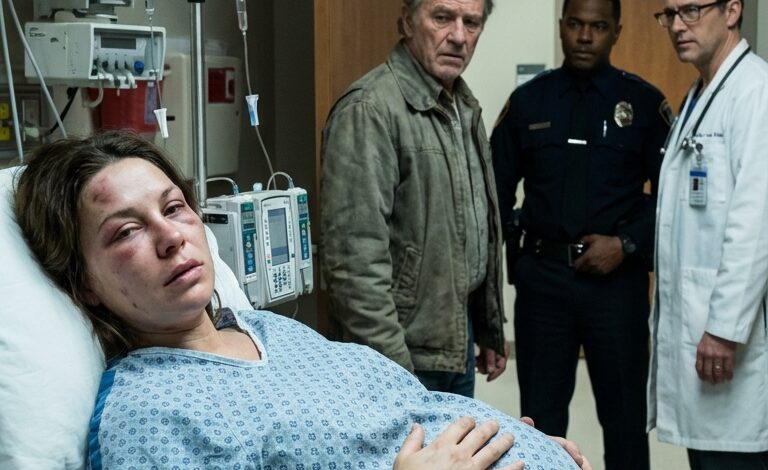
That script would have held if the door hadn’t swung open to reveal my father, David. He was a man of stained denim and quiet strength, a carpenter who spent more time listening than talking. He stood in the doorway, and I saw his eyes track the purple swelling on my face, the IV in my arm, and the way I couldn’t meet his gaze. The muscle in his jaw feathered with a dangerous, controlled energy I had never seen before. He pulled a metal chair to my bedside, the legs screeching against the linoleum, and sat down.

“Tell me everything,” he commanded. It wasn’t a request for information; it was an order to stop lying. When I tried to repeat the script about the fall, he reached out and gently tipped my chin up. “Lauren, I saw the intake notes. That bruising pattern isn’t a fall. That is a hand. How long has he been hurting you?”

The dam inside me, built brick by brick to protect the image of the “perfect couple,” finally buckled. The truth came out in a ragged torrent—the shouting, the breaking of things, the shoves that turned into slaps, and the flowers that always followed the bruises. My father exhaled a long, shuddering breath, his eyes glistening with a fierce, silent rage. When the doctor returned to report that the placental abruption was caused by blunt force trauma and that they were legally required to notify the authorities, my father didn’t hesitate. “Do it,” he said. “Please.”

The room soon filled with a social worker and a police officer, their questions stripping away the last of my secrets. Just as the weight of my new reality began to settle, the door swung open again. Ethan walked in, Margaret trailing behind him like a shadow. He was a masterpiece of performance art, his face contorted with faux concern as he rushed toward my bed. “Lauren, baby! I was so scared when you slipped,” he cried, reaching for my hand.

My father stood up. He didn’t shout; he simply moved into Ethan’s path, a wall of weathered denim and righteous protection. The air in the room grew thin. Ethan’s practiced look of concern faltered as he looked into my father’s eyes and saw that the game was over.

“Don’t touch her,” my father said, his voice a low, vibrating hum of warning.

Margaret tried to intervene, her voice shrill and entitled. “Now see here, David, this is a family matter—”

“You’re right, Margaret,” my father interrupted, never taking his eyes off Ethan. “It is a family matter. And you two aren’t family anymore.”

For the first time in my marriage, the fear that had been my constant companion shifted its weight. I looked at the man I had married and saw him for exactly what he was: a small, hollow person who used violence to feel powerful. Then I looked at my father, whose quiet presence provided more strength than Ethan’s loudest roar ever could.

The police officer stepped forward, asking Ethan to step into the hallway. Margaret began to protest about their “reputation,” but her voice was drowned out by the steady beep of the heart monitor—the sound of my daughter’s life continuing, despite the storm.

I leaned back against the thin hospital pillows, my hand resting on my belly. The road ahead would be long, filled with legal battles and the hard work of rebuilding a life from the wreckage. But as my father sat back down and took my hand, I knew the silence had finally been broken. I wasn’t the porcelain wife anymore. I was a mother, a daughter, and for the first time in a very long time, I was free. The sound of dry wood snapping had been the end of my marriage, but the sound of that galloping heartbeat was the beginning of everything else.

My four-year-old daughter packed her suitcase this evening and announced that she was leaving home! I was shocked when I found out the reason!

The sun was just beginning to dip below the horizon, casting long, amber shadows across the driveway, when I pulled into the yard after a grueling day at the office. Usually, my homecoming is greeted by the muffled sounds of domestic life—the television humming or the distant clatter of dinner preparations. But this evening, the scene awaiting me on the front porch was so unexpected that I froze with my keys still half-turned in the lock.

There, standing with the rigid posture of a sentinel, was my four-year-old daughter, Lily. She was fully geared for a grand expedition. She had her bright pink backpack cinched tight over her shoulders, and gripped firmly in her right hand was the small, glittery rolling suitcase we had bought for our summer trips to the coast. Her face was a dramatic tableau of misery: her cheeks were flushed, her nose was a dusty rose color, and her eyes were shiny and rimmed with red. It was clear she had recently weathered a significant emotional storm.

My heart hammered against my ribs. In the split second before logic took over, a thousand terrifying possibilities flashed through my mind. Had she been hurt? Had some catastrophe occurred while I was away? I immediately dropped my briefcase and crouched down to her level, searching her face for a sign of what had gone wrong.

“Sweetheart, what on earth is happening?” I asked, my voice laced with genuine concern. “Why are you standing out here on the porch? And why in the world do you have your suitcase packed?”

Lily took a deep, shuddering breath, a sound so heavy it seemed to vibrate through her small frame. She looked at me with an expression of profound, weary gravity, as if she were a weary traveler about to deliver news of a kingdom’s fall.

“Daddy,” she said, her voice trembling but resolute. “I am leaving. I am leaving this house forever.”

The sheer conviction in her tone sent a chill through me. “You’re leaving? Lily, where could you possibly go? Did something happen? Tell me everything.”

She scowled, her lower lip beginning to quiver in that way that usually precedes a total meltdown. She adjusted the strap of her backpack with a defiant tug. “I just can’t live here anymore!” she declared. Her delivery was so theatrical, so steeped in the language of a high-stakes soap opera, that I began to suspect she had been practicing this speech in front of her bedroom mirror for the better part of an hour.

I tried to keep my voice steady, though my mind was still racing to find the source of her distress. “Honey, you have to explain this properly. I need to understand why you feel like you can’t stay with us.”

And then, she leveled the accusation that completely floored me. She leaned in slightly, as if sharing a dangerous secret. “I can’t live with your wife anymore, Daddy. She is too much.”

I blinked, the gears of my brain grinding to a momentary halt as I processed the phrasing. “My… wife? Lily, do you mean your mother?”

“Yes!” she shouted, her indignation flaring up like a struck match. “Her! I don’t love her anymore. Not even a little bit.”

I had to bite the inside of my cheek. The transition from “Mommy” to “Your Wife” was a masterstroke of four-year-old psychological warfare. It was a verbal eviction, a way of distancing herself from the woman who, until about three o’clock that afternoon, had likely been her favorite person in the world.

“Okay,” I said, adopting a tone of solemn diplomatic inquiry. “That’s a very big statement. What exactly did Mom do to earn such a title?”

Lily threw her hands up in the air, the backpack shifting precariously on her shoulders. She looked at me as if I were being willfully dense. “She’s a monster, Daddy! A real, live, scary monster! She is being so mean to me.”

“A monster?” I repeated, struggling to maintain a straight face. “In what way?”

“She won’t let me watch the cartoons with the talking dogs,” Lily began, ticking off the grievances on her tiny fingers. “And she said ‘no’ to chocolate even though I asked three times. And then—and this is the worst part—she made me put my blocks away. In the box! All of them!”

I turned my head toward the garden, staring intensely at a hydrangea bush to keep the erupting laughter from escaping. It was the classic preschooler’s manifesto: the tyranny of nutrition, the oppression of educational limits, and the absolute cruelty of basic tidiness.

“I see,” I said, finally regaining enough composure to look back at her. “That does sound like a very difficult set of rules to live under. So, let’s suppose you do leave. Where is a sophisticated traveler such as yourself planning to reside?”

Lily lifted her chin, her eyes flashing with a sense of impending triumph. “I am going to live far away from your wife! I am going to live at Grandma’s house!”

“Ah, Grandma’s. An interesting choice,” I mused. “And why there?”

“Because!” Lily announced, her voice filled with the pride of a champion. “Grandma understands me. She lets me watch all the cartoons, even the loud ones. And she always has chocolate in the little glass jar on the table. She doesn’t make me clean anything! At Grandma’s house, I am the boss.”

At that point, the dam broke. I couldn’t hold it in any longer and let out a short, barked laugh before quickly pulling her into a tight hug. She felt so small and solid in my arms, her pink backpack pressing against my chest. I kissed the top of her head, which smelled faintly of strawberry shampoo and righteous fury.

“My little princess,” I whispered into her hair. “Listen to me. I think I understand the situation now. How about we go back inside together? I will have a very serious talk with this ‘monster’ of ours and see if we can reach an agreement.”

She pulled back slightly, her shiny eyes looking up at me with a flicker of hope. “Will you really talk to her, Daddy? Will you tell her I need chocolate?”

“I will definitely discuss the chocolate situation,” I promised, though I knew exactly how that conversation would go once I made eye contact with my wife in the kitchen. “But first, we have a very important task. We have to unpack this suitcase. A world-class traveler can’t just leave her gear sitting in the hallway, right?”

Lily considered this for a moment, weighing her desire for Grandma’s chocolate against the allure of having an ally in the house. Finally, she gave a slow, dignified nod. She grabbed the handle of her rolling suitcase and, with the weary but triumphant expression of a hero returning from a long journey, she marched back through the front door.

I followed her inside, watching the glitter on her suitcase catch the light. I knew that within twenty minutes, she would be curled up on the lap of the “monster,” probably sharing a piece of fruit and forgetting all about her grand escape. But for that one moment on the porch, she had been a revolutionary, a tiny woman standing up against the injustices of room-cleaning and vegetable-eating, reminding me that in the world of a four-year-old, the line between tragedy and comedy is as thin as a single chocolate bar.

When he went to the bank, the teller handed him a note that ruined his life!

I didn’t leave amid shouting or broken plates. There was no explosive argument, no letter left behind to explain myself. I simply vanished from a life that had learned to treat me like furniture—useful, quiet, and taken for granted. Drama needs an audience, and for years I’d been performing for people who stopped noticing me a long time ago.

To understand why I left, you have to understand the water.

It happened two weeks before I walked away. August 14th. The Illinois heat was suffocating—thick, damp, pressing down like a weight you couldn’t escape. My grandson Evan, twenty-one and permanently “between majors,” decided to invite friends over to use the boat.

“Grandma,” he said without looking up from his phone, “the boat seats are disgusting. Can you wipe them down? The guys are coming.”

It wasn’t a request. It never was. My arthritis was flaring badly that day, joints swollen from the humidity, but pain didn’t factor into my role in that house. I was maintenance.

I carried a bucket down to the dock. The boards were slick with algae. I’d asked my son Richard—three times that month—to clean them.

“I’ll do it later,” he’d said every time, pouring another drink. “Stop nagging.”

The moment my foot hit the dock, it slid. The world tilted, then disappeared. I landed hard, pain tearing through my hip, and rolled straight into the lake.

The cold stole my breath instantly. Water rushed into my nose and mouth. My cardigan soaked through, pulling me down. I flailed, panic clawing through me, fighting to reach the surface.

Evan was there. Two of his friends beside him. Red cups in their hands.

I waited for alarm. For shouting. For someone to jump in.

Instead, they laughed.

“Man,” one of them said, pointing, “your grandma just did a backflip.”

Evan laughed too. Took a sip. “She’s always dramatic. You okay, Grandma? Or are you treasure hunting?”

I was barely staying afloat, limbs heavy, heart pounding. I looked at him—the child I’d helped raise, the boy whose tuition I’d paid—and realized something with absolute clarity.

He wasn’t worried.

He was amused.

They stood there long enough for the cold to sink deep into my bones. Finally, Evan sighed, annoyed, and walked down the steps. He didn’t get wet. He hauled me out like an inconvenience.

“Go change,” he muttered. “And don’t tell Dad. He’ll just complain about the dock again.”

I stood there shaking, soaked through.

“Okay,” I said.

He turned back to his friends. “Let’s get the boat ready.”

That’s where the woman they thought they knew stayed behind—in that lake. The obedient one. The fixer. The one who never complained.

The person who climbed out was someone else.

For the next two weeks, I watched them quietly, like a researcher observing behavior. Richard complained endlessly—about work, money, traffic—then retreated to his study for increasingly tense phone calls. Sarah spoke nonstop about wellness while leaving every mess for me. Evan never mentioned the lake. He asked for cash. Laundry. Favors.

They were comfortable. Of course they were. They lived in a house I helped buy. Drove cars in my name. Ate food paid for with my pension.

What they never thought about was the Hale Family Trust.

My husband Robert had many faults, but carelessness wasn’t one of them. When he died, nearly everything went into a trust. Richard assumed it would someday be his. He never read the documents.

Robert made me the sole discretionary trustee.

Nothing was automatic. Every dollar required my approval.

On a Tuesday, with the house empty, I opened the study safe. Richard had set the combination as his birthday. I removed the trust papers, my passport, my birth certificate, my mother’s pearl earrings. I took what belonged to me.

I packed one suitcase—clothes I actually liked, shoes that held steady, sweaters chosen for comfort, not invisibility.

Wednesday morning, I went to a downtown bank, not the branch that knew my son.

The manager hesitated. “This withdrawal will empty the linked accounts.”

“I understand,” I said.

“Are you certain?”

I thought of the lake. The laughter.

“Yes.”

Forty-five minutes later, the transfer was complete. The entire trust—moved into an account under my maiden name.

I left the bank feeling lighter than I had in years.

I drove to the airport. Parked the Lexus. Left the keys inside. Tossed my SIM card into a trash bin. Boarded a flight west.

I rented a small cottage on the California coast. It smelled of salt and cedar. The ocean was loud and alive—nothing like that stagnant lake.

For three days, I slept.

On the fourth, I turned on a prepaid phone and checked the voicemail I’d forwarded my old number to.

The messages came in stages.

Confusion.
Fear.
Anger.

Cards declined.
Tuition unpaid.
Accounts frozen.

Then accusations.

You’re unstable.
This is because you fell in the lake, isn’t it?
I reported you missing.

That one made me smile.

I called the police back home, calmly explained I was safe, gave them my attorney’s number, and asked them to note the false report.

Then I turned the phone off.

The silence that followed wasn’t empty. It was full—of their panic, their scrambling, their sudden realization of everything I’d been holding together.

And for the first time in years, I wasn’t sinking.

BREAKING! At least 300 homes estimated damaged or destroyed after large fire! See now

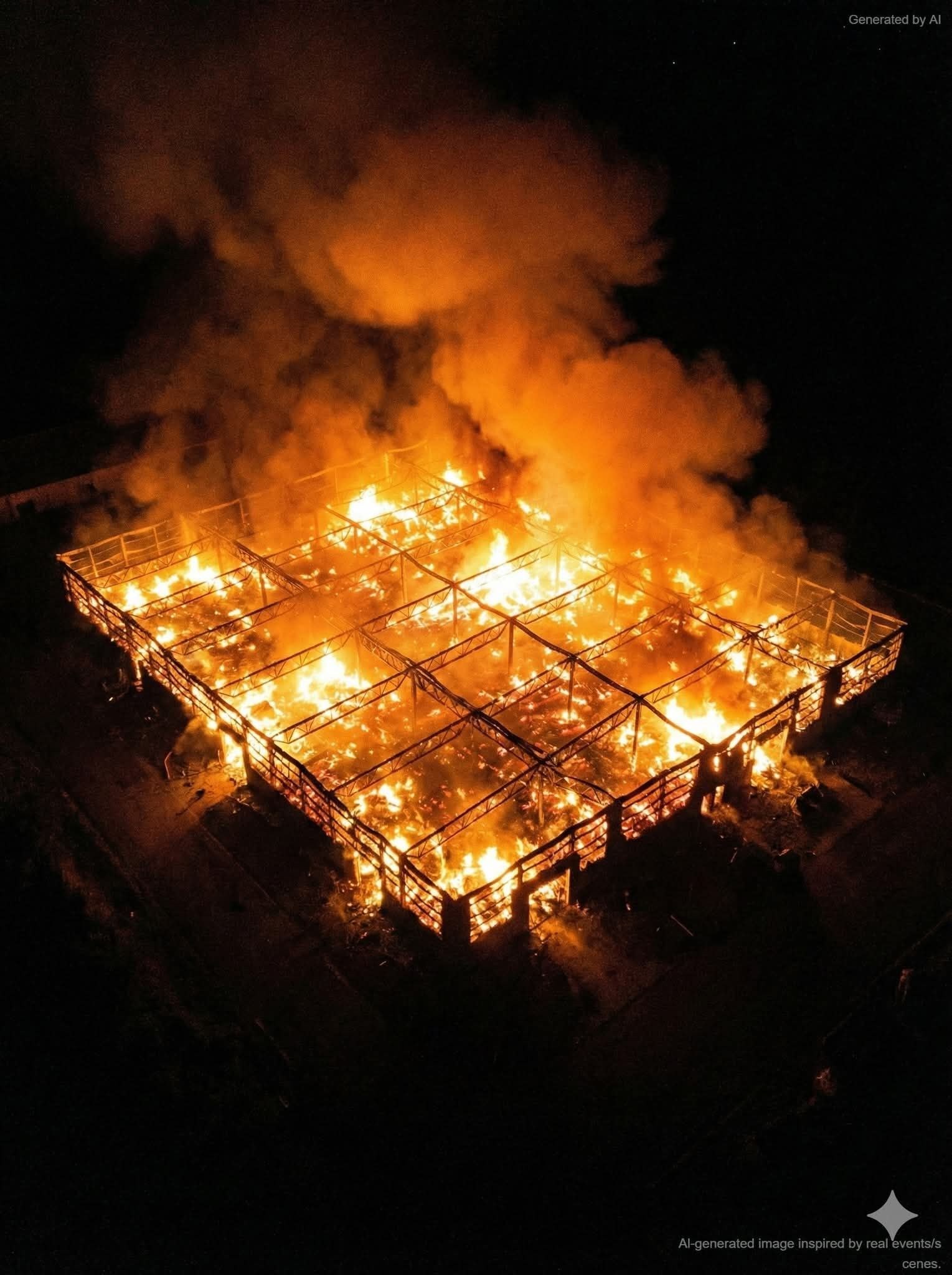
At least 300 homes are believed to have been damaged or completely destroyed after a massive wildfire tore through the region, reducing entire neighborhoods to ash and twisted debris. What began as a rapidly spreading blaze quickly escalated into a large-scale disaster, as powerful winds and extremely dry conditions fueled the flames and pushed them forward at frightening speed. Within hours, communities that had existed for generations were overwhelmed, forcing residents to flee with little more than the clothes on their backs.

Emergency crews battled the fire through the night, facing towering flames, intense heat, and thick smoke that severely limited visibility. Firefighters described the conditions as some of the most dangerous they had encountered in years. Wind-driven embers raced far ahead of the main fire, igniting new blazes faster than crews could contain them. In several locations, flames jumped across roads and open areas, making traditional firebreaks useless and trapping neighborhoods within minutes.

Residents recounted harrowing scenes as the fire advanced. Many watched helplessly as walls of flame moved from house to house, consuming roofs, vehicles, and trees in seconds. Sirens echoed constantly as police and fire units went door to door, urging people to evacuate immediately. Families had only moments to gather pets, important documents, or cherished belongings before abandoning their homes. For some, there was no time to take anything at all.

Shelters were quickly set up in nearby towns to house the growing number of displaced residents. Community centers, schools, and churches opened their doors as volunteers worked nonstop to provide food, clothing, and basic necessities. Donations poured in from surrounding areas, with neighbors stepping up to help neighbors in a powerful show of solidarity. Despite shock and exhaustion, evacuees waited patiently, sharing stories and checking on one another, united by the shared trauma of sudden loss.

Fire officials confirmed that dozens of ground crews were deployed alongside aerial resources, including helicopters and water-dropping aircraft. However, shifting winds and extreme fire behavior made containment exceptionally difficult. Some firefighters suffered minor injuries, mainly from heat exposure and smoke inhalation, though authorities confirmed that no fatalities had been reported at the time of the latest update. Officials emphasized that the situation remained unstable, with crews continuing to monitor hotspots and flare-ups that could reignite as conditions change.

Investigators have begun working to determine the cause of the fire, though officials cautioned that reaching definitive conclusions may take time. In the meantime, residents have been urged to remain cautious, follow evacuation orders, and avoid restricted areas. Power outages and road closures remain widespread, complicating emergency response efforts and the early stages of recovery. Utility crews are assessing damage to infrastructure, while law enforcement maintains checkpoints to protect public safety.

As daylight arrived, the true scale of the destruction became painfully clear. Entire streets were left unrecognizable, lined with charred foundations, melted metal, and the skeletal remains of once-familiar homes. The smell of smoke lingered heavily in the air as residents cautiously returned, many bracing themselves for what they feared they would find. For countless families, the loss extended far beyond property. Photographs, heirlooms, and irreplaceable memories were gone, lost in just a few devastating hours.

Local and state leaders toured the affected areas, calling the situation a major disaster that will require long-term recovery and significant resources. Emergency declarations were issued to unlock funding and assistance for those impacted, and officials pledged continued support for rebuilding efforts. Housing assistance, financial aid, and mental health services are expected to be critical parts of the recovery process, especially for residents who lost everything.

Fire experts warned that disasters like this are becoming increasingly common, as prolonged dry periods, rising temperatures, and extreme weather patterns create ideal conditions for fast-moving wildfires. They stressed the importance of preparedness, early evacuation, and community awareness in reducing risk and saving lives. While the structural losses are devastating, officials noted that the swift response and public compliance with evacuation orders likely prevented a far greater loss of life.

Amid the devastation, stories of resilience have begun to emerge. Neighbors who barely knew one another before the fire are now sharing meals, offering spare rooms, and helping sift through debris. Volunteers have organized cleanup efforts, while local businesses donate supplies and services to those in need. In the face of overwhelming loss, a strong sense of community has taken root, proving that while homes can be destroyed, human bonds endure.

Recovery will be long and difficult. Rebuilding neighborhoods, restoring infrastructure, and helping families heal will take months, if not years. Yet even as residents confront the reality of starting over, there is a shared determination to move forward together. The fire may have scarred the landscape, but it has also revealed a deep well of strength, compassion, and unity that will shape the community’s path ahead.

Blackened Hand Shows Dangers of Untreated Infections!

What began as a minor irritation—a small sting, a scratch, or a barely noticeable wound—can, in rare but devastating cases, spiral into a life-threatening medical crisis. Recent images circulating online of a severely swollen, darkened hand have drawn urgent attention to the dangers of untreated infections and the speed at which they can overwhelm the body when early warning signs are ignored.

Health professionals say the case serves as a sobering reminder that the skin, while resilient, is also a gateway. Once bacteria or toxins breach that barrier, the consequences can escalate rapidly. What many people dismiss as a harmless insect bite or mild skin irritation may, under the wrong conditions, become a medical emergency within hours or days.

Doctors reviewing the images have noted that the extreme discoloration and swelling are consistent with a rapidly spreading infection. While the exact cause has not been officially confirmed, several serious possibilities are being considered. One is a venomous spider bite, such as from a brown recluse, which can cause tissue destruction around the bite site. Another is a severe bacterial infection that entered through a small cut or puncture wound. Exposure to contaminated water, unsanitary conditions, or surfaces carrying aggressive bacteria is also a known risk factor. In some cases, an underlying condition that weakens the immune system—such as diabetes, autoimmune disorders, or certain medications—can make even minor injuries far more dangerous.

One of the most alarming conditions doctors associate with these symptoms is necrotizing fasciitis, often referred to as a “flesh-eating” infection. Though rare, this illness is notorious for its speed and severity. It spreads along connective tissue, destroying skin, fat, and muscle as it advances. Without immediate treatment, it can lead to sepsis, organ failure, and death. Even with aggressive care, patients may require extensive surgery, including the removal of infected tissue or, in extreme cases, amputation to save their life.

The danger lies not only in the infection itself, but in how deceptively it can begin. Many patients report that the initial injury seemed insignificant. A small bite, a nick from gardening, a blister from new shoes—none of it felt alarming at first. Pain may be mild or absent in the early stages, giving a false sense of security. By the time severe symptoms appear, the infection may already be advancing quickly.

Medical experts emphasize that early recognition is the single most important factor in preventing catastrophic outcomes. Rapid swelling around a wound or bite is one of the earliest red flags. Changes in skin color—especially deep redness, purplish tones, or blackened areas—are particularly concerning. Intense pain that seems disproportionate to the size of the injury is another warning sign doctors take seriously. In some cases, the pain may suddenly worsen or spread beyond the original site.

Other symptoms that demand immediate attention include blistering, oozing fluid, or pus, as well as systemic signs such as fever, chills, dizziness, confusion, or a rapid heart rate. These symptoms may indicate that the infection is entering the bloodstream, a condition known as sepsis, which can progress rapidly and requires emergency treatment.

Health professionals stress that waiting it out or attempting to self-treat severe symptoms can be extremely dangerous. Home remedies, over-the-counter creams, or the hope that symptoms will resolve on their own can allow the infection to gain ground. When swelling or discoloration spreads, or when fever and confusion appear, emergency medical services should be contacted without delay.

Preventing serious skin infections often begins with simple, everyday precautions. Using protective gloves while gardening, cleaning, or working outdoors can reduce exposure to bacteria and insects. Even small cuts and scrapes should be cleaned promptly with soap and water, then kept dry and covered until healed. Insect bites should be left alone as much as possible; scratching can break the skin and create an entry point for bacteria.

Regularly monitoring wounds, especially in the first few days after an injury, is critical. Redness that continues to expand, increasing warmth, or swelling that does not subside should prompt a medical evaluation. People with chronic health conditions or weakened immune systems should be particularly cautious, as their bodies may not fight infections as effectively.v

Doctors also caution against underestimating pain. Severe or worsening pain is not something to ignore, even if the wound appears small. In aggressive infections, pain often appears before visible skin damage, making it an important early clue that something is wrong beneath the surface.

The case has sparked renewed discussion about public awareness and the tendency to downplay symptoms. In a culture that often encourages people to “push through” discomfort or avoid medical visits unless absolutely necessary, serious infections can slip under the radar until they become critical. Healthcare professionals argue that seeking care early is not an overreaction—it is a protective measure that can prevent far more invasive treatments later.

Treatment for severe skin infections typically involves a combination of intravenous antibiotics, close monitoring, and, when necessary, surgery to remove infected tissue. Early intervention dramatically improves outcomes, often making the difference between a short hospital stay and life-altering complications.

Beyond the individual case, the broader lesson is clear: the body gives warnings, and those warnings deserve attention. Skin changes are not merely cosmetic; they are often the first visible signs of deeper processes unfolding beneath the surface. Discoloration, swelling, and pain are messages, not inconveniences.

Raising awareness about these risks can save lives. Sharing accurate information helps others recognize danger sooner and seek help before irreversible damage occurs. Infections do not wait, and neither should those who notice something is wrong.

What looks small today can become overwhelming tomorrow. Acting quickly, trusting medical advice, and respecting the seriousness of sudden changes in the body are essential steps in protecting long-term health. Early care does not just reduce suffering—it can preserve function, prevent disability, and, in many cases, save a life.

My Neighbor Iced My Car Because It Spoiled the View from His House – So I Brought Him a Surprise He Will Never Forget

In neighborhoods like mine, appearances are not just valued; they are weaponized. We live in one of those catalog-perfect suburbs where the hedges are trimmed to uniform heights and the mailboxes look like they were installed yesterday. It is a place of forced smiles and “neighborly” waves that never quite reach the eyes. For years, my wife Lena, our five-year-old son Rowan, and I existed in a state of quiet, suburban peace. We aren’t wealthy; we are “fine if nothing breaks.” I work in tech support, mostly from a home office, which gives me plenty of time to observe the peculiar ecosystem of our street.

Specifically, it gave me time to observe Vernon.

Vernon lives directly across from us in a house that resembles a high-end showroom. He is in his mid-fifties, possessed of salt-and-pepper hair cut with surgical precision, and has a penchant for wearing sunglasses indoors. His crown jewel is a vintage navy-blue convertible that is meticulously maintained. Vernon is the kind of man who assumes that because his driveway is pristine, his opinions on everyone else’s property carry the weight of law. To Vernon, my 2009 Honda Civic—a reliable, paid-off “beater”—was a personal insult to his panoramic view.

The first time we spoke, there was no “hello.” He simply adjusted his Ray-Bans, pointed at my car, and asked if that was what I actually drove daily. When I told him it was, he walked away with a look of profound disgust. From that day on, he became our self-appointed shadow. He complained to the Homeowners Association (HOA) about our porch lights being too bright. He knocked on our door to tell me my grass was exactly one inch too long (I checked; he was lying). I took it all in stride, nodding and smiling to keep the peace. That was, until the night Rowan’s health took a terrifying turn.

Lena was out of town visiting her sister when five-year-old Rowan woke up “on fire.” I took his temperature and my heart stopped: 104.5 degrees. The nurse on the emergency line was blunt: “ER. Now.” I scooped my son into a blanket, grabbed my keys, and sprinted out the front door into the 2:00 a.m. chill.

I stopped dead on the porch. My Civic was gone. In its place stood a shimmering, crystalline sculpture. My car hadn’t just frosted over; it had been encased in a thick, deliberate shell of ice. The handles were fused shut, the windshield was a solid block, and the doors were sealed. I tried to yank the handle, but it wouldn’t budge. I ran back inside, grabbed a bottle of de-icer and a scraper, and worked like a man possessed, but it was useless.

Then I saw the evidence: dark, frozen puddles stretching from Vernon’s side gate, where his garden hose sat neatly coiled, directly to my driveway. The man had spent his evening “icing” my car to protect his view. Rowan dragged himself to the front door, whimpering, “Dad… hot…” I felt a surge of rage so violent I screamed his name into the silent street. A light flickered in Vernon’s window. He was awake. He was watching.

I had no choice but to call an ambulance. Rowan was treated and eventually stabilized, but I spent that night sitting by his hospital bed with my jaw clenched so tight it ached. At sunrise, a message appeared in the neighborhood group chat: “REMINDER: VEHICLES THAT DETRACT FROM NEIGHBORHOOD AESTHETICS SHOULD BE KEPT OUT OF SIGHT. TOOK STEPS LAST NIGHT TO PROTECT PROPERTY VALUES.”

When Lena returned and saw the post, she didn’t scream. She didn’t march across the street. She simply smiled—that cold, brilliant smile that meant she had already won the war. “We aren’t going to fight him in his driveway, Gideon,” she said. “We’re going to let him hang himself with his own ‘standards.’”

We became co-conspirators. For the next two weeks, we didn’t retaliate. We let Vernon feel untouchable. While he continued to post anonymous barbs in the group chat, Lena was meticulously building a “gift basket.” She took high-resolution photos of the ice on our car, screenshots of his self-incriminating posts, and photos of his hose extended toward our property. Meanwhile, I dove into the dusty, archaic archives of our HOA bylaws.

Most people never read the fine print, but I treated it like a sacred text. I struck gold. I found a litany of obscure aesthetic violations that Vernon, in his arrogance, had ignored. I documented his unauthorized driveway expansion, his trash bins being left out past the collection deadline, and a fence extension that exceeded the height limit by nearly a foot.

The turning point came when Vernon tried to finish us off. He proposed “Proposal 14B” to the HOA: a rule stating that any vehicle older than ten years must be concealed in a garage. It was a targeted strike against my Civic. Lena read it and laughed. “He finally wrote it in ink,” she said. “That’s our green light.”

The next HOA meeting was packed. Vernon sat in the front row, looking like a triumphant politician. When his proposal came up, he stood and gave a rehearsed speech about “removing visual clutter.” When he finished, I stood up. I walked to the front of the room and placed a blue folder on the table.

“Before we vote on new standards,” I began, “I think we should discuss the ones currently being violated.” I started flipping through the tabs. “Unauthorized driveway expansion—page three. Fence height violation—page six. Trash bin negligence—page eight.” The room erupted in murmurs. I looked Vernon dead in the eye. “And then there’s the matter of criminal tampering. I have time-stamped photos of a neighbor icing my vehicle with a garden hose during a medical emergency involving my son.”

The gasps were audible. Even the board members looked horrified. Then Lena delivered the killing blow. “Regarding Proposal 14B,” she said sweetly, “Vernon’s beloved vintage convertible is a 2007 model. He’s been parking it in his driveway for years. If this rule passes, he’ll be the very first person in violation of his own standard.”

The meeting was adjourned instantly. The HOA president, a woman who didn’t tolerate nonsense, promised a full investigation into Vernon’s property. Vernon didn’t stay to chat; he stormed out, his face a shade of red that matched his custom house trim.

A week later, we threw a “Welcome Back” party for Rowan in our front yard. Neighbors we had never spoken to stopped by, bringing snacks and sharing stories of Vernon’s previous bullying. We passed around a lighthearted flyer titled “How to Respect Neighbors Without Breaking the Law,” which included tips like “Don’t weaponize your hose.”

Vernon’s house has been strangely quiet since then. His extra fencing came down, his driveway was repainted to meet code, and his convertible is now permanently hidden behind a closed garage door. He no longer watches us from his window. He no longer posts in the group chat.

I still drive my 2009 Civic every day. I take the long way around the block, slowly idling past his house just to make sure he gets a good look at it. It might be old, it might be dented, and it certainly isn’t a showroom piece. But every time I hear that engine turn over on the first try, I’m reminded that appearances aren’t everything. Facts sting longer than fists, and a “cheap” car can beat a rich bully if you know exactly how to drive the truth home.