Small Plane Plunges Onto Highway, Crashes Into Car During Desperate Emergency Landing

A terrifying aviation incident unfolded on a busy highway when a small aircraft attempting an emergency landing crashed directly into a car, turning a routine drive into a life-or-death moment caught on camera.

The dramatic footage shows a light aircraft descending dangerously low over multiple lanes of traffic as cars continue moving beneath it. With its warning light flashing red against the dark sky, the plane appears to struggle to maintain altitude, forcing the pilot to make a split-second decision to attempt a landing on the highway.

Seconds later, disaster strikes.

As the aircraft drops closer to the roadway, it collides with at least one vehicle, sending debris scattering across the lanes. Drivers nearby slam on their brakes, some narrowly avoiding additional impacts as chaos erupts on the road.

Authorities later confirmed the plane was experiencing mechanical trouble and had issued an emergency call before attempting the landing. With no nearby runway available, the pilot reportedly chose the highway as the only viable option to avoid a far worse outcome.

Emergency responders rushed to the scene within minutes. Traffic was shut down as firefighters, police, and medical teams worked quickly to secure the area and assist those involved. Miraculously, despite the severity of the crash and the speed of surrounding traffic, early reports indicate that there were no fatalities.

Both the pilot and occupants of the struck vehicle were transported to local hospitals for evaluation. Their injuries were described as non-life-threatening, a result many are calling nothing short of astonishing given the circumstances.

Aviation experts reviewing the footage say the pilot’s actions, while extremely risky, may have prevented an even greater tragedy. Attempting an emergency landing on a highway is considered a last resort, but in some cases, it offers more space than densely populated residential or commercial areas.

“This is every pilot’s nightmare,” one aviation analyst explained. “When an aircraft loses power, you’re trained to put it down in the safest possible place available. Unfortunately, sometimes that place still involves people.”

The incident has reignited discussions about air traffic safety, emergency preparedness, and the dangers posed when aircraft operate near urban areas. While small planes are permitted to fly over highways, an emergency descent leaves little room for error.

Drivers who witnessed the crash described the moment as surreal. “I looked up and thought it was going to land in front of us,” one witness said. “Then it hit the car, and everyone just froze.”

Investigators from aviation authorities are now examining the aircraft to determine what caused the emergency. Mechanical failure is suspected, though a full report has yet to be released.

For now, the video serves as a chilling reminder of how quickly ordinary moments can turn catastrophic — and how close this incident came to claiming lives.

What could have ended in mass tragedy instead became a story of narrow escapes, fast reactions, and the unpredictable dangers that can fall from the sky without warning.
@dailymail

A small multi-engine aircraft slammed into traffic on a major Florida highway on Monday night. The Beechcraft 55 plane was attempting an emergency landing when it smashed into a Toyota Camry on Interstate 95 near Orlando. The pilot had reported engine problems moments earlier. The crash sent debris flying across the road and left the sedan crushed near the median barrier. #plane #orlando #interstate95 📸 ViralHog

♬ original sound – Daily Mail – Daily Mail
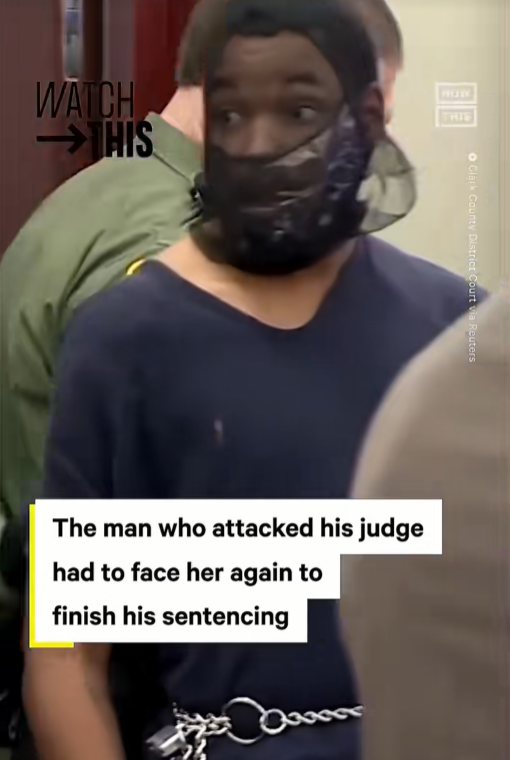
Man Who Attacked His Judge Is Forced to Face Her Again to Finish Sentencing

A tense courtroom moment resurfaced after the man who attacked his own judge was brought back into court to complete the sentencing he violently disrupted. The case, which previously shocked the public, returned to the spotlight as the defendant was required to face the same judge once again — this time under heavy security.

The incident originally unfolded during a sentencing hearing when the defendant suddenly lunged toward the judge, triggering chaos in the courtroom. Deputies and court officers quickly intervened, restraining him before anyone was seriously injured. The shocking outburst raised serious concerns about courtroom safety and judicial security across the country.

After the attack, the case was delayed, and the defendant was transferred into custody while additional charges were considered. Many believed the judge would recuse herself or that sentencing would be handled remotely. Instead, the court made a clear decision: the defendant would return in person to finish what he started — facing the same judge whose authority he tried to undermine through violence.

Footage from the follow-up hearing shows the man escorted in restraints, visibly tense, with deputies positioned closely around him. The atmosphere in the courtroom was noticeably different. Extra security measures were in place, and silence filled the room as the judge entered.

Legal experts say the decision to proceed with the same judge sent a powerful message. “The court is asserting that intimidation will not change outcomes,” one analyst explained. “Allowing a defendant to avoid sentencing by attacking a judge would set a dangerous precedent.”

During the hearing, the judge reportedly remained calm and composed, addressing the defendant directly and continuing the sentencing process without hesitation. Observers noted the contrast between the defendant’s earlier aggression and his subdued demeanor this time around.

In addition to the original charges, the man now faces separate counts related to the courtroom assault, which could significantly increase his prison time. Attacking a judge is considered one of the most serious offenses against the justice system, often resulting in enhanced penalties and stricter incarceration conditions.

Public reaction online has been intense. Many expressed support for the judge’s decision to remain on the case, calling it an act of strength and professionalism. Others focused on the broader implications, questioning how courtroom security allowed the initial incident to happen in the first place.

Court officials have since reviewed safety protocols, with several jurisdictions considering changes such as increased restraints during high-risk hearings, added barriers, and stricter screening procedures.

For legal professionals, the case stands as a stark reminder that courtrooms are not immune to violence — but also that the justice system does not bend under pressure or fear.

In the end, the man who tried to escape accountability through force instead found himself facing even harsher consequences, under the same gavel he once tried to silence.

@lrwonqn1467

“When the Inmate Hears the Verdict… His Reaction Says Everything” #VerdictReaction #CourtTok #SentencingMoment #RealCase #CourtDrama

♬ original sound – lrwonqn1467
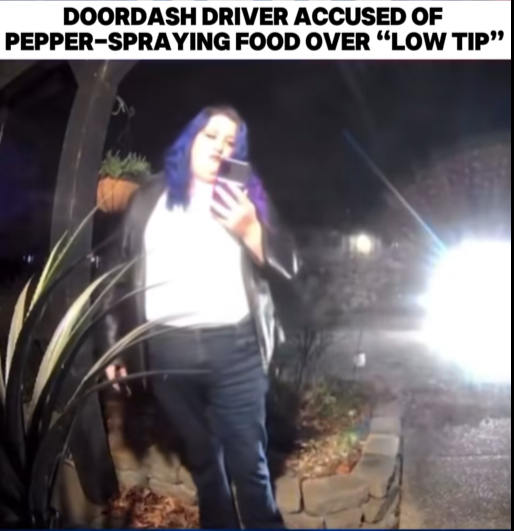
DoorDash Driver Accused of Spraying Customer’s Food After Getting a “Low Tip”

A late-night food delivery reportedly turned into a disturbing confrontation after a DoorDash driver was accused of pepper-spraying a customer’s food in retaliation for what she believed was an insultingly low tip. The incident, caught on a door camera, has sparked outrage online and raised serious questions about safety, accountability, and tipping culture in the gig-economy.

The footage shows a woman standing at the customer’s front door, phone in hand, appearing frustrated as she checks the order details. Moments later, she is seen reaching toward the delivery area near the food. According to the customer, the meal was later discovered to have a strong chemical odor and taste consistent with pepper spray, prompting immediate concern.

The customer claims the driver was upset after realizing the tip amount and acted out of anger. “This wasn’t just petty,” the customer reportedly said. “This could have seriously hurt someone.” Pepper spray is considered a chemical irritant and ingesting contaminated food can cause severe reactions, including burning sensations, nausea, breathing difficulty, and medical emergencies.

After the discovery, the customer contacted DoorDash support and local authorities. While details about potential criminal charges remain unclear, the incident quickly went viral, igniting fierce debate across social media platforms.

Many viewers were horrified. “This is food tampering,” one commenter wrote. “That’s not just wrong, it’s dangerous.” Others pointed out that regardless of tip size, drivers are never justified in retaliating against customers. Food safety experts agree: tampering with food is a serious offense that can carry criminal consequences in many jurisdictions.

DoorDash released a statement saying they take allegations like this extremely seriously and are investigating the matter. The company emphasized that drivers who violate safety or conduct policies may face permanent deactivation. “There is zero tolerance for behavior that puts customers at risk,” a spokesperson said.

The situation has also reignited the ongoing debate around tipping culture. Some drivers argue that low tips are disrespectful, especially with rising fuel and living costs. However, critics were quick to shut down any attempt to justify the alleged behavior. “Being unhappy about a tip doesn’t give you the right to endanger someone,” one user commented. “If you don’t like the order, don’t accept it.”

Legal experts note that food tampering can escalate quickly from a customer service issue into a criminal case. Even if no one is physically harmed, the intent alone can be enough to trigger serious charges.

For customers, the incident has caused renewed anxiety about delivery safety. Many are now calling for stricter background checks, better monitoring, and harsher penalties for violations. Some users admitted they are reconsidering using delivery apps altogether.

As of now, the driver’s account status has not been publicly confirmed, and the investigation is ongoing. What is clear, however, is that this incident crossed a line for many viewers.

What should have been a simple food drop-off instead became a viral warning: frustration over money, tips, or work conditions can never excuse behavior that puts lives at risk.

Woman Sparks Heated Sidewalk Showdown After Confronting Parents Over Baby Photo Shoot

A seemingly harmless baby photo shoot turned into an unexpected public confrontation after a woman challenged parents for using a sidewalk as their backdrop, igniting a debate about public space, boundaries, and parenting etiquette.

The moment, which quickly circulated online, centers around a toddler named Anya, captured innocently playing while adults nearby argued over whether the photo shoot should be happening at all. What began as a casual attempt by parents to capture memories of their child escalated when a passerby stepped in, expressing frustration over the use of the sidewalk for the shoot.

According to viewers familiar with the clip, the parents had briefly set up on a residential or shared walkway, positioning their baby for photos. The setting appeared calm at first, with the child focused on toys and movement, unaware of the growing tension. That calm shifted when a woman approached and questioned the parents’ decision to block or occupy the sidewalk, arguing that it was inappropriate or inconvenient for others passing through.

The confrontation was verbal, but emotions ran high. The woman reportedly insisted that public sidewalks are not private studios and should remain accessible at all times. The parents, on the other hand, defended themselves, stating that the shoot was short, harmless, and not significantly obstructing anyone. As voices rose, bystanders began paying attention, and the interaction soon found its way onto social media.

Online reactions have been sharply divided. Some commenters sided with the woman, arguing that public walkways must remain clear and that photo shoots, even brief ones, can create unnecessary disruption. “If everyone did this, sidewalks would be unusable,” one user wrote. Others felt the confrontation was unnecessary and excessive, pointing out that families often use public spaces for photos without issue. “It’s a baby, not a movie production,” another commenter noted. “A little patience goes a long way.”

Child safety and privacy also became part of the discussion. While the parents were focused on capturing a meaningful moment, critics questioned whether public spaces expose children to unwanted attention or conflict. Supporters countered that parks, sidewalks, and community areas are common places for family photos and that parents should not be shamed for using them responsibly.

What stood out to many viewers was the contrast between the adults’ argument and the baby’s innocence. As the adults debated rules and rights, Anya remained unaware, simply exploring her surroundings. That visual contrast is what many believe made the clip go viral, highlighting how adult disputes can overshadow moments meant to be joyful.

Experts in community etiquette suggest that situations like this often come down to communication and timing. Public spaces are shared by nature, but brief, considerate use is generally accepted. Problems arise when expectations clash or when frustrations are expressed abruptly rather than calmly.

In the end, no authorities were involved, and the situation appeared to de-escalate without further incident. Still, the moment has sparked a wider conversation about how people share public spaces and how quickly small disagreements can escalate in the age of social media.

For many parents watching, the takeaway was simple: capturing memories is important, but being mindful of surroundings matters too. For others, the incident served as a reminder that a little tolerance can prevent a minor inconvenience from becoming a viral controversy.

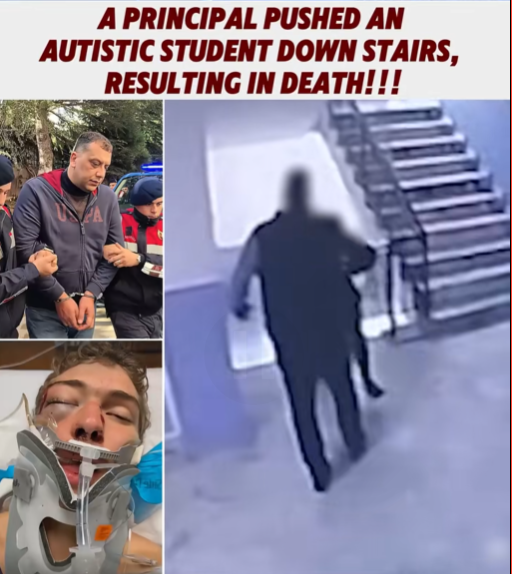
School Principal Accused in Shocking Stairwell Incident That Left an Autistic Student D*ad

A disturbing incident involving a school principal and an autistic student has sparked widespread outrage after allegations surfaced that the student died following a fall down a stairwell. The case, now under investigation, has ignited intense public debate about school safety, accountability, and the treatment of neurodivergent students within educational institutions.

According to early reports circulating online, the incident occurred inside a school building where surveillance footage allegedly shows a confrontation near a staircase. The viral images connected to the case include a blurred figure near the stairwell, a photo of a man being escorted by authorities, and a hospital image of a young male student receiving emergency medical care. Together, these visuals have fueled strong emotional reactions, though officials stress that the full circumstances are still being examined.

Authorities have confirmed that a student with autism suffered fatal injuries after falling down a set of stairs at the school. What remains under investigation is how that fall occurred. Some online claims allege that the school principal physically pushed the student, while others caution that the footage alone does not conclusively show intent or action. Law enforcement has not yet released an official determination, emphasizing that all evidence — including surveillance video, witness statements, and medical findings — must be reviewed.

Advocacy groups for autistic individuals have responded with anger and concern, calling for transparency and accountability. Many argue that autistic students are especially vulnerable in high-stress environments and require trained, compassionate handling by school staff. “Even the possibility that a student with special needs was mishandled is deeply troubling,” one advocate stated. “Schools have a duty of care that must never be violated.”

The school district involved has placed the principal on administrative leave pending the outcome of the investigation. In a brief statement, officials expressed condolences to the student’s family and said they are cooperating fully with authorities. They declined to comment further, citing the ongoing legal process.

Legal experts note that cases like this are complex. If misconduct is proven, the consequences could include criminal charges, civil lawsuits, and systemic changes in school policy. At the same time, experts warn against rushing to conclusions before all facts are confirmed. Viral headlines, while powerful, do not always reflect the full reality of what happened.

Public reaction online has been swift and emotional. Many are demanding justice for the student and stronger protections for children with disabilities. Others are urging caution, reminding viewers that allegations are not the same as convictions. The phrase “resulting in death,” repeated across social media, has intensified scrutiny on how schools manage disciplinary situations and physical interventions.

This case also raises broader questions about training, oversight, and the use of force in schools. Should principals and staff ever physically intervene? Are there sufficient safeguards when dealing with students who may process stress or authority differently? For many parents, especially those with autistic children, the incident has struck a deeply personal nerve.

As the investigation continues, one fact is undisputed: a young life was lost, and a family is grieving. Whether that loss was the result of negligence, misconduct, or a tragic accident will be determined by the evidence. Until then, the case stands as a painful reminder of how critical responsibility and care are in spaces meant to protect children.

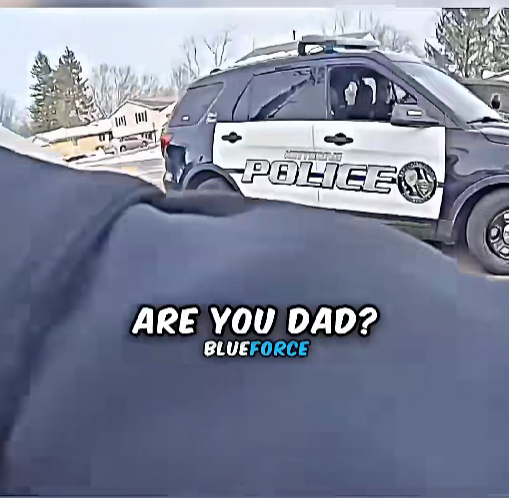
Police Ask a Simple Question — “Are You Dad?” — Bodycam Moment Takes an Unexpected Turn

A brief police interaction captured on bodycam is gaining attention online after a single, unexpected question shifted the tone of the entire encounter. What began as a routine situation quickly turned into a moment that viewers say feels tense, confusing, and emotionally charged — all triggered by just three words: “Are you dad?”

The footage opens with officers positioned near a marked police SUV on a quiet residential street. The setting appears calm, with no immediate signs of danger or urgency. Houses line the road, and the scene looks like a standard stop or welfare check rather than a high-risk situation.

As the camera moves closer, an officer addresses someone off-screen. The question is direct, personal, and surprising. There is no raised voice, no visible aggression — just a pause after the words are spoken, as if everyone involved realizes the weight of what was just asked.

Viewers online have been debating what led up to that moment. Some believe the officers were attempting to identify a guardian or parent connected to a child nearby. Others speculate the question was meant to confirm responsibility during a family-related call. Without full context, the ambiguity has only fueled discussion.

What stands out most is how quickly the mood changes. Body language shifts. The person being questioned appears to hesitate, and the officer’s posture suggests they are waiting for an answer that could significantly alter what happens next. In police encounters, identifying relationships — especially involving children — can instantly escalate the seriousness of a situation.

Commenters have pointed out that moments like this highlight how quickly ordinary interactions can become emotionally loaded. A single question can imply concern, suspicion, or responsibility all at once. For parents watching the clip, the exchange feels especially relatable — and unsettling.

There is no visible use of force in the clip, nor any indication of an arrest within the short segment being shared. That has led many to assume the real story lies outside the frame, either before the camera was activated or after the clip ends. As with many viral bodycam videos, the lack of full context leaves room for interpretation.

Law enforcement experts note that officers often ask direct questions to establish legal responsibility, particularly when minors may be involved. “Determining who is a parent or guardian is a critical step,” one former officer explained. “It affects everything from questioning to potential next steps.”

Still, critics argue that moments like this demonstrate how intimidating police interactions can feel, even when no crime is immediately apparent. Being asked a deeply personal question by an authority figure — in public, on camera — can be overwhelming.

Social media reactions have been split. Some viewers praise the calm, controlled tone of the officer, while others express concern about how easily everyday people can find themselves in stressful encounters. Many are simply asking for the rest of the footage, hoping to understand what prompted the question and how the situation ultimately resolved.

For now, the clip continues to circulate, not because of what happened — but because of what might have happened next. In an era where a few seconds of video can spark widespread debate, one simple question has proven enough to capture millions of eyes.

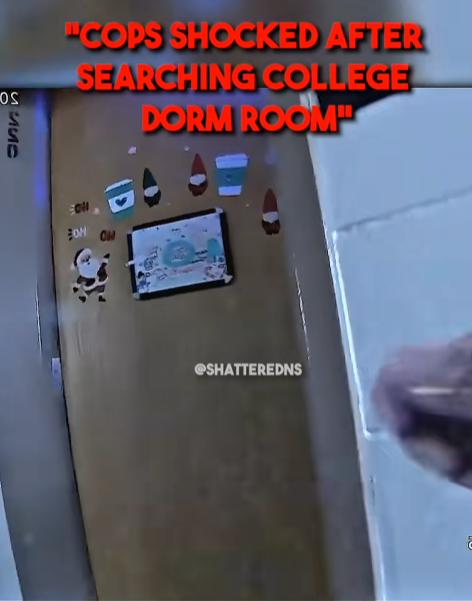
C*ps Enter College Dorm Room — What They Found Inside Left Everyone Stunned

A routine police visit to a college dormitory has gone viral after officers reportedly discovered something completely unexpected behind a closed dorm room door. What began as a standard check quickly turned into a moment that left both authorities and viewers online genuinely surprised.

According to footage circulating on social media, officers approached what appeared to be an ordinary dorm room hallway. The door itself showed no obvious signs of trouble — decorated with playful stickers, cartoon-style graphics, and small personal touches typical of student housing. Nothing about the exterior suggested anything unusual.

But once the door was opened, the situation immediately changed.

Sources familiar with the incident say officers were responding to concerns raised by dorm staff. While initial details remain limited, the reason for the visit was reportedly administrative rather than criminal. However, what officers encountered inside the room was so unexpected that the footage quickly spread across multiple platforms.

Viewers online have been quick to speculate, with many assuming the discovery involved something illegal or dangerous. In reality, the shock appears to stem from how drastically the interior contrasted with expectations. Instead of the typical messy dorm setup — scattered clothes, textbooks, and half-empty coffee cups — the room allegedly contained an unusual arrangement that raised eyebrows.

Some commenters suggested the space looked more like a themed installation than a student living area. Others described it as overly staged, meticulously organized, or strangely symbolic. The decorations and setup reportedly did not match what officers or staff anticipated when responding to the call.

Importantly, there have been no official statements confirming criminal activity. As of now, no arrests have been reported, and authorities have not indicated that any laws were broken. This has led many to believe the shock factor was psychological rather than legal — a moment where expectations collided with reality.

Social media reactions have ranged from humor to concern. Some users joked about how college students continue to find new ways to surprise authority figures. Others questioned whether dorm policies are strict enough when it comes to room usage, decor, or shared living standards.

University officials have remained mostly silent, though insiders say the situation is being reviewed internally. Many colleges maintain detailed housing guidelines, and even non-illegal setups can violate campus rules depending on safety, cleanliness, or appropriateness standards.

Experts in student life say moments like this highlight a generational gap. “What students see as self-expression can sometimes be interpreted as alarming or inappropriate by authority figures,” one campus housing consultant explained. “Context matters, and social media often removes that context entirely.”

The viral nature of the clip has once again raised questions about privacy. While dorm rooms are private spaces, they exist within institutional systems that allow staff and authorities limited access under specific conditions. When footage of those moments goes public, it can quickly distort the narrative.

For now, what exactly shocked officers remains partially unclear — and that mystery is fueling the story’s continued spread. What’s certain is that this was not what anyone expected when the door opened.

In the age of viral clips and instant judgment, even an ordinary college dorm room can become the center of national attention — proving once again that surprise doesn’t always come from something illegal, but from something no one saw coming.

Teen Smiles in Court — Then the Judge Speaks and Everything Changes

A tense courtroom moment has gone viral after footage captured a dramatic shift in expression from a teenage defendant at the center of a disturbing criminal case. The video, now widely circulated online, shows a 15-year-old girl appearing relaxed and even smiling as court proceedings unfold — until the judge delivers a ruling that abruptly changes the tone of the room.

At the start of the hearing, the teen is seen smiling broadly, seemingly unfazed by the gravity of the situation. The contrast between her demeanor and the serious charges she faces immediately drew attention. Many viewers described the moment as unsettling, questioning how someone so young could appear so detached in a courtroom setting.

The judge, reading from prepared notes, methodically outlines the decision. As the words sink in, the teen’s expression visibly shifts. The smile fades, replaced by a stunned, blank stare. In a matter of seconds, the mood changes — not just for the defendant, but for everyone watching.

According to court records connected to the footage, the teen was convicted in a violent case that shocked her local community. Due to her age, many details remain sealed, but officials confirmed that the charges involved the loss of life. The judge’s ruling reportedly removed any expectation of leniency the teen may have had, emphasizing accountability despite her youth.

Legal experts say moments like this highlight the emotional disconnect that can sometimes appear in juvenile cases. Adolescents, especially those involved in extreme violence, may not fully process consequences the same way adults do. What looks like arrogance or indifference on the surface can sometimes be immaturity, trauma, or emotional detachment — though that does not lessen the seriousness of the crime.

Public reaction online has been intense. Some viewers expressed outrage, calling the initial smiling behavior disrespectful to the victim and their family. Others urged caution, reminding people that teenage psychology is complex and that viral clips often lack full context.

Victim advocates emphasized that regardless of the defendant’s age or expressions, the focus should remain on the harm caused. “A courtroom is not a stage,” one advocate wrote. “This is about accountability, justice, and the lives permanently affected by violence.”

The judge’s decision reportedly includes long-term confinement within the juvenile justice system, with the possibility of extended consequences depending on future evaluations. While the exact sentence length was not fully disclosed, officials confirmed it was among the harshest penalties legally available for someone her age.

The moment has reignited broader conversations about juvenile justice in the U.S. How young is too young for severe punishment? Can rehabilitation truly work in cases involving extreme violence? And how should courts balance accountability with the understanding that a teen’s brain is still developing?

For many watching, the most haunting part of the clip isn’t the ruling itself — it’s the instant when the reality finally appears to hit. One second, a smile. The next, silence.

That single expression change has become a symbol for a much larger debate: when innocence, accountability, and irreversible actions collide inside a courtroom, there are no easy answers — only consequences that last a lifetime.

Police Open the Door and Make a Discovery That Leaves an Entire Community in Shock

A heartbreaking scene unfolded when police officers responded to a welfare check and uncovered a tragedy that has since stunned viewers across social media. According to reports tied to the circulating bodycam footage, officers entered a home to find a young girl unresponsive on the floor while her parents were passed out nearby.

The image shows a partially opened bedroom door, a family dog standing alert, and scattered household items that suggest a chaotic and deeply troubling environment. What initially appeared to be a routine welfare check quickly turned into a devastating discovery that would change several lives forever.

Authorities were reportedly called after concerns were raised about the family’s well-being. When officers arrived and received no meaningful response, they entered the home to investigate. Inside, they found the parents unconscious and their daughter lying beneath them, unresponsive. Emergency responders were immediately called, but the child could not be saved.

Investigators believe substance abuse may have played a role, though officials cautioned that the case is still under investigation. Toxicology reports and autopsy results are expected to clarify the exact cause of d*ath. No official charges were announced at the time the footage began circulating, but authorities stated that criminal responsibility is being reviewed.

What has shaken many viewers is the disturbing contrast in the scene itself. A child’s room, toys visible on the floor, and a family pet standing quietly nearby painted a picture of innocence colliding with neglect. The dog’s presence, calm yet watchful, has become a haunting detail that many online commenters cannot stop talking about.

Public reaction has been intense. Many expressed anger, grief, and disbelief that a child could lose her life under such circumstances. Others pointed to the broader issue of addiction, arguing that this tragedy reflects a failure not just of individuals, but of systems meant to protect vulnerable children.

Child welfare advocates say this case highlights the warning signs often missed in households struggling with substance dependency. Missed school days, lack of supervision, and repeated welfare calls are frequently indicators that intervention is urgently needed. When those signs go unaddressed, outcomes can be fatal.

Law enforcement officials emphasized that these calls are some of the most difficult officers face. “You never forget scenes like this,” one former officer commented online. “They stay with you forever.”

The parents were reportedly taken into custody for questioning and later transported to a medical facility. Their legal fate will depend on the findings of the investigation, including whether negligence, intoxication, or other factors directly contributed to the child’s d*ath.

As the case continues to unfold, it has reignited conversations about parental responsibility, addiction treatment access, and the role of community awareness. Many are asking the same painful question: could this have been prevented?

While answers may come through court proceedings and official reports, the image alone has already left a lasting impact. It serves as a stark reminder that behind closed doors, tragedies can unfold silently — until it is far too late.

@cops.usa10

Police Find Dead Daughter Under Passed-Out Parents #cops #copsoftiktok

♬ nhạc nền – COPS USA
She Bought Chicken Legs for Dinner — Then Peeled One and Discovered Something Terrifying

A shocking kitchen discovery has gone viral after a woman claimed that the chicken legs she purchased from the brand Honeysuckle White were not real meat at all, but instead appeared to be synthetic and possibly 3D-printed. The incident, now spreading rapidly across social media, has left viewers disturbed and questioning what they are really buying at the grocery store.

The now-viral image shows a pair of hands peeling back what looks like a translucent, rubber-like layer from a raw chicken leg over a kitchen sink. Instead of separating naturally like skin from meat, the material stretches and lifts in a way many viewers say looks “unnatural.” The bold headline above the image reads: “The woman discovered that the chicken legs of Honeysuckle White were actually 3D-printed synthetic meat.”

According to captions accompanying the video still, the woman noticed something strange while preparing the chicken. What initially seemed like normal poultry quickly raised alarms when the outer layer began peeling off in one smooth sheet. Unlike typical chicken skin, which tears easily and has a distinct texture, this layer appeared elastic, uniform, and almost plastic-like.

Social media users immediately jumped to conclusions. Some accused food manufacturers of secretly replacing real meat with lab-grown or synthetic alternatives. Others speculated about “fake food,” “engineered meat,” and corporate deception. Comments ranged from confusion to outright fear, with many saying they would never buy packaged chicken again.

However, food safety experts urge caution before drawing extreme conclusions. Specialists explain that poultry can sometimes develop unusual textures due to processing methods, freezing, or chemical treatments used to preserve freshness. In some cases, a membrane called the perimysium or connective tissue can separate cleanly, creating the illusion of an artificial layer. Improper thawing can also cause meat proteins to behave abnormally.

Despite this, the video struck a nerve at a time when public trust in food systems is already fragile. With the rise of lab-grown meat, plant-based alternatives, and food technology advancements, many consumers feel uneasy about transparency in labeling and production. The idea that something sold as “real chicken” could be anything else taps directly into those fears.

Honeysuckle White has not officially confirmed that their products contain any synthetic or 3D-printed components. The brand has previously stated that its chicken is farm-raised and meets USDA standards. At the time of writing, there is no verified evidence that the chicken legs shown in the image were artificial or lab-manufactured.

Still, the viral moment has reignited debate around food labeling laws and consumer rights. Many users are calling for clearer disclosures, stricter inspections, and independent testing of mass-produced meat products. “If this isn’t fake, then companies need to explain why it looks fake,” one commenter wrote. “People deserve to know what they’re feeding their families.”

Nutritionists also warn that misinformation can spread just as fast as concern. While it’s healthy to question food quality, experts stress the importance of relying on verified sources rather than viral clips alone. Visual anomalies do not automatically mean contamination or synthetic origin.

Whether this was a misunderstanding, an unusual processing effect, or something that requires further investigation, one thing is certain: the image has shaken consumer confidence. For many, it served as a stark reminder to pay closer attention to food sources, read labels carefully, and ask questions when something doesn’t look right.

In an era where food technology is evolving faster than public awareness, moments like this expose a growing gap between what people expect on their plates — and what they fear might actually be there.

@newsworld86

The woman discovered that the chicken legs of HONEYSUCKLE WHITE were actually 3D-printed synthetic meat #foryou #usa #tiktok #fyp #honeysuckle

♬ original sound – News world