“Dashcam Part 1: Police Pursuit Begins After Young Driver Panics and Tries to Flee a Routine Stop”

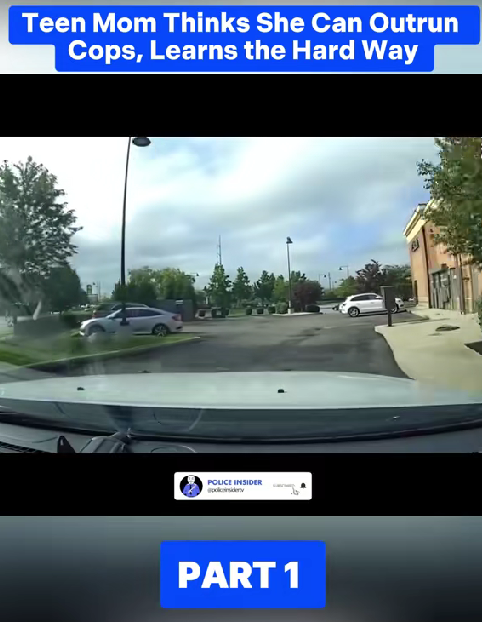
A dashcam clip labeled “Teen Mom Thinks She Can Outrun Cops, Learns the Hard Way – Part 1” has quickly gone viral, capturing the tense moment a young driver attempts to pull away from officers during what appears to be a routine traffic encounter. While the caption suggests she was a “teen mom,” the video itself does not confirm her age, her parental status, or the reason for the traffic stop. What it does show is a sudden, risky decision that immediately turns a calm situation into a dangerous one.

The clip opens with a wide view from a patrol car’s dashcam as the officer drives through a quiet commercial area. Morning light reflects off the windows of nearby businesses, and the parking lot appears mostly empty except for a few vehicles. Everything seems calm — until a silver car suddenly swings into view.

The young driver pauses for a moment near the entrance of the lot, as though deciding whether to stop or continue. For a split second, it looks like she may comply with officers. But just as the patrol car closes the distance, the silver vehicle jolts forward, cutting across the lot as the officer activates lights and sirens.

This single impulsive move is what instantly escalates the encounter.

The dashcam footage shows the officer weaving through the parking area, trying to keep sight of the fleeing vehicle. The driver clips a curb, narrowly misses a parked car, and speeds toward the roadway. Her erratic movements suggest panic more than strategy — a dangerous combination for both her and anyone nearby.

Experts in pursuit psychology note that people who flee traffic stops are often overwhelmed by fear, embarrassment, or misunderstanding rather than criminal intent. A young driver, especially one without much life experience, may act impulsively when confronted with authority. That appears consistent with what viewers see here: a split-second decision made under stress.

The officer’s tone over the radio remains steady as he reports the direction of travel and requests assistance. His calm voice contrasts sharply with the chaotic motion unfolding outside the windshield. This is one reason dashcam clips resonate so deeply with viewers — they reveal how officers must manage both the adrenaline of pursuit and the responsibility of keeping the public safe.

While the uploader’s caption implies she “learned the hard way,” Part 1 of the footage stops before showing whether the pursuit ended safely, whether the driver pulled over, or whether additional units became involved. The clip cuts just as the vehicle speeds out of the lot, leaving viewers hanging and eager for the next episode.

This lack of resolution has triggered a flood of speculation online:

  • Was she running because of a suspended license?
  • Was she simply scared of getting a ticket?
  • Did she misunderstand the officer’s instructions?
  • Did the pursuit end peacefully?

Without the full sequence, none of these questions can be answered.

What is clear, however, is that a simple stop escalated into a high-risk situation — a reminder of how quickly moments of fear or panic can turn dangerous for everyone involved.

As viewers wait for Part 2, the first clip stands as a cautionary example: one split-second decision behind the wheel can change everything.

@daviscops.us

Teen Mom Thinks She Can Outrun Cops, Learns the Hard Way#cops #copsoftiktok #police #bodycam

♬ original sound – daviscops.us
“Bodycam Part 1: Workplace Dispute Explodes After Worker Claims Assault — Officers Rush to Calm the Situation”

A tense bodycam clip is going viral after capturing the moment officers arrived at an industrial facility where a heated workplace dispute had escalated into accusations of assault. While the uploader’s caption suggests “chaos erupted,” the footage itself presents only the immediate confrontation — not the full story of what happened before police were called or what any investigation later determined.

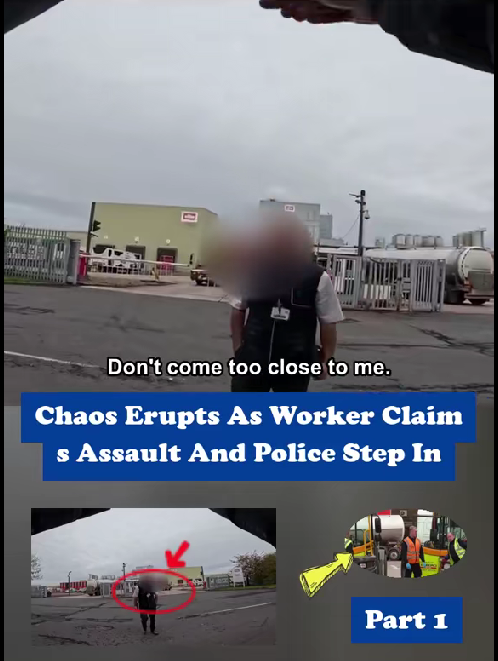
The video begins in a wide, open parking area outside a commercial warehouse. Large trucks, machinery, and fenced storage areas fill the background, giving the scene an industrial, high-pressure atmosphere. At the center of the frame stands a worker in a reflective vest, facing the camera with visible tension in his posture. His face is blurred, suggesting that personal details have been withheld for privacy.

As the officer approaches, the worker raises a hand and firmly says, “Don’t come too close to me.” His tone is controlled but defensive — the kind of voice people use when they feel overwhelmed or misunderstood. The officer stops at a respectful distance, showing that he’s listening carefully and attempting to de-escalate.

The clip offers little insight into what led to the emotional moment. There are no clear visuals of the original incident, no statements from other workers, and no footage showing how the dispute began. This lack of context has fueled online debate, with viewers offering wildly different interpretations. Some speculate that the worker felt threatened by a coworker, while others believe the argument may have stemmed from workplace stress, miscommunication, or a disagreement that spiraled unexpectedly.

Officers on scene appear calm and methodical. Their posture suggests they are trying to gather facts before taking any action. One officer asks the worker to explain what happened, while another stands back, observing the surroundings and ensuring the interaction stays safe for everyone involved. Industrial settings can be high-tension workplaces, and police often respond to calls where emotions are running high but no crime has yet been established.

Experts in conflict resolution point out that disputes in workplaces — especially around heavy equipment and strict schedules — can escalate quickly. Employees may feel unsafe, unheard, or pressured, causing them to interpret interactions more intensely. Even when no physical altercation occurs, the feeling of being threatened can lead to emergency calls like this one.

The bodycam video also shows a wider angle of the lot, including another worker walking in the distance. The uploader circles this person with a red marker, implying their involvement, but the footage does not confirm whether they played any role in the dispute. Without audio or additional footage, viewers cannot determine whether they were a witness, a supervisor, or unrelated.

As the clip ends, officers continue calmly questioning the worker, trying to separate emotion from fact. No arrests, citations, or conclusions are shown, leaving the outcome entirely unknown. This abrupt cutoff has sparked viewer anticipation for “Part 2,” where many hope to see what the officers discovered and how the situation was ultimately resolved.

For now, the clip stands as a snapshot of a common real-world challenge: workplace conflicts that escalate faster than anyone expects, prompting police intervention not to assign blame, but to restore calm and gather clarity.

The internet waits for the next chapter.

“Chaos Erupts During Traffic Stop After Officers Approach the Wrong Car — Driver’s Reaction Says It All”

A viral video is sweeping across social media after showing a tense moment during a traffic stop where officers approached a vehicle and the driver reacted with immediate shock and frustration. The uploader dramatically claims the car “belonged to an undercover FBI agent,” but the clip does not confirm the driver’s identity, occupation, or any federal connection. What the footage does show is a surprising and chaotic misunderstanding that unfolds the moment an officer taps on the car window.

The video begins inside a parked sedan where a man sits in the driver’s seat, appearing relaxed and scrolling on his phone. Suddenly, an officer’s hand reaches into the frame, knocking on the window. The driver jolts upright with visible irritation and confusion, looking toward the officer as if unsure why he’s being approached. His reaction — a mix of disbelief, annoyance, and adrenaline — has become the centerpiece of the viral moment.

The uploader’s caption suggests a serious case of mistaken identity, but the footage contains no audio or documentation that identifies the man as an undercover agent. What is clear is the intensity of the driver’s response. He straightens up, clears his throat, and reaches for something out of frame, possibly identification or paperwork, but the video cuts off before revealing anything definitive.

Throughout the clip, the officer’s face remains mostly off-screen, leaving viewers unable to see their expression or hear what prompted the interaction. This lack of context has led to fierce online debate. Was it a routine check? A mistaken vehicle description? A mix-up in communication? Or simply a driver caught off guard during a standard stop?

Body-language experts commenting online note that the driver’s reaction — eyes widening, posture stiffening, rapid movements — suggests he was genuinely surprised. Some viewers believe he simply felt unfairly targeted, while others interpret his reaction as someone who may hold an official or high-responsibility role and wasn’t expecting open contact from local officers.

Meanwhile, law-enforcement analysts emphasize that officers commonly tap on car windows for safety or communication, especially if a vehicle matches a description or is parked suspiciously. Misunderstandings can easily arise, especially when neither party knows what the other is expecting.

The video’s dramatic caption has fueled speculation, memes, and heated threads across TikTok and Instagram. Many viewers are skeptical of the “undercover FBI agent” claim, pointing out that real federal agents typically carry credentials and resolve mix-ups quickly — not through confrontation. Others argue that the uploader may have exaggerated the situation for views, a trend increasingly common in viral policing clips.

Despite the mystery surrounding the incident, the short clip has undeniably captured attention for one reason: the raw, unfiltered reaction of someone who clearly believes officers approached the wrong person. It’s a relatable moment for anyone who has ever felt wrongly singled out, misunderstood, or unexpectedly questioned.

As the clip continues to spread, users are demanding a Part 2 — hoping for bodycam footage, officer statements, or a continuation that explains whether this was a simple mix-up or something far more complicated.

For now, the video remains a snippet of confusion, fast reactions, and unanswered questions — a perfect recipe for viral intrigue.

@tikcom093

POLICE TOUCHED THE WRONG CAR IT BELONGED TO AN UNDERCOVER FBI AGENT #cops #usa🇺🇸 #copsoftiktok #fyp #viralstory

♬ original sound – PoliceInsider
“Heartbreaking Bodycam Moment: Officers Deliver News That Leaves a Mother in Tears”

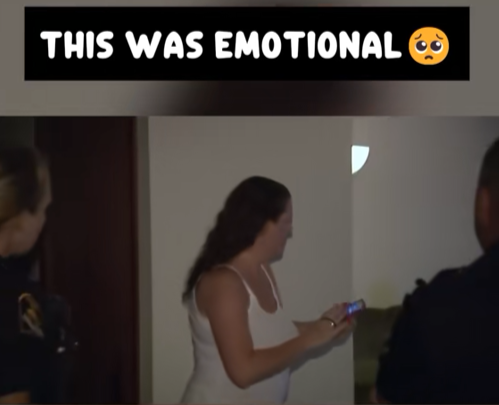
A quietly powerful bodycam clip is circulating online, touching millions who say it’s one of the most emotional police moments they’ve seen. The footage shows officers speaking with a woman inside a modest, dimly lit home, and while the caption suggests a deeply emotional event, the video itself offers only fragments — leaving viewers to interpret the intensity through body language, pauses, and the shifting expressions on everyone’s faces.

The clip begins with the woman walking down a hallway, clutching her phone as two officers follow closely behind. She appears to be trying to process something she’s just been told. The hallway light casts a warm glow, highlighting the worry and confusion on her face. Her movements are slow and hesitant, like someone bracing for what comes next.

The officers maintain a gentle presence, giving her space while still staying close enough to support her if needed. Their posture and tone differ noticeably from more confrontational bodycam encounters — this moment feels deeply human, quiet, and heavy. The woman occasionally glances at her phone as though waiting for an update, message, or confirmation, adding another layer of emotional weight to the scene.

As she enters the living room, she stops, takes a shaky breath, and wipes her eyes. The camera captures the small, telling details: the way her shoulders tremble, the deep breath she tries to steady, the instinctive step backward as overwhelming emotion washes over her. Viewers have commented on how these subtle gestures speak volumes without a single word needing to be heard.

Although the video does not specify the circumstances — whether officers delivered worrying news about a family member, helped locate someone missing, responded to a distress call, or supported her through an emergency — the emotional atmosphere is unmistakable. Everything about the moment suggests a turning point, a revelation that changes everything in an instant.

Experts in crisis intervention note that moments like these are among the most difficult parts of police work. Officers often find themselves as the first point of support in emotionally devastating situations. Their role shifts from law enforcement to compassionate presence — guiding, comforting, and helping people navigate life-altering news.

The woman’s reaction feels raw and relatable. Many viewers have shared their own stories in the comment sections — times when officers showed kindness, or when they received life-changing news in similar ways. Others simply express empathy for a moment that is clearly painful, even though the details remain private.

Because the clip ends abruptly, viewers are left without closure, unsure of what happened next or what news triggered such visible emotion. But the lack of specifics makes the moment universal — allowing people to connect with the human experience rather than focusing on the exact event.

For now, the footage stands as a rare and intimate glimpse into life’s most vulnerable moments and the unseen emotional labor officers often perform. It’s a reminder that behind uniforms, procedures, and protocols, there are human beings — on both sides of the interaction — navigating the hardest chapters of life together.

“Bodycam Part 3: Drunk University Student Tries to Walk Away — Officers Forced to Step In After Fake ID Discovery”

A newly surfaced bodycam clip labeled “Part 3” is going viral after capturing the dramatic late-night moments officers confronted a 19-year-old university student outside a campus-area building. The uploader claims the student was “arrested for being drunk with a fake ID,” but the footage itself only shows officers detaining him — not the full investigation or the steps that led to the encounter — making it impossible to confirm what charges, if any, were officially filed.

The clip begins on a dimly lit sidewalk lined with bushes and glowing campus streetlamps. It’s just after midnight, and the quiet setting contrasts sharply with the chaotic energy of the scene unfolding. Officers can be seen guiding a young man, who appears unsteady on his feet, toward the ground. His movements are sluggish and uncoordinated, suggesting he may have been drinking, but the video does not show sobriety tests or the earlier part of the stop.

As officers attempt to place handcuffs on him, the student tries to pull away, stumbling forward and nearly losing his balance. One officer steps in to support him to prevent injury, while another maintains a firm grip on his arm. Their voices are calm but authoritative, repeatedly asking him to relax his muscles and stop resisting. In many cases like this, officers prioritize safety — both for the individual and for themselves — especially when someone appears intoxicated or unstable.

The student’s speech is partially slurred, and he mutters a series of unclear statements as the officers help him stay upright. His posture suggests confusion more than aggression: shoulders drooping, knees buckling, and head hanging low. The bodycam captures him attempting to turn away several times, prompting officers to redirect him back into a safer position.

The uploader mentions a “fake ID,” but the footage does not show the ID being found or confiscated. Without earlier clips, viewers cannot confirm whether the ID was shown, whether officers verified it, or whether it became part of the investigation. Many commenters online have pointed out that people sometimes embellish captions for dramatic effect, reminding others not to assume guilt solely from brief bodycam segments.

What the video does reveal is the careful, measured approach the officers take while handling the situation. They keep their voices low, avoid escalating the encounter, and repeatedly instruct the student to stop tensing his arms so they can safely secure him. Their focus appears to be preventing injury and gaining control without force.

The surrounding environment — a mostly empty campus sidewalk with a few parked cars and dim hallways — adds to the somber tone of the clip. It’s the kind of scene many college students fear: a night of partying that spirals unexpectedly into a police encounter, complete with flashing lights and the sobering reality of consequences.

As the clip ends, officers successfully detain the student and begin escorting him away from the bushes toward a patrol vehicle. The footage cuts abruptly before showing what happened next, leaving viewers guessing whether he was arrested, transported for medical evaluation, or issued a citation.

This lack of resolution has sparked heavy curiosity online, with many users demanding Part 4 to understand what led to the stop, whether the ID was truly fake, and how the encounter concluded.

For now, the clip serves as a dramatic reminder of how quickly a night out can change — and how bodycam footage captures raw, unfiltered moments that viewers rarely see in full context.

@utpolicecops

Bodycam Footage – 19 Year-Old University Student Arrested for Being Drunk with Fake ID#cops #copscame #copstv #police #capcut

♬ original sound – UTpoli Store
“Bodycam Drama: Two 14-Year-Old Sisters Spark Chaos in the Street Before Dad Steps In — Part 1”

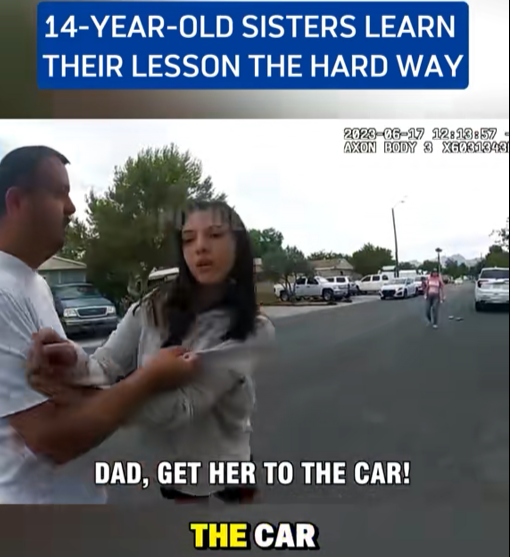
A viral bodycam clip has taken over social media after capturing a heated moment involving two 14-year-old sisters, their father, and responding officers during a tense neighborhood incident. The uploader frames the situation as the teens “learning their lesson the hard way,” but the footage itself does not show what happened before officers arrived, leaving viewers to piece together the context based solely on the chaotic moments caught on camera.

The clip opens on a residential street lined with parked cars and small family homes. It’s the middle of the day, but the atmosphere feels tense. One of the sisters, visibly upset, is being held gently but firmly by her father as an officer instructs, “Dad, get her to the car!” Her body language is a mix of frustration and embarrassment — emotions common in high-stress encounters involving teenagers.

In the background, the other sister can be seen walking quickly toward the scene, adding to the urgency. Officers maintain a calm but assertive tone as they try to manage the escalating emotions. Their priority appears to be diffusing the situation and keeping everyone safe — especially when dealing with minors who may be overwhelmed, angry, or acting impulsively.

Although the uploader’s caption suggests the girls were in trouble for something earlier, the footage does not show the event that triggered the response. Without the beginning of the story, viewers cannot determine whether this incident stemmed from a family dispute, a school-related issue, a misunderstanding, or a neighborhood conflict. That missing context has become a central point of debate among commenters.

The father’s involvement is one of the most striking parts of the clip. He appears protective yet stern, guiding his daughter away from the officers while trying to regain control of the situation. His expression suggests he feels caught between calming his child and cooperating with the authorities — a position many parents find themselves in during unexpected confrontations.

Teen behavior specialists note that moments like these can escalate quickly because adolescents experience emotions more intensely and often react before fully thinking through the consequences. A combination of fear, embarrassment, and adrenaline can make even simple instructions difficult for them to process. This appears to be reflected in the girl’s body language — tense posture, rapid movements, and visible frustration as she’s guided away.

The officers, on the other hand, seem focused on maintaining order while avoiding unnecessary escalation. Their commands are firm but not hostile, emphasizing compliance rather than confrontation. Many viewers praised the restraint shown, noting that incidents involving teens require a delicate balance of authority and patience.

As the clip ends, the father continues escorting his daughter toward their car while officers keep an eye on the second sister approaching. The bodycam video cuts off before showing what happened next — whether the situation calmed down, whether further discussions took place, or whether any official action was required.

This lack of resolution has fueled intense curiosity online, with thousands of users asking for “Part 2” to understand what led to the moment captured and how it ultimately concluded.

What’s clear is that the incident shows a raw and very real moment between a family and law enforcement — a reminder that even everyday disagreements can turn emotionally charged when tensions rise, especially when teenagers are involved.

@samfamily2004

14-Year-Old Sisters Learn Their Lesson the Hard Way DA19 FBI Agent’s D#cops #bodycam #police

♬ original sound – samfamily2004
“Heroic Midnight Rescue: Bodycam Captures Officers Saving Missing 8-Year-Old From a Hotel Room”

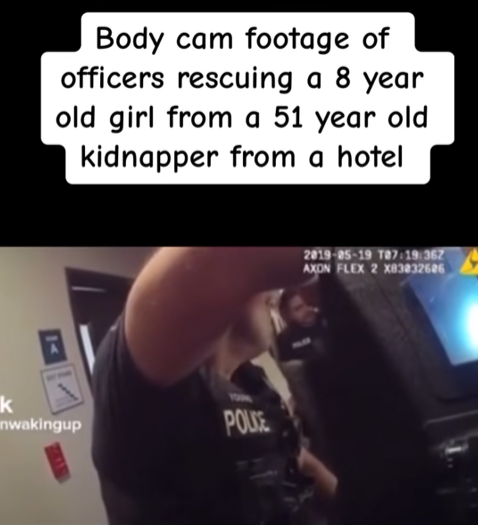
A dramatic bodycam clip is gaining massive attention online after showing officers locating a missing 8-year-old girl inside a hotel room during a tense nighttime search. The uploader’s caption claims that the man inside the room was a “51-year-old kidnapper,” but the footage does not confirm charges, motives, or legal outcomes — it simply documents the intense rescue moment as officers acted on critical information to find a child believed to be in danger.

The clip begins with officers moving quickly down a dim hotel hallway, their flashlights and radios crackling with urgency. The timestamp shows the middle of the night, making the atmosphere even more tense. The officers speak quietly but firmly to each other, planning how to approach the room where they believe the missing child may be located. Every second counts in cases like this, and the bodycam perfectly captures that pressure.

As officers reach the door, one of them knocks loudly and announces their presence. The hotel walls echo with the repeated calls of “Police!” and “Open the door!” Their tone is controlled but forceful — the kind of voice used when a situation may involve a child’s safety. After several attempts, officers decide to move in. The camera jerks as they push forward, entering a dark, cramped hotel room lit only by a TV screen.

Inside, the footage shows officers scanning quickly for the child. One officer moves toward the bed area while another checks the bathroom. After a few tense seconds, an officer spots the young girl sitting quietly in the corner of the room. She appears scared but unharmed. The officer approaches gently, crouching down to her level and reassuring her in a calm, comforting voice. Viewers have praised this moment, calling it one of the most emotional scenes in the clip.

The man in the room is ordered to stand back while officers continue securing the scene. At this point, the footage does not explain how the child got there, whether she knew the man, or what the official investigation later uncovered. Those details are not included in the video and should not be assumed from the caption alone.

The officers move quickly to escort the girl out of the room and into the hallway, where she can be reunited with medical staff and the appropriate authorities. The child clings to one officer’s hand as they step into the brighter, safer corridor — a moment that has touched millions of viewers. The hallway’s harsh fluorescent lighting reveals the child’s relief, contrasted with the intense expressions of the officers who had just completed the rescue.

Experts in missing-child response explain that hotel rescues are often chaotic and time-sensitive, requiring coordination, quick decisions, and careful handling of frightened minors. The bodycam footage highlights exactly how important these rapid interventions can be.

While the internet may continue debating the details, one fact remains clear: officers responding that night prevented a potentially dangerous situation from escalating. The video stands as a powerful reminder of how crucial fast action, teamwork, and vigilance can be when a child’s safety is at stake.

As viewers eagerly wait for more context or official updates, this clip continues circulating as one of the most talked-about rescue moments of the week — and a testament to the lifesaving power of timely intervention.

“Bodycam Tension Erupts After Police Confront Parents Over Alarming Test Results — Child Safety Investigation Begins”

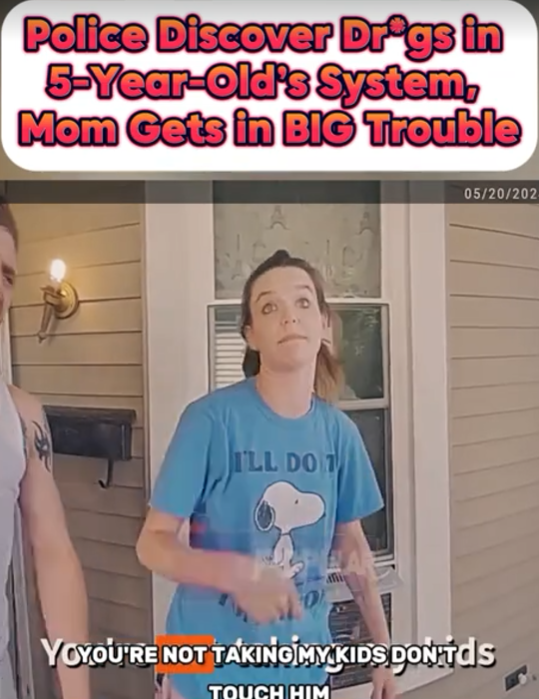
A viral bodycam clip has stirred intense online discussion after officers arrived at a home to address concerning test results involving a young child. The uploader’s caption dramatically claims that police “discovered dr*gs in a 5-year-old’s system,” but the footage itself does not confirm the source of the information, the accuracy of the claim, or any final findings by medical professionals. What the video does show is a tense confrontation on a front porch, with officers explaining that they need to investigate the child’s wellbeing.

The clip opens on a sunny afternoon as officers approach a house where a woman and a man step outside to meet them. The woman, wearing a bright blue Snoopy shirt, immediately appears defensive and overwhelmed. Her body language shows a mix of shock, fear, and frustration as officers begin to explain why they are there. The man beside her looks equally tense, shifting his weight as he listens.

From the start, it’s clear this isn’t a routine welfare check. Officers speak calmly but firmly, saying they need to ensure the child is safe. The woman reacts instantly, raising her voice and insisting, “You’re NOT taking my kids — don’t touch him.” Her heightened reaction suggests she is terrified of losing custody, a fear many parents experience even when the situation is unclear or misunderstood.

The footage does not show the child, the supposed test results, or any documents. As a result, viewers cannot determine whether the information officers referenced came from a hospital, a hotline, a third-party report, or even a misunderstanding. This lack of context has led to massive debate online, with some viewers urging caution against assuming guilt based on captions alone.

Experts familiar with child-welfare procedures explain that officers are often dispatched when there is any indication—confirmed or unconfirmed—that a minor might need medical assessment. This does not automatically mean wrongdoing occurred; situations can involve accidental exposure, environmental contamination, miscommunication, or even false reports. Until official statements or court findings emerge, the cause and circumstances remain unknown.

Throughout the video, officers attempt to de-escalate the rapidly intensifying emotions. One officer steps slightly back, giving the woman space while still trying to talk to her. Their tone stays measured, emphasizing procedure rather than accusation. Meanwhile, the woman’s distress builds as she repeatedly pleads for officers not to remove her children.

The comment sections across various platforms have exploded with conflicting opinions. Some viewers sympathize with the mother’s fear, pointing out that sudden visits from authorities can be terrifying even for innocent families. Others focus on the seriousness of the situation and the need to ensure a child’s medical safety, regardless of how uncomfortable the process may be.

Because the clip ends abruptly, viewers are left with many unanswered questions:
• Were medical professionals involved?
• Was the child taken for evaluation?
• Did follow-up investigations confirm or rule out any exposure?
• Did the parents receive support or resources?

Until more information or additional parts of the footage are released, the clip represents only a single moment in a much larger, complex situation.

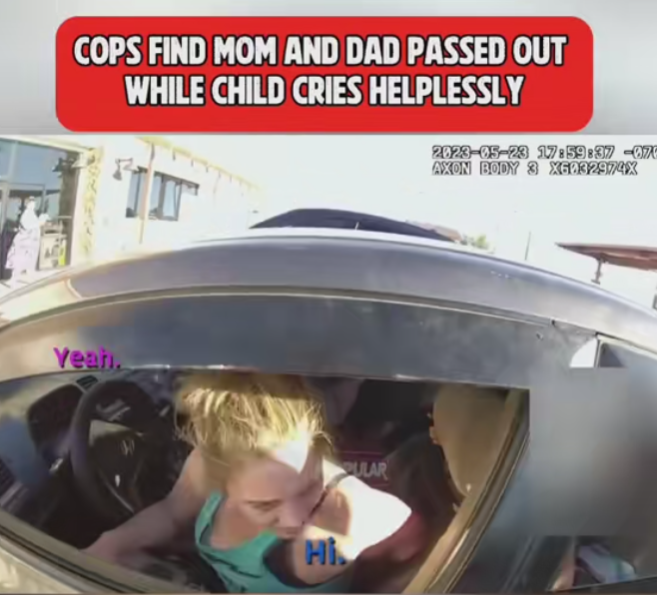
“Bodycam Footage Shows Emotional Rescue After Officers Discover Unresponsive Adults and Crying Child in Backseat”

A heartbreaking bodycam clip has gone viral after showing officers responding to a call involving a young child crying inside a parked vehicle. The uploader’s caption claims that both parents were “passed out,” but the footage itself does not confirm the cause or condition of the adults — only that officers found them unresponsive and immediately took action to check everyone’s safety.

The video opens with the harsh glare of the late afternoon sun beaming into a car’s interior. A small child can be heard crying in the backseat, the sound urgent enough that officers rush toward the vehicle without hesitation. When the door opens, viewers see a woman slumped forward in the driver’s seat. She slowly lifts her head as the officer calls out, clearly startled and disoriented as she tries to understand what’s happening around her.

Officers remain calm, repeatedly asking if she is okay and whether she can hear them. Their tone suggests concern rather than confrontation, as they try to assess whether she is experiencing a medical issue, exhaustion, or another condition. Behind her, the child continues crying, prompting one officer to gently address the toddler in a soothing voice before checking for any signs of distress.

Moments later, the bodycam shows another adult in the passenger seat, also slow to respond. Again, the video does not reveal why the two adults were unresponsive, but officers immediately shift gears into safety mode, ensuring that the child is removed from the backseat and comforted while they continue assessing the situation.

The chaotic scene — a crying child, confused adults, and the tense uncertainty of not knowing whether a medical emergency is unfolding — has struck a deep emotional chord with viewers. Comment sections across platforms are filled with concern, sympathy, and questions about what led to the moment captured on camera.

Experts who analyze emergency-response footage emphasize that officers often encounter situations like these where exhaustion, heat, dehydration, medical complications, or medication reactions may cause adults to become unresponsive. Without official reports, it is impossible to know the reason, and online captions can easily oversimplify complex situations. This is why professionals urge viewers to avoid making assumptions about the family based solely on short clips.

In the video, officers take care to ensure the child’s wellbeing first, offering gentle reassurance and creating distance from the frightening environment inside the car. The child appears alert but visibly upset, clinging to an officer’s hand as they carry them away from the vehicle.

Meanwhile, medics are reportedly contacted off-camera, though the clip cuts before showing whether emergency personnel arrived or whether the adults received medical evaluations. This abrupt ending has prompted thousands of viewers to demand a Part 2 for closure — hoping to learn that the child was safe and that the adults received the care they needed.

What makes the clip so impactful is not just the dramatic tone of the captions but the raw humanity in the officers’ reactions: the urgency, the concern, and the protective instinct toward the child.

Until official updates or additional footage appears, the full story remains unknown. What is clear, however, is that the child’s cry prompted a swift response — one that may have prevented a far more dangerous outcome.

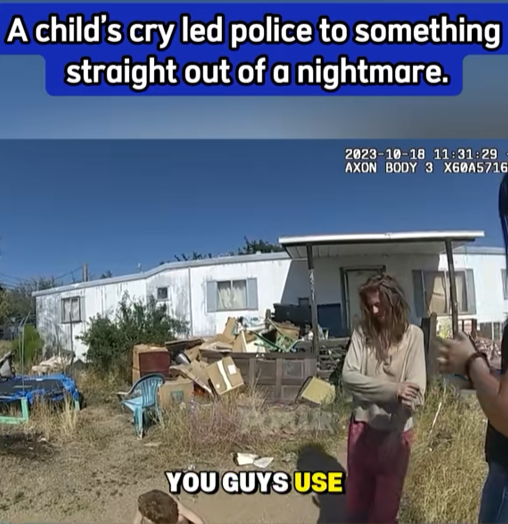
“Bodycam Footage Reveals Haunting Scene After Officers Follow a Child’s Cry to a Remote Property”

A viral bodycam clip has shaken social media after showing officers responding to a report of a child crying near a remote, cluttered property. The uploader’s caption claims the discovery was “straight out of a nightmare,” but the footage itself shows only the initial encounter — not the full investigation or official findings. Still, the dramatic visuals and emotional weight of the scene have fueled intense public reaction.

The video begins under a harsh midday sun. Officers step into a dusty yard scattered with debris: old furniture, broken plastic chairs, cardboard boxes, and discarded household items piled haphazardly around a small white trailer home. The property appears weathered and in disrepair, instantly creating an unsettling atmosphere that has contributed to the clip’s rapid spread online.

As officers approach, they find a woman standing outside. She appears disheveled, anxious, and confused by their presence. Her clothes hang loosely, and her body language suggests exhaustion or stress. Meanwhile, an unseen child nearby can be heard crying off-camera — the sound that reportedly triggered the emergency response. The officers immediately ask questions, their tone direct but controlled, trying to understand what is happening and ensure the child’s safety.

In a brief, partially audible exchange, the woman attempts to answer, but her responses are fragmented, making it difficult for viewers to determine what led officers to the scene. The footage captures only a tiny moment of what is likely a much larger, multi-layered situation. It’s clear, however, that officers are concerned, scanning the property and trying to assess whether anyone needs immediate help.

The clutter surrounding the home has become a major talking point online. Many viewers have expressed worry based on the visible conditions alone, while others caution that appearances can be misleading. Social workers and crisis responders who have seen similar scenarios point out that a messy property does not automatically indicate wrongdoing; it can be the result of poverty, lack of resources, or personal struggles. Without official statements or reports, no assumptions about neglect or danger can be confirmed.

As the clip progresses, viewers see officers kneeling to speak with the child, offering calm reassurance. Their movements are measured, emphasizing the importance of stabilizing emotional distress during calls involving minors. This moment — the juxtaposition of a crying child, a distressed adult, and a chaotic environment — is what has resonated most deeply with audiences.

The video ends abruptly, just as officers begin taking next steps. It does not show whether medical personnel were contacted, whether child protective services arrived, or whether the situation was resolved peacefully. That lack of resolution has only intensified speculation, prompting thousands of users to beg for “Part 2” to understand what truly unfolded.

Experts in online media warn that viral captions often dramatize situations before full facts are known. They urge viewers to remember that bodycam videos provide snapshots, not full context — and that real-life cases involving families, mental health, or poverty must be handled with sensitivity and caution.

For now, the clip remains one of the most discussed videos of the week, leaving millions waiting for the next segment and hoping for clarity — and most of all, safety for the child involved.