
He Did the Right Thing — Then Got Sued for $3,000 After Returning a Lost Wallet
What began as a simple act of honesty quickly turned into a legal nightmare that has left many people questioning how doing the right thing can sometimes lead to serious consequences.
According to court filings and widely shared footage, a man is now facing a $3,000 lawsuit after returning a wallet he found. Instead of being thanked for his integrity, he found himself pulled into a legal dispute that has sparked outrage and disbelief online.
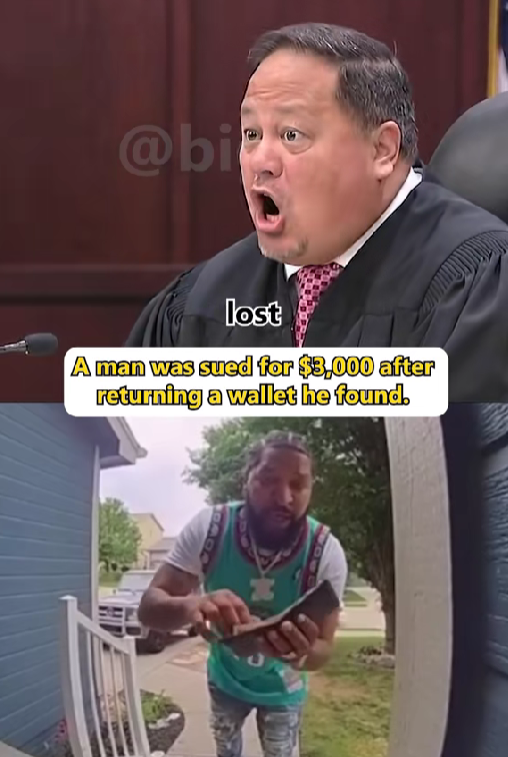
The incident reportedly began when the man discovered a wallet that did not belong to him. Rather than ignore it or keep its contents, he chose to return it to its rightful owner. Surveillance footage shows him approaching the home and handing the wallet back, an act many would consider the most responsible and ethical choice.
However, what happened next stunned both viewers and legal observers.
The wallet’s owner later claimed that money was missing and accused the man of taking cash before returning it. Based on that claim, a lawsuit was filed seeking $3,000 in damages, alleging theft and financial loss. The man has denied the accusation, maintaining that he returned the wallet as he found it and never removed any money.
During court proceedings, the presiding judge appeared visibly surprised by the situation. In courtroom footage, the judge reacted strongly to the details of the case, questioning how an act intended to help could escalate into legal action. The judge emphasized that accusations require evidence, not assumptions, and that returning lost property should not automatically place someone at legal risk.
Legal experts say cases like this highlight a troubling gray area. While individuals have the right to pursue civil claims, filing lawsuits without clear proof can discourage honesty and goodwill. “If people start fearing lawsuits for returning lost items, the incentive to do the right thing disappears,” one legal analyst explained.
Public reaction has been swift and emotional. Many online users expressed anger, arguing that the lawsuit sends the wrong message and punishes moral behavior. Others warned that situations like this could lead people to turn lost items over directly to police rather than returning them personally, just to protect themselves from liability.
Some attorneys advise exactly that. Turning found property into law enforcement or documenting the return with witnesses or video can help prevent false accusations. While it may feel impersonal, it creates a clear record and reduces risk.
At the center of the controversy is a larger question: should good deeds require legal protection? Critics argue that the legal system should not enable claims that discourage honesty, while others stress that courts must still allow disputes to be heard if someone believes they were wronged.
For the man being sued, the experience has been both costly and stressful. What was meant to be a moment of integrity turned into months of legal uncertainty, court appearances, and public scrutiny.
As the case continues, it has become a cautionary tale with a powerful lesson. In a world where even good intentions can be challenged, many are left wondering whether doing the right thing is enough — or if protecting yourself legally now has to come first.
One thing is clear: this story has struck a nerve. And for many, it raises a troubling concern about how easily honesty can be turned against the very people who choose it.