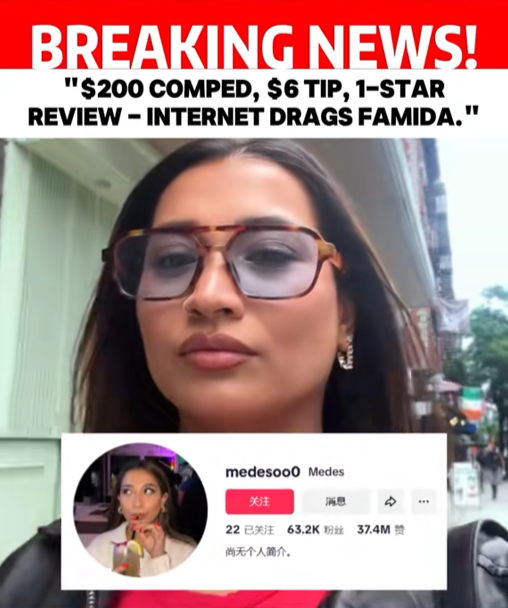

“Internet Erupts After Viral Restaurant Drama — $200 Comped Meal, $6 Tip & a 1-Star Review Leave Followers Furious!”
Social media has exploded into a full-blown debate after a viral video spotlighted an influencer named Famida, known online as medesoo0, following a dramatic restaurant encounter that has captured millions of views across platforms. The situation, as described by online commenters and recap accounts, involves a disputed restaurant bill, a small tip following a partially comped meal, and a controversial 1-star review — but the actual facts remain incomplete, and the story is evolving in real time.
The viral posts claim that Famida’s meal was reduced by $200 after a misunderstanding or complaint at a restaurant. According to the circulating narrative, she allegedly left a $6 tip and later posted a 1-star review, sparking intense backlash from viewers who felt the actions were unfair to the staff. However, the online commentary does not include verified statements from Famida herself, nor the restaurant, leaving much of the situation based on speculation, reactions, and reshared clips.
In a short video making the rounds, Famida appears walking through a city street, confidently addressing the camera with stylish sunglasses and a composed expression. This visual has been widely stitched and reposted as creators add their own commentary, assumptions, and dramatic headlines. The overlayed captions and reactions have further fueled the storm, with some users expressing frustration, while others defend her and caution against taking unverified claims as fact.
This controversy highlights a recurring theme in social media culture: how quickly public opinion can shift based on short clips, partial screenshots, or second-hand retellings. Without full context — including what happened at the restaurant, whether the comped amount was offered voluntarily, how the tip was calculated, or why she left the review she did — creating a definitive narrative becomes nearly impossible. Yet, platforms have still erupted with intense emotion, turning the incident into a trending topic.
Experts in online reputation note that influencer-related controversies often spiral when audiences feel strongly about service industry fairness. Many viewers empathize deeply with restaurant workers, especially when tipping behavior is involved. As a result, even unverified claims can spark massive discussions. But those same experts warn that reacting solely to viral captions risks misrepresenting real people and real events.
Supporters of Famida are urging viewers to wait for her side of the story, pointing out that snippets taken out of context can ignite unnecessary backlash. They emphasize that comped bills often result from customer service policies unrelated to wrongdoing, and tipping behavior — while debated — can vary widely depending on culture, personal preference, and service satisfaction.
Meanwhile, critics argue that influencers carry heightened responsibility because their actions are amplified online, sometimes affecting businesses and workers unintentionally.
The situation remains fluid, with no formal statements issued at the time of the viral explosion. As more creators jump into the conversation, viewers are left sorting through opinions, reactions, and assumptions — all while waiting to see whether Famida herself will address the growing controversy.
For now, the incident stands as yet another reminder of how quickly the internet can turn a small misunderstanding into a trending global debate, and how important it is to approach viral claims with caution until all sides of the story come forward.