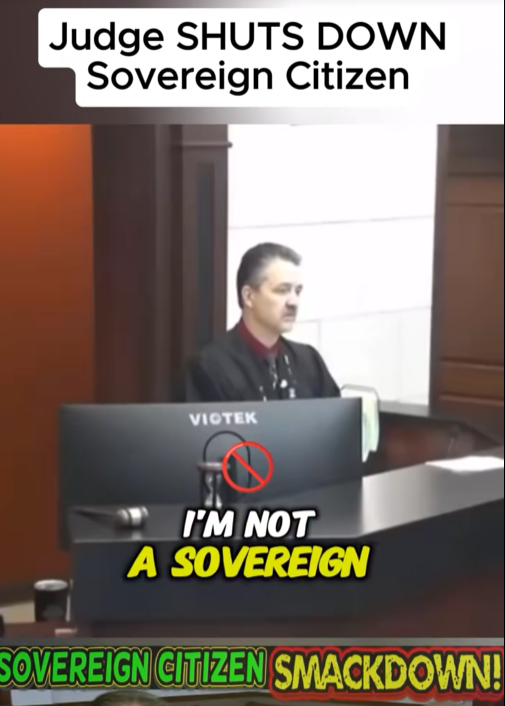

“Judge Instantly Sh*ts Down ‘Sovereign Citizen’ Argument — Courtroom Goes Silent”
A tense courtroom exchange is going viral after a judge decisively shut down a defendant’s attempt to claim “sovereign citizen” status — a move that many viewers say ended the case before it even began. The clip, now circulating widely online, captures a moment that perfectly illustrates how little patience courts have for arguments rooted in internet legal myths.
The footage shows a judge seated calmly behind the bench as the defendant appears to rely on familiar sovereign-citizen talking points — claims that they are not subject to the court’s authority, that laws do not apply to them, or that their legal identity is somehow separate from the person standing in the courtroom.
But the judge doesn’t hesitate.
With a firm tone and unmistakable clarity, the judge states: “I’m not a sovereign.” The message is clear — the courtroom is governed by law, not personal belief systems or online theories. The brief statement effectively ends the argument before it can spiral into the usual back-and-forth that sovereign-citizen cases are known for.
Sovereign citizen defenses have become increasingly common in recent years, fueled by social media videos and forums promising legal loopholes that simply do not exist. These theories often suggest that by using certain phrases or refusing to recognize authority, individuals can avoid charges, taxes, or legal consequences.
Legal experts say that belief is not just wrong — it’s dangerous.
Courts across the country have repeatedly ruled that sovereign-citizen arguments have no legal standing. Judges are trained to recognize these tactics immediately, and many now shut them down within seconds to prevent disruption of proceedings. In this case, viewers praised the judge for maintaining control while making the law unmistakably clear.
Online reactions poured in quickly.
Many commenters applauded the judge’s directness, calling it “refreshing” and “long overdue.” Others pointed out how often defendants are misled into thinking these arguments will help them, only to end up facing harsher consequences for contempt or failure to comply with court orders.
“This is what happens when TikTok becomes your law school,” one viewer wrote.
Some attorneys weighed in, explaining that sovereign-citizen claims often worsen a defendant’s position. Refusing to recognize the court can lead to additional charges, loss of legal representation, or immediate rulings against the defendant. Judges may tolerate confusion — but not defiance.
The clip also highlights a growing frustration within the justice system. Courts are dealing with overloaded dockets, and time spent entertaining baseless legal theories only slows down proceedings for everyone involved. That’s why many judges now respond swiftly and decisively, as seen here.
Importantly, the judge’s response wasn’t emotional or aggressive. It was calm, factual, and authoritative — exactly what legal experts say is most effective. There was no debate, no negotiation, and no acknowledgment that the argument deserved further discussion.
Just the law.
For viewers unfamiliar with courtroom procedures, the video serves as an educational moment. No matter how convincing an online video may sound, legal outcomes are determined by statutes, precedent, and due process — not personal declarations.
As the clip continues to circulate, it’s being shared as both entertainment and warning. A reminder that while questioning authority may feel empowering online, it carries real consequences in a courtroom.
In the end, the judge’s message was simple and final:
You can call yourself whatever you want — but once you step into a court of law, the rules apply to you just the same.
And this time, there was no appeal to argue otherwise.