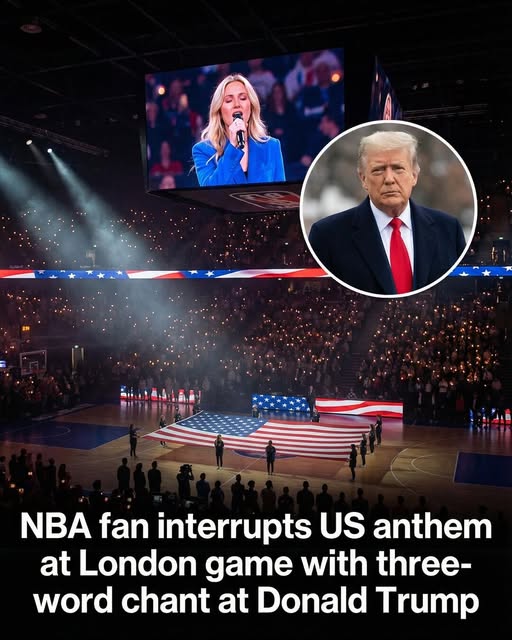

NBA Game in London Sees Crowd Moment During National Anthem!
The atmosphere inside London’s O2 Arena felt electric long before tipoff. Thousands of fans poured into the venue hours ahead of time, buzzing with the kind of anticipation that only a rare NBA regular-season game on European soil can generate. For many in attendance, this was more than just basketball. It was proof that the global reach of the NBA continues to expand, bringing the sport closer to fans who usually experience it from afar.
The matchup between the Orlando Magic and the Memphis Grizzlies was part of the league’s long-term effort to deepen its presence in Europe. Jerseys from across the league dotted the crowd, accents blended together in concession lines, and the pregame music echoed through the arena with a celebratory tone. It felt less like a neutral-site game and more like a festival built around basketball.
As the teams completed their warmups, the arena lights dimmed and the noise softened. The crowd gradually settled into a respectful hush as pregame ceremonies began. Onto the court stepped Vanessa Williams, invited to perform the United States national anthem. Her presence added a sense of formality to the moment, and as the first notes rang out, the audience grew quiet. For a brief stretch, the scene was polished and unified, reflecting the ritualistic calm that usually surrounds an anthem performance.
Then, unexpectedly, a single voice cut through the stillness.
From somewhere in the stands, a man shouted a short remark referencing Donald Trump and his previously reported interest in Greenland. The comment itself was fleeting, lasting no more than a second or two, but its timing made it impossible to ignore. It echoed clearly across the arena, momentarily breaking the solemn mood of the anthem.
The reaction was immediate and mixed. A few scattered boos rang out in response, followed almost instantly by louder cheers that rolled through sections of the crowd. Some fans laughed, others clapped, and many simply looked around, surprised that such a moment had erupted during a ceremony typically treated with restraint. The interruption was brief, but the ripple it caused was unmistakable.
On the court, Williams never faltered. She remained composed, continued the anthem without pause, and carried it through to its conclusion with professionalism. When the final note faded, the applause was strong and sustained, signaling appreciation not just for her performance, but for her ability to maintain focus in the face of an unexpected disruption.
Although the moment passed quickly, it became an immediate topic of conversation among spectators and viewers watching from home. Clips circulated online within minutes, drawing commentary from fans on both sides of the Atlantic. For some, it was a humorous example of how global audiences sometimes inject their own perspectives into American sporting traditions. For others, it highlighted how political discourse has a way of surfacing even in spaces meant to be apolitical.
The shouted remark referenced long-standing public discussions that began years earlier, when Trump publicly suggested the United States should consider acquiring Greenland, a semi-autonomous territory of Denmark. The idea sparked widespread criticism at the time, particularly among European leaders, who firmly rejected the notion and emphasized national sovereignty. While those debates belong squarely in the realm of diplomacy and politics, their echo inside a London basketball arena illustrated how interconnected global conversations have become.
International sporting events, especially those involving American teams abroad, often serve as cultural crossroads. Fans from different countries bring their own histories, humor, and political awareness into shared spaces. In that sense, the crowd’s reaction reflected the diversity of perspectives present in the arena rather than a unified political statement. It was spontaneous, unplanned, and quickly overtaken by the return to sport.
Once the anthem concluded and the ball was finally tipped, attention shifted decisively back to basketball. The game itself delivered the fast pace and athletic intensity fans had hoped for. The Grizzlies controlled much of the contest, executing with confidence and energy, while the Magic fought to keep pace in front of an enthusiastic crowd eager for highlights. Every big play drew cheers, regardless of which team made it, reinforcing the idea that many in attendance were there for the spectacle as much as the score.
By the final buzzer, Memphis emerged with a victory, capping off an entertaining night that reaffirmed the appetite for NBA action in the United Kingdom. Fans lingered after the game, taking photos, debating plays, and savoring the experience of having witnessed top-level basketball without crossing an ocean.
From the league’s perspective, the night was another successful step in its international strategy. The NBA has already announced plans to stage future regular-season games in cities such as Manchester, Paris, and Berlin, signaling a continued commitment to global expansion. These games are designed not just to showcase talent, but to strengthen long-term connections with international fan bases.
While the brief anthem interruption became a memorable footnote, it ultimately did little to overshadow the event itself. Instead, it served as a reminder that large sporting stages sometimes attract moments of unscripted expression, especially when global audiences are involved. In the end, the defining elements of the evening were athletic performance, shared excitement, and the unmistakable energy of a crowd united by love for the game.
As fans filed out of the O2 Arena, the chatter returned to buzzer-beaters, standout performances, and hopes for the NBA’s next visit to London. The unexpected shout during the anthem would be remembered, replayed, and debated online, but it remained just that—a brief interruption in a night that, at its core, celebrated basketball’s ability to bring people together across borders, cultures, and perspectives.