
The Psychology Behind Helping Waiters! What This Simple Gesture Reveals
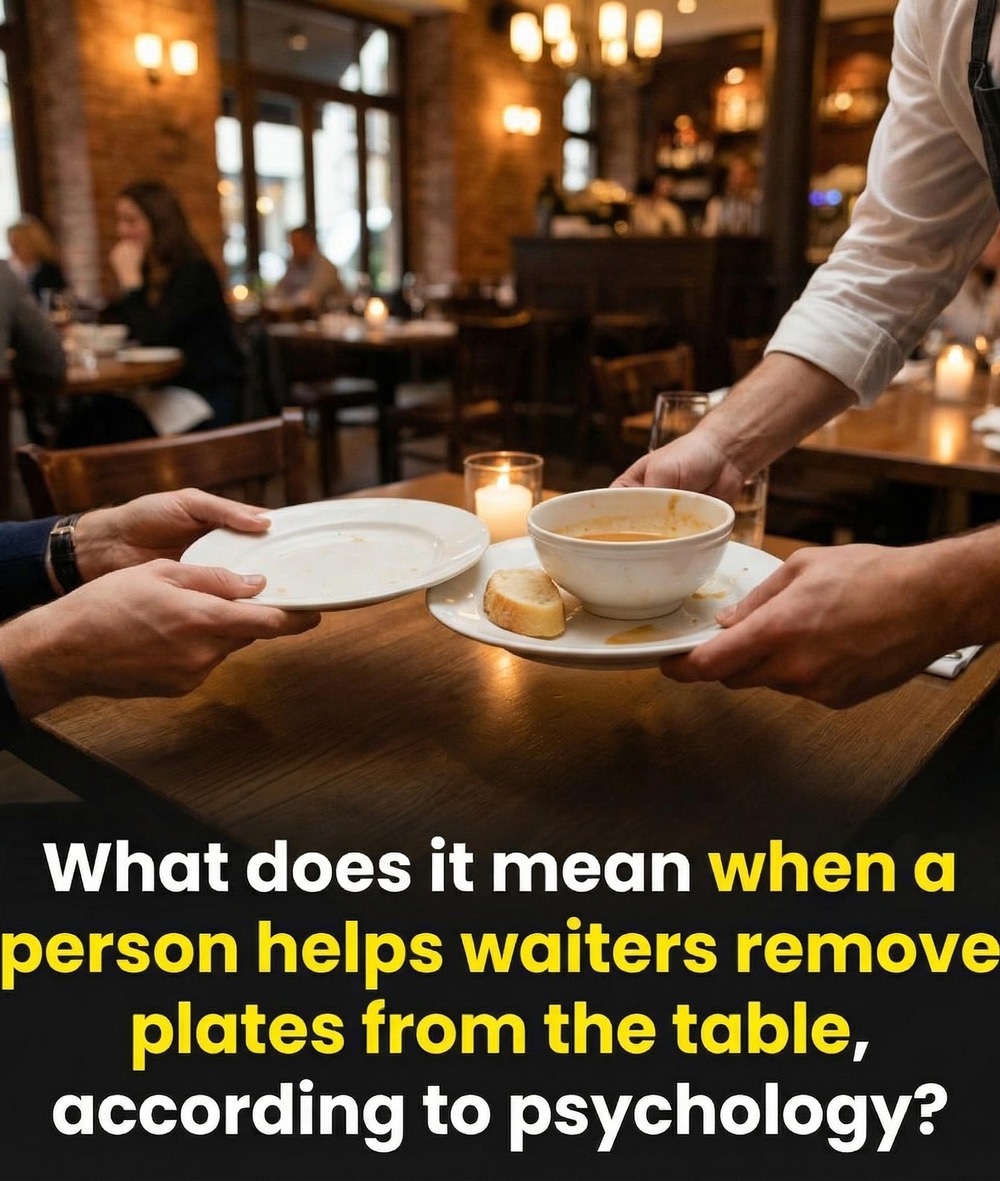
In a busy restaurant, most moments blur together. Plates arrive, glasses clink, conversations overlap, and servers weave through tight spaces with practiced urgency. Yet every so often, something small cuts through the noise: a diner quietly stacking plates, sliding an empty glass toward the edge of the table, or lifting a dish to make a server’s job easier. It’s an ordinary gesture, barely noticeable, but it often reveals far more than it seems.
Helping a waiter is not about efficiency. The server is trained to do the job and rarely needs assistance. What makes the gesture meaningful is that it is voluntary. In an environment where customers are culturally conditioned to sit back and be served, choosing to help signals a mindset that goes beyond the transaction. It reflects awareness—an understanding that the person across the table is not an invisible function, but a human being managing time, weight, pressure, and expectations all at once.
Psychologists describe these actions as micro-prosocial behaviors. They are small, spontaneous choices that reduce friction in shared spaces. People who do this instinctively tend to notice the rhythm of what’s happening around them. They see a tray already full, a server balancing plates while navigating a crowded aisle, or a moment where an extra second of effort could prevent stress. The decision to help doesn’t come from obligation or guilt. It comes from empathy that activates quickly, without needing a spotlight.
Empathy, in this context, is not abstract compassion. It’s practical. Many people who help servers have direct or indirect experience with service work. They remember sore feet at the end of a shift, the pressure of staying polite under constant demand, or the mental load of tracking multiple tables at once. Even those who have never worked in restaurants may possess a strong capacity to imagine physical and emotional strain. That ability—to mentally step into another person’s workload—is a core element of social intelligence.
There is also an element of humility embedded in these gestures. In restaurants, social hierarchy is subtly reinforced. One person pays; another serves. One relaxes; another rushes. When a diner helps, even briefly, they flatten that hierarchy. They signal that no task is beneath them and no role deserves disregard. This doesn’t mean they reject boundaries or interfere. The help is measured, respectful, and timed so it supports rather than disrupts.
Confidence plays a role here as well. People who feel secure in social settings are more comfortable acting on instinct without overthinking how they might be perceived. They don’t worry that helping will look awkward, condescending, or unnecessary. They trust their judgment. Research on emotional regulation suggests that individuals with stable self-esteem are more likely to engage in unprompted kindness because they are not preoccupied with managing their image. They act because it aligns with who they are, not because it earns approval.
Interestingly, this behavior is often quiet. Those who help servers rarely announce it. They don’t make eye contact with the table afterward to gauge reactions. They don’t expect thanks. In fact, overt praise can sometimes make them uncomfortable. The satisfaction comes internally—from the sense that they reduced someone else’s burden, even momentarily. This internal reward system is a strong indicator of values-driven behavior rather than performative politeness.
Of course, choosing not to help does not automatically imply indifference. Cultural norms differ widely. In some places, assisting staff is discouraged or seen as intrusive. Some diners worry they might interfere or slow things down. Others may be dealing with physical limitations, social anxiety, or distraction. Behavior in public spaces is shaped by many invisible factors. What matters is not comparison, but intention.
When intention is thoughtful, the impact can be significant. Service work is emotionally demanding. Servers absorb frustration, impatience, and entitlement far more often than appreciation. A single moment of cooperation—a hand steadying a plate, a table cleared without being asked—can interrupt that pattern. It reminds the worker that not every interaction requires emotional armor. That reminder carries weight, especially across long shifts and busy nights.
These gestures also shape the emotional tone of the environment. Restaurants are shared spaces, and moods are contagious. When one person acts with awareness, it subtly gives permission for others to do the same. Tension eases. Interactions soften. The experience becomes less transactional and more human. Psychologists studying group dynamics note that small acts of cooperation often have ripple effects, influencing behavior beyond their immediate target.
There is also a deeper pattern at play. People who help in these moments often display similar behaviors elsewhere. They return shopping carts instead of leaving them in parking lots. They hold doors without checking who benefits. They notice when someone looks lost and offer directions without being asked. These are not dramatic gestures, but they form a consistent thread: a belief that shared spaces work better when individuals take small responsibility for the collective experience.
This mindset contrasts sharply with entitlement, which thrives on invisibility. Entitled behavior assumes service without acknowledgment, effort without respect, and compliance without gratitude. Helping, by contrast, recognizes labor. It acknowledges that comfort is being actively created by someone else, not magically produced. That recognition alone can shift how people treat those around them.
In psychological terms, this reflects an externalized sense of responsibility balanced by personal agency. The person helping does not feel burdened by the world’s problems, nor do they detach from them entirely. They respond where they can, when it makes sense, without dramatizing their role. This balance is often associated with maturity—an understanding that control and care can coexist.
In a broader sense, these moments reveal how values surface under minimal pressure. No one is watching closely. No reward is offered. The cost is negligible. And yet, a choice is made. Those choices, repeated quietly across days and settings, form the backbone of character. Not the kind announced in speeches or bios, but the kind expressed when no one is keeping score.
In a culture increasingly marked by speed, distraction, and self-focus, these small gestures matter more than ever. They don’t fix systemic issues or transform industries, but they do something equally important: they restore dignity in everyday interactions. They remind both parties that kindness does not require permission, and respect does not need to be loud.
Helping a waiter is not about plates or glasses. It’s about recognizing shared humanity in a moment designed to obscure it. It’s about choosing cooperation over detachment, awareness over autopilot. And while the gesture itself may vanish as quickly as it appears, its impact lingers—quietly shaping how people feel, work, and connect long after the table is cleared.