
Undercover FBI Agent or Just a Routine Stop? School Encounter Sparks Viral Debate
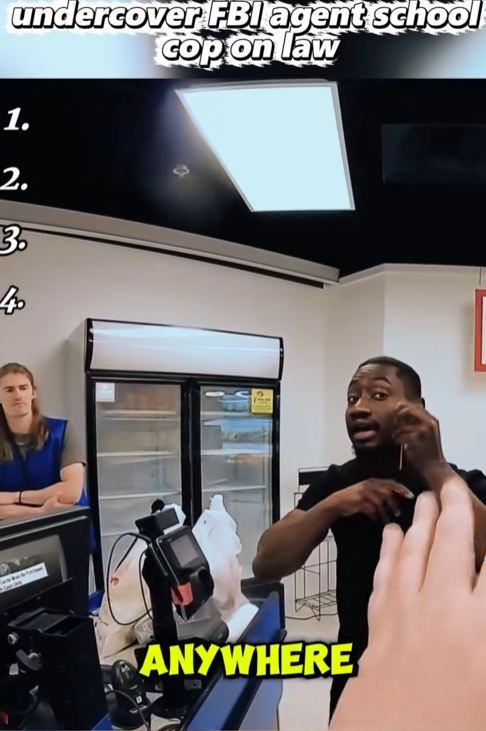
A short video circulating online has ignited widespread speculation after a tense exchange inside what appears to be a school-related facility or public service counter. The clip, shared with the bold claim that an “undercover FBI agent” confronted a school cop or authority figure, has quickly drawn millions of views — and just as many questions.
In the footage, a man behind a counter gestures emphatically while speaking to someone filming. The interaction feels charged, with viewers left to interpret body language, tone, and context without any verified background information. Text overlaid on the video implies that the man is an undercover federal agent testing or exposing misconduct by a school officer or staff member. However, no official confirmation has been provided to support this claim.
As with many viral clips, the lack of context has fueled intense debate. Some viewers are convinced the situation is a covert operation, pointing to the man’s confidence, assertive communication, and apparent familiarity with procedural language. Others argue it is far more likely a routine disagreement that has been exaggerated for clicks and shares.
Experts in law enforcement have cautioned against jumping to conclusions. Undercover operations, especially those involving federal agencies, are rarely conducted in such visible and easily recorded ways. Former officers have noted that true undercover agents avoid drawing attention and do not reveal themselves during casual public encounters, particularly in environments involving schools.
Despite this, the video taps into a broader public fascination with hidden authority, accountability, and the idea that anyone, anywhere, could be secretly testing the system. In recent years, social media has amplified these narratives, often blurring the line between reality and speculation. Short clips stripped of context can easily be framed to suggest dramatic truths that may not exist.
Another key factor driving the video’s popularity is growing public mistrust. Many people feel institutions are not transparent enough, making them more receptive to the idea that undercover agents are quietly investigating everyday spaces. This mindset, combined with sensational captions, creates the perfect conditions for viral spread.
So far, no school district, police department, or federal agency has issued a statement confirming the identities or roles of the individuals involved. Without verified information, the claims remain unproven. Still, the clip continues to circulate, with users dissecting every gesture, word, and pause in search of hidden meaning.
What this incident ultimately highlights is not necessarily an undercover operation, but the power of viral storytelling. A few seconds of video, paired with a dramatic caption, can transform an ordinary dispute into a national talking point. In the process, viewers are left to separate fact from fiction on their own.
Until credible sources confirm what truly happened, the safest conclusion is caution. The encounter may be unusual, tense, or uncomfortable — but extraordinary claims require extraordinary evidence. For now, the mystery remains unsolved, serving as yet another reminder that not everything that goes viral reflects the full truth.