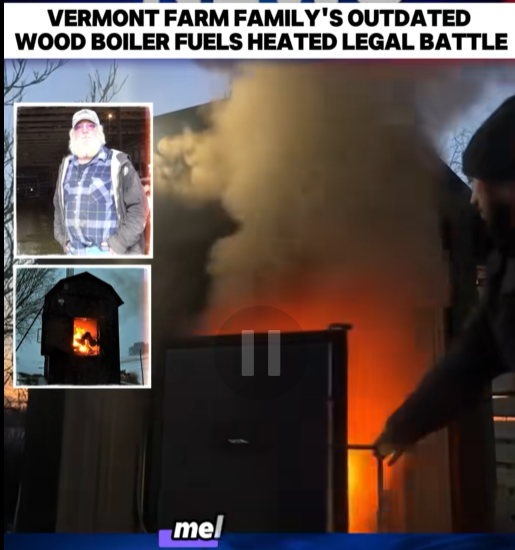

Vermont Farm Family Faces Legal Firestorm After Outdated Wood Boiler Sparks Heated Battle
A quiet Vermont farm has become the center of a growing legal dispute after an aging wood boiler ignited more than just flames. What began as a family’s effort to heat their property during harsh winters has now escalated into a heated legal battle that is drawing attention across the state.
According to reports, the farm family relied on an older outdoor wood boiler to heat their home and agricultural buildings. These systems, once common in rural areas, burn wood to generate heat and are often praised by farmers for being cost-effective and independent from utility companies. However, newer environmental regulations have placed many older models under scrutiny due to smoke emissions and air-quality concerns.
The controversy reportedly intensified after neighbors complained about thick smoke pouring from the unit, claiming it affected air quality and visibility. Regulators later determined that the boiler did not meet updated state standards, triggering enforcement action that the family says they never expected.
At the center of the dispute is the question of responsibility. The family argues that the boiler was installed legally years ago, long before stricter environmental rules were introduced. From their perspective, being forced to replace or shut down the system now feels like punishment for following the law at the time. They say the cost of upgrading to a modern, compliant unit could reach tens of thousands of dollars, an expense they claim would put serious financial strain on their farm.
State officials see the situation differently. Environmental agencies maintain that air-quality standards exist to protect public health, and outdated equipment that produces excessive smoke cannot be exempt indefinitely. They argue that while older systems may have been legal when installed, ongoing operation must still comply with current regulations.
The legal fight has become emotionally charged, with supporters rallying behind the farm family and criticizing what they view as government overreach into rural life. Many locals argue that farmers are being unfairly targeted while trying to survive rising costs, unpredictable markets, and increasingly strict rules.
On the other side, environmental advocates insist the issue is not about attacking farmers, but about ensuring clean air for everyone. They point out that modern wood boilers burn far more efficiently, producing less smoke and fewer harmful particles. In their view, transitioning away from outdated systems is a necessary step toward protecting both communities and the environment.
Legal experts say cases like this highlight a growing tension between rural traditions and modern regulations. As states tighten environmental policies, more families may find themselves caught between long-standing practices and new legal expectations. Courts are often left to decide whether enforcement actions are reasonable or whether accommodations should be made for existing equipment.
For now, the Vermont farm family remains in limbo, facing mounting legal costs and uncertainty about how they will heat their property moving forward. The case continues to spark debate online and offline, with many asking the same question: where should the line be drawn between environmental responsibility and the realities of rural life?
As winter approaches, the outcome of this dispute could set a precedent for similar cases across the region, potentially affecting countless families who still rely on older heating systems to get through the coldest months of the year.