
“Viral Video Claims Menstrual Pads Are ‘Dangerous’ — Here’s What the Scare Is REALLY About”
A viral wave of alarming posts has swept across social media, claiming that “ordinary menstrual pads can put you in the hospital.” Dramatic videos show pads being sliced open, mysterious substances being displayed, and exaggerated graphics suggesting harmful bacteria or hidden chemicals. The clips have exploded in popularity — but experts warn that the panic is based far more on fear than fact.
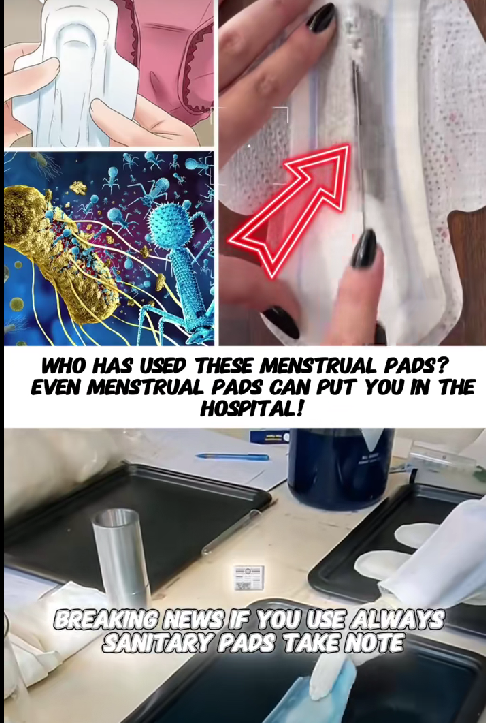
The now-trending clip begins with someone cutting open a sanitary pad and dramatically pointing to the absorbent material inside. Close-up shots show cotton-like fibers, gel beads, or absorbent cores — all normal components of modern period products. Still, with captions screaming phrases like “BREAKING NEWS” and “TAKE NOTE IF YOU USE THESE PADS,” it’s easy to see how viewers become frightened.
People watching these videos often assume the pads contain something harmful. But medical professionals and product-safety experts have repeatedly explained that the materials shown are standard components of FDA-regulated products, designed specifically for absorption, comfort, and hygiene. The dramatic slicing and zooming make it look suspicious — but there is nothing dangerous about seeing absorbent polymer granules or layered cotton.
Despite this, the viral content has fueled intense online debate. Many viewers say the videos triggered anxiety, especially for people who rely heavily on these products every month. Others point out that the creators use frightening visuals — like bacteria animations, hospital imagery, and flashing arrows — to amplify fear and drive engagement.
Health specialists have stepped in to clarify the truth: there is no evidence that mainstream menstrual pads contain hidden harmful substances capable of sending users to the hospital. Pads sold in the United States and many other countries must follow strict regulations regarding materials, hygiene, and safety testing. Any product that fails to meet these standards cannot legally be sold.
However, experts also acknowledge that skin sensitivity and allergic reactions can occur with any hygiene product, including pads, tampons, soaps, or detergents. These reactions are uncommon and typically mild, such as irritation or redness — not the dramatic scenarios shown in viral videos. For individuals with sensitivities, switching brands or trying unscented or organic options is often enough to resolve issues.
The viral scare highlights a growing problem online: sensational health claims spreading without scientific backing. Content creators often dramatize normal product components to spark emotional reactions. The videos look shocking, but the conclusions are misleading.
Still, the online discussion has led to some positive outcomes. Many viewers say the trend encouraged them to research product labels, explore reusable alternatives, or learn more about menstrual health — topics often overlooked or stigmatized.
Consumer advocates remind everyone of an important rule:
If you ever suspect a hygiene product is causing irritation, you should discontinue use and talk to a healthcare professional. But there is no need for widespread panic, and the claims in the viral videos remain unproven and exaggerated.
In the end, the frightening visuals may grab attention — but the real story is that menstrual pads continue to be one of the most regulated and widely used hygiene products worldwide, with millions of people relying on them safely every single day.